From Surf Wiki (app.surf) — the open knowledge base
Jiangxi
Province in East China

Province in East China
| Field | Value |
|---|---|
| name | Jiangxi |
| native_name | 江西 |
| settlement_type | Province |
| translit_lang1 | Name |
| translit_lang1_type | Chinese |
| translit_lang1_info | 江西省 (zh) |
| translit_lang1_type1 | Abbreviation |
| translit_lang1_info1 | JX / (; Gan: gan) |
| translit_lang1_type2 | Gan |
| translit_lang1_info2 | gan |
| translit_lang1_type3 | Hakka Pinyim |
| translit_lang1_info3 | hak |
| image_map | Jiangxi in China (+all claims hatched).svg |
| mapsize | 275px |
| map_caption | Location of Jiangxi in China |
| coordinates | |
| subdivision_type | Country |
| subdivision_name | China |
| named_for | Jiangnanxi Circuit () |
| seat_type | Capital |
| seat | Nanchang |
| seat1_type | Largest city |
| seat1 | Ganzhou |
| parts_type | Divisions |
| parts_style | para |
| p1 | 11 prefectures |
| p2 | 99 counties |
| p3 | 1549 townships |
| government_type | Province |
| governing_body | Jiangxi Provincial People's Congress |
| leader_title | Party Secretary |
| leader_name | Yin Hong |
| leader_title1 | Congress chairman |
| leader_name1 | Yin Hong |
| leader_title2 | Governor |
| leader_name2 | Ye Jianchun |
| leader_title3 | CPPCC chairman |
| leader_name3 | Song Fulong |
| leader_title4 | National People's Congress Representation |
| leader_name4 | 81 deputies |
| area_total_km2 | 166919 |
| area_rank | 18th |
| elevation_max_m | 2158 |
| elevation_max_point | Mt. Huanggang |
| population_footnotes | |
| population_total | 45,188,635 |
| population_as_of | 2020 |
| population_rank | 13th |
| population_density_km2 | auto |
| population_density_rank | 16th |
| demographics_type1 | Demographics |
| demographics1_footnotes | tags -- |
| demographics1_title1 | Ethnic composition |
| demographics1_info1 | |
| demographics1_title2 | Languages and dialects |
| demographics1_info2 | Gan, Hakka, Huizhou, Wu, Jianghuai Mandarin |
| demographics_type2 | GDP |
| demographics2_title1 | Total |
| demographics2_info1 | CN¥3.42 trillion (15th; US$ 480.26 billion) |
| demographics2_title2 | Per capita |
| demographics2_info2 | CN¥75,862 (21st; US$ 10,652) |
| iso_code | CN-JX |
| blank4_name_sec2 | HDI (2022) |
| blank4_info_sec2 | 0.768 (19th) – |
| website | |
| image_skyline | SanQingShan9.jpg |
| image_caption | Mount Lu |
Jiangxi is an inland province in east China. Spanning from the banks of the Yangtze river in the north into hillier areas in the south and east, it borders Anhui to the north, Zhejiang to the northeast, Fujian to the east, Guangdong to the south, Hunan to the west, and Hubei to the northwest. Major prefecture cities include its capital Nanchang, Ganzhou, and Jiujiang.
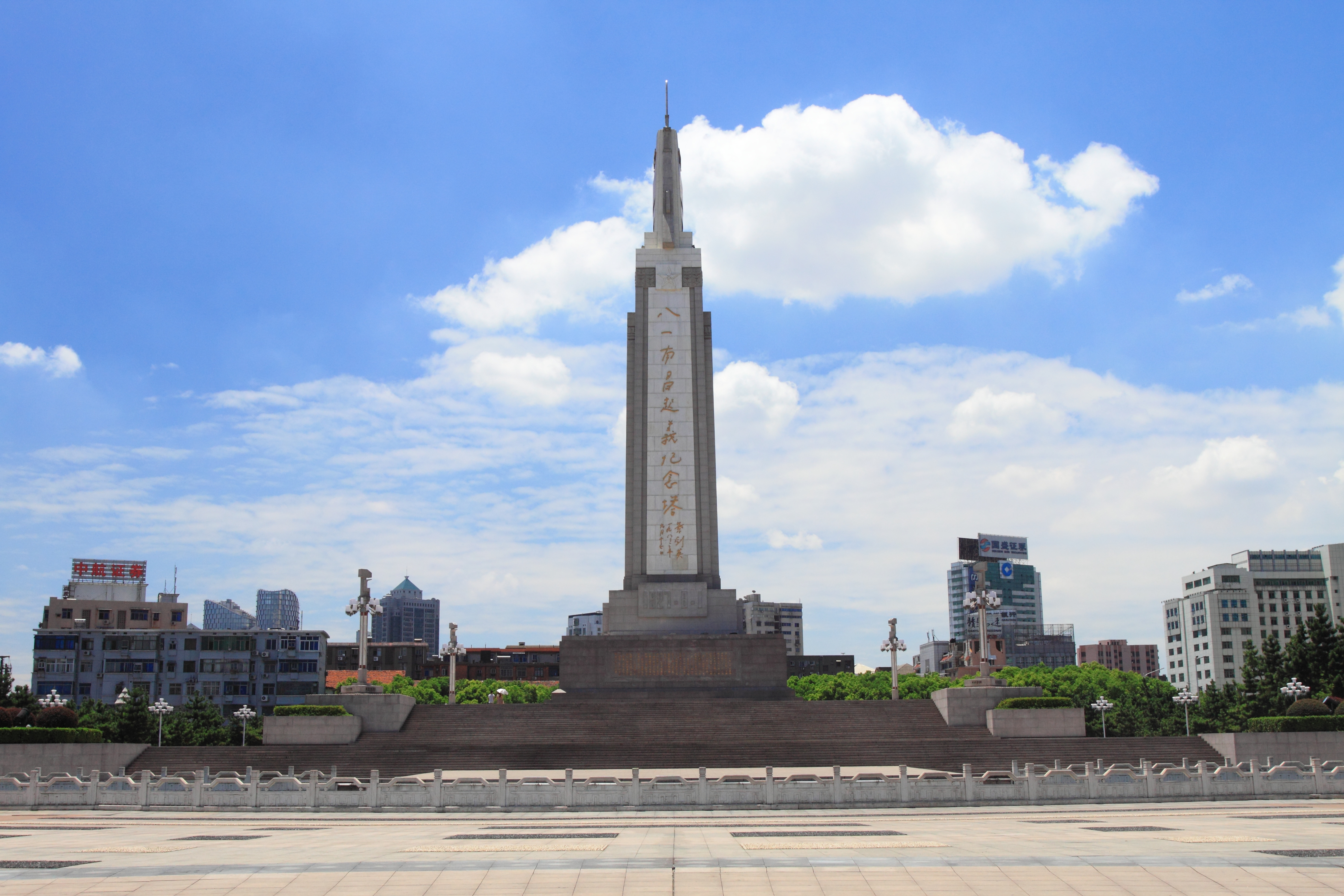
Jiangxi was one of the earliest Communist bases in China. The Nanchang uprising took place in Jiangxi on 1 August 1927, beginning the Chinese Civil War. In 1931, the Chinese Soviet Republic's government was established in Ruijin, which is sometimes called the "Former Red Capital".
The southern half of Jiangxi is hilly and mountainous, with ranges and valleys interspersed; notable mountains and mountain ranges include Mount Lu, the Jinggang Mountains and Mount Sanqing. The northern half is comparatively lower in altitude. The Gan River flows through the province.
Although the majority of Jiangxi's population is Han Chinese, Jiangxi is linguistically diverse. It is considered the center of Gan Chinese; Hakka Chinese is also spoken to some degree. Jiangxi is rich in mineral resources, leading the provinces of China in deposits of copper, tungsten, gold, silver, uranium, thorium, tantalum, niobium and lithium.
History
Main article: History of Jiangxi
Jiangxi is centered on the Gan River valley, which historically provided the main north–south transport route of south China. The corridor along the Gan River is one of the few easily traveled routes through the otherwise mountainous and rugged terrain of the south-eastern mountains. This open corridor was the primary route for trade and communication between the North China Plain and the Yangtze River valley in the north and the territory of modern Guangdong province in the south. As a result, Jiangxi has been strategically important throughout much of China's history.
Jiangxi was outside the sphere of influence of early Chinese civilization during the Shang dynasty (16th to 11th centuries BC). It is likely that peoples collectively known as the Baiyue inhabited the region. During the Spring and Autumn period, the northern part of modern Jiangxi formed the western frontier of the state of Wu. After Wu was conquered by the state of Yue (a power based in modern northern Zhejiang) in 473 BC, the state of Chu (based in modern Hubei) took over northern Jiangxi and there may have been some Yue influence in the south. Chu subjugated Yue in 333 BC. In 223 BC, when Qin conquered Chu, a majority of the Jiangxi area was recorded to be put under Jiujiang Commandery situated in Shouchun (壽春). However the commandery was ineffective and ended shortly when Qin falls.
Yuzhang Commandery (豫章, Gan: Ì-zong) was established in Jiangxi at the beginning of the Han dynasty, possibly before the death of Xiang Yu in 202 BC, and it was also the first commandery set up by Chinese dynasty in Jiangxi. It was named after the Yuzhang River (豫章江, Gan: Ì-zong Kong), the original name of Gan River. "Gan" has become the abbreviation of the province. In 201, eight counties were added to the original seven of Qin, and three more were established in later years. Throughout most of the Han dynasty the commandery's eighteen counties covered most of the modern province of Jiangxi. The county seats of Nanchang, Gan, Yudu, Luling among others were located at the sites of modern major cities. Other counties, however, have been moved or abolished in later centuries.
Under the reign of Emperor Wu of the Han dynasty, Yuzhang Commandery was assigned to Yangzhou Province, as part of a trend to establish provinces (zhou) all across China. In 291 AD, during the Western Jin dynasty, Jiangxi became its own Zhou called Jiangzhou (江州, Gan: Kong-chiu). During the Southern and Northern Dynasties, Jiangxi was under the control of the southern dynasties, and the number of zhou slowly grew.
During the Sui dynasty, there were seven commanderies and twenty-four counties in Jiangxi. During the Tang dynasty, another commandery and fourteen counties were added. Commanderies were then abolished, becoming zhou (henceforth translated as "prefectures" rather than "provinces").
Circuits were established during the Tang dynasty as a new top-level administrative division. At first Jiangxi was part of the Jiangnan Circuit (lit. "Circuit south of the Yangtze"). In 733, this circuit was divided into western and eastern halves. Jiangxi was found in the western half, which was called Jiangnanxi Circuit (lit. "Western circuits south of the Yangtze"). This is the source of the modern name "Jiangxi".
The Tang dynasty collapsed in 907, heralding the division of the Five Dynasties and Ten Kingdoms period. Jiangxi first belonged to Wu (吳, Gan: Ng), then to Southern Tang (南唐, Gan: Nām-thóng). Both states were based in modern-day Nanjing, further down the Yangtze River.
After the ten Chinese kingdoms, Jiangnanxi Circuit was reestablished with nine prefectures and four army districts (with sixty-eight districts). Jiangxi was later divided into thirteen different circuits, and Jiangxi Province was established for the first time. This province also included the majority of modern Guangdong. Jiangxi acquired (more or less) its modern borders.
After the fall of the Qing regime, Jiangxi became one of the earliest bases for the Communists and many peasants were recruited to join the growing people's revolution. The Nanchang Uprising took place in Jiangxi on 1 August 1927, during the Chinese Civil War. Later the Communist leadership hid in the mountains of southern and western Jiangxi, hiding from the Kuomintang's attempts to eradicate them. In 1931, the Chinese Soviet Republic's government was established in Ruijin, which is sometimes called the "Former Red Capital" (红色故都, Gan: Fūng-set Kū-tu), or just the "Red Capital". In 1935, after complete encirclement by the Nationalist forces, the Communists broke through and began the Long March to Yan'an.
From 1930 to 1934, the National Government carried out five military campaigns against the Jiangxi Soviet area. Its brutal two-party battles and cleansing (including the internal cleansing of the Red Army and the cleaning of the post-war government) caused a large number of deaths or escapes, causing the population of Jiangxi to drop by 40%, until only 13.8 million people were left in 1936.
In 1936, after the opening of the Yuehan Railway in Hunan, Jiangxi lost its important position regarding north–south traffic. In 1937, the east-west Zhegan Railway was opened to traffic, which changed the original traffic patterns in Jiangxi to a large extent. The Jiujiang Port (九江港) began to decline in importance.
Following the Doolittle Raid during World War II, most of the B-25 American crews that came down in China eventually made it to safety with the help of Jiangxi locals. The Gan who helped them, however, paid dearly for sheltering the Americans. The Imperial Japanese Army began the Zhejiang-Jiangxi Campaign to intimidate the Chinese from helping downed American airmen. At least 10,000 civilians died in Jiangxi while searching for Doolittle's men.
Jiangxi came under the full control of the CCP upon the establishment of the People's Republic of China in 1949. The Republican provincial government was evacuated to Taichung in Taiwan Province before dissolving itself that same year.
Geography


Mountains surround Jiangxi on three sides, with the Mufu Mountains, Jiuling Mountains, and Luoxiao Mountains on the west; Huaiyu Mountains and Wuyi Mountains on the east; and the (九连山) and Dayu Mountains in the south. The southern half of the province is hilly with ranges and valleys interspersed; while the northern half is flatter and lower in altitude. The highest point in Jiangxi is Mount Huanggang (黄岗山) in the Wuyi Mountains, on the border with Fujian. It has an altitude of 2157 m.
The Gan River dominates the province, flowing through the entire length of the province from south to north. It enters Lake Poyang in the north, the largest freshwater lake of China; that lake in turn empties into the Yangtze River, which forms part of the northern border of Jiangxi. Important reservoirs include the Zhelin Reservoir in the northwest of the province on the Xiushui River, and the in the upper section of the Gan.
Jiangxi has a humid subtropical climate (Cfa under the Köppen climate classification), with short, cool, damp winters, and very hot, humid summers. Average temperatures are about 3 to in January and 27 to in July. Annual precipitation is 1200 to, much of it falling in the heavy rains occurring in late spring and summer.
Nanchang, the provincial capital and the most densely populated city, is one of the largest Chinese metropolises. Nanchang is the hub of Jiangxi civilization throughout its history, which plays a leading role in the commercial, intellectual and industrial and political fields. Ganzhou is the largest subdivision of Jiangxi.
Administrative divisions
Main article: List of administrative divisions of Jiangxi, List of township-level divisions of Jiangxi
Jiangxi is divided into eleven prefecture-level divisions: all prefecture-level cities:
| Division code | Division | Area in km2 | Population 2020 | Seat | Divisions | Districts | Counties | CL cities | 360000 | Jiangxi Province | 360100 | Nanchang city | 360200 | Jingdezhen city | 360300 | Pingxiang city | 360400 | Jiujiang city | 360500 | Xinyu city | 360600 | Yingtan city | 360700 | Ganzhou city | 360800 | Ji'an city | 360900 | Yichun city | 361000 | Fuzhou city | 361100 | Shangrao city |
|---|---|---|---|---|---|---|---|---|---|---|---|---|---|---|---|---|---|---|---|---|---|---|---|---|---|---|---|---|---|---|---|---|
| 166,900.00 | 45,188,635 | Nanchang city | 27 | 61 | 12 | |||||||||||||||||||||||||||
| 7,432.18 | 6,255,007 | Donghu District | 6 | 3 | ||||||||||||||||||||||||||||
| 5,256.23 | 1,618,979 | Changjiang District | 2 | 1 | 1 | |||||||||||||||||||||||||||
| 3,823.99 | 1,804,805 | Anyuan District | 2 | 3 | ||||||||||||||||||||||||||||
| 18,796.79 | 4,600,276 | Xunyang District | 3 | 7 | 3 | |||||||||||||||||||||||||||
| 3,177.68 | 1,202,499 | Yushui District | 1 | 1 | ||||||||||||||||||||||||||||
| 3,556.74 | 1,154,223 | Yuehu District | 2 | 1 | ||||||||||||||||||||||||||||
| 39,317.14 | 8,970,014 | Zhanggong District | 3 | 13 | 2 | |||||||||||||||||||||||||||
| 25,283.80 | 4,469,176 | Jizhou District | 2 | 10 | 1 | |||||||||||||||||||||||||||
| 18,637.67 | 5,007,702 | Yuanzhou District | 1 | 6 | 3 | |||||||||||||||||||||||||||
| 18,811.12 | 3,614,866 | Linchuan District | 2 | 9 | ||||||||||||||||||||||||||||
| 22,826.04 | 6,491,088 | Xinzhou District | 3 | 8 | 1 |
| Administrative divisions in Chinese and varieties of romanizations | English | Chinese | Pinyin | Gan Romanization |
|---|---|---|---|---|
| Jiangxi Province | 江西省 | zh | gan | |
| Nanchang city | 南昌市 | zh | gan | |
| Jingdezhen city | 景德镇市 | zh | gan | |
| Pingxiang city | 萍乡市 | zh | gan | |
| Jiujiang city | 九江市 | zh | gan | |
| Xinyu city | 新余市 | zh | gan | |
| Yingtan city | 鹰潭市 | zh | gan | |
| Ganzhou city | 赣州市 | zh | gan | |
| Ji'an city | 吉安市 | zh | gan | |
| Yichun city | 宜春市 | zh | gan | |
| Fuzhou city | 抚州市 | zh | gan | |
| Shangrao city | 上饶市 | zh | gan |
These prefecture-level cities are in turn subdivided into 100 county-level divisions (27 districts, 12 county-level cities, and 61 counties). Those in turn are divided into 1566 township-level divisions (830 towns, 560 townships, 8 ethnic townships, and 168 subdistricts).
| # | City | Urban area | District area | City proper | Census date |
|---|---|---|---|---|---|
| 1 | Nanchang | 2,223,661 | 2,357,839 | 5,042,566 | 2010-11-01 |
| (1) | Nanchang (new district) | 390,719 | 795,412 | see Nanchang | 2010-11-01 |
| 2 | Pingxiang | 716,229 | 893,550 | 1,854,515 | 2010-11-01 |
| 3 | Jiujiang | 611,321 | 704,986 | 4,728,778 | 2010-11-01 |
| (3) | Jiujiang (new district) | 93,035 | 159,909 | see Jiujiang | 2010-11-01 |
| 4 | Ganzhou | 605,231 | 642,653 | 8,368,447 | 2010-11-01 |
| (4) | Ganzhou (new districts) | 430,680 | 1,334,600 | see Ganzhou | 2010-11-01 |
| 5 | Xinyu | 567,820 | 839,488 | 1,138,874 | 2010-11-01 |
| 6 | Fuzhou | 482,940 | 1,089,888 | 3,912,307 | 2010-11-01 |
| (6) | Fuzhou (new district) | 169,404 | 438,319 | see Fuzhou | 2010-11-01 |
| 7 | Yichun | 461,817 | 1,045,952 | 5,419,591 | 2010-11-01 |
| 8 | Jingdezhen | 430,084 | 473,561 | 1,587,477 | 2010-11-01 |
| 9 | Fengcheng | 379,914 | 1,336,392 | see Yichun | 2010-11-01 |
| 10 | Ji'an | 328,318 | 538,699 | 4,810,339 | 2010-11-01 |
| 11 | Shangrao | 298,975 | 416,219 | 6,579,747 | 2010-11-01 |
| (11) | Shangrao (new district) | 392,302 | 752,953 | see Shangrao | 2010-11-01 |
| 12 | Gao'an | 295,507 | 811,633 | see Yichun | 2010-11-01 |
| 13 | Leping | 286,351 | 810,353 | see Jingdezhen | 2010-11-01 |
| 14 | Ruijin | 216,229 | 618,885 | see Ganzhou | 2010-11-01 |
| 15 | Guixi | 210,319 | 558,451 | see Yingtan | 2010-11-01 |
| 16 | Yingtan | 191,893 | 214,229 | 1,125,156 | 2010-11-01 |
| (16) | Yingtan (new district) | 131,470 | 352,476 | see Yingtan | 2010-11-01 |
| 17 | Zhangshu | 188,586 | 555,120 | see Yichun | 2010-11-01 |
| 18 | Ruichang | 150,531 | 419,047 | see Jiujiang | 2010-11-01 |
| 19 | Dexing | 148,565 | 293,201 | see Shangrao | 2010-11-01 |
| (20) | Gongqingcheng | 118,986 | 118,986 | see Jiujiang | 2010-11-01 |
| (21) | Lushan | 101,630 | 245,526 | see Jiujiang | 2010-11-01 |
| 22 | Jinggangshan | 86,673 | 152,310 | see Ji'an | 2010-11-01 |
Politics
Main article: Politics of Jiangxi, List of provincial leaders of the People's Republic of China
The politics of Jiangxi is structured in a dual party-government system like all other governing institutions in mainland China.
The Governor of Jiangxi is the highest-ranking official in the People's Government of Jiangxi. However, in the province's dual party-government governing system, the Governor has less power than the Jiangxi Chinese Communist Party Provincial Committee Secretary, colloquially termed the "Jiangxi CCP Party Chief".
Economy
Jiangxi was a major recipient of China's investment in industrial capacity during the Third Front campaign.
Rice is the dominant crop in Jiangxi. Cash crops commonly grown include cotton and rapeseed. Jiangxi is the leading producer of kumquats in China, particularly in Suichuan County.
Mining-related industries are a major part of Jiangxi's economy.Jiangxi is rich in mineral resources, leading the provinces of China in deposits of copper, tungsten, gold, silver, uranium, thorium, tantalum, niobium, among others. Noted centers of mining include Dexing (copper) and Dayu County (tungsten).
It is located in extreme proximity to some of the richest provinces of China (Guangdong, Zhejiang, Fujian), which are sometimes blamed for taking away talent and capital from Jiangxi.
Jiangxi has the lowest wages and third lowest property prices in all of China. As of 2016 Jiangxi's nominal GDP was CNY 1.84 trillion or US$276.48 billion, and a per capita of CNY 40,400 or US$6,082.
| 1978 | 8,700 | 5,595 | 13.3 | 276 | 177 | 1.5550 |
|---|
Economic and technological development zones
- Nanchang Export Processing Zone Nanchang National Export Expressing Zone is located in Nanchang Hi-Tech Industrial Development Zone, it was approved by the State Council on May 8, 2006, and passed the national acceptance inspection on Sep 7th, 2007. It has a planning area of 1 km2 and now has built 0.31 km2. It enjoys simple and convenient customs clearances, and special preferential policies both for Nanchang National Export Expressing Zone and NCHDZ.
- Nanchang National High-tech Industrial Development Zone Nanchang National High-tech Industrial Development Zone (NCHDZ for short hereafter) is the only national grade high-tech zoned in Jiangxi, it was established in Mar. 1991. The zone covers an area of 231 km2, in which 32 km2 have been completed. NCHDZ possesses unique nature condition and sound industry foundation of accepting electronics industry. NCHDZ has brought 25% industrial added value and 50% industrial benefit and tax to Nanchang city by using only 0.4% land area.
- Nanchang Economic and Technological Development Zone
- Jiujiang Free Trade (Tariff-free) Zone
- Jiujiang National Economical and Technological Development Zone
- Jiujiang Gongqingcheng National High-tech Industrial Development Zone
Demographics

The population of Jiangxi according 2020 Chinese census is 45.18 million. 99.73% of that is Han Chinese, predominantly Gan and Hakka. Ganzhou, Jiangxi's largest city, has an especially large number of Hakka. Ethnic minorities include the She people.
Jiangxi and Henan both have the most unbalanced gender ratios of all Chinese provinces. Based on a 2009 British Medical Journal study, the ratio is over 140 boys for every 100 girls in the 1–4 age group. |1912 |23,988,000 |1928 |20,323,000 |1936-37 |15,805,000 |1947 |12,507,000 |1954 |16,772,865 |1964 |21,068,019 |1982 |33,184,827 |1990 |37,710,281 |2000 |40,397,598 |2010 |44,567,475
In 2019 the most-common surname in Jiangxi was Liú (刘), the only province where this was the case. Overall Liu is the fourth-most common surname in the country.
Religion
- Buddhists;
- Confucians;
- Deity worshippers;
- Taoists;
- Members of folk religious sects;
- Small minorities of Muslims;
- And people not bounded to, nor practicing any, institutional or diffuse religion.}} The predominant religions in Jiangxi are Chinese folk religions, Taoist traditions and Chinese Buddhism. According to surveys conducted in 2007 and 2009, 24.05% of the population believes and is involved in ancestor veneration, while 2.31% of the population identifies as Christian.
The reports didn't give figures for other types of religion; 73.64% of the population may be either irreligious or involved in worship of nature deities, Buddhism, Confucianism, Taoism, folk religious sects.
Culture
Main article: Culture of Jiangxi

Jiangxi is the main area of concentration of the Gan varieties of Chinese, spoken over most of the northern two-thirds of the province. Examples include the Nanchang dialect, Yichun dialect and Ji'an dialect. The southern one-third of the province speaks Hakka. There are also Mandarin, Huizhou, and Wu dialects spoken along the northern border.
() is the type of Chinese opera performed in Jiangxi.
Although little known outside of the province, Jiangxi cuisine is rich and distinctive. Flavors are some of the strongest in China, with heavy use of chili peppers and especially pickled and fermented products.
Jingdezhen is widely regarded as the producer of the best porcelain in China, it is known as the "porcelain capital" of China.
Jiangxi also was a historical center of Chan Buddhism.
Prominent examples of Hakka architecture can be found in Jiangxi.
Transportation
As of January 2015, Jiangxi had two Yangtze River crossings, both in Jiujiang.
Rail
The Beijing–Kowloon Railway and Shanghai–Kunming Railway crisscross the province and intersect at Nanchang, which also has a high-speed rail link to Jiujiang. In addition, Jiangxi is connected by rail to Anhui Province via the Anhui–Jiangxi and Tongling–Jiujiang Railways; to Hubei via the Wuhan–Jiujiang Railway; and to Fujian via the Yingtan–Xiamen, Hengfeng–Nanping, Ganzhou–Longyan and Xiangtang–Putian Railways.
Tourism
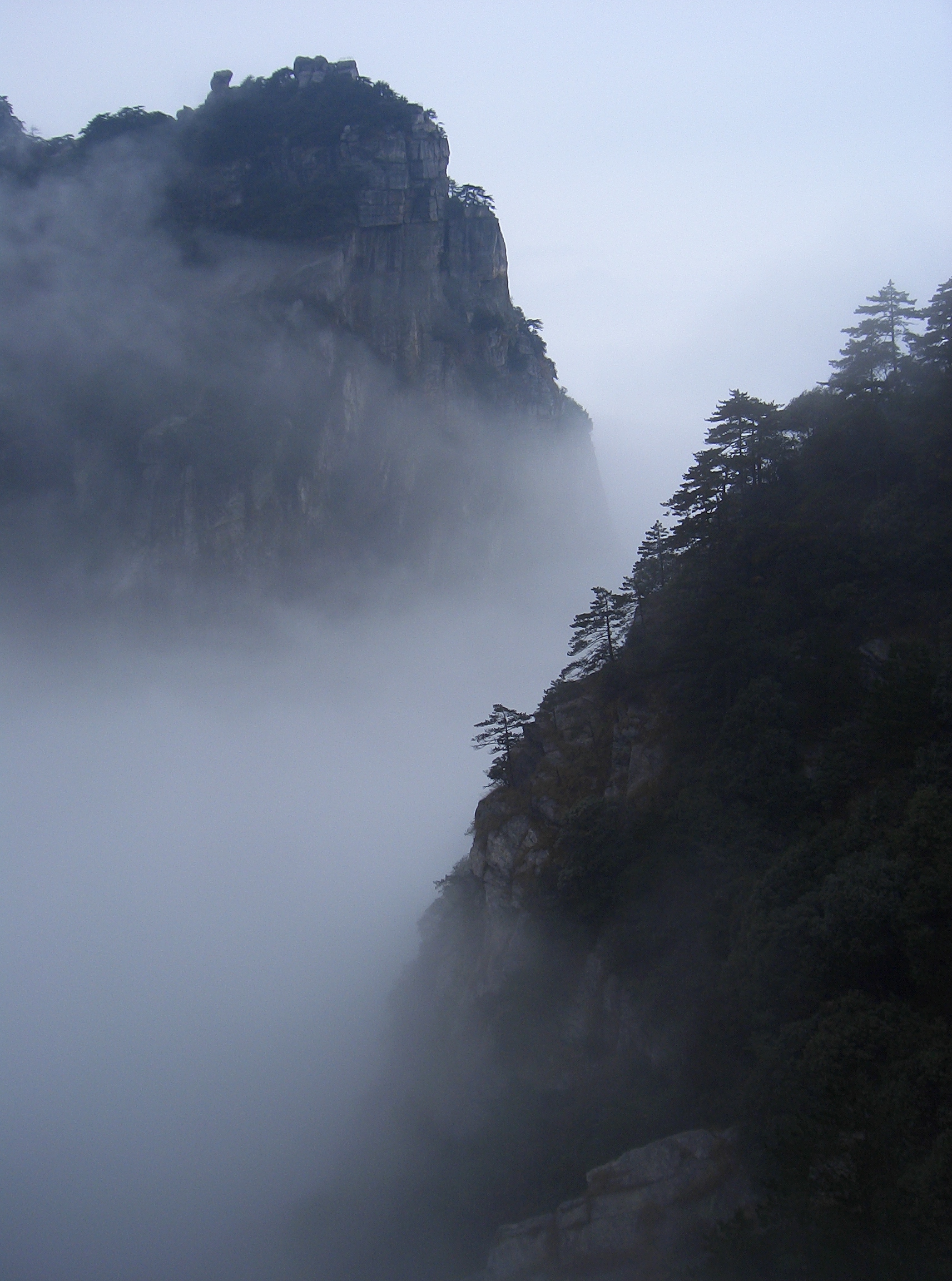
There are several famous mountains in Jiangxi Province, including Mount Lu in Jiujiang, Jinggang Mountains at the border of Jiangxi and Hunan, and Mount Sanqing in Yushan county.
Near the northern port city of Jiujiang lies the well-known resort area of Mount Lu. Also near the city is the Donglin Temple, an important Buddhist temple in china.
Near the small city of Yingtan is the resort area of Longhushan, which purports to be the birthplace of Taoism and hence has great symbolic value to Taoists. The region has many temples, cave complexes, mountains and villages.
The Mount Lu National Park has been a UNESCO World Heritage Site since 1996.
Kuling located on the top of Mount Lu is a summer resort developed by European in the 19th century. There were 3000 European living in Kuling, Lushan and Jiujiang in summer time in 1920s.
In 2007, Jiangxi (specifically the Zhelin Reservoir, located in Jiujiang) was the filming location for the fifteenth series of the American TV show Survivor.
Flora and fauna
The mountainous terrain and large forest coverage of Jiangxi has made it historically one of the more wild places of central China. South China tigers have been seen as recently as fifteen or twenty years ago and projects are underway to document evidence of existing tigers, if there are any. Several mountain areas along the northern border with Hunan and Hubei are potential sites for "wilderness" preserves specifically for protecting or even reintroducing tigers.
Other wildlife, though not plentiful, are more numerous in Jiangxi than in many other developed areas of China. Numerous species of birds are common, especially around the marshes of Lake Poyang in the north. Though protected, mammals such as muntjac, wild boar, civet cats, and pangolins, are still common enough that they'll even occasionally be seen in markets for sale as game meat, or possibly even in a forest.
The late Paleocene mesonychid, Jiangxia chaotoensis was found in the province, and named after it.
Education
Colleges and universities
Main article: List of universities and colleges in Jiangxi
List of colleges and universities in Jiangxi:
- University of Jiujiang
- Jiangxi College of Foreign Studies
- East China University of Technology
- East China Jiaotong University
- Jiangxi Agricultural University
- Jiangxi Institute of Education
- Jiangxi Normal University
- Jiangxi Science and Technology Normal University
- Jiangxi University of Finance and Economics
- Jingdezhen Ceramic Institute
- Jinggangshan University
- Nanchang Institute of Technology
- Nanchang Hangkong University
- Nanchang University
- Xinyu University
- Yichun University
Sister provinces
- Finland Lapland, Finland
- NZ Bay of Plenty Region, New Zealand
- JPN Okayama Prefecture, Japan
- PHL Bohol, Philippines
- DEU Hesse, Germany
- US Kentucky, United States
- BRA Mato Grosso do Sul, Brazil
- MYS Sabah, Malaysia
- CAM Siem Reap, Cambodia
Notes
References
References
- (11 May 2021). "Communiqué of the Seventh National Population Census (No. 3)". [[National Bureau of Statistics of China]].
- Jiangxi's total permanent population at the end of 2023 is 45.1501 million, and at the end of 2024 it is 45.0201 million{{cite press release. link. Jiangxi.gov. (February 17, 2025). link. jiangxi.gov. (January 18, 2025)
- "Human Development Indices (8.0)- China".
- "Jiangxi". [[Oxford University Press]].
- "Jiangxi".
- (2023-03-01). "China's lithium mining likely to face more scrutiny". Reuters.
- (July 2018)
- Averill, Stephen C.. (1981). "The New Life in Action: The Nationalist Government in South Jiangxi, 1934-37". The China Quarterly.
- books.google.com/books?id=i2hjEAAAQBAJ&pg=PT107
- "The Perilous Fight: America's World War II in Color".
- link. Lin. Liangzhe. Da Dun: Cultural Bimonthly
- (2008-11-26). "www.china.com.cn". China.com.cn.
- link. [[Ministry of Civil Affairs]]
- Shenzhen Bureau of Statistics. [[:zh:中国统计出版社. China Statistics Print]]. link
- (2012). [[:zh:中国统计出版社. China Statistics Print]]
- Ministry of Civil Affairs. (August 2014). [[:zh:中国统计出版社. China Statistics Print]]
- zh-hans. 国务院人口普查办公室 [Department of Population Census of the State Council], {{lang. zh-hans. 国家统计局人口和社会科技统计司编 [Department of Population and Social Science and Statistics, National Bureau of Statistics]. (2012). [[:zh:中国统计出版社. China Statistics Print]]
- Lan, Xiaohuan. (2024). "How China Works: An Introduction to China's State-led Economic Development". [[Palgrave Macmillan]].
- Zhonghua quan guo min zhu fu nü lian he hui. (1988). "Chung-kuo fu nü". Foreign Language Press.
- Zhan, Jing Vivian. (2022). "China's Contained Resource Curse: How Minerals Shape State-Capital-Labor Relations". [[Cambridge University Press]].
- "Jiangxi Province: Economic News and Statistics for Jiangxi's Economy". Thechinaperspective.com.
- ''Historical GDP of Jiangxi Province'' published on ''Jiangxi Statistical Yearbook 2017'', ALSO see [http://www.gdstats.gov.cn/tjzl/tjgb/201712/t20171209_377708.html Jiangxi GDP Revision (Chinese)] {{Webarchive. link. (2017-12-22)
- '''Purchasing power parity''' (PPP) for Chinese yuan is estimate according to [[International Monetary Fund. IMF]] '''''[[World Economic Outlook
- "Nanchang Export Processing Zone". RightSite.asia.
- "Nanchang High-Tech Industrial Development Zone". RightSite.asia.
- "Nanchang Economic & Technological Development Zone". RightSite.asia.
- "九江综合保税区".
- "九江国家级经济技术开发区".
- "九江共青城国家高新技术产业开发区".
- (2021-05-11). "Communiqué of the Seventh National Population Census (No. 3)".
- (2009). "China's excess males, sex selective abortion, and one child policy: analysis of data from 2005 national intercensus survey". BMJ.
- link
- link
- link
- link
- link. [[National Bureau of Statistics of China]]
- link. [[National Bureau of Statistics of China]]
- link. [[National Bureau of Statistics of China]]
- link. [[National Bureau of Statistics of China]]
- link. [[National Bureau of Statistics of China]]
- "Communiqué of the National Bureau of Statistics of People's Republic of China on Major Figures of the 2010 Population Census". [[National Bureau of Statistics of China]].
- "新京报 - 好新闻,无止境".
- link. (2015-09-25)
- "Jingdezhen: Where Emperors Got Their Porcelain - Caixin Global".
- (2009-10-23). ":: Notícias MS". Noticias.ms.gov.br.
- Muguntan Vanar. (21 April 2019). "Sabah and China's Jiangxi look to become 'sister provinces', says Shafie". The Star.
- (22 April 2019). "Sabah, Jiangxi sign friendship pact". The Borneo Post.
This article was imported from Wikipedia and is available under the Creative Commons Attribution-ShareAlike 4.0 License. Content has been adapted to SurfDoc format. Original contributors can be found on the article history page.
Ask Mako anything about Jiangxi — get instant answers, deeper analysis, and related topics.
Research with MakoFree with your Surf account
Create a free account to save articles, ask Mako questions, and organize your research.
Sign up freeThis content may have been generated or modified by AI. CloudSurf Software LLC is not responsible for the accuracy, completeness, or reliability of AI-generated content. Always verify important information from primary sources.
Report