From Surf Wiki (app.surf) — the open knowledge base
Jesse Owens
American track and field athlete (1913–1980)

American track and field athlete (1913–1980)
| Field | Value |
|---|---|
| name | Jesse Owens |
| image | Jesse Owens 1936.jpg |
| caption | Owens at the 1936 Summer Olympics, where he won four Olympic gold medals |
| fullname | James Cleveland Owens |
| nickname | The Buckeye Bullet |
| birth_date | |
| birth_place | Oakville, Alabama, U.S. |
| death_date | |
| death_place | Tucson, Arizona, U.S. |
| resting_place | Oak Woods Cemetery |
| Chicago, Illinois, U.S. | |
| spouse | |
| height | 5 ft 11 in |
| weight | 165 lb |
| sport | Track and field |
| event | Sprint, Long jump |
| education | Ohio State University, |
| Fairmont Junior High School, | |
| East Technical High School | |
| nationals | {{ubl |
| pb | 60 yd: 6.09 (1935) |
| 100 yd: 9.3 (1936) | |
| 100 m: 10.2 (1936) | |
| 200 m: 20.7 (1936) | |
| 220 yd: 20.3 (1935) | |
| Long jump: 8.13 m (1935) | |
| medaltemplates |
Chicago, Illinois, U.S. Fairmont Junior High School, East Technical High School |1933 USA Champs | 100m, 3rd | Long jump, 1st |1934 USA Indoors | Long jump, 1st |1934 USA Champs | 100m, 2nd | Long jump, 1st |1935 USA Indoors | 60m, 2nd | Long jump, 1st |1935 NCAAs | 100yd, 1st | 220yd, 1st | 220yd hurdles, 1st | Long jump, 1st |1935 USA Champs | 100m, 3rd | Long jump, 2nd |1936 NCAAs | 100m, 1st | 200m, 1st | 220yd hurdles, 1st | Long jump, 1st |1936 USA Champs | 100m, 1st | Long jump, 1st 100 yd: 9.3 (1936) 100 m: 10.2 (1936) 200 m: 20.7 (1936) 220 yd: 20.3 (1935) Long jump: 8.13 m (1935)
James Cleveland "Jesse" Owens (September 12, 1913 – March 31, 1980) was an American track and field athlete who made history at the 1936 Olympic Games by winning four gold medals, setting Olympic records in each event. He is widely regarded as one of the greatest athletes in track and field history.
Owens excelled in events like short sprints and the long jump and was recognized in his lifetime as "perhaps the greatest and most famous athlete in track and field history". He won four events, set five world records and tied another—all in less than an hour, at the 1935 Big Ten Championships in Ann Arbor, Michigan, a feat that has never been equaled and has been called "the greatest 45 minutes ever in sport". He won four NCAA titles in both 1935 and 1936, bringing his total to eight—an unparalleled achievement that remains unmatched to this day.
He achieved international fame at the 1936 Summer Olympics in Berlin, Germany, by winning four gold medals: 100 meters, long jump, 200 meters, and 4 × 100-meter relay. He was the most successful athlete at the Games and, as a black American man, was credited by ESPN with "single-handedly crushing Hitler's myth of Aryan supremacy".
The Jesse Owens Award is USA Track & Field's highest accolade for the year's best track and field athlete. In a 1950 Associated Press poll, Owens was voted the greatest track and field athlete for the first half of the century. In 1999, he was on the six-man short-list for the BBC's Sports Personality of the Century. That same year, he was ranked the sixth greatest North American athlete of the twentieth century and the highest-ranked in his sport by ESPN.
Early life and education
Jesse Owens, originally known as J. C., was the youngest of ten children (three girls and seven boys) born to Henry Cleveland Owens [1881–1942] (a sharecropper) and Mary Emma Fitzgerald in Oakville, Alabama, on September 12, 1913. He was the grandson of a slave. At the age of nine, he and his family moved to Cleveland, Ohio for better opportunities as part of the Great Migration (1910–70) when millions of African Americans left the segregated and rural South for the urban and industrial North. When his new teacher asked his name to enter in her roll book, he said "J. C.", but because of his strong Southern accent, she thought he said "Jesse". The name stuck, and he was known as Jesse Owens for the rest of his life.
In his younger years, Owens took different menial jobs in his spare time: he delivered groceries, loaded freight cars, and worked in a shoe repair shop while his father and older brother worked at a steel mill. During this period, Owens realized that he had a passion for running. Throughout his life, Owens attributed the success of his athletic career to the encouragement of Charles Riley, his junior high school track coach at Fairmount Junior High School. Since Owens worked after school, Riley allowed him to practice before school instead.
Owens and Minnie Ruth Solomon (1915–2001) met at Fairmont Junior High School in Cleveland when he was 15 and she was 13. They dated steadily through high school. Ruth gave birth to their first daughter Gloria in 1932. They married on July 5, 1935, and had two more daughters together: Marlene, born in 1937, and Beverly, born in 1940. They remained married until his death in 1980.
Owens first came to national attention when he was a student of East Technical High School in Cleveland; he equaled the world record of 9.4 seconds in the 100 yd dash, broke the national high school record with 20.7 seconds in the 220 yards (201 m) dash, and long-jumped 24 ft at the 1933 National High School Championship in Chicago. His 100-yard dash remained the national high school record until 1967, while his 200-yard dash held the national record for 20 years.
Career
Ohio State University
Owens attended Ohio State University after his father found employment, which ensured that the family could be supported. Affectionately known as the "Buckeye Bullet" and under the coaching of Larry Snyder, Owens won a record eight individual NCAA championships, four each in 1935 and 1936. His career total of eight individual NCAA titles remains the most, despite only two years of Varsity competition—which included an undefeated junior year in 1936 where he won all 42 events he entered. Though Owens enjoyed athletic success, he had to live off campus with other African-American athletes. When he traveled with the team, Owens was restricted to ordering carry-out or eating at "blacks-only" restaurants. Similarly, he had to stay at "blacks-only" hotels. Owens did not receive a scholarship for his efforts, so he continued to work part-time jobs to pay for school.
Day of days
May 25, 1935, is remembered as the day when Jesse Owens won four events and established six world records in athletics at the Big Ten Championships. On that day, Owens battled through a lower back injury and set five world records and tied a sixth in a span of 45 minutes from 3:15–4 p.m. during the Big Ten meet at Ferry Field in Ann Arbor, Michigan. He equaled the world record for the 100-yard dash (9.4 seconds) (not to be confused with the 100-meter dash), and set world records in the long jump (26 ft, a world record that would last for 25 years); 220 yd sprint (20.3 seconds); and 220-yard low hurdles (22.6 seconds, becoming the first to break 23 seconds). Both 220-yard records had also beaten the metric records for 200 meters (flat and hurdles), which counted as two additional world records from the same performances.
1936 Big Ten Championships
At the 1936 Big Ten Championships, Owens dominated the competition, winning the long jump, 100-yard dash, 220-yard dash, and 100-yard low hurdles. With these victories, he concluded his Big Ten Championship career undefeated—nine titles in nine events.
USA Track and Field Championships
At the 1934 USA Indoor Track and Field Championships, Owens captured the long jump gold with a world-record leap of 25 ft. Two years later, at his final appearance at the Outdoor Championships in 1936, he shattered the long jump world record once again with a remarkable jump of 26 feet, 8¼ inches. That same meet, he also set a new championship record in the 100 meters, clocking in at 10.4 seconds. Over the course of his career at these championships, Owens amassed a total of six gold medals—five in the long jump and one in the 100 meters.
1936 Berlin Summer Olympics
On December 4, 1935, NAACP Secretary Walter Francis White wrote a letter to Owens, but never sent it. He was trying to dissuade Owens from taking part in the 1936 Summer Olympics in Nazi Germany, arguing that an African American should not promote a racist regime after what his race had suffered at the hands of racists in his own country. In the months prior to the Games, a movement gained momentum in favor of a boycott. Owens was convinced by the NAACP to declare: "If there are minorities in Germany who are being discriminated against, the United States should withdraw from the 1936 Olympics." Yet he and others eventually took part after Avery Brundage, president of the American Olympic Committee branded them "un-American agitators".

In 1936, Owens and his United States teammates sailed on the SS Manhattan and arrived in Germany to compete at the Summer Olympics in Berlin. Just before the competitions, founder of Adidas athletic shoe company Adi Dassler visited Owens in the Olympic village and persuaded Owens to wear Gebrüder Dassler Schuhfabrik shoes; this was the first sponsorship for a male African American athlete.
On August 3, Owens won the 100 m dash with a time of 10.3 seconds, defeating a teammate and a college friend Ralph Metcalfe by a tenth of a second and defeating Tinus Osendarp of the Netherlands by two-tenths of a second.
On August 4, he won the long jump with a leap of 8.06 m (3¼ inches short of his own world record). He initially credited this achievement to the technical advice that he received from Luz Long, the German competitor whom he defeated, but later admitted that this was not true, as he and Long did not meet until after the competition was over.
On August 5, he won the 200 meter sprint with a time of 20.7 seconds, defeating fellow American teammate Mack Robinson (the older brother of Jackie Robinson).
On August 9, Owens won his fourth gold medal in the 4 × 100 m sprint relay when head coach Lawson Robertson replaced Jewish-American sprinters Marty Glickman and Sam Stoller with Owens and Ralph Metcalfe, who teamed with Frank Wykoff and Foy Draper to set a world record of 39.8 seconds in the event. Owens had initially protested the last-minute switch, but assistant coach Dean Cromwell said to him, "You'll do as you are told." Owens's record-breaking performance of four gold medals was not equaled until Carl Lewis won gold medals in the same events at the 1984 Summer Olympics in Los Angeles. Owens had set the world record in the long jump with a leap of 8.13 m in 1935, the year before the Berlin Olympics, and this record stood for 25 years until it was broken in 1960 by countryman Ralph Boston. Coincidentally, Owens was a spectator at the 1960 Summer Olympics in Rome when Boston took the gold medal in the long jump.
The long-jump victory is documented, along with many other 1936 events, in the 1938 film Olympia by Leni Riefenstahl. On August 1, 1936, Nazi Germany's leader, Adolf Hitler, shook hands with the German victors only and then left the stadium. International Olympic Committee president Henri de Baillet-Latour insisted that Hitler greet every medalist or none at all. Hitler opted for the latter and skipped all further medal presentations.
Owens ran his first race on Day 2 of the Olympics (August 2). That day, He ran in the first (10:30 a.m.) and second (3:00 p.m.) qualifying rounds for the 100-meter final. He tied the Olympic and world record in the first race and broke them in the second race, but the new time was not recognized, because it was wind-assisted. Later the same day, Owens's African-American team-mate Cornelius Johnson won gold in the high jump final (which began at 5:00 p.m.) with a new Olympic record of 2.03 meters. Hitler did not publicly congratulate any of the medal winners this time; even so, the communist New York City newspaper the Daily Worker claimed Hitler received all the track winners except Johnson and left the stadium as a "deliberate snub" after watching Johnson's winning jump. Hitler was subsequently accused of failing to acknowledge Owens (who won gold medals on August 3, 4 (two), and 9) or shake his hand. Owens responded to these claims at the time:
Hitler had a certain time to come to the stadium and a certain time to leave. It happened he had to leave before the victory ceremony after the 100 meters [race began at 5:45 p.m.]. But before he left I was on my way to a broadcast and passed near his box. He waved at me and I waved back. I think it was bad taste to criticize the "man of the hour" in another country.
In an article dated August 4, 1936, the African-American newspaper editor Robert L. Vann describes witnessing Hitler "salute" Owens for having won gold in the 100 m sprint (August 3):
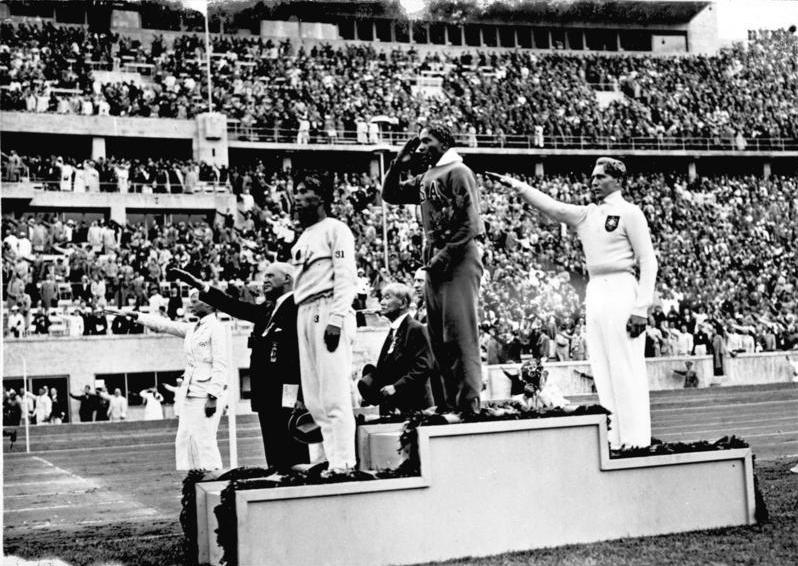
In 2014, Eric Brown, British fighter pilot and test pilot, aged 17 in 1936 and later becoming the Fleet Air Arm's most decorated pilot, stated in a BBC documentary: "I actually witnessed Hitler shaking hands with Jesse Owens and congratulating him on what he had achieved". Additionally, an article in The Baltimore Sun in August 1936 reported that Hitler sent Owens a commemorative inscribed cabinet photograph of himself. Later, on October 15, 1936, Owens repeated this claim when he addressed an audience of African Americans at a Republican rally in Kansas City, remarking: "Hitler didn't snub me—it was our president who snubbed me. The president didn't even send me a telegram."
Owens's success at the games caused consternation for Hitler, who was using them to show the world a resurgent Nazi Germany. He and other government officials had hoped that German athletes would dominate the games. Nazi minister Albert Speer wrote that Hitler "was highly annoyed by the series of triumphs by the marvelous colored American runner, Jesse Owens. People whose antecedents came from the jungle were primitive, Hitler said with a shrug; their physiques were stronger than those of civilized whites and hence should be excluded from future games."
In Germany, Owens had been allowed to travel with and stay in the same hotels as whites, at a time when African Americans in many parts of the United States had to stay in segregated hotels that accommodated only blacks. When Owens returned to the United States, he was greeted in New York City by Mayor Fiorello La Guardia. During a Manhattan ticker-tape parade in his honor along Broadway's Canyon of Heroes, someone handed Owens a paper bag. Owens paid it little mind until the parade concluded. When he opened it up, he found that the bag contained $10,000 in cash (). Owens's wife Ruth later said: "And he [Owens] didn't know who was good enough to do a thing like that. And with all the excitement around, he didn't pick it up right away. He didn't pick it up until he got ready to get out of the car".
After the parade, Owens was not permitted to enter through the main doors of the Waldorf Astoria New York and instead forced to travel up to the reception honoring him in a freight elevator. President Franklin D. Roosevelt (FDR) never invited Jesse Owens to the White House following his triumphs at the Olympic Games. When the Democrats bid for his support, Owens rejected those overtures: as a staunch Republican, he endorsed Alf Landon, Roosevelt's Republican opponent in the 1936 presidential race. Owens was employed to do campaign outreach for African American votes for Landon in the 1936 presidential election.
Life after the Olympics
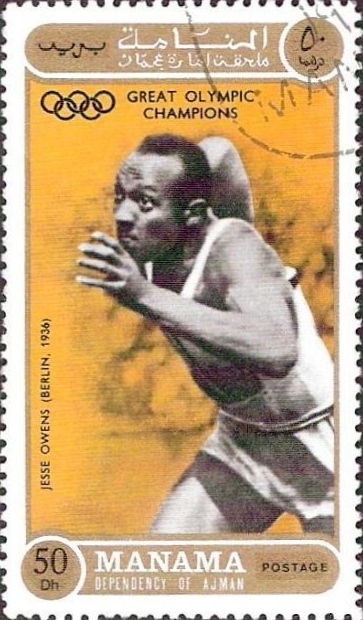
Owens was quoted saying the secret behind his success was, "I let my feet spend as little time on the ground as possible. From the air, fast down, and from the ground, fast up."
After the 1936 Olympics, Avery Brundage organized a grueling European exhibition tour to profit the AAU and USOC, both of which he led. Owens, exhausted but pressured to compete, ran multiple races across Europe with little rest, food, or support. Despite such treatment, Brundage continued booking events across Scandinavia. Owens, drained and frustrated, eventually refused to continue. Brundage retaliated by having Owens permanently suspended from amateur competition which immediately ended his career. Owens was angry and stated that "A fellow desires something for himself." As Ruth Owens later recalled, "That Avery Brundage feller tore a big hole inside Jesse." Owens argued that the racial discrimination he had faced throughout his athletic career, such as not being eligible for scholarships in college and therefore being unable to take classes between training and working to pay his way, meant he had to give up on amateur athletics in pursuit of financial gain elsewhere.
After returning to the United States following his Olympic success, racism back home led to difficulty earning a living despite his international acclaim. Owens struggled to find work and took on menial jobs as a gas station attendant, playground janitor, and manager of a dry cleaning firm and at times resorted to racing against motorbikes, cars, trucks and horses for a cash prize. People say it was degrading for an Olympic champion to run against a horse, but what was I supposed to do? I had four gold medals, but you can't eat four gold medals. Jesse Owens had broken racial barriers and done things that no other man had done before him. Yet after he returned home from the Olympic Games, he was not greeted with the glory and praise that other White Olympians had received. Owens stated, "No one had offered me a job" and "I had jumped farther and run faster than any man ever had before, and it left me with next to nothing." Jesse wasn't being treated like an Olympic gold medalist but instead, just like any other African American at that time. Another quote said "So I sold myself into a new kind of slavery. I was no longer a proud man who had won four Olympic gold medals. I was a spectacle, a freak who made his living by competing—dishonestly—against dumb animals." Despite his athletic triumphs, he was not spared from poverty and was forced to take on degrading work just to afford basic necessities.
Owens bridged the gap between racial disenfranchisement and opportunity. His Olympic medals showed the Jim Crow South and the world what was possible when African Americans were given a fair chance. Though many resisted racial integration, Owens served as a key figure for the beginning building blocks of the civil rights movement.
Owens was banned from attending amateur events to enhance his visibility, and soon discovered that commercial opportunities had almost completely dried up. In 1937, he briefly toured with a twelve-piece jazz band under contract with Consolidated Artists but found it unfulfilling. He also made appearances at baseball games and other events.
Owens was involved politically and lent his support to the Republican Party and Alf Landon in the 1936 United States Presidential Election, saying that Adolf Hitler congratulated him but that he was snubbed by President Franklin Roosevelt after winning a gold medal. In 1942, Willis Ward—a friend and former competitor from the University of Michigan—who was then working at Ford Motor Company as Assistant Personnel Director, invited Owens to Detroit. Ward worked for the Ford Motor Company's "ad hoc civil rights division, serving as the liaison between black and white workers" and was an advocate for African American employees in the personnel department. Owens wound up replacing him, and remained with Ford until 1946. In the late 1940s, Owens moved his family to Chicago and opened his own public relations agency.
In 1946, Owens collaborated with Abe Saperstein to establish the West Coast Negro Baseball League, where he served as Vice-President and owned the Portland (Oregon) Rosebuds franchise in Oregon. He toured with the Rosebuds, sometimes entertaining the audience in between doubleheader games by competing in races against horses. The WCBA disbanded after only two months.
Owens helped promote the exploitation film Mom and Dad in African American neighborhoods. He tried to make a living as a sports promoter, essentially an entertainer. He would give local sprinters a 10- or 20-yard start and still beat them in the 100-yd (91-m) dash. He also challenged and defeated racehorses; as he revealed later, the trick was to race a high-strung Thoroughbred that would be frightened by the starter's shotgun and give him a bad jump. On the lack of opportunities, Owens added, "There was no television, no big advertising, no endorsements then. Not for a black man, anyway."
He traveled to Rome for the 1960 Summer Olympics, where he met the 1960 100 meters champion Armin Hary of Germany, who had defeated American Dave Sime in a photo finish.
During spring training in 1965, Owens was hired by the New York Mets as a running instructor.
Owens ran a dry cleaning business and worked as a gas station attendant to earn a living, but he eventually filed for bankruptcy. In 1966, he was successfully prosecuted for tax evasion. At rock bottom, he was aided in beginning his rehabilitation. Republican President Dwight D. Eisenhower enlisted Owens as a goodwill ambassador in 1955 and sent the world-renowned track star to India, the Philippines, and Malaya to promote physical exercise as well as tout the cause of American freedom and economic opportunity in the developing world. He would continue his goodwill tours in the 1960s and 1970s. Although he lost his patronage job with the Illinois Youth Commission in 1960, Owens continued his product endorsement work for such corporations as Quaker Oats, Sears and Roebuck, and Johnson & Johnson. Owens traveled the world and spoke to companies such as the Ford Motor Company and stakeholders such as the United States Olympic Committee. In 1972, he and his wife retired to Arizona.
Owens initially refused to support the black power salute by African-American sprinters Tommie Smith and John Carlos at the 1968 Summer Olympics. He told them:
The black fist is a meaningless symbol. When you open it, you have nothing but fingers—weak, empty fingers. The only time the black fist has significance is when there's money inside. There's where the power lies.
Four years later in his 1972 book I Have Changed, he revised his opinion:
I realized now that militancy in the best sense of the word was the only answer where the black man was concerned, that any black man who wasn't a militant in 1970 was either blind or a coward.
Owens traveled to Munich for the 1972 Summer Olympics as a special guest of the West German government, meeting West German Chancellor Willy Brandt and former boxer Max Schmeling.
From 1974 to 1977, Owens served on the Boys Town Board of Directors, frequently meeting with students to share his life experiences and the challenges he overcame.
A few months before his death, Owens had unsuccessfully tried to convince President Jimmy Carter to withdraw his demand that the United States boycott the 1980 Moscow Olympics in protest of the Soviet invasion of Afghanistan. He argued that the Olympic ideal was supposed to be observed as a time-out from war and that it was above politics.
Death
_at_Oak_Woods_Cemetery,_Chicago_1.jpg)
Owens was a pack-a-day cigarette smoker for 35 years, starting at age 32. Beginning in December 1979, he was hospitalized on and off with an extremely aggressive and drug-resistant type of lung cancer. He died of the disease at age 66 in Tucson, Arizona, on March 31, 1980, with his wife and other family members at his bedside. He was buried next to the Lake of Memories at Oak Woods Cemetery in Chicago, near where his children and extended family still lived. The grave is inscribed:
President Jimmy Carter issued a tribute to Owens, stating: "Perhaps no athlete better symbolized the human struggle against tyranny, poverty and racial bigotry."
Legacy
.jpg)
Owens is widely considered one of the greatest athletes in the history of track and field. Over the course of his career, he earned nine Big Ten titles, eight NCAA titles, and six USA Track & Field titles. His international legacy was cemented at the Olympics, where he won gold in all four events he entered—each in Olympic record time–delivering a powerful rebuttal to Adolf Hitler's ideology of Aryan supremacy and dealt a symbolic blow to the Nazi regime's racist propaganda. Several of his world records endured for decades, including his long jump record, which lasted 25 years, and his 100-meter dash record, which stood for 20.
Following his athletic career, Owens experienced difficulties securing financial stability, a circumstance attributed in part to limited opportunities available to African American athletes during that period. Although he was celebrated for his Olympic accomplishments, he was not invited to the White House or formally recognized by the U.S. government at the time. Later in life, his contributions to sport and society were acknowledged through various honors, including the Presidential Medal of Freedom in 1976 and the Congressional Gold Medal posthumously in 1990.
"Giants like Jesse Owens show us why politics will never defeat the Olympic spirit. His character, his achievements have continued to inspire Americans as they did the whole world in 1936." — Gerald Ford
Owens has been honored with schools, streets, and athletic facilities named after him—including Jesse Owens Memorial Stadium—and his life has inspired documentaries, books, and the biopic Race. Notably, the documentary Olympic Pride, American Prejudice also highlights his story as part of a broader examination of the 18 Black American athletes who competed in the 1936 Berlin Olympics. He is also a member of several halls of fame, including the U.S. Olympic and National Track and Field Hall of Fame.
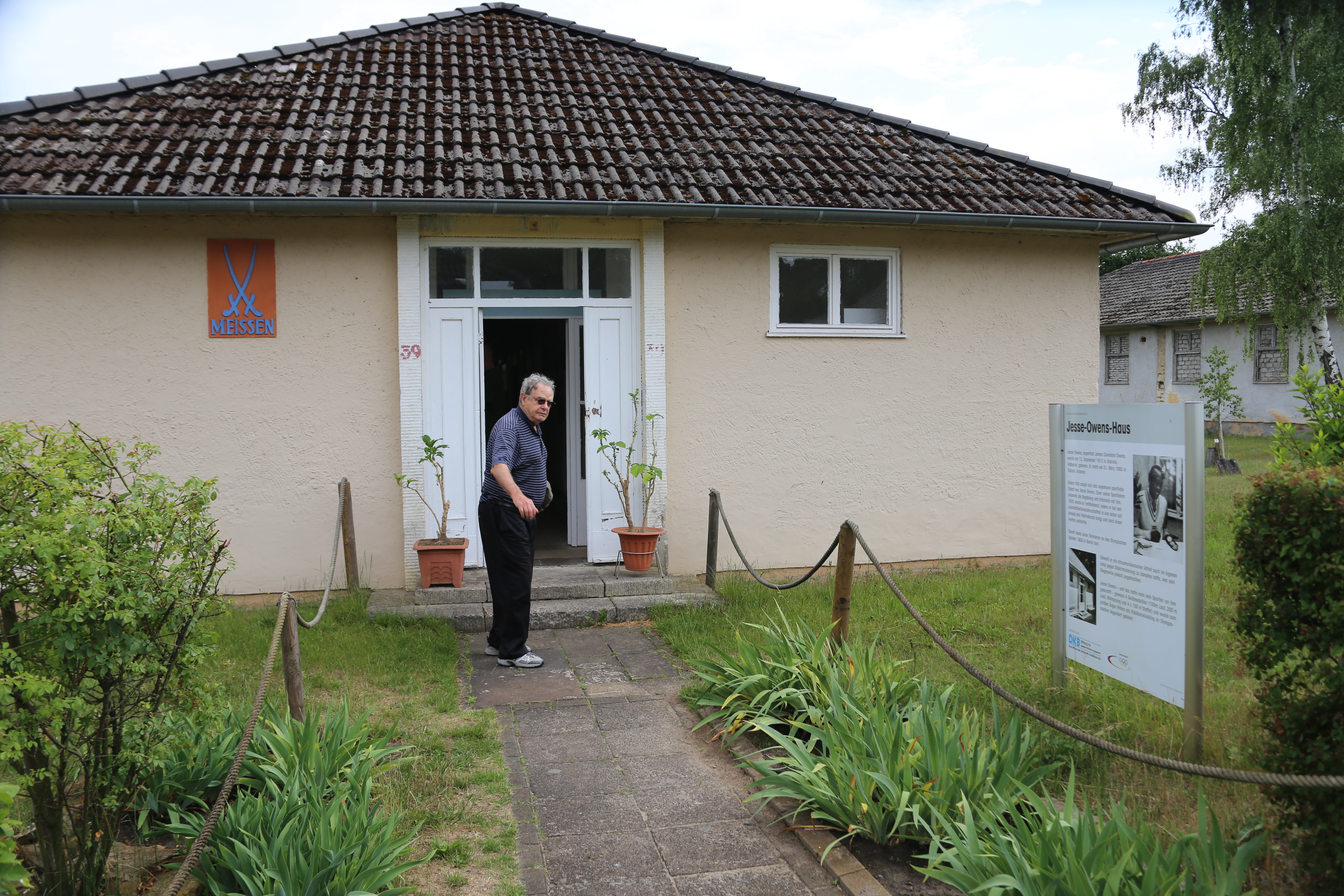
The dormitory that Owens occupied during the Berlin Olympics has been fully restored into a living museum, with pictures of his accomplishments at the games, and a letter (intercepted by the Gestapo) from a fan urging him not to shake hands with Hitler.
Athletic achievements
Sources:
Fairmount Junior High School{{efn|He set [[Middle school|junior high school]] records in the [[100 metres]] in 10.6 seconds, the 75-yard dash in 7.4 seconds, the [[200 metres|220-yard dash]] in 21.4 seconds, the [[high jump]] at 6 feet flat, and the [[long jump]] with 22 feet 11¾ inches.}}
Annual Cleveland Athletic Club Indoor Meet at Cleveland Public Hall
- 3× High jump champion (1928–1930)
- 40-yard low hurdles champion (1929)
- 40-yard dash champion (1929)
East Technical High School{{efn|In his [[Secondary school|high school]] career, Owens finished first in 75 of the 79 competitions he entered. He established a world record in the [[50 metres|50-yard dash]] and his 9.4 second [[100-yard dash]] equaled the world record and set a national high school record that stood until 1967. He also set national high school records in the [[200 metres|220-yard dash]] at 20.7 seconds, which lasted 25 years, and the [[long jump]] at 24 feet 11¼ inches, which stood for 16 years.{{Cite web |title=1963 High School Track and Field Annual |url=https://www.lynbrooksports.prepcaltrack.com/ATHLETICS/CTRN/HS-T+F-Annual_1963.pdf |access-date=2025-05-21 |website=PrepCalTrack.com}}}}
Mansfield Interscholastic Relays
- 2× Long jump champion (1932, 1933)
- 100-yard dash champion (1933 tied H.S. record)
- 220-yard dash champion (1933)
- 4 × 220 yard relay champion (1933) Intraschool Meet in Cleveland (June 3, 1933)
- 100 metres champion
- 200 metres champion
- Long jump champion (H.S. record)
- 4 × 220 yard relay champion OHSAA State Championships
- 2× State Champions – East Technical HS (1932, 1933)
- 3× Long jump champion (1931–1933 H.S. record)
- 2× 100-yard dash champion (1932, 1933)
- 2× 220-yard dash champion (1932, 1933 H.S. record)
- 2× 4 × 220-yard relay champion (1932, 1933) National High School Championships(June 17, 1933)
- National Champions – East Technical HS
- 100-yard dash champion (tied )
- 220-yard dash champion (H.S. record)
- Long jump champion Ohio State Fair (August 31, 1933)
- 100-yard dash champion
College – Ohio State University{{efn|Owens competed in and won all 42 events in 1936.}}
West Virginia Indoor Relays (February 10, 1934)
- 60 metres champion (tied ) Freshman Dual Meet vs. Indiana (February 20, 1934)
- 60-yard dash champion
- Long jump champion Freshman Dual Meet vs. Michigan (February 26, 1934)
- 60-yard dash champion (tied )
- Long jump champion Freshman Dual Meet vs. Chicago (March 3, 1934)
- 60-yard dash champion
- Long jump champion AAU Meet in Cleveland (March 24, 1934)
- 50-yard dash champion (tied ) City of Cincinnati AAU Indoor Meet (March 31, 1934)
- 50-yard dash champion (tied )
- Long jump champion Freshman Dual Meet vs. Purdue (May 4, 1934)
- 100-yard dash champion
- 220-yard dash champion
- Long jump champion Freshman Dual Meet vs. Michigan (May 11, 1934)
- 100-yard dash champion
- 220-yard dash champion
- Long jump champion Annual Intramural Meet (May 22, 1934)
- 100-yard dash champion
- 220-yard dash champion
- Long jump champion Big Ten Freshman Championships (May 26, 1934)
- 100-yard dash champion
- 220-yard dash champion
- Long jump champion Millrose Games (February 2, 1935)
- 60-yard dash champion Dual Meet vs. Indiana (February 9, 1935)
- 60-yard dash champion
- Long jump champion Dual Meet vs. Illinois (February 15, 1935)
- 60-yard dash champion
- 70-yard high hurdles champion
- 75-yard low hurdles champion
- Long jump champion Dual Meet vs. Michigan (March 2, 1935)
- 65-yard low hurdles champion St. Louis Relays (April 5, 1935)
- 50-yard dash champion (tied ) Drake Relays (April 26, 1935)
- 100-yard dash champion
- Long jump champion () Dual Meet vs. Notre Dame (May 4, 1935)
- 100-yard dash champion
- 220-yard dash champion
- Long jump champion Dual Meet vs. Michigan (May 11, 1935)
- 100-yard dash champion
- 220-yard dash champion
- 220-yard low hurdles champion
- Long jump champion Quad Meet vs. Wisconsin, Northwestern and Chicago (May 18, 1935)
- 100-yard dash champion (tied )
- 220-yard dash champion
- 220-yard low hurdles champion ()
- Long jump champion Dual Meet vs. USC (June 15, 1935)
- 100-yard dash champion
- 220-yard dash champion
- 220-yard low hurdles champion
- Long jump champion Butler Indoor Relays
- 2× 60-yard dash champion (1935 , 1936)
- 2× 60-yard low hurdles champion (1935, 1936)
- Long jump champion (1936) Penn Relays (April 25, 1936)
- 100 metres champion
- Long jump champion
- Sprint medley relay champion Dual Meet vs. Michigan (May 2, 1936)
- 100-yard dash champion (tied )
- 220-yard dash champion
- 220-yard low hurdles champion
- Long jump champion Tri-Meet vs. Notre Dame and Michigan State (May 9, 1936)
- 100-yard dash champion
- 220-yard dash champion
- 220-yard low hurdles champion
- Long jump champion Dual Meet vs. Wisconsin (May 16, 1936)
- 100-yard dash champion ()
- 220-yard dash champion
- 220-yard low hurdles champion
- Long jump champion Dual Meet vs. USC (June 13, 1936)
- 100-yard dash champion (tied )
- 220-yard dash champion
- 220-yard low hurdles champion
- Long jump champion Central Intercollegiate Conference Championships (1935, 1936)
- Central Intercollegiate Conference Champions – Ohio State University (1935)
- 2× 100-yard dash champion (1935, 1936)
- 2× 220-yard dash champion (1935, 1936)
- 2× Long jump champion (1935, 1936) Big Ten Indoor Championships (March 9, 1935)
- 60-yard dash champion (1935 ) Big Ten Outdoor Championships
- 2× Long jump champion (1935 , 1936)
- 2× 100-yard dash champion (1935 tied , 1936)
- 2× 220-yard dash champion (1935 , 1936)
- 2× 220-yard low hurdles champion (1935 , 1936) NCAA Championships
- 2× Long jump champion (1935, 1936)
- 100-yard dash champion (1935)
- 100 metres champion (1936 )
- 2× 220-yard low hurdles champion (1935, 1936)
- 220-yard dash champion (1935)
- 200 metres champion (1936)
USA Track and Field Championships
USA Outdoor Track and Field Championships
- 100 metres silver medalist (1934)
- 2× 100 metres bronze medalist (1933, 1935)
- Long jump silver medalist (1935)
- 100 metres gold medalist (1936)
- 3× Long jump gold medalist (1933, 1934, 1936) USA Indoor Track and Field Championships
- 60 metres silver medalist (1935 , semi-final heat)
- 2× Long jump gold medalist (1934 , 1935 )
1936 Olympics
Olympic Trials
- 100 metres champion
- 200 metres champion ()
- Long jump champion Olympics
- 100 metres gold medalist ()
- 200 metres gold medalist ()
- Long jump gold medalist ()
- 4 × 100 metres relay gold medalist ()
World records
Sources:
50-yard dash
- 1933: 5.2 seconds
- February 19, 1939: Broken by Henry Norwood Ewell in 5.1 seconds 60-yard dash (indoor)
- March 23, 1935: 6.09 seconds
- February 28, 1959: Broken by Herb Carper in 6 seconds flat 60 metres dash (indoor)
- February 23, 1935: 6.6 seconds
- March 12, 1955: Broken by Heinz Fütterer in 6.5 seconds 100-yard dash
- June 17, 1933: Tied in 9.4 seconds
- May 15, 1948: Broken by Melvin E. Patton in 9.3 seconds 100 metres dash
- June 20, 1936: 10.2 seconds
- August 3, 1956: Broken by Willie Williams in 10.1 seconds 220-yard dash
- May 25, 1935: 20.3 seconds
- May 7, 1949: Broken by Melvin E. Patton in 20.2 seconds 200 metres dash (curve)
- August 5, 1936: 20.7 seconds
- May 26, 1951: Broken by Andy Stanfield in 20.6 seconds 220-yard low hurdles
- May 25, 1935: 22.6 seconds
- June 8, 1940: Broken by Fred Wolcott in 22.5 seconds Long jump
- May 25, 1935: 26 feet 8¼ inches or 8.13 metres
- August 12, 1960: Broken by Ralph Boston with a leap of 26 feet 11¼ inches or 8.21 metres Long jump (indoor)
- February 23, 1935: 25 feet 9 inches or 7.85 metres
- February 20, 1960: Broken by Irvin Roberson with a leap of 25 feet 9.5 inches or 7.86 metres 4 × 100 metres relay
- August 9, 1936: 39.8 seconds along with Ralph Metcalfe, Foy Draper, and Frank Wykoff
- December 1, 1956: Broken by Ira Murchison, Leamon King, Thane Baker, and Bobby Morrow in 39.5 seconds
Non-standard world records
Source:
90-yard dash
- Set by Charles Paddock in 1921 with a time of 8.8 seconds
- Broken by Jesse Owens on May 4, 1934 with a time of 8.6 seconds 100-yard dash (15-yard head start)
- Set by Frank Wykoff in 1930 with a time of 8.7 seconds
- Broken by Jesse Owens on April 23, 1935 in 8.6 seconds 120-yard dash
- Set by Howard Drew in 1914 with a time of 11.6 seconds
- Broken by Jesse Owens on May 4, 1934 with a time of 11.5 seconds
Awards and honors
Halls of Fame
- Helms Athletic Foundation Hall of Fame – Inaugural Class of 1949
- Drake Relays Hall of Fame – Inaugural Class of 1959
- Alabama Sports Hall of Fame – Class of 1970
- OATCCC Hall of Fame – Class of 1970
- National Track and Field Hall of Fame – Inaugural Class of 1974
- Greater Cleveland Sports Hall of Fame – Inaugural Class of 1976
- Ohio State Athletics Hall of Fame – Inaugural Class of 1977
- NSMA Hall of Fame – Class of 1978
- U.S. Olympic Hall of Fame – Inaugural Class of 1983
- National High School Hall of Fame – Class of 1983
- Arizona Runner's Hall of Fame – Class of 2012
- National High School Track and Field Hall of Fame – Inaugural Class of 2018
- Collegiate Athlete Hall of Fame – Inaugural Class of 2022
- Ohio Sports Hall of Fame – Inaugural Class of 2024
- East Technical High School Hall of Fame – Honorary Inductee
Awards and tributes
- 1930: The city's athletic council voted him the most outstanding junior high athlete.
- 1936: The Associated Press named Owens the most outstanding athlete of the Olympic Trials.
- 1936: AP Athlete of the Year (Male)
- 1936: Four English oak saplings, one for each Olympic gold medal, from the German Olympic Committee, planted. One of the trees was planted at the University of Southern California, one at Rhodes High School in Cleveland, where he trained, and one is rumored to be on the Ohio State University campus but has yet to be identified. The fourth tree was at the home of Jesse Owens's mother but was removed when the house was demolished.
- 1950: Voted the greatest black athlete of all time and the greatest track and field athlete for the first half of the century in a poll conducted by the Associated Press.
- 1950: At the 50th anniversary of the Big Ten Championships, Owens was unanimously named the top track athlete of the half-century and the only athlete selected for the all-star team in more than one individual event—earning spots in the 100-yard dash, 220-yard dash, 220-yard low hurdles, and long jump.
- 1955: President Dwight D. Eisenhower honored Owens by naming him an "Ambassador of Sports".
- October 18, 1955: Track and Field magazine names Owens all-time Track and Field athlete.
- 1956: Owens was elected an honorary member of OSU's chapter of the Senior honor society Sphinx.
- 1959: Owens returned to Des Moines and was celebrated at the Drake Relays as the most outstanding athlete to compete in the first 50 years of the competition.
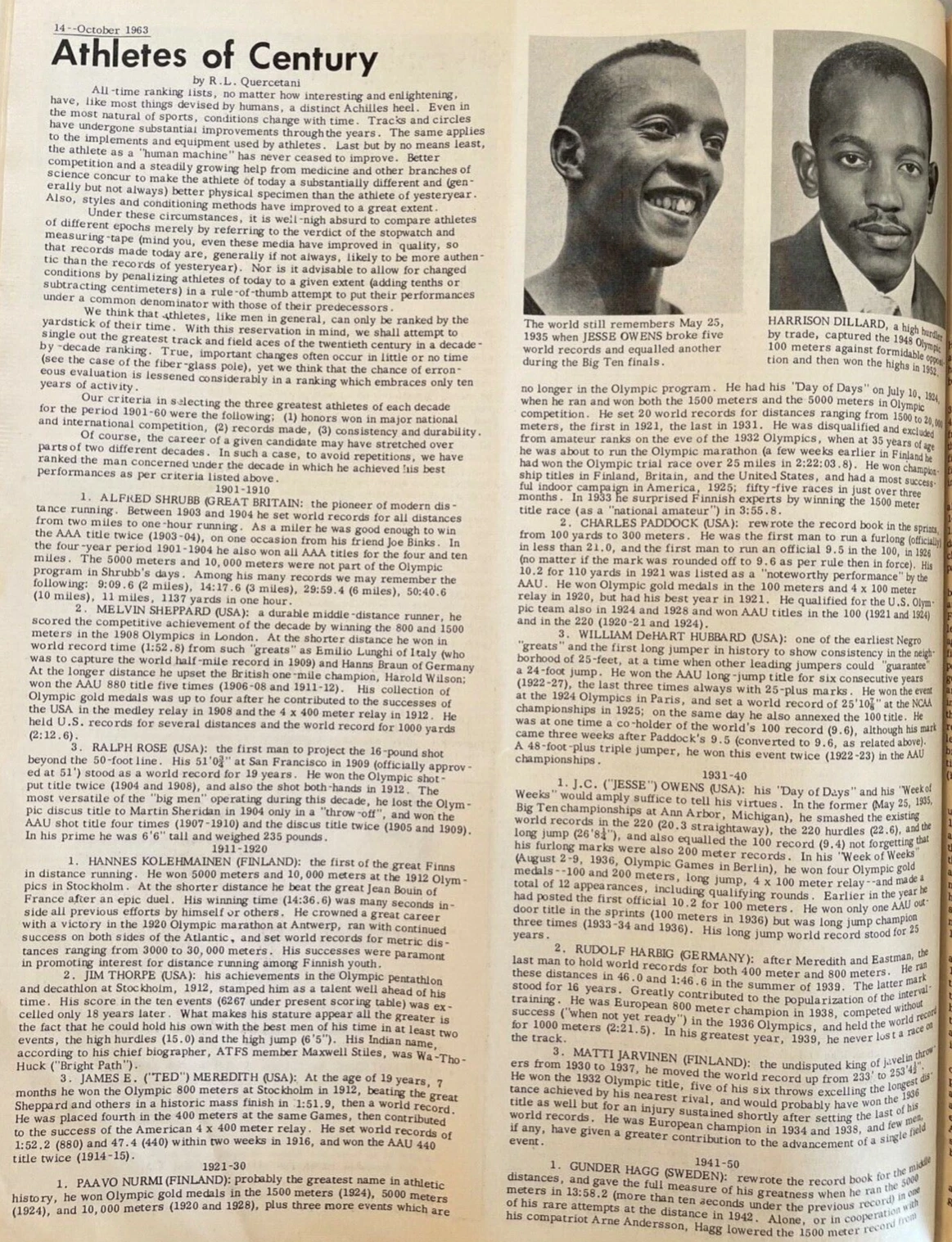
- October 1963: Track & Field News named Owens the athlete of the decade from 1931–1940.
- 1965: The Ohio State Alumni Association presented Owens with the Alumni Citizenship Award.
- 1970: Receives OSU Centennial Award.
- 1971: The Ivory Coast named the street on which the U.S. embassy is located "Rue Jesse Owens".
- 1972: The Ohio State University awarded Owens an honorary doctorate of athletic arts.
- 1974: The NCAA presented Owens with the Theodore Roosevelt Award.
- 1976: Awarded Presidential Medal of Freedom by President Gerald Ford.
- 1976: Recipient of the Silver Olympic Order for his quadruple victory in the 1936 games and his defense of sport and the ethics of sport.
- 1978: Receives the Roy Wilkins Award from the NAACP.
- 1979: Awarded Living Legend Award by President Jimmy Carter.
- 1979: The Spirit of America Festival honored Owens with the Audie Murphy Patriotism Award.
- 1980: Asteroid newly discovered by Antonín Mrkos at the Kleť Observatory named 6758 Jesseowens.
- 1980: Jesse Owens Academy in Chicago was named in his honor, but it closed in 2013 and merged with Gompers Elementary. Following public outcry, the merged school was once again named after him.
- 1980: The Chicago Park District renamed Stony Island Park, Jesse Owens Park in his honor.
- 1980: Jesse Owens Park, in Tucson, Arizona, is a center of local youth athletics there.
- 1980: The Ohio Stadium track and University Recreation Centers were named after Owens.
- 1981: USA Track and Field created the Jesse Owens Award which is given annually to the country's top track and field athlete.
- 1981: The International Athletic Association has annually presented the Jesse Owens International Trophy, with the exception of a ten-year break from 2004 to 2014.
- 1982: In Cleveland, Ohio, a statue of Owens in his Ohio State track suit was installed at Fort Huntington Park, west of the old Courthouse.
- 1982: The Big Ten Athlete of the Year award is named in his honor.
- 1983: Track and field stadium at Cal State Los Angeles is named in Owens's honor.
- 1984: Street south of the Olympic Stadium in Berlin renamed Jesse-Owens-Allee
- 1984: For his contribution to sports in Los Angeles, Owens was honored with a Los Angeles Memorial Coliseum "Court of Honor" plaque by the Coliseum commissioners.
- 1984: Secondary school Jesse Owens Realschule/Oberschule in Lichtenberg, Berlin named for Owens.
- 1987: NYC Parks named the playground at Stuyvesant and Lafayette Avenues the Jesse Owens Playground.
- March 28, 1990: Posthumously presented a Congressional Gold Medal by President George H. W. Bush.
- 1990 and 1998: Two U.S. postage stamps have been issued to honor Owens, one in each year.
- 1996: Owens's hometown of Oakville, Alabama, dedicated the Jesse Owens Memorial Park and Museum along with a statue in his honor at the same time that the Olympic torch came through the community, 60 years after his Olympic wins. An article in the Wall Street Journal of June 7, 1996, covered the event and included this inscription written by poet Charles Ghigna that appears on a bronze plaque at the park:
May this light shine forever as a symbol to all who run for the freedom of sport, for the spirit of humanity, for the memory of Jesse Owens.}}
- 1999: Ranked the sixth greatest North American athlete of the twentieth century and the highest-ranked in his sport by ESPN.
- 1999: On the six-man shortlist for the BBC's Sports Personality of the Century.
- 2001: Ohio State University dedicated Jesse Owens Memorial Stadium for track and field events. A sculpture honoring Owens occupies a place of honor in the esplanade leading to the rotunda entrance to Ohio Stadium. Owens competed for the Buckeyes on the track surrounding the football field that existed prior to the 2001 expansion of Ohio Stadium. The campus also houses three recreational centers for students and staff named in his honor.
- 2002: Scholar Molefi Kete Asante listed Owens on his list of 100 Greatest African Americans.
- 2005: Posthumously receives the IAAF Golden Order of Merit.
- 2009: At the 2009 World Athletic Championships in Berlin, all members of the United States Track and Field team wore badges with "JO" on them to commemorate Owens's victories in the same stadium 73 years before.
- 2009: The Drake Relays honored Owens as the Athlete of the Century.
- 2010: Ohio Historical Society proposed Owens as a finalist from a statewide vote for inclusion in Statuary Hall at the United States Capitol.
- November 15, 2010: The city of Cleveland renamed East Roadway, between Rockwell and Superior avenues in Public Square, Jesse Owens Way.
- 2011: Ohio State University paid tribute to Owens by unveiling the Jesse Owens Memorial Statue outside the Jesse Owens Memorial Stadium.
- 2011: In the Big Ten Icons countdown of the Top 50 Athletes on the Big Ten Network, Owens was ranked the third greatest athlete in Big Ten history.
- 2012: 80,000 individual pixels in the audience seating area were used as a giant video screen to show footage of Owens running around the stadium in the London 2012 Summer Olympics opening ceremony, just after the Olympic cauldron had been lit.
- 2012: The Jesse Owens Room, named in his honor at the NCAA campus in Indianapolis.
- 2016: A portion of Highway 36 beginning at I-65 Exit 328 and ending at the Lawrence County line just west of Danville was renamed Jesse Owens Parkway.
- 2016: The Jesse Owens Olympic Spirit Award is presented annually by the U.S. Olympic Committee to recognize those who have served as an inspiration in society.
- 2017: Inaugural recipient of the AAU Gussie Crawford Lifetime Achievement Award.
- July 2018: Ohio governor John Kasich dedicated the 75th state park Jesse Owens State Park. It is located on AEP reclaimed mining land south of Zanesville, OH.
- 2021: A horticulturally propagated tree from the original Jesse Owens Olympic Oak was planted by the Rockefeller Park Lagoon. In 2022, another was planted beside the original tree at James Ford Rhodes High School.
- 2023: The team at University Circle Inc. dedicated the Jesse Owens Olympic Oak Plaza in Rockefeller Park.
- 2024: Posthumously received the Olympians for Life award by World Olympians Association.
- 2024: Named the greatest U.S. Summer Olympic athlete of all time by The Sporting News.
- 2024: A plaque in honor of Owens' track and field accomplishments on the Day of days is dedicated outside the University of Michigan's Ferry Field.
- 2024: The former home of Owens was unanimously approved to become a Cleveland landmark.
- Phoenix, Arizona named the Jesse Owens Medical Centre in his honor, as well as Jesse Owens Parkway.
- LA County Parks and Recreation renamed Sportsman Park to Jesse Owens Park in his honor.
- P.S. 26 in Brooklyn, New York is named the Jesse Owens School.
Literature
- 2006: The Book Thief by Markus Zusak is released, in which a character named Rudy Steiner idolizes Owens.
- 2025: The book Jesse Owens by was awarded the Sportilivre Prize by the Voies Civiles think tank.
The Jesse Owens Rising Star Award
Beginning in 2024, a collaboration among the Owens family, the Jesse Owens Foundation, and the Wanda Diamond League will recognize two exceptional emerging top-performing male and female athletes, aged 23 or under.
Each winner will receive a bronze statuette of Owens designed by Belgian sculptor Jan Desmarets. Two oak trees will also be planted in the host city in honor of the two winners.
The inaugural awards ceremony was held in Brussels in September 2024, honoring 2023 World Championship silver medalist Diribe Welteji as the top female performer and 2024 Olympic gold medalist Letsile Tebogo as the top male performer.
Filmography
| Year | Title | Ref. |
|---|---|---|
| 1936 | Berlin 1936: Games of the XI Olympiad | |
| 1938 | Olympia | |
| 1948 | Kings of the Olympics | |
| 1948 | Olympic Cavalcade | |
| 1964 | Valentine's Day: All Through the Night | |
| 1966 | Jesse Owens Returns to Berlin | |
| 1984 | The Jesse Owens Story | |
| 2012 | Jesse Owens (American Experience) | |
| 2016 | Race | |
| 2016 | Olympic Pride, American Prejudice | |
| 2021 | Capturing Black Lightning: Jesse Owens | |
| 2022 | Olympic Oaks: Continuing Jesse Owens' Legacy | |
| 2024 | Triumph: Jesse Owens and the Berlin Olympics |
Other
- 2017: In the Jordan Peele-directed film Get Out, Roman Armitage, the villainous patriarch, lost the qualification round for the 1936 Olympics to Owens, instigating his neurosurgical research and theft of young black men via brain transplant.
- 2019: In Jojo Rabbit, directed by Taika Waititi, an incarnation of Adolf Hitler humorously refers to the character Elsa as "a little female Jewish Jesse Owens".
- 2023: In The Boys in the Boat, Jyuddah Jaymes portrays Owens in a cameo as the University of Washington Eight rowing team enters the stadium with the United States Olympic team.
Notes
References
References
- (2007). "Jesse Owens: A Biography". [[Greenwood Publishing Group]].
- (April 5, 2017). "East Technical High School". Cleveland Metro Schools.
- "The World's Greatest Track Athlete by Larry Snyder, Page 25 (46 of 392)".
- (2020). "Treasure Trove: A Collection of ICSE Poems and Short Stories". Evergreen Publications Ltd..
- "Track and Field Greatest Athletes of All Time".
- (2024-07-20). "Ten greatest Olympians of all time, including Bolt and 'Athlete of the Century'".
- "Famous Track Athletes".
- Litsky, Frank. (1980). "Jesse Owens Dies of Cancer at 66". The New York Times.
- (May 24, 2010). "Greatest 45 minutes ever in sports".
- McGrath, Dan. (2011-02-20). "Big Ten Icons: Jesse Owens".
- Schwartz, Larry. (2000). "Owens Pierced a Myth". ESPN Internet Ventures.
- "Gatlin and Felix are recipients of the Jesse Owens Award".
- "ESPN.com - CLASSIC - SportsCentury biography of Jesse Owens".
- "On this day in history, August 9, 1936, Jesse Owens wins fourth gold at Berlin Olympics {{!}} Fox News".
- "ESPN.com - ESPNINC/PRESSRELEASES - SportsCentury Greatest Athletes".
- Baker, William J. ''Jesse Owens – An American Life'', p. 19.
- "?".
- "The Owens Family".
- "Jesse Owens". Whitehouse.gov.
- "Jesse Owens: Track & Field Legend: Biography".
- "Nike Indoor Nationals - News - How It Came Together - The National High School Track and Field Hall of Fame".
- "Jesse Owens – Willingboro".
- (2019-01-16). "Courage – Jesse Owens".
- White, Benedict. (May 18, 2016). "How Jesse Owens went from Alabama to Olympic glory". The Telegraph.
- (May 25, 1985). "The Greatest Day in Track & Field: 50 Years Ago, Jesse Owens Had an Afternoon Like No One Else". Los Angeles Times.
- Benagh, Jim. (1985-05-20). "REMEMBERING JESS OWENS'S OTHER BID DAY". The New York Times.
- (1935-05-24). "Jesse Owens and the greatest 45 minutes in sport - Olympic News". Olympics.com.
- Broadbent, Rick. (2020-05-25). "The day Jesse Owens set five world records in 45 minutes - and did it all with a bad back".
- Rose, Lacey. (November 18, 2005). "The Single Greatest Athletic Achievement". Forbes.com.
- Features, Amy Meaney in. (2016-08-09). "Jesse Owens at the 1934 Amateur Athletic Union Track and Field Championships".
- My Footage. (2011-03-31). "1936 Olympics. Track and Field Jesse Owens National AAU Championships".
- [https://www.loc.gov/exhibits/naacp/the-great-depression.html "NAACP: A Century in the Fight for Freedom"]. NAACP Collection, Manuscript Division, Library of Congress (082.00.00),
- [https://www.pbs.org/wgbh/americanexperience/features/introduction/owens/ "American Experience, Jesse Owens"] {{Webarchive. link. (February 10, 2017 . PBS)
- (November 8, 2005). "How Adidas and Puma were born". In.rediff.com.
- Olympic. (December 9, 2015). "Jesse Owens at Berlin 1936 – Epic Olympic Moments".
- Goldman, Tom. (August 14, 2009). "Was Jesse Owens' 1936 Long-Jump Story A Myth?". NPR.
- "Controversy at the 1936 Olympics".
- [https://www.pbs.org/wgbh/americanexperience/features/introduction/owens/ PBS: American Experience. Jessie Owens.] {{Webarchive. link. (February 10, 2017 (Accessed: May 2, 2012))
- 978-1-84854-749-0
- Rick Shenkman, [http://hnn.us/articles/571.html ''Adolf Hitler, Jesse Owens and the Olympics Myth of 1936''] February 13, 2002, from History News Network (article excerpted from Rick Shenkman's ''Legends, Lies and Cherished Myths of American History'', William Morrow & Co, 1988 {{ISBN. 0-688-06580-5)
- "Official Report Volume 2, The XIth Olympic Games, Berlin, Organisation Committee for the 11th Olympiad, Berlin: Wilhelm Limpert, 1936, pp. 617–618".
- Organisation Committee for the 11th Olympiad. (1936). "Official Report Volume 3, The XIth Olympic Games, Berlin, 1936". Wilhelm Limpert.
- (August 3, 1936). "Negroes Set New Records in Olympics". Daily Worker.
- Organisation Committee for the 11th Olympiad. (1936). "Official Report Volume 2, The XIth Olympic Games Berlin, 1936". Wilhelm Limpert.
- (August 24, 1936). "Owens Arrives With Kind Words For All Officials". The Pittsburgh Press.
- Effrat, Louis. (August 25, 1936). "Owens, Back, Gets Hearty Reception". The New York Times.
- Vann, Robert L.. (August 8, 1936). "Hitler Salutes Jesse Owens [Aug. 4 – (By Cable)]". Houghton Mifflin Co..
- "Paisley University Library Special Collections – Putnam Aeronautical 1997".
- (January 1, 1970). "BBC Two – Britain's Greatest Pilot: The Extraordinary Story of Captain Winkle Brown (at 05:35 of the documentary)". BBC.
- (August 18, 1936). "Owens Weighs His Pro Offers". The Baltimore Sun.
- (October 16, 1936). "'Snub' From Roosevelt". St. Joseph News-Press.
- Schaap, Jeremy. (2007). "Triumph: The Untold Story of Jesse Owens and Hitler's Olympics". Houghton Mifflin Harcourt.
- (October 10, 1936). "Owens Nearly Mobbed as He Speaks Here". The Afro American.
- Bachrach, Susan D.. (2000). "The Nazi Olympics: Berlin 1936". Little, Brown, and Company.
- (August 27, 2011). "Jesse Owens, 1913–1980: He Was Once the Fastest Runner in the World". Voice of America.
- (2009). "Hitler, Nazi Philosophy and Sport".
- (March 20, 2016). "50 stunning Olympic moments No6: Jesse Owens's four gold medals, 1936". The Guardian.
- Filmschätze aus Köln – vom Rhein – Weltfilmerbe. (March 15, 2016). "Berlin 1936 – Olympics – Olympia – Jesse Owens back in New York – confetti parade".
- CriticalPast. (June 16, 2014). "A motorcade carrying Olympic hero Jesse Owens passes crowded New York streets dur ... HD Stock Footage".
- (June 30, 2001). "Ruth Owens; Widow of Legendary Olympian". Los Angeles Times.
- Schwartz, Larry. (2007). "Owens pierced a myth".
- Burton W. Folsom. (2009). "New Deal Or Raw Deal?: How FDR's Economic Legacy Has Damaged America". Simon & Schuster.
- . (September 3, 1936). "Owens Will Talk in Landon Drive". *[[The New York Times]]*.
- (September 4, 1936). "Owens Jumps into Political Ring; Landon for President". [[The McDowell Times]] (Keystone, West Virginia).
- Streissguth, Thomas. (2005). "Jesse Owens". Twenty-First Century Books.
- (2013). "The 20th Century O–Z: Dictionary of World Biography". Routledge.
- Altman, Alex. (August 18, 2009). "Usain Bolt: The World's Fastest Human".
- ThinkExist.com Quotations. "Jesse Owens quotes". Thinkexist.com.
- Riley, Liam. "An Emperor among Professionals". BBC.
- "How did it come to this? {{!}} Sport {{!}} The Observer".
- (2000). "Taboo: Why Black Athletes Dominate Sports and why We are Afraid to Talk about it". PublicAffairs.
- (May 3, 2023). "Jesse Owens {{!}} Biography, Olympics, Medals, & Facts {{!}} Britannica".
- (March 30, 2021). "From horse-racer to speech writer: Jesse Owens' life after the Olympic Games".
- (April 11, 2017). "From horse-racer to speech writer: Jesse Owens' life after the Olympic Games".
- Farley, A. P. (2012). The Bitter Tears of Jesse Owens. ''Berkeley La Raza Law Journal'', ''22'', 231–256.
- Evans, Tyson. (2025-02-16). "Jesse Owens: Defying Racism, Shattering Barriers, and Inspiring Generations".
- Jack Neely, "[http://www.knoxmercury.com/2016/08/10/fastest-bandleader-world/ The Fastest Bandleader in the World]," ''Knoxville Mercury'', August 10, 2016.
- (September 14, 1936). "National Affairs: Owens for Landon".
- Bracken, Haley. "Was Jesse Owens Snubbed by Adolf Hitler at the Berlin Olympics?".
- "Eddie Tolan, Willis Ward, and Jesse Owens at 1935 Big Ten Track Meet at Ferry Field · Willis Ward: More than The Game · Exhibits at the Bentley".
- Post, The Livingston. (January 22, 2017). "Decency, justice and the Michigan-OSU rivalry: The story of Jesse Owens and Gerald Ford".
- "Willis Ward and Jesse Owens, Ford Motor Company, November 23, 1942 – The Henry Ford".
- "Willis Ward and Jesse Owens, Ford Motor Company, November 23, 1942 – The Henry Ford".
- (2005). "West Coast Baseball Association". [[BookRags]].
- Simonich, Milan. (July 12, 2010). "Sun City home to the Negro Leagues for one weekend". [[El Paso Times]].
- (2005). "West Coast Baseball Association". [[BookRags]].
- "Mom and Dad (1945)".
- (March 21, 2016). "US athletics legend Jesse Owens (R) poses and jokes with his f ...".
- "Jesse Owens Was (Briefly) (Really!) a Coach for the Mets – Who2".
- (February 2, 1966). "Jesse Owens Is Fined in Tax Case". The Times-News.
- (February 14, 2008). "Jesse Owens".
- Metcalfe, Jeff. "Track hero Jesse Owens lived his latter years in Phoenix".
- "Jesse Owens: Olympic Legend-quotes".
- "Stock Photo – Aug. 08, 1972 – Jesse Owens at the Olympic games in Munich.: World famous American coloured athlete Jesse Owens. Who won Gold medals in the 1936 Olympic games in berlin is at".
- "Browsing Jesse Owens Collection by Subject 'Munich Olympics'".
- Lynch, Thomas. (2016-02-25). "Achievements of Supporters, Alumni Highlight Boys Town's Black History Month Celebration".
- (April 1, 1980). "Jesse Owens – Obituary". The Washington Post.
- Murry R. Nelson. (2013). "American Sports: A History of Icons, Idols, and Ideas [4 Volumes]: A History of Icons, Idols, and Ideas". ABC-CLIO.
- (April 1, 1980). "Jesse Owens Dies Of Cancer At 66: Hero of the 1936 Berlin Olympics". The New York Times.
- Smith, J. Y.. (April 1, 1980). "Olympic Track Great Jesse Owens Is Dead at 66". The Washington Post.
- Spence, Blaine. "Jesse Owens: One of the Greatest Athletes of All Time".
- Bansal, Puneet. "Jesse Owens, one of the greatest athletes of the last century".
- Museum, Abraham Lincoln Presidential. "Exposing the Hypocrisy of the 1936 Berlin Olympics".
- "BBC World Service - Sportsworld - 10 seconds that defied Adolf Hitler".
- "After 51 years, Owens' longevity record finally falls {{!}} NEWS {{!}} World Athletics".
- Shryack, Lincoln. (February 18, 2016). "Jesse Owens And The 100m World Record Timeline".
- Morse, Ben. (2024-07-04). "Jesse Owens' achievements at 1936 Olympics were 'thumb in the eye' to Adolf Hitler, says US athlete's grandson".
- "1936 Berlin Olympics :: Consider The Source Online".
- (2018-03-25). "Owens' Medal of Freedom auctioned for $128K".
- (2017-01-22). "Decency, justice and the Michigan-OSU rivalry: The story of Jesse Owens and Gerald Ford".
- "Jesse Owens Memorial Stadium {{!}} Columbus, OH 43210".
- "Race (2016) {{!}} Rotten Tomatoes".
- "Olympic Pride, American Prejudice movie review (2016) {{!}} Roger Ebert".
- "Olympic Pride, American Prejudice".
- Jones, Maddie. (2019-07-21). "Jesse Owens {{!}} U.S. Olympic & Paralympic Hall of Fame".
- (2023-01-25). "Jesse Owens' four gold medals at the 1936 Olympic Games in Nazi Berlin mean more than perhaps any others in history.".
- (August 26, 2012). "Hitler's Olympic Village Faces Conservation Battle [video]". Voice of America.
- Ridgwell, Henry. (August 23, 2012). "Hitler's Olympic Village Faces Conservation Battle". Voice of America.
- "The Greatest Day – Page 6".
- Dubelko, Jim. "Jesse Owens - The Cleveland Years".
- "Timeline {{!}} Jesse Owens: A Lasting Legend".
- "Looking Back At The OHSAA's Track & Field Championships".
- "Jesse Owens".
- "Ohio State – Championship History".
- "1963 High School Track and Field Annual".
- "Mansfield Relays".
- "Indianapolis Recorder 10 June 1933 — Owens Breaks Own Prep Track Record".
- "Indianapolis Recorder 27 May 1933 — Run LI'l Boy Run".
- "The Lantern 22 May 1933 — Jesse Owens Sets Records In Track Meet".
- "Jesse Owens ties World record in high school... - RareNewspapers.com".
- "Black Quotidian: June 22, 1933".
- (August 3, 2024). "Remember When: High Schooler Jesse Owens Defeated a Big Ten Champion at the Ohio State Fair".
- "The Lantern 12 February 1934 — Ohio Runners Lose Opener To Hoosiers".
- "The Lantern 21 February 1934 — Frosh Track Men Score Initial Win".
- "The Lantern 27 February 1934 — Wolves Win Meet From Buck Frosh".
- "February 27, 1934 (vol. 44, iss. 105) – Jesse Owens, Ohio Star, Equals World's Record In 60-Yard Dash".
- "The Lantern 6 March 1934 — Ohio Frosh Lose Meet To Chicago".
- "The Lantern 27 March 1934 — Owens Shows Brilliantly in A.A.U. Meet".
- "The Lantern 2 April 1934 — Bucks Obtain Top Honors In A.A.U. Races".
- "The Lantern 7 May 1934 — Jesse Owens Tops 2 World Records".
- "The Lantern 8 May 1934 — Ohio State University Newspaper Archives".
- "The Lantern 16 May 1934 — Owens Stars As Freshmen Beat Wolves".
- "The Lantern 23 May 1934 — Owens Leads Alpha Phis To Track Crown".
- "The Lantern 29 May 1934 — Freshmen Lead In Big Ten Meet".
- "The Lantern 4 February 1935 — Owens Cops 60-Yard Dash in New York".
- "The Lantern 11 February 1935 — Owens Leads Cinder Stars To Initial Win".
- "The Lantern 18 February 1935 — Owens Sets Pace For Win Over Illinois".
- "The Lantern 4 March 1935 — Ward Bests Owens To Lead Michigan In Victory Over Bucks".
- "Hawk Track Team Moves Across River, Page 6".
- "The Lantern 8 April 1935 — Jesse Equals World Mark For 50 Yards".
- Miller, Justin. "A brief history of the Drake Relays".
- "The Lantern 29 April 1935 – Jesse Shatters American Jump Record, Equals Carnival Mark For 100-Yard Dash".
- "Indianapolis Times 27 April 1935 — Jesse Owens of Ohio State Cracks American Record in Broad Jump".
- "Jesse Owens Breaks American Broad Jump Mark at Drake Relays".
- "The Lantern 6 May 1935 – Bucks Score 71-60 Victory Over Irish In Night Contest".
- "The Lantern 13 May 1935 – Maize and Blue Capitalize on Second, Third Places; Owens Scores 4 Triumphs".
- "The Lantern 20 May 1935 – New Record In Low Hurdles Features Performances; Bucks Lead With 69 Points".
- "Indianapolis Recorder 25 May 1935 — Jesse Owens Breaks World Low Hurdle Record".
- "Indianapolis Recorder 22 June 1935 — Owens Takes Four Events on Coast".
- "Indianapolis Recorder 30 March 1935 — Hoosier State Chronicles: Indiana's Digital Historic Newspaper Program".
- (1936-03-22). "OWENS SCORES THRICE IN THE BUTLER RELAYS; Ohio State Star Wins Hurdles, Dash and Broad Jump in Return to College Competition.". The New York Times.
- "The Indianapolis Star Subscription Offers, Specials, and Discounts".
- "The Lantern 27 April 1936 — Scarlet Give Snappy Showing to Win Two Relay Titles at Penn".
- "The Lantern 4 May 1936 — Owens Ties World Mark in Century Winning Four Firsts".
- "The Lantern 11 May 1936 — Bucks Lose Hairline Verdict To Balanced Irish Cinder Outfit".
- "The Lantern 18 May 1936 — Owens Shows Form as Badgers Defeat Bucks at Wisconsin".
- "Track —— 1936, Page 45 (67)".
- "Indianapolis Recorder 15 June 1935 — Owens Three Victories Help Ohio State Cop C.I.C. Track Supremacy at Marquette U.".
- "The Lantern 8 June 1936 — Bucks Take Third in Central Meet".
- "The Lantern 11 March 1935 — Owens Cracks World Mark in 60-Yard Dash As Wolves Set New High-Point Record".
- "Jesse Owens Breaks World 60-Yard Mark".
- "Indianapolis Recorder 1 June 1935 — Jesse Owens Startles World With Sensational Versatility".
- "The Lantern 25 May 1936 — Owens Keeps 4 Titles".
- "NCAA Outdoor Track and Field".
- "Track and Field Statistics".
- "Indianapolis Recorder 13 July 1935 — Peacock Steals 100 Meter Dash Show From Owens And Metcalfe In National A.A.U. Carnival".
- (February 25, 1935). "Former Plymouth Boy Ties World's Record". Wilkes-Barre Times Leader.
- "The Lantern 25 February 1935 — Owens Shatters 2 World Records In National Meet".
- "The Lantern 26 February 1934 — Owens Sets World Broad Jump Record".
- "The Lantern 25 February 1935 — Owens Shatters 2 World Records in National Meet".
- "Towns Wears Old Trunks, Safety Pins Held Need".
- "Progression of IAAF World Records".
- "World Athletics – 2012 Statistics Book".
- "Track Newsletter".
- Georgia, Digital Library of. "Atlanta daily world. (Atlanta, Ga.) 1932-current, April 21, 1940, City Edition, Image 8". Atlanta Daily World.
- "March 9 - Year in Sports".
- Allmann, Bill. "No. 36: Herb Carper missed out on the Olympics but was once the fastest in the world".
- "The Lantern 21 May 1934 — Owens Steps 100 In 9.4".
- "The Lantern 27 May 1935 — World Marks Topple Before Blazing Onslaught Of Buck Sprint And Jump Sensation".
- "The Lantern 24 April 1935 — Owens Shatters Wykoff's Record For Flying Start".
- "The Lantern 10 May 1949 — Ohio State University Newspaper Archives".
- (2022-04-25). "Drake Relays Athletes and Coaches Hall of Fame Induction Coming Up on April 28".
- "James Cleveland "Jesse" Owens".
- Diamond, Brian. "Ohio Association of Track and Cross Country Coaches Hall Of Fame Recipient Jesse Owens 1970".
- "USA Track & Field {{!}} Jesse Owens".
- admin. (2009-11-20). "Owens, Jesse".
- "Jesse Owens (1977) {{!}} Hall of Fame Inductees".
- "1978 – Jesse Owens".
- (April 20, 2009). "Notable US Olympic Hall of Fame inductees".
- "Hall of Fame".
- "NFHS Hall of Fame".
- (2012-10-31). "Runner's Hall of Fame adds 4".
- "National High School Track & Field Hall of Fame Ceremony - News - Inaugural Inductees Announced for National High School Track and Field Hall of Fame".
- "Jesse Owens Inducted into Collegiate Athlete Hall of Fame".
- Fame, Ohio Sports Hall of. "Ohio Sports Hall of Fame".
- "ETAA Scarab Hall of Fame".
- "Jesse Owens to Talk Here".
- "Jesse Owens Voted Year's Outstanding Performer in Sports by Associated Press".
- Edmondson, Jacqueline. (2007). "Jesse Owens: A Biography". Greenwood Press.
- Deitch, Linda. (October 7, 2011). "Did Jesse Owens plant a tree at OSU?". The Columbus Dispatch.
- "All Big Ten Track Squad Selected – Team Marks 50 Years Of Outdoor Track".
- (2008-02-14). "A True American Hero - Jesse Owens".
- Miller, Dylan. (October 18, 2024). "October 18th, 1955-Jesse Owens named all-time Track and Field athlete".
- "Ohio State University Monthly March 1956 — Ohio State University Newspaper Archives".
- Sievers, Jeremy. (April 16, 2013). "Old School Photo: Drake Relays 1935".
- (2025-05-21). "Athletes of the Century".
- "Past honorees {{!}} Alumni Association".
- "Tribute to Jesse Owens' Accomplishments, Page 13".
- "IVORY COAST: JESSE OWENS AND US AMBASSADOR ATTEND OPENING OF NEW US EMBASSY".
- (2024-03-26). "OWENS, JESSE {{!}} Encyclopedia of Cleveland History {{!}} Case Western Reserve University".
- Wiggins, David K.. (2015-03-26). "African Americans in Sports". Routledge.
- (May 18, 2016). "Jesse Owens: the life and times of a 20th century icon".
- (July 12, 1976). "Olympic Awards".
- "ESPN.com: An American hero".
- (December 15, 2012). "Life After Berlin".
- Thomas, Ronnie. (2013-07-02). "Decorated vet bestowed Audie Murphy award".
- "(6758) Jesseowens".
- rtmdjackson. (2013-10-03). "The name Jesse Owens may grace Chicago school".
- (2013-10-23). "Olympic hero Jesse Owens' name to go back on a CPS school".
- "JOPAC".
- "Owens (Jesse) Park {{!}} Chicago Park District".
- Duarte, Carmen. (May 26, 2017). "Tucson park to get $1 million in improvements; city pools free for kids this summer". Arizona Daily Star.
- "Ohio State University Monthly March 1984 — Ohio State University Newspaper Archives".
- (November 19, 2009). "Gay, Richards win 2009 Jesse Owens Awards".
- (2014-01-28). "Usain Bolt, Messi, Phelps, LeBron among finalists for Prestigious Jesse Owens International Award - Trackalerts.com, track and field news website".
- [http://www.positivelycleveland.com/soulofcleveland Soul of Cleveland website] {{Webarchive. link. (July 22, 2012 Last retrieved January 31, 2009.)
- "Jesse Owens Male Athlete of the Year".
- "Jesse Owens Track".
- Markham, James M.. (1984). "Berliners Hail Togetherness and Jesse Owens". The New York Times.
- Flippo, Hyde. (March 6, 2017). "Did Hitler Really Snub Jesse Owens at the 1936 Berlin Olympics?".
- [http://www.lacoliseum.com/pages/memcourt.shtml "Los Angeles Coliseum Court of Honor Plaques"] {{webarchive. link. (March 8, 2010 on the Coliseum website)
- "Jesse Owens Playground Highlights : NYC Parks".
- (1990). "Sports People: Track and Field; Bush Awards Owens His Fifth Gold Medal". The New York Times.
- "Jesse Owens' Congressional Gold Medal, Posthumously Presented by George H.W. Bush".
- (June 7, 1996). "Belatedly, Grudgingly, Two Black Olympians Are Given Their Due". Jesse Owens Memorial Park.
- "Inscription on Jesse Owens Statue".
- "Jesse Owens statue dedicated in Ala.".
- . ["Top N. American athletes of the century"](https://www.espn.com/sportscentury/athletes.html). *ESPN*.
- (December 13, 1999). "Ali crowned Sportsman of Century". [[BBC Sport]].
- "Get caught". Ohio State Recreational Sports.
- Asante, Molefi Kete (2002). ''100 Greatest African Americans: A Biographical Encyclopedia''. Amherst, New York: Prometheus Books. {{ISBN. 1-57392-963-8.
- "Owens posthumously awarded IAAF Golden Order of Merit".
- "12th IAAF World Championships in Athletics – Berlin 2009 – Owens and Long families to meet at Owens exhibition in Berlin". Berlin.iaaf.org.
- (2009-03-14). "Owens and Jones are honored as Drake Athletes of the Century".
- (November 6, 2009). "Ohio State leads effort on behalf of alumnus Jesse Owens". The Ohio State University.
- [https://news.yahoo.com/s/yblog_localcle/20101115/ts_yblog_localcle/jesse-owens-new-mark-on-cleveland Jesse Owens's new mark on Cleveland]. News.yahoo.com. Retrieved on September 15, 2011. {{webarchive. link. (November 19, 2010)
- "Ohio State Unveils Jesse Owens Memorial Statue – Ohio State Buckeyes".
- "The One and Only Jesse Owens is Big Ten Icon No. 3 – Ohio State Buckeyes".
- [[Danny Boyle]] and [[Frank Cottrell Boyce]], the director and writer of the ceremony, in their audio commentary track to the BBC DVD of the entire opening ceremony
- "NCAA National Office".
- Reports, Staff. (2016-05-25). "Alabama highway will be dedicated to Jesse Owens".
- (2016-09-22). "Ali honored posthumously with 1st Owens Award".
- "AAU Crawford Award {{!}} AAU".
- "Kasich Opens Jesse Owens State Park and Wildlife Area – News from the Ohio Department of Natural Resources".
- "Jesse Owens Plaza in Rockefeller Park to Be Dedicated {{!}} CoolCleveland".
- "Jesse Owens Olympic Oak Tree Continues to take Root this Fall with New Documentary and Grafted Sapling Next to Site of Original Tree » HF&G".
- Lardakis, David. (2023-09-26). "A Story for the Ages Lives On: The Jesse Owens Olympic Oak Plaza Dedication » Trees, Urban Forestry » HF&G".
- "Jesse Owens and Luz Long among 5 awarded Olympians for Life by WOA Patron Prince Albert".
- (2024-07-25). "Why Jesse Owens is Sporting News' choice as greatest U.S. Summer Olympics athlete of all time {{!}} Sporting News".
- Hamilton, Jacob. "New Jesse Owens plaque dedicated outside University of Michigan's Ferry Field on Thursday, May 9 2024.".
- "Jesse Owens house in Fairfax named Cleveland Landmark {{!}} Cleveland City Council".
- Pasztor, David. (September 15, 1993). "The Doctor is Out South Phoenix's Jesse Owens Center Plans to Eliminate Trauma Treatment". Phoenix New Times.
- (January 21, 2017). "PD: Phoenix man charged with manslaughter had .369 BAC". azfamily.com.
- (2025-03-11). "Los Angeles County - Parks & Recreation".
- "16K026 The Jesse Owens School".
- Ardagh, Philip. (January 7, 2007). "It's a steal". The Guardian.
- "Jesse Owens (Folio Gallimard) by Alain Foix receives the Sportilivre2025 prize".
- "Jesse Owens Rising Star Award to honour young athletes at WDL Final".
- (2024-09-10). "Jesse Owens Rising Star Award to honour young athletes at Wanda Diamond League Final - Trackalerts.com, track and field news website".
- "Ethiopia's Welteji named first female winner of Jesse Owens Rising Star Award".
- "This week in Olympic history: 18-24 November – A look back at the first televised Olympic Games".
- (February 20, 2016). "Nazis Pioneered Broadcasting... And Made Jesse Owens A Star".
- (February 14, 2008). "Leni Riefenstahl's "Olympia": Brilliant Cinematography or Nazi Propaganda?".
- "Kings of the Olympics".
- "Olympic Cavalcade".
- "CTVA US Comedy - "Valentine's Day" (TCF/ABC/Hal Kanter)(1964-65) starring Tony Franciosa".
- "“Jesse Owens returns to Berlin Olympics 1936” – IAVM".
- Unger, Arthur. (July 9, 1984). "'The Jesse Owens Story': TV tells of a black star in a white world". The Christian Science Monitor.
- "The Jesse Owens Story".
- "Jesse Owens {{!}} American Experience".
- Linden, Sheri. (February 18, 2016). "'Race': Film Review". The Hollywood Reporter.
- Fraley, Jason. (February 19, 2016). "'Race' recounts the time Jesse Owens left Hitler in the dust". wtop.
- Robinson, Jennifer. (July 5, 2024). "Olympic Pride, American Prejudice".
- Amnesty Sports. (2021-08-24). "Capturing Black Lightning: Jesse Owens".
- "Olympic Oaks, Continuing Jesse Owens' Legacy".
- Anderson, John. (June 18, 2024). "‘Triumph: Jesse Owens and the Berlin Olympics’ Review: Hitler’s Nemesis, Seen Afresh".
- (March 1, 2017). "We Really Need to Talk About That Get Out Ending".
- Robinson, Tasha. (February 24, 2017). "Get Out review: a ruthlessly smart racial send-up that's also terrifying". The Verge.
- Galuppo, Mia. (October 4, 2016). "Jordan Peele's Thriller 'Get Out' Gets Release Date, Trailer". The Hollywood Reporter.
- Waititi, Taika. (June 5, 2025). "Watch 'Did you see how fast she moved? Yes. Like a little female Jewish Jesse Owens. And now...' {{!}} Jojo Rabbit Clip".
- Pells, Eddie. (December 25, 2023). "'The Boys in the Boat' gives the Hollywood treatment to rowing during an Olympic year".
- Lowry, Brian. (December 24, 2023). "'The Boys in the Boat' gets stuck in the shallow end of the sports-movie pool".
This article was imported from Wikipedia and is available under the Creative Commons Attribution-ShareAlike 4.0 License. Content has been adapted to SurfDoc format. Original contributors can be found on the article history page.
Ask Mako anything about Jesse Owens — get instant answers, deeper analysis, and related topics.
Research with MakoFree with your Surf account
Create a free account to save articles, ask Mako questions, and organize your research.
Sign up freeThis content may have been generated or modified by AI. CloudSurf Software LLC is not responsible for the accuracy, completeness, or reliability of AI-generated content. Always verify important information from primary sources.
Report