From Surf Wiki (app.surf) — the open knowledge base
Jeju Island
Island of South Korea

Island of South Korea
| Field | Value |
|---|---|
| name | Jeju Island |
| native_name_lang | ko |
| sobriquet | Sammudo ("Island of Three Lacks"), Samdado ("Island of Three Abundances") |
| image_name | Jeju Island.jpg |
| image_alt | Image of Jeju Island |
| image_caption | Satellite image of Jeju Island |
| map_image | Map Jeju-do.svg |
| image_map_caption | Map of Jeju Island |
| pushpin_map | South Korea |
| pushpin_relief | 1 |
| location | East Asia |
| coordinates | |
| archipelago | Jeju |
| length_km | 73 |
| width_km | 31 |
| area_km2 | 1826 |
| highest_mount | Hallasan |
| elevation_m | 1,950 |
| country | South Korea |
| country_admin_divisions_title | Special Self-Governing Province |
| country_largest_city | Jeju City |
| country_largest_city_population | 501,791 |
| population | 665,953 |
| population_as_of | August 2025 |
| density_km2 | 316 |
| ethnic_groups | Jejuans, Korean |
| languages | Jeju, Korean |
| module | {{Infobox Korean name/auto |
| hangul | ^제주도 |
| hanja | 濟州島 |
| child | yes |
the island's natural features
Jeju Island (Jeju and ) is South Korea's largest island, covering an area of 1833.2 km2, which is 1.83% of the total area of the country. Alongside outlying islands, it is part of Jeju Province and makes up the majority of the province.
The island lies in the Korea Strait, 82.8 km south of the nearest point on the Korean Peninsula. The Jeju people are indigenous to the island, and it has been populated by modern humans since the early Neolithic period. The Jeju language is considered critically endangered by UNESCO. It is also one of the regions of Korea where Shamanism is most intact.
Jeju Island has an oval shape and is 73 km east–west and 31 km north–south, with a gentle slope around Hallasan in the center. The length of the main road is 181 km and the coastline is 258 km. On the northern end of Jeju Island is Gimnyeong Beach, on the southern end Songak Mountain, the western end Suwol Peak, and the eastern end Seongsan Ilchulbong.
The island was formed by the eruption of a submarine volcano approximately 2 million years ago. It contains a natural World Heritage Site, the Jeju Volcanic Island and Lava Tubes. Jeju Island has a subtropical climate; even in winter, the temperature rarely falls below 0 C. Jeju is a popular holiday destination and a sizable portion of the economy relies on tourism and related economic activity.
Historical names
Historically, the island has been called by many different names including:
- Doi ()
- Dongyeongju ()
- Juho ()
- Tammora ()
- Seomna ()
- Tangna ()
- Tamna ()
- Quelpart, Quelparte or Quelpaert Island
- Junweonhado ( meaning "southern part of peninsula")
- Taekseungnido (, meaning "the peaceful hot island in Joseon")
- Samdado () meaning "Island of Three Abundances")
- Sammudo ()
- Cheju (spelling until 7 July 2000)
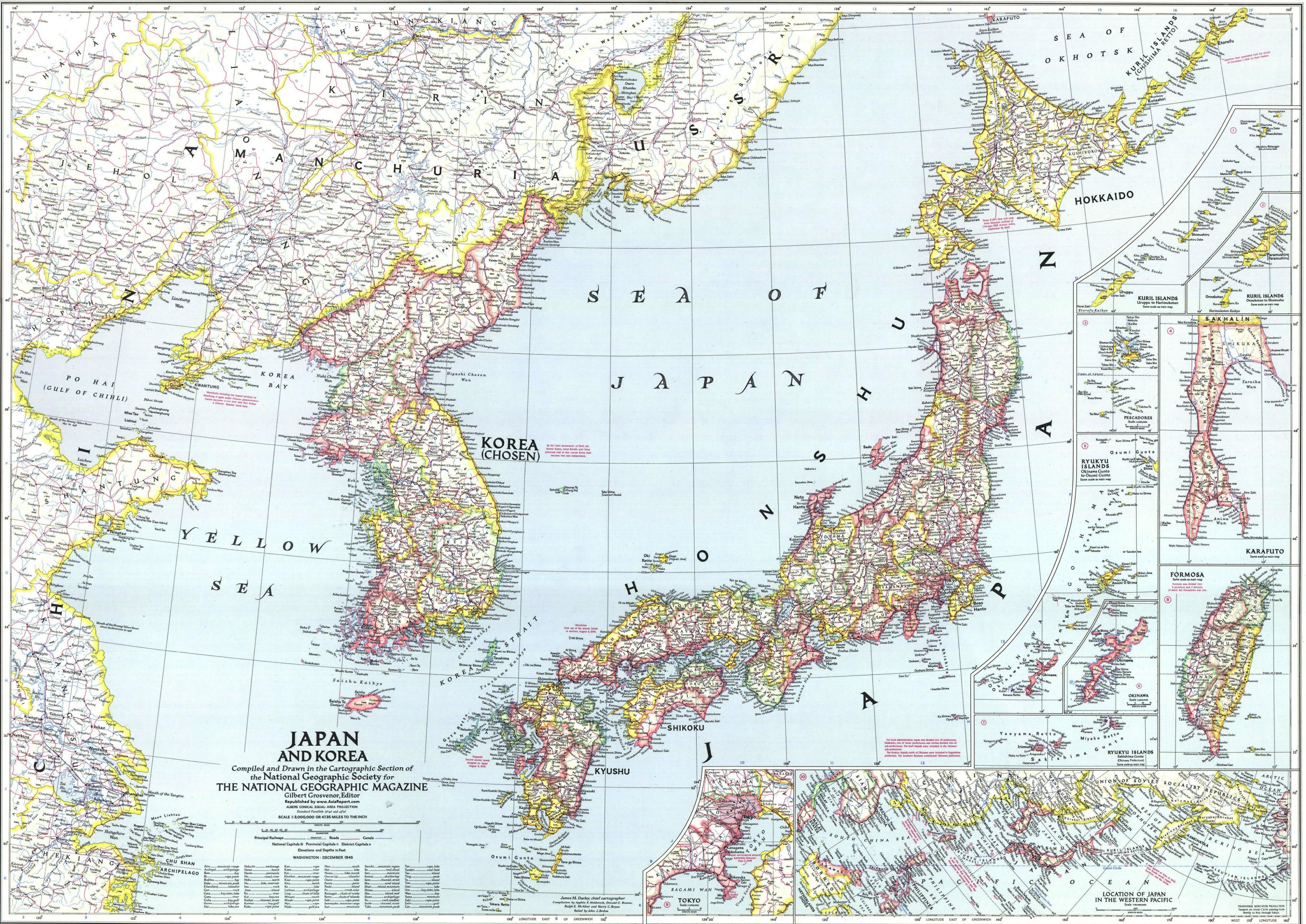
Before the Japanese annexation in 1910, the island was usually known as Quelpart (Quelpaërt, Quelpaert) to Europeans; during the occupation it was known by the Japanese name Saishū. The name Quelpart coming from the French language is attested in Dutch no later than 1648 and may have denoted the first Dutch ship to spot the island, the quelpaert de Brack around 1642, or rather some visual similarity of the island from some angle to this class of ships (a small dispatch vessel, also called a galiot).
The first European explorers to sight the island, the Portuguese, called it Ilha de Ladrones (Island of Thieves, modern Portuguese Ladrões).
The name "Fungma island" appeared in the "Atlas of China" of M. Martini who arrived in China as a missionary in 1655.
Plants & animals whose scientific names describe them as coming from Jeju
Numerous plants and animals have scientific epithets which describe them as "coming from" or being found on Jeju-do. (Many of these are found nowhere else.)
''quelpartensis''
- Okeanos quelpartensis Distant, 1911 (stink bug)
- Bekkochlamys quelpartensis (Pilsbry & Hirase, 1908) (gastropod)
- Nesticella quelpartensis (Paik & Namkung, 1969) (spider)
- Plectotropis quelpartensis (Pilsbry & Hirase, 1908) (gastropod)
- Atypus quelpartensis Namkung, 2001 (a spider)
- Homoeocarabus maeander quelpartensis Kwon and Lee, 1984 (beetle), and several more.
''Jejuensis''
- Stegasta jejuensis Park and Omelko, 1994 (moth)
- Camponotus jejuensis Kim and Kim, 1986 (ant)
- Cosmetura jejuensis Storozhenko and Paik, 2009 (grasshopper)
- Martensia jejuensis Y. Lee 2004 (algae)
- Huperzia jejuensis B.-Y Sun & J. Lim (lycopodium)
''chejuensis''
- Lycoris chejuensis KH Tae & SC Ko (lily)
- Apodemus chejuensis Johnson and Jones, 1955 (mouse)
- Chondria chejuensis Lee & Yoon 1996 (algae)
and many more.
History
Jeju Island has been inhabited by modern humans since the early Neolithic period. There is no discovered historical record of the founding or early history of Tamna. One legend tells that the three divine founders of the country—Go (고), Yang (양), and Bu (부)—emerged from three holes in the ground in the 24th century BC. These holes, known as the Samseonghyeol (삼성혈), are still preserved in Jeju City. Until 938 AD, the island was an independent kingdom called Tamna (which means 'island country') when it became a vassal state of Korea under the Goryeo dynasty. In April 1330, in the midst of political purges of the Yuan dynasty, Toghon Temür had been sent in exile on this remote island, which was then part of the vassal Korean Goryeo. In 1404, Taejong of Joseon placed the island under firm central control and brought the Tamna kingdom to an end.
From April 1948 to May 1949, it was the site of the Jeju uprising, during which around 30,000 people were killed and 40,000 fled to Japan. The Workers' Party of South Korea (WPSK) launched an insurgency against the government in April 1948 which was brutally repressed by the US-backed South Korean regime of Syngman Rhee. In 2003, the National Committee for Investigation of the Truth about the Jeju 3 April Incident described the event as a genocide. The commission verified 14,373 people were killed during the uprising, 86% by security forces and 14% by rebels. The commission estimated the total death toll at around 30,000. Other sources have estimated higher at 80,000 to 100,000 killed. The act of mentioning the uprising was punishable by beatings, torture, and harsh prison sentences by the South Korea government until the mid-1990s, after which the South Korean government finally admitted that the Jeju uprising had occurred.
Landscape
Jeju is a volcanic island, dominated by Hallasan: a volcano 1,947 m high and the highest mountain in South Korea. The island measures approximately 73 km across, east to west, and 41 km from north to south. The island also has around 360 oreum: small extinct volcanoes or parasitic cones. Many of these are now popular tourist attractions, such as Geomunoreum, Yongnuni Oreum, and Geum Oreum.
The island formed by volcanic eruptions approximately two million years ago, during the Pleistocene epoch.{{Citation

An area covering about 12% (224 km2) of Jeju Island is called gotjawal, a local term for forests. This area remained uncultivated until the 21st century, as its base of 'a'a lava made it difficult to develop for agriculture. Because this forest remained pristine for so long, it has a unique ecology.
The forest is the main source of groundwater and thus the main water source for the half million people of the island, because rainwater penetrates directly into the aquifer through the cracks of the 'a'a lava under the forest. Gotjawal forest is considered an internationally important wetland under the Ramsar Convention by some researchers because it is the habitat of unique species of plants and is the main source of water for the residents, although to date it has not been declared a Ramsar site. File:Hallasan 2.jpg|Baengnokdam in Hallasan File:KOCIS Jeju Island (5982720813).jpg|Mountains in Jeju File:제주 중문대포해안주상절리대 (Jeju Jungmun Daepo Jusangjeolli Cliff).jpg|Daepo Jusangjeolli Cliff File:Sanbangsan (5983281424).jpg|Sanbangsan File:Seongsan Ilchulbong from the air.jpg|Seongsan Ilchulbong File:Goseong-ri, Seongsan-eup, Seogwipo-si, Jeju-do, South Korea - panoramio - song songroov (51).jpg|Seopjikoji () File:Jeongbang loin de la mer.jpg|Jeongbang Waterfall File:Jeju2022OSM.png|Detailed map of Jeju Island File:Jeju black sand beach swimmers.jpg|A black sand beach in south-western Jeju File:Bomunsa temple view jeju.jpg|View from Bomunsa temple File:Cheonjiyeon waterfall jeju korea 2.jpg|Cheonjiyeon waterfall in Seogwipo File:Jeju Volcanic rock fence and home in Jeju.jpg|The island's volcanic basalt rock was traditionally used as a building material File:Jeju World Cup Stadium, Jeju Island.jpg|Jeju World Cup Stadium.
Formation
- About 2 million years ago, the island of Jeju was formed through volcanic activity.
- About 1.2 million years ago, a magma chamber formed under the sea floor and began to erupt.
- About 700 thousand years ago, the island had been formed through volcanic activity. Volcanic activity then stopped for approximately 100 thousand years.
- About 300 thousand years ago, volcanic activity restarted along the coastline.
- About 100 thousand years ago, volcanic activity formed Hallasan Mountain.
- About 25 thousand years ago, lateral eruptions around Hallasan Mountain left multiple oreum (smaller 'parasitic' cones on the flanks of the primary cone).
- Volcanic activity that stopped and prolonged weathering and erosion helped shape the island.
Climate
Most of Jeju Island has a humid subtropical climate (Cfa in the Köppen climate classification). Four distinct seasons are experienced in Jeju: winters are cool with moderate rainfall, while summers are hot and humid with very high rainfall.
Jeju City, the northern part of the island, tends to be colder in winter than the southern part due to the influence of continental seasonal winds. Gosan-ri, located on the west side of the island, has the lowest annual average precipitation on the island. However, unlike most parts of mainland Korea, the seasonal precipitation in Gosan-ri is evenly distributed. The Chuja Islands, which belong to Jeju City, are an archipelago located between mainland Korea and Jeju Island and also have a humid subtropical climate (Cfa).
Seogwipo, the southern part of the island, is relatively warmer in winter than Jeju City because Hallasan in the middle of the island blocks continental seasonal winds. Downtown Seogwipo has the highest average temperature in January in Korea, even compared to mainland Korea. Seongsan-eup, on the southeastern side of the island, is directly affected by both the East Asian monsoon and the Tsushima Current, so annual precipitation is very high. Seogwipo is one of the regions with the highest annual precipitation in Korea.
The climate of the highlands in the middle of the island where Hallasan is located is quite different from that of the rest of the island. As the altitude increases, the average temperature decreases and the climate becomes colder. The highlands of Jeju Island have the highest annual precipitation in Korea.
|access-date=24 May 2023 |script-title=ko:제주도상세기후특성집(2010) 윗세오름(871) |archive-date=1 October 2021 |archive-url=https://web.archive.org/web/20211001093945/http://web.kma.go.kr/servlet/NeoboardProcess?mode=download&bid=press2&num=753&fno=2&callback=http%3a%2f%2fweb.kma.go.kr%2faboutkma%2fintro%2fjeju%2fopeninfo%2fpress.jsp&ses=USERSESSION&k=ATC201011301744392_452c9e0a-2c58-428b-8ee1-79f2d198c8df.pdf |url-status=dead }}
In January 2016, a cold wave affected Jeju Island. Snow and frigid weather forced the cancellation of 1,200 flights on Jeju Island, stranding approximately 90,300 passengers.
References
References
- "Joshua Calder's World Island Info - Largest Islands of Selected Countries". Worldislandinfo.com.
- (1 July 2013). "Jeju Island Geopark - A Volcanic Wonder of Korea". Springer Science & Business Media.
- (2022). "Google Earth". Alphabet.
- Choi, Joon-sik. (2006). "Folk-Religion: The Customs in Korea. Ewha Womans University Press". Ewha Womans University Press.
- (February 2011). "Jeju Island". Business Traveller.
- (28 June 2007). "Unesco names World Heritage sites". [[BBC News]].
- (1905). "The Island of Quelpart". Bulletin of the American Geographical Society.
- "Photographic image of map".
- (1926). "Quelpart Island and Its People". Geographical Review.
- (1902). "The Queen of Quelparte".
- (1948). "The Name of Quelpaert Island". Isis.
- "Jeju Island Facts".
- "The Island of Quelpart".
- (February 1948). "The Name Of Quelpaert Island". Isis.
- "The memory and traces of marine exchange:Jeju Island in eastern and western antique maps".
- "Jeju (Cheju) Island Travel Information: Samseonghyeol".
- (2001). "Sources of Korean tradition. 2: From the sixteenth to the twentieth centuries / ed by Yong-ho Ch'oe ... with the collaboration of Donald Baker ... and contributions by Martina Deuchler". Columbia University Press.
- (2010). "A History of Korea". Palgrave.
- The National Committee for the Investigation of the Truth about the Jeju 3 April Incident (15 December 2003). "The Jeju April 3 Incident Investigation Report" (PDF). Office of the Prime Minister, Republic of Korea. Archived from the original (PDF) on 21 September 2015. Retrieved 17 August 2015.
- Cumings, Bruce. (2010). "New Challenges of North Korean Foreign Policy". Palgrave Macmillan US.
- Tucker, Spencer C.. (December 2010). "The Korean War, 1950–53: from maneuver to stalemate". Korean Journal of Defense Analysis.
- (2000). "Blowback: The Costs and Consequences of American Empire". Foreign Affairs.
- [http://www1.korea-np.co.jp/pk/124th_issue/99121501.htm Map of Korea: Cheju Island] {{webarchive. link. (4 March 2016 The People's Korea. Accessed 8 July 2012)
- {{Citation. 권. 동희. link. [[Academy of Korean Studies]]
- {{Citation. 권. 동희. link. [[Academy of Korean Studies]]
- {{Citation. 김. 태호. link. [[Academy of Korean Studies]]
- "Geumak (Geum) Oreum Volcanic Cone".
- "RISS 통합검색 - 국내학술지논문 상세보기".
- "RISS 통합검색 - 학위논문 상세보기".
- Jang, Yong-chang and Chanwon Lee, 2009, "Gotjawal Forest as an internationally important wetland," ''Journal of Korean Wetlands Studies'', 2009, Vol 1.
- "Ramsar site list".
- link
- Ap, Tiffany. (25 January 2016). "Deaths, travel disruption as bitter cold grips Asia". [[CNN]].
This article was imported from Wikipedia and is available under the Creative Commons Attribution-ShareAlike 4.0 License. Content has been adapted to SurfDoc format. Original contributors can be found on the article history page.
Ask Mako anything about Jeju Island — get instant answers, deeper analysis, and related topics.
Research with MakoFree with your Surf account
Create a free account to save articles, ask Mako questions, and organize your research.
Sign up freeThis content may have been generated or modified by AI. CloudSurf Software LLC is not responsible for the accuracy, completeness, or reliability of AI-generated content. Always verify important information from primary sources.
Report