From Surf Wiki (app.surf) — the open knowledge base
Japanese new religions
New religious movements founded in Japan since mid-19th century
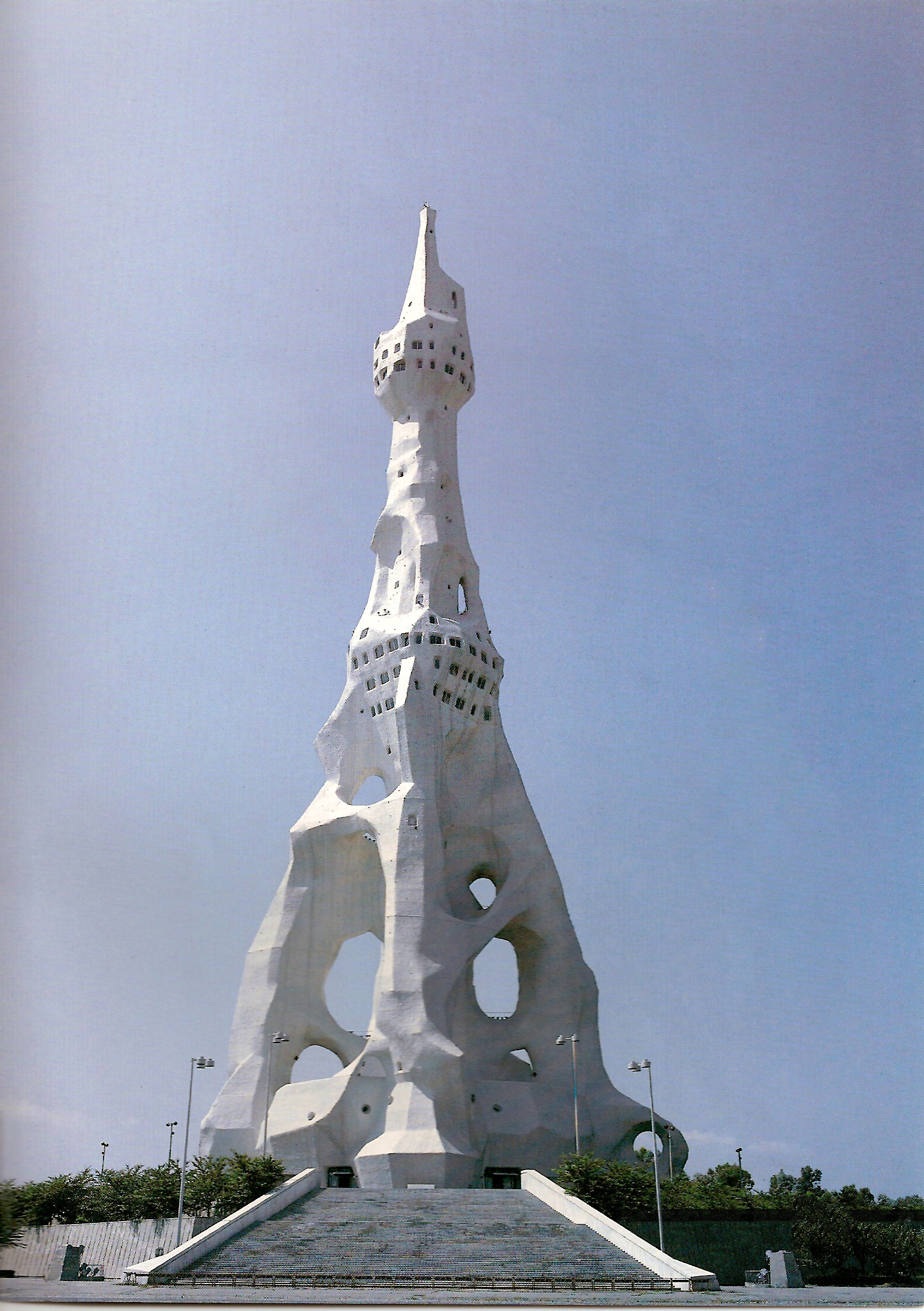
New religious movements founded in Japan since mid-19th century
Japanese new religions are new religious movements established in Japan. In Japanese, they are called shinshūkyō or shinkō shūkyō. Japanese scholars classify all religious organizations founded since the middle of the 19th century as "new religions"; thus, the term refers to a great diversity and number of organizations. Most came into being in the mid-to-late twentieth century and are influenced by much older traditional religions including Buddhism and Shinto. Foreign influences include Islam and Christianity, the Bible, and the writings of Nostradamus.
Before World War II
In the 1860s, Japan began to experience great social turmoil and rapid modernization. As social conflicts emerged in this last decade of the Edo period, known as the Bakumatsu period, some new religious movements appeared. Among them were Tenrikyo, Kurozumikyo, and Oomoto, sometimes called Nihon Sandai Shinkōshūkyō () or "old new religions", which were directly influenced by Shinto (the state religion) and shamanism.
The social tension continued to grow during the Meiji period, affecting religious practices and institutions. Conversion from traditional faith was no longer legally forbidden, officials lifted the 250-year ban on Christianity, and missionaries of established Christian churches reentered Japan. The traditional syncreticism between Shinto and Buddhism ended and Shinto became the national religion. Losing the protection of the Japanese government which Buddhism had enjoyed for centuries, Buddhist monks faced radical difficulties in sustaining their institutions, but their activities also became less restrained by governmental policies and restrictions.
The Japanese government was very suspicious towards these religious movements and periodically made attempts to suppress them. Government suppression was especially severe during the early 20th century, particularly from the 1930s until the early 1940s, when the growth of Japanese nationalism and State Shinto were closely linked. Under the Meiji regime lèse-majesté prohibited insults against the Emperor and his Imperial House, and also against some major Shinto shrines which were believed to be tied strongly to the Emperor. The government strengthened its control over religious institutions that were considered to undermine State Shinto or nationalism, arresting some members and leaders of Shinshūkyō, including Onisaburo Deguchi of Oomoto and Tsunesaburō Makiguchi of Soka Kyoiku Gakkai (now Soka Gakkai), who typically were charged with violation of lèse-majesté and the Peace Preservation Law.
After World War II
Background
After Japan was defeated in World War II, its government and policy changed radically during occupation by Allied troops. The official status of State Shinto was abolished, and Shinto shrines became religious organizations, losing government protection and financial support. Although the Occupation Army (GHQ) practiced censorship of all types of organizations, specific suppression of Shinshūkyō ended.
GHQ invited many Christian missionaries from the United States to Japan, through Douglas MacArthur's famous call for 1,000 missionaries. Missionaries arrived not only from traditional churches, but also from some modern denominations, such as Jehovah's Witnesses. The Jehovah's Witnesses missionaries were so successful that they have become the second largest Christian denomination in Japan, with over 210,000 members (the largest is Catholicism with about 500,000 members). In Japan, Jehovah's Witnesses tend to be considered a Christianity-based Shinshūkyō, not only because they were founded in the 19th century (as were other major Shinshūkyō), but also because of their missionary practices, which involve door-to-door visiting and frequent meetings.
Despite the influx of Christian missionaries, the majority of Shinshūkyō are Buddhist- or Shinto-related sects. Major sects include Risshō Kōsei Kai and Shinnyo-en. Major goals of Shinshūkyō include spiritual healing, individual prosperity, and social harmony. Many also hold a belief in Apocalypticism, that is in the imminent end of the world or at least its radical transformation. Most of those who joined Shinshūkyō in this period were women from lower-middle-class backgrounds.
A few Shinto-based Shinshūkyō, such as Tenrikyo and Konkokyo, refer to themselves in English as churches rather than as temples or shrines. In both Tenrikyo and Konkokyo, some branches abroad are known as missions.
Soka Gakkai has a particular influence on politics since 1964, due to their affiliated party Komeito, later New Komeito. In 1999, it was estimated that 10 to 20 per cent of the Japanese population were members of a Shinshūkyō.
Influence
After World War II, the structure of the state was changed radically. Prior to WWII, the National Diet was restricted and the real power lay with the executive branch, in which the prime minister was appointed by the emperor. Under the new Constitution of Japan, the Diet had the supreme authority for decision making in state affairs and all its members were elected by the people. Especially in the House of Councillors, one third of whose members were elected through nationwide vote, nationwide organizations found they could influence national policy by supporting certain candidates. Major Shinshūkyō became one of the so-called "vote-gathering machines" in Japan, especially for the conservative parties which merged into the Liberal Democratic Party in 1955.
Other nations
In the 1950s, Japanese wives of American servicemen introduced the Soka Gakkai to the United States, which in the 1970s developed into the Soka Gakkai International (SGI) cult. Well-known American SGI converts include musician Herbie Hancock and singer Tina Turner.
In Brazil Shinshūkyō, like Honmon Butsuryū-shū, were first introduced in the 1920s among the Japanese immigrant population. In the 1950s and 1960s some started to become popular among the non-Japanese population as well. Seicho-No-Ie now has the largest membership in the country. In the 1960s, it adopted Portuguese, rather than Japanese, as its language of instruction and communication. It also began to advertise itself as philosophy rather than religion in order to avoid conflict with the Roman Catholic Church and other socially conservative elements in society. By 1988 it had more than 2.4 million members in Brazil, 85% of them not of Japanese ethnicity.
Today, the largest Japanese new religions in Brazil and the United States include Seicho-No-Ie, PL Kyodan, the Church of World Messianity, Sukyo Mahikari, Soka Gakkai, Reiyukai, Tenrikyo, and Konkokyo.
Statistics
| Name | Founder | Founded | 1954 | 1974 | 1990 | 2012 |
|---|---|---|---|---|---|---|
| Nyorai-kyō (如来教) | Isson-nyorai Kino (1756–1826) | 1802 | 75,480 | 33,674 | 27,131 | 7,477 |
| Kurozumi-kyō (黒住教) | Munetada Kurozumi (1780–1850) | 1814 | 715,650 | 407,558 | 295,225 | 297,767 |
| Tenri-kyō (天理教) | Nakayama Miki (1798–1887) | 1838 | 1,912,208 | 2,298,420 | 1,839,009 | 1,199,652 |
| Honmon Butsuryū-shū (本門佛立宗) | Nagamatsu Nissen (1817–1890) | 1857 | 339,800 | 515,911 | 526,337 | 345,288 |
| Konko-kyō (金光教) | Konkō Daijin (1814–1883) | 1859 | 646,206 | 500,868 | 442,584 | 430,021 |
| Maruyama-kyō (丸山教) | Rokurōbei Itō (1829–1894) | 1870 | 92,011 | 3,200 | 10,725 | 11,057 |
| Oomoto (大本) | Nao Deguchi (1837–1918) | |||||
| Onisaburō Deguchi (1871–1948) | 1899 | 73,604 | 153,397 | 172,460 | 169,525 | |
| Nakayama-Shingoshō-shū (中山身語正宗) | Matsutarō Kihara (1870–1942) | 1912 | 282,650 | 467,910 | 382,040 | 295,275 |
| Honmichi (ほんみち) | Ōnishi Aijirō (1881–1958) | 1913 | 225,386 | 288,700 | 316,825 | 318,974 |
| En'ō-kyō (円応教) | Chiyoko Fukada (1887–1925) | 1919 | 71,654 | 266,782 | 419,452 | 457,346 |
| Reiyū-kai (霊友会) | Kakutarō Kubo (1892–1944) | 1924 | 2,284,172 | 2,477,907 | 3,202,172 | 1,412,975 |
| Nenpō-shinkyō (念法眞教) | Ogura Reigen (1886–1982) | 1925 | 153,846 | 751,214 | 807,486 | 408,755 |
| Perfect Liberty Kyōdan (パーフェクト リバティー教団) | Miki Tokuharu (1871–1938) | |||||
| Miki Tokuchika (1900–1983) | (1925) | |||||
| 1946 | 500,950 | 2,520,430 | 1,259,064 | 942,967 | ||
| Seichō-no-Ie (生長の家) | Masaharu Taniguchi (1893–1985) | 1930 | 1,461,604 | 2,375,705 | 838,496 | 618,629 |
| Sōka Gakkai (創価学会) | Tsunesaburō Makiguchi (1871–1944) | |||||
| Jōsei Toda (1900–1958) | 1930 | 341,146 | 10,000,000 (claimed) | 12,000,000 (claimed) / 2 to 4,000,000 (scholars) | 12,000,000 (claimed) / 2 to 4,000,000 (scholars) | |
| Sekai Kyūsei-kyō (世界救世教) | Mokichi Okada (1882–1955) | 1935 | 373,173 | 661,263 | 835,756 | 835,756 |
| Shinnyo-en (真如苑) | Shinjō Itō (1906–1956) | 1936 | 155,500 | 296,514 | 679,414 | 902,254 |
| Kōdō Kyōdan (孝道教団) | Shōdō Okano (1900–1978) | 1936 | 172,671 | 417,638 | 400,720 | 184,859 |
| Risshō Kōsei-kai (立正佼成会) | Myōkō Naganuma (1889–1957) | |||||
| Nikkyō Niwano (1906–1999) | 1938 | 1,041,124 | 4,562,304 | 6,348,120 | 3,232,411 | |
| Tenshō Kōtai Jingū-kyō (天照皇大神宮教) | Sayo Kitamura 1900–1967) | 1945 | 89,374 | 386,062 | 439,011 | 479,707 |
| Zenrin-kyō (善隣教) | Tatsusai Rikihisa (1906–1977) | 1947 | 404,157 | 483,239 | 513,321 | 132,286 |
| Ōyamanezunomikoto Shinji Kyōkai (大山ねずの命神示教会) | Sadao Inaii (1906–1988) | 1948 | 59,493 | 826,022 | ||
| Bussho Gonenkai Kyōdan (佛所護念会教団) | Kaichi Sekiguchi (1897–1961) | |||||
| Sekiguchi Tomino (1905–1990) | 1950 | 352,170 | 1,210,227 | 2,196,813 | 1,277,424 | |
| Myōchikai Kyōdan (妙智会教団) | Mitsu Miyamoto (1900–1984) | 1950 | 515,122 | 673,913 | 962,611 | 709,849 |
| Byakkō Shinkō-kai (白光真宏会) | Masahisa Goi (1916–1980) | 1951 | 500,000 | |||
| Agon-shū (阿含宗) | Seiyū Kiriyama (1921–2016) | 1954 | 500 | 206,606 | 353,890 | |
| Reiha-no-Hikari Kyōkai (霊波之光) | Hase Yoshio (1915–1984) | 1954 | 761,175 | |||
| Jōdoshinshū Shinran-kai (浄土真宗親鸞会) | Kentetsu Takamori (1934–) | 1958 | date=February 2014}} reporting the organizations‘ own membership statistics around 1990. | |||
| Sekai Mahikari Bunmei Kyōdan (世界真光文明教団) | Kōtama Okada (Yoshikazu Okada) (1901–1974) | 1959 | 97,838 | |||
| Honbushin (ほんぶしん) | Ōnishi Tama (1916–1969) | 1961 | 900,000 | |||
| God Light Association Sōgō Honbu (GLA総合本部) | Shinji Takahashi (1927–1976) | 1969 | 12,981 | |||
| Shinji Shūmei-kai (神慈秀明会) | Mihoko Koyama (1910–2003) | 1970 | 1988: 440,000 | |||
| Nihon Seidō Kyōdan (日本聖道教団) | Shōkō Iwasaki (1934–) | 1974 | 69,450 | |||
| Extra-Sensory-Perception Kagaku Kenkyūjo (ESP科学研究所) | Katao Ishii (1918–1993) | 1975 | 16,000 | |||
| Sūkyō Mahikari (崇教真光) | Yoshikazu Okada (1901–1974) | 1978 | 501,328 | |||
| Ho No Hana (法の華三法行) | Hōgen Fukunaga (1945–) | 1980 | 70,000 | |||
| Yamato-no-Miya (大和之宮) | Tenkei Ajiki (1952–) | 1981 | 5,000 | |||
| World Mate (ワールドメイト) | Seizan Fukami (1951–) | 1984 | 30,000 | 72,000 | ||
| Happy Science (幸福の科学) | Ryūhō Ōkawa (1956–2023) | 1986 | 1989: 13,300 | |||
| 1991: 1,527,278 | 1,100,000 | |||||
| Aum Shinrikyo (オウム真理教) | Shōkō Asahara (1955–2018) | 1987 (−2000) | 2005: 1,650 | 2018: 1,950 |
Data for 2012 is from the Agency for Cultural Affairs.
List of scriptures
Below is a list of scriptures in various Japanese new religions, most of which are considered to be direct divine revelations in their respective religions.
- Konkokyo: Konkōkyō Kyōten (金光教教典)
- Tenrikyo: Mikagura-uta (御神楽歌), Ofudesaki (御筆先), Osashizu (御指図)
- Honmichi: Kyōgi Ichiban (教義一斑)
- Honbushin: Tenkei Mikyōsho (天啓御教書)
- Oomoto: Oomoto Shin'yu (大本神諭), Reikai Monogatari (霊界物語), Michi no Shiori (道の栞), Michi no Hikari (道の光)
- Seicho-No-Ie: 4 sutras (Kanro no Hōu 甘露の法雨, Tenshi no Kotoba 天使の言葉, Zoku-zoku Kanro no Hōu 続々甘露の法雨, Seishimei Bosatsu Sange 聖使命菩薩讃偈) and Seimei no jissō (生命の實相, 40 volumes)
- Ananaikyo: Reikai-de Mita Uchū (霊界で観た宇宙, about 12 volumes)
- Tenshō Kōtai Jingūkyō: Seisho (生書, 4 volumes)
- Shintō Tenkōkyo: Tomokiyo Yoshisane zenshū (友清歓真全集, 6 volumes)
- Ōyamanezunomikoto Shinji Kyōkai: Shinjitsu no hikari: shinji (真実の光・神示)
- Makoto no Michi: Makoto no Michi shinji (真の道神示, 2 volumes)
- Ennokyo: Ennōkyō Kyōten (円応教教典)
- Tensokokyo: Voice of the Sphinx (スフィンクスの声)
Sacred mountains
Sacred mountains in Japanese new religions include the following.
- In Honbushin: Mount Kami or Kami-yama (神山) in Okayama
- In Kurozumikyō: Mount Shintō or Shintō-zan (神道山) in Okayama
- In Oomoto: Mount Takakuma or Takakuma-yama (高熊山) in Kameoka and Mount Hongū (本宮山) in Ayabe. Mount Hongū is considered to be a shintaizan.
- In Shintō Tenkōkyo: Mount Iwaki or Iwaki-yama (石城山) in Yamaguchi Prefecture
- In Sukyo Mahikari: Mount Kurai. The Inner Shrine (Okumiya) of the World Shrine (世界総本山奥宮) is located on its summit. A memorial complex dedicated to the religion's founders is located near the mountain's base.
- In Seicho-No-Ie: Sōhonzan, the hill where Seicho-No-Ie's spiritual headquarters is located in Saikai, Nagasaki
References
Bibliography
- Clarke, Peter B. (1999) A Bibliography of Japanese New Religious Movements: With Annotations. Richmond, Vi: Curzon. . OCLC 246578574.
- Clarke, Peter B. (2000). Japanese New Religions: In Global Perspective. Richmond, Vi: Curzon. . OCLC 442441364.
- Clarke, Peter B., Somers, Jeffrey, editors (1994). Japanese New Religions in the West, Japan Library/Curzon Press, Kent, UK. .
- Dormann, Benjamin (2012). Celebrity Gods: New Religions, Media, and Authority in Occupied Japan, University of Hawaiʻi Press. .
- Dormann, Benjamin (2005). “New Religions through the Eyes of Ōya Sōichi, 'Emperor' of the Mass Media”, in: Bulletin of the Nanzan Institute for Religion & Culture, 29, pp. 54–67.
- Dormann, Benjamin (2004). “SCAP's Scapegoat? The Authorities, New Religions, and a Postwar Taboo”, in: Japanese Journal of Religious Studies 31/1: pp. 105–140.
- Hardacre, Helen. (1988). Kurozumikyo and the New Religions of Japan. Princeton, NJ: Princeton University Press. .
- Kisala, Robert (2001). “Images of God in Japanese New Religions”, in: Bulletin of the Nanzan Institute for Religion & Culture, 25, pp. 19–32.
- Shimazono, Susumu (2004). From Salvation to Spirituality: Popular Religious Movements in Modern Japan. Japanese Society Series. Melbourne, Vic.: Trans Pacific Press. .
- Staemmler, Birgit & Ulrich Dehn, eds. Establishing the Revolutionary: An Introduction to New Religions in Japan. Munster: LIT, 2011. .
- Thomson, Harry. The New Religions of Japan. Tokyo and Rutland, Vt.: Charles E. Tuttle, 1963.
- Wilson, Bryan R. and Karel Dobbelaere. (1994). A Time to Chant. Oxford: Oxford University Press. .
References
- [[Peter B. Clarke]], 1999, "Japanese New Religious Movements in Brazil: from ethnic to 'universal' religions", ''New Religious Movements: challenge and response'', Bryan Wilson and Jamie Cresswell editors, [[Routledge]] {{ISBN. 0415200504
- [[Eileen Barker]], 1999, "New Religious Movements: their incidence and significance", ''New Religious Movements: challenge and response'', Bryan Wilson and Jamie Cresswell editors, [[Routledge]] {{ISBN. 0415200504
- Eugene V. Gallagher, 2004, ''The New Religious Movement Experience in America'', [[Greenwood Press]], {{ISBN. 0313328072, pages 120–124
- The (1925) date refers to the Hito-no-Michi Kyōdan, the mother organization of Perfect Liberty Kyōdan
- Most of the statistics in these charts are from the 1991 edition of the Shūkyō Nenkan (Religion Yearbook, Tokyo: Gyōsei). Numbers marked with this footnote are from other sources{{Citation needed. (February 2014 reporting the organizations‘ own membership statistics around 1990.)
- (25 July 2011). "オウム真理教対策(警察庁)".
- "Archived copy".
- "神道天行居とは".
- "Facilities".
- "インフォメーション|崇教眞光公式サイト".
This article was imported from Wikipedia and is available under the Creative Commons Attribution-ShareAlike 4.0 License. Content has been adapted to SurfDoc format. Original contributors can be found on the article history page.
Ask Mako anything about Japanese new religions — get instant answers, deeper analysis, and related topics.
Research with MakoFree with your Surf account
Create a free account to save articles, ask Mako questions, and organize your research.
Sign up freeThis content may have been generated or modified by AI. CloudSurf Software LLC is not responsible for the accuracy, completeness, or reliability of AI-generated content. Always verify important information from primary sources.
Report