From Surf Wiki (app.surf) — the open knowledge base
Japanese idol
Type of entertainer
.jpg)
Type of entertainer
An idol is a type of entertainer marketed for image, attractiveness, and personality in Japanese popular culture. Idols are primarily singers with training in other performance skills such as acting, dancing, and modeling. Idols are commercialized through merchandise and endorsements by talent agencies. They dedicate significant time and resources to building relationships with fans through concerts and meetups.
Japan's idol industry first emerged in the 1960s and became prominent in the 1970s and 1980s due to television. During the 1980s, regarded as the "Golden Age of Idols", idols drew in commercial interest and began appearing in commercials and television dramas. As more niche markets began to appear in the late 2000s and early 2010s, it led to a significant growth in the industry known as the "Idol Warring Period." Today, over 10,000 teenage girls in Japan are idols, with over 3,000 groups active. Japan's idol industry has been used as a model for other popular idol industries, such as K-pop.
Sub-categories of idols include gravure idols, junior idols, net idols, idol voice actors, virtual idols, AV idols, alternative idols, underground idols, ja idols, local idols, bandols, and Japanese-South Korean idols.
Definition
Roles and training
An idol is an entertainer whose appeal centers not only on performance skills but also significantly on emotional accessibility and perceived personal growth. Idol careers in Japan typically begin at a young age, with many idols entering the industry through public auditions, local performance circuits, or training programs provided by talent agencies. Notably, fans often participate actively in the idols' development process, closely following their progress from novices to skilled performers.
Rather than solely focusing on technical proficiency, idol culture emphasizes values such as sincerity, visible effort, and emotional connection between performers and fans. Emotional reciprocity and mutual validation form the core of fan-idol relationships, significantly influencing fan behaviors like attending events, purchasing merchandise, and active online interactions.
Idols undergo years of training in singing, dancing, or acting. This approach increases their opportunities for admiration and influence, strengthening their overall appeal. Additionally, idols often utilize blogs and social media to display personal and relatable aspects of their lives, fostering empathy and closeness with their audience.
In addition to performance skills like singing, dancing, and acting, idols engage in extensive character-building activities intended to foster discipline, self-expression, and resilience. These aspects of idol training are seen not only as entry points into entertainment careers but also as meaningful experiences of personal and communal growth within Japanese popular culture.
The idol industry's structure actively encourages fans to support new idols as earlier favorites mature, perpetuating a cycle of emotional engagement, personal development, and collective identity formation within idol fandom communities.
This style of recruiting and training was pioneered by Johnny Kitagawa, the founder of Johnny & Associates, and has since been used in other pop idol industries such as Korean idols in K-pop.
Anime News Network described the idol industry as highly demanding, with busy schedules that can limit time for personal life or family connections. Certain talent agencies have been criticized for withholding job assignments or notifying talents of work on short notice to discourage time off. Additionally, some agencies intentionally recruit individuals with limited experience and market them as relatable or "unfinished" figures, encouraging fans to support them as they grow. Idols are often not expected to meet the same performance standards as other professionals in their respective fields of entertainment, but they are appreciated by fans for qualities such as sincerity, effort, and emotional expression rather than for perfection.
Music from idol singers is generally categorized under J-pop, though talent agencies may label them under the sub-genre "idol pop" for further distinction. Many idol singers find success as groups rather than individually. Within each idol group, the members are sometimes given distinct roles. One example of a role is the center, who occupies the center position in the group's choreography and thus receives the most focus. Another example is the leader, usually relegated to the oldest or most experienced member in the group, who acts as an intermediary for the members and the staff.
Public image
Idols are often promoted based on their personality, charm, and relatability, with a strong emphasis in Japanese culture on emotional sincerity, perseverance, and visible growth. Some talent agencies set behavioral guidelines for their performers, such as discouraging smoking or public romantic relationships, as part of sustaining an image that symbolizes hope, personal growth, and the trust-based connection idols often share with their fans. Some idol groups have colors assigned to their members to distinguish them to the public, a practice that was drawn from the Super Sentai series.
Outfits
Idols generally perform in elaborate costumes for specific performances. Costumes are created for each song in their promotion cycle, as well as graduation events, and some groups have their own in-house costume designer. AKB48, in particular, has had over 1,102 costumes created for the group since 2017. The outfits worn by female idols are generally described as "cute", while outfits worn by male idols are described as "cool."
Among many idol groups, school uniforms have been used as a standard costume. The integration of school uniforms in the idol industry originated from Onyanko Club, who debuted in 1985 with a concept based on school. Following their disbandment in 1987, other groups began adopting school uniforms as costumes, such as CoCo and Ribbon, two groups put together by Fuji TV's audition programs, followed by in 1992 and Morning Musume in the early 2000s. When AKB48 debuted in 2006, the group used a school concept and the members have performed in various stylized costumes based on school uniforms. Since then, other groups have used stylized school uniforms as costumes, such as AKB48's sister groups, Sakura Gakuin, and Sakurazaka46, with some modifications to suit the groups' image and choreography.
In 2017, Nihon Tarento Meikan noted that stylized school uniforms being used as costumes gained popularity through AKB48 due to their unique designs, the short skirts, and the neatness of the uniform. The uniforms found popularity with men, as they represent their "eternal longing" and nostalgia for high school, while only gaining popularity with women in the 2010s through anime.
Graduation
Idols who retire to pursue other career paths are typically given a farewell event known as "graduations". Female idols typically change careers at age 25 and male idols at ages 30–45. Prior to the 1980s, the terms "retirement" and "disbandment" were used.
The term "graduation" originated from the idol group Onyanko Club, as the group's concept drew similarities to an after-school club, and the fact that Onyanko Club member 's final solo single before retirement was released around school graduations in Japan. "Graduation" saw usage again when Tsunku, who produced the group Morning Musume, used the term as a euphemism regarding Yuko Nakazawa's departure from the group in April 2001. Nakazawa's departure had gained widespread media attention at the time, with articles using the term "graduation" equally to those using "retirement." In addition, Nakazawa's departure was celebrated at the final show of Morning Musume's spring concert tour, her final performance as a member of the group. Since then, graduations became closely associated with farewell concerts, which are announced and planned in advance.
Graduations are seen as an "amicable" ending of idol activities, as they have a positive nuance of celebrating an idol's career. An idol having a graduation ceremony is seen more favorably than terminating a contract or voluntarily withdrawing, as the latter two terms are seen as "abrupt" and "covering up a secret." Contract terminations and voluntary withdrawals are negatively connoted with scandals or health concerns. Former Denpagumi.inc member Moga Mogami described the difference between graduations and withdrawals in that idols who graduate tend to leave because they have clear future goals, while idols who withdraw did not leave entirely by their own choice.
Sub-category markets
The diversity of Japan's idol industry has created several sub-category markets, each with a specific concept appealing to certain audiences.
- AV idols: AV (adult video) idols generally refer to pornographic actresses and models, with the industry first emerging in the 1980s.
- : Bandols are idol groups that play instruments and perform as bands. The term first emerged in the 2000s as a shortening of the phrase, "a new genre of neither bands nor idols", which was used to describe the marketing concept of the band Zone.
- Gravure idols: Gravure idols are models who pose in provocative swimsuit and lingerie photographs in magazines and photo books marketed towards men, similar to pin-up models. In the 1970s, Agnes Lum, who rose to fame in Japan, is considered the first gravure idol despite the term not existing at the time. Other notable swimsuit models were , , and Fumie Hosokawa. After Akiko Hinagata became a rising star in 1995, the term "gravure idol" was coined to describe her. In the 2000s, there was a significant growth in the gravure idol industry, with many women of different body types modeling. This led to sub-category markets in the gravure idol industry to describe their aesthetic and body types, which included "healing", "loli", "intelligent", "big breasts", and "sexy swimsuit". The gravure idol industry faced a decline in 2010 due to the popularity of AKB48, as some of their members also did gravure modeling; as a result, the demand for newer talents was reduced.

- Idol voice actors: Since the 1970s, several voice actors of anime and video games also held successful singing careers in addition to voice acting. Early examples of voice actors who had an idol-like presence were Mobile Suit Gundam voice actors Toshio Furukawa and Toru Furuya in the 1970s, who gained a sizeable female following after forming their band, Slapstick. In the 1980s, idol singer Noriko Hidaka eventually became a voice actress after gaining recognition for playing lead in Touch. Beginning in the 1990s, several voice actors held successful concurrent singing careers alongside of voice acting, such as Hekiru Shiina, Mariko Kouda, and Megumi Hayashibara. As the anime industry began producing more late-night series in the 2000s, the term "idol voice actor" was popularized when more voice actors with a cultivated fan following began appearing on television. While previous examples involved voice actors who incidentally drew in fans through their singing careers or former idol singers who turned to voice acting, Yui Horie, Yukari Tamura, and Nana Mizuki were intentionally produced and marketed as idol voice actors by their record labels. Around the time when the Idol Warring Period was occurring during the mid-to-late 2000s, there was a significant boom in idols voice acting in anime, with Oricon naming Aya Hirano and Koharu Kusumi as examples, as both of them were established actresses and singers in mainstream Japanese entertainment before entering voice acting. Hirano, in particular, was strongly marketed as an idol at the height of her voice acting career, from the late 2000s to the early 2010s. While character song tie-ins were already common in the film industry by then, some voice actors also began making crossover television, stage, and concert appearances as their characters as well, leading them to be closely associated with one another.
- Japanese-Korean idols: While Japan and South Korea agencies have created collaborative idol groups in the past, with Route 0 in 2002, during the third Korean wave in the mid-to-late 2010s, the term saw usage again to refer to collaborative idol groups promoting primarily in Japan, but with music, styling, marketing, and presentation produced in the K-pop industry. The earliest example is Iz*One in 2018, followed by JO1 in 2019 and NiziU in 2020.

- Johnny's: Male idols contracted to Johnny & Associates are nicknamed "Johnny's idols" by the media and include groups such as SMAP and Arashi, who have led strong careers both individually and as a group. Since the company was founded in 1962 by Johnny Kitagawa, who is credited for pioneering the idol trainee system and popularizing the performance aspect of modern idols, the company has held a monopoly over the male idol industry in Japan, with Kitagawa pressuring the media to reduce coverage on male idols from other companies until his death in 2019. Johnny's idols also rarely get negative press such as scandals due to Kitagawa's influence on the media.
- Junior idols: Junior idols are singers and gravure models who generally are 15 years old and younger. Junior models first grew in popularity in 1995, when child magazine models became popular for their youthfulness and innocence, beginning with the elementary school girls featured in the covers of the magazine Panja. In addition, in 1997, the magazine Nicola was launched, featuring elementary and middle school girls as their core demographic. At the center of the phenomenon's popularity were Sayaka Yoshino and Yuka Nomura, child actresses and models who became popular in Japanese media. In the following years, it led to what the media named the "Chidol Boom", with the term "chidol" (a combination of the words "child" and "idol") coined by journalist Akio Nakamori in the magazine Weekly Spa! in 1999. In the 2000s, "chidol" saw fewer usage, and it was eventually replaced by the term "junior idol" to legitimize them as part of the idol industry as well as removing the focus on their age. While the industry is still considered legal in Japan, it has been criticized for sexual exploitation of minors. Many junior idol distributors closed after possession of child pornography was outlawed in Japan in 2014.
- : Also written as gotōji aidoru and chihō aidoru or shortened as "locodol", local idols primarily promote in rural areas in their specific communities, where accessibility to celebrities is limited. The emergence of local idols was traced back to the early 2000s with Perfume and Negicco. The "Idol Warring Period" in the 2010s led to an increase in the number of local idols, with the 2013 television drama Amachan inspiring an accelerated growth. Journalist Mamoru Onoda estimates there are approximately 2,000 local idols active as of 2021. Most of the local idol groups are independently managed, relying on popularity through word-of-mouth. Several local idol groups who have crossed into mainstream media in the 2010s are Rev. from DVL and Dorothy Little Happy, the former after a photo of then-member Kanna Hashimoto went viral on the Internet.
- Net idols: Net idols are Internet celebrities who emerged with the accessibility of the Internet in the 1990s, using self-made websites and blogs to discuss their daily lives. Net idols currently conduct the majority of their activities through video streaming websites and social media beginning in the 2000s. Around March 2007, dance covers (known as odottemita) became popular on video-sharing websites such as Niconico, which in turn led people into performing choreographed dances from anime series and idol groups. Notable creators of dance covers, known as odorite, who later debuted as idols include from Danceroid and Dempagumi.inc, Beckii Cruel, and Keekihime.
- Virtual idols: Virtual idols are digital avatars representing a fictional character or persona. The first fictional idol gaining mainstream crossover was Lynn Minmay from Macross in the 1980s. In 1997, Kyoko Date was created as the first virtual idol. In 2007, Crypton Future Media released Hatsune Miku as its latest addition to the Vocaloid software, who subsequently saw positive reception from amateur songwriters, with her character and music based on user-generated content. Virtual online streamer Kizuna AI, who first appeared in 2016, led to a boom of Virtual YouTubers who similarly conduct their activities through a digital avatar on YouTube and other streaming websites.

- : Underground idols are independently managed idols who perform at small venues. They are also known as live idols or indies idols. Underground idols first emerged in the 1990s when idol groups with large numbers of members began appearing after the popularity of Onyanko Club. Tama Himeno and Kamen Joshi member Tomoka Igari, both underground idols, describe them as being different from mainstream idols (nicknamed "above-ground idols") in that underground idols are active through live performances rather than through exposure from mass media or CD releases through major record labels, thus making them more accessible to fans in comparison to mainstream idols. An example Igari used to describe close relationships that underground idols have with their fans is that underground idols will hold handshake events and take instant camera photos (known as "cheki") with fans after every live performance.
- : ja idols are type of underground idol based in the Akihabara district of Tokyo, drawing influences from its ja culture. Music from ja idols are generally sold as self-published CDs at Comiket or promoted through Niconico. is a dedicated venue where they perform. While ja idols are niche, Haruko Momoi and Dempagumi.inc are cited as an examples of an ja idols crossing over to mainstream media. Dempagumi.inc's music producer, Maiko Fukushima, describes the music from ja idols as distinct from anime songs, with most composers being "amateurs" and its organic music culture facing a state of the Galapagos syndrome, as they had no direct creative input from J-pop or other music genres. However, Fukushima noted that songs from R-18 games were also key components of ja music. In 2007, Vocaloid greatly influenced the growth of ja music and idol culture. AKB48, one of Japan's most recognized idol groups nationwide, originated from Akihabara, but it is not considered an ja group.
- Alternative idols: Alternative idols, also known as alt-idols or anti-idols, is a term coined by English-speaking communities to describe idol singers who have an image concept and music different from what is considered mainstream, such as having darker images and alternative rock. The alternative idol scene was pioneered by Bis and Seiko Oomori and made popular by Bis' successor Bish.
History
1960–1980: Post-war era and idol beginnings

The popularity of young female singers can be traced back to Sayuri Yoshinaga in the 1960s, as well as the 1913 Takarazuka Revue and theater shows from the Meiji era. In 1962, Johnny Kitagawa founded Johnny & Associates and created the group Johnnys, which is retroactively considered the first idol group in Japan. He is also credited with pioneering the idol trainee system, where talents would be accepted in the agency at a young age and train not only in singing, but also dancing and acting, until they were ready for debut. However, the concept of an idol was not defined by mainstream Japanese media until in November 1964, when the 1963 French film Cherchez l'idole was released in Japan under the title Aidoru o Sagase. Many Japanese audiences took interest in Sylvie Vartan, whose song "La plus belle pour aller danser" from the film sold more than a million copies in Japan. Vartan was heralded for her youthful, adorable looks and musical talent, leading the Japanese entertainment industry to assign the word "idol" to singers who shared a similar aesthetic.
Television greatly impacted the popularity of the idol phenomenon, as beginning in the 1970s, many idols were recruited through audition programs. In addition, the availability of having home television sets gave audiences greater accessibility of seeing idols at any time compared to going to theaters. Momoe Yamaguchi, Junko Sakurada, Saori Minami, and Mari Amachi, some of the idols recruited through television, were some of the more popular figures of this era, along with groups such as Candies and Pink Lady. Saori Minami, who debuted in 1971, was noted by scholar Masayoshi Sakai to be the turning point of when teenage stars became popular in mainstream media. Music was produced by a shared climate of songwriters and art directors seeking a step towards a depoliticized youth culture. Idols grew in popularity over the 1970s, as they offered audiences escapism from political violence and radical student movements.
Idols at the time were seen as ephemeral because of how short-lived their careers were, and how they would disappear from the public after retirement. In public, idols took steps to play a distinct character and uphold an illusion of perfection, such as maintaining a virginal image. Other examples include being told not to use restrooms in public and answering interview questions about their favorite food with feminine-sounding answers such as "strawberries" and "shortcake."
1980–1990: Golden Age of Idols

The influence idols had on television led the 1980s to be known as the "Golden Age of Idols", in part due to Japan's economic bubble and growing commercial interest in them. Several figures who defined the Golden Age of Idols are Seiko Matsuda, Akina Nakamori, Kyōko Koizumi, and Onyanko Club. Television programs in which idols appeared often enjoyed high viewer ratings. Dentsu also created the "CM idol" business model, where idols were able to gain fame by singing and appearing in commercials.
Onyanko Club, in particular, shifted public perception of idols from professional stars to ordinary schoolgirls who would gain experience throughout their career. They were also the first group to introduce a "graduation system", where older members would eventually leave the group while newer inexperienced members would join, with the system being named such as the group drew similarities to a school club. Onyanko Club also led to idols becoming closely associated with television due to the popularity of their variety show, as the visual component became important to the overall enjoyment of their music.
At the same time, male idols gained popularity, with acts from Johnny & Associates normalizing idols singing and dancing at the same time. However, fewer male idol acts from other companies achieved the same success as Johnny's idols due to the company's CEO, Johnny Kitagawa, controlling the media and pressuring certain programs not to invite male idols from competing agencies, as he would continue to until his death in 2019.
1990–2000: Idol Winter Period and Chidol Boom
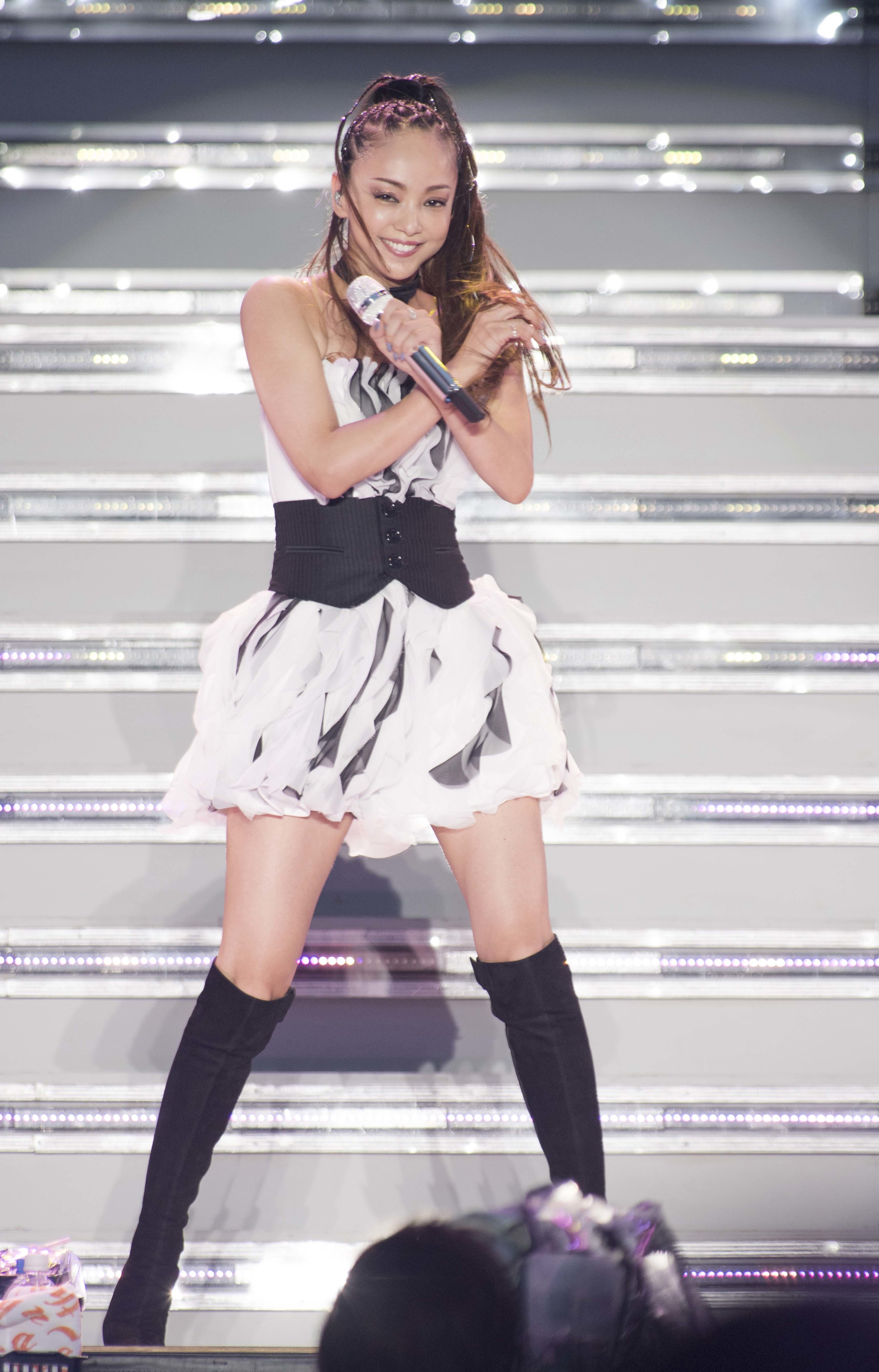
Around 1985, idols soon became unpopular after the public became disillusioned with the idol system. By the 1990s, public interest in idols began to wane, as audiences lost interest in singing and audition programs, particularly due to a shift in attitudes caused by Japan's economic collapse. The media coined the term "Idol Winter Period" to describe the stagnation of the idol industry beginning in 1990.
More young people yielded aspirations to be defined as an artist instead of an idol. During this decline, public perception of idols again shifted from inexperienced amateurs to strong, independent women, in part due to a rehaul in Seiko Matsuda's public image. Namie Amuro, who gained fame as the lead singer of Super Monkey's, found popularity among young girls who emulated her appearance. At the same time, Speed also found a fan following. However, neither Amuro nor Speed referred to themselves under the idol label. While idols appeared less in mainstream media, the popularity of Onyanko Club from the 1980s led to an increase of idol groups with large numbers of members debuting in the 1990s, performing under independent record labels. These idols became known as underground idols. Because of the lack of publicity over idols on television, many turned to the Internet.
Johnny & Associates observed the popularity of former Shibugakitai member Hirohide Yakumaru's success as an MC on variety shows, which prompted them to develop and market their current acts with distinct public personalities. Groups from the company began gaining more attention, drawing in fans from Hong Kong and Taiwan, and their marketing success led to many other idols doing the same.
In the mid-1990s, there was an increase in young idols in the elementary school age, which the media described as the "Chidol (child idol) Boom." The term "chidol" was coined by journalist Akio Nakamori in the magazine Weekly Spa! In the 2000s, "chidol" saw fewer usage, and it was eventually replaced by the term "junior idol" to legitimize them as part of the idol industry as well as removing the focus on their age.
2000–present: Media crossovers and Idol Warring Period
The 2000s saw the rise in popularity of idol groups again after Morning Musume's debut in 1997 and the formation of their musical collective, Hello! Project. Around the same time, there was an increase in gravure idols, who competed in magazine and photo book sales. In addition, anime voice actors, such as Yui Horie, Nana Mizuki, and Yukari Tamura, were also marketed as idols to promote both their activities and singing careers.
While idols briefly experienced another decline after 2002, AKB48 debuted in 2005 and later became known as nation's idol group. The public image of idols had diversified, with each idol group having a specific concept appealing to different audiences. To celebrate the diversity of idols, AKB48, Shoko Nakagawa, and Leah Dizon performed a medley called "Special Medley: Latest Japan Proud Culture" at the 58th Kohaku Uta Gassen in 2007, introduced as "ja idols" with each act described as a different sub-genre of idols.

The idol industry experienced a rapid growth in the beginning of the 2010s, and the media coined the nickname "Idol Warring Period" to describe the phenomenon. Lawyer Kunitaka Kasai cited the Internet as a reason for the rapid growth of idols, as anyone can upload videos onto websites, and AKB48's business model encouraged this even further through creating more opportunities for fan interactivity. The 2013 television drama Amachan also inspired more idol groups to appear, the majority of them being "local idols" who performed in specific rural communities. Several independent idol groups also crossed over into mainstream, such as Dempagumi.inc, Dorothy Little Happy, and Rev. from DVL, the latter of which gained mainstream popularity after a photo of then-member Kanna Hashimoto went viral.
Since 2010, the biggest idol concert festival, Tokyo Idol Festival, has taken place. More than 200 idol groups and about 1500 idols performed, attracting more than 80,000 spectators in 2017. During 2014, about 486,000 people attended AKB48 and Momoiro Clover Z's live concerts, which was the highest record of all female musicians in Japan. Momoiro Clover Z has been ranked as the most popular female idol group from 2013 to 2017 according to surveys by The Nikkei, There were more than 10,000 teenage girls who performed as idols in Japan in 2017. In 2019, there were over 3,000 female idol groups.
From 2013 to 2018, boy band Arashi was ranked as the most popular artist overall in Japan according to Oricon polls of 20,000 people. Other male idols also found success as underground idols, as well as anime media mix projects and 2.5D musicals.
In the early 2010s, the diversification of the idol industry led to several acts mixing pop music with other musical genres such as alternative rock and heavy metal; this was pioneered by Bis and Seiko Oomori and was given the sub-category "alternative idol" by English-speaking publications. They have also been known for utilising shock value to gain public and media attention and making use of a darker image than that of the idol scene norm.
Beginning in the mid-to-late 2010s, the Japanese idol industry crossed over with K-pop with the third Korean wave in Japan, which was sparked partially from positive reception of the Japanese members of the South Korean group Twice. In the years that followed, several Japanese and South Korean companies collaborated to form K-pop influenced groups for a global consumer base, such as Iz*One, JO1, and NiziU.
Cultural significance

In Japan, idol culture is deeply embedded in participatory practices and emotional investment, offering fans opportunities for identification, encouragement, and shared experience. Fans are drawn not only to the final performances but to the visible process of growth and effort. This engagement is shaped by uniquely Japanese cultural values, where imperfection and personal development are viewed positively rather than as flaws.
Supporting idols is often understood as an emotionally reciprocal act. Research shows that fans experience strong affective ties based on admiration, shared goals, and empathy. These dimensions are especially influential in promoting long-term support behaviors such as attending events or purchasing goods. Rather than passively consuming entertainment, fans actively participate in idols’ development through cheering, voting, gifting, and public expression of support. This contributes to a unique dynamic where idols’ growth is not only observed but co-experienced by their supporters.
A recurring theme in idol fandom is the aesthetic appreciation of “immaturity” (未熟さ) — a cultural pattern also observed in traditional arts, where audiences value the formative stages of a performer’s journey. This “growth-as-value” principle is central to the emotional structure of idol support. Fans often speak of “polishing” or “nurturing” idols, taking pride in watching them evolve from uncertain novices into confident performers.
Idol culture also fosters a strong sense of community. Fans frequently report that their engagement includes a social dimension — interacting with others who share their admiration, exchanging information, and building shared narratives around their favorite performers. According to recent mixed-method research, such social behaviors differ across subgroups of fans, but emotional involvement and the desire for connection are common across degrees of fandom.
Idols, in turn, acknowledge this dynamic by recognizing fan support as integral to their own motivation and public image. The system is sustained by mutual validation, where idols express gratitude and fans find meaning in being part of the growth narrative. These aspects make idol culture not just a commercial or entertainment practice, but a culturally embedded form of shared aspiration and emotional co-creation.
Fan culture
Fan activities

Passionate male fans of idols are colloquially referred to as wota, derived from the word "ja." Beginning in the 1980s, they formed cheering groups known as bodyguards to support idols at concerts and public appearances. During these events, the ja perform ja, an organized sequence of fan chants and dancing to show appreciation for the idols. Fan chants where an idol's name is called after each bar is sung was popularized by Mari Amachi's fans in the 1970s.
Because mainstream Japanese media exercises self-censorship over taboo, controversial subjects, fans are influential in circulating under-reported news through social media.
Idol fan culture has introduced several slang terms into the Japanese public, including:
- DD, an abbreviation for daredemo daisuki, applying to people who do not have a favorite member or group. The term has negative connotations. Writer Riyan suggests that while there are fans with no favorite members or groups, they are not likely to identify themselves as DD. A variation of DD is the word bako oshi, which indicates support for an idol group.
- Oshimen, also shortened to oshi, is a favorite member or group
Fan interactions

A notable trait of idols that sets them apart from typical celebrities is their relationship with fans, and they are marketed intentionally by talent agencies to have a high emotional connection with their consumer fan base. Fans are built as active supporters into the narrative of the idol's journey to become a professional entertainer, not only to appearance or performance but to the sense of shared journey and personal development that idols embody. Fans may view them as siblings, daughters/sons, or girl/boy next door types due to how easily they can relate to the public. One documented example are fans of female idols, typically consisting of men from 30 to 40 years of age, who seek interactions with them as a way of having a long-term relationship without the prospect of supporting a family or dealing with awkwardness outside of a controlled environment. The idol fan culture idealizes the idea of ja, where vulnerability is seen as an attractive trait.
Using idols from Johnny & Associates as an example, male idols appeal to female fans by representing a pseudo-romantic ideal for them. However, there are some female fans, particularly in Japan, who prefer to put themselves in the role of an external observer. For them, the absence of other women is a way of watching the male idols interact with one another and imagining their interactions to be similar to boys' love.
To foster a closeness between idols and fans, some talent agencies offer meet-and-greets in the form of handshake events, where fans have the opportunity to shake hands, take a photograph, and speak briefly with the idols. These events and activities, where there is direct communication between idols and their fans, provide emotional support and reinforce fans' sense of community and pride. AKB48's business model created more opportunities for fan interactions with their "idols you can meet" concept. An example of this are their elections, where fans can vote for their favorite member, thereby including the fans directly into the members' individual success. Fans spend money on merchandise and endorsed products to directly support their favorites, comparing it to spending money on "loved ones"; some express feeling happy that they were able to make someone they admired happy. Dedicated fans may give up their careers and devote their life savings to supporting and following their favorite members. Because idols share an intimate relationship with their fans, fans may feel "betrayed" if idols reveal unfavorable parts of their personal lives that are different from the image they present, or break the illusion that they are there exclusively for fans.
Impact
Economic
Idols often appear in advertising, with 50–70% of commercials in Japan featuring an idol. The "CM idol" business model, conceptualized by advertising agency Dentsu in the 1980s, uses idols' public image as a marketing asset. As the career of idols are dependent on their image, contracting offices create their image based upon trends in the market and with the intent of generating as much revenue as possible. Along with promoting products, commercials are also a cross-platform to promote idols at the same time by keeping both brand and idol product in the forefront of the consumers' minds. Pitches for commercials are often made with a specific idol who matches the company's image in mind. Idols contracted to particular brands are expected to uphold the brand's image and may not work for competing brands or networks; the agreement extends to magazine advertisements, online videos, and appearances in dramas. Idols may also provide the music or jingle for commercials. The idol industry makes approximately $1 billion a year.
Media
Beginning in the 1980s, companies would compete to secure contracts for idols in dramas, which led to the current four-season television cour in Japan. Variety, talk, and music shows also became popular, in part for featuring idols as guests or the stars of the show.
Anime and video games

The idol industry has crossed over to anime and video games. Using a media mix strategy, various multimedia projects have used fictional idols to market Japanese pop culture and ja music. The series Creamy Mami, the Magic Angel was the first notable anime series to use a media mix marketing strategy, where Takako Ōta would provide the voice to the main character and portray her at music events; the series was used as a vehicle to launch her singing career. The first fictional idol to cross over to mainstream media is Lynn Minmay from Macross, whose 1984 single, "Ai Oboete Imasu ka", charted at #7 on the Oricon Weekly Singles Chart. In the late 2000s, Vocaloid software Hatsune Miku was received positively among amateur music producers, who used her as an avatar to perform their compositions, influencing ja music.
In the early 2010s, idol-themed multimedia projects, such as Love Live!, The Idolmaster, and Uta no Prince-sama, became popular. Professor Marc Steinberg suggested that the popularity of idol-related media mix projects may stem from the managerial aspect found in life simulation games, with The Idolmaster being the first notable idol franchise to include this. These franchises set the fans in the active contributing role of the "producer" and regularly involved interactivity, as input made by the players were crucial to the idols' success. The growth of idol-related media mix projects in anime and video games was also seen as an attempt from the Japanese government to market Japanese pop culture overseas through the Cool Japan initiative. Music produced by voice actor idols and fictional idols have crossed over to mainstream music charts, with Billboard Japan launching the Billboard Japan Hot Animation Chart on December 1, 2010, exclusively for anime and video game music releases. Fictional idols have been treated like real-life celebrities. Idol-themed anime and video game series have been compared to the sports genre in anime due to a similar competitive nature and team-building the characters face, as well as being linked to the Odagiri effect for featuring attractive people of the same gender interacting with each other.
The idol fan culture is heavily tied to anime and manga, and most fans of anime are also fans of idols. The idea of "ja", which was popularized by anime, can be projected onto both idols and fictional characters, linking the two. Some may prefer fictional idols due to them never disbanding, leaving groups, or getting into scandals. A 2005 study by the Nomura Research Institute revealed that idol fans were the third largest group of ja interests, following comics and anime.
In the late-2010s, the idol agency influenced the business model of VTuber agencies such as Hololive and Nijisanji—which focus on a mix of video game livestreaming, entertainment, and music.
Criticism
Working conditions
The idol system has been criticized for its strict rules, intense work schedules, and offering idols little control over their personal lives. The system has been likened to salarymen in Japan who are unable to disobey their employers. Labor rights activist Shohei Sakagura stated that idols get very little revenue and are ill-prepared for the work force after leaving their groups, as many of them spend their academic years learning poor job skills. In addition to this, Rob Schwartz from Billboard addressed that Japanese mainstream media outlets rarely bring attention to controversies and allegations of power harassment due to self-censorship on what they are allowed to write. Sasetsu Takeda of GQ Japan wrote that talent agencies dismiss idols regardless of their popularity, sometimes intentionally blocking job offers in order to pressure them to leave, all while declaring that they are "resting from illness" to the public. Independently managed idol groups offer even less protection, with idols given ambiguously worded contracts that keep them in their companies for years, while offering almost no pay and compensation for transportation and costuming fees. Lawyer Kunitaka Kasai stated management may be poor, especially among independent idol groups, because they were established by people with a lack of experience to fill a demand for idols over the industry's growth.
Work schedules for idols have been criticized for being excessive, as idols are expected to work even when sick. Miki Gonobe from Nikkan Sports noted that idols generally do not have a labor union and agencies see no need for one, as they view idol activities akin to extracurricular activities at school. She voiced concerns about young girls becoming idols at an early age, especially elementary school students. In addition, Sasetsu Takeda of GQ Japan criticized some idol managements for intentionally preventing their talents from taking time off, mentioning it "strange" that idols are only notified of their assignments the night before. He also condemned the idol industry for not providing talents access to better mental health resources, as idols are often suspended or dismissed for publicly showing they are stressed out of concern that they may cause fans to feel worried or upset.
In March 2018, Enoha Girls member Honoka Omoto died by suicide, with her family launching a lawsuit against her talent agency in October 2018. Allegedly, Omoto was working 10 hours a day at the expense of her studies and when she had asked to leave the group, a staff member threatened her with violence while Takahiro Sasaki, the head of her managing company, told her she would have to pay a penalty fee of . In June 2018, a former member of Niji no Conquistador filed a lawsuit against Pixiv representative director, Hiroaki Nagata, and the group's management companies for voyeurism and sexual harassment during her time with the group, and Nagata filed a counter lawsuit for libel and resigned several days later. On February 10, 2020, the Tokyo District Court dismissed his claims and ordered him to pay to the woman in damages.
Dating ban
.jpg)
Most idols are not allowed to form romantic relationships or must obtain permission from their agencies to get married. Yasushi Akimoto, the producer of AKB48, likened the group's dating ban to similar dating bans for baseball teams competing at the ja, where dating is seen as a distraction from preparing for tournaments. On the other hand, critics have suggested a dating ban is implemented in order to sell a fantasy of idols being accessible to their fans and disagreed with them for being inhumane. The Japan Times noted that aside from talent agencies, idol fan culture has contributed to this, especially with male fans of female idols; male fans buy into the idea of "ja", which fetishizes weakness and submissiveness while asserting "complete control" over the girls' sexual independence.
Several idols who were confirmed to have been dismissed, suspended, demoted, or forced to leave their groups following reports of them dating or having sexual relations include Mari Yaguchi, Ai Kago, Aya Hirano, Rino Sashihara, and Minami Minegishi. Minegishi, in particular, caught international media attention after her apology video went viral, causing international criticism over the management of her group, AKB48, as well as the Japanese idol industry. A talent agency filed a lawsuit against a 17-year-old former idol singer for accepting an invitation to a hotel room from two male fans, which had caused her group to disband within the first 3 months of their debut. In September 2015, Judge Akitomo Kojima, along with the Tokyo District Court, ruled in favor of the talent agency and fined the woman to pay , stating that the dating ban was necessary for idols to "win the support of male fans." In January 2016, a similar lawsuit filed with the Tokyo District Court ruled in favor of a 23-year-old former idol, with Judge Kazuya Hara stating that the dating ban "significantly restricts the freedom to pursue happiness."
Since handshake and other related events allow fans to be in close proximity with idols, critics also believe that marketing the idols' accessibility may cause fans to be unable to distinguish between fantasy and real life. Talent agencies have also been criticized over offering inadequate protection towards idols after several incidents of violent attacks on female idols such as the saw attack on Anna Iriyama and Rina Kawaei, the stabbing of Mayu Tomita, and the assault of Maho Yamaguchi.
Sexualization
Idols are often sexualized, especially female idols, some of whom also work as gravure idols and have suggestive swimsuit photo shoots that are published in magazines targeted towards adults. With the idol system commodifying youth, the industry is criticized for putting minors at risk, most particularly junior idols, who are aged 15 years and younger. Idol swimsuit photo books are often sold in the same sections as pornographic titles. In 1999, Japan banned production and distribution of sexually explicit depictions of minors, which outlawed photo books depicting nude junior idols. Multiple junior idol distributors closed after possession of child pornography was made illegal in Japan in 2014. However, junior idol content currently stands on legally ambiguous ground due to open interpretations of child pornography laws in Japan.
In 2017, through a survey conducted by the Japanese government, 53 out of 197 women contracted with talent agencies stated that they had been asked to take part in pornographic photo or video shoots of which were not previously disclosed nor included in their contracts. Seventeen of the women stated that they had performed the request anyway.
List of idols
References
References
- "Largest pop group".
- link. [[Nihon Keizai Shimbun]]. (24 June 2013)
- (2013-05-04). Nikkei Entertainment. Nikkei BP
- (2014-05-02). Nikkei Entertainment. Nikkei BP
- (2015-05-02). Nikkei Entertainment. Nikkei BP
- (2016-05-04). Nikkei Entertainment. Nikkei BP
- (2017-05-04). Nikkei Entertainment. Nikkei BP
- (2018-05-04). Nikkei Entertainment. Nikkei BP
- Kakin, Oksana. (2018). "「未熟さ」を磨き、愛でる―ファン行動に見るアイドル育成の文化的側面―". 人間文化創成科学論叢.
- Oshiro, Kazuki. (2022). "アイドルオタクにおけるファン心理が及ぼすファン行動促進への影響について". Komazawa University Faculty of Management.
- Galbraith, Patrick W.. (2012). "Idols and Celebrity in Japanese Media Culture". Palgrave Macmillan.
- 林, 宇顥. (2024). "アニメ、ゲーム、アイドル「オタク」(ファン)の社会行為と消費心理の共通点と相違点分析". 慶應義塾大学大学院経営管理研究科.
- Kakin, Oksana. (2018). "「未熟さ」を磨き、愛でる―ファン行動に見るアイドル育成の文化的側面―". 人間文化創成科学論叢.
- Gingold, Naomi. (2019-01-08). "Why The Blueprint For K-Pop Actually Came From Japan". [[National Public Radio]].
- Sevakis, Justin. (2018-09-03). "Why Isn't Idol Culture Bigger in America?". [[Anime News Network]].
- Park, Jin-hai. (2018-07-03). "Why Japanese idol trainees lag behind Koreans". [[The Korea Times]].
- link. [[Embassy of Japan in Moscow. Embassy of Japan to Russia]]
- Craig, Timothy. (2000-05-02). "Japan Pop: Inside the World of Japanese Popular Culture". [[Routledge]].
- Covington, Abigail. (2014-07-18). "Unraveling a fantasy: A beginner's guide to Japanese idol pop". [[The A.V. Club]].
- (2016-09-25). "アイドルが目指すセンターとは何なのか?". [[Kadokawa Corporation]].
- (2015-12-10). "AKB48高橋みなみが語る、「リーダー」と「アイドル」とは?". [[Kadokawa Corporation]].
- Kazuki, Takanori. (2014). "On Idols (アイドルについて語るときに僕たちの語ること)". Chikuma Shobō.
- Inamasa, Ryuji. (1999). "Idol Culture Theory (アイドル文化論)". Sekai Shisōsha.
- Kaneko, Shūhei. (2015-03-28). "アイドルとは何か". 産経デジタル.
- Tajima, Yukirai. (2022). "Idol Kenkyū Josetsu (アイドル研究序説)". Shinhyōron.
- link. [[Nikkei Business Publications]]. (2011-12-05)
- Yamazaki, Haruna. (2017-04-05). "AKB48が作った"アイドルらしさ"とは? 歴代衣装を振り返る". [[Buzzfeed Japan]].
- Kimura, Sae. (2014-09-04). "日本の女性アイドルの衣装ってかわいい? - 日本在住の外国人に聞いてみた!". {{ill.
- Kimura, Sae. (2014-09-05). "日本の男性アイドルの衣装はかっこいい? - 日本在住の外国人に聞いてみた!". {{ill.
- Tanaka, Hiroyuki. (2017-08-29). "アイドルの衣装のスタンダード"制服ふう"衣装、いつから始まった!?". [[Nihon Tarento Meikan]].
- Morissy, Kim. (2020-01-27). "Keyakizaka46 Member Yurina Hirate Leaves Group Following Health Issues". [[Anime News Network]].
- Ōmiya, Takashi. (2020-01-25). "アイドル「脱退」「卒業」の20年史 いかに表現が変わっていったか". J-Cast.
- Shibutani, Kyotaro. (2019-03-09). "錦戸亮も脱退か、男性アイドルの「賞味期限」と「定年適齢期」". Jujo Prime.
- (2016-02-03). "女性アイドル界から減少する「解散」 「卒業制度」がもたらした変化とは?". [[Oricon]].
- Sakai, Masayoshi. (May 2015). "特集 アイドルが輝いていたところ アイドル国家日本の成長とアイドルの奇跡". [[Chuokoron-Shinsha]].
- (13 May 2014). "Japanese Schoolgirl Confidential: How Teenage Girls Made a Nation Cool". Tuttle Publishing.
- "20年後の8月 また出会えるのを信じて――ZONEのヒットの裏側と、短くも濃密な活動の記録". [[Natalie (website).
- Yamano, Sharin. (2017-10-28). "BABYMETALが世界を征服!「ラウド系アイドル」を生んだアイドル&ガールズ・バンドの歴史【山野車輪】". {{ill.
- (2011-05-20). "元祖バンドルZONE10年後の8月再結成】". [[Nikkan Sports]].
- Oda, Yūji. (2011-04-20). "グラビアアイドル「幻想」論 その栄光と衰退の歴史". [[Futabashinsha]].
- (2019-01-04). "「アイドル声優」のブームは継続中! その歴史は意外と深いって本当?". [[:ja:東京アニメ・声優専門学校.
- (2008-07-02). "角川とアップフロントがアイドル声優オーディション開催". [[Oricon]].
- (2011-04-18). "平野綾の声優人生が全否定された? アッコ「涼宮ハルヒ」なんて誰も知らない". J-Cast.
- Yano, Junko. (2006-10-25). "月島きらり starring 久住小春(モーニング娘。)『スーパーアイドル・きらりの2ndシングルPV到着!』-". [[Oricon]].
- Koyanagi, Akiko. (2019-02-21). "よしもとばなな原作小説、日韓で映画化 少女時代・スヨンが初主演」". [[Asahi Shimbun]].
- (2020-11-25). "日韓合同アイドル「NiziU」大躍進に沸く韓国 「彼女たちのように日韓が協力しあえば世界を席巻できるのに」【日韓経済戦争】". [[J-Cast]].
- Narikawa, Aya. (2020-12-19). "NiziU、日韓で認知度に大きなギャップのわけ". [[Asahi Shimbun]].
- Schilling, Mark. (2019-07-18). "Johnny Kitagawa: Power, Abuse, and the Japanese Media Omerta". [[Variety (magazine).
- Sims, Calvin. (2000-01-30). "In Japan, Tarnishing a Star Maker". [[The New York Times]].
- Saito, Takashi. (2021-06-20). "四半世紀前の中学生が起こしたチャイドルブームの主役たちの今". [[Yahoo! News]].
- (March 1999). "進化する元祖チャイドル". ITMedia.
- Onoda, Mamoru. (2021-02-04). "2010年代のアイドルシーン Vol.5 ローカルアイドル文化の隆盛(前編)". [[Natalie (website).
- (2014-03-08). "橋本環奈だけじゃない! "かわいすぎる"ご当地アイドル一挙紹介". [[Oricon]].
- Kogawa, Tomo. (1999). "「デジタル特捜隊 ネットの有名人たちspecial ネットアイドルBEST10 1999年夏篇」". [[Kodansha]].
- (2010-01-23). "『ニコニコ動画』で定番ジャンルとなった"踊ってみた"動画! 何故踊る?その心理を聞いてみた". Gadget News.
- (2016-11-25). "「ニコニコ動画」からアイドルデビューした愛川こずえ 「ニコニコがなかったらたぶんニートになってた(笑)」". [[Shueisha]].
- (2010-01-05). ""可愛いにもほどがある!"英ネットアイドルのベッキー・クルーエルが初のテレビ出演!". [[Oricon]].
- Hirota, Minoru. (2013-04-25). "ニコ動が引きつけた才能"ケーキ姫☆優海"【ニコ動今昔物語】". [[Kadokawa Future Publishing]].
- Eisenbeis, Richard. (2012-09-07). "The Fictional (Yet Amazingly Popular) Singers of Japan". [[Kotaku]].
- (1997-01-02). "Virtual idol Kyoko Date breaks new ground in cyberspace project". [[The Japan Times]].
- Considine, J.D.. (1997-09-25). "Kyoko Date: The world's first virtual pop star".
- St. Michel, Patrick. (2017-08-24). "Animated pop star Hatsune Miku is only 10, but she has had a huge impact on music". [[The Japan Times]].
- Kelts, Roland. (2015-12-19). "Hatsune Miku: the 'nonexistent' pop star". [[The Japan Times]].
- Furukawa, Yuki. (2019-09-22). "How virtual streamers like Kizuna Ai became Japan's biggest YouTube attraction". [[The Japan Times]].
- (2008-03-16). "【サブカル最前線】地下アイドルって何? アキバの新人ユニットを直撃". Sankei MSN.
- Saejima, Tomoki. (2018-01-12). "地下アイドル、そして応援するファンの実情。内側と外側から業界を見つめる、地下アイドル・姫乃たまインタビュー【前編】". [[Media Factory]].
- Igari, Tomoka. (2020-08-12). "「アイドルは顔だ」と誤解する人が知らない真実". [[Toyo Keizai]].
- Onoda, Mamoru. (2020-08-12). "2010年代のアイドルシーン Vol.3 アキバ系カルチャーとのクロスオーバー(前編)". [[Natalie (website).
- (2017-03-25). "「モモーイ」こと桃井はるこ アニメ好きになった意外な理由が「食物アレルギー」って?". [[Sankei Sports]].
- Fukue, Natsuko. (2009-04-14). "So, you wanna be a Johnny?". [[The Japan Times]].
- St. Michel, Patrick. (2019-07-10). "Johnny Kitagawa: The mogul who defined and controlled Japan's entertainment industry". [[The Japan Times]].
- Simone, Gianni. (2019-02-03). "From cosplay fan to idol, Yuriko Tiger's journey has been a colorful one". [[The Japan Times]].
- Iwabuchi, Koichi. (2002-11-08). "Recentering Globalization: Popular Culture and Japanese Transnationalism". [[Duke University Press]].
- Enami, Hidetsugu. (2006-07-06). "Show biz exploits 'volunteerism' image in packaging of latest teen idol". [[The Japan Times]].
- (2016-03-15). "アイドルが生息する「現実空間」と「仮想空間」". Bulletin of Edogawa University.
- Grunebaum, Dan. (2010-10-07). "As Japan Ages, Pop 'Idols' Aren't as Spry as They Used to Be". [[The New York Times]].
- Martin, Ian. (2011-05-26). "'Golden age' of kayoukyoku holds lessons for modern J-pop". [[The Japan Times]].
- Matsutani, Minoru. (2009-08-25). "Pop 'idol' phenomenon fades into dispersion". [[The Japan Times]].
- (2020-11-15). "アイドル冬の時代、手作り名刺配り発奮した高橋由美子が30周年…「悲壮な現実ブッ潰す」". [[Yomiuri Shimbun]].
- Brasor, Philip. (2014-05-10). "Brush up on pop idol feuds before the exam". [[The Japan Times]].
- Nakano, Naga. (2018-04-22). "浜辺美波・正統派美少女の系譜と"生粋の女優"としての輝き". [[Oricon]].
- (2019-02-11). "元チャイドル野村佑香、第2子の写真を公開 自宅に戻ったことを報告". [[Sports Hochi]].
- Onoda, Mamoru. (2020-05-26). "2010年代のアイドルシーン Vol.1 "アイドル戦国時代"幕開けの瞬間(前編)". [[Natalie (website).
- "58th Kouhaku Utagassen History".
- link. [[Nihon Keizai Shimbun]]. (4 December 2014)
- Gonobe, Miki. (2019-01-28). "アイドルの諸問題、悪いのは運営か、それとも…". [[Nikkan Sports]].
- link. (25 October 2013). Oricon
- link. (24 October 2014). Oricon
- link. (22 October 2015). Oricon
- link. (14 November 2016). Oricon
- link. (7 December 2017). Oricon
- (2016-02-07). "男性アイドルシーンに異変 「地方」「2.5次元」「アニメ」の異色出自アイドルたち". [[Oricon]].
- (February 9, 2021). "Singing Songs of Rebellion: Meet 7 of Japan's Alternative Idols".
- (June 23, 2014). "Why One J-Pop Girl Group is Covering Themselves in Fake Semen To Protest Idol Culture".
- (2018-02-14). "「TWICEになりたい」 日本のアイドルの卵たちが、韓国デビューを選ぶ理由". [[NHK]].
- Dong, Sun-hwa. (2018-06-18). "'Third hallyu' blooming in Japan". [[The Korea Times]].
- St. Michel, Patrick. (2018-12-06). "Bridges built by the power of K-pop and J-pop". [[The Japan Times]].
- St. Michel, Patrick. (2021-01-04). "What does 2021 have in store for J-pop?". [[The Japan Times]].
- Chang, Dong-woo. (2020-07-13). "Exporting the template: K-pop agencies' overseas idol projects yield solid results". [[Yonhap News Agency]].
- St. Michel, Patrick. (2021-04-22). "NiziU: Made in South Korea, totally Japanese". [[The Japan Times]].
- Kakin, Oksana. (2018). "「未熟さ」を磨き、愛でる―ファン行動に見るアイドル育成の文化的側面―". 人間文化創成科学論叢.
- Kakin, Oksana. (2018). "「未熟さ」を磨き、愛でる―ファン行動に見るアイドル育成の文化的側面―". 人間文化創成科学論叢.
- Kakin, Oksana. (2018). "「未熟さ」を磨き、愛でる―ファン行動に見るアイドル育成の文化的側面―". 人間文化創成科学論叢.
- 林, 宇顥. (2024). "アニメ、ゲーム、アイドル「オタク」(ファン)の社会行為と消費心理の共通点と相違点分析". 慶應義塾大学大学院経営管理研究科.
- 大代, 一輝. (2022). "アイドルオタクにおけるファン心理が及ぼすファン行動促進への影響について". 駒澤大学経営学部.
- Kakin, Oksana. (2018). "「未熟さ」を磨き、愛でる―ファン行動に見るアイドル育成の文化的側面―". 人間文化創成科学論叢.
- Prideaux, Eric. (2005-01-16). "Wota lota love". [[The Japan Times]].
- (2016-11-25). "Fans show love through dance". [[The Straits Times]].
- St. Michel, Patrick. (2019-02-03). "An idol's fans have the power to make change in Japan". [[The Japan Times]].
- (2016). "オタク用語およびネット用語の意味の変化と一般化". Ibaraki Christian University Faculty of Letters Department of Cultural Exchange 2016.
- (2020-05-01). "【AKB48編】ファンが使っているあの言葉の意味は? "沼落ち寸前のあなたに贈る"アイドル用語辞典". [[Oricon]].
- Riyan. (2020-10-29). "アイドルファンがDDを名乗ることは悪いこと?". [[The Asahi Shimbun]].
- (2019-12-14). "「DD」って、どういう意味かわかる? アイドル業界の専門用語クイズ". MyNavi News.
- Hoover, William D.. (2011-03-18). "Historical Dictionary of Postwar Japan". Scarecrow Press.
- Glasspool, Lucy. (2012). "Idols and Celebrity in Japanese Media Culture". Palgrave Macmillan.
- Lowe, Justin. (2017-01-20). "'Tokyo Idols': Film Review". [[The Hollywood Reporter]].
- Minami, Marie. (2018-01-17). "なぜアニメやアイドルに、お金を注ぐの?「沼」にハマる女性たちを描く『浪費図鑑』の作者に聞いた". [[HuffPost]].
- Karlin, Jason G.. (2012). "Through a Looking Glass Darkly: Television Advertising, Idols, and the Making of Fan Audiences". Palgrave Macmillan Limited.
- Marx, W. David. (2012). "The Jimusho System: Understanding the Production Logic of the Japanese Entertainment Industry". Palgrave Macmillan Limited.
- (2012). "The Mirror of Idols and Celebrity". Palgrave Macmillan Limited.
- Ryusei, Satoru. (2020-02-23). "メディアミックスプロジェクト戦国時代が到来? DJ、お笑い、戦国武将……多種多様に広がるコンテンツの現在". Real Sound.
- Dennison, Kara. (2019-07-11). "Creamy Mami Character Goods Prove Showa Idols Are Forever". [[Crunchyroll]].
- Tai, Hiroki. (2015-02-15). "最近よく聞く"2.5次元"、その定義とは?". [[Oricon]].
- Itabashi, Fujiko. (2016-09-01). "「うたプリ」「Bプロ」…女性ターゲットのアイドルアニメ大豊作! 新時代の覇者は生まれるか". Real Sound.
- (2020-04-20). "Transmedia Storytelling in East Asia". [[Routledge]].
- (2017-12-15). "今人気のアイドルアニメソングは... TSUTAYAアニメストア11月音楽ランキング". Anime! Anime!.
- (2010-12-01). "ビルボードジャパン新チャート提供開始のお知らせ". [[Kyodo News]].
- Orsini, Lauren. (2016-12-21). "What is a Fujoshi?". [[Anime News Network]].
- (2005-10-06). "New Market Scale Estimation for Otaku: Population of 1.72 Million with Market Scale of ¥411 Billion – NRI classifies 5 types of otaku group, proposing a "New 3Cs" marketing frame". Nomura Research Institute.
- (2021-06-10). "The Virtual YouTube World Is in Uproar. What's the Virtual YouTube World?".
- (22 December 2020). "The Vtuber Industry: Corporatization, Labor, and Kawaii".
- Oi, Mariko. (2016-01-26). "The dark side of Asia's pop music industry". [[BBC News]].
- McAlpine, Frasier. (2017-06-30). "The Japanese obsession with girl bands - explained". [[BBC Music]].
- Martin, Ian. (2013-02-01). "AKB48 member's 'penance' shows flaws in idol culture". [[The Japan Times]].
- (2019-01-21). "Inside the Weird, Dangerous World of Japan's Girl 'Idols'". [[The Daily Beast]].
- Takeda, Sasetsu. (2019-03-05). "No More Objectification of Me: 女性アイドルはなぜ「謝らされる」のか?". [[GQ (magazine).
- (2018-12-21). "The dark side of Japan's underground idols: Little pay, long hours and unbreakable contracts". [[The Japan Times]].
- Udagawa, Haruka. (2018-11-18). "Suicide of teen draws attention to poor working conditions, harassment of idols". [[The Mainichi]].
- Ashcraft, Brian. (2018-10-15). "After Idol's Death, Bullying And Intimidation Allegations Surface". [[Kotaku]].
- Ressler, Karen. (2018-06-01). "Former Niji No Conquistador Idol Sues pixiv Representative Director for Sexual Harassment". [[Anime News Network]].
- Pineda, Rafael Antonio. (2018-06-06). "pixiv Representative Director Resigns From Company Amidst Lawsuits". [[Anime News Network]].
- (2020-02-10). "【報告】アイドルグループ「虹のコンキスタドール」元メンバー及びERA共同代表理事と、元プロデューサー永田寛哲氏との間で行われた裁判の判決について". Entertainment Rights Association.
- Sevakis, Justin. (2015-07-24). "Why Can't Idol Singers Have Lives of Their Own?". [[Anime News Network]].
- (3 December 2012). "AKBに「恋愛禁止令」なんてなかった? 秋元氏「僕は一度も言ってない」発言で波紋". J-Cast.
- link. [[Nikkan Sports]]. (24 October 2017)
- O'Connell, Ryan. (22 April 2008). "Ex-Morning Musume star Ai Kago blazing a trail back to top (using a cigarette lighter)". [[Mainichi Shimbun]].
- (4 August 2011). "Japanese pop star sacked over sex scandal". [[AsiaOne]].
- St. Michel, Patrick. (16 August 2012). "For Japan's Justin Biebers, No Selena Gomezes Allowed". [[The Atlantic]].
- St. Michel, Patrick. (30 May 2019). "Rino Sashihara: Can one 'idol' beat the system?". [[The Japan Times]].
- Komuro, Catherine. (9 January 2018). "Sacrificial idols: in J-pop, Teen Dreams Become Nightmares".
- Stimson, Eric. (20 September 2015). "Idol Fined 650,000 Yen for Dating Contract Violation". [[Anime News Network]].
- (19 January 2016). "Court rules pop idol has right to pursue happiness, can date". [[The Japan Times]].
- (16 January 2019). "Why a pop idol's stand against her assault sparked outrage in Japan". [[CNN]].
- Tabuchi, Hiroko. (2011-02-09). "In Tokyo, a Crackdown on Sexual Images of Minors". [[The New York Times]].
- Sherman, Jennifer. (2018-01-17). "AKB48 Rumored to End Swimsuit Gravure Photos for Underage Members". [[Anime News Network]].
- Hongo, Jun. (2007-05-03). "Photos of preteen girls in thongs now big business". [[The Japan Times]].
- Ozawa, Harumi. (2018-01-27). "'Little idols': Japan's dark obsession with young girls".
- Seale, Jack. "Unreported World: Series 39 - Episode 1: Schoolgirl Pin-ups". [[Radio Times]].
- Fackler, Martin. (2014-06-18). "Japan Outlaws Possession of Child Pornography, but Comic Book Depictions Survive". [[The New York Times]].
- Reith Banks, Tash. (2019-06-15). "Schoolgirls for sale: why Tokyo struggles to stop the 'JK business'". [[The Guardian]].
- (2015-02-07). ""聖地"も閉店 ジュニアアイドルDVDビジネスはあと半年の命か". [[Tokyo Sports]].
- Galbraith, Patrick W.. (2009-07-08). "Innocence lost: the dark side of Akihabara".
- (2017-02-08). "26.9% of aspiring models, idols have been asked to perform sex acts for the camera: survey". [[The Japan Times]].
This article was imported from Wikipedia and is available under the Creative Commons Attribution-ShareAlike 4.0 License. Content has been adapted to SurfDoc format. Original contributors can be found on the article history page.
Ask Mako anything about Japanese idol — get instant answers, deeper analysis, and related topics.
Research with MakoFree with your Surf account
Create a free account to save articles, ask Mako questions, and organize your research.
Sign up freeThis content may have been generated or modified by AI. CloudSurf Software LLC is not responsible for the accuracy, completeness, or reliability of AI-generated content. Always verify important information from primary sources.
Report