From Surf Wiki (app.surf) — the open knowledge base
Japanese calendar
Calendars used in Japan past and present

Calendars used in Japan past and present
Japanese calendar types have included a range of official and unofficial systems. At present, Japan uses the Gregorian calendar together with year designations stating the year of the reign of the current Emperor. The written form starts with the year, then the month and finally the day, coinciding with the ISO 8601 standard.
For example, February 16, 2003, can be written as either 2003年2月16日 or 平成15年2月16日 (the latter following the regnal year system). 年 reads and means "year", 月 reads and means "month", and finally 日 (usually) reads (its pronunciation depends on the number that precedes it, see below) and means "day".
Prior to the introduction of the Gregorian calendar in 1873, the reference calendar was based on the lunisolar Chinese calendar.
History

File:Briefly_Abridged_Calendar_of_1873%2C_Hiroshige_Museum_of_Art.JPG|Briefly Abridged Calendar of 1873 File:Calendar_for_1907%2C_Nakai_Tokujiro_%28Pub.%29%2C_Hiroshige_Museum_of_Art.JPG|Calendar for 1907
Over the centuries, Japan has used up to four systems for designating years: the Chinese sexagenary cycle, the era name system, the Japanese imperial year ( or ) and the Western Common Era (Anno Domini) system. In the 21st century, however, the era system (gengō) and Western system (seireki) are the only ones still widely used.
Chinese calendar
The lunisolar Chinese calendar was introduced to Japan via Korea in the middle of the sixth century. After that, Japan calculated its calendar using various Chinese calendar procedures, and from 1685, using Japanese variations of the Chinese procedures. Its sexagenary cycle was often used together with era names, as in the 1729 Ise calendar shown above, which is for "the 14th year of Kyōhō, tsuchi-no-to no tori", i.e., .
In modern times, the old Chinese calendar is virtually ignored; celebrations of the Lunar New Year are thus limited to Chinese and other Asian immigrant communities. However, its influence can still be felt in the idea of "lucky and unlucky days" (described below), the traditional meanings behind the name of each month, and other features of modern Japanese calendars.
Era names ({{lang|ja-Latn|gengō}})
The era name system was also introduced from China, and has been in continuous use since AD 701. The reigning Emperor chooses the name associated with their regnal eras; before 1868, multiple names were chosen throughout the same emperor's rule, such as to commemorate a major event. For instance, the Emperor Kōmei's reign (1846–1867) was split into seven eras, one of which lasted only one year. Starting with Kōmei's son the Emperor Meiji in 1868, there has only been one gengō per emperor representing their entire reign.
The gengō system remains in wide use, especially on official documents and government forms. It is also in general use in private and personal business.
The present era, Reiwa, formally began on 1 May 2019.{{cite news
Japanese imperial years ({{lang|ja-Latn|kōki}} or {{lang|ja-Latn|kigen}})
The Japanese imperial year ( or ) is based on the date of the legendary founding of Japan by Emperor Jimmu in 660 BC. For instance, 660 BC is counted as Kōki 1. It was first used in the official calendar in 1873. Kōki 2600 (1940) was a special year. The 1940 Summer Olympics and Tokyo Expo were planned as anniversary events, but were canceled due to the Second Sino-Japanese War. The Japanese naval Zero Fighter was named after this year. After the Second World War, the United States occupied Japan, and stopped the use of kōki by officials.
Today, kōki is rarely used, except in some judicial contexts. Usage of kōki dating can be a nationalist signal, pointing out that the history of Japan's imperial family is longer than that of Christianity, the basis of the Anno Domini (AD) system.
The 1898 law determining the placement of leap years is officially based on the kōki years, using a formula that is effectively equivalent to that of the Gregorian calendar: if the kōki year number is evenly divisible by four, it is a leap year, unless the number minus 660 is evenly divisible by 100 and not by 400. Thus, for example, the year Kōki 2560 (AD 1900) is divisible by 4; but 2560 − 660 = 1900, which is evenly divisible by 100 and not by 400, so kōki 2560 was not a leap year, just as in most of the rest of the world.
Gregorian calendar ({{lang|ja-Latn|seireki}})
The Western Common Era (Anno Domini) system, based on the solar Gregorian calendar, was first introduced in 1873 as part of the Japan's Meiji period modernization.
Nowadays, Japanese people know it as well as the regnal eras.
Divisions of time
Seasons
There are four seasons corresponding to the West's:
| English name | Japanese name | Romanisation | Traditional dates |
|---|---|---|---|
| Spring | February 5 – May 6 | ||
| Summer | May 7 – August 8 | ||
| Fall | August 9 – November 7 | ||
| Winter | November 8 – February 4 |
However, there is also a traditional system of 72 microseasons, consisting of 24 solar terms each divided into three sets of five days, and with specially-named days or indicating the start and end of each. This system was adapted from the Chinese in 1685 by court astronomer Shibukawa Shunkai, rewriting the names to better match the local climate and nature in his native Japan. Each kō has traditional customs, festivals, foods, flowers and birds associated with it:
The 24 sekki
| Microseason number | Traditional dates | Japanese name | Romanization | English meaning | |
|---|---|---|---|---|---|
| 1 | February 4–8 | 東風解凍 | The east wind melts the thick ice. | ||
| 2 | February 9–13 | 黄鶯睍睆 | Bush warblers sing in the countryside. | ||
| 3 | February 14–18 | 魚上氷 | Ice cracks, allowing fish to emerge. | ||
| 4 | February 19–23 | 土脉潤起 | Rain falls, moistening the soil. | ||
| 5 | February 24–28 | 霞始靆 | Mist lies over the land. | ||
| 6 | March 1–5 | 草木萌動 | Trees and plants put forth buds. | ||
| 7 | March 6–10 | 蟄虫啓戸 | Hibernating insects emerge. | ||
| 8 | March 11–15 | 桃始笑 | Peach trees begin to bloom. | ||
| 9 | March 16–20 | 菜虫化蝶 | Cabbage whites emerge from their cocoons. | ||
| 10 | March 21–25 | 雀始巣 | Sparrows begin building their nests. | ||
| 11 | March 26–30 | 櫻始開 | Cherry blossoms begin to bloom. | ||
| 12 | March 31 – April 4 | 雷乃発声 | Thunder rumbles far away. | ||
| 13 | April 5–9 | 玄鳥至 | Swallows return from the south. | ||
| 14 | April 10–14 | 鴻雁北 | Wild geese fly north. | ||
| 15 | April 15–19 | 虹始見 | Rainbows begin to appear. | ||
| 16 | April 20–24 | 葭始生 | Reeds begin to sprout. | ||
| 17 | April 25–29 | 霜止出苗 | Rice seedlings grow. | ||
| 18 | April 30 – May 4 | 牡丹華 | Peonies bloom. | ||
| 19 | May 5–9 | 蛙始鳴 | Frogs begin croaking. | ||
| 20 | May 10–14 | 蚯蚓出 | Worms wriggle to the surface. | ||
| 21 | May 15–20 | 竹笋生 | Bamboo shoots sprout. | ||
| 22 | May 21–25 | 蚕起食桑 | Silkworms feast on mulberry leaves. | ||
| 23 | May 26–30 | 紅花栄 | Safflowers bloom in abundance. | ||
| 24 | May 31 – June 5 | 麦秋至 | Barley ripens, ready to be harvested. | ||
| 25 | June 6–10 | 蟷螂生 | Praying mantises hatch and come forth. | ||
| 26 | June 11–15 | 腐草為螢 | Fireflies fly out from moist grass. | ||
| 27 | June 16–20 | 梅子黄 | Plums ripen, turning yellow. | ||
| 28 | June 21–26 | 乃東枯 | Prunella flowers wither. | ||
| 29 | June 27 – July 1 | 菖蒲華 | Irises bloom. | ||
| 30 | July 2–6 | 半夏生 | Crowdipper sprouts. | ||
| 31 | July 7–11 | 温風至 | Warm winds blow. | ||
| 32 | July 12–16 | 蓮始開 | Lotuses begin to bloom. | ||
| 33 | July 17–22 | 鷹乃学習 | Young hawks learn to fly. | ||
| 34 | July 23–28 | 桐始結花 | Paulownia trees begin to produce seeds. | ||
| 35 | July 29 – August 2 | 土潤溽暑 | The ground is damp, the air hot and humid. | ||
| 36 | August 3–7 | 大雨時行 | Heavy rains fall. | ||
| 37 | August 8–12 | 涼風至 | Cool winds blow. | ||
| 38 | August 13–17 | 寒蝉鳴 | Evening cicadas begin to sing. | ||
| 39 | August 18–22 | 蒙霧升降 | Thick fog blankets the land. | ||
| 40 | August 23–27 | 綿柎開 | Cotton bolls open. | ||
| 41 | August 28 – September 1 | 天地始粛 | The heat finally relents. | ||
| 42 | September 2–7 | 禾乃登 | Rice ripens. | ||
| 43 | September 8–12 | 草露白 | White dew shimmers on the grass. | ||
| 44 | September 13–17 | 鶺鴒鳴 | Wagtails begin to sing. | ||
| 45 | September 18–22 | 玄鳥去 | Swallows return to the south. | ||
| 46 | September 23–27 | 雷乃収声 | Thunder comes to an end. | ||
| 47 | September 28 – October 2 | 蟄虫坏戸 | Insects close up their burrows. | ||
| 48 | October 3–7 | 水始涸 | Fields are drained of water. | ||
| 49 | October 8–12 | 鴻雁来 | Wild geese begin to fly back. | ||
| 50 | October 13–17 | 菊花開 | Chrysanthemums bloom. | ||
| 51 | October 18–22 | 蟋蟀在戸 | Crickets chirp by the door. | ||
| 52 | October 23–27 | 霜始降 | Frost begins to form. | ||
| 53 | October 28 – November 1 | 霎時施 | Drizzling rain falls gently. | ||
| 54 | November 2–6 | 楓蔦黄 | Maple leaves and ivy turn yellow. | ||
| 55 | November 7–11 | 山茶始開 | Sasanqua camellias begin to bloom. | ||
| 56 | November 12–16 | 地始凍 | The land begins to freeze. | ||
| 57 | November 17–21 | 金盞香 | Daffodils bloom. | ||
| 58 | November 22–26 | 虹蔵不見 | Rainbows disappear. | ||
| 59 | November 27 – December 1 | 朔風払葉 | The north wind blows leaves off the trees. | ||
| 60 | December 2–6 | 橘始黄 | Tachibana citrus trees begin to turn yellow. | ||
| 61 | December 7–11 | 閉塞成冬 | The skies stay cold as winter arrives. | ||
| 62 | December 12–16 | 熊蟄穴 | Bears hide away in their dens to hibernate. | ||
| 63 | December 17–21 | 鱖魚群 | Salmon swim upstream en masse. | ||
| 64 | December 22–26 | 乃東生 | Prunella sprouts. | ||
| 65 | December 27–31 | 麋角解 | Deer shed their antlers. | ||
| 66 | January 1–4 | 雪下出麦 | Barley sprouts under the snow. | ||
| 67 | January 5–9 | 芹乃栄 | Parsley thrives. | ||
| 68 | January 10–14 | 水泉動 | Springs once frozen flow once more. | ||
| 69 | January 15–19 | 雉始雊 | Cock pheasants begin to call. | ||
| 70 | January 20–24 | 款冬華 | Butterburs put forth buds. | ||
| 71 | January 25–29 | 水沢腹堅 | Mountain streams gain a cover of thick ice. | ||
| 72 | January 30 – February 3 | 鶏始乳 | Hens begin to lay eggs. |
''Zassetsu''
Zassetsu is a collective term for special seasonal days within the 24 sekki.
| Date | Kanji | Romaji | Comment |
|---|---|---|---|
| February 3 | [](setsubun) | The eve of Risshun by one definition. | |
| March 18 – March 24 | The seven days surrounding Shunbun. | ||
| Vernal equinox day | In Shinto. {{nihongo krt | ||
| May 2 | Literally meaning 88 nights (since Risshun). | ||
| June 11 | Literally meaning entering tsuyu. | ||
| July 2 | One of the 72 Kō. Farmers take five days off in some regions. | ||
| July 15 | [](chugen) | Officially July 15. August 15 in many regions (Tsuki-okure). | |
| July 20 | Custom of eating eel on this day. | ||
| September 1 | Literally meaning 210 days (since Risshun). | ||
| September 11 | Literally meaning 220 days. | ||
| September 20 – September 26 | The seven days surrounding Shūbun. | ||
| Autumn equinox | In Shinto. {{nihongo krt |
Shanichi dates can vary by as much as 5 days. Chūgen has a fixed day. All other days can vary by one day.
Many zassetsu days occur in multiple seasons:
- refers to the 18 days before each season, especially the one before fall which is known as the hottest period of a year.
- is the seven middle days of spring and autumn, with Shunbun at the middle of the seven days for spring, Shūbun for fall.
- is the day closest to Shunbun (middle of spring) or Shūbun (middle of fall), which can be as much as 5 days before to 4 days after Shunbun/Shūbun.
The term originally referred to the eves of , , , and ; however, it now only refers to the day before .
Months

As mentioned above, the Japanese calendar used to be based on an adaptation of the Chinese lunar calendar, which begins 3 to 7 weeks later than the Gregorian. In other words, the Gregorian "first month" and the Chinese "first month" do not align, which is important in historical contexts.
The "traditional names" for each month, shown below, are still used by some in fields such as poetry; of the twelve, Shiwasu is still widely used today. The opening paragraph of a letter or the greeting in a speech might borrow one of these names to convey a sense of the season. Some, such as Yayoi and Satsuki, do double duty as given names (for women). These month names also appear from time to time on jidaigeki, contemporary television shows and movies set in the Edo period or earlier.
The Japanese names for the modern Gregorian months literally translate to "first month", "second month", and so on. The corresponding number is combined with the suffix . The table below uses traditional numerals, but the use of Western numerals (, , , etc.) is common.

| English name | Common Japanese name | Traditional Japanese name | ||
|---|---|---|---|---|
| January | {{nihongo krt | 一月 | ichigatsu}} | |
| February | {{nihongo krt | 二月 | nigatsu}} | |
| March | {{nihongo krt | 三月 | sangatsu}} | |
| April | {{nihongo krt | 四月 | shigatsu}} | |
| May | {{nihongo krt | 五月 | gogatsu}} | |
| June | {{nowrap | {{nihongo krt | 六月 | rokugatsu}}}} |
| July | {{nowrap | {{nihongo krt | 七月 | shichigatsu}}}} |
| August | {{nowrap | {{nihongo krt | 八月 | hachigatsu}}}} |
| September | {{nihongo krt | 九月 | kugatsu}} | |
| October | {{nihongo krt | 十月 | jūgatsu}} | |
| November | {{nowrap | {{nihongo krt | 十一月 | jūichigatsu}}}} |
| December | {{nihongo krt | 十二月 | jūnigatsu}} |
Division of the month
Week
Japan uses a seven-day week, aligned with the Western calendar. The seven-day week, with names for the days corresponding to the Latin system, was brought to Japan around AD 800 with the Buddhist calendar. The system was used for astrological purposes and little else until 1876.
Much like in multiple European languages, in which the names for weekdays are, partially or fully, based on what the Ancient Romans considered the seven visible planets, meaning the five visible planets and the sun and the moon, in the Far East the five visible planets are named after the five Chinese elements (metal, wood, water, fire, earth.) On the origin of the names of the days of the week, also see East Asian Seven Luminaries.
| Japanese | Romanization | Element (planet) | English name |
|---|---|---|---|
| Sun | Sunday | ||
| Moon | Monday | ||
| Fire (Mars) | Tuesday | ||
| Water (Mercury) | Wednesday | ||
| Wood (Jupiter) | Thursday | ||
| Metal (Venus) | Friday | ||
| Earth (Saturn) | Saturday |
Sunday and Saturday are regarded as "Western style take-a-rest days". Since the late 19th century, Sunday has been regarded as a "full-time holiday", and Saturday a half-time holiday. These days have no religious meaning (except the less than 1% who are Christian or Jewish). Many Japanese retailers do not close on Saturdays or Sundays, because many office workers and their families are expected to visit the shops during the weekend. Monday is traditionally the first day of the week.
10-days ({{lang|ja-Latn|jun}})
Japanese people also use 10-day periods called . Each month is divided into two 10-day periods and a third with the remaining 8 to 11 days:
- The first (from the 1st to the 10th) is
- The second (from the 11th to the 20th),
- The last (from the 21st to the end of the month), .
These are frequently used to indicate approximate times, for example, "the temperatures are typical of the jōjun of April"; "a vote on a bill is expected during the gejun of this month". The magazine Kinema Junpo was originally published once every jun (i.e. three times a month).
Days
The list below shows dates written with traditional numerals, but use of Arabic numerals (, , , etc.) is extremely common in everyday communication, almost the norm.
- ,
- ,
- ,
- ,
Each day of the month has a semi-systematic name. The days generally use kun (native Japanese) numeral readings up to ten, and thereafter on (Chinese-derived) readings, but there are some irregularities.
Tsuitachi is a worn-down form of , literally "calendar month start". The last day of the month was called tsugomori, which means "moon hidden". This classical word comes from the tradition of the lunisolar calendar.
The 30th was also traditionally called misoka, just as the 20th is called hatsuka. Nowadays, the terms for the numbers 28–31 plus nichi are much more common. However, misoka is much used in contracts, etc., specifying that a payment should be made on or by the last day of the month, whatever the number is. New Year's Eve is known as , and that term is still in use.
As mentioned below, there is traditional belief that some days are lucky (kichijitsu) or unlucky. For example, there are some who will avoid beginning something on an unlucky day.
Holidays and other notable days
April 1
The first day of April has broad significance in Japan. It marks the beginning of the government's fiscal year. Many corporations follow suit. In addition, corporations often form or merge on that date. In recent years, municipalities have preferred it for mergers. On this date, many new employees begin their jobs, and it is the start of many real-estate leases. The school year begins on April 1.
''Rokuyō''
The are a series of six days calculated from the date of Chinese calendar that supposedly predict whether there will be good or bad fortune during that day. The rokuyō are commonly found on Japanese calendars and are often used to plan weddings and funerals, though most people ignore them in ordinary life. The rokuyō are also known as the . In order, they are:
| Kanji | Romanization | Symbol | Meaning |
|---|---|---|---|
| ◐ | Good luck before noon, bad luck after noon. Good day for beginnings (in the morning). | ||
| | Your friends may be "drawn-in" towards good and evil. Funerals are avoided on this day (tomo = friend, biki = pull, thus a funeral might pull friends toward the deceased). Typically crematoriums are closed this day. But, for instance, weddings are fine on this day. | ||
| ◑ | Bad luck before noon, good luck after noon. | ||
| ● | Symbolizes the day Buddha died. Considered the most unlucky day. Weddings are best avoided. Some Shinto shrines close their offices on this day. | ||
| \circ | The most lucky day. Good day for weddings and events like shop openings. | ||
| | The hour of the horse (11 am to 1 pm) is lucky. The rest is bad luck. |
The rokuyō days are easily calculated from the Japanese lunisolar calendar. The first day of the first month is always senshō, with the days following in the order given above until the end of the month. Thus, the 2nd day is tomobiki, the 3rd is senbu, and so on. The 1st day of the 2nd month restarts the sequence at tomobiki. The 3rd month restarts at senbu, and so on for each month. The latter six months repeat the patterns of the first six, so the 1st of the 7th is senshō, the 1st of the 12th is shakkō and the moon-viewing day on the 15th of the 8th is always butsumetsu.
This system did not become popular in Japan until the end of the Edo period. The symbols largely fell out of use in the Meiji period, but are still sometimes seen. They are iconic, with black for bad luck and white for good, when arranged from right to left in vertical text.
National holidays===
Main article: Holidays of Japan
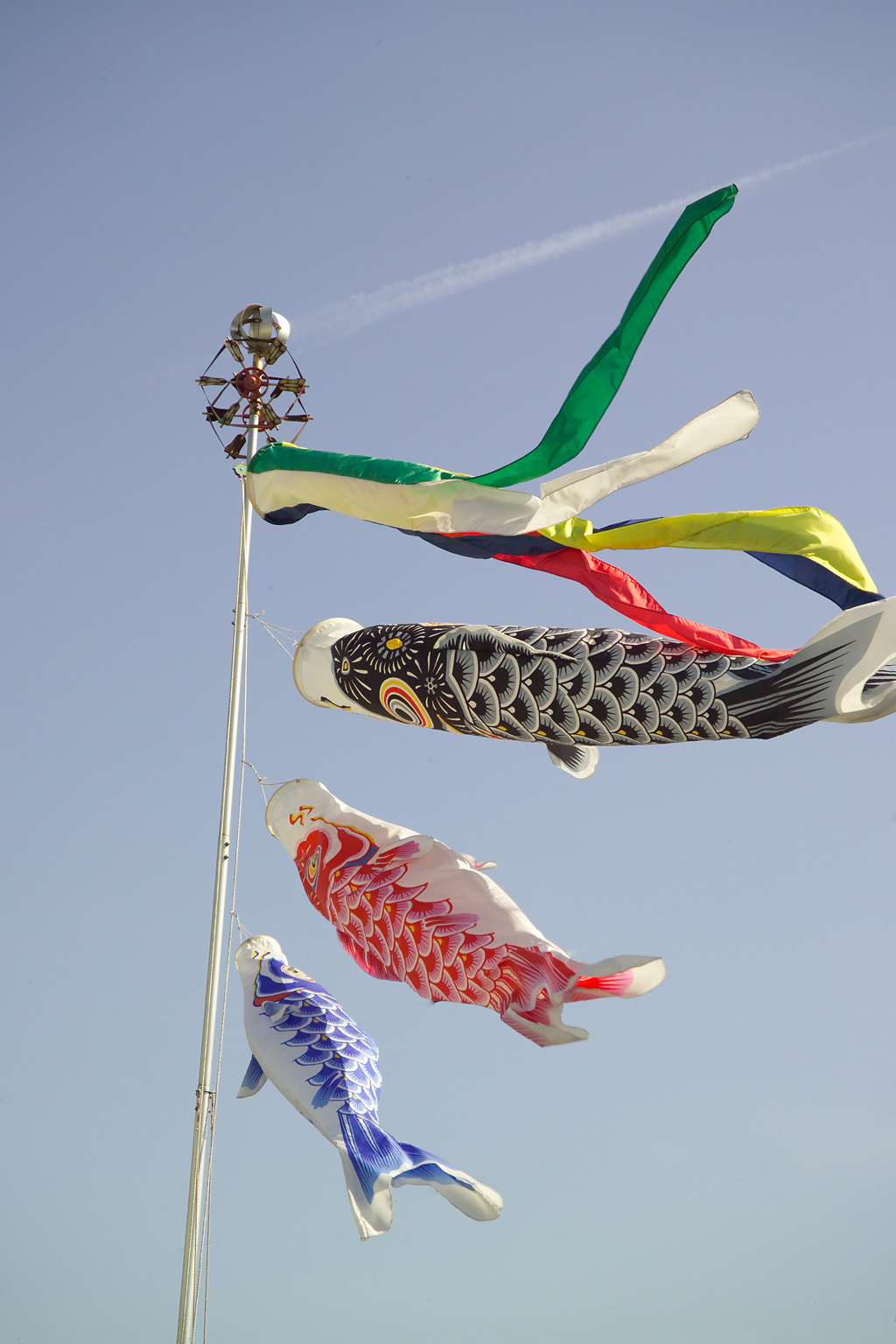
After World War II, the names of Japanese national holidays were completely changed because of the secular state principle (Article 20, The Constitution of Japan). Although many of them actually originated from Shinto, Buddhism and important events relating to the Japanese imperial family, it is not easy to understand the original meanings from the superficial and vague official names.
Notes: Single days between two national holidays are taken as a bank holiday. This applies to May 4, which is a holiday each year. When a national holiday falls on a Sunday the next day that is not a holiday (usually a Monday) is taken as a holiday.
| Date | English name | Official name | Romanization |
|---|---|---|---|
| January 1 | New Year's Day | ||
| Second Monday of January | Coming of Age Day | ||
| February 11 | National Foundation Day† | ||
| February 23 | The Emperor's Birthday | ||
| March 20 or 21 | Vernal Equinox Day | ||
| April 29 | Shōwa Day* | ||
| May 3 | Constitution Memorial Day* | ||
| May 4 | Greenery Day* | ||
| May 5 | Children's Day* | ||
| Third Monday of July | Marine Day | ||
| August 11 | Mountain Day | ||
| Third Monday of September | Respect for the Aged Day | ||
| September 22 or 23 | Autumnal Equinox Day | ||
| Second Monday of October | Sports Day | ||
| November 3 | Culture Day | ||
| November 23 | Labour Thanksgiving Day |
|† Traditional date on which according to legend Emperor Jimmu founded Japan in 660 BC. |* Part of Golden Week.}}
Timeline
- 1948: The following national holidays were introduced in the Public Holiday Law: New Year's Day, Coming-of-Age Day, Constitution Memorial Day, Children's Day, Autumnal Equinox Day, Culture Day, and Labor Thanksgiving Day.
- 1966: A supplementary provision to create Health and Sports Day was introduced in memory of the 1964 Tokyo Olympics. Vernal Equinox Day, National Foundation Day and Respect for the Aged Day were also introduced.
- 1985: Reform to the national holiday law made days like May 4, sandwiched between two other national holidays, a generic national holiday.
- 1989: After the Shōwa Emperor died on January 7, his birthday, April 29, was renamed Greenery Day and The Emperor's Birthday (observed as a national holiday since 1868) moved to December 23 for the succeeding Akihito.
- 1995: Reform to the national holiday law added Marine Day, to be celebrated July 20.
- 2000, 2003: Happy Monday System moved several holidays to Monday. Starting with 2000: Coming-of-Age Day (formerly January 15, now the second Monday in January) and Health and Sports Day (formerly October 10, now the second Monday in October). Starting with 2003: Marine Day (formerly July 20, now the third Monday in July) and Respect for the Aged Day (formerly September 15, now the third Monday in September).
- 2005, 2007: April 29 was renamed Shōwa Day, and May 4, previously a generic national holiday, became the new Greenery Day.
- 2014: Mountain Day was established as a new holiday, to be observed starting 2016
- 2019: Akihito's birthday is December 23; however, he abdicated April 30, 2019, in favor of his son Naruhito, which moved the "Emperor's Birthday" holiday to February 23. Because the transition happened before Akihito's birthday but after Naruhito's, the "Emperor's Birthday" holiday was not celebrated that year.
- 2020: The speech given by Naruhito during the New Year was the first given since 2017, when Akihito halted the practice to reduce his workload.
- 2021, 2022: Because of the COVID-19 crisis, Naruhito's New Year's greetings were delivered via a televised speech instead of in-person.
- 2023: The imperial family's New Year's greetings were held publicly for the first time in three years. The Emperor's Birthday on February 23 will also be the first time public celebrations will be held for the occasion since Naruhito's ascension in 2019. The latter events in 2020, 2021 and 2022 had all been cancelled due to concerns over COVID-19.
Seasonal festivals
The following are known as the five seasonal festivals, also known as . The sekku were made official holidays during Edo period on Chinese lunisolar calendar. The dates of these festivals are confused nowadays; some on the Gregorian calendar, others on "Tsuki-okure".
- 7th day of the 1st month: , held on January 7
- 3rd day of the 3rd month: , held on March 3 or April 3 depending on the area
- .
- 5th day of the 5th month: : mostly held on May 5
- ,
- Boys' Day. Overlaps with the national holiday Children's Day.
- 7th day of the 7th month: , held on July 7 in many areas, but in northern Japan held on August 7 (e.g. in Sendai)
- 9th day of the 9th month: , almost out of vogue today
Not sekku:
- January 1: Japanese New Year
- August 15: Obon – the date is "Tsuki-okure". In central Tokyo, Obon is held on July 15 (the local culture of Tokyo tends to dislike Tsuki-okure custom)
- December 31: Ōmisoka
Customary issues in modern Japan
Gregorian months and the "One-Month Delay"
In contrast to other East Asian countries such as China, Vietnam, Korea and Mongolia, Japan has almost completely forgotten the Chinese calendar. Since 1876, January has been officially regarded as the "first month" even when setting the date of Japanese traditional folklore events (other months are the same: February as the second month, March as the third, and so on). But this system often brings a strong seasonal sense of gap since the event is 3 to 7 weeks earlier than in the traditional calendar. Modern Japanese culture has invented a kind of "compromised" way of setting dates for festivals called Tsuki-okure ("One-Month Delay") or Chūreki ("The Eclectic Calendar"). The festival is celebrated just one solar calendar month later than the date on the Gregorian calendar. For example, the Buddhist festival of Obon was the 15th day of the 7th month. In many places the religious services are held on July 15. However, in some areas, the rites are normally held on August 15, which is more seasonally close to the old calendar. (The general term "Obon holiday" always refers to the middle of August.) Although this is just de facto and customary, it is broadly used when setting the dates of many folklore events and religious festivals. But Japanese New Year is the great exception. The date of Japanese New Year is always January 1.
References
References
- [https://www.japan-guide.com/e/e2272.html "Calendar" at Japan-guide.com]; Bramsen, William. (1880). [https://archive.org/details/bub_gb_mk8aAAAAIAAJ/page/n33 ''Japanese chronological tables'', p. 25].
- Clement, Ernest W. (1902). "[https://books.google.com/books?id=iq8BAAAAMAAJ&pg=PA1&dq= Japanese Calendars]", in ''Transactions of the Asiatic Society of Japan,'' Vol. 30–31, p. 3,
- See the page on the history of the calendar at the National Diet Library site: [http://www.ndl.go.jp/koyomi/e/].
- Bramsen, [https://archive.org/details/bub_gb_mk8aAAAAIAAJ/page/n71 pp. 5–11].
- Bramsen, [https://archive.org/details/bub_gb_mk8aAAAAIAAJ/page/n65 pp. 2–5].
- See list of nengō with the reasons for the changes in {{lang. ja-Latn. Rekishi Dokuhon, January 2008 ("Nihon no Nengo Tokushuu"), pp. 196–221.
- (July 15, 2014). "Understanding The Ways That Japan Tells Time".
- "Japan's New Imperial Era is Announced: 'Hesei' Ends, 'Reiwa' Begins".
- (May 2019). "Japan welcomes new emperor Naruhito as Reiwa era begins". The Guardian.
- "Japan's new era named 'Reiwa,' 1st from native source".
- (April 20, 2021). "New Japan era to be called 'Reiwa,' or pursuing harmony".
- (April 2019). "Reiwa: How Japan's new era name is breaking tradition". The Guardian.
- "Japan unveils dawn of the 'Reiwa' era".
- Bramsen, [https://archive.org/details/bub_gb_mk8aAAAAIAAJ/page/n19 p. 11].
- See "2533 years since Jinmu's accession" in the heading [http://www.ndl.go.jp/koyomi/e/history/pic10_2_lar.html] {{Webarchive. link. (January 22, 2013")
- "kigen" in ''Kokushi Daijiten'', vol. 4 (Yoshikawa Kôbunkan, 1983).
- {{nihongo2. 閏年ニ關スル件 (Japanese Imperial [[Edict]] No. 90, May 11, 1898)
- Bramsen, [https://archive.org/details/bub_gb_mk8aAAAAIAAJ/page/n33 p. 25].
- (October 16, 2015). "Japan's 72 Microseasons".
- "Takasago website has adopted a new theme. {{pipe".
- (February 3, 2023). "Japan's 24 Solar Terms".
- (February 3, 2023). "Risshun (Beginning of Spring)".
- "「卯月」で始まる言葉 – 国語辞書の検索結果 – goo辞書".
- "「水無月」で始まる言葉 – 国語辞書の検索結果 – goo辞書".
- Entries in the standard dictionaries ''Daijisen'' {{nihongo2. 大辞泉 (Shōgakukan {{nihongo2. 小学館), ''Daijirin'' {{nihongo2. 大辞林 (Sanseidō {{nihongo2. 三省堂), ''Nihon Kokugo Daijiten'' {{nihongo2. 日本国語大辞典 (Shōgakukan {{nihongo2. 小学館).
- (1998). "Practically Religious: Worldly Benefits and the Common Religion of Japan". University of Hawaii Press.
- ''Nihon Kokugo Daijiten'' {{nihongo2. 日本国語大辞典 (Shōgakukan {{nihongo2. 小学館) lists nine more besides.
- Miyao, Daisuke. (July 12, 2014). "The Oxford Handbook of Japanese Cinema". Oxford University Press USA.
- Nussbaum, [https://books.google.com/books?id=p2QnPijAEmEC&pg=PA513&dq= ''Kichijitsu''], p. 513.
- (2003). "The Japanese Fiscal Year and Miscellaneous Data". Japan International Research Center for Agricultural Sciences.
- "国民の祝日に関する法律 {{pipe}} e-Gov法令検索".
- "国民の祝日に関する法律の一部を改正する法律(平成10年法律第141号)/網際情報館".
- "国民の祝日に関する法律及び老人福祉法の一部を改正する法律(平成13年法律第59号)/網際情報館".
- "The Emperor's Birthday 2023, 2024 and 2025".
- "Japan: 16th National Holiday Added".
- "Asahi".
- (February 2018). "初めて天皇誕生日なし 政府が19年の祝日発表".
- (January 2, 2023). "Japan's emperor gives first public New Year's greeting since 2020". Reuters.
- (January 2021). "Japan's emperor acknowledges virus hardship in video message".
- "Imperial Household Agency".
- (February 23, 2021). "On his birthday, Japanese Emperor hopes for bright future amid pandemic". Reuters.
- (January 2, 2023). "Japan's emperor wishes for 'peaceful' 2023 in first live New Year address since pandemic began".
- "Emperor delivers 1st video message to rally people's hopes in crisis {{pipe}} the Asahi Shimbun: Breaking News, Japan News and Analysis". The Asahi Shimbun.
- "Emperor, family greet New Year crowds for 1st time since 2020 {{pipe}} the Asahi Shimbun: Breaking News, Japan News and Analysis". The Asahi Shimbun.
- (December 19, 2022). "Japan Emperor's Birthday Greeting Event to Resume".
- "His Majesty's Birthday Receptions - the Imperial Household Agency".
- (December 19, 2022). "Japan Emperor's Birthday Greeting Event to Resume".
This article was imported from Wikipedia and is available under the Creative Commons Attribution-ShareAlike 4.0 License. Content has been adapted to SurfDoc format. Original contributors can be found on the article history page.
Ask Mako anything about Japanese calendar — get instant answers, deeper analysis, and related topics.
Research with MakoFree with your Surf account
Create a free account to save articles, ask Mako questions, and organize your research.
Sign up freeThis content may have been generated or modified by AI. CloudSurf Software LLC is not responsible for the accuracy, completeness, or reliability of AI-generated content. Always verify important information from primary sources.
Report