From Surf Wiki (app.surf) — the open knowledge base
Janata Dal
Former political party in India, 1988–1999
.jpg)
Former political party in India, 1988–1999
| Field | Value |
|---|---|
| name | Janata Dal |
| logo | Janata Dal symbol.svg |
| logo_size | 150px |
| colorcode | |
| foundation | |
| country | India |
| abbreviation | JD |
| founder | V. P. Singh |
| dissolution | 2003 |
| merger | |
| successor | |
| ideology | Social democracy |
| position | Centre |
| national | |
| colours | Green |
Janata Dal () was an Indian political party which was formed through the merger of Lok Dal, Jagiivan's Congress, and Jan Morcha on 11 October 1988—the birth anniversary of Jayaprakash Narayan under the leadership of V. P. Singh.
History
V. P. Singh united the entire disparate spectrum of parties ranging from regional parties such as the Telugu Desam Party, the Dravida Munnetra Kazhagam, and the Asom Gana Parishad, and formed the National Front with N. T. Rama Rao as President and Singh as convenor. The front also included outside support from the right-wing Bharatiya Janata Party and the left-wing Left Front, led by the Communist Party of India and Communist Party of India (Marxist). They defeated Rajiv Gandhi's Congress (I) in the 1989 parliamentary elections. His government fell after Lalu Prasad Yadav got Advani arrested in Samastipur and stopped his Ram Rath Yatra, which was going to Ayodhya to the site of the Babri Masjid on 23 October 1990, and the Bharatiya Janata Party withdrew support. Singh lost a parliamentary vote of confidence on 7 November 1990. In the 1991 Indian general election the Janata Dal lost power but emerged as the third largest party in the Lok Sabha. The Janata Dal-led United Front formed the government after the 1996 Indian general election with the outside support of the Indian National Congress. However, after this the Janata Dal gradually disintegrated into various smaller factions, which largely became regional parties such as Biju Janata Dal, Rashtriya Janata Dal, Janata Dal (Secular) and Janata Dal (United).
Ascent to power
It first came to power in 1989, after cases of corruption, known as the Bofors scandal, caused Rajiv Gandhi's Congress (I) to lose the elections. The National Front coalition that was formed consisted of the Janata Dal and a few smaller parties in the government, and had outside support from the Left Front and the Bharatiya Janata Party. V. P. Singh was the prime minister. In November 1990, this coalition collapsed, and a new government headed by Chandra Shekhar under Samajwadi Janata Party (Rashtriya) which had the support of the Congress came to power for a short while. Two days before the vote, Chandra Shekhar, an ambitious Janata Dal rival who had been kept out of the National Front government, joined with Devi Lal, a former deputy prime minister under V. P. Singh, to form the Samajwadi Janata Party, with a total of sixty Lok Sabha members. The day after the collapse of the National Front government, Chandra Shekhar informed the president that by gaining the backing of the Congress (I) and its electoral allies he enjoyed the support of 280 members of the Lok Sabha, and he demanded the right to constitute a new government. Even though his rump party accounted for only one-ninth of the members of the Lok Sabha, Chandra Shekhar succeeded in forming a new minority Government and becoming prime minister (with Devi Lal as deputy prime minister). However, Chandra Shekhar's government fell less than four months later, after the Congress (I) withdrew its support.
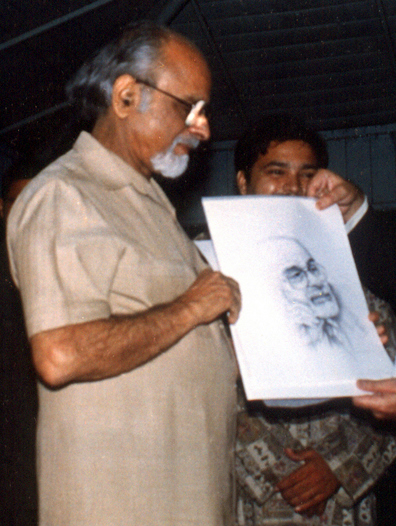
Its second spell of power began in 1996, when the Janata Dal-led United Front coalition came to power, with outside support from the Congress under Sitaram Kesri, choosing H. D. Deve Gowda as their prime minister. The Congress withdrew its support in less than a year, after the Deve Gowda Government restarted probing the corruption cases against a lot of Congress leaders, hoping to gain power with the support of various United Front constituent groups, and I. K. Gujral became the next prime minister. His government too fell in a few months, and in February 1998, the Janata Dal-led coalition lost power to the Bharatiya Janata Party in general elections.
Party presidents
| No. | Portrait | Presidents | Year | Duration | |||
|---|---|---|---|---|---|---|---|
| 1 | [[File:V. P. Singh (cropped).jpg | center | frameless | 133x133px]] | Vishwanath Pratap Singh | 1989-1997 | days |
| 2 | [[File:Sharadyadavjdu.jpg | center | frameless | 109x109px]] | Sharad Yadav | 1997-1999 | days |
National leadership
Vice president
| No. | Portrait | Vice president | Year | Duration | ||
|---|---|---|---|---|---|---|
| 1 | [[File:Krishan_Kant_2005_stamp_of_India.jpg | frameless | 100x100px]] | Krishan Kant | 21 August 1997 – 27 July 2002 | 4 years, 340 days |
Prime minister
| No. | Image | Prime ministers | Year | Duration | Constituency | |
|---|---|---|---|---|---|---|
| 1 | [[File:V._P._Singh_(cropped).jpg | 100px]] | Vishwanath Pratap Singh | 1989 1990 | 343 days | Fatehpur |
| 2 | [[File:Deve Gowda BNC.jpg | 100px]] | H. D. Deve Gowda | 1996 1997 | 324 days | (Rajya Sabha MP) from Karnataka |
| 3 | [[File:Inder Kumar Gujral 071.jpg | 100px]] | Inder Kumar Gujral | 1997 1998 | 332 days | (Rajya Sabha MP) from Bihar |
Deputy Prime Minister of India
| No. | Portrait | Deputy prime minister | Year | Duration | ||
|---|---|---|---|---|---|---|
| 1 | [[File:Chaudhary_Devi_Lal_2001_stamp_of_India.jpg | frameless | 136x136px]] | Devi Lal | 10 November 1990 – 21 June 1991 | 242 Days |
State leadership
Chief minister
| No. | Portrait | Chief ministers | State | Year | Duration | |||
|---|---|---|---|---|---|---|---|---|
| 1 | [[File:Uttar Pradesh Chief Minister Shri.Mulayam Singh Yadav, addressing at the National Development Council, New Delhi on December 9, 2006 (cropped).jpg | center | frameless | 120x120px]] | Mulayam Singh Yadav | Uttar Pradesh | ||
| 2 | Chimanbhai Patel | Gujarat | ||||||
| 3 | [[File:Lalu Prasad Yadav addressing the EEC - 2006 (cropped).jpg | center | frameless | 100x100px]] | Lalu Prasad Yadav | Bihar | ||
| 4 | [[File:Biju Patnaik 2018 stamp of India.jpg | center | frameless | 100x100px]] | Biju Patnaik | Odisha | ||
| 5 | [[File:The former Prime Minister, Shri H.D. Deve Gowda calling on the Prime Minister, Shri Narendra Modi, in New Delhi on June 03, 2015 (cropped 2).jpg | center | frameless | 152x152px]] | H. D. Deve Gowda | Karnataka | ||
| 6 | J. H. Patel | Karnataka | ||||||
| 7 | [[File:Devi Lal.jpg | center | frameless | 131x131px]] | Devi Lal | Haryana | ||
| 8 | [[File:Om Prakash Chautala.jpg | center | frameless | 121x121px]] | Om Prakash Chautala | Haryana | ||
| 9 | [[File:Banarsi Das Gupta.jpeg | center | frameless | 109x109px]] | Banarsi Das Gupta | Haryana | ||
| 10 | Hukum Singh | Haryana |
Deputy chief minister
| No. | Portrait | Deputy chief minister | State | Year | Duration | |||
|---|---|---|---|---|---|---|---|---|
| 1 | [[File:Banarsi Das Gupta.jpeg | center | frameless | 109x109px]] | Banarsi Das Gupta | Haryana | ||
| 2 | Hukam Singh | Haryana | ||||||
| 3 | J. H. Patel | Karnataka | ||||||
| 4 | [[File:The Chief Minister of Karnataka Siddaramaiah visits PMO.jpg | center | frameless | 109x109px]] | K. Siddaramaiah | Karnataka |
Electoral records
| Year | Seats won | Votes |
|---|---|---|
| 1989 Indian general election | 143 | 143 |
| 1991 Indian general election | 59 | 84 |
| 1996 Indian general election | 46 | 13 |
| 1998 Indian general election | 6 | 40 |
| Party Disintegrated |
National and state units

- National general secretary
State units
-
Uttar Pradesh Anantram Jaiswal (1983)
-
Karnataka
Presidents
B. Rachaiah (1989)
Siddaramaiah (Feb 1999)
C. Byre Gowda (July 1999)
General secretary
Jeevaraj Alva (1989-1990)
C. Narayanaswamy (1999)
-
Tamil Nadu
- President Sivaji Ganesan (1989–1993)
Factions
| Party name | Led by | Formed | Remarks | Pro-NDA parties | Pro-I.N.D.I.A. parties | Non-NDA/I.N.D.I.A. parties | |
|---|---|---|---|---|---|---|---|
| Rashtriya Lok Dal | Chaudhary Jayant Singh | 1996 | State Party in Uttar Pradesh | ||||
| Janata Dal (Secular) | H. D. Deve Gowda | 1999 | State Party in Karnataka | ||||
| Janata Dal (United) | Nitish Kumar | 2003 | Merger of Janata Dal (United) led by Sharad Yadav and Samata Party led by Nitish Kumar | State Party in Bihar & Manipur | |||
| Hindustani Awam Morcha (Secular) | Jitan Ram Manjhi | 2015 | Split from Janata Dal (United) | State party in Bihar | |||
| Lok Janshakti Party (Ram Vilas) | Chirag Paswan | 2021 | Factioned from Lok Janshakti Party | State Party in Bihar & Nagaland | |||
| Rashtriya Lok Morcha | Upendra Kushwaha | 2023 | Split from Janata Dal (United) | Unrecognised Party | |||
| Samajwadi Party | Akhilesh Yadav | 1992 | State Party in Uttar Pradesh and recognised in Maharashtra | ||||
| Rashtriya Janata Dal | Lalu Prasad Yadav | 1997 | State Party in Bihar and Jharkhand | - | |||
| Biju Janata Dal | Naveen Patnaik | 1997 | State Party in Odisha | ||||
| Indian National Lok Dal | Om Prakash Chautala | 1996 | Unrecognised Party | ||||
| Jannayak Janta Party | Ajay Singh Chautala | 2018 | Split from Indian National Lok Dal | Recognised | |||
| Rashtriya Lok Janshakti Party | Pashupati Kumar Paras | 2021 | Factioned from Lok Janshakti Party | Recognised Party |
Defunct parties
- Jan Adhikar Party (Loktantrik) led by Pappu Yadav (merged with Indian National Congress).
- Samajwadi Janata Party (Rashtriya) of Late Chandra Shekhar is now defunct because of weak leadership.
- Samajwadi Janata Dal (Democratic) led by Devendra Prasad Yadav (merged with Rashtriya Janata Dal).
- Bharatiya Sablog Party led by Arun Kumar (merged with Lok Janshakti Party (Ram Vilas)).
- Lok Janshakti Party of Late Ram Vilas Paswan and led by Chirag Paswan (split into the Lok Janshakti Party (Ram Vilas) led by Ram's son Chirag Paswan, and the Rashtriya Lok Janshakti Party led by Ram's brother Pashupati Kumar Paras).
- Rashtriya Lok Samta Party led by Upendra Kushwaha (merged with Janata Dal United).
- Loktantrik Janata Dal led by Late Sharad Yadav (merged with Rashtriya Janata Dal).
- Socialist Janata Party led by Manju Mohan (merged with Socialist Party (India)).
- Samras Samaj Party led by Nagmani (merged with Rashtriya Lok Samta Party).
- Samata Party of Late George Fernandes (merged with Janata Dal (United)).
- Socialist Janata (Democratic) led by Late M. P. Veerendra Kumar (merged with Janata Dal (United))
- Jan Morcha of Late V. P. Singh and led by Ajeya Pratap Singh (merged with Indian National Congress).
- Odisha Jan Morcha is defunct because of weak leadership.
- Odisha Gana Parishad led by Bijoy Mohapatra (merged with Nationalist Congress Party).
- All India Progressive Janata Dal led by Late Ramakrishna Hegde and late S. R. Bommai (merged with Janata Dal (United)).
- Janata Dal (Left) led by Late Surendra Mohan and Late M. P. Veerendra Kumar (merged with Janata Dal (Secular)).
- Lok Shakti led by Late Ramakrishna Hegde (merged with Janata Dal (United)).
- Pragatisheel Samajwadi Party (Lohiya) led by Shivpal Singh Yadav (merged with Samajwadi Party).
- Janata Dal (Gujarat) led by Late Chimanbhai Patel and Late Chhabildas Mehta (merged with Indian National Congress).
- Janata Dal (Digvijay) led by Digvijay Singh (merged with Bharatiya Janata Party).
- Janata Dal (Ajit) led by Late Ajit Singh (merged with Indian National Congress).
- Janata Dal (Socialist) led by Late Chandra Shekhar, Late Devi Lal, Late Mulayam Singh Yadav (renamed as Late Samajwadi Janata Party (Rashtriya)).
- Punjab Janata Morcha (PJM), in English the Punjab Popular Front, was a Sikh political party in the Indian state of Punjab. The party formed in 1989 as a splinter group of the Janata Dal. The party failed to win any election seats in its lifetime. Party president Kirpal Singh announced that the PJM was disbanded in 1997. Most members joined the Jan Morcha by 2003.
Dissolution == In August 1999, the Janata Dal (United) was formally designated by the Election Commission of India (ECI) following a legal dispute over the name and symbol of the original Janata Dal.
August 3, 1999: The Election Commission held a final hearing to listen to rival claims from factions led by Sharad Yadav (who wanted to join the NDA) and H.D. Deve Gowda (who opposed the move). August 4, 1999: The Election Commission issued an order freezing the original "Chakra (Wheel)" symbol of the Janata Dal. To resolve the immediate need for election identities for the upcoming general election, the ECI granted "ad-hoc recognition" to the two splinter groups: The Sharad Yadav-led faction was designated as Janata Dal (United). The H.D. Deve Gowda-led faction was designated as Janata Dal (Secular). Context of the Formation The split actually began on July 21, 1999, when those opposed to the BJP-led National Democratic Alliance expelled Sharad Yadav from the presidency and elected Deve Gowda in his place. The August 4th ruling effectively legalized the existence of the JD(U) as a distinct political entity for the 1999 elections. While the designation Janata Dal (United) appeared in August 1999, the party was reconstituted on its most widely recognized foundation date, October 30, 2003, through a formal merger with the Samata Party and Lok Shakti. == See also ==
- Samata Party
References
References
- "Samata Party".
- "Why the Far Right Rules Modi's India". [[Jacobin (magazine).
- N. Jose Chander. (1 January 2004). "Coalition Politics: The Indian Experience". Concept Publishing Company.
- (2010). "India Since Independence: Making Sense of Indian Politics". Pearson Education India.
- (29 November 2008). "V. P. Singh, a Leader of India Who Defended Poor, Dies at 77". New York Times.
- (2003). "Indian Parliamentary Democracy". Atlantic Publishers & Dist.
- (8 November 1990). "India's Cabinet Falls as Premier Loses Confidence Vote, by 142-346, and Quits". New York Times.
- "India Parliamentary Chamber: Lok Sabha Elections Held in 1991". Inter-Parliamentary Union.
- (5 April 2015). "Lalu green signal for Janata Parivar unity". [[The Times of India]].
- Srivastava, Aaku. (2022). "Sensex of Regional Parties". Prabhat Prakashan Pvt. Limited.
- "india-today".
- (31 March 1989). "Karnataka unit Janata Dal gets a president".
- "Rediff On The NeT: Spectre of split returns to haunt JD".
- Raj Chengappa. (15 September 1988). "Karnataka's new CM S.R. Bommai inherits a troubled legacy".
- Menon, Parvathi. "The fallout in Karnataka".
- (2020-04-06). "Rediff On The NeT:Samata Party breaks away from JD (U)".
- "Samras Samaj Party merges into RLSP".
- (2014-12-29). "Nitish Kumar hails SJD's merger with JD-U in Kerala : South, News - India Today". Indiatoday.intoday.in.
- (2014-12-29). "SJD Merges with Sharad Yadav's Janata Dal (United)". The New Indian Express.
- (24 December 2016). "From Lucknow to Delhi, parties that died with their founders". The Indian Express.
- https://www.indiatoday.in/magazine/nation/story/19990802-main-group-within-fractious-janata-dal-keen-to-join-bjp-led-nda-ruling-party-sceptical-824744-1999-08-01
- Janata Dal (United). Political Party, India, Bihar, History, Leaders, & Facts
- "Samata Party – Official Website".
This article was imported from Wikipedia and is available under the Creative Commons Attribution-ShareAlike 4.0 License. Content has been adapted to SurfDoc format. Original contributors can be found on the article history page.
Ask Mako anything about Janata Dal — get instant answers, deeper analysis, and related topics.
Research with MakoFree with your Surf account
Create a free account to save articles, ask Mako questions, and organize your research.
Sign up freeThis content may have been generated or modified by AI. CloudSurf Software LLC is not responsible for the accuracy, completeness, or reliability of AI-generated content. Always verify important information from primary sources.
Report