From Surf Wiki (app.surf) — the open knowledge base
Jack-o'-lantern
Carved pumpkin or root vegetable lantern
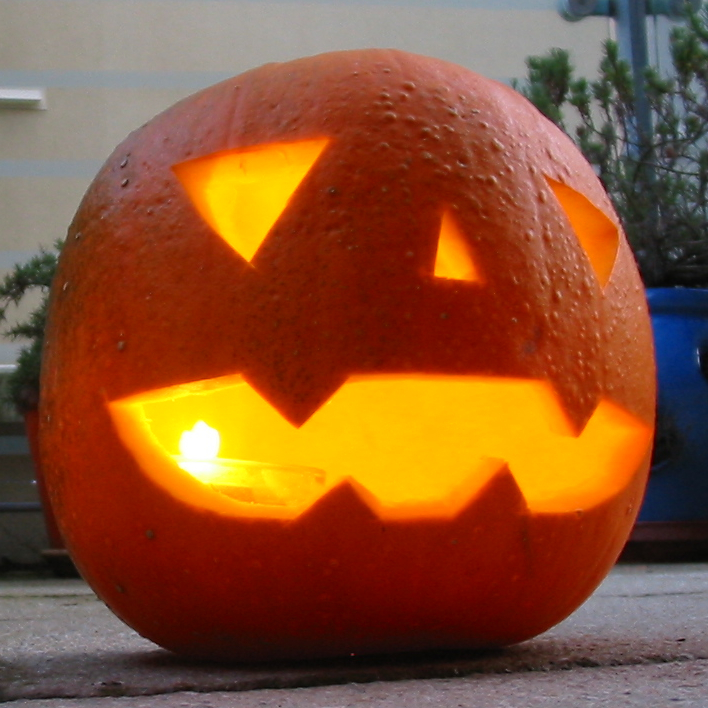
Carved pumpkin or root vegetable lantern

A jack-o'-lantern (or jack o'lantern) is a carved lantern, most commonly made from a pumpkin, or formerly a root vegetable such as a mangelwurzel, rutabaga or turnip. Jack-o'-lanterns are associated with the Halloween holiday. Its name comes from the phenomenon of strange lights flickering over peat bogs, called jack-o'-lanterns (also known as will-o'-the-wisps). It is suggested that the name also has ties to the Irish legend of Stingy Jack, a drunkard who, after deceiving people throughout his life and even Satan, is doomed to roam the Earth with only a hollowed turnip to light his way.
Jack-o'-lanterns carved from pumpkins are a yearly Halloween tradition that developed in the United States when Irish, Cornish, Scottish and other Celtic influenced immigrants brought their root vegetable carving traditions with them. It is common to see jack-o'-lanterns used as external and interior decorations prior to and on Halloween.
To make a jack-o'-lantern, the top of a pumpkin is cut off to form a lid, the inside flesh is scooped out, and an image—usually a "scary" or "funny" face—is carved out of the rind exposing the hollow interior. A light source, traditionally a candle flame or tealight, is placed within before the lid is closed. Artificial jack-o'-lanterns with electric lights are also marketed.
Etymology

The term jack-o'-lantern was originally used to describe the visual phenomenon ignis fatuus (lit., "foolish fire") known as a will-o'-the-wisp in English folklore. Used especially in East England, its earliest known use dates to the 1660s. The Oxford English Dictionary (OED) records use of the term in Britain from 1658 in reference to ignis fatuus, and from 1663 to 1704 in reference to a man with a lantern or to a night watchman. The OED gives 1837 as the earliest date for when the term was used to refer to a lantern carved from a turnip or pumpkin.
History
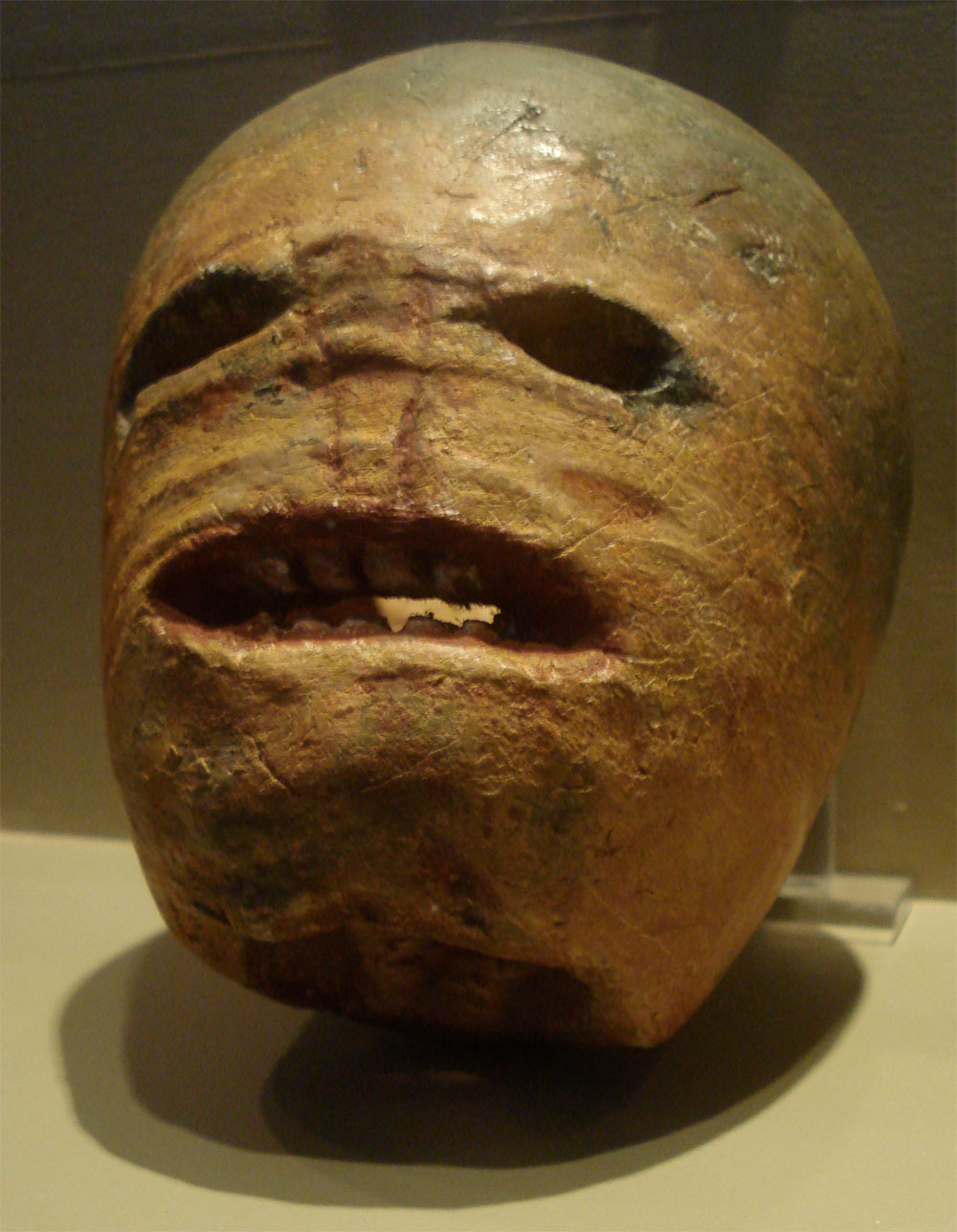
Origin
The carving of vegetables has been a common practice in many parts of the world. It is believed that the custom of making jack-o'-lanterns at Halloween time began in Ireland and Britain. In the 19th century, "turnips or mangel wurzels, hollowed out to act as lanterns and often carved with grotesque faces," were used on Halloween in parts of England, Ireland, Wales and Scotland. In Gaelic-speaking regions, Halloween was also the festival of Samhain and was seen as a time when supernatural beings (the Aos Sí) walked the earth. In Wales such nights were known as Ysbrydnosau (spirit nights), with Calan Gaeaf being the one which occurred on the night of 31 October. Jack-o'-lanterns were also made at Halloween time in Somerset, England (see Punkie Night) during the 19th century.
By those who made them, the lanterns were said to represent either spirits or supernatural beings, For example, sometimes they were used by Halloween participants to frighten people, and sometimes they were set on windowsills to keep harmful spirits out of one's home. It has also been suggested that the jack-o'-lanterns originally represented Christian souls in purgatory, as Halloween is the eve of All Saints' Day (1 November)/All Souls' Day (2 November).
On January 16, 1836, the Dublin Penny Journal published a long story on the legend of "Jack-o'-the-Lantern", although this does not mention the lantern being carved from a vegetable. In 1837, the Limerick Chronicle refers to a local pub holding a carved gourd competition and presenting a prize to "the best crown of Jack McLantern". The term "McLantern" also appears in an 1841 publication of the same paper.
There is also evidence that turnips were used to carve what was called a "Hoberdy's Lantern" in Worcestershire, England, at the end of the 18th century. The folklorist Jabez Allies outlines other derivations of the name, "Hobany's", which is most likely derived from "Hob and his", with other variations including "Hob-o'-Lantern", "Hobbedy's Lantern" and "Hobbady-lantern".
In North America
The application of the term to carved pumpkins in American English is first seen in 1837.
.jpg)
When wood-grapes were purpling and brown nuts were falling! When wild, ugly faces we carved in its skin,
Glaring out through the dark with a candle within!
The carved pumpkin lantern's association with Halloween is recorded in the 1 November 1866 edition of the Daily News (Kingston, Ontario):
In 1879's Funny Nursery Rhymes, a poem admonishes children to avoid being similar to untrustworthy "Master Jack o' Lantern," described as a "wicked, deceiving boy" similar to a will-o'-the-wisp who "dances, and jumps, and gambols." He is humorously illustrated as a personification of a lantern.
An 1885 article "Halloween Sports and Customs" contrasts the American jack-o'-lantern custom with the British bonfire custom:
Adaptations of Washington Irving's short story "The Legend of Sleepy Hollow" (1820) often show the Headless Horseman with a jack-o'-lantern in place of his severed head. In the original story, a shattered pumpkin is discovered next to the missing Ichabod Crane's abandoned hat on the morning after Crane's supposed encounter with the Horseman. The Horseman chased Crane and possibly threw his severed head at him, but the story does not reference jack-o'-lanterns or Halloween.
Folklore
The story of the jack-o'-lantern comes in many forms and is similar to the story of Will-o'-the-wisp retold in different forms across Western Europe, including, Italy, Norway, Spain and Sweden. In Switzerland, children will leave bowls of milk or cream out for mythical house spirits called Jack o' the bowl. An old Irish folk tale from the mid-18th century tells of Stingy Jack, a lazy yet shrewd blacksmith who uses a cross to trap Satan. One story says that Jack tricked Satan into climbing an apple tree, and once he was up there, Jack quickly placed crosses around the trunk or carved a cross into the bark, so that Satan could not get down.
Another version of the story says that Jack was getting chased by some villagers from whom he had stolen. He then met Satan, who claimed it was time for him to die. However, the thief stalled his death by tempting Satan with a chance to bedevil the church-going villagers chasing him. Jack told Satan to turn into a coin with which he would pay for the stolen goods (Satan could take on any shape he wanted); later, when the coin (Satan) disappeared, the Christian villagers would fight over who had stolen it. The Devil agreed to this plan. He turned himself into a silver coin and jumped into Jack's wallet, only to find himself next to a cross Jack had also picked up in the village. Jack closed the wallet tight, and the cross stripped the Devil of his powers; and so he was trapped.
In both folktales, Jack lets Satan go only after he agrees to never take his soul. Many years later, the thief died, as all living things do. Of course, Jack's life had been too sinful for him to go to Heaven; however, Satan had promised not to take his soul, and so he was barred from Hell as well. Jack now had nowhere to go. He asked how he would see where to go, as he had no light, and Satan mockingly tossed him a burning coal, to light his way. Jack carved out one of his turnips (which were his favorite food), put the coal inside it, and began endlessly wandering the Earth for a resting place. He became known as "Jack of the Lantern", or jack o'lantern.
Cornish folklorist Dr. Thomas Quiller Couch (d. 1884) recorded the use of the term in a rhyme used in Polperro, Cornwall, in conjunction with Joan the Wad, the Cornish version of Will-o'-the-wisp. The people of Polperro regarded them both as pixies. The rhyme goes:
Jack o' the lantern! Joan the wad, Who tickled the maid and made her mad Light me home, the weather's bad.
Jack-o-lanterns were also a way of protecting one's home against the undead. Superstitious people used them specifically to ward off vampires. They thought this because it was said that the jack-o-lantern's light was a way of identifying vampires who, once their identity was known, would give up their hunt for you.
Pumpkin craft

Sections of the pumpkin or turnip are cut out to make holes, often depicting a face, which may be either cheerful, scary, or comical. Jack-o'-lanterns are typically made from Connecticut field pumpkins, which are described as "the original commercial jack-o'-lantern pumpkin".
World records
For a long time, Keene, New Hampshire, held the world record for most jack-o'-lanterns carved and lit in one place. The Life is Good Company teamed up with Camp Sunshine, a camp for children with life-threatening illnesses and their families, to break the record. A record was set on October 21, 2006, when 30,128 jack-o'-lanterns were simultaneously lit on Boston Common in downtown Boston, Massachusetts. Highwood, Illinois, tried to set the record on October 31, 2011, with an unofficial count of 30,919 but did not follow the Guinness regulations, so the achievement did not count.
On October 19, 2013, Keene broke the Boston record and reclaimed the world record for most lit jack-o'-lanterns on display (30,581). The town has broken the record eight times since the original attempt.
References
References
- "The History of 'Jack-O'-Lantern'".
- "History of the Jack O' Lantern". HISTORY.
- Dixon, J. M.. (1891). "Dictionary of Idiomatic Phrases...". T. Nelson & Company.
- Harper, Douglas. "Jack o'lantern (n.)". Online Etymology Dictionary.
- "Jack-o'-lantern, n. meanings, etymology and more".
- (2007). "The Oxford Companion to American Food and Drink". Oxford University Press.
- (October 31, 2005). "Pumpkins Passions". BBC.
- (October 28, 2005). "Turnip battles with pumpkin for Hallowe'en". BBC.
- Hutton, Ronald. (1996). "The Stations of the Sun: A History of the Ritual Year in Britain". Oxford University Press.
- Palmer, Kingsley. (1973). "Oral folk-tales of Wessex". David & Charles.
- Wilson, David Scofield. (1999). "Rooted in America: Foodlore of Popular Fruits and Vegetables". University of Tennessee Press.
- Arnold, Bettina. (2001-10-31). "Bettina Arnold – Halloween Lecture: Halloween Customs in the Celtic World". Center for Celtic Studies.
- Rogers, Nicholas. (2003). "Halloween: From Pagan Ritual to Party Night". Oxford University Press.
- (1835). "History of Jack-o'-the-Lantern". Dublin Penny Journal.
- Kittredge, G. L.. (1900). "The Friar's Lantern and Friar Rush". PMLA.
- "Jack-o'-lantern". Oxford English Dictionary.
- (November 24, 1895). "The Day We Celebrate: Thanksgiving Treated Gastronomically and Socially". The New York Times.
- (October 21, 1900). "Odd Ornaments for Table". The New York Times.
- Whittier, John Greenleaf. (1885). "The Pumpkin".
- (November 1, 1866). "Carved pumpkin". Daily News.
- (1879). "Funny Nursery Rhymes". Ward, Lock, and Company.
- Sage, Agnes Carr. (October 27, 1885). "Halloween Sports and Customs".
- Morton, Lisa. (2012). "Trick or Treat: A History of Halloween". Reaktion Books.
- Skal, Richard. (2002). "Death Makes a Holiday: A Cultural History of Halloween". Bloomsbury.
- Santino, Jack. (1995). "All Around the Year: Holidays and Celebrations in American Life". University of Illinois Press.
- Allies, Jabez. (1856). "The British, Roman, and Saxon antiquities and folklore of Worcestershire". J.R. Smith.
- Newell, William Wells. (1 January 1904). "The Ignis Fatuus, Its Character and Legendary Origin". Journal of American Folk-Lore.
- "Brewer, e. Cobham. Dictionary of Phrase & Fable. Jack o' the Bowl".
- Mark Hoerrner. (2006). "History of the Jack-O-Lantern". buzzle.com.
- (2000). "A Dictionary of English Folklore". Oxford University Press.
- James, David. (2016-10-31). "The Tale o' Jack-o'-Lantern".
- (1990). "You Can Carve Fantastic Jack-O-Lanterns". Storey Communications.
- (2 January 2012). "The Perfect Pumpkin: Growing/Cooking/Carving". Storey Publishing, LLC.
- (January 2004). "The Compleat Squash: A Passionate Grower's Guide to Pumpkins, Squash, and Gourds". Artisan Books.
- "Home | Camp Sunshine".
- (October 22, 2006). "A Love in Common for Pumpkins". The Boston Globe.
- "Highwood sets pumpkin-carving record". Highland Park News.
- "Most Lit Jack-o'-lanterns Displayed".
This article was imported from Wikipedia and is available under the Creative Commons Attribution-ShareAlike 4.0 License. Content has been adapted to SurfDoc format. Original contributors can be found on the article history page.
Ask Mako anything about Jack-o'-lantern — get instant answers, deeper analysis, and related topics.
Research with MakoFree with your Surf account
Create a free account to save articles, ask Mako questions, and organize your research.
Sign up freeThis content may have been generated or modified by AI. CloudSurf Software LLC is not responsible for the accuracy, completeness, or reliability of AI-generated content. Always verify important information from primary sources.
Report