From Surf Wiki (app.surf) — the open knowledge base
J.League Cup
Association football tournament in Japan

Association football tournament in Japan
| Field | Value |
|---|---|
| organiser | J.League |
| name | J.League Cup |
| logo | J.League_Levain_Cup_logo.jpeg |
| founded | |
| region | Japan |
| number of teams | 60 |
| current champions | Sanfrecce Hiroshima |
| (2nd title) | |
| most successful club | Kashima Antlers (6 titles) |
| broadcasters | Fuji TV, SKY PerfecTV! |
| (live matches) | |
| website | |
| current | 2026–27 J.League Cup |
(2nd title) (live matches) The J.League Cup, a.k.a. J.League YBC Levain Cup or YBC Levain Cup is a Japanese football knockout tournament organised by J.League, the men's association football league in Japan. It has been sponsored by Yamazaki Biscuits (YBC) of Yamazaki Baking (formerly Yamazaki Nabisco) since its inception in 1992. It was known as the J.League Yamazaki Nabisco Cup or Nabisco Cup until August 2016.
It is generally regarded as the Japanese equivalent to league cup competitions played in many countries, such as the Football League Cup in England, as complementary to the Emperor's Cup competed between clubs from all divisions of professional football in Japan. Before the J. League Cup was created, the old Japan Soccer League had its own Japan Soccer League Cup since the 1976 season.
The tournament format varies almost each year largely depending on the schedule of international matches such as the Olympic Games and World Cup games (see the Format section below).
From 2007 to 2023, the winners qualified for the J.League Cup / Copa Sudamericana Championship held in the following summer, where they played against the winners of the Copa Sudamericana. The tournament was cancelled in 2020 due to the COVID-19 pandemic, but was not held for 2021 and 2022, before ultimately being cancelled in 2023.
Format
Early years (1992–1998)
;1992 :The founding ten clubs of the J. League participated as a warm-up to the upcoming inaugural league season. At the group stage, each team played the other teams once. There was no draw and the golden goal, extra time and penalty shootout was employed to decide a tie if necessary. A sudden death was applied to the penalty shoot-out from the first kicker. The winner of a game got four points. A team who scored two or more goals in a game also won one point. The top four teams of the group stage went on to the knock-out stage where the ties were single matches. ;1993 :Thirteen teams (the ten J. League sides as well as the three JFL sides who had J. League associate membership) took part. At the group stage, the teams were divided into two groups, one consisting seven and the other consisting six. Each team played the other teams in the same group once. The top two teams of each group were qualified for the knock-out stage where the ties were single matches. ;1994 :Fourteen teams (the twelve J. League sides as well as the two JFL sides who had J. League associate membership) took part. There was no group stage. The ties were single matches all through the competition. ;1995 :No competition ;1996 :The sixteen J. League sides participated. J. League associate member teams did not take part due to the congested schedule. At the group stage, the teams were divided into two groups. Each team played the other teams in the same group twice (home and away). A tie was decided by the aggregate of two matches. The winner of a tie got three points and a draw earned one point. The top two teams of each group were qualified for the knock-out stage where the ties were single matches. ;1997 :Twenty teams (all the J. League clubs and the JFL clubs with J. League associate membership) participated. At the group stage, the teams were divided into five groups. Each team played the other teams in the same group once. A win earned three points, a draw earned one point. There was no extra time at this stage. The top team of each group, as well as the three second-placed teams with the best records, were qualified for the knock-out stage where the ties were played over two matches (home and away). Although Sagan Tosu had forfeited their associate membership because of the bankruptcy of their forerunner Tosu Futures, they were allowed to enter the competition as a special case. ;1998 :Twenty teams (all the J. League clubs and the JFL clubs with J. League associate membership) participated. At the group stage, the teams were divided into four groups. Each team played the other teams in the same group once. The top team of each group was qualified for the knock-out stage where the ties were single matches.
As tournaments for J1 and J2 (1999–2001)
;1999 :All the twenty-six J1 and J2 clubs participated. There was no group stage. The ties were played over two matches (home and away) except the final where the winners were decided by a single game. ;2000 :All the twenty-seven J1 and J2 clubs participated. There was no group stage. The ties were played over two matches (home and away) except the final where the winners were decided by a single game. ;2001 :All the twenty-eight J1 and J2 clubs participated. There was no group stage. The ties were played over two matches (home and away) except the final where the winners were decided by a single game.
As tournaments for only J1 (2002–2017)
;2002 :All the sixteen J1 teams took part. At the group stage, the teams were divided into four groups. Each team played the other teams in the same group twice. The top two teams of the each group were qualified for the knock-out stage where the ties were single matches. ;2003
:All the sixteen J1 teams took part. Kashima Antlers and Shimizu S-Pulse were exempted from the group stage because they participated in the AFC Champions League. The remaining fourteen teams were divided into four groups, two groups containing four teams and the other two groups containing three. The top team of the each group and the second placed teams of the groups containing four teams as well as Kashima and Shimizu were qualified for the knock-out stage. The ties were played over two matches (home and away) except the final where the winners were decided by a single game. ;2004 :All the sixteen J1 teams took part. At the group stage, the teams were divided into four groups. Each team played the other teams in the same group twice. The top two teams of the each group were qualified for the knock-out stage where the ties were single matches. ;2005 :All the eighteen J1 teams took part. Yokohama F. Marinos and Jubilo Iwata were exempted from the group stage because they participated in the AFC Champions League. The remaining sixteen teams were divided into four groups. Each team played the other teams in the same group twice. The top team of the each group and the two second-placed teams with the best records as well as Marinos and Iwata were qualified for the knock-out stage. The ties were played over two matches (home and away) except the final where the winners were decided by a single game. From this year's competition, the golden goal rule was abolished and the extra time was always played for thirty minutes. ;2006 :All the eighteen J1 teams took part. Gamba Osaka were exempted from the group stage because they participated in the 2006 AFC Champions League. The remaining seventeen teams were divided into four groups, three of them containing four teams and the other containing five teams. Each team played the other teams in the same group twice but only one game was played between some pairs of teams in the group containing five teams. The top team of the each group and the three second placed teams with the best records as well as Gamba Osaka were qualified for the knock-out stage. The ties were played over two matches (home and away) except the final where the winners were decided by a single game. The away goal rule was employed for this year's competition but it was not applied to a goal in the extra time. ;2007 :The format of the 2007 competition was similar to that of 2006's, but the number of clubs participating from the group stage has been decreased to 16 due to two clubs', Kawasaki Frontale and Urawa Red Diamonds, participation in the 2007 AFC Champions League. See 2007 J. League Cup for details. ;2008
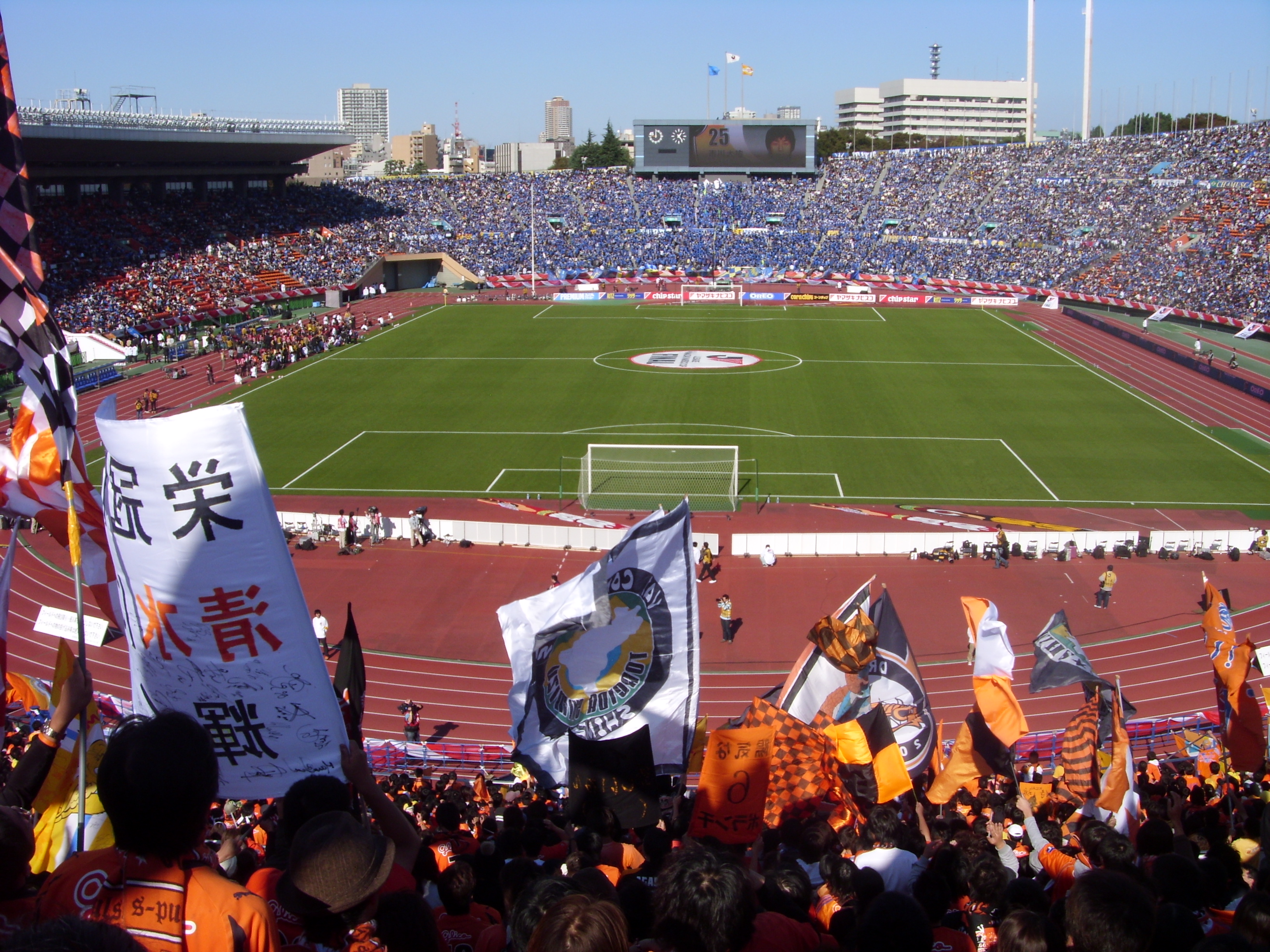
:The format of the 2008 competition was similar to that of 2007's. See 2008 J. League Cup for details. ;2009 :The format of the 2009 group stage was changed due to the number of clubs participating 2009 AFC Champions League increased from two to four. 14 remaining clubs were divided into two groups with seven clubs each, then two top clubs of each group were qualified for the knock-out stage. See 2009 J. League Cup for more details. ;2010 :The format of the 2010 competition was same as that of 2009's. See 2010 J. League Cup for details. ;2011 :Although the format of the 2011 competition is planned to be same as that of 2009's and 2010's, it was abandoned due to 2011 Tōhoku earthquake and tsunami and replaced by a format without group stage (five knockout stages only). See 2011 J. League Cup for details. ;2012–2017 :See 2012 J. League Cup, 2013 J. League Cup, 2014 J. League Cup, 2015 J. League Cup, 2016 J. League Cup, and 2017 J.League Cup for details.
As tournaments for J1 and J2 (2018–2023)
0 to 2 clubs (varies depending on the number of J1 teams participating in the ACL group stage) that were relegated to J2 last year and all J1 clubs can now participate. This is last season of group stage format in 2023.
As tournaments for J1, J2 and J3 (2024–present)
All of the 60 J. League clubs participated in a full knockout format which started from 2024.
For the 2024 season, the three Japanese clubs qualified for the 2023–24 AFC Champions League knockout stage (i.e. Kawasaki Frontale, Yokohama F. Marinos and Ventforet Kofu) received a bye to the knockout phase, while the remaining 57 J.League clubs were split into 10 groups of five or six for the first three rounds (known as the "first stage") based on their performance in the 2023 league season, with the winners of each single leg single-elimination group advanced to the two-legged play-off round. The five winners of the play-off round will join the three aforementioned clubs in the knockout stage (known locally as the "prime stage"), in which the format was unchanged.
Prizes
- Champions: J. League Cup, YBC Levain Cup, Champion medals and 150 million yen
- Runners-up: J. League Commemorative Plaque, Runner-up medals, and 50 million yen
- 3rd place (2 clubs): J. League Commemorative Plaque and 20 million yen to each 3rd placed club
Trophy
The trophy has been produced by Tiffany & Co. since the third tournament in 1994. The sterling silver trophy, about 56cm tall, includes a soccer ball motif at the tip as a design feature. The tournament names "J.LEAGUE" and "YBC Levain CUP" are engraved on a silver plate attached to its ebony wood base.
Finals
| Year | Winners | Score | Runners-up | Venue | Attendance |
|---|---|---|---|---|---|
| 1992 | Verdy Kawasaki | 1–0 | Shimizu S-Pulse | National Stadium | 56,000 |
| 1993 | Verdy Kawasaki | 2–1 | Shimizu S-Pulse | National Stadium | 53,677 |
| 1994 | Verdy Kawasaki | 2–0 | Júbilo Iwata | Kobe Universiade Memorial Stadium | 37,475 |
| 1995 | Not played | ||||
| 1996 | Shimizu S-Pulse | 3–3 | |||
| Verdy Kawasaki | National Stadium | 28,232 | |||
| 1997 | Kashima Antlers | 7–2 agg. | |||
| 2–1 | |||||
| 5–1 | Júbilo Iwata | First leg: Yamaha Stadium | |||
| Second leg: Kashima Soccer Stadium | First leg: 10,437 | ||||
| Second leg: 14,444 | |||||
| 1998 | Júbilo Iwata | 4–0 | JEF United Ichihara | National Stadium | 41,718 |
| 1999 | Kashiwa Reysol | 2–2 | |||
| Kashima Antlers | National Stadium | 35,238 | |||
| 2000 | Kashima Antlers | 2–0 | Kawasaki Frontale | National Stadium | 26,992 |
| 2001 | Yokohama F. Marinos | 0–0 | |||
| Júbilo Iwata | National Stadium | 31,019 | |||
| 2002 | Kashima Antlers | 1–0 | Urawa Red Diamonds | National Stadium | 56,064 |
| 2003 | Urawa Red Diamonds | 4–0 | Kashima Antlers | National Stadium | 51,758 |
| 2004 | FC Tokyo | 0–0 | |||
| Urawa Red Diamonds | National Stadium | 53,236 | |||
| 2005 | JEF United Chiba | 0–0 | |||
| Gamba Osaka | National Stadium | 45,039 | |||
| 2006 | JEF United Chiba | 2–0 | Kashima Antlers | National Stadium | 44,704 |
| 2007 | Gamba Osaka | 1–0 | Kawasaki Frontale | National Stadium | 41,569 |
| 2008 | Oita Trinita | 2–0 | Shimizu S-Pulse | National Stadium | 44,723 |
| 2009 | FC Tokyo | 2–0 | Kawasaki Frontale | National Stadium | 44,308 |
| 2010 | Júbilo Iwata | 5–3 | Sanfrecce Hiroshima | National Stadium | 39,767 |
| 2011 | Kashima Antlers | 1–0 | Urawa Red Diamonds | National Stadium | 46,599 |
| 2012 | Kashima Antlers | 2–1 | Shimizu S-Pulse | National Stadium | 45,228 |
| 2013 | Kashiwa Reysol | 1–0 | Urawa Red Diamonds | National Stadium | 46,675 |
| 2014 | Gamba Osaka | 3–2 | Sanfrecce Hiroshima | Saitama Stadium 2002 | 38,126 |
| 2015 | Kashima Antlers | 3–0 | Gamba Osaka | Saitama Stadium 2002 | 50,828 |
| 2016 | Urawa Red Diamonds | 1–1 | |||
| Gamba Osaka | Saitama Stadium 2002 | 51,248 | |||
| 2017 | Cerezo Osaka | 2–0 | Kawasaki Frontale | Saitama Stadium 2002 | 53,452 |
| 2018 | Shonan Bellmare | 1–0 | Yokohama F. Marinos | Saitama Stadium 2002 | 44,242 |
| 2019 | Kawasaki Frontale | 3–3 | |||
| Hokkaido Consadole Sapporo | Saitama Stadium 2002 | 48,119 | |||
| 2020 | FC Tokyo | 2–1 | Kashiwa Reysol | National Stadium | 24,219 |
| 2021 | Nagoya Grampus | 2–0 | Cerezo Osaka | Saitama Stadium 2002 | 17,933 |
| 2022 | Sanfrecce Hiroshima | 2–1 | Cerezo Osaka | National Stadium | 39,608 |
| 2023 | Avispa Fukuoka | 2–1 | Urawa Red Diamonds | National Stadium | 61,683 |
| 2024 | Nagoya Grampus | 3–3 | |||
| Albirex Niigata | National Stadium | 62,517 | |||
| 2025 | Sanfrecce Hiroshima | 3–1 | Kashiwa Reysol | National Stadium | 62,466 |
Performances by team
| Club | Winners | Runners-up | Winning seasons | Runners-up seasons |
|---|---|---|---|---|
| Kashima Antlers | 1997, 2000, 2002, 2011, 2012, 2015 | 1999, 2003, 2006 | ||
| Tokyo Verdy | 1992, 1993, 1994 | 1996 | ||
| FC Tokyo | 2004, 2009, 2020 | |||
| Urawa Red Diamonds | 2003, 2016 | 2002, 2004, 2011, 2013, 2023 | ||
| Júbilo Iwata | 1998, 2010 | 1994, 1997, 2001 | ||
| Gamba Osaka | 2007, 2014 | 2005, 2015, 2016 | ||
| Sanfrecce Hiroshima | 2022, 2025 | 2010, 2014 | ||
| JEF United Chiba | 2005, 2006 | 1998 | ||
| Kashiwa Reysol | 1999, 2013 | 2020, 2025 | ||
| Nagoya Grampus | 2021, 2024 | |||
| Shimizu S-Pulse | 1996 | 1992, 1993, 2008, 2012 | ||
| Kawasaki Frontale | 2019 | 2000, 2007, 2009, 2017 | ||
| Cerezo Osaka | 2017 | 2021, 2022 | ||
| Yokohama F. Marinos | 2001 | 2018 | ||
| Oita Trinita | 2008 | |||
| Shonan Bellmare | 2018 | |||
| Avispa Fukuoka | 2023 | |||
| Hokkaido Consadole Sapporo | 2019 | |||
| Albirex Niigata | 2024 |
Most valuable players
| Year | Winner | Club | Nationality |
|---|---|---|---|
| 1992 | Kazuyoshi Miura | Verdy Kawasaki | |
| 1993 | Bismarck | Verdy Kawasaki | |
| 1994 | Bismarck | Verdy Kawasaki | |
| 1996 | Santos | Shimizu S-Pulse | |
| 1997 | Jorginho | Kashima Antlers | |
| 1998 | Nobuo Kawaguchi | Júbilo Iwata | |
| 1999 | Takeshi Watanabe | Kashiwa Reysol | |
| 2000 | Koji Nakata | Kashima Antlers | |
| 2001 | Tatsuya Enomoto | Yokohama F. Marinos | |
| 2002 | Mitsuo Ogasawara | Kashima Antlers | |
| 2003 | Tatsuya Tanaka | Urawa Red Diamonds | |
| 2004 | Yoichi Doi | FC Tokyo | |
| 2005 | Tomonori Tateishi | JEF United Chiba | |
| 2006 | Koki Mizuno | JEF United Chiba | |
| 2007 | Michihiro Yasuda | Gamba Osaka | |
| 2008 | Daiki Takamatsu | Oita Trinita | |
| 2009 | Takuji Yonemoto | FC Tokyo | |
| 2010 | Ryoichi Maeda | Júbilo Iwata | |
| 2011 | Yuya Osako | Kashima Antlers | |
| 2012 | Gaku Shibasaki | Kashima Antlers | |
| 2013 | Masato Kudo | Kashiwa Reysol | |
| 2014 | Patric | Gamba Osaka | |
| 2015 | Mitsuo Ogasawara | Kashima Antlers | |
| 2016 | Tadanari Lee | Urawa Red Diamonds | |
| 2017 | Kenyu Sugimoto | Cerezo Osaka | |
| 2018 | Daiki Sugioka | Shonan Bellmare | |
| 2019 | Shota Arai | Kawasaki Frontale | |
| 2020 | Leandro | FC Tokyo | |
| 2021 | Sho Inagaki | Nagoya Grampus | |
| 2022 | Pieros Sotiriou | Sanfrecce Hiroshima | |
| 2023 | Hiroyuki Mae | Avispa Fukuoka | |
| 2024 | Mitchell Langerak | Nagoya Grampus | |
| 2025 | Hayato Araki | Sanfrecce Hiroshima |
New Hero Award
This award is presented to an under-23 player who made the biggest contribution to his team in the competition. The winner is decided based on votes from football journalists.
| Year | Winner | Club |
|---|---|---|
| 1996 | Hiroshi Nanami | Júbilo Iwata |
| Toshihide Saito | Shimizu S-Pulse | |
| 1997 | Atsuhiro Miura | Yokohama Flügels |
| 1998 | Naohiro Takahara | Júbilo Iwata |
| 1999 | Yukihiko Sato | FC Tokyo |
| 2000 | Takayuki Suzuki | Kashima Antlers |
| 2001 | Hitoshi Sogahata | Kashima Antlers |
| 2002 | Keisuke Tsuboi | Urawa Red Diamonds |
| 2003 | Tatsuya Tanaka | Urawa Red Diamonds |
| 2004 | Makoto Hasebe | Urawa Red Diamonds |
| 2005 | Yuki Abe | JEF United Chiba |
| 2006 | Hiroyuki Taniguchi | Kawasaki Frontale |
| 2007 | Michihiro Yasuda | Gamba Osaka |
| 2008 | Mu Kanazaki | Oita Trinita |
| 2009 | Takuji Yonemoto | FC Tokyo |
| 2010 | Yojiro Takahagi | Sanfrecce Hiroshima |
| 2011 | Genki Haraguchi | Urawa Red Diamonds |
| 2012 | Hideki Ishige | Shimizu S-Pulse |
| 2013 | Manabu Saitō | Yokohama F. Marinos |
| 2014 | Takashi Usami | Gamba Osaka |
| 2015 | Shuhei Akasaki | Kashima Antlers |
| 2016 | Yosuke Ideguchi | Gamba Osaka |
| 2017 | Takuma Nishimura | Vegalta Sendai |
| 2018 | Keita Endo | Yokohama F. Marinos |
| 2019 | Keito Nakamura | Gamba Osaka |
| 2020 | Ayumu Seko | Cerezo Osaka |
| 2021 | Zion Suzuki | Urawa Red Diamonds |
| 2022 | Sota Kitano | Cerezo Osaka |
| 2023 | Jumpei Hayakawa | Urawa Red Diamonds |
| 2024 | Riku Yamane | Yokohama F. Marinos |
| 2025 | Yotaro Nakajima | Sanfrecce Hiroshima |
Broadcasters
Japan
All matches of the competition is currently broadcast live by Fuji TV and SKY PerfecTV! respectively.
Outside Japan
YouTube only broadcast live coverage in prime stage matches through J.League International channel (excluding China, Hong Kong, Thailand, and Brazil).
References
References
- (22 June 2016). "2016 J.League Cup renamed to J.League YBC Levain Cup". Japan Professional Football League.
- "2024 JリーグYBCルヴァンカップの優勝トロフィー【2024 JリーグYBCルヴァンカップ】". Japan Professional Football League.
This article was imported from Wikipedia and is available under the Creative Commons Attribution-ShareAlike 4.0 License. Content has been adapted to SurfDoc format. Original contributors can be found on the article history page.
Ask Mako anything about J.League Cup — get instant answers, deeper analysis, and related topics.
Research with MakoFree with your Surf account
Create a free account to save articles, ask Mako questions, and organize your research.
Sign up freeThis content may have been generated or modified by AI. CloudSurf Software LLC is not responsible for the accuracy, completeness, or reliability of AI-generated content. Always verify important information from primary sources.
Report