From Surf Wiki (app.surf) — the open knowledge base
J. C. Watts
American politician (born 1957)

American politician (born 1957)
| Field | Value |
|---|---|
| name | J. C. Watts |
| image | J. C. Watts (3x4 cropped).JPG |
| caption | Official portrait, 2003 |
| office | Chair of the House Republican Conference |
| 1blankname | Vice Chair |
| 1namedata | Tillie Fowler |
| Deborah Pryce | |
| leader | Dennis Hastert |
| term_start | January 3, 1999 |
| term_end | January 3, 2003 |
| predecessor | John Boehner |
| successor | Deborah Pryce |
| state1 | Oklahoma |
| district1 | |
| term_start1 | January 3, 1995 |
| term_end1 | January 3, 2003 |
| predecessor1 | Dave McCurdy |
| successor1 | Tom Cole |
| office2 | Member of the Oklahoma Corporation Commission |
| governor2 | David Walters |
| term_start2 | January 14, 1991 |
| term_end2 | January 3, 1995 |
| predecessor2 | James Townsend |
| successor2 | Ed Apple |
| birth_name | Julius Caesar Watts Jr. |
| birth_date | |
| birth_place | Eufaula, Oklahoma, U.S. |
| party | Republican |
| spouse | |
| children | 6, including Trey |
| relatives | Wade Watts (uncle) |
| education | University of Oklahoma (BA) |
| module | {{Infobox NFL biography |
| embed | yes |
| image | Football signed by 1976 Oklahoma Sooners (1987.574).jpg |
| caption | A football from the Oklahoma Sooners and signed by the team. Notable signatures include Billy Sims (1978 Heisman Trophy winner) and J. C. Watts. On the white quarter of the football an inscription to Ford was written in red. |
| position | Quarterback |
| high_school | Eufaula (OK) |
| college | Oklahoma (1976–1980) |
| cflstatlabel1 | Passing completions |
| cflstatvalue1 | 851 |
| cflstatlabel2 | Passing attempts |
| cflstatvalue2 | 1,608 |
| cflstatlabel3 | Passing yards |
| cflstatvalue3 | 12,414 |
| cflstatlabel4 | TD–INT |
| cflstatvalue4 | 66–93 |
| cflstatlabel5 | Rushing yards |
| cflstatvalue5 | 2,312 |
| cflstatlabel6 | Rushing touchdowns |
| cflstatvalue6 | 13 |
Deborah Pryce
- Ottawa Rough Riders ()
- Toronto Argonauts ()
- Grey Cup MVP (1981)
- 2× Second-team All-Big Eight (1979, 1980)
- Japan Bowl MVP (1981) Julius Caesar Watts Jr. (born November 18, 1957) is an American politician, clergyman, and former football player. Watts played as a quarterback in college football for the Oklahoma Sooners and later played professionally in the Canadian Football League (CFL). He served in the U.S. House of Representatives from 1995 to 2003 as a Republican, representing .
Watts was born and raised in Eufaula, Oklahoma, in a rural impoverished neighborhood. After being one of the first children to attend an integrated elementary school, he became a high school quarterback and gained a football scholarship to the University of Oklahoma. He graduated from college in 1981 with a degree in journalism and became a football player in the CFL until his retirement in 1986. He was the MVP of the 69th Grey Cup.
Watts became a Baptist minister and was elected in 1990 to the Oklahoma Corporation Commission as the first African-American in Oklahoma to win statewide office. He successfully ran for Congress in 1994 and was re-elected to three additional terms with increasing vote margins. Watts delivered the Republican response to Bill Clinton's 1997 State of the Union address and was elected Chair of the House Republican Conference in 1998. He retired in 2003 and turned to lobbying and business work, also occasionally serving as a political commentator.
Early life and career
Watts was born in Eufaula in McIntosh County, Oklahoma to J. C. "Buddy" Watts Sr., and Helen Watts (d. 1992). His father was a Baptist minister, cattle trader, the first black police officer in Eufaula, and a member of the Eufaula City Council. His mother was a homemaker. Watts is the fifth of six children and grew up in a poor rural African-American neighborhood. He was one of two black children who integrated the Jefferson Davis Elementary School in Eufaula and the first black quarterback at Eufaula High School.
While in high school, Watts fathered a daughter with a white woman, causing a scandal. Their families decided against an interracial marriage because of contemporary racial attitudes and Watts' family provided for the child until she could be adopted by Watts' uncle, Wade Watts, a Baptist minister, civil rights leader and head of the Oklahoma division of the NAACP.
He graduated from high school in 1976 and attended the University of Oklahoma on a football scholarship. In 1977, Watts married Frankie Jones, an African-American woman with whom he had fathered a second daughter during high school.
Watts began his college football career as the second-string quarterback and left college twice, but his father convinced him to return, and Watts became starting quarterback of the Sooners in 1979 and led them to consecutive Orange Bowl victories. Watts graduated from college in 1981 with a Bachelor of Arts in journalism. Watts was selected by the New York Jets of the National Football League in the eighth round of the 1981 NFL Draft. The Jets tried Watts at several positions and could not guarantee that he would play quarterback, so he opted to sign with the CFL's Ottawa Rough Riders. As Ottawa's quarterback, he helped the team reach the 1981 Grey Cup game, which they nearly won in an upset. Watts stayed with the Rough Riders from 1981 to 1985 and played a season for the Toronto Argonauts before retiring in 1986.
Watts returned to Oklahoma and became a youth minister in Del City and was ordained as a Baptist minister in 1993. Watts won election to the Oklahoma Corporation Commission in November 1990 He served as a member of the commission from 1990 to 1995 and as its chairman from 1993 to 1995.
U.S. House of Representatives

1994 congressional election
Watts ran for Congress in 1994 to succeed Dave McCurdy, who had announced his retirement from the House of Representatives to run for the Senate. He positioned himself as both a fiscal and social conservative, favoring the death penalty, school prayer, a balanced budget amendment and welfare reform, and opposing abortion, gay rights, and reduced defense spending. as the first African-American Republican U.S. Representative from south of the Mason–Dixon line since Reconstruction. He and Gary Franks of Connecticut were the only two African-American Republicans in the House. Oklahoma's Fourth District at the time was 90 percent white and had been represented by Democrats since 1922.
As Congressman, Watts was assigned to the Armed Services Committee and the Financial Services Committee. He initially supported ending affirmative action, declaring inadequate education the main obstacle for racial equality, but subsequently opposed legislation banning the practice for the federal government. Watts focused on promoting his party, attending NAACP meetings and meeting with representatives from historically black colleges. In 1995, Watts was named national co-chairman for the presidential campaign of Republican Bob Dole.
Reelection and successive terms
Watts' 1996 reelection campaign featured state representative Ed Crocker as the Democratic candidate in a negative campaign. Watts denied the charge, took the test, and accused Crocker of draft dodging during the Vietnam War and later living at the "center of the West Coast drug culture." Watts was given a featured speaking role at the 1996 Republican National Convention and was re-elected with 58 percent of the vote in the 1996 U.S. House election.
Following the election, Watts switched from the Financial Services Committee to the House Transportation Committee. He was the only African-American Republican in the House and was chosen to deliver the Republican reply to President Bill Clinton's State of the Union address in February 1997, the youngest congressman and first African-American to do so. In his response, Watts focused on providing a positive vision of the Republican Party and advocated deficit and tax reduction and faith-based values. Watts had previously spoken to The Washington Times and created controversy by criticizing "race-hustling poverty pimps" as keeping African-Americans dependent on government. These remarks were viewed as critical of activist Jesse Jackson and Washington, D.C. mayor Marion Barry, and Jesse Jackson Jr. demanded a public apology. Watts stated he did not speak about Barry and Jackson but about "some of the leadership in the black community."
In his 1998 reelection campaign against Democrat Ben Odom, Watts faced accusations about debts, unpaid taxes and over actions in a federal bribery investigation in 1991, where he arranged to receive campaign contributions from a lobbyist for telephone companies that were investigated during Watts' membership on the Oklahoma Corporation Commission. Odom used portions of a transcript to try to discredit Watts, and the accusations were widely publicized in Oklahoma. Watts argued he had been exonerated from any criminal conduct and that his financial problems were a result of losses for Oklahoma oil and gas businesses during the 1980s. He was re-elected with 62 percent of the vote.
From 1995 until 1997, Watts was only one of two black Republicans in Congress (along with Gary Franks of Connecticut). From 1997 until 2003, Watts was the only black Republican Congressman. There would not be another until the elections of Tim Scott and Allen West in 2010.
Leadership position and retirement
In Congress, Watts had established himself as a "devoted conservative." He had a lifetime 94 percent rating from the American Conservative Union and a lifetime "liberal quotient" of 1 percent from Americans for Democratic Action, and was regarded as a team player by Republicans. after a vote of 121–93. Watts assumed the position in 1999 and was the first African-American Republican elected to a leadership post.

In his leadership position, Watts opposed government regulations and President Clinton's attempt to restore the ability of the Food and Drug Administration to regulate tobacco products. He voted to impeach Bill Clinton, Watts argued for using tax reduction to improve education, job training and housing in poor urban and rural settings, and advocated letting religious institutions carry out the work.
To keep a majority of House seats in the 2000 election, Watts advised Republicans to moderate their language and criticized the party for creating the perception it favored a view of "family values that excluded single mothers." Watts won re-nomination with 81 percent against James Odom and was re-elected by his largest margin yet against Democratic candidate Larry Weatherford.
After George W. Bush took office as president, Watts co-sponsored a bill to create tax incentives for charitable donations and allow religious charities to receive federal money for social programs, and proposed several new tax reductions in addition to Bush's tax cut plan, targeting the estate tax and marriage penalty. Watts was one of ten congressional leaders taken to an undisclosed location following the September 11 attacks.
In 2002, Watts stated he would not seek reelection, citing a desire to spend more time with his family, Republicans argued Watts complained about the party message and the cancellation of an artillery system in his district by the Bush Administration, which Watts denied.
Post-congressional career

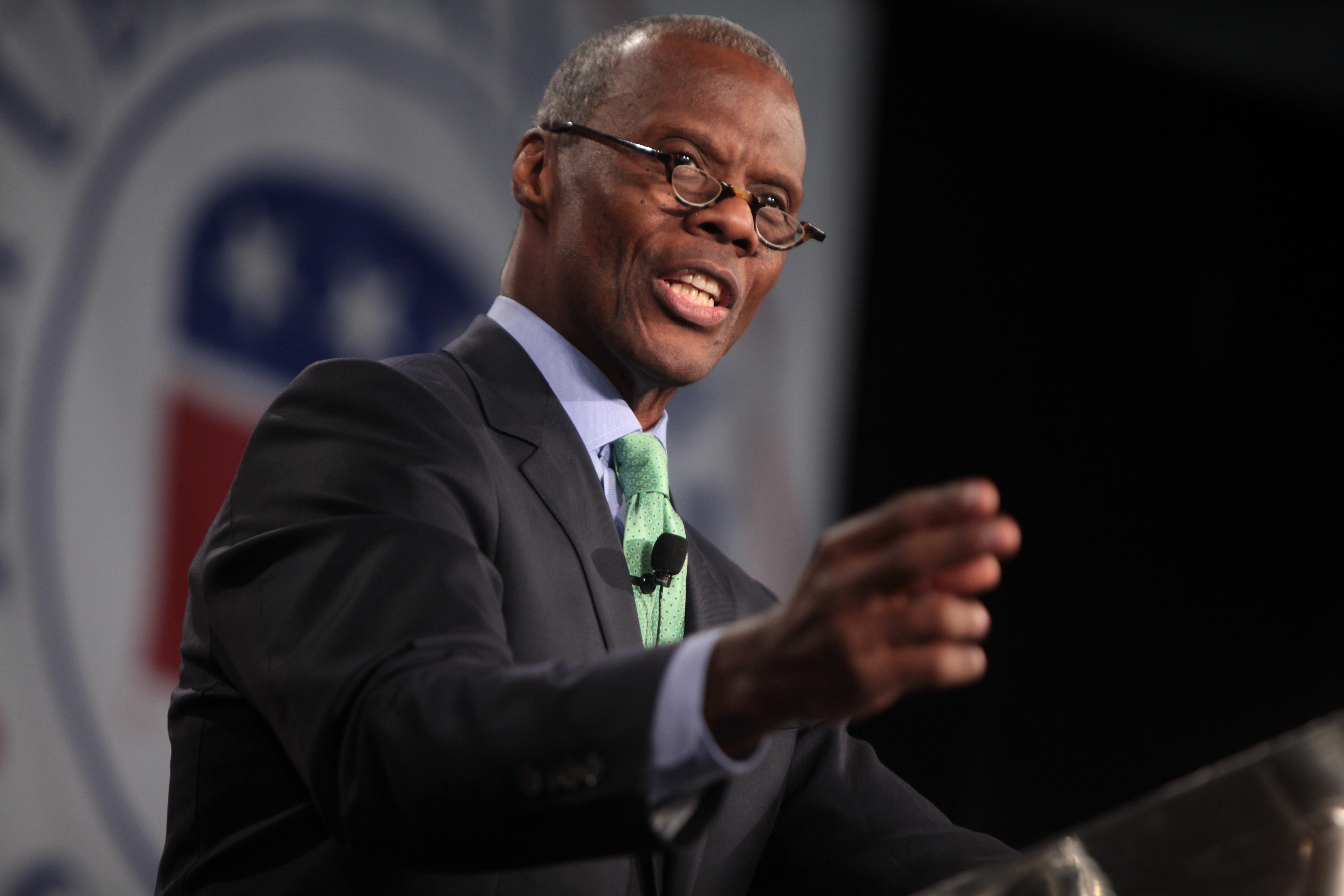
After he left Congress, Watts was appointed by President Bush to be a member of the Board of Visitors to the United States Military Academy for a term expiring December 30, 2003. Watts founded a lobbying and consulting firm, J. C. Watts Companies, in Washington, D.C., to represent corporations and political groups and focus on issues he championed in Congress. The John Deere Company hired Watts as lobbyist in 2006 and Watts later invested in a Deere dealership and sought financial support from United States agencies and others for a farm-related project in Senegal. Watts wrote an autobiography, wrote regular opinion columns for the Las Vegas Review-Journal, and joined the boards of several companies, including Dillard's, Terex, Clear Channel Communications, and CSX Transportation, and served as chairman of GOPAC.
Watts supported the Iraq War in 2003, stating: "America did not become the leader of the free world by looking the other way to heinous atrocities and unspeakable evils." He was later hired as a political commentator by CNN
In 2008, Watts announced he was developing a cable news network with the help of Comcast, focusing on an African-American audience, and that he considered voting for Barack Obama, criticizing the Republican party for failing in outreach to the African-American community. Reports showed he contributed to John McCain, but not to Obama.
Watts considered running to succeed Brad Henry as Governor of Oklahoma in the 2010 gubernatorial election, but declined in May 2009, citing his business and contractual obligations.
Watts served as a campaign surrogate for Newt Gingrich's 2012 presidential campaign. On April 7, 2015, Watts joined U.S. Senator Rand Paul on stage during Paul's announcement speech for U.S. president.
For most of 2016, Watts served as the president and CEO of Feed the Children (FTC). The board of directors announced his appointment on January 21. On November 15, the organization and Watts announced that he was no longer serving in those roles. The following April, Watts sued both FTC and its board of directors for wrongful termination. According to Watts, he was fired after uncovering rampant financial mismanagement at the charity and notifying the state's Attorney General Office of potentially illegal practices. Feed The Children denied there was any validity to Watts' claims and proceeded to file a counter-suit against him. The case was settled in 2019, after FTC agreed to drop their counter-suit and pay Watts $1 million to resolve all his claims against them.
In 2019 Watts began plans to start the Black News Channel, which launched on February 10, 2020, as a 24-hour news channel aimed at an African American audience. The channel went out of business in April 2022, in the face of lagging cable and satellite provider subscriptions and an unsuccessful 2021 revamp that added commentators at odds with Watts's views.
Writings
Electoral history
| Year | Democrat | Votes | Pct | Republican | Votes | Pct | 3rd Party | Party | Votes | Pct | 4th Party | Party | Votes | Pct | |||||||||||||||
|---|---|---|---|---|---|---|---|---|---|---|---|---|---|---|---|---|---|---|---|---|---|---|---|---|---|---|---|---|---|
| 1994 | David Perryman | 67,237 | 43% | J. C. Watts Jr. | 80,251 | 52% | Bill Tiffee | Independent | 7,913 | 5% | |||||||||||||||||||
| 1996 | Ed Crocker | 73,950 | 40% | J. C. Watts Jr. | 106,923 | 58% | Robert Murphy | Libertarian | 4,500 | 2% | |||||||||||||||||||
| 1998 | Ben Odom | 52,107 | 38% | J. C. Watts Jr. | 83,272 | 62% | |||||||||||||||||||||||
| 2000 | Larry Weatherford | 54,808 | 31% | J. C. Watts Jr. | 114,000 | 65% | Susan Ducey | Reform | 4,897 | 3% |
Football statistics
| Passing | Rushing | YEAR | CMP | ATT | CMP% | YDS | TD | INT | ATT | YDS | AVG | TD | Totals | 87 | 197 | 44.2 | 1,917 | 8 | 19 | 328 | 1,322 | 4.0 | 34 | |||||||||||||
|---|---|---|---|---|---|---|---|---|---|---|---|---|---|---|---|---|---|---|---|---|---|---|---|---|---|---|---|---|---|---|---|---|---|---|---|---|
| 1977 | 0 | 0 | — | 0 | 0 | 0 | 0 | 0 | 0.0 | 0 | ||||||||||||||||||||||||||
| 1978 | 13 | 38 | 34.2 | 227 | 2 | 4 | 42 | 204 | 4.9 | 6 | ||||||||||||||||||||||||||
| 1979 | 39 | 81 | 48.2 | 785 | 4 | 5 | 123 | 455 | 3.7 | 10 | ||||||||||||||||||||||||||
| 1980 | 35 | 78 | 44.9 | 905 | 2 | 10 | 163 | 663 | 4.1 | 18 |
| Passing | Rushing | YEAR | TEAM | CMP | ATT | CMP% | YDS | TD | INT | RAT | ATT | YDS | AVG | TD | Totals | — | 851 | 1,608 | 52.9 | 12,414 | 66 | 93 | 67.9 | 346 | 2,312 | 6.7 | — | |||||||||||||||
|---|---|---|---|---|---|---|---|---|---|---|---|---|---|---|---|---|---|---|---|---|---|---|---|---|---|---|---|---|---|---|---|---|---|---|---|---|---|---|---|---|---|---|
| OTT | 77 | 142 | 54.2 | 957 | 3 | 11 | 50.1 | — | — | — | — | |||||||||||||||||||||||||||||||
| OTT | 175 | 358 | 48.9 | 3,089 | 18 | 20 | 72.3 | — | — | — | — | |||||||||||||||||||||||||||||||
| OTT | 189 | 360 | 52.5 | 3,052 | 21 | 23 | 74.0 | 61 | 357 | 5.9 | 1 | |||||||||||||||||||||||||||||||
| OTT | 236 | 439 | 53.8 | 2,975 | 12 | 25 | 60.5 | 106 | 710 | 6.7 | 1 | |||||||||||||||||||||||||||||||
| OTT | 66 | 127 | 52.0 | 864 | 7 | 9 | 62.6 | — | — | — | — | |||||||||||||||||||||||||||||||
| TOR | 108 | 182 | 59.3 | 1,477 | 5 | 5 | 83.1 | — | — | — | — |
:Source:
References
References
- "J. C. Watts, Jr.".
- Fulwood, Sam III. (February 22, 1999). "Republicans Cast Watts as Leader, Healer". Los Angeles Times.
- Schmitt, Eric. (February 21, 2000). "Public Lives; A Rising Republican Star, and Very Much His Own Man". The New York Times.
- Seelye, Katharine Q.. (February 5, 1997). "G.O.P., After Fumbling in '96, Turns to Orator for Response". The New York Times.
- Rhoden, William C.. (December 17, 2000). "Sports of The Times; Watts Now Excels on a Different Field". The New York Times.
- "J. C. Watts Jr.". Office of the Clerk of the House of Representatives.
- Thomas, Jo. (November 16, 1998). "Rising Congressional Leader Experienced in Self-Defense". The New York Times.
- Fineman, Howard. (November 8, 1997). "Four Eyes On The Prize". Newsweek.
- Holmes, Steven A.. (August 6, 1995). "2 Black G.O.P. Lawmakers in House Differ Slightly on Affirmative Action". The New York Times.
- Waldman, Amy. (October 1996). "The GOP's Great Black Hope".
- Verhovek, Sam Howe. (October 7, 1994). "The 1994 Campaign: The Republicans; More Black Candidates Find Places on Republican Ballots". The New York Times.
- Kuharsky, Paul. (January 28, 1995). "Super Bowl XXIX; Former Football Stars Bring Game Plans to Capital". The New York Times.
- Holmes, Steven A.. (September 26, 1996). "The States and the Issues". The New York Times.
- Lewis, Neil A.. (October 8, 1996). "The States and the Issues". The New York Times.
- Mitchell, Alison. (July 2, 2002). "Congress's Sole Black Republican Is Retiring". The New York Times.
- "2002 U.S. House Ratings". American Conservative Union.
- "Voting Records". Americans for Democratic Action.
- Seelye, Katharine Q.. (November 19, 1998). "The Republican Transition: The Overview; Mix of Old and New Is to Lead House G.O.P.". The New York Times.
- Clymer, Adam. (March 26, 2000). "Clinton Urges Giving F.D.A. Oversight Of Tobacco". The New York Times.
- Hall, Mimi. (July 9, 2001). "Stem-cell issue splits Republicans". USA Today.
- "Primary Election Results 8/22/00". Oklahoma State Election Board.
- Becker, Elizabeth. (March 18, 2001). "Bill on Church Aid Proposes Tax Incentives for Giving". The New York Times.
- Rosenbaum, David E.. (March 15, 2001). "Republicans, In New Tactic, Offer Increase In Tax Breaks". The New York Times.
- Page, Susan. (December 13, 2000). "Next chapter: Will Bush be able to govern?". USA Today.
- Raasch, Chuck. (September 11, 2001). "Top congressional leaders rushed to secure location". USA Today.
- Waller, Douglas. (July 10, 2002). "10 Questions For J.C. Watts".
- (January 9, 2003). "President Bush Announced His Intention to Nominate". Office of the Press Secretary.
- (January 8, 2003). "Politics and the Economy; Former Rep. Watts Opens Consulting Firm". The New York Times.
- Meier, Barry. (November 11, 2006). "Ex-Quarterback Thrives as Lobbyist". The New York Times.
- Watts, J. C.. (March 8, 2009). "We'll all pay for this massive spending plan". Las Vegas Review-Journal.
- (March 4, 2003). "Dillard's, Inc. Announces Election of J.C. Watts, Jr. to Board of Directors". Dun & Bradstreet.
- (January 8, 2003). "Terex Corporation Elects Former Congressman J.C. Watts, Jr. to Its Board". Dun & Bradstreet.
- (February 3, 2003). "Terex Corporation Elects Former Congressman J.C. Watts, Jr. to Its Board". Business Wire.
- (September 23, 2003). "GOPAC Chairman J.C. Watts, Jr. Travels to Mississippi for GOP Campaign Events on Tuesday, September 30". U.S. Newswire.
- Espo, David. (October 1, 2008). "Analysis: A vote with unforeseen consequences?". USA Today.
- Wolf, Richard. (December 7, 2006). "Republicans of '94 revolution reflect on '06". USA Today.
- Andrews, Helena. (July 17, 2008). "Watts launches African-American channel". Politico.
- (June 14, 2008). "Black Republicans consider voting for Obama". USA Today.
- Jones, Del. (September 11, 2008). "Board diversity expands political spectrum". USA Today.
- McNutt, Michael. (May 7, 2009). "J.C. Watts vows to decide soon on run". The Oklahoman.
- Hoberock, Barbara. (May 22, 2009). "Watts will not run for governor". Tulsa World.
- perrybaconjr. (2012-01-19). "JC Watts strongly backs Gingrich in South Carolina speech".
- Byers, Dylan. (2012-02-28). "Newspapers unfazed by Gingrich letter".
- (April 7, 2015). "Rand Paul: 'I'm Putting Myself Forward as a Candidate for President'". [[CNN]].
- Feed the Children. "Feed the Children names J.C. Watts new president and CEO". Feed the Children.
- "Leadership Change at Feed the Children".
- (July 24, 2019). "Feed the Children settles lawsuit with former president". [[The Oklahoman]].
- (April 26, 2019). "Black News Channel Will Launch This Fall". TVSpy.
- [https://www.upi.com/Top_News/US/2020/02/10/Former-lawmaker-cable-veteran-launch-24-hour-Black-News-Channel/4581581349608/ Former lawmaker, cable veteran launch 24-hour Black News Channel]. [[United Press International. UPI]], February 10, 2020.
- (March 25, 2022). "Shad Khan's Black News Channel is shutting down".
- "J.C. Watts, qb". TotalFootballStats.com.
- Mullick, Rajeev. "History >> CFL Legends >> J.C. Watts". CFL.ca.
This article was imported from Wikipedia and is available under the Creative Commons Attribution-ShareAlike 4.0 License. Content has been adapted to SurfDoc format. Original contributors can be found on the article history page.
Ask Mako anything about J. C. Watts — get instant answers, deeper analysis, and related topics.
Research with MakoFree with your Surf account
Create a free account to save articles, ask Mako questions, and organize your research.
Sign up freeThis content may have been generated or modified by AI. CloudSurf Software LLC is not responsible for the accuracy, completeness, or reliability of AI-generated content. Always verify important information from primary sources.
Report