From Surf Wiki (app.surf) — the open knowledge base
Israelites
Hebrew ethno-religious group in Canaan during the Iron Age

Hebrew ethno-religious group in Canaan during the Iron Age
the ancient ethno-religious group
The Israelites, also known as the Children of Israel, were an ancient Semitic-speaking people who emerged in Canaan during the Iron Age. They were a Hebrew people that spoke an archaic Hebrew language commonly called Biblical Hebrew through association with the Hebrew Bible. In the biblical myth, the population was divided into the Twelve Tribes of Israel. The group went on to form the Iron Age kingdoms of Israel and Judah.
Modern scholarship describes the Israelites as emerging from indigenous Canaanite populations and other peoples of the ancient Near East. The Israelite religion revolved around Yahweh, who was an ancient Semitic god with less significance in the broader Canaanite religion. Around 720 BCE, the Kingdom of Israel was conquered by the Neo-Assyrian Empire, triggering the Assyrian captivity; and around 586 BCE, the Kingdom of Judah was conquered by the Neo-Babylonian Empire, triggering the Babylonian captivity. While most of Israel's population was irreversibly dispossessed as a result of Assyrian resettlement policy, Judah's population was rehabilitated by the Achaemenid Empire following the fall of Babylon in 539 BCE.
According to the Hebrew Bible, the Israelites were the descendants of Jacob (later known as Israel), who was a son of Isaac and thereby a grandson of Abraham. Due to a severe drought in Canaan, Jacob and his twelve sons migrated to Egypt, where each son became the progenitor and namesake of an Israelite tribe. These tribes came to constitute a distinct nation, which was enslaved by "the Pharaoh" before being led out of Egypt by the Hebrew prophet Moses, whose successor Joshua oversaw the Israelite conquest of Canaan. After taking control of Canaan, they established a kritarchy and eventually founded the United Monarchy, which split into independent Israel in the north and independent Judah in the south. Scholars generally consider the Hebrew Bible's narrative to be part of the Israelites' national myth, but believe that there is a "historical core" to some of the events in it. The historicity of the United Monarchy is widely disputed. In the context of Hebrew scripture, Canaan is also variously described as the Promised Land, the Land of Israel, Zion, or the Holy Land.
Historically, Jews and Samaritans have been two closely related ethno-religious groups descended from the Israelites; Jews trace their ancestry to the tribes that inhabited the Kingdom of Judah, namely Judah, Benjamin, and partially Levi, while Samaritans trace their ancestry to the tribes that inhabited the Kingdom of Israel and remained after the Assyrian captivity, namely Ephraim, Manasseh, and partially Levi. Furthermore, Judaism and Samaritanism are fundamentally rooted in Israelite religious and cultural traditions. There are several other groups claiming affiliation with the Israelites, but most of them have unproven lineage and are not recognized as either Jewish or Samaritan.
Etymology
The first reference to Israel in non-biblical sources is found in the Merneptah Stele in . The inscription is very brief and says: "Israel is laid waste and his seed is not". The inscription refers to a people, not an individual or nation state, who inhabit central Palestine or the highlands of Samaria. Some Egyptologists suggest that Israel appeared in earlier topographical reliefs, dating to the Eighteenth Dynasty or Nineteenth Dynasty (i.e. reign of Ramesses II) , but this reading remains controversial.
In the Hebrew Bible, Israel first appears in , where an angel renames Jacob to Israel after Jacob fought with him. According to the folk etymology given in the text, Israel is derived from yisra, "to prevail over" or "to struggle with", and El, a Canaanite-Mesopotamian creator god that is tenuously identified with Yahweh. However, modern scholarship interprets El as the subject, "El rules/struggles", from sarar () 'to rule' (cognate with sar () 'ruler', Akkadian šarru 'ruler, king'), which is likely cognate with the similar root sara () "fought, strove, contended". Dr. Tzemah Yoreh clarifies that Israel is a combination of 'to strive with' (ש.ר.ה) and 'God' (אל) and that Jacob's name alternates between Jacob and Israel in the biblical narrative, even after his renaming, due to the authors having different opinions about Jacob's moral character. The gradual ethnonymic shift from "Israelites" to "Jews", regardless of their descent from Judah is made explicit in the Book of Esther (4th century BCE) of the Tanakh.
Biblical timeline

Genesis of the Israelite people
Biblically, the Israelites referred to the direct descendants of Israel, a view that was reinforced by Second Temple Judaism. They referred to themselves as the sons of Israel.**, gentiles (i.e. resident aliens) could fully assimilate into the Israelite community.
Some scholars interpret sons of Israel as citizens of the Israelite community, especially after Israel's biological family transitioned from a clan to a society (). In fact, there is evidence of gentiles (i.e. resident aliens) assimilating into the Israelite community.
Whilst the Israelites called themselves the sons of Jacob, some scholars interpret this as citizens of the Israelite community, especially after Israel's biological family transitioned from a clan to a society (). Contemporary ethnicities in the ancient Near East similarly named themselves this way. Likewise, tribal membership in Israel was likely based on one's self-declared allegiance or residency within an assigned tribal territory ().
Alternatively, the Israelites were a religious group that adhered to Yahwism and that their ethnic identity was based on 'covenantal circumcision' rather than ancestry ().
The Israelites trace their ancestors to Jacob, who in turn descended from Abraham. Abraham was formerly a native of Ur Kaśdim (), whose location is hotly contested. Some scholars argue that it is located in lower Mesopotamia whilst others locate it further north in upper Mesopotamia, around northern Syria or southeastern Turkey.
Theologians suggest that Canaan always belonged to the Israelites but was initially usurped by the descendants of Canaan, resulting in their conquest by Israel as divine punishment. Israelite presence in Canaan was also established before Joshua's conquests according to a few biblical traditions.
The history of the Israelite people can be divided into these categories, according to the Hebrew Bible:
Before the United Monarchy
: The Israelites were named after their ancestor, Jacob/Israel, who was the grandson of Abraham. They were organized into 12 tribes: Reuben, Simeon, Levi, Judah, Dan, Naphtali, Gad, Asher, Issachar, Zebulun, Joseph (or Tribe of Ephraim and Tribe of Manasseh) and Benjamin. Originally, they went to Egypt after a famine in Canaan but were enslaved by the Egyptians. They escaped and organized themselves as a kritarchy, where they followed laws given by Moses. Afterwards, the Israelites conquered Canaan and fought with several neighbours until they established a monarchic state. :* This period is covered by Genesis 12 to 1 Samuel 8.
During the United Monarchy
: As a monarchic state, the Israelite tribes were united by the leadership of Saul, David and Solomon. The reigns of Saul and David were marked by military victories and Israel's transition to a mini-empire with vassal states. Solomon's reign was relatively more peaceful and oversaw the construction of the First Temple, with the help of Phoenician allies. This Temple was where the Ark of the Covenant was stored; its former location was the City of David. :* This period is covered by 1 Samuel 8 to 1 Kings 11 or alternatively, 1 Chronicles 10 to 2 Chronicles 9.
Division of Israel and Judah
: [[File:The map of the Holy Land by Marino Sanudo (drawn in 1320).jpg|thumb|upright=1.15|Map of the [[Holy Land]], [[Pietro Vesconte]], 1321, showing the allotments of the tribes of Israel. Described by [[Adolf Erik Nordenskiöld]] as "the first non-[[Ptolemy|Ptolemaic]] map of a definite country"]]The monarchic state was divided into two states, Israel and Judah, due to civil and religious disputes. Eventually, Israel and Judah met their demise after the Assyrian and Babylonian invasions respectively. According to the Biblical prophets, these invasions were divine judgements for religious apostasy and corrupt leadership. :* This period is covered by 1 Kings 12 to 2 Kings 25 or alternatively, 2 Chronicles 10 to 2 Chronicles 36. The Book of Jonah narrates the prophet Jonah going to the Neo-Assyrian Empire to deliver a divine message.
Exilic period
: After the Babylonians invaded Judah, they deported most of its citizens to Babylon, where they lived as "exiles". Cyrus the Great conquered Babylon and established the First Persian Empire in 539 BCE. One year later, according to traditional dating, Cyrus permitted the Judahites to return to their homeland. This homeland was re-named as the Province of Yehud, which eventually became a satrapy of Eber-Nari. :* This period is covered by the entirety of the Book of Daniel.
Persian period
: In 537–520 BCE, Zerubbabel became Yehud's governor and started work on the Second Temple, which was stopped. In 520–516 BCE, Haggai and Zechariah goaded the Judahites to resume work on the Temple. Upon completion, Joshua became its high priest. In 458–433 BCE, Ezra and Nehemiah led another group of Judahites to Yehud, with Artaxerxes's permission. Nehemiah rebuilt the temple after some unspecified disaster and removed foreign influence from the Judahite community. That said, some Judahites elected to stay in Persia, where they almost faced annihilation. :* This period is covered by the entirety of the Book of Ezra, Book of Nehemiah, the Book of Esther, the Book of Haggai, the Book of Zechariah, and the Book of Malachi.
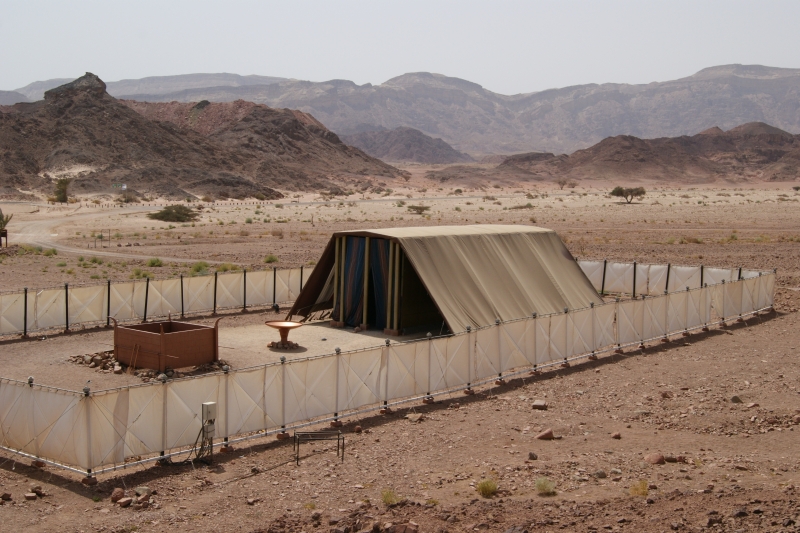
Historical timeline
Emergence of the Israelite culture
Efforts to confirm the biblical ethnogenesis of Israel through archaeology have largely been abandoned as unproductive. Many scholars see the traditional narratives as national myths with little historical value, but some posit that a small group of exiled Egyptians contributed to the Exodus narrative. William G. Dever cautiously identifies this group with the Tribe of Joseph, while Richard Elliott Friedman identifies it with the Tribe of Levi. Josephus quoting Manetho identifies them with the Hyksos. Other scholars believe that the Exodus narrative was a "collective memory" of several events from the Bronze Age.
In addition, it is unlikely that the Israelites overtook the southern Levant by force, according to archaeological evidence. Instead, they branched out of indigenous Canaanite peoples that long inhabited the region, which included Syria, ancient Israel, and the Transjordan region. Their culture was monolatristic, with a primary focus on Yahweh (or El) worship, but after the Babylonian exile, it became monotheistic, with partial influence from Zoroastrianism. The latter decisively separated the Israelites from other Canaanites. The Israelites used the Canaanite script and communicated in a Canaanite language known as Biblical Hebrew. The language's modern descendant is today the only surviving dialect of the Canaanite languages. Genetic studies show that contemporary ethnicities in the Levant were, like Israel, distinguished by their unique cultures, due to their descent from a common ancestral stock.[[File:Canaanites and Shasu Leader captives from Ramses III's tile collection; By Niv Lugassi.png|thumb|[[Ramesses III prisoner tiles]] depicting precursors of the Israelites in Canaan: Canaanites from [[city-state]]s and a Shasu leader.|upright=0.7]] Several theories exist for the origins of historical Israelites. Some believe they descend from raiding groups, itinerant nomads such as Habiru and Shasu or impoverished Canaanites, who were forced to leave wealthy urban areas and live in the highlands. Gary Rendsburg argues that some archaic biblical traditions and other circumstantial evidence point to the Israelites emerging from the Shasu and other seminomadic peoples from the desert regions south of the Levant, later settling in the highlands of Canaan. The prevailing academic opinion is that the Israelites were a mixture of peoples predominately indigenous to Canaan, with additional input from an Egyptian matrix of peoples, which most likely inspired the Exodus narrative. Israel's demographics were similar to the demographics of Ammon, Edom, Moab and Phoenicia.
Besides their focus on Yahweh worship, Israelite cultural markers were defined by body, food, and time, including male circumcision, avoidance of pork consumption and marking time based on the Exodus, the reigns of Israelite kings, and Sabbath observance. The first two markers were observed by neighbouring west Semites besides the Philistines, who were of Mycenaean Greek origin. As a result, intermarriage with other Semites was common. But what distinguished Israelite circumcision from non-Israelite circumcision was its emphasis on 'correct' timing. Israelite circumcision also served as a mnemonic sign for the circumcised, where their 'unnatural' erect circumcised penis would remind them to behave differently in sexual matters. Yom-Tov Lipmann-Muhlhausen suggests that Israelite identity was based on faith and adherence to sex-appropriate commandments. For men, it was circumcision. For women, it was ritual sacrifice after childbirth ().

Names were significant in Israelite culture and indicated one's destiny and inherent character. Thus, a name change indicated a 'divine transformation' in one's 'destines, characters and natures'. These beliefs aligned with the Near Eastern cultural milieu, where names were 'intimately bound up with the very essence of being and inextricably intertwined with personality'.
In terms of appearance, rabbis described the Biblical Jews as being "midway between black and white" and having the "color of the boxwood tree". Assuming Yurco's debated claim that the Israelites are depicted in reliefs from Merneptah's temple at Karnak is correct, the early Israelites may have wore the same attire and hairstyles as non-Israelite Canaanites. Dissenting from this, Anson Rainey argued that the Israelites in the reliefs looked more similar to the Shasu. Based on biblical literature, it is implied that the Israelites distinguished themselves from peoples like the Babylonians and Egyptians by not having long beards and chin tufts. However, these fashion practices were upper class customs.
Early highland settlements in Canaan
In the 12th century BCE, many Israelite settlements appeared in the central hill country of Canaan, which was formerly an open terrain. These settlements lacked evidence of pork consumption, compared to Philistine settlements, had four-room houses and lived by an egalitarian ethos, which was exemplified by the absence of elaborate tombs, governor's mansions, certain houses being bigger than others etc. They followed a mixed economy, which prioritized self-sufficiency, cultivation of crops, animal husbandry and small-scale craft production. New technologies such as terraced farming, silos for grain storage and cisterns for rainwater collection were simultaneously introduced.
These settlements were built by inhabitants of the "general Southland" (i.e. modern Sinai and the southern parts of Israel and Jordan), who abandoned their pastoral-nomadic ways. Canaanites who lived outside the central hill country were tenuously identified as Danites, Asherites, Zebulunites, Issacharites, Naphtalites and Gadites. These inhabitants do not have a significant history of migration besides the Danites, who allegedly originate from the Sea Peoples, particularly the Dan(an)u. Nonetheless, they intermingled with the former nomads, due to socioeconomic and military factors. Their interest in Yahwism and its concern for the underprivileged was another factor. Possible allusions to this historical reality in the Hebrew Bible include the aforementioned tribes, except for Issachar and Zebulun, descending from Bilhah and Zilpah, who were viewed as "secondary additions" to Israel.
El worship was central to early Israelite culture but currently, the number of El worshippers in Israel is unknown. It is more likely that different Israelite locales held different views about El and had 'small-scale' sacred spaces.
Himbaza et al. (2012) states that Israelite households were typically ill-equipped to handle conflicts between family members, which may explain the harsh sexual taboos enforced against acts like incest, homosexuality, polygamy etc. in . While the death penalty was legislated for these 'secret crimes', they functioned as a warning, where offenders would confess out of fear and make appropriate reparations.
Historicity of the United Monarchy
Main article: Kingdom of Israel (united monarchy),
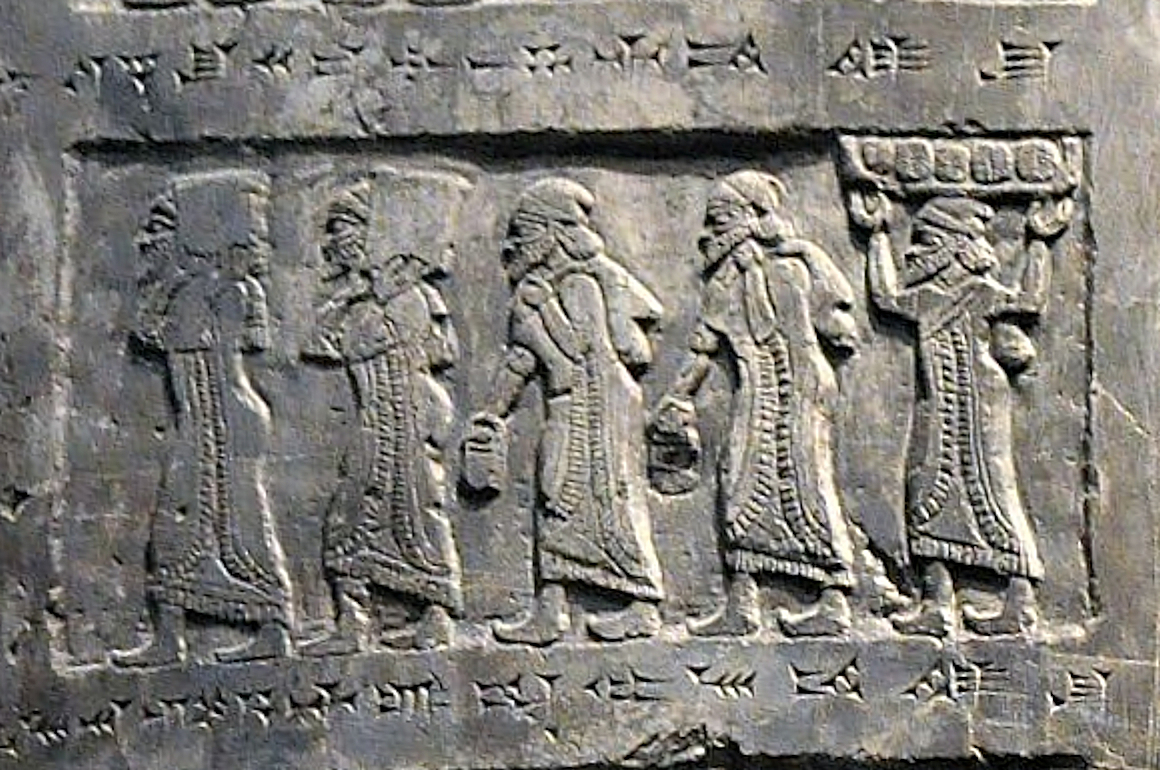
The historicity of the United Monarchy is heavily debated among archaeologists and biblical scholars: biblical maximalists and centrists (Kenneth Kitchen, William G. Dever, Amihai Mazar, Baruch Halpern and others) argue that the biblical account is more or less accurate, while biblical minimalists (Israel Finkelstein, Ze'ev Herzog, Thomas L. Thompson and others) argue that Israel and Judah never split from a singular state. The debate has not been resolved, but recent archaeological discoveries by Eilat Mazar and Yosef Garfinkel show some support for the existence of the United Monarchy.
From 850 BCE onwards, a series of inscriptions mention the "House of David". They came from Israel's neighbours.
Kingdoms of Israel and Judah

Compared to the United Monarchy, the historicity of the Kingdom of Israel and Judah is widely accepted by historians and archaeologists. Their destruction by the Assyrians and Babylonians respectively is also confirmed by archaeological evidence and extrabiblical sources.
Christian Frevel argues that Yahwism was rooted in the culture of the Kingdom of Israel, who introduced it to the Kingdom of Judah via Ahab's expansions and sociopolitical cooperation, which was prompted by Hazael's conquests. Frevel has also argued that Judah was a 'vassal-like' state to Israel, under the Omrides. This theory has been rejected by other scholars, who argue that the archaeological evidence seems to indicate that Judah was an independent socio-political entity for most of the 9th century BCE.
Avraham Faust argues that there was continued adherence to the 'ethos of egalitarianism and simplicity' in the Iron Age II (10th-6th century BCE). For example, there is minimal evidence of temples and complex tomb burials, despite Israel and Judah being more densely populated than the Late Bronze Age. Four-room houses remained the norm. In addition, royal inscriptions were scarce, along with imported and decorated pottery. According to William G. Dever, Israelite identity in the 9th-8th centuries BCE can be identified through a combination of archaeological and cultural traits that distinguish them from their neighbours. These traits include being born and living within the territorial borders of Israel or Judah, speaking Hebrew, living in specific house types, using locally produced pottery, and following particular burial practices. Israelites were also part of a rural, kin-based society, and adhered to Yahwism, though not necessarily in a monotheistic way. Their material culture was simple but distinct, and their societal organization was centered around family and inheritance. These traits, while shared with some neighbouring peoples, were uniquely Israelite in their specific combination.
Wars with Assyria and Babylonia
The Kingdom of Israel was conquered by the Neo-Assyrian Empire around 720 BCE. The records of Sargon II of Assyria indicate that he deported part of the population to Assyria. Some Israelites migrated to the southern kingdom of Judah, while those that remained in Samaria, concentrated mainly around Mount Gerizim, developed a new ethnic identity as Samaritans. Foreign groups were also settled by the Assyrians in the territories of the conquered kingdom. Research indicates that only a portion of the surviving Israelite population intermarried with Mesopotamians settlers. In their native Samaritan Hebrew, the Samaritans identify as "Israel", "B'nai Israel" or "Shamerim/Shomerim" (i.e. "Guardians/Keepers/Watchers"). Despite this, belief in the Ten Lost Tribes of Israel emerged because of the heavy assimilation faced by Samarian deportees.
Towards the end of the same century, the Neo-Babylonian Empire emerged victorious over the Assyrians, leading to Judah's subjugation as a vassal state. In the early 6th century BC, a series of revolts in Judah prompted the Babylonian king Nebuchadnezzar II to lay siege to and destroy Jerusalem along with the First Temple, marking the kingdom's demise. Subsequently, a segment of the Judahite populace was exiled to Babylon in several waves. Judeans were progenitors of the Jewish people, who practised Second Temple Judaism during the Second Temple period.
Persian period
Main article: Yehud Medinata
With the fall of Babylon to the rising Achaemenid Persian Empire, king Cyrus the Great issued a proclamation known as the Edict of Cyrus, encouraging the exiles to return to their homeland after the Persians raised it as an autonomous Jewish-governed province named Yehud. Under the Persians (), the returned Jewish population restored the city and rebuilt the Temple in Jerusalem. The Cyrus Cylinder is controversially cited as evidence for Cyrus allowing the Judeans to return. The returnees showed a "heightened sense" of their ethnic identity and shunned exogamy, which was treated as a "permissive reality" in Babylon. Circumcision was no longer a significant ethnic marker, with increased emphasis on genealogical descent or faith in Yahweh. Jason A. Staples argues that the majority of contemporary Jews, regardless of theology, wished for the reunion of northern Israelites and southern Jews.
Hellenistic period
Main article: Hellenistic Palestine
In 332 BCE, the Achaemenid Empire fell to Alexander the Great, and the region was later incorporated into the Ptolemaic Kingdom () and the Seleucid Empire (). The Maccabean Revolt against Seleucid rule ushered in a period of nominal independence for the Jewish people under the Hasmonean dynasty (140–37 BCE). Initially operating semi-autonomously within the Seleucid sphere, the Hasmoneans gradually asserted full independence through military conquest and diplomacy, establishing themselves as the final sovereign Jewish rulers before a prolonged hiatus in Jewish sovereignty in the region. Some scholars argue that Jews also engaged in active missionary efforts in the Greco-Roman world, which led to conversions. Several scholars, such as Scot McKnight and Martin Goodman, reject this view while holding that conversions occasionally occurred. A similar diaspora existed for Samaritans but their existence is poorly documented.
Roman period
Main article: Roman Palestine
In 63 BCE, the Roman Republic conquered the kingdom. In 37 BCE, the Romans appointed Herod the Great as king of a vassal Judea. In 6 CE, Judea was fully incorporated into the Roman Empire as the province of Judaea. During this period, the main areas of Jewish settlement in the Land of Israel were Judea, Galilee and Perea, while the Samaritans had their demographic center in Samaria. Growing dissatisfaction with Roman rule and civil disturbances eventually led to the First Jewish–Roman War (66–73 CE), resulting in the destruction of Jerusalem and its Temple, which ended the Second Temple period. This event marked a cataclysmic moment in Jewish history, prompting a reconfiguration of Jewish identity and practice to ensure continuity. The cessation of Temple worship and disappearance of Temple-based sects facilitated the rise of Rabbinic Judaism, which stemmed from the Pharisaic school of Second Temple Judaism, emphasizing communal synagogue worship and Torah study, eventually becoming the predominant expression of Judaism. Concurrently, Christianity began to diverge from Judaism, evolving into a predominantly Gentile religion. Decades later, the Bar Kokhba revolt (132–135 CE) further diminished the Jewish presence in Judea, leading to a geographical shift of Jewish life to Galilee and Babylonia, with smaller communities scattered across the Mediterranean.
Genetic studies and descendants

As of 2024, only one study has directly examined ancient Israelite genetic material. The analysis examined First Temple-era skeletal remains excavated in Abu Ghosh, and showed one male individual belonging to the J2 Y-DNA haplogroup, a set of closely related DNA sequences thought to have originated in the Caucasus or Eastern Anatolia, as well as the T1a and H87 mitochondrial DNA haplogroups, the former of which has also been detected among Canaanites, and the latter in Basques, Tunisian Arabs, and Iraqis, suggesting a Mediterranean, Near Eastern, or perhaps Arabian origin.
A 2004 study (by Shen et al.) comparing Samaritans to several Jewish populations (including Ashkenazi Jews, Iraqi Jews, Libyan Jews, Moroccan Jews, and Yemenite Jews) found that "the principal components analysis suggested a common ancestry of Samaritan and Jewish patrilineages. Most of the former may be traced back to a common ancestor in what is today identified as the paternally inherited Israelite high priesthood (Cohanim), with a common ancestor projected to the time of the Assyrian conquest of the kingdom of Israel."
A 2020 study (by Agranat-Tamr et al.) stated that there was genetic continuity between the Bronze Age and Iron Age southern Levantines, which included the Israelites and Judahites. They could be "modeled as a mixture of local earlier Neolithic populations and populations from the northeastern part of the Near East (e.g. Zagros Mountains, Caucasians/Armenians and possibly, Hurrians)". Reasons for the continuity include resilience from the Bronze Age collapse, which was mostly true for inland cities such as Tel Megiddo and Tel Abel Beth Maacah. Elsewhere, European-related and East African-related components were added to the population, from a north-south and south-north gradient respectively. Late Neolithic and Bronze Age Europeans and Somalis were used as representatives.
Modern Levantine groups with Israelite ancestry
Samaritans and ethnic Jews have historically been regarded as being descended from the Israelites. With regard to the Jewish diaspora, it is held that each Jewish community originates from exiled Israelite settlement in various parts of the world, particularly as a result of the Jewish–Roman wars. It is also argued that some Palestinian people are similarly descended from those Israelites who were not exiled from the region and who consequently converted to Christianity under the Byzantine Empire and then to Islam following the Arab conquest of the Levant, save for those who remained identified as Palestinian Jews.
Non-Levantine groups claiming Israelite ancestry
Largely owing to the spread of Christianity and Islam globally, several groups of people outside of the Levant have claimed Israelite ancestry on an ethnic or racial basis, while some Christian groups have claimed spiritual continuity of the Israelite identity on the basis of their religion. These various non-Levantine groups include Mandaeans, Pashtuns, British Israelists, Black Hebrew Israelites, Igbos, Mormons, and evangelical Christians who subscribe to covenant theology. The phenomenon became especially prevalent after the founding of the State of Israel in 1948, as the country's Law of Return grants citizenship to qualified Jews and to non-Jews who are either married to a Jew or provide sufficient evidence of having Jewish ancestry.
Notes
References
Sources
- {{cite book
- {{cite book | author-link=William G. Dever | access-date=7 February 2016 |year=2005
- {{cite book
- {{Cite book |editor-last=Hasegawa |editor-first=Shuichi |editor-last2=Levin |editor-first2=Christoph |editor-last3=Radner |editor-first3=Karen
- {{cite book| title = Jews and Samaritans: The Origins and History of Their Early Relations | author-link = Gary N. Knoppers
- {{cite book| chapter = SMR | author-link = Ibn Manzur | chapter-url = https://books.google.com/books?id=EY5QAAAACAAJ
- {{cite book | access-date=7 December 2020
- {{cite book
- {{cite journal
- {{cite book
- {{cite book
References
- "Israelite". [[Oxford University Press]].
- {{MW. Israelite
- Sparks, Kenton L.. (1998). "Ethnicity and Identity in Ancient Israel: Prolegomena to the Study of Ethnic Sentiments and Their Expression in the Hebrew Bible". Eisenbrauns.
- Baron, Salo W.. (1937). "Social and Religious History of the Jews".
- (2002). "A Dictionary of Archaeology". Wiley Blackwell.
- Faust, Avraham. (2023). "The Oxford History of the Holy Land". Oxford University Press.
- (2000). "British Museum Dictionary of the Ancient Near East". British Museum Press.
- Mark Smith in "The Early History of God: Yahweh and Other Deities of Ancient Israel" states "Despite the long regnant model that the Canaanites and Israelites were people of fundamentally different culture, archaeological data now casts doubt on this view. The material culture of the region exhibits numerous common points between Israelites and Canaanites in the Iron I period (c. 1200–1000 BCE). The record would suggest that the Israelite culture largely overlapped with and derived from Canaanite culture ... In short, Israelite culture was largely Canaanite in nature. Given the information available, one cannot maintain a radical cultural separation between Canaanites and Israelites for the Iron I period." (pp. 6–7). Smith, Mark (2002). ''The Early History of God: Yahweh and Other Deities of Ancient Israel''. Eerdmans.
- Frevel, Christian. History of Ancient Israel. [[Atlanta]], [[Georgia (U.S. state). Georgia]]. [[SBL Press]]. 2023. p. 33. ISBN 9781628375138. "Israel developed in the land and not outside of it (in Egypt, in the desert, etc.)."
- Steiner, Richard C. (1997). "Ancient Hebrew". In Hetzron, Robert (ed.). ''The Semitic Languages''. Routledge. pp. 145–173. {{ISBN. 978-0-415-05767-7.
- Faust, Avraham. (29 August 2012). "Judah in the Neo-Babylonian Period". Society of Biblical Literature.
- (2015). "Exile and Return: The Babylonian Context". Walter de Gruyter.
- "Encyclopaedia Judaica".
- Dever, William. (2001). "What Did the Biblical Writers Know, and When Did They Know It?". Eerdmans.
- Thomas, Zachary. (22 April 2016). "Debating the United Monarchy: Let's See How Far We've Come". Biblical Theology Bulletin.
- (2014). "The Jewish Study Bible". Oxford University Press.
- Adams, Hannah. (1840). "The history of the Jews: from the destruction of Jerusalem to the present time". Duncan and Malcolm and Wertheim.
- Brenner, Michael. (2010). "A short history of the Jews". Princeton University Press.
- Ostrer, Harry. (2012). "Legacy: A Genetic History of the Jewish People". Oxford University Press USA.
- Kartveit, Magnar. (1 January 2014). "Review of Knoppers, Gary N., Jews and Samaritans: The Origins and History of Their Early Relations (Oxford: Oxford University Press 2013)". [[Journal of Hebrew Scriptures]].
- Greenspahn, Frederick E.. (2008). "The Hebrew Bible: New Insights and Scholarship". NYU Press.
- Van der Toorn, K. (196). [https://books.google.com/books?id=VSJWkrXfbLQC&pg=PA282 ''Family Religion in Babylonia, Ugarit and Israel: Continuity and Changes in the Forms of Religious Life'']. Brill. pp. 181, 282.
- Van der Veern, Peter, et al. "Israel in Canaan (Long) Before Pharaoh Merenptah? A Fresh Look at Berlin Statue Pedestal Relief 21687". ''Journal of Ancient Egyptian Interconnections''. pp. 15–25.
- Romer, Thomas (2015). ''The Invention of God'', Harvard. p. 75.
- Dijkstra, Meindert (2017). "Canaan in the Transition from the Late Bronze to the Early Iron Age from an Egyptian Perspective". In Grabbe, Lester, ed. ''The Land of Canaan in the Late Bronze Age''. Bloomsbury. p. 62, n. 17
- {{Bibleverse. Genesis. 32:29. HE
- Scherman, Rabbi Nosson, ed. (2006). ''The Chumash''. The Artscroll Series. Mesorah. pp. 176–77.
- Kaplan, Aryeh (1985). "Jewish Meditation". New York: Schocken. p. 125.
- Hamilton, Victor. (1995). "The Book of Genesis, Chapters 18–50". [[Wm. B. Eerdmans]].
- Wenham, Gordon. (1994). "Word Biblical Commentary". Word Books.
- (2004). "The Jewish Study Bible: Jewish Publication Society Tanakh Translation". [[Oxford University Press]].
- "שׂרר". Sefaria.
- "Klein Dictionary, שַׂר".
- "šarru". Association Assyrophile de France.
- "שׂרה". Sefaria.
- Even-Shoshan, Avraham. "שׂרה".
- Yoreh, Tzemah. (29 December 2017). "Jacob Is Renamed Israel (Twice): Why Does the Name Jacob Remain?".
- Chouraqui, André. (1975). "The people and the faith of the Bible". University of Massachusetts Press.
- {{bibleverse. Genesis. 35:22-26. KJV
- Hayes, Christine E.. (2002). "Gentile Impurities and Jewish Identities: Intermarriage and Conversion from the Bible to the Talmud". Oxford University Press.
- Block, Daniel I.. (1984). "'Israel'—'sons of Israel': A study in Hebrew eponymic usage". Studies in Religion/Sciences Religieuses.
- Martin, Troy W.. (2003). "The Covenant of Circumcision (Genesis 17:9-14) and the Situational Antitheses in Galatians 3:28". Journal of Biblical Literature.
- Cohen, Shaye J.D.. (2001). "The Beginnings of Jewishness: Boundaries, Varieties, Uncertainties". University of California Press.
- E.H.Gifford. "Eusebius of Caesarea: Praeparatio Evangelica (Preparation for the Gospel). Tr. E.H. Gifford (1903) - Book 9".
- Arnold, Bill T.. (2005). "Who Were the Babylonians?". Brill.
- Pinches, Theophilus Goldridge. (1902). "The Old Testament in the light of the historical records and legends of Assyria and Babylonia". Society for Promoting Christian Knowledge.
- "Ur of the Chaldees - International Standard Bible Encyclopedia".
- Lipman. "RaMBaN on Lech Lecha — Summary of Lech Lecha".
- Bohstrom, Philippe. (6 February 2017). "Peoples of the Bible: The Legend of the Amorites".
- Issar, A. S. ''Strike the Rock and There Shall Come Water: Climate Changes, Water Resources and History of the Lands of the Bible'', p. 67. Springer. 2014.
- (1743). "A description of the East, and some other countries". London : Printed for the author, by W. Bowyer.
- Rendsburg, Gary. (6 November 2019). "Ur Kasdim: Where Is Abraham's Birthplace?".
- (2024). "Genesis 10 Barnes' Notes".
- Frankel, David. (8 April 2015). "The Book of Chronicles and the Ephraimites that Never Went to Egypt".
- Wazana, Nili. (15 April 2018). "Israel's Declaration of Independence and the Biblical Right to the Land".
- Dearman, J. Andrew. (2018). "Reading Hebrew Bible Narratives". Oxford University Press.
- Bereshith, Genesis
- {{bibleverse. Exodus. 18:13–26. NRSV
- (2022). "1 Samuel 14: Henry's Complete Commentary on the Bible".
- {{Bibleverse. 2 Sam. 8:1–14. NRSV
- {{harvnb. Dever. 2005. Mendels. 1987. Brand. Mitchell. 2015
- Barnes, W. E. (1899), [https://biblehub.com/commentaries/cambridge/2_chronicles/5.htm Cambridge Bible for Schools and Colleges] on 2 Chronicles 5, accessed 17 April 2020
- Adolf Erik Nordenskiöld. (1889). "Facsimile-atlas to the Early History of Cartography: With Reproductions of the Most Important Maps Printed in the XV and XVI Centuries". Kraus.
- Myers, Jacob M.. (1964). "Ezra, Nehemiah". Doubleday.
- (2024). "Esther 3 Barnes' Notes".
- (2024). "Esther 9 Barnes' Notes".
- Friedman, Richard Elliott. (12 September 2017). "The Exodus". HarperCollins.
- Assmann, Jan. (2003). "The Mind of Egypt: History and Meaning in the Time of the Pharaohs". Harvard University Press.
- "L 186 Josephus I Life Against Apion".
- Killebrew, Ann E.. (2017). "Rethinking Israel: Studies in the History and Archaeology of Ancient Israel in Honor of Israel Finkelstein". Pennsylvania State University Press.
- link. (1 July 2023 A&C Black. p. 164: "It would seem that, in the eyes of Merneptah's artisans, Israel was a Canaanite group indistinguishable from all other Canaanite groups." "It is likely that Merneptah's Israel was a group of Canaanites located in the Jezreel Valley.")
- Moore Cross, Frank. (1997). "Canaanite Myth and Hebrew Epic: Essays in History of the Religion of Israel". Harvard University Press.
- Kuzar, Ron. (2001). "Hebrew and Zionism: a discourse analytic cultural study". Mouton de Gruyter.
- (2017). "Continuity and Admixture in the Last Five Millennia of Levantine History from Ancient Canaanite and Present-Day Lebanese Genome Sequences". American Journal of Human Genetics.
- (2019). "Ancient DNA sheds light on the genetic origins of early Iron Age Philistines". Science Advances.
- (24 August 2015). "Shasu or Habiru: Who Were the Early Israelites?".
- "Israelites as Canaanites".
- (24 August 2015). "Inside, Outside: Where Did the Early Israelites Come From?".
- Killebrew, Ann E.. (2020). "The Oxford Handbook of the Historical Books of the Hebrew Bible". Oxford University Press.
- Rendsburg, Gary A.. (December 2025). ""An Excellent Fortress for His Armies, a Refuge for the People": Egyptological, Archaeological, and Biblical Studies in Honor of James K. Hoffmeier". Pennsylvania State University Press.
- Mittleman, Alan (2010). "Judaism: Covenant, Pluralism and Piety". In Turner, Bryan S., ed. [https://books.google.com/books?id=RheC7rG9u6gC&pg=PA345 ''The New Blackwell Companion to the Sociology of Religion'']. John Wiley & Sons. pp. 340–363, 346.
- Gottwald, Norman (1999). [https://books.google.com/books?id=L_dIEeMj2EYC&pg=PA455 ''Tribes of Yahweh: A Sociology of the Religion of Liberated Israel, 1250–1050 BCE'']. A&C Black. p. 433. cf. 455–56.
- [[Richard A. Gabriel
- Hendel, Ronald. (2005). "Remembering Abraham: Culture, Memory, and History in the Hebrew Bible". Oxford University Press.
- Fleishman, Joseph. (2001). "On the Significance of a Name Change and Circumcision in Genesis 17". Journal of the Ancient Near Eastern Society.
- Thiessen, Matthew. (2011). "Contesting Conversion: Genealogy, Circumcision, and Identity in Ancient Judaism and Christianity". Oxford University Press.
- Cohen, Shaye J.D.. (2005). "Why Aren't Jewish Women Circumcised?: Gender and Covenant in Judaism". 978-0520212503.
- Olyan, Saul. (2000). "Rites and Rank: Hierarchy in Biblical Representations of Cult". Princeton University Press.
- Yurco, Frank J.. (1986). "Merenptah's Canaanite Campaign". Journal of the American Research Center in Egypt.
- Hasel, Michael G.. (2003). "Merenptah's Inscription and Reliefs and the Origin of Israel (The Near East in the Southwest: Essays in Honor of William G. Dever)". American Schools of Oriental Research.
- Stager, Lawrence E.. (2001). "The Oxford History of the Biblical World". Oxford University Press.
- Rainey, Anson F.. (2001). "Israel in Merenptah's Inscription and Reliefs". Israel Exploration Journal.
- "Beard".
- Rendsburg, Gary A.. (2021). "Ancient Israel: From Abraham to the Roman Destruction of the Temple". Biblical Archaeology Society.
- Mark W. Bartusch, ''Understanding Dan: an exegetical study of a biblical city, tribe and ancestor'', Volume 379 of ''Journal for the study of the Old Testament: Supplement series'', Continuum International Publishing Group, 2003
- Lewis, Theodore J.. (2020). "The Origin and Character of God: Ancient Israelite Religion through the Lens of Divinity". Oxford University Press.
- (2012). "The Bible on the Question of Homosexuality". Catholic University of America Press.
- (1906). "Babel and Bible;". The Open Court.
- (2 July 2014). "Divided Kingdom, United Critics".
- (2001). "The Bible unearthed: archaeology's new vision of ancient Israel and the origin of its stories". Simon & Schuster.
- (July 2014). "David, King of Judah (Not Israel)".
- Broshi, Magen. (2001). "Bread, Wine, Walls and Scrolls". Bloomsbury.
- "British Museum – Cuneiform tablet with part of the Babylonian Chronicle (605–594 BCE)".
- "ABC 5 (Jerusalem Chronicle)".
- Faust, Avraham. (2012). "Judah in the Neo-Babylonian Period: The Archaeology of Desolation". Society of Biblical Lit..
- Yardenna Alexandre. (2020). "The Settlement History of Nazareth in the Iron Age and Early Roman Period". 'Atiqot.
- Frevel, Christian. (2021). "When and from Where did YHWH Emerge? Some Reflections on Early Yahwism in Israel and Judah". Entangled Religions.
- (2023). ""And in Length of Days Understanding" (Job 12:12): Essays on Archaeology in the Eastern Mediterranean and Beyond in Honor of Thomas E. Levy". Springer Nature.
- Faust, Avraham. (2019). "Israelite Temples: Where Was Israelite Cult Not Practiced, and Why". Religions.
- Dever, William G.. (2017). "Beyond the texts: an archaeological portrait of ancient Israel and Judah". SBL Press.
- Finkelstein, Israel. (28 June 2015). "Migration of Israelites into Judah after 720 BCE: An Answer and an Update". Zeitschrift für die alttestamentliche Wissenschaft.
- Finkelstein, Israel. (2013). "The forgotten kingdom: the archaeology and history of Northern Israel". Society of Biblical Literature.
- Cline, Eric H.. (2008). "From Eden to Exile: Unraveling Mysteries of the Bible". National Geographic (US).
- (2004). "Reconstruction of patrilineages and matrilineages of Samaritans and other Israeli populations from Y-Chromosome and mitochondrial DNA sequence Variation". Human Mutation.
- (8 February 1963). "BANŪ ISRĀ'ĪL IN THE QUR'ĀN". Islamic Research Institute.
- "The Samaritan Identity". The Israelite Samaritan Community in Israel.
- (26 May 2020). "The Keepers: Israelite Samaritan Identity". Israelite Samaritan Information Institute.
- (1998). "The Lost Tribes of Israel as a Problem in History and Sociology". International Journal of Politics, Culture, and Society.
- (3 February 2017). "Ancient tablets reveal life of Jews in Nebuchadnezzar's Babylon". Reuters.
- Spielvogel, Jackson J.. (2008). "Western Civilization: Volume A: To 1500". Wadsworth Publishing.
- Catherine Cory. (13 August 2015). "Christian Theological Tradition". Routledge.
- Stephen Benko. (1984). "Pagan Rome and the Early Christians". Indiana University Press.
- Winn Leith, Mary Joan. (2001). "The Oxford History of the Biblical World". [[Oxford University Press]].
- Becking, Bob. (2006). "Judah and the Judeans in the Persian Period". Eisenbrauns.
- Katherine ER. Southward, [https://books.google.com/books?id=Wbo5h0BYOrIC&pg=PA193 ''Ethnicity and the Mixed Marriage Crisis in Ezra, 9–10: An Anthropological Approach,''] Oxford University Press 2012 pp.103–203, esp. p.193.
- Pearce, Laurie. (2022). "Jews Intermarried Not Only in Judea but Also in Babylonia".
- Thiessen, Matthew. (2011). "Contesting Conversion: Genealogy, Circumcision, and Identity in Ancient Judaism and Christianity". Oxford University Press.
- Lau, Peter H.W.. (2009). "Gentile Incorporation into Israel in Ezra - Nehemiah?". Peeters Publishers.
- Staples, Jason A.. (2021). "The Idea of Israel in Second Temple Judaism: A New Theory of People, Exile, and Israelite Identity". Cambridge University Press.
- (2013). "The World of the New Testament: Cultural, Social, and Historical Contexts". Baker Academic.
- Ben-Sasson, H.H.. (1976). "A History of the Jewish People". Harvard University Press.
- Smith, Morton. (1999). "The Gentiles in Judaism 125 BCE - 66 CE". Cambridge University Press.
- Ben-Eliyahu, Eyal. (30 April 2019). "Identity and Territory: Jewish Perceptions of Space in Antiquity". Univ of California Press.
- [[Louis H. Feldman]], [http://cojs.org/louis-h-feldman-omnipresence-god-fearers-biblical-archaeology-review-12-5-1986/ "The Omnipresence of the God-Fearers"] {{Webarchive. link. (24 October 2020 , ''[[Biblical Archaeology Review]]'' 12, 5 (1986), Center for Online Judaic Studies.)
- [[Shaye J. D. Cohen]], ''From the Maccabees to the Mishnah'' (1989), pp. 55–59, [[Louisville, Kentucky]]: [[Westminster John Knox Press]], {{ISBN. 978-0-664-25017-1.
- A. T. Kraabel, J. Andrew Overman, Robert S. MacLennan, ''Diaspora Jews and Judaism: essays in honor of, and in dialogue with, A. Thomas Kraabel'' (1992), [[Scholars Press]], {{ISBN. 978-15-55406-96-7. "As pious gentiles, the God-fearers stood somewhere between Greco-Roman piety and Jewish piety in the synagogue. In his classic but now somewhat outdated study titled ''Judaism in the First Centuries of the Christian Era'', Harvard scholar George Foot Moore argued that the existence of the God-fearers provides evidence for the synagogue's own missionary work outside of Palestine during the first century C.E. The God-fearers were the result of this Jewish missionary movement."
- Goodman, Martin. (2006). "Judaism in the Roman World". Brill.
- Gregerman, Adam. (2009). "The Lack of Evidence for a Jewish Christian Countermission in Galatia". Studies in Christian-Jewish Relations.
- Zsengeller, Jozsef. (2016). "THE Samaritan Diaspora in Antiquity". Acta Antiqua Academiae Scientiarum Hungaricae.
- Karesh, Sara E.. (2006). "Encyclopedia of Judaism". Facts On File.
- Alföldy, Géza. (1995). "Eine Bauinschrift aus dem Colosseum". [[Zeitschrift für Papyrologie und Epigraphik]].
- Westwood, Ursula. (1 April 2017). "A History of the Jewish War, AD 66–74". Journal of Jewish Studies.
- Maclean Rogers, Guy. (2021). "For the Freedom of Zion: The Great Revolt of Jews against Romans, 66-74 CE". Yale University Press.
- Goldenberg, Robert. (1977). "The Broken Axis: Rabbinic Judaism and the Fall of Jerusalem". Journal of the American Academy of Religion.
- (2002). "The Early Christian World". [[Routledge]].
- David, Ariel. (9 October 2023). "DNA of Ancient Israelites". [[Haaretz]].
- "Reconstruction of Patrilineages and matrilineages of Samaritans and Other Israeli Populations From Y-Chromosome and Mitochondrial DNA Sequence Variation".
- (28 May 2020). "The Genomic History of the Bronze Age Southern Levant". Cell.
- R. Yisrael Meir haKohen ([[Chofetz Chayim]]), ''The Concise Book of Mitzvoth'', p. xxxv. This version of the list was prepared in 1968.
- The [[Nachmanides. Ramban]]'s addition to the [[Rambam]]'s Sefer HaMitzvot.
- (2024). "About Israelite Samaritans".
- [[Moshe Gil. Gil, Moshe]]. [1983] 1997. ''A History of Palestine, 634–1099''. Cambridge University Press. pp. 222–3: "[[David Ben-Gurion]] and [[Yitzhak Ben-Zvi]] claimed that the population at the time of the Arab conquest was mainly Christian, of Jewish origins, which underwent conversion to avoid a tax burden, basing their argument on 'the fact that at the time of the Arab conquest, the population of Palestine was mainly Christian and that during the Crusaders' conquest some four hundred years later, it was mainly Muslim. As neither the Byzantines nor the Muslims carried out any large-scale population resettlement projects, the Christians were the offspring of the Jewish and Samaritan farmers who converted to Christianity in the Byzantine period; while the Muslim fellaheen in Palestine in modern times are descendants of those Christians who were the descendants of Jews, and had turned to Islam before the Crusaders' conquest."
- [https://www.thetimes.com/comment/register/article/a-tragic-misunderstanding-pbw3x8cp0r6 A tragic misunderstanding] – Times online, 13 January 2009.
- "One moment, please...".
- (2019). "Genetic Polymorphisms of Glutathione S-Transferases T1 (GSTT1) and M1 (GSTM1) in Iranian Mandaeans Population". Iranian Journal of Public Health.
- Houtsma, Martijn Theodoor. (1987). "E.J. Brill's first encyclopaedia of Islam, 1913–1936". BRILL.
- Oreck, Alden. "The Virtual Jewish History Tour, Afghanistan".
- (3 May 2012). "Historical Dictionary of Radical Christianity". Scarecrow Press.
- (24 January 2019). "The Hebrew Israelites in That March for Life Viral Video, Explained". [[Christianity Today]].
- Subramanian, Samanth. (26 April 2022). "The lost Jews of Nigeria". The Guardian.
- Davies, W.D.. "Israel, the Mormons and the Land".
- Wellum, Stephen. (2023). "Dispensational and Covenant Theology".
This article was imported from Wikipedia and is available under the Creative Commons Attribution-ShareAlike 4.0 License. Content has been adapted to SurfDoc format. Original contributors can be found on the article history page.
Ask Mako anything about Israelites — get instant answers, deeper analysis, and related topics.
Research with MakoFree with your Surf account
Create a free account to save articles, ask Mako questions, and organize your research.
Sign up freeThis content may have been generated or modified by AI. CloudSurf Software LLC is not responsible for the accuracy, completeness, or reliability of AI-generated content. Always verify important information from primary sources.
Report