From Surf Wiki (app.surf) — the open knowledge base
Islington North
Parliamentary constituency in the United Kingdom, 1885 onwards

Parliamentary constituency in the United Kingdom, 1885 onwards
| Field | Value | |
|---|---|---|
| name | Islington North | |
| parliament | uk | |
| image | ||
| caption | Interactive map of boundaries from 2010 | |
| image2 | [[File:Islington North 2023 Constituency.svg | 200px]] |
| caption2 | Location within Greater London | |
| year | 1885 | |
| type | Borough | |
| elects_howmany | One | |
| previous | Finsbury | |
| electorate | 73,970 (2023){{cite web | url= https://boundarycommissionforengland.independent.gov.uk/2023-review/the-2023-review-of-parliamentary-constituency-boundaries-in-england-volume-two-constituency-names-designations-and-composition/2023-volume-two-constituency-names-designations-and-composition-london/#lg_islington-north-bc-73970 |
| title | The 2023 Review of Parliamentary Constituency Boundaries in England – Volume two: Constituency names, designations and composition – London | |
| publisher | Boundary Commission for England | |
| access-date | 21 June 2024 | |
| df | dmy | |
| mp | Jeremy Corbyn | |
| party | Independent politician | |
| region | England | |
| county | Greater London | |
| european | London |
the UK parliamentary constituency
|access-date=21 June 2024 Islington North is a constituency in Greater London established for the 1885 general election. It has been represented in the House of Commons of the Parliament of the United Kingdom by one member of Parliament (MP) since it was created, with Jeremy Corbyn serving as its MP since 1983. Corbyn, who served as Leader of the Labour Party and Leader of the Opposition from 2015 until 2020, has been an independent since 2020. After having only ever stood as a candidate of the Labour Party, he was returned as an independent MP for Islington North at the 2024 general election.
Constituency profile
The seat includes the densely populated and multicultural neighbourhoods of Finsbury Park, Highbury, Canonbury, Archway, Tufnell Park and the northern part of Holloway. Electoral Calculus categorises the seat as being part of the “Strong Left” demographic, those who have very economically left-wing and socially liberal views, and have an internationalist outlook including strong opposition to Brexit: only 21.6% of Islington North voted for Brexit in 2016, indicating that it is a heavily pro-Remain area. In 1971, 18.7% were non-White. In 1981, 21% of the constiuency were non-White.
Despite high incomes and house prices, around 52% of the constituency is deprived, in terms of employment, income and education, mirroring the national average. The average age is 42.5, at least 36% of the local population owns a car, whilst 31% own a home, which are both considerably low in comparison to the rest of the UK, and the gross household income is £52,102. Arsenal Football Club is located in the seat.
Boundaries
1885–1918
The seat was created by the Redistribution of Seats Act 1885, as one of four divisions of the new parliamentary borough of Islington. The constituency was defined in the legislation as consisting of the single ward of Upper Holloway of the parish of Islington. The ward was one of eight used in the election of Islington vestrymen under the Metropolis Management Act 1855.
1918–1950


Under the next redistribution of seats by the Representation of the People Act 1918 constituencies in the County of London were defined in terms of wards of the metropolitan boroughs created in 1900. Islington North comprised three wards of the Metropolitan Borough of Islington: Tollington, Tufnell and Upper Holloway.
1950–1974

1974–1983
In 1965 local government in Greater London was reorganised, with the formation of London boroughs. The changes were reflected in parliamentary boundaries from 1974. The London Borough of Islington was divided into three constituencies. Islington North was defined as comprising seven wards: Highview, Hillmarton, Hillrise, Junction, Parkway, St. George's and Station.
1983–1997
In 1983 the parliamentary representation of Islington was reduced to two constituencies. The new, enlarged, Islington North was formed from ten wards of the borough as they existed in February 1983. These were Gillespie, Highbury, Highview, Hillrise, Junction, Mildmay, Quadrant, St. George's, Sussex and Tollington wards.
1997–2010
In 1997 there were only slight boundary changes, with the constituency defined as the same ten wards with their boundaries as they existed on 1 June 1994.
Since 2010
The seat covers the northern half of the London Borough of Islington, which includes the areas of Holloway, Highbury, Tufnell Park, Upper Holloway and Archway.
From 2010 until 2022, the constituency comprised the following eight electoral wards: Finsbury Park, Highbury East, Highbury West, Hillrise, Junction, Mildmay, St. George's and Tollington.
Following a review of local authority ward boundaries which came into effect on 4 May 2022, the seat now comprises the following eight London Borough of Islington wards: Arsenal; Finsbury Park; Highbury; Hillrise; Junction; Mildmay; Tollington; Tufnell Park.
The boundaries of the constituency were not changed as part of the 2023 Periodic Review of Westminster constituencies.
These boundaries have been considerably changed since 1970, when Islington returned three MPs and shared another with Hackney. This reflects the depopulation of central London on a lowering of adult occupancy of households and the local authority has replaced tower blocks. The core of the constituency was the area north of Seven Sisters Road and Camden Road. At the Fifth Periodic Review of Westminster constituencies begun in 2012 the seat was approximately 1,300 electors below the electoral quota and the highest concentration of elector density nationally. The criteria of successive reviews emphasise equal electorates as well as restricting seats to one or, if unavoidable, two local authority areas.
Political history
The constituency was held by the Labour Party without interruption from a by-election in 1937 until former Labour member and leader Jeremy Corbyn won it as an independent in 2024. From 1945 to 2019, Labour's smallest majority was 10.4% of the vote, in a by-election in 1969, on a very low turnout.
As a Labour candidate, Corbyn had his smallest majority (15.3%) in 1983, when he was first elected, and his largest (60.5%) in 2017, when he was leader of the party. In the ten elections since Corbyn began representing the constituency, the Conservatives have finished in second place five times while the Liberal Democrats have also been runners up on five occasions. The 2015 result made the seat the 26th safest of Labour's 232 seats by percentage of majority.
In the 2016 referendum to leave the European Union, the constituency voted remain by 78.4%. This was the fifth highest support for remain for a constituency.
Members of Parliament
| Election | t | 1 | date=March 2012}} | Party |
|---|---|---|---|---|
| 1885 | Sir George Trout Bartley | |||
| 1886 | ||||
| 1892 | ||||
| 1895 | ||||
| 1900 | ||||
| 1906 | David Waterlow | |||
| Jan 1910 | ||||
| Dec 1910 | Sir George Touche | |||
| 1918 | Sir Newton Moore | |||
| 1922 | ||||
| 1923 | Sir Henry Cowan | |||
| 1924 | ||||
| 1929 | Robert Young | |||
| 1931 | Albert Goodman | |||
| 1935 | ||||
| 1937 | Leslie Haden-Guest | |||
| 1945 | ||||
| 1950 | Moelwyn Hughes | |||
| 1951 | Wilfred Fienburgh | |||
| 1955 | ||||
| 1958 | Gerry Reynolds | |||
| 1959 | ||||
| 1964 | ||||
| 1966 | ||||
| 1969 | Michael O'Halloran | |||
| 1970 | ||||
| Feb 1974 | ||||
| Oct 1974 | ||||
| 1979 | ||||
| 1983 | Jeremy Corbyn | |||
| 1987 | ||||
| 1992 | ||||
| 1997 | ||||
| 2001 | ||||
| 2005 | ||||
| 2010 | ||||
| 2015 | ||||
| 2017 | ||||
| 2019 | ||||
| 2024 |
Election results

| Elections: | 2020s | 2010s | 2000s | 1990s | 1980s | 1970s | 1960s | 1950s | 1940s | 1930s | 1920s | 1910s |
|---|
Elections in the 2020s
Main article: Islington North in the 2024 United Kingdom general election
: |reg. electors = 72,582}}
Elections in the 2010s
: |reg. electors = 75,162
|reg. electors = 74,831
|reg. electors = 73,326
|reg. electors = 68,119
Elections in the 2000s
|reg. electors = 58,428
|reg. electors = 61,970
Elections in the 1990s
|reg. electors = 57,385
|reg. electors = 56,270
Elections in the 1980s
|reg. electors = 58,917
_(cropped).jpg)
|reg. electors = 59,984
Elections in the 1970s
|reg. electors = 38,253 |reg. electors = 41,390 |reg. electors = 41,185 |reg. electors = 45,083
Elections in the 1960s
|reg. electors = 45,077 |reg. electors = 50,203 |reg. electors = 51,315
Elections in the 1950s
|reg. electors = 54,120
|reg. electors = 54,576
|reg. electors = 56,574

|reg. electors = 59,039
|reg. electors = 59,086
Elections in the 1940s
|reg. electors = 51,324
Elections in the 1930s
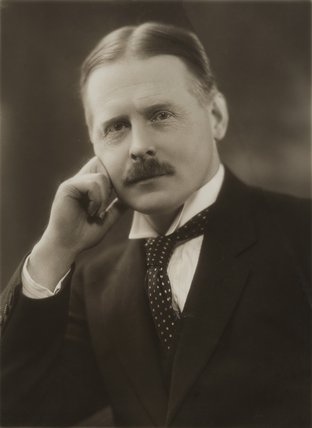
|reg. electors = 63,747 |reg. electors = 63,835 |reg. electors = 65,486
Elections in the 1920s
|reg. electors = 64,241
|reg. electors = 48,573

|reg. electors = 48,002
|reg. electors = 47,059
Elections in the 1910s
.jpeg)
|reg. electors = 41,769
- Craig lists Arnall as an Independent Labour candidate.

|reg. electors = 12,677
|reg. electors = 12,677
Elections in the 1900s

|reg. electors = 12,075

|reg. electors = 11,964
Elections in the 1890s
|reg. electors = 10,803
|reg. electors = 10,782
Elections in the 1880s
|reg. electors = 7,774
|reg. electors = 7,774
Further information
A short film was made about the 1969 by-election. This highlighted the importance of the local Irish community, the poor local housing conditions (the opening line talks of "a crowded, crumbling constituency") and the relatively low turn-outs at previous elections. The film is now available through British Pathé Archive.
Michael O'Halloran, elected Labour MP for Islington North in 1969, was the subject of an investigation in the early-1970s by The Sunday Times newspaper. They highlighted his background with a local building company and the local Irish community and queried the tactics of his supporters during his selection as candidate.
O'Halloran defected to the SDP in September 1981, as did both of the other Islington MPs. However the Boundary Commission cut the number of constituencies in Islington from three to two. O'Halloran sought selection as the SDP candidate for the revised Islington North constituency but the local SDP association selected John Grant, then-SDP (elected as Labour) MP for Islington Central, as their official candidate. In February 1983, O'Halloran resigned his membership of the SDP and sat in Parliament as an "Independent Labour" member, supporting the Parliamentary Labour Party. Despite this, he failed to regain the Labour Party nomination for the 1983 general election and he was defeated by the new Labour candidate, Jeremy Corbyn, and finished in fourth place with 11.1% of the vote.
Corbyn defeated Paul Boateng for the Labour Party selection. Boateng subsequently became the first Black Cabinet Minister in the UK.
Notes
References
Bibliography
References
- (2024-07-03). "Jeremy Corbyn wins independent seat in Islington North". The Guardian.
- "The Electoral Calculus' profile of Islington North".
- Layton-Henry, Z.. (1978). "RACE, ELECTORAL STRATEGY AND THE MAJOR PARTIES". Parliamentary Affairs.
- Norris, Pippa. (1992-01-01). "Race and parliamentary representation". British Elections and Parties Yearbook.
- "The Electoral Calculus' profile of Islington North".
- Redistribution Of Seats Act, 1885. Sixth Schedule. Divisions Of Boroughs. Number, Names, Contents, And Boundaries Of Divisions.
- Youngs Jr., Frederic A.. (1979). "Guide to the Local Administrative Units of England, Vol.I: Southern England". [[Royal Historical Society]].
- Representation Of The People Act 1918. Ninth Schedule. Redistribution Of Seats.
- Representation Of The People Act 1948, First Schedule. Parliamentary Constituencies.
- The Parliamentary Constituencies (England) Order 1983 (S.I. 1983/417).
- "The Parliamentary Constituencies (England) Order 1995 (S.I. 1995/1626)". The National Archives (United Kingdom).
- "The Parliamentary Constituencies (England) Order 2007 (S.I. 2007/1681)". The National Archives (United Kingdom).
- "The Parliamentary Constituencies Order 2023".
- "Fifth Periodical Report".
- "Labour Members of Parliament 2015".
- "Revised estimates of leave vote in Westminster constituencies".
- {{Rayment-hc. t. 1. (March 2012)
- "Jeremy Corbyn".
- (7 June 2024). "Statement of Person Nominated and Notice of Poll: Islington North Constituency". Haringey Council.
- (28 January 2020). "Commons Briefing Paper 8749. General Election 2019: results and analysis". [[House of Commons Library]].
- (February 2023). "Election results".
- (29 January 2019). "Commons Briefing Paper 7979. General Election 2017: results and analysis". [[House of Commons Library]].
- "Election Data 2015". Electoral Calculus.
- "Islington Council".
- [http://www.worldsocialism.org/spgb/forum/world-socialist-movement/general-election-news-release General Election – Campaign News] {{Webarchive. link. (2015-01-20 Socialist Party of Great Britain, 15 January 2015.)
- "Election Data 2010". Electoral Calculus.
- "Islington Council".
- "Election Data 2005". Electoral Calculus.
- "Election Data 2001". Electoral Calculus.
- "Election Data 1997". Electoral Calculus.
- "Election Data 1992". Electoral Calculus.
- "Election Data 1987". Electoral Calculus.
- "Election Data 1983". Electoral Calculus.
- (1980). "Election Expenses". [[Parliament of the United Kingdom]].
- William Wolff. (25 February 1974). "Why the Big Guns failed to fire". [[Daily Mirror]].
- "1969 By Election Results". British Elections Ephemera Archive.
- "1958 By Election Results".
- British Parliamentary Election Results 1918–1949, F. W. S. Craig.
- British Parliamentary Election Results 1885–1918, F. W. S. Craig.
- (6 July 1892). "Islington". [[London Standard]].
- (13 April 2014). "North Islington Elections (1969)".
This article was imported from Wikipedia and is available under the Creative Commons Attribution-ShareAlike 4.0 License. Content has been adapted to SurfDoc format. Original contributors can be found on the article history page.
Ask Mako anything about Islington North — get instant answers, deeper analysis, and related topics.
Research with MakoFree with your Surf account
Create a free account to save articles, ask Mako questions, and organize your research.
Sign up freeThis content may have been generated or modified by AI. CloudSurf Software LLC is not responsible for the accuracy, completeness, or reliability of AI-generated content. Always verify important information from primary sources.
Report