From Surf Wiki (app.surf) — the open knowledge base
Islamic holy books
Wider religious scriptures of Islam

Wider religious scriptures of Islam
The Islamic holy books are a number of religious scriptures that are regarded by Muslims as having valid divine significance, in that they were authored by God (Allah) through a variety of prophets and messengers, all of which predate the Quran. Among scriptures considered to be valid revelations, three that are named in the Quran are: the Tawrat (Arabic for Torah), received by prophets and messengers amongst the Israelites; the Zabur (Psalms), received by David; and the (Arabic for the Gospel), received by Jesus. Additionally, the Quran mentions the Scrolls of Abraham and the Scrolls of Moses, as well as individual revelations and guidance to specific Messengers.
Muslims hold the Quran, as it was revealed to Muhammad, to be God's final revelation to mankind, and therefore a completion and confirmation of previous scriptures, such as the Bible. Despite the primacy that Muslims place upon the Quran in this context, belief in the validity of earlier Abrahamic scriptures is one of the six Islamic articles of faith. However, for most self-identified Muslims, the level of this belief is restricted by the concept of ar.
The Islamic methodology of ar () refers to interpreting the Quran with/through the Bible. This approach adopts canonical Arabic versions of the Bible, including the Tawrat and the Injil, both to illuminate and to add exegetical depth to the reading of the Quran. Notable Muslim ar (commentators) of the Bible and Quran who weaved biblical texts together with Quranic ones include Abu al-Hakam Abd al-Salam bin al-Isbili of al-Andalus, Ibrahim bin Umar bin Hasan al-Biqa'i, Hamid al-Din al-Kirmani, and the Brethren of Purity.
Major books
Quran
Main article: Quran
The Quran is the central religious text of Islam, which Muslims believe to be a revelation from God (, Allah). The Quran is divided into chapters (surah), which are then divided into verses (ayah). Muslims believe the Quran was verbally revealed by Allah to Muhammad through the angel Jibril (Gabriel), gradually over a period of approximately 23 years, starting in late 609, when Muhammad was 39, and concluding in 632, the year of his death. Muslims regard the Quran as the most important miracle of Muhammad, a proof of his prophethood, and the culmination of a series of divine messages that started with the messages revealed to Adam and ended with Muhammad. It is widely regarded as the finest work in classical Arabic literature.
''Tawrat'' (Torah)
Main article: Torah in Islam
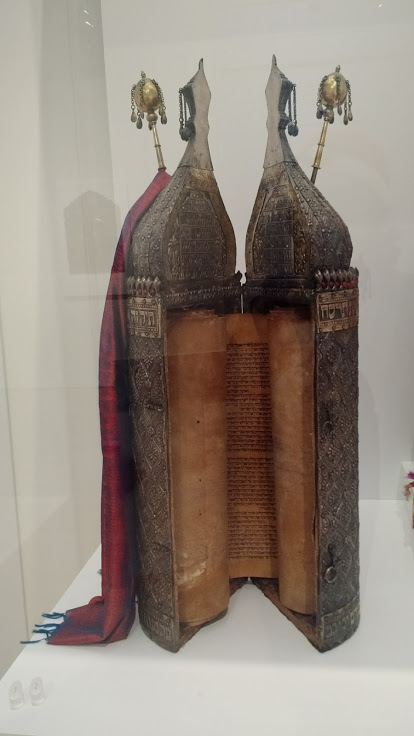
The Tawrat (also or ; ) is the Arabic name for the Torah within its context as an Islamic holy book believed by Muslims to have been given by God to the prophets and messengers amongst the Children of Israel. When referring to traditions from the , Muslims have not only identified it with the Pentateuch, but also with the other books of the Hebrew Bible as well as with Talmudic and Midrashim writings.
''Zabur'' (Psalms)
Main article: Zabur

The Quran mentions the , interpreted as being the Book of Psalms, as being the holy scripture revealed to Dawud (King David). Scholars have often understood the Psalms to have been holy songs of praise, and not a book administering law. The current Psalms are still praised by many Muslim scholars. and are direct counterparts.
''Injil'' (Gospel)
Main article: Gospel in Islam
The was the holy book revealed to Isa (Jesus), according to the Quran. Most scholars and Muslims believe that it refers not to the New Testament but to an original Gospel given to Jesus as the word of Allah.
Additional scriptures
The Quran also mentions several additional scriptures in the form of books, revelations, guidance and wisdom.
Scrolls of Abraham
The Scrolls of Abraham (, ) are believed to have been one of the earliest bodies of scripture, which were given to Abraham (Ibrāhīm). Although usually referred to as "scrolls", many translators have translated the Arabic suhuf as "books". The verse mentioning the "Scriptures" is in Quran where they are referred to, alongside the Scrolls of Moses, to have been "Books of Earlier Revelation".
Scrolls of Moses
The Scrolls of Moses (, ) are an ancient body of scripture mentioned twice in the Quran. They are part of the religious scriptures of Islam. Jordanian scholar and professor of philosophy Ghazi bin Muhammad mentions that the "Scrolls of Moses" are identical to the Torah of Moses. Others have stated that they could possibly refer to the Book of the Wars of the Lord, a lost text spoken of in the Old Testament or Tanakh in the Book of Numbers. The verse mentioning the "Scriptures" is in Quran where they are referred to, alongside the Scrolls of Abraham, to have been "Books of Earlier Revelation".
Notes
References
References
- Glasse, Cyril. "Holy Books".
- McCoy, R. Michael. (2021-09-08). "Interpreting the Qurʾān with the Bible (Tafsīr al-Qurʾān bi-l-Kitāb)". Brill.
- (2018). "Fallou Ngom, Muslims beyond the Arab World: The Odyssey of ʿAjamī and the Murīdiyya, AAR Religion, Culture, and History (New York: American Academy of Religion and Oxford University Press, 2016). Pp. 336. $105.00 cloth. ISBN: 9780190279868". International Journal of Middle East Studies.
- Nasr, Seyyed Hossein. (2007). "Qurʼān".
- (2013). "The Leaders Are Coming!". WestBow Press.
- (2012). "Pendulum: How Past Generations Shape Our Present and Predict Our Future". Vanguard Press.
- Fisher, Mary Pat. (1997). "Living Religions: An Encyclopaedia of the World's Faiths". I.B. Tauris Publishers.
- {{qref. 17. 106
- Peters, F.E.. (2003). "The Words and Will of Allah". [[Princeton University Press]].
- Patterson, Margot. (2008). "Islam Considered: A Christian View". [[Liturgical Press]].
- (2010). "Islam and Indian Muslims". Guan Publishing House.
- Jones, Alan. (1994). "The Koran". Everyman Paperback.
- Arberry, Arthur J.. (1996). "The Koran Interpreted: A Translation". Simon and Schuster.
- Lang, Isabel. (31 December 2015). "Intertextualität als hermeneutischer Zugang zur Auslegung des Korans: Eine Betrachtung am Beispiel der Verwendung von Israiliyyat in der Rezeption der Davidserzählung in Sure 38: 21-25". Logos Verlag Berlin GmbH.
- "Zabur - Oxford Islamic Studies Online".
- "Psalms".
- Lings, Martin. "Mecca, from Before Genesis Until Now".
- Malik, Abdul. "In Thy Seed".
- "Psalms - Oxford Islamic Studies Online".
- Ali, Abdullah Yusuf. (1938). "The Holy Qur-an".
- {{qref. 87. 19
- Ali, Abdullah Yusuf. (March 2012). "The Holy Qur'an: Text, Translation and Commentary".
- Pickthall, Marmaduke. "The Meaning of the Glorious Koran".
- (2018). "A Thinking Person's Guide to Islam: The Essence of Islam in 12 Verses from the Qur'an". Turath.
- {{bibleverse. Numbers. 21:14. ESV
This article was imported from Wikipedia and is available under the Creative Commons Attribution-ShareAlike 4.0 License. Content has been adapted to SurfDoc format. Original contributors can be found on the article history page.
Ask Mako anything about Islamic holy books — get instant answers, deeper analysis, and related topics.
Research with MakoFree with your Surf account
Create a free account to save articles, ask Mako questions, and organize your research.
Sign up freeThis content may have been generated or modified by AI. CloudSurf Software LLC is not responsible for the accuracy, completeness, or reliability of AI-generated content. Always verify important information from primary sources.
Report