From Surf Wiki (app.surf) — the open knowledge base
Islamic funeral
Islamic burial custom
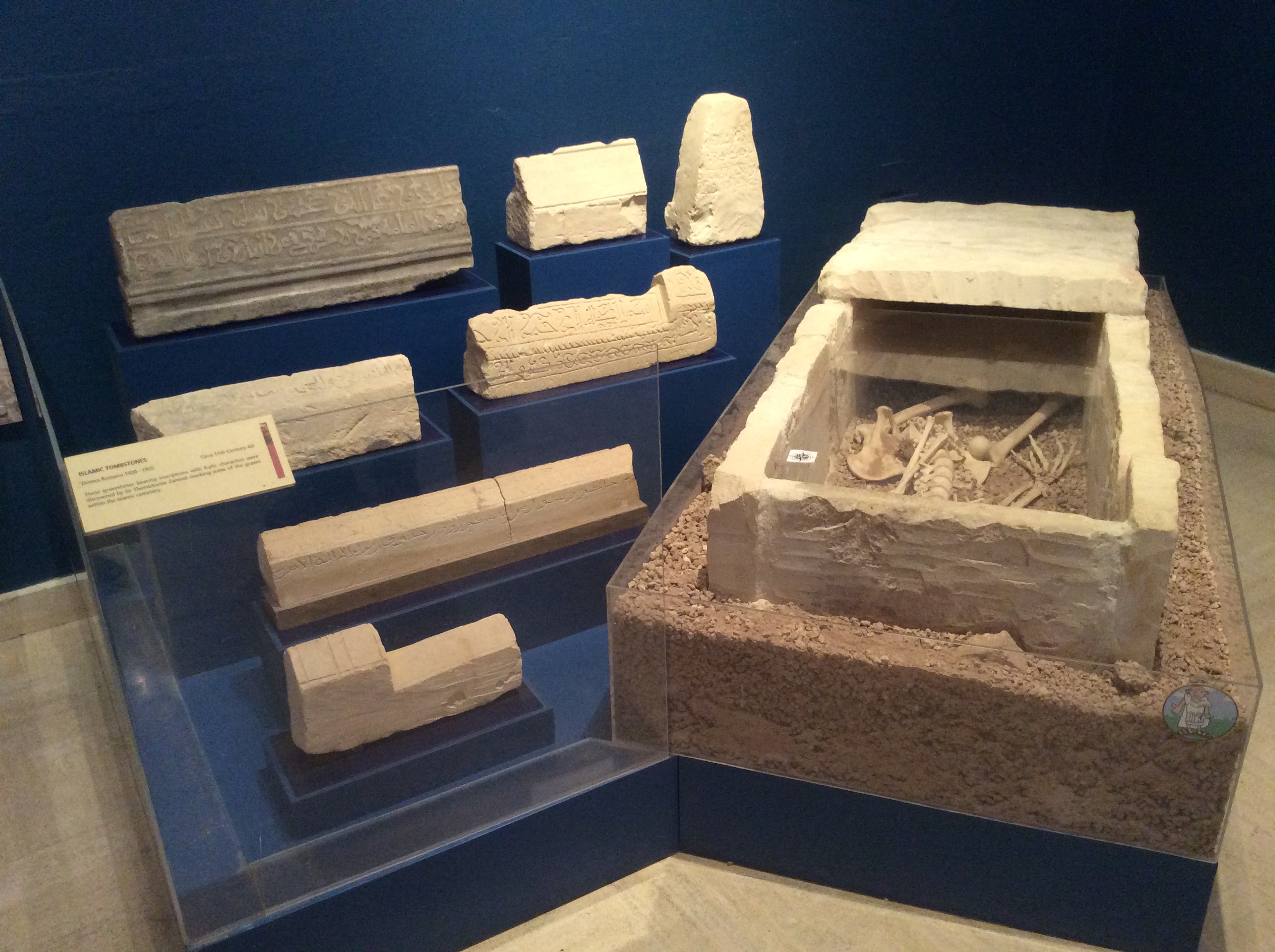
Islamic burial custom
Islamic funerals () follow fairly specific rites, though they are subject to regional interpretation and variation in custom. In all cases, however, sharia (Islamic religious law) calls for burial of the body as soon as possible. The deceased is first bathed and shrouded with simple white cloth. Then a funeral prayer, Salat al-jinazah, is performed. Cremation of the body is strictly forbidden in Islam and the body is buried without a casket and the head faces Mecca. Mourning for the deceased is observed for three days except for the widow who mourns for 4 months and 10 days.
Preparing the body
Initial prayer
Upon news of the deceased, it is common that a prayer is recited from the Quran, Chapter 2, verse 156 - "Indeed, we belong to Allah, and indeed, to Him we return."
Bathing

The corpse is washed (ar, bathed) by family members or individuals of the same gender of the deceased. The exact manner, method, style and accessories used for bathing the corpse may vary by locale and temporal position, except that it is to be done with heated water. Bathing the dead body is an essential ritual of the Sunnah of the Islamic prophet Muhammad symbolizing physical and spiritual purification.
Orthodox practice is to wash the body an odd number of times (at least once) with a cloth covering its ar (parts of the body that should be hidden according to sharia).
Shrouding
After bathing, the body is wrapped in simple white cloth (known as ar). This is done to respect the dignity and privacy of the deceased with the family sometimes present. The specifics of this ritual, including the material, style, and colour of the cloth, may vary between regions. It is for this reason that Muslims have generally preferred to use white cotton cloth to serve as the shroud. Men may use only three pieces of cloth and women five pieces of cloth. Overall, this process is part of the Islamic principle of that all individuals are buried in the same manner and God views all as equal.
If a Muslim dies without any family or friends to carry out the bathing and shrouding rituals, elders in the Muslim community arrange for the rites to be completed.
Funeral prayer
Main article: Funeral prayer (Islam)
After the announcement of death of the deceased persons, the Muslims of the community gather to offer their collective prayers for the forgiveness of the dead. This prayer has been generally termed as the ar (funeral prayer).
The Janazah prayer is as follows:
- The ar prayer incorporates four ars, the Arabic name for the phrase ar, but there is no ar (bowing) and ar (prostrating).
- Supplication for the deceased and mankind is recited.
- In extraordinary circumstances, the prayer can be postponed and prayed at a later time as was done in the Battle of Uhud.
- The Janazah is considered fard kifaayah (communal obligation), meaning that only a few people have to do it, but everyone is considered sinful if no one prays it. It is prayed upon the death of an adult Muslim in the community.
Funeral services


Following washing, shrouding and prayer, the body is then taken for burial (ar). Burial typically occurs as soon as possible, ideally within 24 hours of death, to honor the deceased and prevent undue delay. However, customs of the burial may vary depending on one's sect of Islam. Muslims typically try their best to follow hadith regarding proper grave burial procedures. Some traditions of Islam permit only men to attend funeral services.
The grave should be perpendicular to the direction of the Qibla (i.e. Mecca). Islam doesn't use coffins in burial, more specifically in Muslim majority countries, instead, stones or wood are placed at the bottom where the body will rest. The body is placed in the grave on its right side facing the Qibla. Once the body is placed, each attendee places three handfuls of soil on top to fill the grave accompanied by a prayer. The grave is kept simple and Islamic tradition doesn't call for a tombstone; a small marker can be placed to identify the grave site.[[File:C0566-Kstovo-Muslim-cemetery.jpg|thumb|A [[Tatars|Tatar]] Muslim cemetery]]
Mourning
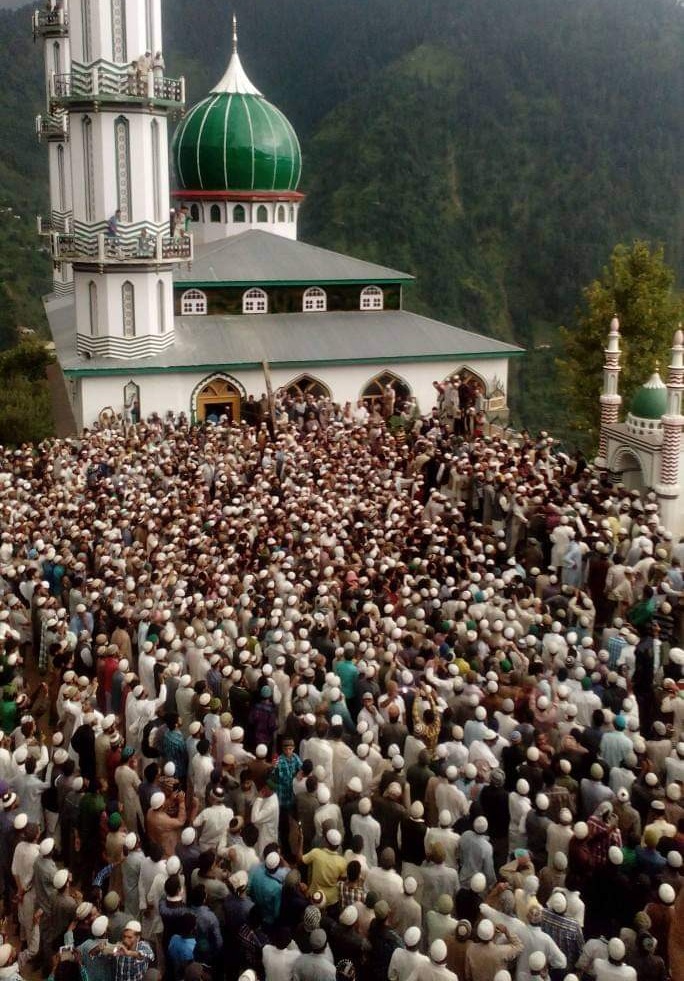
Grief at the death of a loved one and weeping for the dead is normal and acceptable. According to Sunni Islam, the mourning period is to be three days except for widows who have an extended period. Islamic mourning is observed by increased devotion, receiving visitors and condolences, and avoiding decorative clothing and jewelry in accordance with the Qur'an. Widows must observe ar, "period of waiting" which is four months and 10 days long.
Sunni Islam expects expressions of grief to remain dignified, prohibiting loud wailing or mourning in a loud voice, shrieking, beating the chest and cheeks, tearing hair or clothes, breaking objects, scratching faces or speaking phrases such as challenging the power of God (e.g. "If God exists and is just, he would not allow such injustice"). Grieving is allowed as part of the funerary rites to allow one to come to terms with the loss of a person passing away as long as it respects Allah.
Widows
As stated in the Qur'an, widows are to observe a longer mourning period (iddah) of four lunar months and ten days. Islamic scholars consider this directive a balance between the mourning of a husband's death and the protection of a widow from cultural or societal censure if she became interested in remarrying after her husband's death, often an economic necessity. This provision also operates to protect the property rights of the unborn, as the duration is enough to ascertain whether a widow is pregnant or not.
And those of you who die and leave widows behind, they should keep themselves in waiting for four months and ten days. Then when they have fulfilled their term, there is no blame on you about what they do with themselves in accordance with the norms [of society]. And Allah is well acquainted with what you do. And there is also no blame on you if you tacitly send a marriage proposal to these women or hold it in your hearts. Allah knows that you would definitely talk to them. [Do so] but do not make a secret contract. Of course you can say something in accordance with the norms [of the society]. And do not decide to marry until the law reaches its term. And know that Allah has knowledge of what is in your hearts; so be fearful of Him and know that Allah is Most forgiving and Most Forbearing.
Charity and supplication
Charity (sadaqah) and supplications (du'a) are integral to the funeral practices. Acts of charity on behalf of the deceased are believed to benefit the deceased's soul.
References
References
- (2022). "Mapping Mourning Among Muslims of Kashmir: Analysis of Religious Principles and Current Practices". OMEGA - Journal of Death and Dying.
- (9 January 2001). "Bioethics for clinicians: 21. Islamic bioethics: The cases, Case 1". Abdallah S. Daar and A. Khitamy.
- "Cremation Services".
- (2022-06-16). "Islamic Burial Practices & Funerals".
- Rahman, Fazlur. (1995). "Islamic methodology in history".
- Sahih Muslim [http://www.usc.edu/schools/college/crcc/engagement/resources/texts/muslim/hadith/bukhari/023.sbt.html#002.023.344 Volume 2, Book 23, Number 344-358] {{Webarchive. link. (2010-08-19)
- (2008). "The Qur'an". Oxford University Press.
- Nesa, Baduroon. "The Washing and Shrouding of the Deceased". Dr. Hassan Ali El-Najjar.
- Sahih Muslim [http://www.usc.edu/schools/college/crcc/engagement/resources/texts/muslim/hadith/bukhari/023.sbt.html#002.023.353 Volume 2, Book 23, Number 353-358] {{Webarchive. link. (2010-08-19)
- (2002). "What everyone needs to know about Islam". Oxford University Press.
- Gatrad, A R. (1994-08-20). "Muslim customs surrounding death, bereavement, postmortem examinations, and organ transplants". BMJ.
- Sahih Muslim [http://www.usc.edu/schools/college/crcc/engagement/resources/texts/muslim/hadith/bukhari/023.sbt.html#002.023.404 Volume 2, Book 23, Number 404] {{Webarchive. link. (2010-08-19)
- Ghamidi, [http://www.renaissance.com.pk/DecIslaw2y5.htm Various types of the prayer] {{webarchive. link. (2013-09-23)
- Sahih Muslim [http://www.usc.edu/schools/college/crcc/engagement/resources/texts/muslim/hadith/bukhari/023.sbt.html#002.023.359 Volume 2, Book 23, Number 359] {{Webarchive. link. (2010-08-19)
- "The funeral prayer is fard kifaayah".
- Sachedina, Abdulaziz Abdulhussein. (2001). "The Islamic roots of democratic pluralism". Oxford University Press.
- "Fiqh-us-Sunnah, Volume 4: Burial".
- "Sahih Bukhari, Book 23: Funerals (Al-Janaa'iz)".
- Sahih Muslim [http://www.usc.edu/schools/college/crcc/engagement/resources/texts/muslim/hadith/bukhari/023.sbt.html#002.023.368 Volume 2, Book 23, Number 368] {{Webarchive. link. (2010-08-19)
- al-Misri, Ahmad ibn Naqib. (1994). "Reliance of the Traveler (edited and translated by [[Nuh Ha Mim Keller]]". Amana Publications.
- {{Cite quran. 20. 55. Genesis. 3:19)
- Esposito, John L.. (2011). "What Everyone Needs to Know about Islam". Oxford University Press, USA.
- Sahih Muslim [http://www.usc.edu/schools/college/crcc/engagement/resources/texts/muslim/hadith/bukhari/023.sbt.html#002.023.391 Volume 2, Book 23, Number 391] {{Webarchive. link. (2010-08-19)
- Sahih Muslim [http://www.usc.edu/schools/college/crcc/engagement/resources/texts/muslim/hadith/bukhari/023.sbt.html#002.023.369 Volume 2, Book 23, Number 369–371] {{Webarchive. link. (2010-08-19)
- {{Cite quran. 2. 234
- "CRCC: Center for Muslim-Jewish Engagement: Resources: Religious Texts".
- Sahih Muslim [http://www.usc.edu/schools/college/crcc/engagement/resources/texts/muslim/hadith/bukhari/023.sbt.html#002.023.375 Volume 2, Book 23, Number 375–393] {{Webarchive. link. (2010-08-19)
- Islahi (1986), p. 546
- Shehzad Saleem. ''[http://www.renaissance.com.pk/Marislaw2y4.html The Social Directives of Islam: Distinctive Aspects of Ghamidi's Interpretation] {{webarchive. link. (2007-04-03'', [[Al-Mawrid). Renaissance]]. March, 2004
This article was imported from Wikipedia and is available under the Creative Commons Attribution-ShareAlike 4.0 License. Content has been adapted to SurfDoc format. Original contributors can be found on the article history page.
Ask Mako anything about Islamic funeral — get instant answers, deeper analysis, and related topics.
Research with MakoFree with your Surf account
Create a free account to save articles, ask Mako questions, and organize your research.
Sign up freeThis content may have been generated or modified by AI. CloudSurf Software LLC is not responsible for the accuracy, completeness, or reliability of AI-generated content. Always verify important information from primary sources.
Report