From Surf Wiki (app.surf) — the open knowledge base
Islamic banking and finance
Financial activities compliant with Islamic law
Financial activities compliant with Islamic law
Islamic banking, Islamic finance ( masrifiyya 'islamia), or Sharia-compliant finance is banking or financing activity that complies with Sharia (Islamic law) and its practical application through the development of Islamic economics. Some of the modes of Islamic finance include mudarabah (profit-sharing and loss-bearing), wadiah (safekeeping), musharaka (joint venture), murabahah (cost-plus), and ijarah (leasing).
Sharia prohibits riba, or usury, generally defined as interest paid on all loans of money (although some Muslims dispute whether there is a consensus that interest is equivalent to riba). Investment in businesses that provide goods or services considered contrary to Islamic principles (e.g. pork or alcohol) is also haram ("sinful and prohibited").
These prohibitions have been applied historically in varying degrees in Muslim countries/communities to prevent un-Islamic practices. In the late 20th century, as part of the revival of Islamic identity, a number of Islamic banks formed to apply these principles to private or semi-private commercial institutions within the Muslim community. Their number and size has grown, so that by 2009, there were over 300 banks and 250 mutual funds around the world complying with Islamic principles, and around $2 trillion was Sharia-compliant by 2014. Sharia-compliant financial institutions represented approximately 1% of total world assets, concentrated in the Gulf Cooperation Council (GCC) countries, Bangladesh, Pakistan, Iran, and Malaysia. Although Islamic banking still makes up only a fraction of the banking assets of Muslims, since its inception it has been growing faster than banking assets as a whole, and is projected to continue to do so.
The Islamic banking industry has been lauded by devout Muslims for returning to the path of "divine guidance" in rejecting the "political and economic dominance" of the West, and noted as the "most visible mark" of Islamic revivalism; its advocates foresee "no inflation, no unemployment, no exploitation and no poverty" once it is fully implemented. However, it has also been criticized for failing to develop profit and loss sharing or more ethical modes of investment promised by early promoters, and instead merely selling banking products that "comply with the formal requirements of Islamic law", but use "ruses and subterfuges to conceal interest", and entail "higher costs, bigger risks" than conventional (ribawi) banks.
History
Usury in Islam
Islamic finance is based upon the belief that "all forms of interest are riba and hence prohibited". The word "riba" literally means "excess or addition", and has been translated as "interest", "usury", "excess", "increase" or "addition".
According to Islamic economists Choudhury and Malik, the elimination of interest followed a "gradual process" in early Islam, "culminating" with a "fully fledged Islamic economic system" under Caliph Umar (634–644 CE).
Other sources (Encyclopedia of Islam and the Muslim World, Timur Kuran), do not agree, and state that the giving and taking of interest continued in Muslim society "at times through the use of legal ruses (ḥiyal), often more or less openly," including during the Ottoman Empire. Still another source (International Business Publications) states that during the "Islamic Golden Age" the "common view of riba among classical jurists" of Islamic law and economics was that it was unlawful to apply interest to gold and silver currencies, "but that it is not riba and is therefore acceptable to apply interest to fiat money—currencies made up of other materials such as paper or base metals—to an extent."|group=Note}}
In the late 19th century Islamic modernists reacted to the rise of European power and influence and the European colonization of Muslim countries by reconsidering the prohibition on interest and whether interest rates and insurance were not among the "preconditions for productive investment" in a functioning modern economy. Syed Ahmad Khan, argued for a differentiation between sinful riba "usury", which they saw as restricted to charges on lending for consumption, and legitimate non-riba "interest", for lending for commercial investment.
However, in the 20th century, Islamic revivalists, Islamists, and other Islamic activists worked to define all interest as riba, to enjoin Muslims to lend and borrow at "Islamic banks" that avoided fixed rates. By the 21st century this Islamic banking movement had created "institutions of interest-free financial enterprises across the world". Loans are permitted in Islam if the interest that is paid is linked to the profit or loss obtained by the investment. The concept of profit acts as a symbol in Islam of equal sharing of profits, losses, and risks.
The movement started with activists and scholars such as Anwar Qureshi, Naeem Siddiqui, Abul A'la Maududi, Muhammad Hamidullah, in the late 1940 and early 1950s. They believed commercial banks were a "necessary evil," and proposed a banking system based on the concept of mudarabah, where shared profit on investment would replace interest. Further works specifically devoted to the subject of interest-free banking were authored by Muhammad Uzair (1955), Abdullah al-Araby (1967), Mohammad Najatuallah Siddiqui, al-Najjar (1971) and Muhammad Baqir al-Sadr.
Since 1970
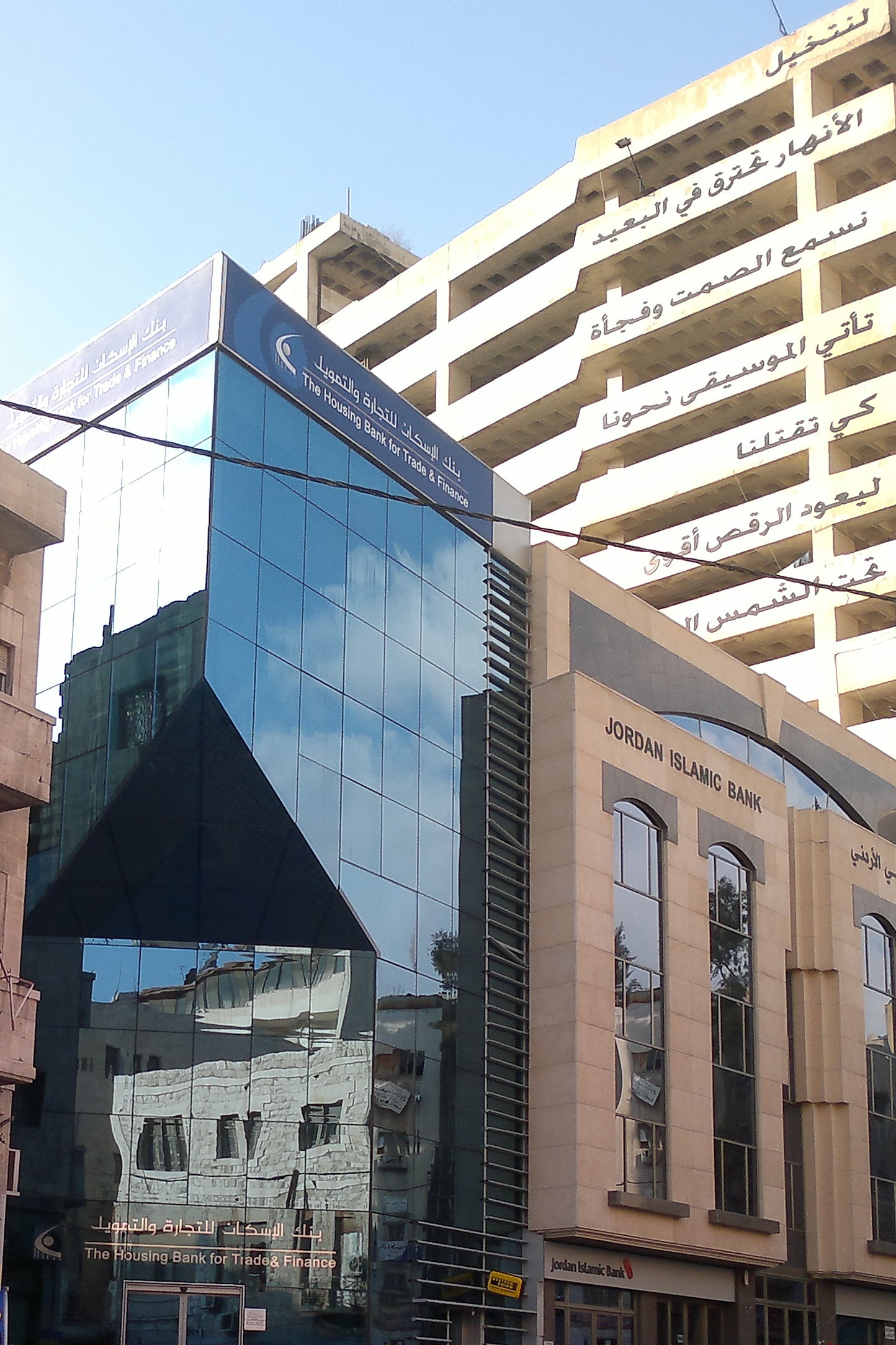
The involvement of institutions, governments, and various conferences and studies on Islamic banking (the Conference of the Finance Ministers of the Islamic Countries held in Karachi in 1970, the Egyptian study in 1972, the First International Conference on Islamic Economics in Mecca in 1976, and the International Economic Conference in London in 1977) were instrumental in applying the application of theory to practice for the first interest-free banks. Sami Hassan Homoud, established the Jordanian Islamic Bank in 1978. (source: ) At the First International Conference on Islamic Economics, "several hundred Muslim intellectuals, Sharia scholars and economists unequivocally declared ... that all forms of interest" were riba.
By 2004, the strength of this belief (which is the basis of Islamic finance) was demonstrated in Pakistan—when a minority (non-Muslim) member of the Pakistani parliament questioned it, pointing out that a scholar from Al-Azhar University (one of the oldest Islamic universities in the world), had issued a decree that bank interest was not un-Islamic. His statement resulted in "pandemonium" in the parliament, a demand by members of the leading Islamist political party to immediately respond to these allegedly derogatory remarks, followed by a walkout when they were denied it. When the upset members of parliament returned, their leader (Sahibzada Fazal Karim), stated that since the Pakistan Council of Islamic ideology had decreed that interest in all its forms was haram (forbidden) in an Islamic society, no member of parliament had the right to "negate this settled issue".
The council's decree notwithstanding, over the years a minority of Islamic scholars (Muhammad Abduh, Rashid Rida, Mahmud Shaltut, Syed Ahmad Khan, Fazl al-Rahman, Muhammad Sayyid Tantawy and Yusuf al-Qaradawi) have questioned whether riba includes all interest payments. Others (Muhammad Akran Khan) have questioned whether riba is a crime like murder and theft, forbidden by Sharia (Islamic law) and subject to punishment by human beings, or simply a sin to be inveighed against, with the reprimand left to God, since "neither the Prophet nor the first four caliphs nor any subsequent Islamic government ever enacted any law against riba."
With an increase in the Muslim population in Europe and the current lack of supply, opportunities will arise for the important role which Islamic finance plays in Europe's economy. In particular, Luxembourg is emerging as a leader and hub for Islamic funds.
Banking
While revivalists like Mohammed Naveed insist Islamic banking is "as old as the religion itself with its principles primarily derived from the Quran", secular historians and Islamic modernists see it as a modern phenomenon or "invented tradition".
Early example: [[Zubayr ibn al-Awwam]]
It is argued that in practice the fundraising business of Zubayr ibn al-Awwam was banking with zero interest. Zubayr pioneered this practice by technically modifying the money-keeping service to be a loan which Zubayr was obligated to pay off, while he also got privilege to manage the money he kept to do his business. Zubayr's practice of accepting deposits while not charging any interest meant Zubayr died with an inflated debt of 2,000,000 Dinar. However, Zubayr invested his clients' deposits in his own lucrative businesses, so his inheritors managed to settle his debts while still leaving an inheritance for his family. After his death, his son Abdullah ibn Zubayr sold the property for 1.600.000 dinar. This practice was allowed according to classical scholar consensus, such as Ibn Taymiyyah in his Majmu Fatawa.
Early banking
According to Timur Kuran, by "the tenth century, Islamic law supported credit and investment instruments" that were "as advanced" as anything in the non-Islamic world, but prior to the 19th century there were no "durable" financial institutions "recognizable as banks" in the Muslim world. The first Muslim majority-owned banks did not emerge until the 1920s.
An early market economy and an early form of mercantilism, sometimes called Islamic capitalism, was developed between the eighth and twelfth centuries. The monetary economy of the period was based on the widely circulated currency the gold dinar, and it tied together regions that were previously economically independent.
A number of economic concepts and techniques were applied in early Islamic banking, including bills of exchange, partnership (mufawada, including limited partnerships, or mudaraba), and forms of capital (al-mal), capital accumulation (nama al-mal), trusts (see Waqf), transactional accounts, loaning, ledgers and assignments. Muslim traders are known to have used the cheque or ṣakk system since the time of Harun al-Rashid (9th century) of the Abbasid Caliphate.{{citation
20th century
In the middle of the 20th century, some organizational entities were found to offer financial services complying with Islamic laws. The first, experimental, local Islamic bank was established in the late 1950s in a rural area of Pakistan. It charged no interest on its lending.
In 1963, the first modern Islamic bank on record was established in rural Egypt by economist Ahmad Elnaggar to appeal to people who lacked confidence in state-run banks. The profit-sharing experiment, in the Nile Delta town of Mit Ghamr, did not specifically advertise its Islamic nature for fear of being seen as a manifestation of Islamic fundamentalism, which was anathema to the Gamal Nasser regime. Also in that year the Pilgrims Saving Corporation was founded in Malaysia. Although not a bank, it incorporated basic Islamic banking concepts.
The Mit Ghamr experiment was shut down by the Egyptian government in 1968. Nonetheless, it was considered a success by many,{{cite book as by that time there were nine similar banks in the country. In 1972, the Mit Ghamr Savings project became part of Nasr Social Bank, which as of 2016 was still in business in Egypt.
Since 1970
| Year | Number |
|---|---|
| prior to 1979 | 238 |
| 1999 | 2722 |
| 2006 | 6484 |
The influx of "petro-dollars" and a "general re-Islamisation" following the 1973 Arab Israeli War and 1973 oil crisis encouraged the development of the Islamic banking sector,{{cite book
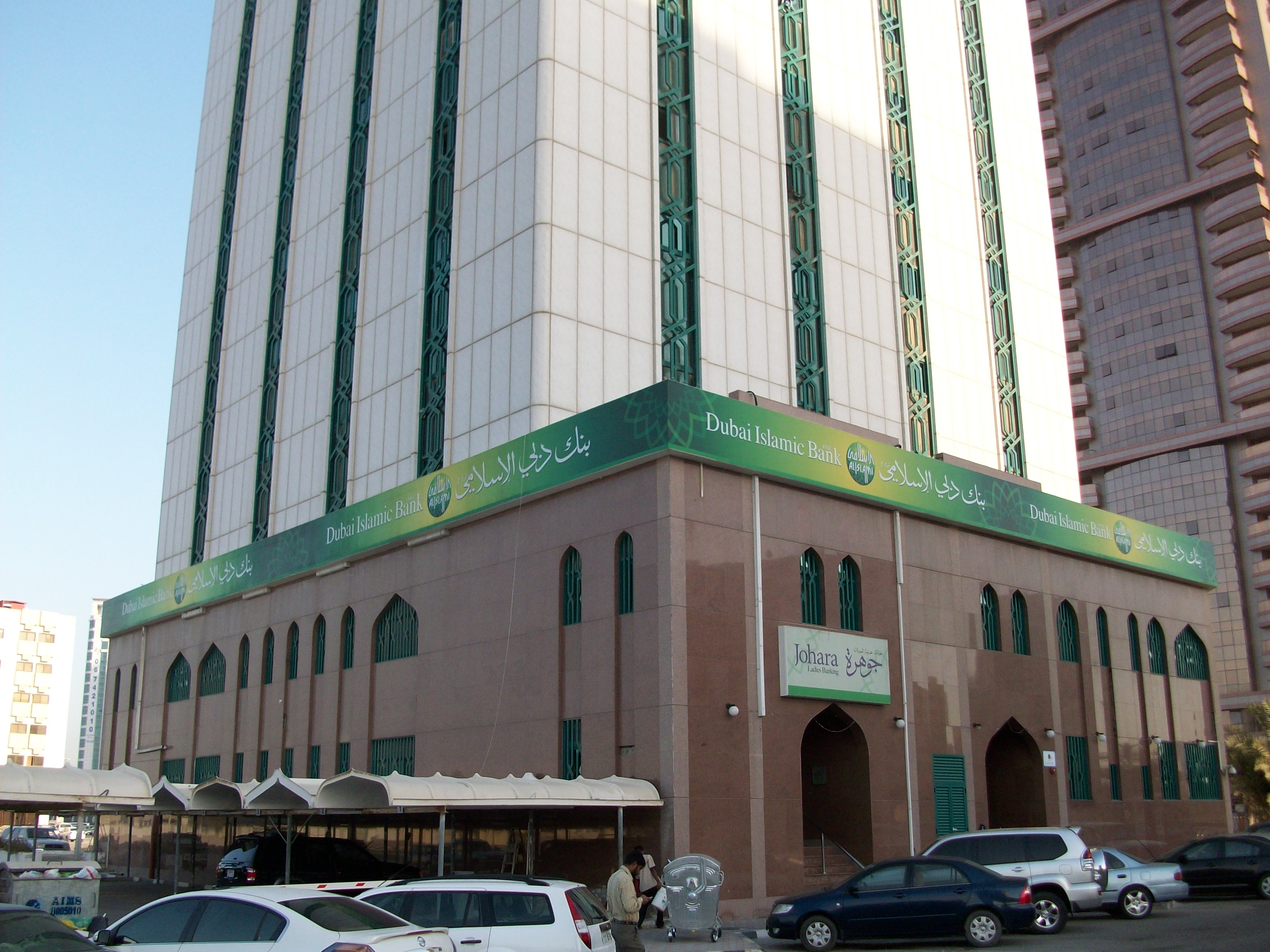
In 1975, the Islamic Development Bank was set up with the mission of providing funding to projects in its member countries. The first modern commercial Islamic bank, Dubai Islamic Bank, was established in 1979. The first Islamic insurance (or takaful) company – the Islamic Insurance Company of Sudan – was established in 1979. the world's first Islamic mutual fund (which invests only in Sharia-compliant equities), was created in 1986 in Indiana.
From 1980 to 1985, Islamic investments underwent a "spectacular expansion" throughout the Muslim world, attracting deposits with the promise of "great gains" and "religious guarantees" supplied by Islamic jurists who were "recruited to issue fatwas denouncing conventional banks and recommending their Islamic rivals." This growth was temporarily reversed in 1988 in the largest Arab Muslim country, Egypt, when the Egyptian state – worried that Islamist movements were building up a "war chest" and being given financial independence – reversed its tacit support for the industry, and launched a media campaign against Islamic banks.
In 1990 an accounting organization for Islamic financial institutions (Accounting and Auditing Organization for Islamic Financial Institutions, AAOIFI), was established in Algiers by a group of Islamic financial institutions. Also in that year the Islamic bond market emerged when the first tradable sukuk – the Islamic alternative to conventional bonds – were issued by Shell MDS in Malaysia. In 2002, the Malaysia-based Islamic Financial Services Board (IFSB) was established as an international standard-setting body for Islamic financial institutions.
By 1995, 144 Islamic financial institutions had been established worldwide, including 33 government-run banks, 40 private banks, and 71 investment companies.

Also in the 1990s, a false start was made in Islamic banking in the UK, where bankers declared returns "interest" for tax purposes, while insisting to depositors they were actually "profit" and so not riba. Islamic scholars issued a fatwa stating they had "no objection to the use of the term 'interest'" in loan contracts for purposes of tax avoidance provided the transaction did not actually involve riba, and the Islamic bankers used the term for fear that lack of tax deductions available for interest (but not profit) would put them at a competitive disadvantage to conventional banks. Muslim customers were not persuaded, and a "bad taste" was left "in the mouth" of the market for Islamic financial products. The Islamic Bank of Britain, the first Islamic commercial bank established outside the Muslim world, was not established until 2004.
By 2008 Islamic banking was growing at a rate of 10–15% per year and continued growth was forecast. There were over 300 Islamic financial institutions spread over 51 countries, as well as an additional 250 mutual funds complying with Islamic principles. Worldwide, approximately 0.5% of financial assets were estimated to be under Sharia-compliant management according to The Economist magazine.
But, as the industry grew, it also drew criticism (from M.T. Usmani among others) for not progressing from "debt-based contracts", such as murabaha, to the more "genuine" profit and loss sharing mode, but instead moving in the opposite direction, "competing to present themselves with all of the same characteristics of the conventional, interest-based marketplace".
During the 2008 financial crisis, Islamic banks were not initially impacted by the 'toxic assets' built up on the balance sheets of US banks as these were not Sharia-compliant and not owned by Islamic banks. In 2009, the official newspaper of the Vatican (L'Osservatore Romano) put forward the idea that "the ethical principles on which Islamic finance is based may bring banks closer to their clients and to the true spirit which should mark every financial service". (The Catholic Church also forbids usury, but began to relax its ban on all interest in the 16th century.) However, the drop in valuation of real estate and private equity – two segments heavily invested in by Islamic firms – following the collapse of Lehman Brothers Islamic did hurt Islamic financial institutions.
As of 2015, $2.004 trillion in assets were being managed in a Sharia-compliant manner according to the State of the Global Islamic Economy Report. Of these $342 billion were sukuk. The market for Islamic sukuk bonds in that year was made up of 2,354 sukuk issues, and had become strong enough that several non-Muslim majority states – UK, Hong Kong, and Luxembourg – issued sukuk.
There are multiple Sharia-compliant indexes, created by Sharia screening of companies. Such indexes include DJIM, S&PSI, MSCI and country-based indexes like KMI-Pakistan and SCM-Malaysia.
Principles
To be consistent with the principles of Islamic law (Sharia)—or at least an orthodox interpretation of the law—and guided by Islamic economics, the contemporary movement of Islamic banking and finance prohibits a variety of activities, some of which are not illegal in secular states:
- Paying or charging interest. "All forms of interest are riba and hence prohibited". Islamic rules on transactions (known as Fiqh al-Muamalat) have been created to prevent use of interest.
- Investing in businesses involved in activities that are forbidden (haram). These include things such as selling alcohol or pork, or producing media such as gossip columns or pornography.
- Charging extra for late payment. This applies to murâbaḥah or other fixed payment financing transactions, although some authors believe late fees may be charged if they are donated to charity, or if the buyer has "deliberately refused" to make a payment.
- Maisir. This is usually translated as "gambling" but used to mean "speculation" in Islamic finance. Involvement in contracts where the ownership of a good depends on the occurrence of a predetermined, uncertain event in the future is maisir and forbidden in Islamic finance.
- Gharar. Usually translated as "uncertainty" or "ambiguity". Bans on both maisir and gharar tend to rule out derivatives, options and futures. Islamic finance supporters (such as Mervyn K. Lewis and Latifa M. Algaoud) believe these involve excessive risk and may foster uncertainty and fraudulent behaviour such as are found in derivative instruments used by conventional banking.
- Engaging in transactions lacking "'material finality'. All transactions must be "directly linked to a real underlying economic transaction", which excludes "options and most other derivatives".
Money on the most common type of Islamic financing – debt-based contracts – "must be made from a tangible asset that one owns and thus has the right to sell – and in financial transactions it demands that risk be shared." Money cannot be made from money. Another statement of the Islamic banking theory of finance is: "Money has no intrinsic utility; it is only a medium of exchange." Other restrictions include:
- Islamic banks are to collect zakat (obligatory religious alms giving) from customers' accounts – at least according to some sources.
- A board of Sharia experts is to supervise and advise each Islamic bank on the propriety of transactions to "ensure that all activities are in line with Islamic principles". (Interpretations of Sharia may vary by country. According to Humayon Dar, interpretation of the Sharia is more strict in Turkey or Arab countries than in Malaysia, whose interpretation is in turn more strict than the Islamic Republic of Iran. Mohammed Ariff also found less exacting Sharia compliance in Iran, where the Islamic government had decreed "that government borrowing on the basis of a fixed rate of return from the nationalized banking system would not amount to interest" and consequently would be permissible." Mahmud el-Gamal found interpretations to be most strict in Sudan and least in Malaysia.)
- Risk sharing. Symmetrical risk and return on distribution to participants must be structured such that no one benefits disproportionately from the transaction.
In general, Islamic banking and finance has been described as having the "same purpose" as conventional banking but operating in accordance with the rules of Sharia law (Institute of Islamic Banking and Insurance), or having the same "basic objective" as other private entities, i.e. "maximization of shareholder wealth" (Mohamed Warsame). In a similar vein, Mahmoud El-Gamal states that Islamic finance "is not constructively built from classical jurisprudence". It follows conventional banking and deviates from it "only insofar as some conventional practices are deemed forbidden under Sharia."
A broader description of its principles is given by the Islamic Research and Training Institute of the Islamic Development bank:
The most important feature of Islamic banking is that it promotes risk sharing between the provider of funds (investor) on the one hand and both the financial intermediary (the bank) and the user of funds (the entrepreneur) on the other hand ... In conventional banking, all this risk is borne in principle by the entrepreneur.
Some proponents (Nizam Yaquby) believe Islamic banking has more far reaching purposes than conventional banking, and declare that the "guiding principles" for Islamic finance include: "fairness, justice, equality, transparency, and the pursuit of social harmony", although others describe these virtues as the natural benefits of following Sharia. (Taqi Usmani describes the virtues as guiding principles in one section of his book on Islamic Banking, and benefits in another.)
Nizam Yaquby, for example, declares that the "guiding principles" for Islamic finance include: "fairness, justice, equality, transparency, and the pursuit of social harmony". Some distinguish between Sharia-compliant finance and a more holistic, pure and exacting Sharia-based finance. "Ethical finance" has been called necessary, or at least desirable, for Islamic finance, as has a "gold-based currency". Taqi Usmani declares that Islamic banking would mean less lending because it paid no interest on loans. This should not be thought of as presenting a problem for borrowers finding funds, because – according to Usmani – it is in part to discourage excessive finance that Islam forbids interest. Zubair Hasan argues that the objectives of Islamic finance as envisaged by its pioneers were "promotion of growth with equity ... the alleviation of poverty ... [and] a long run vision to improve the condition of the Muslim communities across the world." Some (such as Umar Ibrahim Vadillo) believe the Islamic banking movement has so far failed to follow the principles of Sharia law, or at least failed to follow them sufficiently strictly.{{#tag:ref|Umar Ibrahim Vadillo states: "For the last one hundred years the way of the Islamic reformers have led us to Islamic banks, Islamic Insurance, Islamic democracy, Islamic credit cards, Islamic secularism, etc. This path is dead. It has shown its face of hypocrisy and has led the Muslim world to a place of servile docility to the world of capitalism." According to critic Critic Feisal Khan "there have thus been two broad categories of critic of the current version of IBF [Islamic Banking and Finance]: the Islamic Modernist/Minimalist position, and the Islamic ultra Orthodox/Maximalist one. ... The ultra Orthodox [such as the Islamic courts in Pakistan] ... agree with the Modernist/Minimalist criticism that contemporary Islamic banking is indeed nothing but disguised conventional banking but ... agitate for a truly Islamic banking and finance system".|group=Note}}
On the other hand, Usmani preached that an Islamic economy free of the "imbalances" in society – such as concentration of "wealth in the hands of the few", or monopolies which paralyze or hinder market forces – would follow from obeying "divine injunctions" by banning interest (along with other Islamic efforts). (Later in his book Introduction to Islamic Finance, he argues that Islamic principles should include "the fulfillment of the needs of the society" giving "preference to the products which may help the common people to raise their standard of living", but that few Islamic banks have followed this path.) Another source (Saleh Abdullah Kamel), described the changes anticipated for the Muslim community by following Islamic approach to economics, banking, finance, etc., as a "move towards economic development, creation of the value added factor, increased exports, less imports, job creation, rehabilitation of the incapacitated and training of capable elements".

Scriptural basis
The Sharia law that forms the basis of Islamic banking is itself based on the Quran (revealed to the Islamic prophet Muhammad) and hadith (the body of reports of the teachings, deeds and sayings of the Islamic prophet Muhammad that often explain verses in the Quran). Prohibition of gharar is based on hadith declaring as forbidden gharar, the sale of things like "the birds in the sky or the fish in the water".{{#tag:ref|Several hadith, in addition to prohibiting games of chance, prohibit bayu al-gharar (literally "trading in risk", defined as sales in which gharar is the major component). but disagree over what constitutes gharar that is minor and gharar that is substantial, (at least according to one source, Abu Umar Faruq Ahmad), have not agreed on an exact definition of the meaning and concept of gharar.|group=Note}} Maisir is thought to be banned by verses 2:219, 5:90, and 91 in the Quran.
However, "the Islamic evaluation" of modern banking centers around the definition of interest on loans as riba. Twelve verses in the Qur'an deal with riba, the word appearing eight times in total, three times in verses , and once in , , , and . Riba is mentioned numerous times in hadith, including Muhammad's Farewell Sermon.
A number of orthodox scholars point to Quranic verses (2:275–2:280) as declaring riba "categorically prohibited" and "unjust" (zulm), and defining it to mean any payment "over and above the principal" of a loan. (Although at least one source states "it is commonly argued" that riba is "defined by hadith".)
According to the orthodox, an "increase over the principal sum" in loans of cash is riba. An increase over the principal sum in financing a purchase of some product or commodity is another matter. These are not riba according to the orthodox interpretation – at least in some circumstances. (These are sometimes known as "credit sales".) According to noted Islamic scholar Taqi Usmani, this is because in Quran aya 2:275 ("they say, 'Trafficking (trade) is like usury,' [but] God has permitted trafficking, and forbidden usury") "trafficking (trade)" refers to credit sales such as murabaha, the "forbidden usury" refers to charging extra for late payment (late fees), and the "they" refers to non-Muslims who did not understand why if the first was allowed both were not.
Interest and credit sales
While Usmani and other Islamic banking pioneers envisioned credit sales like murâbaḥah being a limited part of the Islamic banking industry and subordinate to profit and loss sharing, it has become the "most common" mode of Islamic financing.
The distinction between credit sales and interest has also come under attack from critics such as Khalid Zaheer and Muhammad Akram Khan, criticizing it from opposite points of view. Zaheer considers profit from credit sales to be riba, the same as interest, and notes the lack of enthusiasm of orthodox scholars (such as the Council of Islamic Ideology) for credit sales-based Islamic banking, which the council calls "no more than a second best solution from the viewpoint of an ideal Islamic system". Khan calls the distinction "frivolous and laboured", a way of charging interest using another name, necessary because businesses "cannot survive where cash and credit prices are equal". Others note that in terms of standard accounting practice and truth-in-lending regulations, getting 90 days credit on a Rs 10000 product and paying an extra Rs 500, cost very nearly the same and is considered very nearly the same as paying in cash, using a three-month loan at 20% per annum.
Taqi Usmani, however, explains that this is a "misconception". Paying more for credit when buying a product ("an exchange of commodities for money") does not violate Sharia law, but exchange of "one unit of money for another of the same denomination" ("an exchange of money for money") and charging for credit is a violation of Sharia. The cash loan is different because "money has no intrinsic utility".
Other orthodox supporters (such as Kahf) have defended the Sharia-compliance of the practice saying that among other things, attaching commodities to money in finance prevents money from being used for speculative purposes. Critics report widespread abuses of "synthetic" murabaha, which are loans with interest in all but name.
Types of Islamic lending
One of the pioneers of Islamic banking, Mohammad Najatuallah Siddiqui, suggested a two-tier mudarabah model as the basis of a riba-free banking. The bank would act as the capital partner in mudarabah accounts with the depositor on one side and the entrepreneur on the other side. (Another pioneer Taqi Uthmani called mudarabah and another profit-sharing form of finance musharakah, the "real and ideal instruments of financing in Shari‘ah".) This model would be supplemented by a number of fixed-return models—mark-up (murabaha), leasing (ijara), cash advances for the purchase of agricultural produce (salam) and cash advances for the manufacture of assets (*istisna'''), etc. In practice, the fixed-return models, in particular the murabaha model, became the industry staples, not supplements, as they bear results most similar to interest-based finance models. Assets managed under these products far exceed those in "profit-loss-sharing modes" such as mudarabah and *musharakah''.
Time value of money
The time value of money – the idea that there is greater benefit in receiving money now rather than later, so that savers/investors/lenders should be compensated for delayed gratification – has been called one of the "most significant" arguments in favor of charging interest on loans. As such, some Islamic finance supporters have opposed the concept, arguing that some consumption, such as eating, can only be done over time, and discounting for time encourages negative outcomes such as desertification, since the desertification comes in the discounted future. However, since Islamic banking also calls for rewarding delayed gratification in the form of "return on investment" on both profit-sharing and credit sales, Islamic scholars and economists have tended to insist that time value of money is a valid concept "provided the rate of discount is the 'rate of return' on capital rather than the rate of interest," a position critics find specious.
Early payment of debt
The opposite of credit sales (i.e. the opposite of charging more in exchange for giving the buyer time to pay) is reduced charges for early payment. This is considered haram by the four Sunni schools of jurisprudence (Hanafi, Maliki, Shafi'i, Hanbali), but not by all jurists according to Ridha Saadullah. He notes that such reductions have been permitted by some companions of the Prophet and some of their followers. This position has been advanced by Ibn Taymiyya and Ibn al-Qayyim, and it has, more recently, been adopted by the Islamic Fiqh Academy of the OIC. The Academy decided that "reduction of a deferred debt in order to accelerate its repayment, whether at the request of the debtor or the creditor is permissible under Shariah. It does not constitute forbidden riba if it is not agreed upon in advance and as long as the creditor-debtor relationship remains bilateral."
Islamic laws on trading

Main article: Sharia and securities trading
As noted above, the primary focus of Islamic banking is on financing without interest to avoid riba, while trade is not an issue (per the Quranic statement that "God has permitted trade and forbidden riba [usury]". However trade transactions that involve gambling (maisir), or excessive risk (bayu al-gharar) are not permitted. Among the financial instruments and activities common in conventional finance that are considered forbidden (or at least Islamically problematic) by many Islamic scholars and Muslims are:
- Margin trading: using borrowed money to buy shares of stock or other financial instruments. It both involves forbidden interest on the borrowed money,
- Short selling: borrowing/renting shares of stock or some other instruments and selling it, sometimes without possessing it, on the hope that it can be later repurchased at a lower price for a profit. It is traditionally thought to violate the hadith stating "Do not sell which you do not possess," and has been declared impermissible by numerous sources (Raj Bhala, Taqi Usmani, Humayon Dar).
- Day trading: very short term buying and selling of financial instruments. It has been called un-Islamic because the short period of "ownership" means day traders do not truly own what they trade, and furthermore pay interest. Among the sources calling it un-Islamic include Yusuf Talal DeLorenzo, and Focus Business Services of the UAE.
- Derivatives: contracts that derive their value from the performance of an underlying asset. (The "notional value" of the world's over-the-counter derivatives at the end of 2007 was $596 trillion and the gross market value of all outstanding derivatives was $14.5 trillion.) Options, futures and "other derivatives" are "generally" not used in Islamic finance "because of the prohibition against maisir". Sources stating that most derivative or some kinds of derivative are banned by Islamic scholars include Juan Sole and Andreas Jobst, P. S. Mills and J. R. Presley, Taqi Usmani, and Investopedia. The most commonly used derivatives are:
- forwards: customized contracts to buy or sell an asset at a specified price on a future date. unlike futures contracts forward contracts are not traded on any exchanges;
- futures: a legal agreement to buy or sell a particular commodity or financial instrument at a predetermined price at a specified time in the future;
- options: contracts offering the buyer the right, but not the obligation, to buy (call) or sell (put) a security or other financial asset at an agreed-upon price (the strike price) during a certain period of time or on a specific date (exercise date); and
- swaps: contracts through which two parties exchange financial instruments to transfer risk.
On the other hand, at least one Islamic scholar (Mohammed Hashim Kamali) finds "nothing inherently objectionable" in selling and using options, which like other kinds of trade is mubah (permissible) in fiqh, and "simply an extension of the basic liberty that the Quran has granted". Both Islamic finance practitioners and critics find benefit in at least some uses of derivatives and short selling – managing risk in times of financial trouble and improving market efficiency and employee productivity.
At least some in the Islamic finance industry use derivatives and make short sales, and the permissibility of this is a subject of "heated debate". Global standards for trading Islamic profit-rate and currency swap derivatives were set in 2010 with the "Hedging Master Agreement" (see below). A "Shariah-certified" short-sale had been created by some Shariah-compliant hedge funds. However, both have been criticized as un-Islamic.
Justification for Islamic banking
It has been praised – or at least described positively – for
- turning a "theory" into a trillion dollar{{cite web |access-date=2025-10-31
- enriching the Islamic legal system by providing it with real world business questions to find shariah-compliant solutions for (Usmani);
- creating an "ethical, sustainable, environmentally- and socially-responsible" system (according to Abayomi A. Alawode);
- drawing conventional banks into the industry in search of Muslim customers (Munawar Iqbal and Philip Molyneux);
- drawing new customers and money into banking, rather than taking existing customers and their money away from conventional banking, (Laurent Gheeraert);
- creating a less risky form of finance (according to Zeti Akhtar Aziz and others):
- by forbidding speculation, so that, for example, the excesses that led to the 2008 financial crisis are avoided (according to Ibrahim Warde);
- and by use of two kinds of accounts:
- "current accounts" – where funds earn no return and (in theory) are held, not invested by the bank, so not subject to risk;
- and mudarabah accounts – where the depositors share in any losses with the bank, so diminishing the bank's risk.
- While the industry has problems and challenges, these can be explained by
- its relative youth and low position on the "learning curve" that will solve these difficulties over time; and by
- non-Islamic influences which can only be eliminated when the industry operates in a truly Islamic society and environment.
Industry framework
Islamic financial institutions take different forms. They may be:
- Full-fledged Islamic financial institutions (for example Islami Bank Bangladesh Ltd, Meezan Bank in Pakistan);
- Islamic "windows" – i.e. separate, sharia-compliant units – in conventional financial institutions (for example: HSBC – HSBC Amanah, American Express Bank, ANZ Grindlays, BNP-Paribas, Chase Manhattan, UBS, Kleinwort Benson, Commercial Bank of Saudi Arabia, Ahli United Bank Kuwait, Riyad Bank); (Scholars debate the Sharia compliance of this form, according to Faleel Jamaldeen, "primarily" because of "where" the funds for these windows come from.);
- Islamic subsidiaries of conventional financial institutions (for example: Citibank subsidiary Citi Islamic Investment Bank (Bahrain), Union Bank of Switzerland subsidiary Noriba Bank); or
- in India, Islamic non-banking financial institutions (NBFCs).
Size and locations
| Saudi Arabia | Malaysia | UAE | Kuwait | Qatar | Turkey | Indonesia | Bahrain | Pakistan | Rest of the world |
|---|---|---|---|---|---|---|---|---|---|
| 33 | |||||||||
| 15.5 | |||||||||
| 15.4 | |||||||||
| 10.1 | |||||||||
| 8.1 | |||||||||
| 5.1 | |||||||||
| 2.5 | |||||||||
| 1.6 | |||||||||
| 1.4 | |||||||||
| 7.3 |
Sharia-compliant banking grew at an annual rate of 17.6% between 2009 and 2013, faster than conventional banking, and is estimated to be $2 trillion in size, but at 1% of total world banking, still much smaller than the conventional sector.
As of 2010, Islamic financial institutions operate in 105 countries. Statistics differ on which country has the largest Islamic banking sector. According to the 2016 World Islamic Banking Competitiveness Report (see table), Saudi Arabia, Malaysia, United Arab Emirates, Kuwait, Qatar, and Turkey represented over 87% of international Islamic banking assets. A 2006 report by ISI Analytics also lists Saudi Arabia at the top and Iran as insignificant. In Qatar, Islamic banking assets were valued at $97 billion at the end of 2017, accounting for nearly 81% of total Islamic finance assets, according to QFC Authority chief executive officer Yousuf Mohamed al-Jaida. The country also announced the launch of an energy-focused Islamic bank with $10 billion capital in 2019, which would make it the biggest Islamic lender for energy projects in the world.
However, according to Ibrahim Warde, Shia-majority Iran dominates Islamic banking with $345 billion in Islamic assets, Saudi Arabia with $258 billion, Malaysia $142 billion, Kuwait with $118 billion and UAE with $112 billion. Islamic banks in the UAE also provide Islamic investment programs which are Shariah compliant. And according to Reuters, Iranian banks accounted for "over a third" of the estimated worldwide total of Islamic banking assets, (although sanctions have hurt Iran's banking industry and "its Islamic financial system has evolved in ways that will complicate ties with foreign banks"). According to the latest central bank data, Iran's banking assets as of March 2014 totalled 17,344 trillion riyals or $523 billion at the free market exchange rate. According to The Banker, as of November 2015, three out of ten top Islamic banks in the world based on return on assets were Iranian.
Sharia advisory councils and consultants
Main article: Shariah Board

Because compliance with Shariah law is the raison d'être of Islamic finance, Islamic banks and banking institutions that offer Islamic banking products and services may establish a Shariah Supervisory Board (SSB) – to advise them on whether some proposed transaction or product follows the Sharia, and to ensure that the operations and activities of the banking institution comply with Shariah principles.
According to various Islamic banking organizations some requirements for SSBs include:
- that they be composed of jurists specializing in fiqh al-muamalat, i.e. Islamic commercial jurisprudence, (Accounting and Auditing Organization for Islamic Financial Institutions, AAOIFI);
- their fatwas (legal opinions) and ruling be binding, (AAOIFI);
- that they have at least three members, (Institute of Islamic Banking and Insurance);
- that their members not be employees of the financial institution they supervise;
- and be appointed and have their remuneration set by a "general assembly" rather than the institution's board of directors, (International Association of Islamic Banks). In addition, their duties should include:
- calculating zakat payable by Islamic financial institutions, (AAOIFI);
- disposing of non-Shariah-compliant income, (AAOIFI);
- advising on the distribution of income among investors and shareholders, (AAOIFI).
Since the beginning of modern Islamic finance, the work of the Shariah boards has become more standardized. Among the organizations that have issued guidelines and standards for Shariah compliance are the AAOIFI, Fiqh Academy of the OIC, Islamic Financial Services Board (IFSB) (2009). The guidelines and standards are not regulations though, and each Islamic financial institution has its own SSB, which are not generally obliged to follow them.
However, their home country many have a regulatory organization that they are required to follow. As of 2013, regulators in Bahrain, Indonesia, Jordan, Kuwait, Lebanon, Malaysia and Pakistan have developed guidelines for SSBs in their respective jurisdictions. Some countries, like Indonesia, Kuwait, Malaysia, Pakistan, Sudan, and the UAE have centralized SSBs. A number of Shariah advisory firms have now emerged to offer Shariah advisory services to institutions offering Islamic financial services.
Financial accounting standards
The Accounting and Auditing Organization for Islamic Financial Institutions (AAOIFI) has been publishing standards and norms for Islamic financial institutions since 1993. By 2010, it had issued "25 accounting standards, seven auditing standards, six governance standards, 41 shari'ah standards and two codes of ethics." (By 2017 it had issued 94 standards in the "areas of Shari’ah, accounting, auditing, ethics and governance".) Although it is an independent body, its "pronouncements on the acceptability or otherwise of contractual structures in relation to Islamic financial instruments are to be viewed in the same vein as regulatory edicts." Its standards are mandatory for Islamic financial institutions in Bahrain, Sudan, Jordan and Saudi Arabia, and recommended for other Muslim countries and Islamic financial institutions according to Muhammad Akram Khan. Established in Algiers in 1990, its original name was the Financial Accounting Organization for Islamic Banks and Financial Institutions. It later moved its headquarters to Bahrain.
The International Islamic Financial Market – a standardization body of the Islamic Financial Services Board for Islamic capital market products and operations – was founded in November 2001 through the cooperation of the governments and central banks of Brunei, Indonesia and Sudan. Its secretariat is located in Manama, Bahrain. It is not a regulatory body and its recommendations are "not implemented by most Islamic banks". Faleel Jamaldeen differentiates its controlling body (Islamic Financial Services Board) from the other Islamic Financial standards organ, the AAOIFI, saying,the AAOIFI sets best practices for handling the financial reporting requirements of Islamic financial institutions, IFSB standards are mainly concerned with the identification, management, and disclosure of risk related to Islamic financial products. Individual countries also have accounting standards. The Institute of Chartered Accountants of Pakistan issues Islamic Financial Accounting Standards (IFAS).
Supporting institutions
The Islamic Interbank Money Market was established by Bank Negara Malaysia on 3 January 1994, and has developed instruments to manage the liquidity needs of the Islamic financial institutions – "funding and adjusting portfolios over the short term".
The Islamic Financial Services Board was founded on 3 November 2002 in Kuala Lumpur by the central banks of Bahrain, Iran, Kuwait, Malaysia, Pakistan, Saudi Arabia, Sudan along with the Islamic Development Bank, AAOIFI, and IMF. As of April 2015, the 188 members of the IFSB comprise 61 regulatory and supervisory authorities, eight international inter-governmental organisations, and 119 market players (financial institutions, professional firms and industry associations) operating in 45 jurisdictions. From 2002 to 2012 it issued 17 standards, guiding principles and notes. Its objective is to standardize and harmonize the operation and supervision, standards and capital adequacy, risk management and corporate governance of Islamic financial institutions in consultation with a wide array of stakeholders and after following a lengthy process. It complements the task of the Basel Committee on Banking Supervision. As of 2015 it had published 17 standards and six guidance notes.
The Islamic International Ratings Agency started operations in July 2005 in Bahrain. It is sponsored by 17 multilateral development institutions, banks and other rating agencies.
The Dow Jones Islamic Market Index (DJIMI) was established in 1996. The Index has been approved by Fiqh Academy of the OIC. It uses three levels of screening—eliminating businesses involved in activities not allowed by Islamic law (alcohol, pork, gambling, prostitution, pornography, etc.); eliminating companies whose total debts divided by their 12-month average market capitalization are 33% or more of their total sources of funds; eliminating companies that have 'impure income or expenditure' (including, of course, interest) of more than 5–10 per cent of their income or expenditure (eliminating businesses with any 'impure income' being considered impractical).
In 2006, Citigroup launched the Dow Jones Citigroup Sukuk Index. The sukuk making up the Index must be at least $250 million in size, have a maturity of at least one year and a minimum rating of BBB-/Baaa3. In 1998, the FTSE Global Islamic Index was launched. It has 15 Islamic indices for various regions. In 2007, the MSCI Islamic Index series was launched, one of the "MSCI 'Faith-Based' Indexes". It is constructed from the conventional MSCI country indices and covers 69 developed, emerging and frontier markets, including regions such as the Gulf Cooperation Council and Arabian markets.
Central banking
Although no Muslim country has yet banned interest on loans completely, suggestions have been made as to how to deal with monetary policy when central banks operate in an interest-free environment and there are no longer any interest rates to lower or raise. Economist Mohammad N. Siddiqi has proposed that central banks offer "refinance facilities" to expand or contract credit as needed to deal with inflation or deflation.
He also proposes that short term credit for the production sector of the economy be estimated by the central banks and then adjusted by manipulating the "refinance ratio" and the "lending ratio".
According to economist and Islamic finance critic Feisal Khan, a "true" or strict Islamic banking and finance system of profit and loss sharing (the type supported by Taqi Usmani and the Shariah Appellate Bench of the Supreme Court of Pakistan) would severely cripple central banks' ability to fight a credit crunch or liquidity crisis that leads to a severe recession (such as happened in 2007–8). This is because if credit was provided by taking "a direct equity stake in every enterprise" (the PLS approach) it would contract in a credit crunch. But situations like this – when financiers are "less and less sure of the creditworthiness of their financial sector counterparties" and essentially stop lending to even the biggest and most stable borrowers or even other banks – is exactly the time when credit expansion and "flooding" the economy with liquidity is needed to prevent widespread business bankruptcy and unemployment.
Products, services and contracts
Banking makes up most of the Islamic finance industry. Banking products are often classified in one of three broad categories, two of which are "investment accounts":
- Profit and loss sharing modes (musharakah and mudarabah), where the financier and the customer share profits and losses, are based on "contracts of partnership". These have been called the "real and ideal" modes of Islamic finance and other theoreticians of Islamic finance).
- "Asset-backed financing" and "debt-like instruments" such as mark-up (murabaha), leasing (ijara), cash advances for the purchase of agricultural produce (salam), and cash advances for the manufacture of assets (''istisna'''). and involve the "purchase and hire of goods or assets and services on a fixed-return basis". Originally these modes were intended by Islamic banking advocates to be "interim" measures, or to be used for situations where participatory financing was not practical, but now account for the great bulk of investments in many Islamic banks.
- Modes based on contracts of safety and security include safe-keeping contracts (wadi’ah) for current deposits (the equivalent of a checking account in the US), and agency contracts (wakalah).
Most Islamic finance is in banking, but non-banking finance, such as sukuk, equity markets, investment funds, insurance (takaful), and microfinance, is also fast-growing,
These products – and Islamic finance in general – are based on Islamic commercial contracts and contract law, with many products named after a particular type of contract (e.g. mudaraba) although they are combinations of more than one contract.
Profit and loss sharing
While the original Islamic banking proponents hoped profit-loss sharing (PLS) would be the primary mode of finance replacing interest-based loans, long-term financing with profit-and-loss-sharing mechanisms is "far riskier and costlier" than the long term or medium-term lending of the conventional banks – according to critics such as economist Tarik M. Yousef – and has "declined to almost negligible proportions". Loans are permitted in Islam if the interest that is paid is linked to the profit or loss obtained by the investment. The concept of profit acts as a symbol in Islam as equal sharing of profits, losses, and risks.
''Mudarabah''
A mudarabah or mudharabah contract is a profit sharing partnership in a commercial enterprise. One partner, the rabb-ul-mal, is a silent or sleeping partner who provides money. The other partner, the mudarib, provides expertise and management. The arrangement is similar to venture capital in conventional finance, in which a venture capitalist finances an entrepreneur, who provides management and labor.
Profits are shared between the parties according to a pre-agreed ratio, usually either 50%–50%, or 60% for the mudarib and 40% for the rabb-ul-mal. If there is a loss, the rabb-ul-mal loses the invested capital, and the mudarib loses the invested time and effort. The sharing of risk reflects the view of Islamic banking proponents that under Islam, the user of capital – labor and management – should not bear all the risk of failure. Sharing of risk, according to proponents, results in a balanced distribution of income, and prevents financiers from dominating the economy.
''Musharakah'' (joint venture)
Like mudaraba, musharakah is also a profit and loss sharing partnership, but one where investment comes from all the partners, all partners are given the option of participating in the management of the business, and all partners share in losses according to the ratio (pro rata) of their investment.
Musharakah may be "permanent" or "diminishing". It is often used in investment projects, letters of credit, and the purchase of real estate or property. Use of musharaka is not great. In Malaysia, for example, the share of musharaka (or at least permanent musharaka) financing declined from 1.4 percent in 2000 to 0.2 per cent in 2006.
Diminishing ''musharaka''
Musharaka al-Mutanaqisa (literally "diminishing partnership") is a popular type of financing for major purchases such as housing. In it, the bank and purchaser (customer) have joint ownership of a purchased asset with the customer also leasing the asset.{{cite book If the customer defaults and the asset is sold, the bank and the customer split the proceeds according to each party's current equity.
To highlight how Musharaka al-Mutanaqisa is different from conventional banking mortgages in terms of law and practice is understood, compare it to a typical United States mortgage:
When a buyer wishes to purchase a home, she approaches the lender and requests a loan. The lender in turn, if the buyer qualifies, will lend money to buy the house, and the bank will usually set a fixed percentage of interest to be paid to the lender. Each payment to the lender will then include a return of a portion of the principal and the interest accrued on the remaining balance for that period. Over time, the entire principal is paid back to the lender, together with all the interest that is due. In terms of the ownership of the house, the buyer/borrower/debtor will have legal title to the house during the term of repayment and thereafter too. In the county title records office, the borrower will have a title deed showing the buyer as the title holder, and not the bank. The risk of the house diminishing in value is assumed by the borrower and not the bank. On the other hand, any appreciation is also assumed by the borrower and the bank cannot ask for more principal due to appreciation. Hence, the bank and the borrower know at the outset their exact obligations to each other. The bank, in an effort to secure its loan, will place a lien (a charge) on the property, so that if the borrower does not repay the loan, the bank gets the right to foreclose on the borrower's right to hold title and have the title be transferred to the bank (or the house be auctioned and the proceeds received by the bank). In the U.S., most states have a judicial foreclosure process where the bank asks the court to sell the property to recover the balance of its loan and accrued interest, plus any other costs of the suit.
The Musharaka al-Mutanaqisa differs from the US mortgage in how it addresses the interest portion of the payment from the borrower to the bank. The concept of title is critical, because the Islamic bank will still come up with the money to buy the house, but the bank will buy the house in partnership with the homeowner. Together the bank and the borrower will become "tenants in common" and the local records office will show both the bank and the buyer as joint owners. The percentage of ownership of the house at this point will be based on the contributed money ratio between the bank and buyer. Assuming the buyer paid 10% of the price and the bank paid 90% of the price, since the bank will not be living in the house, the buyer will agree to a rental payment for the use of the 90% of the property that they do not own outright. In addition, the buyer will also agree to buy a certain percent of the bank's portion on a monthly basis. Hence, the buyer pays rent for usage of house, and also to buy out the bank's portion of ownership. Since there is no interest being paid, this form of ownership (in partnership) is acceptable under Shariah. At the end of the agreed rental term, the buyer will have bought out the entire partnership, and the buyer can then ask the bank to dissolve the partnership. The recorder's office will have a new title deed recorded, whereby the bank ceases to be a tenant-in-common with the buyer, and the buyer becomes the entire title holder (whether alone or with their spouse, or any other entity as chosen by the buyer).
The essence of both transactions is different, based which entity legally has title to the house at the outset. The other difference is that the monthly payments by the buyer in Islamic banking are considered to be rent and partnership buyout payments, and not the return of principal and interest as they are in conventional banking. The Islamic bank also shares in the risk of a depreciation in the value of the house, where in the conventional banking model the bank does not take on this risk. The opposite is true also, where both the Islamic bank and the buyer gain if the house is sold for more than the book value of the partnership. In conventional banking, the bank does not benefit from rising prices.
Skeptics of Islamic banking argue that the result is the same: the buyer makes monthly payments to own the house, much like a conventional mortgage. However, as the risk of the price of the house decreasing is shared between buyer and bank in Islamic banking, it is legally distinct from the conventional mortgage transaction.
Asset-backed financing
_001.jpg)
Asset-backed or debt-type instruments (also called contracts of exchange) are sales contracts that allow for the exchange of one commodity for another commodity, the exchange of a commodity for money, or the exchange of money for money. They include murabaha, musawamah, salam, istisna’a, and tawarruq.
''Murâbaḥah''
Main article: Murabahah
Murabahah (or murabaha) is an Islamic contract for a sale where the buyer and seller agree on the markup (profit) or "cost-plus" price for the item(s) being sold. In Islamic banking it has become a term for both a marked-up price and deferred payment – a way of financing a good (home, car, business supplies, etc.) whereby the bank buys the good and resells it to the customer at a higher price (informing the customer of the price increase), and offering to take payment in installments or in a lump sum.
Murabahah has also come to be the most common type of Islamic finance. One estimate is that 80% of Islamic lending is by murabahah. This is despite the fact that (according to Uthmani) Islamic finance Shari‘ah supervisory boards "are unanimous" in agreement that murabahah loans "are not ideal modes of financing", and should be used only "when more preferable means of finance – musharakah, mudarabah, salam or ''istisna''' – are not workable for some reasons".
Murabahah differs from conventional finance (such as mortgages for homes or hire purchase for furniture or appliances), in that the fixed return with which the bank is compensated is called "profit" and not interest, and that the financier may not keep for itself any penalties for late payment.
Economists have questioned whether murabahah is actually distinct from debt- and interest-based finance. The fact that there is a principal and a payment plan means that there is an implied interest rate, based on conventional banking interest rates such as LIBOR. Others complain that in practice most "murabaḥah" transactions do not involve actual buying or selling of goods or commodities, but are merely cash-flows between banks, brokers and borrowers. In contrast to LIBOR, Islamic banks lend money based on their own reference rate, known as the Islamic Interbank Benchmark Rate, which "uses expected profits from short-term money and a forecasted return on the assets of the bank receiving funds".
''Bai' muajjal''
In Islamic jurisprudence (fiqh), bai' muajjal, also called bai'-bithaman ajil, or BBA, is a credit sale or deferred payment sale, i.e. the sale of goods on a deferred payment basis. In Islamic finance, the bai' muajjal product also involves the price markup of a murabahah contract, and a murabahah product involves a bai-muajjal deferred payment. Thus the terms and are often used interchangeably, (according to Hans Visser), or "in practice ... used together" (according to Faleel Jamaldeen).
However, according to another source, bai' muajjal differs from murabahah in that the client, not the bank, is in possession of and bear the risk for the goods being purchased before completion of payment. And according to a Malaysian source, the main difference between BBA (short for bai'-bithaman ajil) and murabaha – at least as practiced in Malaysia – is that murabaha is used for medium and short term financing and BBA for longer term.
Bai' muajjal as a finance product was introduced in 1983 by Bank Islam Malaysia Berhad.
''Bai' al 'inah'' (sale and buy-back agreement)
Bai' al 'inah (literally, "double sale" or "a loan in the form of a sale"), is a financing arrangement where the financier/bank buys some asset from the customer on a spot basis, with the financier's payment constituting the "loan". The asset is then sold back to the customer, who pays in installments over time, essentially "repaying the loan". Since the loaning of cash for profit is forbidden in Islamic finance, some scholars do not believe bai' al 'inah is permissible in Islam. According to the Institute of Islamic Banking and Insurance, it "serves as a ruse for lending on interest", but bai' al 'inah is practiced in Malaysia and similar jurisdictions.
''Musawamah''
A musawamah (literally "bargaining") contract is used if the exact cost of the item(s) sold to the bank/financier either cannot be or is not ascertained. Musawamah differs from murabahah in that the "seller is not under the obligation to reveal his cost or purchase price". Musawamah is the "most common" type of "trading negotiation" seen in Islamic commerce.
''Istisna'' and ''bai salam''
Istisna (also bia istisna or bai' al-istisna) and bai salam (also bai us salam or just salam) are "forward contracts" – customized contracts where immediate payment is made for goods in the future (i.e. goods not yet manufactured, built, or harvested). Istisna contracts (literally, a request to manufacture something) are limited by Islamic fiqh to use for manufacturing, processing, or construction, and may be applied in these regards within the sphere of supply chain management, while salam "can be effected on anything" except gold, silver, or currencies based on these metals. On the other hand, a salam contract cannot be cancelled unilaterally, and the time of delivery must be specified – restrictions that do not apply to istisna.
In a istisna contract, the financier/bank makes payments in stages, to finance raw materials (in the case of manufacturing), or construction materials (in the case of the construction project). When the product/structure is finished and sold, the bank can be repaid.
Bai salam and istisna contracts should be as detailed as possible to avoid uncertainty. Salam contracts predate istisna and were designed to fulfill the needs of small farmers and traders. Salam is a preferred financing structure and carries a higher order of Shariah compliance than murabahah or musawamah contracts.
Istisna are used in the Islamic finance world by the Kuwait Finance House and the Barzan gas project in Qatar. Examples of banks using salam are ADCB Islamic Banking and Dubai Islamic Bank.
''Ijarah''
Ijarah (literally "to give something on rent") is a leasing or renting contract. In traditional Islamic jurisprudence (fiqh), it means a contract for the hiring of persons, services, or the "usufruct" of a property, generally for a fixed period and price.
In Islamic finance, al ijarah usually refers to a leasing contract that also includes a sales contract. Some property, such as a manufacturing plant, office automation, or motor vehicle, is leased to a client for a stream of rental and purchase payments, so that the end of the leasing period coincides with the completion of purchase payments and transfer of ownership to the lessee. There are several types of ijarah in Islamic finance ("operating ijarah" or ijarah tashgheeliah are leases without sales and finance):
''Ijarah thumma al bai{{'}}'' and ''ijarah wa-iqtina''
Ijarah thumma al bai ("hire purchase") and ijarah wa-iqtina ("lease and ownership") involve the leasing/renting/hiring of a good, paid in installments and ending with its purchase (or option to purchase) by/for the customer. Both involve two contracts – a lease and a transfer of ownership of the asset or the property – that should be recorded in separate documents.
The two modes differ in that in ijarah wa-iqtina (or ijara muntahia bittamleek) sale/ownership transfer is "an option given to the lessee" and cannot be a precondition. In ''ijara thumma al bai''' the sale is part of the contract.
''Ijara mawsoofa bi al dhimma''
In a "forward ijarah" or ijara mawsoofa bi al dhimma, the service or benefit being leased is defined, rather than the particular unit providing that service/benefit. In contemporary Islamic finance, it is used to finance construction (of a home, office, factory, etc.) combined with a istisna contract. The party begins leasing the asset after "taking delivery" of it.
''Ijarah'' challenges
Among the complaints made against ijara are that in practice some rules protecting the customer are overlooked, that its rules provide weaker legal standing and consumer protection and less flexibility than a conventional mortgage loan or car finance contract, as well as higher costs.
''Tawarruq''
A tawarruq (literally "turns into silver", or "monetization") is a contract/product where the client/customer can raise cash to be repaid later by buying and selling some readily saleable asset. An example of this would be a customer wishing to borrow $1,000 in cash having their bank buy $1,100 worth of a commodity such as iron from a supplier, buying the iron from the bank on credit with 12 months to pay the $1,100 back, and immediately selling the metal back to the bank for $1,000 cash to be paid on the spot. The bank then resells the iron to the supplier. (This would be the equivalent of borrowing $1,000 for a year at an interest rate of 11 percent.)
Like the bai' al 'inah mentioned above, the greater complexity of this transaction means more fees and higher costs than a conventional bank loan, but (in theory) greater compliance with Shariah law because of the tangible assets that underlie the transactions. However, critics complain that "billions of dollars" of putative commodity-based tawarruq transactions have evaded the required commodity trades; and both contemporary and classical Islamic scholars have forbidden the practice. Nonetheless, as of 2012 Islamic banks using tawarruq include the United Arab Bank, QNB Al Islamic, Standard Chartered of the United Arab Emirates, and Bank Muamalat Malaysia.
Charitable lending
''Qardh-ul hasan''
Taqi Usmani insists that the "role of loans" (as opposed to investment or finance) in a truly Islamic society is "very limited", and that Shariah law permits loans not as an ordinary occurrence, "but only in cases of dire need". A Shariah-compliant loan is known as qardh-ul hasan (also qard hasan, literally "benevolent loan" or "beneficence loan"). It is often described as an interest-free loan extended to needy people. Such loans are often made by social service agencies, or by a firm as a benefit to its employees, rather than by Islamic banks. They are analogous to the microcredit of conventional finance, when it does not provide for interest.
Quoting the Islamic prophet Muhammad, some sources insist that lenders may not gain "any advantage or benefits" from the loan, let alone interest. However, some Islamic banks offer products called qardh-ul hasan which charge lenders a management fee, and others have savings account products called qardh-ul hasan, (the "loan" being a deposit to a bank account) where the debtor (the bank) may pay an extra amount beyond the principal amount of the loan (known as a hibah, literally gift) if the extra is not an obligation of the account/loan agreement.
Contracts of safety, security, and service
These contracts are intended to help individual and business customers keep their funds safe.
''Hawala''
Hawala (also hiwala, hewala, or hundi; literally "transfer" or "trust") is a widely used, informal "value transfer system" for transferring funds from one geographical area to another, based not on wire transfers but on a huge network of money brokers (known as "hawaladars") throughout the Muslim world. Hawala was not started as a halal alternative to conventional banking transfers, since electronic wire transfers have not been found to be in violation of Sharia. However, hawala has the advantage of being available in places wire transfer is not, and predates conventional banking remittance systems by many centuries.
In the first half of the 20th century it lost ground to instruments of the conventional banking system, but regained it starting in the late 20th century with the economic migration of Muslim workers to wealthier countries in the West and the Gulf and their need to send money home. Dubai has traditionally served as a hub for hawala.
Hawala is based on a short term, discountable, negotiable, promissory note (or bill of exchange) called "hundi", transferred from one debtor to another. After the debt is transferred to the second debtor, the first debtor is free from his/her obligation. Recipient of the funds often identify themselves with passwords given to them by the sender. Hawaladars are often small traders who work at hawala as a sideline or moonlighting operation. Hawaladar networks are usually family or clan-based, and enforcement of the contracts is based on these networks rather than the power of the state.
''Kafala''
Kafala (literally "guarantee") is called "surety" or "guaranty" in conventional finance. A third party accepts an existing obligation and becomes responsible for fulfilling someone's liability.
''Rahn''
Rahn ("collateral" or "pledge contract") is property pledged against an obligation. A rahn contract is made in order to secure a financial liability.
''Wakalah''
In a wakalah contract, a person (the principal or muwakkel) appoints a representative (the agent or wakil) to undertake transactions on his/her behalf which the principal does not have the time, knowledge or expertise to perform themselves – similar to a power of attorney agreement in conventional legal terms. Wakalah should be a non-binding contract for a fixed fee. The agent's services may include selling and buying, lending and borrowing, debt assignment, guarantee, gifting, litigation and making payments, and wakil are involved in numerous Islamic products like musharakah, mudarabah, murabaha, salam and ijarah.
An example of wakalah is found in a mudarabah profit and loss sharing contract where the mudarib (the party that receives the capital and manages the enterprise) serves as a wakil for the rabb-ul-mal (the silent party that provides the capital).
Deposits in Islamic banking
From the point of view of depositors, the "investment accounts" of Islamic banks – based on profit and loss sharing and asset-backed finance – play a similar role to the "time deposits" of conventional banks. (For example, one Islamic bank – Al Rayan Bank in the United Kingdom – offers "fixed term" deposits or savings accounts). In both, the depositor agrees to hold the deposit at the bank for a fixed amount of time. In Islamic banking return is measured as "expected profit rate" rather than interest.
"Demand deposits" of Islamic financial institutions, which provide no return, are structured with qard al-hasana (also known as qard) contracts*,* or less commonly as wadiah or amanah contracts, according to Mohammad O. Farooq.
Restricted and unrestricted investment accounts
At least in one Muslim country with a strong Islamic banking sector (Malaysia), there are two main types of investment accounts offered by Islamic banks for those investing specifically in profit and loss sharing modes – restricted or unrestricted.
- Restricted investment accounts (RIA) enable customers to specify the investment mandate and the underlying assets that their funds may be invested in,
- Unrestricted investment accounts (UIAs) do not, leaving the bank or investing institution full authority to invest funds as "it deems fit", unrestricted by purpose, geography, or means of investing. In exchange the accounts may be "tailored to meet a diverse range of customer needs and preferences", but are not guaranteed against losses.
Some have complained that UIA accounts lack transparency, fail to follow Islamic banking standards, lack customer representation on the board of governors, and have sometimes hidden poor performance from investors.
Demand deposits
Islamic banks also offer "demand deposits", i.e. accounts which promise the convenience of returning funds to depositors on demand, but in return usually pay little if any return on investment and/or charge more fees.
''Qard''
Because demand deposits pay little if any return and qard al-hasana (mentioned above) loans are forbidden to pay any "stipulated benefit", the qard is a popular Islamic finance structure for demand deposits. In this mode, customer deposits constitute "loans" and the Islamic bank a "borrower" who guarantees full return of the "lenders" deposits.
However, critics (M.O. Farooq, Mohammad Hashim Kamali) Islamic banks, on the other hand, are multi-million or billion dollar profit-making institutions, and their depositors/lenders typically expect to be able to withdraw their deposits on demand rather than be asked to be lenient with the bank.
A further issue is that at least some conventional banks do pay a modest interest on their demand/savings deposits, and Islamic banks often feel a need to compete with them, finding an (at least putative) Shariah-compliant technique to do so. The means that has been used is hibah (literally "gift"), in the form of prizes, exemptions, etc., which officially differ from the conventional banks' interest/riba in not being legally stipulated or time bound. Its use has nonetheless has been attacked by at least one scholar as the "entry of riba through the back door".
''Wadi'ah'' and ''amanah''
Two other contracts sometimes used by Islamic finance institutions for pay-back-on-demand accounts instead of qard al-hasanah{{#tag:ref|According to Mahmud El-Gamal Classical jurists "recognized two types of property possession based on liability risk": trust and guaranty.
- With a trust (which result, e.g., from deposits, leases, and partnerships), the possessor only responsible for compensating the owner for damage to property if the trustee has been negligence or committed a transgression.
- With guaranty the possessor guarantees the property against any damage, whether or not the guarantor was negligent or committed a transgression. Classical jurists consider the two possessions mutually exclusive, so if two different "considerations" conflict – one stating the property is held in trust and another stating in guaranty – "the possession of guaranty is deemed stronger and dominant, and rules of guaranty are thus applied".|group=Note}} are wadi'ah (literally "safekeeping") and amanah (literally "trust"). Sources disagree over the definition of these two contracts. "Often the same words are used by different banks and have different meanings." Sometimes wadi'ah and amanah are used interchangeably.
Sources differ over whether wadi'ah deposits are simply guaranteed by the bank or must be kept unused with 100% reserve, with another type of contract – called wadi'ah yadd ad daman – allowing "rights of disposal" to invest but guaranteeing "repayment of the whole or part" of "current account deposit". Sources also differ on whether banks can use amanah accounts for their operations – if it "obtains" the "authority" of depositor – or not. Sources do agree that the trustee of amanah is not liable for "unforeseen mishap" (Abdullah and Chee), "resulting from circumstances beyond its control", or if there has not been a "breach of duty" (Reuters).{{cite web |access-date=2025-10-31
According to at least one report, in practice no examples of 100 percent reserve banking are known to exist.
Other ''Sharia''-compliant financial instruments
''Sukuk'' (bonds)
Main article: Sukuk
Sukuk (plural of صك sakk) – often called "Islamic" or "sharia compliant" bonds – are financial certificates developed as an alternative to conventional bonds. Different types of sukuk are based on the different structures of Islamic contracts mentioned above (murabaha, ijara, wakala, istisna, musharaka, istithmar, etc.), depending on the project the sukuk are financing.
Like conventional bonds, sukuk have expiration dates, but instead of receiving interest payments on money lent as bonds do, sukuk holders are given "(nominal) part-ownership of an asset" from which they receive income "either from profits generated by that asset or from rental payments made by the issuer". The part ownership element and (at least in theory) the lack of a guaranteed repayment of initial investment resemble equity instruments. However, in practice, most sukuk are "asset-based" rather than "asset-backed"—their assets are not truly owned by their Special Purpose Vehicle, and (like conventional bonds), their holders have recourse to the originator if there is a shortfall in payments.
The sukuk market began to take off around 2000 and as of 2013, sukuk represent 0.25 percent of global bond markets. The total value of outstanding sukuk as of the end of 2014 was $294 billion, with $188 billion from Asia, and $95.5 billion from the countries of the Gulf Cooperation Council. Demand for sukuk should able to support further growth.
''Takaful'' (insurance)
Main article: Takaful
Takaful, sometimes called "Islamic insurance", differs from conventional insurance in that it is based on mutuality so that the risk is borne by all the insured rather than by the insurance company. Rather than paying premiums to a company, the insured contribute to a pooled fund overseen by a manager, and they receive any profits from the fund's investments. Any surplus in the common pool of accumulated premiums should be redistributed to the insured. (As with all Islamic finance, funds must not be invested in haram activities like interest-bearing instruments and enterprises involved in alcohol or pork.)
Like other Islamic finance operations, the takaful industry has been praised by some for providing "superior alternatives" to conventional equivalents; and criticized by others for not being significantly different from them in its use of the "law of large numbers" to spread risk, or its use of conventional corporate (not mutual) management practices.
The industry is projected to reach $25 billion in size by the end of 2017.
Credit cards
While a number of scholars (Manzur Ahmad, Hossein Askari, Zamir Iqbal and Abbas Mirakhor) have cast doubt on the Shariah compliance of any kind of credit card – or at least cards that "can offer the same service as the conventional credit card" – there are credit cards claiming to be Shariah-compliant (particularly in Malaysia, where as of about 2012 they were offered by Bank Islam Malaysia Berhad, CIMB Islamic Bank Berhad, HSBC Amanah Malaysia Berhad, Maybank Islamic Berhad, RHB Islamic Bank Berhad, Standard Chartered Berhad, and Am Islamic Bank Berhad.) These generally follow one of a number of arrangements:
- ujra (the client simply pays an annual service fee for using the card);
- ijara (The card is used as a leased asset. Ownership of whatever is purchased is transferred to the card user after installment payments are complete.);
- kafala (The bank acts as a kafil (guarantor) for the transactions of the card holder. For its services, the card holder is obligated to pay kafala bi ujra (a fee));
- qard (The client acts as the borrower and the bank as a lender.);
- bai' al 'ina/wadi'ah (The bank sells the customer some item/commodity at a certain price and then shortly thereafter repurchases it from the client at a lower price. The difference between the two prices is the income of the bank for its services in administering the card. The customer's initial payment to the bank serves as the account balance for the credit card and ceiling limit of what can be spent. The bank's repayment to the customer constitutes whatever balance is left over after purchases.)
- cards that act much like debit cards, with any transaction "directly debited" from the holder's bank account.
Funds
Islamic funds are professionally managed investment funds that pool money from many investors to purchase securities that have been screened for Sharia compliance. They include mutual funds holding equity and/or sukuk securities, but Islamic "alternative" funds deal in "anything from private equity and real estate to infrastructure and commodity asset classes." They began growing fairly rapidly in about 2004, and as of 2014 there were 943 Islamic mutual funds worldwide and as of May 2015, they held $53.2 billion of assets under management, with "latent demand" for considerable growth.
For equity mutual funds, companies whose shares are being considered for purchase must be screened
- to exclude those that are involved in alcohol, tobacco, pork, adult entertainment industry, gambling, weapons, etc., but also
- those that are "engaged in prohibited speculative transactions (involving uncertainty or gambling), which are likely leveraged with debt", by examining the company's "financial ratios" to meet "certain financial benchmarks".
Benchmarks to gauge the (equity) funds' performance include the Dow Jones Islamic market index series and the FTSE Global Islamic Index Series.
At least from 2000 to 2009, Islamic equity funds under-performed both Islamic and conventional equity benchmarks, particularly as the 2008 financial crisis set in (according to a study by Raphie Hayat and Roman Kraeuss).
Derivatives
As mentioned above (see Islamic laws on trading), "almost all conservative Sharia scholars" believe derivatives (i.e. securities whose price is dependent upon one or more underlying assets) are in violation of Islamic prohibitions on gharar. This, however, has not stopped the Islamic finance industry from using some of these instruments, and derivative permissibility in Islam is a subject of "heated debate".
As of 2013 the Islamic derivatives market was "in its infancy" and its size was not known. Contracts or combinations of contracts for derivatives include swaps and options:
Swaps
Faleel Jamaldeen describes the Islamic swap market as being composed of two kinds of swaps:
- Profit rate swaps are "based on exchanging fixed for floating rate profits". (Similar to interest rate swaps in conventional finance. As of 2007, this kind of swap had the largest market of any variety of swaps.) According to Harris Irfan, the Islamic finance market is "awash" with "profit rate swap" contracts, including a global standard developed by the IIFM and International Swaps and Derivatives Association. In Malaysia, the "Islamic Profit Rate Swap" (IPRS) hedging tool is popular.
- Cross-currency swaps are used by investors to "transfer currency fluctuation risk among themselves."
Put and call options
The Islamic finance equivalent of a conventional call option is known as an urbun (lit. "down payment"); the equivalent of a put option is known as a "reverse urbun". In each the seller has the right but not the obligation to either buy (in the case of a call or urbun) or sell (in the case of a put or "reverse urbun") at a pre-determined price by some point in the future. These two Islamic options also have a different name for a "premium", (called a "down payment") and for the "strike price" ("preset price"). The options' Islamic distinctiveness has been questioned by analysts, and its use has been criticized by conservative scholars.
Microfinance
Microfinance seeks to help the poor and spur economic development by providing small loans to entrepreneurs too small and poor to interest non-microfinance banks. Its strategy meshes with the "guiding principles" or objectives of Islamic finance, and with the needs of Muslim-majority countries where a large fraction of the world's poor live, many of them small entrepreneurs in need of capital, and most unwilling or unable to use formal financial services.
According to the Islamic Microfinance Network website (as of ), there are more than 300 Islamic microfinance institutions in 32 countries. The products used in Islamic microfinance may include some of those mentioned above – qard al hassan, musharaka, mudaraba, salam, and others.
A number of studies One 2012 report found that Islamic microfinance made up less than 1 percent of the global microfinance outreach, "despite the fact that almost half of the clients of microfinance live in Muslim countries and the demand for Islamic microfinance is very strong."
Monetary system integration
Integration of Islamic banking principles with modern monetary systems presents opportunities and challenges for comprehensive financial reform. By 2012, Sharia-compliant assets had grown to over $1.8 trillion, raising the importance of how institutions interact with conventional monetary frameworks.
Central banking and Islamic finance interface
Dual banking systems
Most countries with significant Islamic banking sectors operate dual banking systems where central banks supervise both Islamic and conventional banks. Malaysia pioneered this system, which requires central banks to develop specialized regulatory frameworks accommodating interest-based as well as profit-sharing models.
The Bank Negara Malaysia has established a board, setting international standards for separate Islamic banking subsidiaries with distinct capital requirements, liquidity management tools, and supervisory frameworks. Under this system, central banks maintain parallel monetary policy instruments: conventional tools based on interest rate, and Islamic alternatives based on profit-sharing ratios.
Monetary policy transmission mechanisms
Traditional monetary policy operates by central banks altering benchmark rates, affecting variable retail rates. Islamic banking's prohibition on interest challenges this transmission mechanism.
Alternative transmission channels in Islamic banking include:
- The asset price channel works through exchange rates and equity prices.
- The credit channel impacts bank lending and corporate balance sheets.
- The profit- and loss-sharing channel works through reference rate increases raising interbank and lending rates, which restrict borrowing.
In Islamic economics frameworks, zakat helps avoid the zero lower bound liquidity trap.
100% reserve banking models
Some Islamic economists advocate for full reserve banking as more consistent with Islamic principles.
Under this system:
- Demand deposits would be backed by 100% reserves, functioning as safekeeping services (wadi'ah) rather than loans to banks.
- Investment accounts would have depositors accept risk of loss in exchange for potential profits.
- Money creation would be limited to central bank issuance, potentially backed by gold.
Asset-backed money creation
Islamic banking's asset-backed financing offers an equilibrium between conventional fractional reserve banking and full reserve systems.
Under this approach:
- Credit creation is backed by real assets.
- Speculative lending is restricted by requirements for underlying commodities or services.
- Money supply growth becomes closer tied to real production than monetary policy decisions.
Research suggests this approach shows greater resilience, though trade-offs between self-insurance against liquidity risks and opportunity costs remain.
Compliance with Islamic goals and Sharia
Main article: Assessments, controversies, challenges in Islamic finance
.jpg)
These are the emic (from within) issues discussed within the Islamic community for the compliance of Islamic banking and finance with Sharia and desired Islamic objectives.
Challenges, criticism – industry view
Key among the challenges faced by Islamic banking, as of 2016 (according to the State of the Global Islamic Economy Report, 2015/16 and the IMF), are:
- "low levels" of public awareness;
- a need for better regulation, better cooperation between Islamic and conventional financial standard-setters to deal with complexity and to "address the unique risks of the industry";
- a "scarcity of Shariah-compliant monetary policy instruments";
- "underdeveloped" safety nets and resolution frameworks such as Sharia compliant deposit insurance systems and "lenders-of-last-resort";
- better Shariah compliance by regulators.
Another challenge in Islamic banking has been the exploitation of poor or vulnerable people in the name of religion.
Challenges, criticism – scholars and critics
Critics have complained that Islamic banking and finance closely resembles the conventional sort but has "higher costs, bigger risks", – a situation that has not been remedied by "learning" over the decades. Other issues/complaints include a lack of policies to uplift small traders and the poor; the challenge of inflation, late payments, the lack of hedging of currencies and rates or of Sharia-compliant places to park short term funds for liquidity, the non-Muslim ownership of much of Islamic banking, and the concentration of what ownership is in Muslim hands.
Hegemony of hand-picked highly paid Shariah experts
Some Islamic banking observers believe the industry suffers from handpicked, highly paid Shariah experts who have been approving financial products using ḥiyal (legal stratagems) to follow Sharia law, "shunning controversial issues", and/or "rubber stamping" bank management decisions after perfunctory reviews, and that the banking practices approved by this small number of Islamic jurists have moved closer and closer to the practices of conventional non-Islamic banking.
"Fatwa shopping", independence
Journalist John Foster quotes an "investment banker based in Dubai":
"We create the same type of products that we do for the conventional markets. We then phone up a Sharia scholar for a Fatwa ... If he doesn't give it to us, we phone up another scholar, offer him a sum of money for his services and ask him for a Fatwa. We do this until we get Sharia compliance. Then we are free to distribute the product as Islamic."
According to Foster, this practice of "shopping" for an Islamic scholar who will issue a fatwa testifying that a banking product obeys Shari'ah law has led to "top scholars" earning "six-figure sums" for each fatwa, and to Islamic financing mechanisms that appear to outsiders to be mortgages "dressed up in Arabic terminology"—such as mudarabah, or ijarah (lease agreements).
Mahmoud El-Gamal believes that from the 1970s to the 2000s there has been an evolution of the industry towards "progressively closer approximations" of the practices of conventional banking, approved by "progressively smaller" numbers of jurists (with only a small group for example approving "unsecured lending" to retail and corporate customers through the tawarruq mode in the early 2000s). The scarcity of qualified Shariah supervisors – who need to be trained in both Islamic commercial law and contemporary financial practices – has been noted. One study found the 20 most popular Shariah scholars holding 621 Sharia board positions, creating potential conflicts of interest.
This scarcity also increases fees. Two researchers noted the small group of Shariah experts "earn as much as US$88,5000 per year per bank" and can "charge up to US$500,000 for advice on large capital market transactions." Income far in excess of what has been customary for Islamic scholars, as well as being eagerly asked for a legal opinion by wealthy, high-status people, may lead to what one writer (Muhammad O. Farooq) calls a "certain changes in viewpoint" resulting in "over-stretching the rules of Shariah".
A study of the practice of boards of financial institutions setting the pay and employment of SSB members found this arrangement "compromise(s) the independence of the SSB". Another study found Islamic financial institutions do "not have practices which ensure transparency in the role and functions of the SSBs".
Imitation of conventional finance
A number of scholarly supporters (such as Taqi Usmani, D.M. Qureshi, Saleh Abdullah Kamel, Harris Irfan) and skeptics of Islamic banking (Muhammad Akram Khan, Muhammad O. Farooq, Feisal Khan, Mahmoud El-Gama, Timur Kuran) have complained of Islamic finance's similarity to conventional banking.
Taqi Usmani argues that the industry has "totally" neglected its "basic philosophy", undermining its own raison d'être; so that non-Muslims and the Muslim "masses" have now gotten the impression that Islamic banking is "nothing but a matter of twisting documents..."
This has happened first by the sidelining risk-sharing finance in favor of murabaha and other fixed-markup financing of purchases, and further by distorting the rules of that fixed-markup murabaha (see also Ignoring required commodities below) to effectively provide conventional cash interest loans with "profit rates" that follow conventional interest rates, (Another violation is the use of ijarah (leasing) without the "lessor either assuming "the liability for his ownership" or offering "any usufruct to the lessee".)
In March 2009, Usmani (as chairman of the board of scholars of the Accounting and Auditing Organization for Islamic Financial Institutions, or AAOIFI), declared that 85% of sukuk, or Islamic bonds, were "un-Islamic". Others (Hassan Heikal) have also criticized the authenticity of sukuk. Critics of Islamic banking have called it "a labeling industry" (D.M. Qureshi),{{#tag:ref|at the First Pakistan Islamic Banking and Money Market Conference or complained that the industry was "busy searching for ways to make it similar" to conventional banking, when it should be demonstrating its differences (Mohammad Najatuallah Siddiqui). (A Sharia committee at one bank – Lariba – even issued a fatwa in 1990 stating "no objection to using the term "interest" as an alternative to the term "profit" or "rate of return".) Other criticisms of Islamic finance include that:
- the industry uses "a whole host of ruses and subterfuges to conceal" rather than eliminate interest (Muhammad Akram Khan);
- the industry charges higher fees for financial products that have "all the economic features of that conventional product"Mahmoud Amin El-Gamal, and Mohammad Fadel
- the industry uses the same "formulas for SLR (statutory liquidity requirements), capital adequacy ratio, and risk management standards" as those of "interest-based banks" (Sayyid Tahir).
- it is the same as conventional banking other than in "the technicalities and legal forms", keeping interest but calling it "by another name, such as commissions or profits ...`" (A. W. Duskuki and Abdelazeem Abozaid).
Explanations
Explanations for the similarity between Islamic and conventional banking include:
- The pressure on Shari'ah boards (which serve as a sort of modern-day equivalent of the medieval "court ulama") to approve the products of institutions that pay their salaries (M.O. Farooq).
- The clash between the large demand by pious Muslims for Islamic financial products and practices, and the impracticality/inefficiency of the Islamic products and practices proposed by Islamic finance evangelists, resolved by use of highly paid (but scarce) scholars "willing to certify conventional instruments as being Shariah-compliant", and the adding of an additional layer of transaction costs on those products (Feisal Khan).
- The lack of training of Sharia experts in the deeper meaning of the Sharia, and in the long-term economic consequences of the widespread use of complex financial transactions (Farooq quoting Mohammad Nejatullah Siddiqi).
- The motivation of the evangelists of Islamic banking, which is to reassert "the primacy of Islam" rather than advance fundamental "economic change".
Social responsibility and emphasis
Following Islamic principles, "Islamic banks were supposed to adopt new financing policies and to explore new channels of investments" to encourage development and raise the standard of living of "small scale traders", but Taqi Usmani complains "very few Islamic banks and financial institutions have paid attention to this aspect". Islamic scholar Mohammad Hashim Kamali laments the focus on short-term financing by Islamic banks, this financing being "largely concerned with the financing of goods already produced, and not with the creation or increase of production capital or with facilities like factories and plants, infrastructure etc." Islamic bonds, also known as sukuk, have emerged as a new financial instrument to fund ethical transactions such as the project for the Global Alliance for Vaccines and Immunisation. To support the growth of Islamic financing, governments must establish measures to create a level playing field with regards to liquid secondary markets and equal regulation and taxes that match conventional banking.
Others:
- protest the lack of "a different type of banking which was aligned to fairness, equitable income distribution, and ethical modes of investment" (Muhammad Akram Khan).
- propose emphasizing "community banking, microfinance, socially responsible investment and the like." (Mahmoud El-Gamal).
- complain that while use of profit and loss sharing by Islamic banks is in decline, in the non-Muslim West venture capital – which operates under the same principles as darabah (minus the prohibition on haram products) – has "financed the global high-tech industry" and could potentially "bring major benefits" to poor Muslim countries seeking economic development (Timur Kuran).
- challenge the basic premise of Islamic banking, arguing that "greed and profit" are more serious and widespread causes of exploitation than interest on loans, which may not truly constitute forbidden riba in a competitive, regulated market (Muhammad O. Farooq).
The world in reality is full of exploitation: child exploitation, sexual exploitation, labor exploitation, etc. Interest is probably, if any, a small component in accounting for global exploitation. Yet, the proponents of Islamic economics and finance are fixated with interest.
Farooq cites as an example the profit (not interest) motive of the East India Company that colonized and ruled India at the expense of the Muslim Mughal Empire until 1858. He notes a lack of empirical or focused studies (as opposed to polemical fulminating) in Islamic economics on the subject of exploitation or injustice.
Profit and loss sharing and its problems
Main article: Profit and loss sharing#Promises and challenges
While profit-loss-sharing modes (or at least mudarabah), were originally envisioned as "the basis of a riba-free banking"|group=Note}} Malaysia, have shown fixed-return products now far exceed profit-loss-sharing (PLS) modes in assets under management.
Explanations (offered by two authors, Humayon A. Dar and J.R. Presley), for why PLS instruments – namely mudaraba and musharaka financing – have declined to almost negligible proportions include:
- There is an inherent disincentive for the bank's client to report profit, because the more it declares, the more of the client's money will go to the financing bank, and the less it will get to keep.
- Property rights in most Muslim countries are not properly defined, creating more difficulties for profit-loss sharing financing than for the fixed payment kind.
- The competitors of Islamic banks – conventional banks – are firmly established and have centuries of experience. Islamic banks are not yet sure of their policies and practices and feel restrained in taking unforeseen risks.
- PLS is not suitable or feasible in many cases such as short-term resource requirement, working capital needs, or non-profit-generating projects such as in the education and health sectors.
- Conventional finance has tax advantages over the Sharia compliant sort in some countries where interest is considered a business expenditure and given tax exemption, while profit (the return of PLS investment) is taxed as income.
- There were no secondary markets for Islamic financial products based on PLS (at least as of 2001).
- Mudaraba, one of the forms of PLS, provides limited control rights to shareholders of the bank and "creates an imbalance in the governance structure" of PLS. "Shareholders like to have consistent and complementary control system, which is missing in the case of mudaraba financing."
- Depositors/investors of banks have proven highly resistant to accepting the periodic losses that inevitably arise in investment. for fear of losing depositors.
Aside from disadvantages to lenders, one critic of Islamic banking, Feisal Khan, argues that widespread use of PLS could have severe harm to economies by preventing central banks from expanding credit – buying bonds, commercial paper, etc. – to prevent liquidity crises that arise from time to time in modern economies.
Murabaha and ignoring required commodities
In addition to ignoring profit and loss sharing in favor of murâbaḥah, the industry has been accused of not properly following Shariah regulations of murabahah (mentioned above), by not buying and selling the commodities/inventory that are "a key condition" of Shariah compliance (done when the bank wants to borrow cash rather than finance a purchase, though they are an added cost and serve no other function). In 2008 Arabianbusiness.com complained that there are sometimes "no commodities at all, merely cash-flows between banks, brokers and borrowers". Often the commodity is completely irrelevant to the borrower's business and not even enough of the relevant commodities "in existence" in the world "to account for all the transactions taking place". Two other researchers report that for many years multibillion-dollar 'synthetic' murabaha transactions in London took place, where "many doubt the banks truly assume possession, even constructively, of inventory".
Fund mingling
The original proponents of Islamic banking proponents for "keeping distinct accounts for various types of deposits so that return can be assigned to each type". "In practice", according to critic Muhammad Akram Khan, "Islamic financial institutions pool all types of deposits".
Falsification
Critics complain that the compliance with Sharia regulations by banks often is nothing more than taking the word of bank or borrower that they have followed compliance rules, with no effective auditing to see if this is true. One observer (L. Al Nasser) complains that "Shariah authorities demonstrate excessive confidence in their subjects when it comes to dealing with parities in the industry", and Shariah audits are needed "to bring about transparency and ensure" that the institutions "deliver what they have committed to their customers". Furthermore, when external Shariah audits are carried out, "many of these auditors frequently complain about the amount of violations that they witness and cannot discuss" because the records they have examined "have been tampered with".
Following conventional (''haram'') returns
Although Islamic banking forbids interest, its "profit rates" often are benchmarked to interest rates. Islamic banker Harris Irfan states "there is no question" that benchmarks such as LIBOR "continue to be a necessary metric" for Islamic banks, and that the "overwhelming majority of scholars have come to accept this, however imperfect a solution this may seem", but Muhammad Akram Khan writes that following the conventional banking benchmark LIBOR "defeats the very purpose for which the Islamic financial products were designed and offered" in the first place.
In addition, skeptics have complained that the rates of return on accounts in Islamic banks are suspiciously close to those of conventional banks, when (in theory) their different mechanisms should lead to different numbers. A 2014 study in Turkey found the long-term relationship between term-deposit rates at three of four "participation banks" (i.e. Islamic banks) "significantly cointegrated" with those of the conventional banks. According to skeptics this nearness suggests a manipulation of returns by Islamic banks to reassure customers of their financial competitiveness and stability.
Liquidity
Islamic banking and finance lacks a way to earn a return on funds "parked" for the short term, waiting to be invested, which puts those banks at a disadvantage to conventional banks.
Banks/financial institutions must balance liquidity – the ability to convert assets into cash or a cash equivalent quickly in an emergency when their depositors need them without incurring large losses – with a competitive rate of return on funds. Conventional banks are able to borrow and lend by using the interbank lending market – borrowing to meet liquidity requirements and investing for any duration including very short periods, and thereby optimize their earnings. Calculating the return for any period of time is straightforward – multiplying the loan's length by the interest rate.
While Muslim countries such as Bahrain, Iran, Malaysia and Sudan have started to develop an Islamic money market, and have been "issuing securitized papers on the basis of musharaka, mudaraba and ijarah", at least as of 2013, the "lack of an appropriate and efficient secondary market" has meant the relative volume of these securities is "much smaller" than on the conventional capital market.
Regarding non-PLS "debt-based contracts", one study found that "the business model of Islamic banking is changing over the time and moving in a direction where it is acquiring more liquidity risk."
To deal with the problem of earning no return on funds held for the sake of liquidity or because of a lack of investment opportunity, many Islamic financial institutions (such as Islamic Development Bank and the Faisal Islamic Bank of Egypt)Ibrahim WARDE. Islamic Finance in the Global Economy [Edinburgh University Press, 2000] have "been explicitly and openly earning interest on their excess funds, often invested in safer, debt-like or debt instruments overseas". Rather than forbidding this, "Shariah-experts have provided the necessary fatwa of Shari'ah-compliance based on the rules of necessities (darurah)", though they require the interest be used for "religiously meritorious purposes".
Scholars in Islamic finance and banking have invoked necessity to permit exceptional relaxations of rules. They have issued fatwas (opinions) allowing Islamic banks to deposit funds in interest-bearing accounts.
Other challenges and issues
Most Islamic banks have their own Shariah boards ruling on their bank's policies.
Management and Islamic banking
Recently, scholars have engaged with questions around leading and managing Islamic banks. This field conceptualizes Islamic banks as hybrid organizations that combine business and religious pursuits with distinct challenges for leadership to bring together diverse beliefs, values, and views.
Behavioural Islamic finance
Behavioural economists typically argue that stock prices can be substantially influenced by the mood of investors. For instance, researchers have found stock prices to be positively affected by positive events such as sunshine and upcoming holidays (Kim and Park, 1994). Ramadan is one of the five pillars of Islam, which is the religious practice of fasting from dawn to sunset during the ninth month of the Islamic calendar. Several studies, such as (Białkowski et al. (2012), Al-Hajieh et al. (2011) and Al-Khazali (2014), have found stocks in Muslim countries to yield higher returns during Ramadan compared to the rest of the year. Their results were explained by the fact that Ramadan encourages Muslims' optimism, which has a positive effect on stock price.
Lack of Sharia uniformity
The four schools (Madhhab) of Sunni fiqh (Islamic jurisprudence) apply "Islamic teachings to business and finance in different ways", and have not come closer to agreement. Furthermore, Shari'a boards sometimes change their minds, reversing earlier decisions."
Differences between boards as to what constitutes Sharia-compliance may raise "doubts in the minds of clients" over whether a given bank is truly Sharia-compliant, and should be given their business.
Judicial treatment under secular legal systems
In non-Islamic common law jurisdictions, the courts may treat Islamic finance contracts as ordinary contracts without regard to their Shariah substance. Legal scholars have also pointed to structural challenges in enforcing Islamic finance contracts within secular legal systems. Building on concerns around form-over-substance practices and Shariah non-compliance, El Daouk (2021) further contends that English courts tend to separate the contractual obligations from the Shariah-based commercial intentions of Islamic finance arrangements. This means that even if a contract is disputed on religious compliance grounds, it will typically be treated and enforced as a standard contract unless specific Shariah terms are expressly and legally incorporated. This leads to accusations that Islamic banking is 'Islamic' in name only, and that its products are effectively copies of conventional banking products.
Late payments and defaults
While in conventional finance late payments/delinquent loans are discouraged by interest continuing to accumulate, according to Ibrahim Warde,
Islamic banks face a serious problem with late payments, not to speak of outright defaults, since some people take advantage of every dilatory legal and religious device ... In most Islamic countries, various forms of penalties and late fees have been established, only to be outlawed or considered unenforceable. Late fees in particular have been assimilated to riba. As a result, 'debtors know that they can pay Islamic banks last since doing so involves no cost'.
A number of suggestions have been made to deal with the problem.
Inflation
Inflation is also a problem for financing where Islamic banks have not imitated conventional banking and are truly lending without interest or any other charges. Whether and how to compensate lenders for the erosion of the value of their funds from inflation has also been called a problem "vexing" Islamic scholars, since finance for businesses will not be forthcoming if a lender loses money by lending. Suggestions include indexing loans (opposed by many scholars as a type of riba and encouraging inflation), denominating loans "in terms of a commodity" such as gold, and further research to find an answer.
Non-Muslim influence
Islamic banking and finance customers, are almost all, if not entirely, Muslims, but the majority of financial institutions that offer Islamic banking services are Western financial institutions not owned by Muslims. Supporters of Islamic banking have cited this interest of Western banks in Islamic banking as evidence of the strong demand for Islamic banking and thus an "achievement of the movement".
However, critics complain these banks lack a deep faith-based commitment to Islamic banking which means:
- that Muslims employed within these organizations have little input into their actual management, resulting in sometimes suspicion among the Muslim populace as to the diligence of Sharia compliance at these institutions.
- that rather than a reflection of the growing strength of Islamic banking, the interest of conventional banks reflects how similar Islamic banking has become to the conventional sort, so that the latter can enter Islamic banking without making substantive changes to its practices.
- and that these banks will be more likely to withdraw from the industry when the market takes a downturn. Harris Irfan argues that the lack of ideological commitment to Islamic banking by non-Muslim banks such as Deutsche Bank will lead to their withdrawing from the industry when the market takes a downturn. In early 2011 during the housing bubble collapse, "not a single dedicated Islamic structurer or salesperson remained at Deutsche. Islamic finance had become 'a luxury the bank can't afford'".
Stability and risk
Sources differ over whether Islamic banking is more stable and less risky than conventional banking.
Proponents (such as Zeti Akhtar Aziz, the head of the central bank of Malaysia) have argued that Islamic financial institutions are more stable than conventional banks because they forbid speculation and the two main types (in theory) of Islamic banking accounts – "current accounts" and mudarabah accounts – carry less risk to the bank.
- In a current account the customer earns no return and (in theory) there is no risk of loss because the bank does not invest the account funds.
- In a mudarabah account the Islamic bank carries less risk of loan defaults because it shares that risk with the depositor. If the borrower cannot pay back part or all of the money lent to them by the bank, the amount going to the depositor is cut by an equivalent amount, whereas in a conventional bank the depositor is given fixed interest payments whether or not the bank's earnings decline from loan defaults.
This means that while the bank itself may be more stable, the depositors/"partners" of Islamic profit and loss sharing accounts (Islamic banks often use the term "partner" instead of "customer" or "depositor") are exposed to risks they would not be subject to in conventional banks. Furthermore,
In these institutions, investment-account holders neither have the protection of being creditors of the Islamic financial institution, nor do they have the protection of being equity holders with representation on those institutions' boards of directors. This introduces a host of other well-documented risk factors for the institution ...
On the other hand, Habib Ahmed — writing in 2009 shortly after the 2008 financial crisis – argues that the practices of Islamic finance have gradually moved closer to conventional finance, exposing them to the same dangers of instability.
When the practice of Islamic finance and the environment under which it operates are examined, one can identify trends that are similar to the ones that caused the current crisis.... In the recent past, the Gulf region has witnessed its own episodes of speculation in their stock and real estate markets. Finally, the Islamic financial industry has witnessed rapid growth with innovations of complex Shari'ah compliant financial products. Risks in these new Islamic financial products are complex, as the instruments have multiple types of risks ...
In practice, a few Islamic banks have failed over the decades. In 1988 the Islamic investment house Ar-Ryan collapsed, causing thousands of small investors to lose their savings (they were later reimbursed for their losses by an anonymous Gulf state donor) and dealing a blow to Islamic finance at the time. In 1998 the management of Bank al Taqwa's failed, with its annual report reporting a "loss of over 23 per cent of principal to both mudaraba depositors and shareholders". (It was later revealed that management had violated banking rules and "invested in one single project more than 60 per cent bank's assets.")
The Ihlas Finance House in Turkey closed in 2001 due to "liquidity problems and financial distress". Faisal Islamic Bank had difficulties and closed its operations in the UK for regulatory reasons. According to The Economist, "Dubai's debt crisis in 2009 showed that sukuk [Islamic bonds] can help to inflate debt to unsustainable levels."
Recessions
During the Great Recession, Islamic banks "on average, showed stronger resilience" than conventional banks, but "faced larger losses" when the crisis hit "the real economy," according to a 2010 IMF survey.
At the beginning of the Great Recession, Islamic banks were "unscathed", leading to one Islamic banking supporter to write that the collapse of leading Wall Street institutions, particularly Lehman Brothers, "should encourage economists world-wide to focus on Islamic banking and finance as an alternative model." However, gradually the effect of the financial downturn moved to the real sector, affecting Islamic banking. According to Ibrahim Warde, "this showed that Islamic finance was not all a panaceas, and that a faith-based system is not automatically immune to the vagaries of the Financial system."
Concentration of ownership
Concentrated ownership is another danger to the stability of Islamic banking and finance. Munawar Iqbal and Philip Molyneux write that only
"three or four families own a large percentage of the industry. ... This concentration of ownership could result in substantial financial instability and possible collapse of the industry if anything happens to those families, or the next generation of these families change their priorities. Similarly, the experience of country-wide experiments has also been mostly on the initiatives of rulers not elected through popular votes."
Macroeconomic exposures
Harris Irafan warns that the "macroeconomic exposures" of Islamic banks constitute a "ticking time bomb" of "billions of dollars" in "unhedged currencies and rates". The difficulty, complexity and expense of hedging these in the correct Islamic manner is such that as of 2015, the Islamic Development Bank "was hemorrhaging cash as if it were funding a war. It simply couldn't swap dollars for euros or vice versa on an ongoing basis without resorting to the conventional markets." Regional Islamic banks in the Middle East and Malaysia did not have "specialized personnel trained to understand and negotiate Sharia-compliant treasury swaps" and were not willing to hire consultants who did.
Customers and the industry
The majority of Islamic banking clients are found in the Gulf states and in developed countries. Studies of Islamic banking customers in Malaysia and Pakistan found customer satisfaction was connected to service quality. A study of Islamic banking customers in Bangladesh found "most customers" were between 25 and 35 years old, "highly educated" and having a "durable relationship" with the bank, and more knowledgeable about account than financing products.
In a series of interviews conducted in 2008 and 2010 with Pakistani banking professionals (conventional and Islamic bankers, Shariah banking advisors, finance-using businessmen, and management consultants), economist Feisal Khan noted many Islamic bankers expressed "cynicism" over the difference or lack thereof between conventional and Islamic bank products, the lack of requirements for external Shariah-compliance audits of Islamic banks in Pakistan, and Shariah boards' lack of awareness of their banks' failure to follow Shariah compliant practices or their power to stop these practices. However this did not deter patronage of the banks by the pious (one of whom explained that if his Islamic bank was not truly Shariah compliant, 'The sin is on their head now, not on mine! What I could do, I've done.')
The Bank of London and the Middle East (BLME) have majority non-Muslim customers that receive a fixed percentage of profits, rather than an interest rate. However, critics say that Sharia deposits and products are too similar to interest-rate related products, in contrast to the share of profits earned. Other explanations for the rise of non-Muslim customers in Islamic banking have been pointed towards ethical reasons in negative screening of investments like tobacco, alcohol, and arms.
One estimate of customer preference (given by a Pakistani banker) in the Pakistani banking industry was that about 10% of customers were "strictly conventional banking clients", 20% were strictly Shariah-compliant banking clients, and 70% would prefer Shariah-compliant banking but would use conventional banking if "there was a significant pricing difference". A survey of Islamic and conventional banking customers found that Islamic banking customers were more observant (having attended hajj, observing salat, growing a beard, etc.), but also had higher savings account balances than conventional bank customers, were older, better educated, had traveled more overseas, and tended to have a second account at a conventional bank. Another study, using "official data" reported to State Bank of Pakistan, found that for lenders who had taken out both Islamic (murabaha) financing and conventional loans, the default rate was more than twice as high on the conventional loans. Borrowers were "less likely to default during Ramadan and in big cities if the share of votes to religious-political parties increases, suggesting that religion – either through individual piousness or network effects – may play a role in determining loan default."
Costs
Muhammad El-Gamal argues that because Islamic financial products imitate conventional financial products but operate in accordance with the rules of Shariah, different products will require additional jurist and lawyer fees, "multiple sales, special-purpose vehicles, and documentations of title". In addition there will be costs associated with "the peculiar structure that Islamic banks use for late payment penalties". Consequently, their financing tends to cost more than, and/or accounts pay less return than conventional products.
El-Gama also argues that another source of inefficiency/greater expense in Islamic banking and a reason its replications of conventional finance are "always one step behind" new financial products in the conventional industry is the industry's dependence on "classical "nominate contracts" (murabahah credit sales, ijarah leases, etc.). These contracts follow classical texts and were created in a time when financial markets were very limited. They are not equipped to "disentangle various risks" that "modern" financial markets and institutions (such as "money markets, capital markets, options markets, etc.") are so designed. On the other hand, making their contracts/products more efficient will alienate the pious customer base that wants contracts/products to follow classical forms.
Most studies have found Islamic banks less efficient on average than conventional ones.
- According to a 2006 report by M. Kabir Hassan of 43 bank in 21 Muslim countries from 1996 to 2001, "on average, the Islamic banking industry is relatively less efficient compared to their conventional counterparts in other parts of the world";
- A study of banks in Malaysia from 1997 to 2003 found Islamic banks somewhat less efficient, on average, than their conventional counterparts, as did a study of Islamic banks in Turkey from 1999 to 2001.
- In contrast, one multi-country study (43 Islamic and 37 conventional banks in 21 countries), covering a similar time period (1999–2005) as the studies above, found no "significant differences" in overall efficiency.
In one important part of the finance market, home buying, Islamic finance has not been able to compete with conventional finance in at least some countries (the UK as of 2002, and the US and Canada as of 2009). According to Humayon Dar, the monthly payments for a Shariah compliant "Lease Contract" used by Islamic Investment Banking Unit of Ahli United Bank Kuwait in Britain "are much higher" than equivalent conventional mortgages. In Canada the cost of Islamic home finance was 100 to 300 basis points higher than conventional home finance, and in the U.S. 40 to 100 basis points higher, according to Hans Visser. (Visser credits the higher cost of Islamic ijarah financing to its higher risk weighting compared to conventional mortgages under the Basel I and Basel II international standards of minimum capital requirements for banks.)
Maturity
According to M. O. Farooq, "common explanations offered by" the Islamic finance movement for the Islamic banking industry shortcomings are that
- industry problems and challenges are part of a "learning curve" and will be solved over time;
- and that unless and until the industry operates in an Islamic society and environment it will be hindered by non-Islamic influences and won't "operate in its essence".
While the veracity of the second explanation can not be verified before a complete Islamic society is established, Feisal Khan points out in regard to the first defense that it has been over twenty years (1993) since one critic (Timur Kuran) first highlighted the industry's problems (the basic similarity of Islamic banking in practice to the conventional, the marginalizing of the equity-based, risk-sharing modes and embrace of short-term products and debt-like instruments), and since a supporter (Ausaf Ahmad) defended the industry as early in its transition from conventional banking.
Seventeen years later, Ibrahim Warde, an Islamic finance proponent, lamented that "rather than disappearing, murabaha and comparable sale-based products grew significantly and today they constitute the bulk of the activity of most Islamic Banks..."
Most critics of the Islamic banking industry call for further orthodoxy and a redoubling of effort to strictly enforce Sharia. Some (M. O. Farooq and M. A. Khan), have blamed the industry problems on its condemnation of any and all interest on loans as forbidden riba, and the impracticality of attempting to enforce this prohibition.
Lack of conformance with Islamic financial principles
Critic Feisal Khan argues that in many ways Islamic finance has not lived up to its defining characteristics. Risk-sharing is lacking because profit and loss sharing modes are so infrequently used. Underlying material transactions are also missing in such transactions as "tawarruq, commodity murabahas, Malaysian Islamic private debt securities, and Islamic short-sales". Exploitation is involved when high fees are charged for "doing nothing more substantial than mimicking conventional banking /finance products". Haram activities are not avoided when banks (following the customary practice) simply take the word of clients/financees/borrowers that they will not use funds for un-Islamic activities.
Etic (from outside) and universal issues
FATF
Lack of compliance with global standards
The International Monetary Fund (IMF) has highlighted the risk of Islamic banking and finance's lack of common understanding of money laundering (ML) and terrorism financing (TF) and resultant noncompliance such as with Financial Action Task Force on Money Laundering (FATF) recommendations. Some of the ML/TF risks related to Islamic finance are similar to conventional financing, but there is an unknown and large number of unknown risks and issues. These risks are caused by the complexity of Islamic finance products as well as the nature of the relationship between the Islamic banks and stakeholders. Since there is limited experience and capability within the Islamic banking and finance system for the risk mitigation and compliance with global ML/TF standards, the risks are magnified. These risks become critical in case of vulnerable, non-compliant or rogue nations and organisations. "The FATF standards are implemented without any form of tailoring to the specificities of Islamic finance. The FATF, the Islamic finance standard-setters, and the national regulators should seek a greater understanding of the specific ML/TF risks that may arise in Islamic finance and develop an appropriate response."
References
Notes
Citations
Books and journal articles
- Balala, Maha-Hanaan. Islamic finance and law: theory and practice in a globalized world. London: I.B. Tauris, 2011.
-
- Nethercott, Craig & David Eisenberg. Islamic finance: law and practice, 2nd edn. Oxford: Oxford University Press USA, 2020.
References
- [https://web.archive.org/web/20180111233958/http://www.halalmonk.com/ajaz-ahmed-khan-sharia-compliant-finance. Khan, Ajaz A., Sharia Compliant finance]. halalmonk.com
- "Tafhim al-Qur'an - The Meaning of the Qur'an".
- "Islamic Banking Principles". Institute of Islamic Banking and Insurance.
- (2023-05-19). "Halal Investing for Beginners: How to Start, Grow and Scale Your Halal Investment Portfolio". John Wiley & Sons.
- [[#IIFTU1998. Usmani, ''Introduction to Islamic Finance'', 1998]]: p. 6
- (23 August 2007). "Awareness of Islamic banking products among Muslims: The case of Australia". Journal of Financial Services Marketing.
- Saeed, A. (1996). "Islamic Banking and Interest: A Study of the Prohibition of Riba and its Contemporary Interpretation". Leiden, Netherlands: E. J. Brill.
- (12 November 2009). "Sharia calling". The Economist.
- (13 September 2014). "Islamic finance: Big interest, no interest". The Economist.
- Mohammed, Naveed. (27 December 2014). "The Size of the Islamic Finance Market". Islamic Finance.
- (April 2015). "Islamic Finance: Opportunities, Challenges, and Policy Options". IMF.
- (18 July 2014). "Islamic banking: Growing fast but can it be more than a niche market?".
- Warde, ''Islamic finance in the global economy'', 2000]: p. 21
- Qureshi, D.M. 2005. Vision table: Questions and answers session. In ''Proceedings of the First Pakistan Islamic Banking and Money Market Conference'', 14–15 September, Karachi
- Fadel, Mohammad. 2008. [http://papers.ssrn.com/sol3/papers.cfm?abstract_id=1115875 ''Riba'', efficiency, and prudential regulation: Preliminary thought.] ''Wisconsin International Law Journal'' 25 (4) (April) 656
- Zaidi, Asif. "RIBA IN THE CONTEMPORARY CONTEXT (by Asif Zaidi)".
- (2007). "A Primer on Islamic Finance: Definitions, Sources, Principles and Methods". University of Wollongong. Research Online.
- Choudhury, M.A. and Malike, U.A. (1992) ''The Foundations of Islamic Political Economy'', London: Macmillan; New York: St. Martin's Press. p. 104
- ''Encyclopedia of Islam and the Muslim World'', p. 596
- Kuran, ''The Long Divergence'', 2011: p. 148
- Kuran, ''The Long Divergence'', 2011: p. 152
- (25 March 2015}}{{self-published source). "Investment Laws in Muslim Countries Handbook Volume 1 Investment Laws ..". Lulu.com. ("updated annually").
- (2003). "Jihad: on the Trail of Political Islam". Harvard University Press.
- Choudhury, M.A. and Malike, U.A. (1992) ''The Foundations of Islamic Political Economy'', London: Macmillan; New York: St. Martin's Press., p. 104
- Qureshi, Anwar Iqbal. ''Islam and the Theory of Interest'', with an Introduction by Syed Sullaiman Nadvi, Lahore, Muhammad Ashraf, xxiw, 223p. Arabic translation ''al-Islam wa'l riba'' by Faruq Hilmi, al-Qahirah Maktabah, Misr, 158p.
- Siddiqui, Naeem. "Islami usul par banking" (Banking according to Islamic principles) ''Chiragh-e-Rah'' (Karachi) 1(11), November 1948: 60–64; 1(12), December 1948; 24–28
- (1981). "Muslim Economic Thinking". The Islamic Foundation.
- "ISLAMIC BANKING".
- (2015). "Development of the Islamic Banking System". Journal of Islamic Banking and Finance.
- (1961, 1969. The 1969 work is''G̲h̲air sūdī bank kārī''. 1969
- Muhammad Baqir al-Sadr, ''[[Iqtisaduna]]'' 1961; ''Al-Bank al-la Ribawi fi al-Islam'' (Usury-free Banking in Islam) 1974.
- ISLAMIC BANKING By A.L.M. Abdul Gafoor [http://users.bart.nl/~abdul/chap4.html 4.1 Historical development] {{Webarchive. link. (21 August 2017)
- [http://www.dawn.com/2004/06/17/top2.htm Govt accused of fudging figures: Poverty reduction]. dawn.com. 17 June 2004
- Siddiqi, ''Riba, Bank Interest'', 2004: p. 55–56
- "Islamic Finance in Europe".
- Mohammed, Naveed. (8 February 2015). "A History of Islamic Finance". Islamic Finance.
- "The Islamic Banker".
- (2019). "The Growth of Islamic Finance and Banking Innovation, Governance and Risk Mitigation". Taylor & Francis.
- Kuran, Timur. 2004. ''Islam and Mammon: The economic predicaments of Islamism''. Princeton, NJ; Princeton University Press, pp. x–xi
- Subhi Y. Labib (1969), "Capitalism in Medieval Islam", ''The Journal of Economic History'' '''29''' (1), p. 79–96 [81, 83, 85, 90, 93, 96].
- [[cheque]]s, [[promissory note]]s,Robert Sabatino Lopez, Irving Woodworth Raymond, Olivia Remie Constable (2001), ''Medieval Trade in the Mediterranean World: Illustrative Documents'', [[Columbia University Press]], {{ISBN. 0-231-12357-4.
- Timur Kuran (2005), "The Absence of the Corporation in Islamic Law: Origins and Persistence", ''American Journal of Comparative Law'' '''53''', pp. 785–834 [798–9].
- Subhi Y. Labib (1969), "Capitalism in Medieval Islam", ''The Journal of Economic History'' '''29''' (1), pp. 79–96 [92–3].
- [[Organization]]al [[Business. enterprises]] independent from the [[Sovereign state. state]] also existed in the medieval Islamic world, while the [[Agency (law). agency]] institution was also introduced during that time.Said Amir Arjomand (1999), "The Law, Agency, and Policy in Medieval Islamic Society: Development of the Institutions of Learning from the Tenth to the Fifteenth Century", ''Comparative Studies in Society and History'' '''41''', pp. 263–93. [[Cambridge University Press]].
- Samir Amin (1978), "The Arab Nation: Some Conclusions and Problems", ''MERIP Reports'' '''68''', pp. 3–14 [8, 13].
- Jairus Banaji (2007), "Islam, the Mediterranean and the rise of capitalism", ''[[Historical Materialism (journal). Historical Materialism]]'' '''15''' (1), pp. 47–74, [[Brill Publishers]].
- Wilson, R. (1983), Banking and Finance in the Arab Middle East, St Martin's Press, New York.
- Cengiz Erol, Radi El‐Bdour, (1989) "Attitudes, Behaviour, and Patronage Factors of Bank Customers towards Islamic Banks", International Journal of Bank Marketing, Vol. 7 Iss: 6, pp. 31–37
- "Key Sharia Principles and Prohibitions in Islamic Finance".
- (September 1988). "Islamic Banking". Asian-Pacific Economic Literature.
- "بنك كل المصريين".
- [[#. Warde, ''Islamic finance in the global economy'', 2000]]: p.?
- (2015-10-21). "Amana Mutual Funds Trust".
- [[#GKJTPI2002. Kepel, ''Jihad'', (2002)]]: p. 280
- Kepel, ''Jihad'', (2002)]]: p.280–1
- Khan, ''What's Wrong with Islamic Banking?'', 2013, 6
- "Translation of Selected Fatwas of Al-Baraka Seminars" – Seminar 6b pp. 81–2, Algeria, 2–6 October 1990
- (2015). "Heaven's Bankers". Overlook Press.
- [http://www.imf.org/external/pubs/ft/wp/2008/wp0816.pdf Islamic Banks and Financial Stability: An Empirical Analysis] pg. 5
- Slater, Joanna. (10 January 2007). "World's Assets Hit Record Value Of $140 Trillion". The Wall Street Journal.
- (2008). "Sukuk and their contemporary application".
- "Vatican offers Islamic finance system to Western Banks". (6 March 2009). link
- "When and why did the Christian Church stop viewing usury as a sin?".
- Abdul-Rahman, Yahia. 2010: ''The art of Islamic Banking and Finance'', Hoboken, NJ, John Wiley and Sons, 26
- Mohammed, Naveed. (3 July 2015). "Islamic and Conventional Banking Comparison". IslamicFinance.com.
- "State of the Global Islamic Economy Report 2015/16". Thomson Reuters & Dinar Standard.
- (8 October 2014). "Why Islamic financial products are catching on outside the Muslim world".
- (10 January 2014). "Luxembourg successfully issues landmark Sukuk transaction".
- Hanif, Muhammad. (January 2019). "Sharīʿah Screening Process of Capital Markets: An Evaluation of Methodologies". Journal of King Abdulaziz University: Islamic Economics.
- "World Database for Islamic Banking and Finance".
- {{harvnb. Visser. 2009
- (2011). "The Islamic Banking and Finance Workbook: Step-by-Step Exercises to help you ...". Wiley.
- "FAQs and Ask a Question. Is it permissible for an Islamic bank to impose penalty for late payment?".
- (June 2015). "IMF Working paper, An Overview of Islamic Finance".
- (2001). "Islamic Banking". Edward Elgar.
- (2004). "Regulating Islamic financial institutions: The nature of the regulated". World Bank.
- (20 March 2015). "[Book Review] Heaven's Bankers by Harris Irfan". The New York Times.
- [[#IIFTU1998. Usmani, ''Introduction to Islamic Finance'', 1998]]: p.12
- Nathan, S. and Ribiere, V. (2007). "From knowledge to wisdom: The case of corporate governance in Islamic banking". ''The Journal of Information and Knowledge Management Systems'', 37 (4), pp. 471–483.
- Dar, Humayon A. 27 June 2010. "[https://web.archive.org/web/20210906115834/http://www.humayondar.com/businessasia4.pdf Islamic banking in Iran and Sudan]". ''Business Asia''.
- [[#MeGIFLEP2006. El-Gamal, ''Islamic Finance'', 2006]]: p. 21
- "What is Islamic Banking?".
- (2009). "The role of Islamic finance in tackling financial exclusion in the UK". Durham University.
- [[#MeGIFLEP2006. El-Gamal, ''Islamic Finance'', 2006]]: p. 8
- Iqbal, Munawar. (1998). "Challenges facing Islamic banking". Islamic Development Bank.
- (21 August 2014). "Risk-sharing versus risk-transfer in Islamic finance: An evaluation". The Global University of Islamic Finance (INCEIF) .MPRA Paper No. 58059, (Munich Personal RePEc Archive).
- [[#HIHB2015. Irfan, ''Heaven's Bankers'', 2015]]: p.53
- [[#IIFTU1998. Usmani, ''Introduction to Islamic Finance'', 1998]]: p.11, 167–8
- [[#HIHB2015. Irfan, ''Heaven's Bankers'', 2015]]: p.236
- (13 March 2009). "Islamic mortgages: Shari'ah-based or Shari'ah-compliant?". New Horizon Magazine.
- "SHARIAH-COMPLIANT TO SHARIAH-BASED FINANCIAL INNOVATION: A QUESTION OF SEMANTICS OR PROGRESSIVE MARKET DIFFERENTIATION". 4th SC-OCIS Roundtable, 9–10 March 2013, Ditchley Park, Oxford, United Kingdom.
- [[#HIHB2015. Irfan, ''Heaven's Bankers'', 2015]]: p.198
- [[#HIHB2015. Irfan, ''Heaven's Bankers'', 2015]]: p.192
- [[#MTUHJI1999. Usmani, ''Historic Judgment on Interest'', 1999]]: para 159
- (21 February 2010). "'Islamic finance: What does it change, what it does not? Structure-objective mismatch and its consequences". International Centre for Education in Islamic Finance (INCEIF).
- (19 October 2013). "Questionnaire for Jurisconsults, subject specialists and general public in connection with re-examination of Riba/Interest based laws by Federal Shariah Court".
- [[#IIFTU1998. Usmani, ''Introduction to Islamic Finance'', 1998]]: p.11
- [[#IIFTU1998. Usmani, ''Introduction to Islamic Finance'', 1998]]: p.167-8
- (1998). "Development of Islamic banking activity: Problems and prospects". Islamic Research and Training Institute, Islamic development Bank.
- "Sales and Trade - Sunnah.com - Sayings and Teachings of Prophet Muhammad (صلى الله عليه و سلم)".
- El-Gamal, Mahmoud A.. (2 May 2001). "An Economic Explication of the Prohibition of Gharar in Classical Islamic Jurisprudence".
- "Basic Principles of Islamic Finance".
- Mahmoud A. El-Gamal. First version: 2 May 2001
- (2010). "Theory and Practice of Modern Islamic Finance: The Case Analysis from Australia". Universal-Publishers.
- "Towards an objective measure of ''gharar'' in exchange". Islamic Economic Studies.
- Siddiqi, Muhammad Nejatullah. (1981). "Muslim Economic Thinking: A Survey of Contemporary Literature". International Centre for Research in Islamic Economics, King Abdul Aziz University.
- Siddiqi, ''Riba, Bank Interest'', 2004: p.35
- Siddiqi, ''Riba, Bank Interest'', 2004: p.36
- "Surah al-Baqarah, 275–281".
- Farooq, ''Riba, Interest and Six Hadiths'', 2009: p.105
- "Q. What is Murabaha?".
- "Surah Al-Baqarah - 275". Quran.com.
- [[#MTUHJI1999. Usmani, ''Historic Judgment on Interest'', 1999]]: paras 50, 51, 219
- Usmani, ''Historic Judgment on Interest'', 1999]]: para 224
- (2015). "Heaven's Bankers". Overlook Press.
- (2010). "Islamic Finance: Instruments and Markets". Bloomsbury Publishing.
- (14 May 2015). "A Simple Introduction to Islamic Mortgages".
- "Is charging more on credit sales (Murabaha) permissible?".
- [[#MeGIFLEP2006. El-Gamal, ''Islamic Finance'', 2006]]: p.52
- (2006). "Islamic Finance: Law, Economics, and Practice". Cambridge University Press..
- (2009). "Islamic money and banking: Integrating money in capital theory.". John Wiley & Sons (Asia).
- "Pricing for Cash and Credit Sales".
- (c. 2007). "Islamic finance: Business as usual".
- Frank VOGEL and Samuel Hayes, III. Islamic Law and Finance: Religion, Risk and Return [The Hague: Kluwer Law International, 1998], pp.8–9
- [[#HIHB2015. Farooq, ''Riba-Interest Equation and Islam'', 2005]]: p.19
- (3 July 2012). "Islamic Banking: A Brief Introduction". Curtis, Mallet-Prevost, Colt & Mosle LLP.
- (2015). "Heaven's Bankers: Inside the Hidden World of Islamic Finance". Little, Brown Book Group..
- (1983). "Fiscal policy and resource allocation in Islam". International Centre for Research in Islamic Economics, King Abdulaziz University; and Islamabad: Institute of Policy studies.
- "The value of money and discounting in the Islamic perspective". Review of Islamic Economics.
- (2009). "The Time Value of Money Concept in Islamic Finance". The American Journal of Islamic Social Sciences.
- (Islamic Fiqh Academy, 7th session, 1992, Resolution 66/2/77)
- Saadullah, Ridha. (1994). "Concept of time in Islamic economics". Islamic Economic Studies.
- (1–15 July 2005). "Investing in stock market: the Shariah way".
- (2011). "Understanding Islamic Law". LexisNexis.
- (16 February 2012). "Short-Selling in Islamic Finance". Islamic Institute of Banking and Insurance.
- (9 December 2013). "UAE System, Laws and Regulations for Foreign Investors, Permitted Activities".
- "Day Trading in Stocks vs. Investment".
- (15 October 2008). "$596 Trillion!". slate.com.
- "Maisir". Thomson Reuters.
- Solé, Juan A. and Jobst, Andreas (Andy), Operative Principles of Islamic Derivatives – Towards a Coherent Theory (March 2012). IMF Working Paper No. NO.12/63. Available at SSRN: https://ssrn.com/abstract=2028239
- (1999). "Islamic Finance: Theory and Practices". St. Martins Press.
- (15 October 2014). "Derivatives and Islamic Finance".
- "Gharar".
- Kamali, M.H. (1997) "Islamic commercial law: an analysis of options", ''The American Journal of Islamic Social Sciences'', v.14 n.3, pp. 17–18
- (6 February 2009). "ANALYSIS – Derivatives dispute divides Islamic finance market". Reuters.
- "Derivatives in Islamic Finance". Islamic Finance News.
- (2010). "Frequently Asked Questions in Islamic Finance". John Wiley & Sons..
- "Hedging Master Agreement".
- (3 March 2010). "ISDA, IIFM Set Global Islamic Derivatives Standards". Global Islamic Finance.
- [http://www.iran-daily.com/1388/12/11/MainPaper/3630/Page/5/Index.htm iran-daily.com]. (click on "Islamic Derivatives Standards Set"). 2 March 2010
- (23 July 2007). "Don't call it interest". Forbes.
- (11 December 2009). "How Sharia-compliant is Islamic banking?".
- [[#IIFTU1998. Usmani, ''Introduction to Islamic Finance'', 1998]]: p.162-3
- (31 March 2015). "Islamic Finance".
- Munawar IQBAL and Philip Molyneux. Thirty Years of Islamic Banking: History, Performance and Prospects [Palgrave, 2005], p.58
- (July 2014). "Does Islamic finance spur banking sector development?". Journal of Economic Behavior & Organization.
- (5 January 2013). "Banking on the ummah". The Economist.
- (30 January 2014). "The Rise of Islamic Finance". Council on Foreign Relations.
- [[#IIFTU1998. Usmani, ''Introduction to Islamic Finance'', 1998]]: p.xviii
- Ahmad, A.. (1993). "Contemporary Practices of Islamic Financing Techniques". Islamic Research and Training Institute, Islamic Development Bank.
- [[#FJIFD2012. Jamaldeen, ''Islamic Finance For Dummies'', 2012]]:53
- [[#FJIFD2012. Jamaldeen, ''Islamic Finance For Dummies'', 2012]]:121
- "World Islamic Banking Competitiveness Report 2016. Participation industry footprint".
- see also: Hasan, Maher and Jemma Dridi (2010). ''The effects of the global crisis on Islamic and conventional banks: A comparative study. IMF working paper WP 10/201, September . Washington, DC: International Monetary Fund. p.3-4''
- link. (14 March 2014 EY Global Centre of Excellence, Bahrain)
- Askari, Hossein, Zamir Iqbal and Abbas Mirakhor. 2010. ''Globalization and Islamic finance: Convergence, prospects and challenges.'' Singapore: John Wiley & Sons (Asia). cited in ...
- (2019-03-11). "Islamic banking assets in Qatar valued at $97bn by end-2017: QFC Authority CEO".
- (2019-03-19). "Qatar to launch energy-focused Islamic bank with $10 billion capital". Reuters.
- [[#IFGE2010. Warde, ''Islamic finance in the global economy'', 2000]]: p.1
- (12 May 2015). "MIDEAST MONEY-Iran's isolated banks may have slow, painful return to global system". Reuters.
- The Banker. "Home".
- James King. (2 November 2015). "The Banker's Top Islamic Financial Institutions 2015 – Methodology".
- "Shari'ah Supervisory Board [Religious Board]".
- "Shari'a Supervisory Committee".
- AAOIFI 2005. ''Accounting, auditing and governance standards for Islamic financial institutions.'' Manana, Bahrain: Accounting and Auditing Organization for Islamic Financial Institutions
- Warde Ibrahim, 2000: Islamic finance in the global economy, Edinburg, Edinburg university press. p.226-27
- (1 February 2012). "Analysing the Role of Shariah Supervisory Boards in Islamic Financial Institutions".
- Grais, Wafik and Matteo Pellegrini. 2006. ''Corporate governance and Shari'ah compliance in institutions offering Islamic financial services.'' Policy research working paper 4054, November. Washington, DC: World Bank., p.7
- AAOIFI. 2008. ''Governance standards. Shari'a supervisory board: Appointment, composition and report.'' Manana, Bahrain: Accounting and Auditing Organization for Islamic Financial Institutions.
- Askari, Hossein, Zamir Iqbal Mirakhor. 2010. ''Globalization and Islamic finance: Convergence, prospects and challenges.'' Singapore: John Wiley & Sons (Asia), 21
- "About AAOIFI".
- [[#HIHB2015. Irfan, ''Heaven's Bankers'', 2015]]: p.33
- (2015). "Heaven's Bankers: Inside the Hidden World of Islamic Finance". Little, Brown Book Group..
- (9 March 2010). "Islamic Finance Moves Toward Common Standards". Forbes.
- [[Sukuk#FJIFD2012. Jamaldeen, ''Islamic Finance For Dummies'', 2012]]:54
- "Published Standards". The Islamic Financial Services Board (IFSB).
- [[#FJIFD2012. Jamaldeen, ''Islamic Finance For Dummies'', 2012]]: p.260
- "Published Standards". The Islamic Financial Services Board (IFSB).
- "Islamic International Rating Agency (IIRA)".
- "Dow Jones Islamic Market Indecises".
- McMillen, Michael J.T. 2008. "Asset securitization sukuk and Islamic capital markets: Structural issues in these formative years." ''Wisconsin International Law Journal'' 25 (4) (Winter), p.730
- Siddiqi, Mohammad Nejatullah, ''Muslim Economic Thinking: A Survey of Contemporary Literature'', The Islamic Foundation, Leicester, 2007, p.34
- Siddiqi, Muhammad Nejatullah. ''Some aspects of the Islamic Economy.'' Lahore, Islamic Publications, 1970; New Delhi, Markazi Matabah Islami, 1972, 105
- Siddiqi, Mohammad Nejatullah, ''Muslim Economic Thinking: A Survey of Contemporary Literature'', The Islamic Foundation, Leicester, 2007, p.35
- Siddiqi, Muhammad Nejatullah. ''Ghair sudi bank kari (Banking Without Interest) Lahore, Islamic Publications, 1969. Dekhi, Markazi Maktabah Jamat'at-e-Islami Hind, 1969 pp 44–60''
- (April 2015). "Islamic Finance: Opportunities, Challenges, and Policy Options". IMF.
- Hussain, M., A. Shahmoradi, and R. Turk. 2014. "Overview of Islamic Finance," IMF Working Paper (forthcoming), International Monetary Fund, Washington, DC.
- (15 August 2015). "Islamic Banking. Profit-and-Loss Sharing".
- [[#FJIFD2012. Jamaldeen, ''Islamic Finance For Dummies'', 2012]]:160-2
- [[#FJIFD2012. Jamaldeen, ''Islamic Finance For Dummies'', 2012]]:96
- Usmani, ''Introduction to Islamic Finance'', 1998]]: p.14
- (2016-11-01). "Public Finance and Islamic Capital Markets: Theory and Application". Springer.
- "islamic finance for dummies cheat sheet.".
- (2007). "A Critical Appraisal on the Challenges of Realizing Maqasid al-Shariah". International Journal of Economic, Management & Accounting.
- "Current account deposits".
- link. (17 March 2017 . Kuala Lumpur: IFSB.)
- [[Sukuk#FJIFD2012. Jamaldeen, ''Islamic Finance For Dummies'', 2012]]:89
- [[#FJIFD2012. Jamaldeen, ''Islamic Finance For Dummies'', 2012]]:160
- [[#FJIFD2012. Jamaldeen, ''Islamic Finance For Dummies'', 2012]]:158
- [[#FJIFD2012. Jamaldeen, ''Islamic Finance For Dummies'', 2012]]:218-26
- (2004). "THE POLITICS OF ISLAMIC FINANCE". Edinburgh University Press.
- Iqbal, Munawar, and Philip Molyneux. 2005. ''Thirty years of Islamic banking: History, performance and prospects.'' New York: Palgrave Macmillan.
- Kuran, Timur. 2004. ''Islam and Mammon: The economic predicaments of Islamism''. Princeton, NJ; Princeton University Press
- Yousef, T.M. 2004. The murabaha syndrome in Islamic finance: Laws, institutions and policies. In ''Politics of Islamic finance,'' ed. C.M. Henry and Rodney Wilson. Edinburgh: Edinburgh University Press
- Di Mauro, Filippo. "Islamic Finance in Europe". European Central Bank.
- (2012). "Legal, Regulatory and Governance Issues in Islamic Finance". Edinburgh University Press.
- (2 April 2006). "Mudarabah".
- [http://www.central-mosque.com/fiqh/limliability.htm Musharakah & Mudarabah By Mufti Taqi Usmani]. Limited Liability. central-mosque.com
- [[Islam in Saudi Arabia#IIFTU1998. Usmani, ''Introduction to Islamic Finance'', 1998]]: p.17-36
- (2012). "The Declining Balance Co-ownership Program. An Overview". Guidance Residential, LLC.
- Zubair Hasan, "Fifty years of Malaysian economic development: Policies and achievements", ''Review of Islamic Economics'', 11 (2) (2007)
- Asutay, Mehmet. (2007). "Conceptualization of the second best solution in overcoming the social failure of Islamic banking and finance: Examining the overpowering of the homoislamicus by homoeconomicus". IIUM Journal of Economics and Management.
- (2 December 2015). "Is Musharakah Mutanaqisah a practical alternative to conventional home financing?".
- (2011). "The Islamic Banking and Finance Workbook: Step-by-Step Exercises to Help You ...". John Wiley & Sons..
- "Modes of financing".
- Turk, ''Main Types and Risks'', 2014: p.31
- (2015). "Heaven's Bankers". Overlook Press.
- [[#IIFTU1998. Usmani, ''Introduction to Islamic Finance'', 1998]]: p.72-81
- [[#IIFTU1998. Usmani, ''Introduction to Islamic Finance'', 1998]]: p.65
- (2014). "Econ Focus. Islamic Banking, American Regulation".
- [[#IIFTU1998. Usmani, ''Introduction to Islamic Finance'', 1998]]: p.71
- (1 February 2008). "Misused murabaha hurts industry".
- Burne, Katy. (2011-11-25). "Islamic Banks Get a 'Libor' of Their Own". [[The Wall Street Journal]].
- "TRADE-BASED FINANCING MURABAHA (COST-PLUS SALE)".
- (27 November 2015). "Bai Muajjal".
- (February 2011). "INVESTMENT MODES: MUDARABA, MUDHARAKA, BAI-SALAM AND ISTISNA'A".
- (2013). "Islamic Banking and Finance in Malaysia; System, Issues and Challenges". Al Manhal.
- (2007). "An Introduction to Islamic Finance Theory and Practice". Wiley Finance.
- (2011). "Scarcity, self-interest and maximization from Islamic angle.".
- (2010). "Frequently Asked questions in Islamic Finance".
- (2010). "Theory and Practice of Modern Islamic Finance: The Case Analysis from Australia". Universal-Publishers.
- "Glossary of Financial Terms – B".
- (11 June 2014). "Financing : Commodity Murabaha & Tawarruq".
- [http://www.azmilaw.com/Article/Article_8_&9/Article_9_Tawarruq_00093603.pdf The emergence of Islamic financing based on the Syariah concept of Tawarruq]. AZMI and Associates. 2008
- (2009). "The Lender of First Resort: A Handbook in Islamic finance and risk management, resilience and best practices, a post crisis outlook". Datalnvest Arabia Incorporated.
- (18 January 2015). "Islamic Finance: Types of Contracts".
- [[#IIFTU1998. Usmani, ''Introduction to Islamic Finance'', 1998]]: p.136
- "Forward Contract".
- "Letter by Mahmoud El-Gamal following A Review of Forward, Futures and Options From the Islamic Perspective. From Complexity to Simplicity.". Seminar Ekonomi & Kewangan Islam (Seki) Conference, August 29–30, 2005.
- El Daouk, Mohamad. (2022-01-01). "Introducing ḥalāl to construction supply chains in the UK's construction sector". Journal of Islamic Marketing.
- (2011). "Introduction to Islamic Banking and Finance". John Wiley & Sons..
- (2017). "Developing Africa's Financial Services: The Importance of High-Impact ...". Emerald Group Publishing.
- [[#FJIFD2012. Jamaldeen, ''Islamic Finance For Dummies'', 2012]]:159
- Turk, ''Main Types and Risks'', 2014: p.64
- [[#IIFTU1998. Usmani, ''Introduction to Islamic Finance'', 1998]]: p.128
- [[#MeGIFLEP2006. El-Gamal, ''Islamic Finance'', 2006]]: p.81
- [[#IIFTU1998. Usmani, ''Introduction to Islamic Finance'', 1998]]: p.133
- [[#FJIFD2012. Jamaldeen, ''Islamic Finance For Dummies'', 2012]]:161
- [[#IIFTU1998. Usmani, ''Introduction to Islamic Finance'', 1998]]: p.130
- "Qatar Islamic Bank: Setting the benchmark for Islamic banking".
- "Islamic Glossary. Ijarah".
- "Ijara Contracts".
- (21 May 2013). "MEANING OF IJARAH".
- "Ijarah thumma al bai'".
- "Definition of "Ijarah wa-iqtina "".
- "ijara".
- "What is Ijara wa Iqtina?".
- "What is the Difference Between Ijara Muntahia Bittamleek and Ijara Thumma Bay'?".
- (12 February 2013). "Ijarah Mawsufa fi al-Dhimmah".
- [[#IIFTU1998. Usmani, ''Introduction to Islamic Finance'', 1998]]: p.167
- (2010). "Theory and Practice of Modern Islamic Finance: The Case Analysis from Australia". Universal-Publishers.
- [[Murabaha#MeGIFLEP2006. El-Gamal, ''Islamic Finance'', 2006]]: p.14
- "Tawarruq Definition from Financial Times Lexicon".
- "Definition of tawarruq ft.com/lexicon".
- [[Murabaha#MeGIFLEP2006. El-Gamal, ''Islamic Finance'', 2006]]: p.72
- (September 2013). "Fatwa in Islamic Finance". ISRA.
- Ebrahim, Muhammed Shahid. (n.d.). "Debt Instruments in Islamic Finance: A Critique". Arab Law Quarterly.
- "Islamic Personal Finance".
- [[#FJIFD2012. Jamaldeen, ''Islamic Finance For Dummies'', 2012]]:156
- "Qardhul Hasan".
- "Al-Qard al-Hasan".
- [[#MTUHJI1999. Usmani, ''Historic Judgment on Interest'', 1999]]: para 196
- (2011). "A Case Study on the Implementation of Qardhul Hasan Concept as a Financing Product in Islamic Banks in Malaysia". International Journal of Economics, Management & Accounting.
- (17 December 2014 }}. This view is based on fatwa of the Shari'ah advisory board of al-Rajhi Bank, dated April 2001; cited in {{cite journal). "Qard al-Hasana, Wadiah/Amanah and Bank Deposits: Applications and Misapplications of Some Concepts in Islamic Banking". Arab Law Quarterly.
- (20 September 2006). "Management Fees in 'Qardul Hasan'". zaharuddin.net.
- (June 2005). "Hawala, or the Bank that Never Was".
- Osman, Tarek. (2016). "Islamism: What it Means for the Middle East and the World". Yale University Press.
- "Hawala". Financial Crimes Enforcement Network with Interpol/FOPAC.
- (2005). "Regulatory Frameworks for Hawala and Other Remittance Systems". International Monetary Fund.
- (24 December 2013). "Synopsis of 2013 BNM Exposure Drafts".
- [[#FJIFD2012. Jamaldeen, ''Islamic Finance For Dummies'', 2012]]:97
- "Wakalah".
- (2015). "Contracts and Deals in Islamic Finance: A UserÂs Guide to Cash Flows ...". John Wiley & Sons..
- "Islamic Savings Accounts / Halal investments – Al Rayan Bank".
- [[Sukuk#FJIFD2012. Jamaldeen, ''Islamic Finance For Dummies'', 2012]]:105
- "Banking you can believe in. Instant Access Savings".
- (15 March 2017). "Al Rayan Bank. ISLAMIC SAVINGS ACCOUNTS [download Expected Profit Rate] Expected Profit Rates for UBL Islamic Mudaraba Products".
- (19 January 2012). "Qard al-Hasana, Wadiah/Amanah and Bank Deposits: Applications and Misapplications of Some Concepts in Islamic Banking". Arab Law Quarterly.
- [[#FJIFD2012. Jamaldeen, ''Islamic Finance For Dummies'', 2012]]:253-4
- "Financial Stability and Payment System Report 2014. Investment accounts under Islamic Financial Services Act 2013".
- (8 March 2013). "Unrestricted Investment Account".
- (2011). "Corporate governance in Islamic financial institutions: the issues surrounding unrestricted investment account holders". Corporate Governance: The International Journal of Business in Society.
- (13 June 2017). "What is the difference between a demand deposit and a term deposit?".
- Ziauddin Ahmad, "Islamic Banking: The State of the Art", IDB Islamic Training and Research Institute, 1994. Munawar Iqbal and Philip Molyneux, ''Thirty Years of Islamic Banking: History, Performance and Prospects'', (Palgrave Macmillan, 2005), 41.
- (19 January 2012). "Qard al-Hasana, Wadiah/Amanah and Bank Deposits: Applications and Misapplications of Some Concepts in Islamic Banking". Arab Law Quarterly.
- (17 May 2006). "Learn more about Islamic Banking – Returns on deposits are competitive". RHB Banking Group.
- (19 January 2012). "Qard al-Hasana, Wadiah/Amanah and Bank Deposits: Applications and Misapplications of Some Concepts in Islamic Banking". Arab Law Quarterly.
- (2010). "Islamic Finance: Understanding its Principles and Practices". Marshall Cavendish International Asia Pte Ltd.
- [[Murabaha#MeGIFLEP2006. El-Gamal, ''Islamic Finance'', 2006]]: p.41
- "Glossary of Financial Terms".
- (19 January 2012). "Qard al-Hasana, Wadiah/Amanah and Bank Deposits: Applications and Misapplications of Some Concepts in Islamic Banking". Arab Law Quarterly.
- (19 January 2012). "Qard al-Hasana, Wadiah/Amanah and Bank Deposits: Applications and Misapplications of Some Concepts in Islamic Banking". Arab Law Quarterly.
- "Financial Islam Islamic Finance".
- "Glossary of Financial Terms – W".
- (n.d.). "A Guide to Islamic Finance". Thomson Reuters.
- "Wadiah".
- (19 January 2012). "Qard al-Hasana, Wadiah/Amanah and Bank Deposits: Applications and Misapplications of Some Concepts in Islamic Banking". Arab Law Quarterly.
- "Concept and ideology :: Issues and problems of Islamic banking". Islami Bank Bangladesh Limited.
- [[#FJIFD2012. Jamaldeen, ''Islamic Finance For Dummies'', 2012]]:214
- Hayat, Usman. (11 April 2010). "Islamic finance's sukuk explained".
- [[#FJIFD2012. Jamaldeen, ''Islamic Finance For Dummies'', 2012]]:210
- (April 2015). "Islamic Finance: Opportunities, Challenges, and Policy Options". IMF.
- Mohammed, Naveed. (21 May 2015). "Islamic Finance Market Size". Islamic Finance.
- (April 2015). "Islamic Finance: Opportunities, Challenges, and Policy Options". IMF.
- (c. 2009). "Difference between Takaful and Conventional Insurance".
- (April 2000). "Prospects for Evolution of Takaful in the 21st Century: Origins of Takaful". [[President and Fellows of Harvard College]].
- Siddiqui, Mohammad Najatuallah "Islamic banking and finance in theory and practice: A survey of the state of the art." ''Islamic Economic Studies'', 13 (2) (February): 1–48
- [[Murabaha#MeGIFLEP2006. El-Gamal, ''Islamic Finance'', 2006]]: p.170
- (6 January 2017). "Global takaful industry to reach $25 billion: Research".
- Ahmad, Manzur. 2008. Credit cards ki shari'i hathiyat [Legal position of credit cards]. Urdu. ''Fikro Nazar'' (Islamibad) 45 (4)(April–June): 83–125.
- Askari, Hossein, Zamir Iqbal and Abbas Mirakhor (2009. ''New Issues in Islamic finance and economics: Progress and challenges.'' Singapore: John Wiley & Sons (Asia) p.135)
- (n.d.}}{{Dead link). "ISLAMIC CREDIT CARDS: ISSUES AND CHALLENGES IN ACHIEVING MAQASID SHARIAH".
- (n.d.}}{{Dead link). "ISLAMIC CREDIT CARDS: ISSUES AND CHALLENGES IN ACHIEVING MAQASID SHARIAH".
- (April–June 2010). "Questions of price and ethics: Islamic banking and its competitiveness". Newhorizon.
- [[Sukuk#FJIFD2012. Jamaldeen, ''Islamic Finance For Dummies'', 2012]]:107
- (November 2005). "Comparative Performance of Islamic Versus Secular Mutual Funds".
- (2009). "Shariah-compliant funds: A whole new world of investment". Price Waterhouse Cooper.
- (2013-05-13). "Investing in Islamic Funds: A Practitioner's Perspective". Wiley.
- (2009). "Shariah-compliant funds: A whole new world of investment*".
- (19 May 2015). "Islamic mutual funds fall short of global demand -study". Reuters.
- "Types of Islamic Financial Products".
- "S&P Dow Jones Indices » DOW JONES ISLAMIC MARKET".
- "FTSE Global Islamic Index Series".
- (June 2011). "Risk and return characteristics of Islamic equity funds". Emerging Markets Review.
- "FINANCIAL MARKET TRADING AND ISLAMIC FINANCE". Wiley.
- [[#FJIFD2012. Jamaldeen, ''Islamic Finance For Dummies'', 2012]]:183
- BIS Semiannual OTC derivatives statistics at end-December 2008
- [[#HIHB2015. Irfan, ''Heaven's Bankers'', 2015]]: p.174-5
- (1 March 2010). "IIFM and ISDA Launch Tahawwut (Hedging) Master Agreement".
- (17 August 2011). "Treasury : Waad in Islamic Profit Rate Swap". Islamic Bankers Resource Centre.
- "Options: Calls and Puts".
- (2007). "Understanding Islamic Finance". John Wiley and Sons.
- [[#MeGIFLEP2006. El-Gamal, ''Islamic Finance'', 2006]]: p.181
- (29 December 2014). "Contracts and Deals in Islamic Finance: A User s Guide to Cash Flows, Balance Sheets, and Capital Structures by". John Wiley & Sons.
- [[#MeGIFLEP2006. El-Gamal, ''Islamic Finance'', 2006]]: p.92
- (2014). "Derivatives in Islamic Finance: Examining the Market Risk Management Framework". Edinburgh University Press.
- "Islamic Microfinance A Real Hope for Poor".
- Honohon, Patrick. 2007. "Cross-Country Variations in Household Access to Financial Services." Presented at the World Bank Conference on Access to Finance, Washington, D.C., 15 March., p.1
- "Islamic Microfinance News". imfn.org.
- "Funding Sources for Islamic Microfinance Institutions". AlHuda Centre of Islamic Banking & Economics.
- (17 April 2013). "What is islamic Microfinance ?".
- [[#NKIM2008. Karim, "Islamic microfinance", 2008]]: p.1
- (August 2005). "Case study "Islamic microfinance and socially responsible investments"". MEDA PROJECT. Microfinance at the University. University of Torino.
- Dar, Humayon A. Rizwan Rahman, Rizwan Malik and Asim Anwar Kamal, ed. 2012. Global Islamic finance report 2012. London: Edbiz Consulting.
- (2017-12-18). "Islamic Finance: A Practical Perspective". Springer.
- (2011-11-11). "Globalization and Islamic Finance: Convergence, Prospects and Challenges". John Wiley & Sons.
- (2016-01-13). "Banking and Financial Systems in the Arab World". Springer.
- (2009-01-01). "Handbook of Islamic Banking". Edward Elgar Publishing.
- (2019-02-27). "Islamic Capital Markets: A Comparative Approach". World Scientific.
- (2024-03-06). "Economic Capital and Risk Management in Islamic Finance". Taylor & Francis.
- (2019-10-01). "Islamic Monetary Economics and Institutions: Theory and Practice". Springer Nature.
- (2004-08-02). "How Monetary Policy Works". Routledge.
- (2015-07-02). "The Oxford Handbook of Africa and Economics: Volume 2: Policies and Practices". Oxford University Press.
- (2025-01-30). "Inclusive Welfare: On the Role of Islamic Social-Public Finance and Monetary Economics". Springer Nature.
- Akkas, Erhan. (2025-02-18). "Islamic Economics and Financial Crisis". Taylor & Francis.
- (2023-05-26). "The Islamic Finance Industry: Issues and Challenges". Taylor & Francis.
- (2020-03-13). "Islamic Business Administration: Concepts and Strategies". Bloomsbury Publishing.
- Alrifai, Tariq. (2015-06-02). "Islamic Finance and the New Financial System: An Ethical Approach to Preventing Future Financial Crises". John Wiley & Sons.
- Krichene, Noureddine. (2012-11-28). "Islamic Capital Markets: Theory and Practice". John Wiley & Sons.
- (2016-01-08). "Intermediate Islamic Finance". John Wiley & Sons.
- (2020-08-12). "Introduction To Islamic Banking And Finance: An Economic Analysis". World Scientific.
- (2020-08-10). "Handbook of Analytical Studies in Islamic Finance and Economics". Walter de Gruyter GmbH & Co KG.
- (2021-01-18). "An Alternative Approach to Liquidity Risk Management of Islamic Banks". Walter de Gruyter GmbH & Co KG.
- "What customers want; Customer insights to inform growth strategies of Islamic banks in the Middle East", PwC, October 2014
- "[https://www.imf.org/external/pubs/ft/sdn/2015/sdn1505.pdf Islamic Finance: Opportunities, Challenges, and Policy Options]", IMF, April 2015, p.6-7
- [[#SGIER2015-6. ''State of the Global Islamic Economy Report'', 2015/16]]:70
- [[Shariah Board#IFGE2010. Warde, ''Islamic finance in the global economy'', 2000]]: p.227
- [[Murabaha#MeGIFLEP2006. El-Gamal, ''Islamic Finance'', 2006]]: p.34
- (19 January 2011). "The small world of Islamic finance: Shari'ah scholars and governance – A network analytic perspective". Funds@Work; Zawya Shariah Scholars.
- Khan, M Mansoor and M Ishaq Bhatti. 2008. ''Developments in Islamic banking: the case of Pakistan''. Houndmills, Basingstoke: Palgrave Macmillan. p.71
- see also: Hasan, Zubair. 2009. Islamic finance education at the graduate level: Current state and challenges. ''Islamic Economic Studies'' 16 (1, 2) (January): 96
- Kahf, Monzer. 2004. Islamic banks: The rise of a new power alliance of wealth and Shari'ah scholarship. In ''The politics of Islamic finance,'' ed. Clement Henry and Rodney Wilson, p.26. Edinburgh: Edinburgh University Press.
- Foster, John. 2008. Curb your Enthusiasm. ''Islamic Business and Finance'' 28 (March) 11–13.
- [[#IFGE2010. Warde, ''Islamic finance in the global economy'', 2000]]: p.236
- Grais, Wafik and Matteo Pellegrini. 2006. ''Corporate governance and Shari'ah compliance in institutions offering Islamic financial services.'' Policy research working paper 4054, November. Washington, DC: World Bank., p.12
- [[#IIFTU1998. Usmani, ''Introduction to Islamic Finance'', 1998]]: p.166
- [[#IIFTU1998. Usmani, ''Introduction to Islamic Finance'', 1998]]: p.165-8
- Khan. 2013. Khan. 2013. Usmani, ''Introduction to Islamic Finance'', 1998]]: p.165
- (22 November 2007). "Most sukuk 'not Islamic', body claims". arabianbusiness.com.
- (17 August 2007). "Banking on piety".
- Siddiqi, M.N. 2006. Islamic banking and finance in theory and practice: A survey of the state of the art. ''Islamic Economic Studies'' 13 (2) February p.8
- (1990). "DOCUMENTED SHARI'AA – JURISPRUDENCE – OPINIONS".
- El-Gamal, ''Islamic Finance'', 2006]]: p.20
- Tahir, Sayyid. 2009. Islamic finance: Undergraduate education. ''Islamic Economic Studies'' 16 (1&2) (January) 53–77
- Duskuki, A.W. and Abdelazeem Abozaid. 2007. A critical appraisal on the challenges of realizing maqasid al-shariah in Islamic banking and finance. ''IIUM Journal of Economics and Management'', 15 (2) 143–165
- (21 April 2006). "Shariah, Economics and the Progress of Islamic Finance: The Role of Shariah Experts". SEVENTH HARVARD FORUM ON ISLAMIC FINANCE.
- Kuran, ''Islam and Mammon'', 2004: p.5
- Mohammad Hashim Kamali. Equity and Fairness in Islam [Cambridge, UK: The Islamic Texts Society, 2005], [p. 104]
- Jaffer, Sohail. (22 June 2016). "Rejuvenating the European Economy: The Role of Islamic Finance".
- [[#MeGIFLEP2006. El-Gamal, ''Islamic Finance'', 2006]]: p.xii
- (16 March 2013). "There's Nothing Wrong With Islamic Finance As Long As It Really Is Islamic Finance".
- Z. Hasan, "Fifty years of Malaysian economic development: Policies and achievements", ''Review of Islamic Economics'', 11 (2) (2007))
- link. (22 December 2018 ''. Houndsmills, Basingstoke: Palgrave Macmillan, p.49)
- (2010b). "How "Islamic" is Islamic Banking?". Journal of Economic Behavior & Organization.
- Dar, Humayon A. and J.R. Presley (2000–01. ''[http://citeseerx.ist.psu.edu/viewdoc/download?doi=10.1.1.196.5571&rep=rep1&type=pdf Lack of profit loss sharing in Islamic banking: Management and control imbalance].'', Economics research paper 024. Leicester: Loughborough University. 5–6)
- (2004). "Regulating Islamic Financial Institutions: The Nature of the Regulated". World Bank.
- Al Nasser, L.. (16 February 2008). "Islamic banking and external auditing". Ashraq Alawast (English Edition).
- Zaman, M.R.. (2008). "Usury (riba) and the place of bank interest in Islamic banking and finance". International Journal of Banking and Finance.
- [[#HIHB2015. Irfan, ''Heaven's Bankers'', 2015]]: p.168
- (2015). "The dependency of Islamic bank rates on conventional bank interest rates: further evidence from Turkey". Applied Economics.
- (June 2013). "State of Liquidity Management in Islamic Financial Institutions". Islamic Economic Studies.
- "Islamic Interbank Money Market". Bank Negara Malaysia.
- "International Islamic Liquidity Management Corporation (IILM)".
- Frank VOGEL and Frank Hayes, III. ''Islamic Law and Finance: Religion, Risk and Return''. [The Hague: Kluwer Law International, 1998], pp. 38–39
- (2020-02-01). ""God at Work": Engaging Central and Incompatible Institutional Logics through Elastic Hybridity". Academy of Management Journal.
- (2019-07-16). "Religion and Finance". REUNIR Revista de Administração Contabilidade e Sustentabilidade.
- Frank VOGEL and Frank Hayes, III. ''Islamic Law and Finance: Religion, Risk and Return''. [The Hague: Kluwer Law International, 1998], p.10
- Munawar IQBAL and Philip Molyneux. ''Thirty Years of Islamic Banking: History, Performance and Prospects''. [Palgrave, 2005], p.109
- Mohamad El Daouk. (2021-12-31). "English Case Law on Islamic Finance: Interpretation and Application of Shariah Principles". Journal of Islamic Finance.
- [[#IFGE2010. Warde, ''Islamic finance in the global economy'', 2000]]: p.163
- Siddiqi, Mohammad Nejatullah, ''Muslim Economic Thinking: A Survey of Contemporary Literature'', The Islamic Foundation, Leicester, 2007, p.36
- (2002). "Transition to a riba-free economy". International Institute of Islamic Thought and Islamic Research Institute.
- [http://www.albalagh.net/Islamic_economics/riba_judgement.shtml#Expansion of Artificial Money and Inflation Text of the Supreme Court Shari'ah Appellate Branch decision on riba written] – Expansion of Artificial Money and Inflation by Taqi Uthmani, 1999
- Munawar IQBAL and Philip Molyneux. Thirty Years of Islamic Banking: History, Performance and Prospects [Palgrave, 2005] p.58
- [[#HIHB2015. Irfan, ''Heaven's Bankers'', 2015]]: p.237
- (June 2006). "A Simple Fiqh-and-Economics Rationale for Mutualization in Islamic Financial Intermediation".
- "Financial crisis: Risks and lessons for Islamic finance". ISRA International Journal of Islamic Finance.
- "Financial crisis: Risks and lessons for Islamic finance". ISRA International Journal of Islamic Finance.
- Taylor & Francis Group. (2004). "The Middle East and North Africa 2004". Psychology Press.
- Monzer KAHF. "Islamic Banks: The Rise of a New Power Alliance of Wealth and Shari'ah Scholarship," in Clement HENRY and Rodney WILSON (eds.). The Politics of Islamic Finance [Edinburgh University Press, 2004], p35
- (January 2007). "FINANCIAL DISTRESS AND BANK FAILURE: LESSONS FROM CLOSURE OF IHLAS FINANS IN TURKEY". Islamic Economic Studies.
- (3 May 2012). "Troubled Faisal Bank up for sale". Reuters.
- (4 October 2010). "IMF Survey: Islamic Banks: More Resilient to Crisis?".
- (January 2019). "Prospects for Islamic Banking after the World Economic Crisis".
- [[#IFGE2010. Warde, ''Islamic finance in the global economy'', 2000]]: p.89
- Munawar IQBAL and Philip Molyneux. ''Thirty Years of Islamic Banking: History, Performance and Prospects'' [Palgrave, 2005] p.122
- [[#HIHB2015. Irfan, ''Heaven's Bankers'', 2015]]: p.163-4
- (10 February 2015). "Banking Behavior of Islamic Bank Customers in Bangladesh".
- (2018-10-20). "Why non-Muslims are converting to sharia finance". The Economist.
- (19 February 2014). "Of Religion and Redemption: Evidence from Default on Islamic Loans". CentER Discussion Paper Series No. 2012-014 European Banking Center Discussion Paper No. 2012-008.
- [[#MeGIFLEP2006. El-Gamal, ''Islamic Finance'', 2006]]: p.1,5,25
- [[Murabaha#MeGIFLEP2006. El-Gamal, ''Islamic Finance'', 2006]]: p.24-5
- (February 2006). "The X-efficiency in Islamic Banks". Islamic Economic Studies.
- Mokhtar, Hamim S.A., Naziruddin Abdullah and S. Musa al-Habshi. 2007. Technical and cost efficiency of Islamic banking in Malaysia. ''Review of Islamic Economics'' 11 (1):5–40
- (January 2007). "FINANCIAL DISTRESS AND BANK FAILURE: LESSONS FROM CLOSURE OF IHLAS FINANS IN TURKEY". Islamic Economic Studies.
- Bader, M.K.I., Shamsher Mohamad, Mohamed Ariff and Tufiq Hassan. 2008. Cost, revenue and profit efficiency of Islamic vs. conventional banks: International evidence using data envelopment analysis. ''Islamic Economic Studies'' 15 (2) (January): 23–77
- Dar, Humayon A. 2002. Islamic home financing in the United Kingdom: Problems, challenges and prospects. ''Review of Islamic Economics'' 12: 65–6
- The economic impact on Islamic fundamentalism in M. Marty and S. Appleby (eds) ''Fundamentalism and the State: Remaking Polities, Economies, and Militance,'' Chicago IL, Chicago University Press, pp. 302–341
- [[#IFGE2010. Warde, ''Islamic finance in the global economy'', 2010]]: p.141
- [[#IIFTU1998. Usmani, ''Introduction to Islamic Finance'', 1998]]: p.161-9
- [[#HIHB2015. Irfan, ''Heaven's Bankers'', 2015]]: p.271
- Nadim Kyriakos-Saad, Manuel Vasquez, et el, 2016, [https://www.imf.org/external/pubs/ft/wp/2016/wp1642.pdf Islamic Finance and Anti-Money Laundering andCombating the Financing of Terrorism (AML/CFT)], [[International Monetary Fund]].
- (2025-10-26). "What Is Riba In Islam? - Financelish".
This article was imported from Wikipedia and is available under the Creative Commons Attribution-ShareAlike 4.0 License. Content has been adapted to SurfDoc format. Original contributors can be found on the article history page.
Ask Mako anything about Islamic banking and finance — get instant answers, deeper analysis, and related topics.
Research with MakoFree with your Surf account
Create a free account to save articles, ask Mako questions, and organize your research.
Sign up freeThis content may have been generated or modified by AI. CloudSurf Software LLC is not responsible for the accuracy, completeness, or reliability of AI-generated content. Always verify important information from primary sources.
Report