From Surf Wiki (app.surf) — the open knowledge base
Isabelline wheatear
Species of bird

Species of bird
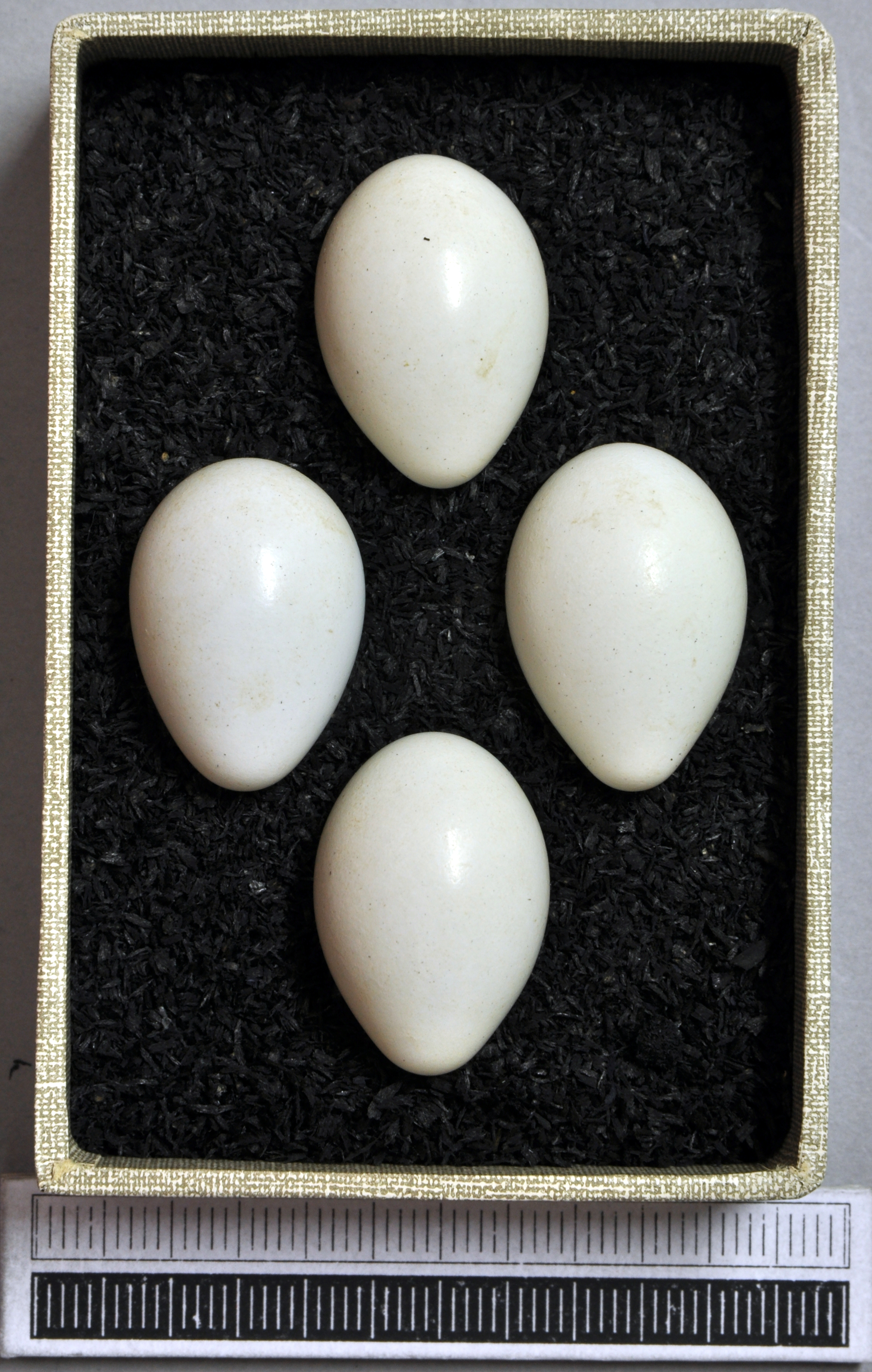
The isabelline wheatear (Oenanthe isabellina) is a small passerine bird that was formerly classed as a member of the thrush family Turdidae, but is now more generally considered to be an Old World flycatcher in the family Muscicapidae. It is a migratory insectivorous bird. Its habitat is steppe and open countryside and it breeds in southern Russia and Central Asia to northern Pakistan, wintering in Africa and northwestern India. It is a very rare vagrant to western Europe.
In colouring it resembles a female northern wheatear but it is larger at 15 – in length, more upright and more tawny in colour, and has more black on its tail. The term isabelline refers to the parchment-like colouration. The axillaries and underwing coverts are white, whereas in the commoner bird they are mottled with grey. The sexes are similar.
Etymology
The name is from the specific isabellinus, Neo-Latin for "greyish-yellow", and is likely in reference to Isabella I of Castile, who is said to have promised not to change her undergarments until Spain was freed from the Moors. "Wheatear" is not derived from "wheat" or any sense of "ear", but is a 16th-century linguistic corruption of "white" and "arse", referring to the prominent white rump found in most species. The genus name Oenanthe is derived from the Ancient Greek oenos (οίνος) "wine" and anthos (ανθός) "flower". It refers to the northern wheatear's return to Greece in the spring just as the grapevines blossom.
Description
Male and female isabelline wheatear are similar in appearance. The upper-parts are a pale sandy brown with an isabelline tinge (isabelline is a pale grey-yellow, fawn, cream-brown or parchment colour). The lower back is isabelline and the rump and upper tail-coverts are white. The tail feathers are brownish-black with a narrow edge and tip of buff and a large white base. In the outer tail feathers this occupies more than half the length of the feather but in the central feathers it is about one third. There is an over-eye streak of creamy white and the ear-coverts are pale brown. The chin is pale cream and the throat pale buff. The breast is sandy or isabelline buff and the belly creamy white. The under tail-coverts are pale buff and the under wing-coverts and axilliaries white with dark bases. The wing feathers are brownish-black, tipped and edged with creamy buff. The beak, legs and feet are black and the irises are brown.
At a length of 16.5 cm it is rather larger and also paler in colour than the northern wheatear (Oenanthe oenanthe). The beak is longer than that bird and the ear-coverts are paler but otherwise the birds are very similar in appearance and could be confused. The plumage is moulted twice a year, there being a complete moult in late summer and a partial moult of the body feathers in mid-winter.
The call note is a chirp, and a loud whistle is sometimes emitted. The song has been described as lark-like and starts with a croaking noise followed by various whistles and includes mimicry of the voices of other birds.
Distribution and habitat
The isabelline wheatear is a migratory species with an eastern palearctic breeding range. This extends from Southern Russia, the Caspian region, the Kyzyl Kum Desert and Mongolia to Afghanistan, Iran, Iraq, Saudi Arabia, Syria, Jordan and Israel. It winters in Africa and northwestern India. It has occurred as a summer vagrant to Greece, Cyprus, Algeria and Tunisia.
In the breeding season the isabelline wheatear is found in open country, barren tracts of land, arid regions, steppes, high plateaux and on the lower slopes of hills. In its winter quarters it occupies similar habitats in semi-arid regions, open country with sparse scrub and the borders of cultivated areas, showing a particular liking for sandy ground.
Behaviour
The isabelline wheatear is an active and restless bird, moving across the ground with long hops, flitting into the air and perching on eminences or small bushes. Its posture is rather upright and it is constantly bobbing about and flaring, raising and lowering its tail. It sometimes flutters into the air to catch insect prey but mostly forages along the ground, probing the soil with its beak. Its diet includes ants, grasshoppers, moths, flies, mites, spiders and insect larvae, and it sometimes eats seeds as well.
Isabelline wheatears are solitary birds in their winter quarters and may associate with other Oenanthe species during migration. On arrival at their breeding grounds they establish territories. The breeding season starts at the end of March in Turkey but does not commence until May in Central Asia. There are probably two broods in the southern parts of the range.
Status
The isabelline wheatear has an extensive range, estimated as being 11.7 million square kilometres (4.36 million square miles), and a large population with an estimated total of 26 million to 378 million individuals. The population seems to be stable and the IUCN in their Red List of Threatened Species has evaluated this species as being of "least concern".
References
References
- BirdLife International. (2016). "''Oenanthe isabellina''".
- Jobling, James A. (2010). "The Helm Dictionary of Scientific Bird Names". Christopher Helm.
- {{Cite OED. Wheatear
- (1943). "Handbook of British Birds, Volume 2: Warblers to Owls". H. F. and G. Witherby Ltd..
- Coward, T. A.. (1941). "The Birds of the British Isles and their Eggs". Frederick Warne.
- "Isabelline wheatear (''Oenanthe isabellina'')". ARKive.
- "Isabelline wheatear ''Oenanthe isabellina''". BirdLife International.
This article was imported from Wikipedia and is available under the Creative Commons Attribution-ShareAlike 4.0 License. Content has been adapted to SurfDoc format. Original contributors can be found on the article history page.
Ask Mako anything about Isabelline wheatear — get instant answers, deeper analysis, and related topics.
Research with MakoFree with your Surf account
Create a free account to save articles, ask Mako questions, and organize your research.
Sign up freeThis content may have been generated or modified by AI. CloudSurf Software LLC is not responsible for the accuracy, completeness, or reliability of AI-generated content. Always verify important information from primary sources.
Report