From Surf Wiki (app.surf) — the open knowledge base
Irish Naval Service
Maritime service branch of the Irish Defence Forces
Maritime service branch of the Irish Defence Forces
| Field | Value | ||||
|---|---|---|---|---|---|
| unit_name | Naval Service | ||||
| native_name | |||||
| image | Badge of the Irish Naval Service.svg | ||||
| image_size | 200px | ||||
| caption | Emblem of the Naval Service | ||||
| country | Ireland | ||||
| type | Navy | ||||
| role | Defence of the state and protection of its maritime resources | ||||
| size | 719 active personnel (Establishment: 1,094) (Dec 2024) | ||||
| 77 reservists (Establishment: 200) (Apr 2023) | |||||
| 8 ships (4 available for operations as of March 2025) | |||||
| command_structure | [[File:Badge of the Irish Defence Forces.svg | 25px]] Irish Defence Forces | |||
| garrison | Haulbowline, County Cork, Ireland | ||||
| garrison_label | Naval base | ||||
| website | |||||
| colours | [[File:Irish Naval Service Colour.svg | border | 150px]] [[File:Irish Naval Service Flag.svg | border | 150px]] |
| battle_honours | |||||
| notable_commanders | |||||
| identification_symbol | [[File:Flag of Ireland.svg | centre | border | 100px]] | |
| identification_symbol_label | Naval ensign | ||||
| identification_symbol_2 | [[File:Naval jack of Ireland.svg | centre | border | 100px]] | |
| identification_symbol_2_label | Naval jack | ||||
| start_date | 1 September 1946 | ||||
| commander1 | Commodore Mick Malone | ||||
| commander1_label | Flag Officer Commanding Naval Service (FOCNS) |
77 reservists (Establishment: 200) (Apr 2023) 8 ships (4 available for operations as of March 2025)
The Naval Service () is the maritime component of the Defence Forces of Ireland and is one of the three branches of the Irish Defence Forces. Its base is in Haulbowline, County Cork.
Though preceded by earlier maritime defence organisations, the Naval Service was formed in 1946. Since the 1970s a major role of the Naval Service has been the provision of fisheries protection in Ireland's exclusive economic zone (EEZ). Other roles include sea patrol, surveillance, and smuggling prevention. Occasionally the service undertakes longer missions in support of other elements of the Defence Forces, Irish peacekeepers serving with the United Nations, or humanitarian and trade missions.
The Naval Service has an active establishment of 1,094 and a reserve establishment of 200. Like other components of the Defence Forces, the Naval Service has struggled to maintain strength and as of late 2024 had only 719 active personnel, and 77 reserve personnel.
The international ship prefix for Naval Service vessels is LÉ or Long Éireannach (Irish Ship). Naval Service ships are traditionally named with mainly female names taken from Celtic mythology and Irish folklore. In 2014, the government controversially broke from tradition and decided to name the new P60 class ships after famous Irish writers, but in 2024, the traditional naming conventions was restored with the naming of the P70 class patrol vessels.
History
Coastal and Marine Service
The Anglo-Irish Treaty of 1921, which created the Irish Free State, stipulated that it was to be given responsibility to police its customs and fishing, while control of its seas remained with the United Kingdom and its Royal Navy, who also retained the "Treaty Ports" of Cork, Berehaven and Lough Swilly.
During the Irish Civil War, due to the lack of an established navy for the Irish Free State, the Royal Navy provided some support, patrolling and searching incoming ships to prevent gun-running to the Irish Republican Army. Actually backing the Free State in combat was considered, but never implemented, as British military intervention would have been politically-embarrassing for the new Irish government. Anti-Treaty IRA units occasionally fired on Royal Navy vessels, though these efforts were ineffective.
Several coastal landings were undertaken by the Irish National Army using commandeered civilian passenger ships such as the Arvonia and the SS Lady Wicklow. On 2 August 1922, the Lady Wicklow, commanded by Captain Patrick Ryan, landed 450 troops under the infamous Paddy Daly at Fenit, the port of Tralee. On 8 August, the Arvonia and Lady Wicklow were used to land over 1,000 troops at Youghal and Passage West liberating Cork unopposed two days later.
In May 1923, Major General Joseph Vize, a colleague of Michael Collins, established the Coastal and Marine Service (CMS) with fourteen patrol vessels, each armed with a 12 pounder gun, and several other boats armed with machine guns. As the civil war concluded the same month, the vessels were soon disposed of, and the service was disbanded in March 1924.
Inter-war years

From 1924 to 1938, Ireland had very little interest in maritime affairs. Its only ship was the unarmed , which was operated by the Department of Agriculture and Fisheries to patrol Irish fisheries. By the late 1930s, the Free State began to pay a little more notice and the Muirchú was re-armed in 1936. She was joined in 1938 by the newly built steam trawler Fort Rannoch. Also in 1938, the Anglo-Irish Trade Agreement returned the Treaty Ports to Ireland, and the Royal Navy withdrew from Cork Harbour.
The Emergency – Marine and Coastwatching Service
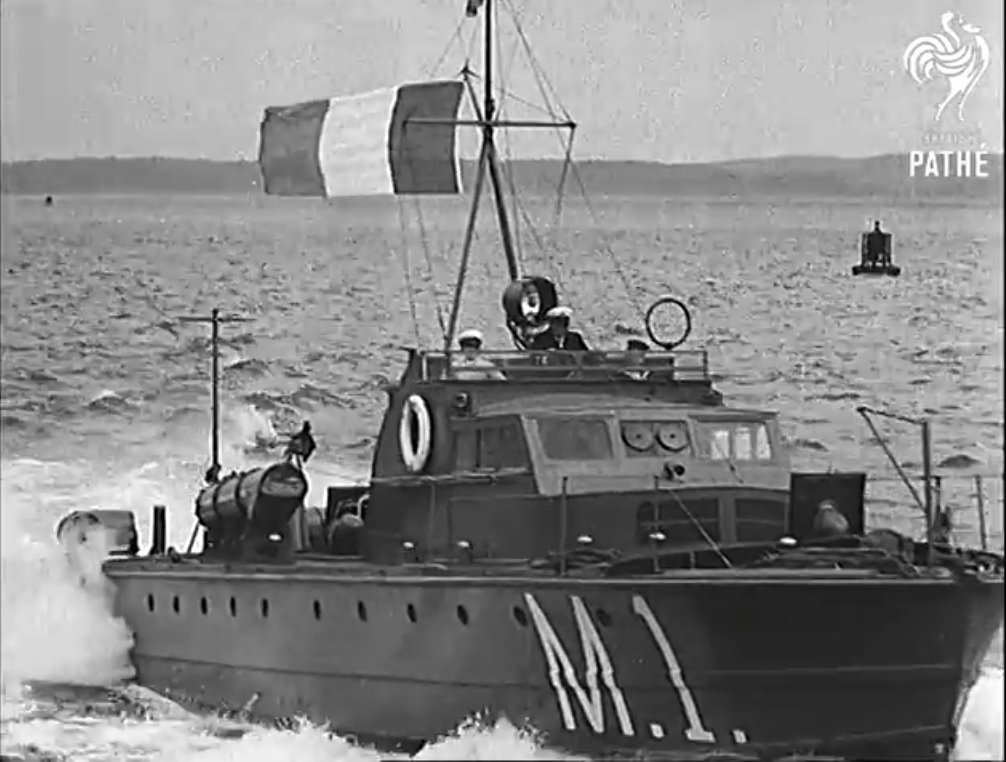
Marine and Coastwatching Service On the outbreak of World War Two in September 1939, referred to as The Emergency in Ireland, the government established the Marine and Coastwatching Service, later renamed the Marine Service in 1942. That May the government had ordered two motor torpedo boats (MTBs) from Vosper Thorneycroft. In order to present a more credible neutrality the government ordered an additional four boats later that year. In June 1940, one of the MTBs was involved in a serious breach of Irish neutrality, when the crew who were in Southampton to collect the boat decided to assist in evacuating Allied soldiers during the Dunkirk evacuation. A naval reserve, the Maritime Inscription, was established with over 1,000 men in twelve companies to provide port security. The closed Royal Navy base at Haulbowline in Cork harbour was re-opened in 1940 to serve as the base for the Service. By 1941, the Service had about 300 all ranks, with the six MTBs joined by the Muirchú, Fort Rannock, the minelayer Shark, and sail training vessel Isaalt. During the Emergency, these ships served as Ireland's navy, regulating merchant ships, protecting fisheries, and laying mines in Cork and Waterford harbours.
Cold War – Naval Service
1946–1971
In September 1946, the Marine Service was incorporated into the Irish Defence Forces as the Naval Service. The first formal training of Irish Naval Cadets took place at the Britannia Royal Naval College, Dartmouth, UK in 1947. In June 1947, the Maritime Inscription was reorganised as An Slua Muirí. The government intended to purchase six corvettes for the fledgling navy, but ultimately only three s were purchased from the United Kingdom in 1946 and 1947. The tradition of naming Irish Naval Ships after figures in Celtic mythology was started, and the ships were named , , and . These three corvettes were Naval Service's only ships during the 1950s and 1960s with their main role being fishery protection. The corvettes were withdrawn from service between 1970-2 and scrapped soon afterwards. In 1971, the Naval Service acquired three s: , and .
1971–1989
The 1970s was a time of expansion for the Naval Service as several locally built ships were added to the fleet. In 1971, the Naval Service commissioned Verolme Cork Dockyard to build an offshore patrol ship. Named , it was the first naval vessel purpose-built in Ireland to patrol its waters.
Since independence, Ireland's territorial waters were limited to 3 nmi. In 1964, her territorial waters were extended to 12 nmi increasing her maritime area to 41000 km2. In 1976, Ireland's exclusive economic zone was extended out to 200 nmi, increasing her maritime area to 450000 km2. The increased maritime area required additional patrol vessels, and Ireland was granted funding from the European Economic Community to increase the Naval Service fleet. Between 1977 to 1982 inclusive, Ireland received IR£31 million from the EEC to purchase ships and aircraft for fishery protection.
LÉ Deirdre was the prototype for three further offshore patrol vessels built by Verolme, which were (1978), (1979), and (1980).
In 1980, the government planned to acquire two helicopter carriers from Verolme. However, due to design delays the first ship was not ordered until April 1982 with delivery expected twenty four months later. entered service in December 1984, and two Dauphin helicopters were acquired to operate with her. In 1986, L.É. Eithne became the first Irish naval ship to cross the Atlantic. The closure of the Verolme dockyard in 1984 due to poor management and low worker productivity prevented the sister ship to Eithne being ordered.
Meanwhile, Isolda was acquired in 1977 from the Commissioners of Irish Lights. Renamed , she served as a training ship until 1984. A Danish stern trawler Helen Basse was leased for a year in 1977 as the . By the 1980s, the three minesweepers were showing their age and were withdrawn from service by 1987. As replacements, in 1988 the government purchased two s from the Royal Navy's Hong Kong Squadron, which were renamed and . The 50th anniversary of the Irish Naval Service took place in 1996, which included a fleet review by President Mary Robinson.
Into the 21st century
In the late 1990s, the government commissioned Appledore Shipbuilders to construct a new class of larger patrol vessels. In December 1999, was delivered to the Naval Service, followed in September 2001 by . LÉ Deirdre was decommissioned the same year. On 1 October 2005, An Slua Muirí was reorganised into the Naval Service Reserve.
In 2010, Appledore was again commissioned to construct two new patrol vessels to VARD Marine's PV90 design. The new ships were 12m longer than the Róisín class patrol vessels, allowing for a longer deck area to accommodate unmanned submersibles, a diving chamber, or UAVs. In a very controversial decision, the government broke from tradition and decided to name the new ships after Irish writers. The first, , was delivered in April 2014 replacing the decommissioned LÉ Emer. The second, arrived in September 2015 to replace the decommissioned LÉ Aoife. The option for a third, , was exercised in June 2014 and commissioned in October 2016 to replace the LÉ Aisling. A fourth, , was also ordered and entered service in October 2018.
While Naval Service ships typically operate in Irish waters, they have provided resupply missions to Irish peacekeepers in Lebanon, Cyprus, the Balkans, Eritrea and Liberia. In 2002, LÉ Niamh travelled to the far east in a trade mission, visiting India, Malaysia, Singapore, Hong Kong, China, Korea, and Japan, resupplying Irish peacekeepers in Eritrea enroute. During the cruise, she became the first Irish naval ship to transit the Suez Canal and cross the Equator. In 2006, LÉ Eithne travelled to Argentina to attend commemorations of Irish-born Admiral William Brown, founder of the Argentine Navy, in the first-ever deployment of an Irish naval ship to the southern hemisphere. She also visited ports in Uruguay and Brazil, and brought back a statue of Brown which is erected on Sir John Rogerson's Quay, Dublin. In 2010, LÉ Niamh travelled to Latin America attend bicentenary independence celebrations in a trade and diplomatic mission. During her trip she visited Brazil, Argentina, Chile, Mexico and the United States, and became the first Irish naval ship to transit the Straits of Magellan and the Panama Canal, and the first to sail in the Pacific Ocean.
From 2015 to 2018, the Naval Service deployed a ship eleven times to the Mediterranean to provide humanitarian assistance because of the European migrant crisis, firstly in a bilateral agreement with Italy under Operation Pontus, and latterly with the European Union's Operation Sophia, rescuing over 18,000 illegal migrants. Participation in Operation Sophia was controversial as it required approval by the so-called "triple lock" process. The Naval Service's participation ended due to a shortage of operational ships as one third of fleet were in refit or maintenance, and there were insufficient numbers of technical and specialist personnel.
In March 2022, the government announced the purchase of two retired RNZN inshore patrol vessels. The government statement also announced the withdrawal of the LÉ Orla, LÉ Ciara and LÉ Eithne from service, which were later decommissioned in July. The loss of LÉ Eithne represented a serious degradation in the service's operational capability given she was the only ship that was capable of operating a helicopter and had onboard sonar capabilities. The two new inshore patrol vessels, and , were commissioned into service in September 2024. Due to their small size, the two ships are intended to be used for fishery protection patrols in the Irish Sea, and based in an east coast base.
"Manpower crisis"
The decommissioning of three ships did not resolve the growing "manpower crisis" in the Naval Service, as in January 2023 LÉ Róisín and LÉ Niamh, one third of the fleet, were placed into operational reserve. Later that year, two additional ships, LÉ James Joyce and LÉ George Bernard Shaw, were also placed into reserve, leaving only two ships available for patrols. In July 2024, the Naval Service operated a "three-ship operational posture", with the four P60 class vessels on patrol in operational rotation (two operational and one standby), while the two P50 vessels were under refit or in reserve. In January 2025, due to only having one naval ordnance technician left, the LÉ George Bernard Shaw had to go to sea with its main armament, OTO Melara 76mm, non-functional. The reduced operational capability of the Naval Service has meant that the number of patrol days has halved between 2020 and 2024 to 428 days.
Organisation
Main article: Structure of the Irish Defence Forces
Naval Headquarters

The Naval Service is headed by Flag Officer Commanding the Naval Service (FOCNS) Commodore Michael Malone who is based at Naval Headquarters (NHQ) in Naval Base Haulbowline. NHQ oversees all aspects of the Naval Service, with a number of commands under it: Naval Operations Command (NOC) and Naval Support Command (NSC). The Naval College, like the DFTC is of an equal footing with the two commands, with all three headed by an officer commanding who report directly to the FOCNS of NHQ. Commodore Malone is the first marine engineer to be appointed as FOCNS, his prior appointment was as Officer Commanding Naval Support Command (OCNSC).
Naval Operations Command
Main article: Naval Operations Command (Ireland)
Naval Operations Command is the principal command component of the Irish Naval Service responsible for all day-to-day activities of the service, both at sea and on shore. One of three major command components of the NS this command is responsible for overseeing the work and mission objectives of all Irish naval vessels at sea who report directly to Naval Operations Command at Naval Base Haulbowline. The command is a direct subordinate to NHQ and is overseen by Officer Commanding Naval Operations Command (OCNOC). The OCNOC reports directly to the head of the Irish Naval Service, the FOCNS.
Naval Support Command
Main article: Naval Support Command (Ireland)
Naval Support Command oversees the personnel, logistical and technical resources of the NS, allowing the service to meet its operational and training commitments. Ship procurement, maintenance, repair, provisions, ordnance, food, fuel, personnel and transportation are handled by Naval Support Command. Naval Support Command is headed by Officer Commanding Naval Support Command and reports directly to the FOCNS.
Naval College
Main article: Naval College (Ireland)
The Naval College is the principal naval military college in Ireland providing training to cadets, NCOs and recruits of the Irish Naval Service. The Naval College trains and educates personnel for service, providing a mixture of different courses ranging from officer training right through to naval engineering. The Naval College is based out of the Naval Service's headquarters at Naval Base Haulbowline but also provides classes and lessons in non-military naval training at the nearby National Maritime College of Ireland (NMCI) in Ringaskiddy.{{cite web |access-date=2 January 2017 |archive-date=3 January 2017 |archive-url=https://web.archive.org/web/20170103094858/https://www.nmci.ie/index.cfm/page/ins |url-status=live
The Naval College contains a number of schools providing specialist courses including the Officer Training School, the Military and Naval Operational Training School and the School of Naval Engineering. The Officer Commanding Naval College reports directly to the FOCNS.
Naval Service Reserve
The Naval Service Reserve is the part-time, volunteer reserve force of the Naval Service, with an established strength of 200 personnel. The Reserve provides port security and supplements the crews of Naval Service vessels. As of 2021, four new motor launches had been ordered for the NSR, to be built by FM Marine Services. The first of these vessels, named Fionnghuala and launched in December 2024, was the first naval vessel built in Ireland since the LÉ Eithne in 1984.
Specialist units
The Naval Service has a number of specialist units that handle unique and varied tasks within the service.
Diving Section
.jpg)
Main article: Naval Service Diving Section
The Naval Service Diving Section (NSDS) (Irish: Rannóg Tumadóireachta na Seirbháse Cabhlaigh), formally part of NOC's shore operations section, is a specialist unit of the Irish Naval Service, a branch of the Defence Forces, the military of Ireland. The Naval Service Diving Section specialises in underwater diving tasks for the Naval Service, and since its formation in 1964 has become Ireland's most advanced diving team, aiding other state agencies in various specialist roles.
Various mission roles of the NSDS include search and recovery, underwater survey, explosive ordnance disposal (EOD) underwater engineering and military diving training. They have conducted combat diving training for Army Ranger Wing members after selecting combat diving as a speciality.{{cite web |access-date=1 October 2009 |url-status=dead |archive-url=https://web.archive.org/web/20081228002848/http://www.specialoperations.com/Foreign/Ireland/Rangers/Combat_Diving.htm |archive-date=28 December 2008
Naval Intelligence Cell
The Naval Intelligence Cell, part of the NOC's Intelligence and Fisheries Section, is responsible for the collection, collation and dissemination of naval intelligence and is the naval component of the Defence Forces' Directorate of Military Intelligence.{{cite web |access-date=2 January 2017 |archive-date=27 March 2019 |archive-url=https://web.archive.org/web/20190327102720/http://www.military.ie/naval-service/organisation/naval-operations-command/ |url-status=live
Fishery Monitoring Centre
The Fishery Monitoring Centre, part of the NOC's Intelligence and Fisheries Section, oversees the identification, monitoring and surveillance of fisheries vessels in Irish waters as part of the Vessel Monitoring System. The Fishery Monitoring Centre coordinates with fisheries agencies in other countries. |access-date=1 January 2017
Roles and capabilities
The Naval Service's military roles and the functions it carries out are more those of a coast guard rather than that of a conventional navy. Lacking both anti-submarine and anti-aircraft capabilities, and without standoff weapons such as surface-to-surface missiles, the Naval Service's ability to control Ireland's territorial waters and provide close naval support is extremely limited. Sea lift is also limited and ad hoc. The Naval Service's non-military capabilities in aid to the civil power and other government departments is fishery protection, search and rescue, drugs interdiction and dive support.
Equipment
As of September 2024, the Naval Service fleet included four offshore patrol vessels (OPVs), two large patrol vessels (LPVs), and two inshore patrol vessels (IPVs).
Ships
Main Articles: List of current vessels of the Naval Service and List of decommissioned vessels of the Naval Service


Other equipment
The Naval Service also operates smaller training vessels, rigid-hulled inflatable boats and motor launches. The latter includes the Fionnghuala, an NSR vessel used for maritime security, search and rescue and training.
Air assets to support naval patrols are provided by the Air Corps with their two Airbus C295 maritime patrol aircraft and AW139 helicopters operated from Casement Aerodrome, Baldonnel, County Dublin.
In July 2015, the Irish Naval Service began using an Irish-based satellite communications system for its fleet, with new systems and equipment installed on all vessels. The Irish National Space Centre (NSC) at Elfordstown, Midleton, County Cork, and County Wicklow based company Voyager IP provided the contract.
Acquisitions and future
In 2010, the government ordered the first of four Samuel Beckett class OPVs. These purchases were informed by a Whitepaper on Defence which expected acquisition of three new naval vessels over 10 years from 2015 to 2025. As well as the acquired and ordered OPVs, the whitepaper covered a multi-role vessel (MRV) – which would be potentially enabled for helicopter operations and have a freight carrying capacity – to replace the flagship LÉ Eithne.
In 2017, a delegation of Department of Defence (DoD) officials and members of the Defence Forces visited New Zealand to inspect the Royal New Zealand Navy (RNZN) multi-role vessel ; it was suggested that a vessel of this type, capable of accommodating and deploying a full infantry company either by landing craft or helicopter, and with a fully equipped hospital, was what the Defence Forces needed for the type of military and humanitarian missions undertaken by Ireland. Plans expected that LÉ Ciara and LÉ Orla be replaced with similar vessels, but with counter-mine and counter-IED capabilities. In August 2021, the Irish Examiner reported that the DoD was considering acquiring two former RNZN Lake-class inshore patrol vessels. These vessels would be based on the east coast and operate mainly in the Irish Sea with the primary role of fisheries protection in light of Brexit.
On 14 March 2022, the DoD announced the acquisition of two such retired RNZN vessels, HMNZS Rotoiti and HMNZS Pukaki, for €26 million, to replace LÉ Orla and LÉ Ciara and with the expectation that they would require less crew to operate. Intended to enter service in 2024, the two vessels arrived in Ireland in May 2023. On 5 April 2024, the DoD announced that the new vessels would be named LÉ Aoibhinn and LÉ Gobnait. On 4 September 2024, the two vessels were commissioned into service.
Weapons
| Name | Origin | Type | Caliber | Photo | Notes | Pistol | Assault rifle | Battle rifle | Machine gun | Autocannon | Naval gun | |
|---|---|---|---|---|---|---|---|---|---|---|---|---|
| Heckler & Koch USP | Semi-automatic pistol | 9×19mm | [[File:First-year H&K USP 9mm (32415150000) modified.png | 120px]] | Standard service pistol | |||||||
| Steyr AUG | Assault rifle | 5.56×45mm | [[File:AUG A1 508mm 04.jpg | 120px]] | Standard service rifle since 1989 | |||||||
| FN FAL | Battle rifle | 7.62×51mm | [[File:FN-FAL belgian.jpeg | 120px]] | Only used for line throwing | |||||||
| FN MAG | Machine gun | 7.62×51mm | [[File:Irish Defence Forces GPMG (4815975558).jpg | 120px]] | Fitted onboard Naval Service ships for close range weapons support and anti-air point defence. Can also be mounted on RHIBs | |||||||
| M2 Browning .50 heavy machine gun (HMG) | Machine gun | 12.7×99mm (.50) | [[File:Machine gun M2 1.jpg | 120px]] | Fitted onboard Naval Service ships for close range weapons support and anti-air point defence | |||||||
| Rheinmetall Rh 202 | Autocannon | 20×139mm | [[File:LÉ Róisin starboard 20 mm Rheinmetall Rh 202 Helsinki.JPG | 120px]] | Fitted onboard all Naval Service ships for close range weapons support and anti-air point defence | |||||||
| OTO Melara 76 mm | Autocannon | 76×900mmR | [[File:LÉ Róisin Otobreda 76 mm Helsinki 3.JPG | 120px]] | Main weapon mounted onboard , , , , LÉ William Butler Yeats and LÉ George Bernard Shaw |
Personnel and ranks
Main article: Irish Defence Forces rank insignia
As of April 2023, there were 764 personnel in the Naval Service, and 77 in the Naval Service Reserve. The Naval Service is headed by a general officer commanding (GOC) known as the "flag officer commanding the naval service" (FOCNS), who holds the rank of commodore. Non-military training takes place alongside Mercantile Marine personnel at the National Maritime College of Ireland in Ringaskiddy, near to the Haulbowline base.
References
References
- (29 January 2025). "Many EU nations in 'full war preparation mode', raising pressure on Irish neutrality". Irish Examiner.
- (13 June 2023). "Defence Forces Strength (Dáil Éireann Debate – Tuesday, 13 June 2023)". Dáil Éireann Hansard.
- (19 March 2025). "Naval Service - Dáil Éireann Debate, Wednesday - 19 March 2025".
- "The Defence Forces". Irish Defence Forces.
- "Flag Officer Commanding Naval Service".
- The Irish Defence Forces are made up of the Permanent Defence Forces (PDF) – the standing branches – and the [[Reserve Defence Forces]] (RDF). The Naval Service is part of the PDF.
- "History of the Naval Service". Official Defence Forces website.
- "Roles of the Naval Service – Fisheries Monitoring Centre". Official Defence Forces website.
- "Military.ie – Naval Service – History". Official Defence Forces website.
- (17 May 2014). "Press Release – Naming and Commissioning Ceremonies for new Naval Service Vessel LÉ Samuel Beckett". MerrionStreet.ie Irish Government News Service.
- (2013). "Submission on Defence Green Paper: Towards an Efficient and Effective Fisheries Protection Partnership". The Sea-Fisheries Protection Authority.
- "Casting the Net".
- "Roles of the Naval Service". Official Defence Forces website.
- (16 February 2025). "Number of patrol days carried out by naval service more than halved".
- "The Fleet". Irish Defence Forces.
- (20 November 1946). "Questions. Oral Answers. - The Naval Service. (Dáil Éireann Debate – Wednesday, 20 November 1946)". Dáil Éireann Hansard.
- ''Articles of Agreement between Great Britain and Ireland'', 6 December 1921 (Irish Free State established pursuant thereto on 6 December 1922)
- "History of the Naval Service".
- (5 August 2022). "The Civil War on water".
- McIvor, Aidan. (1994). "A History of the Irish Naval Service". Irish Academic Press.
- "Early Irish Free State Naval Activity".
- Harrington, Niall. (1992). "Kerry Landing". Anvil Books.
- Duggan, John P.. (1991). "A History of the Irish Army". Gill & Macmillan.
- Buchanan, Myles. (22 April 2016). "Dramatic life of Joe Vize, who settled in Wicklow". [[Irish Independent]].
- . (6 October 1923). ["On board the coast patrol sloop 'Dainty'"](https://www.militaryarchives.ie/uploads/antoglac/1923.02.24%20to%201923.12.29%20-%20Vol%2001%20No%2001%20to%20Vol%2001%20No%2021.pdf#page=347). *The Military Archives*.
- Patrick McCarthy. (July 2021). "The First Irish Navy - The Coastal and Marine Servie 1923-1924". The Military Archives.
- Noel R. Clancy. (May 2025). "The Free State Coastal and Marine Service". The Military Archives.
- Noel R. Clancy. (July 2025). "The Marine Investigation Department 1922-1923". The Military Archives.
- "Irish Naval Service".
- Farrell, Daniel. (1 September 2018). "The Irish Naval Service – 72 years of Excellent Service (1946 – 2018)".
- "Marine Archive - Vessels". [[Marine Institute Ireland.
- (25 April 1938). "British-Irish tripartite agreement on trade, finance and defence from Text of British-Agreements".
- (29 August 2017). "Irish torpedo boats in the 1940s". Coast Monkey Media.
- (26 March 2012). "Irish Naval Service – The Birth". [[National Maritime Museum of Ireland]].
- (2004). "The Irish Defence Forces since 1922". [[Osprey Publishing]].
- (6 November 2010). "Price of fighting in the second World War". [[The Irish Times]].
- Duggan, John P.. (1991). "A History of the Irish Army". Gill & Macmillan.
- "History {{!}} Naval Service {{!}} Defence Forces".
- (2004). "The Irish Defence Forces since 1922". [[Osprey Publishing]].
- (24 Jun 1997). "Ship called after a sea goddess to the fore in naval reserve". Irish Times.
- (26 November 1969). "Irish Naval Service 1969".
- "Fleet History {{!}} History {{!}} Naval Service {{!}} Defence Forces".
- (28 January 1971). "Committee on Finance. - Vote 43: Defence. (Dáil Éireann Debate – Thursday, 28 January 1971)". Dáil Éireann Hansard.
- (3 June 1971). "Rebuilding The Irish Navy 1971".
- "Weapons & Equipment - Naval Service".
- (16 December 1970). "Questions. Oral Answers. - All-Weather Fishing Protection Vessels. (Dáil Éireann Debate – Wednesday, 16 December 1970)". Dáil Éireann Hansard.
- "Maritime Jurisdiction Act, 1959, Section 3". [[Attorney General of Ireland]].
- "Maritime Jurisdiction (Amendment) Act, 1964, Section 2". [[Attorney General of Ireland]].
- "Atlas of the Commercial Fisheries Around Ireland".
- "S.I. No. 320/1976 - Maritime Jurisdiction (Exclusive Fishery Limits) Order, 1976.". [[Attorney General of Ireland]].
- (1 December 1976). "Questions. Oral Answers. - Fishery Limits. (Dáil Éireann Debate – Tuesday, 1 December 1976)". Dáil Éireann Hansard.
- "Marine Strengths".
- (31 May 2024). "Fisheries in Ireland".
- (16 November 1983). "Written Answers. - EEC Funds. (Dáil Éireann Debate – Wednesday, 16 November 1983)". Dáil Éireann Hansard.
- "You are here: Naval Service > Fleet > Offshore Patrol Vessel".
- (2 April 1974). "Questions. Oral Answers. - Naval Service. (Dáil Éireann Debate – Tuesday, 2 April 1974)". Dáil Éireann Hansard.
- (28 February 1978). "Vote 46: Defence (Dáil Éireann Debate – Tuesday, 28 February 1978)". Dáil Éireann Hansard.
- (July 2021). "The Fate of the PV's". jmpublishing.ie.
- (20 March 1980). "Written Answers. - Naval Service. (Dáil Éireann Debate – Thursday, 20 March 1980)". Dáil Éireann Hansard.
- (17 December 1980). "Questions. Oral Answers. - Naval Service. (Dáil Éireann Debate – Thursday, 17 December 1980)". Dáil Éireann Hansard.
- (28 January 1981). "Written Answers. - Naval Patrol Vessels. (Dáil Éireann Debate – Wednesday, 28 January 1981)". Dáil Éireann Hansard.
- (26 January 1983). "Written Answers. - Naval Service. (Dáil Éireann Debate – Wednesday, 26 January 1983". Dáil Éireann Hansard.
- "You are here: Naval Service > Fleet > Helicopter Patrol Vessel".
- "Aircraft - Aerospatiale SA.365F Dauphin II".
- (28 November 1984). "Private Members' Business. - Verolme Cork Dockyard: Motion (Resumed). (Dáil Éireann Debate – Wednesday, 28 November 1984)". Dáil Éireann Hansard.
- (28 December 2013). "Dockyard's fate was sealed a year before its closure".
- "Isolde Becomes Setanta".
- (27 October 1988). "Estimates for Public Services 1989, and Public Capital Programme, 1989: Motion (Resumed). (Dáil Éireann Debate – Thursday, 27 October 1988)". Dáil Éireann Hansard.
- "You are here: Naval Service > History > Coastal Patrol Vessel".
- "RTÉ Archives - Saluting 50 Years Of The Irish Navy (1996)". RTÉ.
- "You are here: Naval Service > History > Large Patrol Vessel".
- (14 June 2001). "Irish Naval Ship Sold".
- "About the Army Reserve". Defence Forces Ireland.
- "Parent Vessel Design Scaling Case Study".
- Sean O'Riordan. (24 May 2012). "Navy ships to carry deep sea robot subs". [[Irish Examiner]].
- (5 May 2014). "Decision to name Navy patrol ships after writers defended". [[The Irish Times]].
- "LÉ Samuel Beckett P61".
- (30 April 2014). "Navy's newest ship LÉ Samuel Beckett sails into Cork".
- (20 September 2013). "Navy's oldest vessel LÉ Emer decommissioned in Cork".
- "LÉ James Joyce P62".
- (27 November 2014). "Naval vessel LÉ Aoife to be sold at auction next year".
- "LÉ William Butler Yeats P63".
- (17 October 2016). "LÉ William Butler Yeats formally enters service". Raidió Teilifís Éireann.
- (16 May 2017). "Dáil told LÉ Aisling cost €380,000 to maintain since June".
- "LÉ George Bernard Shaw P64".
- (30 April 2019). "Naval vessel named after George Bernard Shaw in ceremony".
- McDermott, Stephen. (30 April 2019). "Ireland's fourth offshore patrol vessel, the LÉ George Bernard Shaw, has been officially commissioned". [[TheJournal.ie]].
- "The Voyage of LE Niamh". Representative Association of Commissioned Officers.
- Mark Mellett. (February 2006). "Voyage diary: L.É. Eithne departs for Buenos Aires, Argentina". Irish Naval Service.
- (14 July 2010). "LE Niamh to return from Latin America mission".
- (10 July 2017). "Irish Navy to join EU migrant search-and-rescue operation". [[The Irish Times]].
- (23 January 2018). "Naval Service Operations (Dáil Éireann Debate – Tuesday, 23 January 2018)". Dáil Éireann Hansard.
- (12 January 2024). "Will new pay measures help retention in the Irish Naval Service?".
- (14 July 2017). "Govt to consider change in status to naval operations in Mediterranean".
- (11 July 2017). "Concern as Cabinet approves Irish Navy role in EU military operation". [[The Irish Times]].
- (12 July 2017). "Minister Kehoe Secures Dáil Approval For Deployment of Defence Forces To Eu Naval Mission - Operation Sophia". Irish Government.
- (9 July 2019). "Irish naval vessels will not patrol Mediterranean Sea".
- (9 July 2019). "Leaders' Questions (Resumed) (Dáil Éireann Debate – Tuesday, 9 July 2019)". Dáil Éireann Hansard.
- (13 March 2022). "Announcement of the purchase of two Inshore Patrol Vessels (IPVs) from the New Zealand Government". Department of Defence.
- (1 July 2022). "The Naval Service is retiring three ships next week - and one might become a floating museum".
- (8 July 2022). "Irish Navy decommissions a third of its fleet". Irish Times.
- (6 March 2024). "Irish Naval Service says 'sad goodbye' to LÉ Eithne".
- (23 June 2024). "Irish navy is now at two thirds of its full strength".
- (4 September 2024). "Tánaiste Micheál Martin unveils new Naval Service vessels and confirms extension of the Sea-going Naval Personnel Tax Credit". Department of Defence.
- (7 August 2024). "Defence Forces Have No Decision Made on Location of New East Coast Navy Base for €26m Cutters".
- (2 February 2023). "Priority Questions (Dáil Éireann Debate – Thursday, 2 February 2023)". Dáil Éireann Hansard.
- O'Connor, Niall. (25 January 2023). "Two naval ships to be tied up as staffing crisis deepens in Irish Navy". Journal Media Ltd.
- (23 August 2023). "Naval Service left with two ships to patrol Irish waters due to manpower crisis". Irish Times.
- (2 July 2024). "Dáil Éireann debate - Tuesday, 2 Jul 2024 - Vol. 1056 No. 6 - Other Questions".
- (3 October 2023). "Parliamentary Questions (Naval Service Dáil Éireann Debate – Tuesday, 3 October 2023)". Dáil Éireann Hansard.
- (15 October 2023). "Only two Irish Naval vessels operational".
- (11 January 2025). "Naval Service goes to sea without working guns as maritime threats mount".
- (17 February 2025). "Number of Patrol Days by Naval Service More Than Halved Since 2020".
- (5 December 2024). "New Irish Navy vessel launches in Co Kerry".
- Gallagher, Conor. (19 April 2021). "Naval Service to acquire four new boats over coming years". Irish Times.
- MacCarron (2004), p.37
- "Naval Service - The Fleet".
- (10 July 2015). "Irish firms to man Navy system". [[Irish Examiner]].
- (27 August 2015). "'Fund Defence to prevent terror attacks' says Simon Coveney". [[Irish Examiner]].
- O'Riordan, Sean. (12 October 2017). "Navy considers €200m multi-role ship". [[Irish Examiner]].
- (August 2015). "White Paper on Defence 2015". Department of Defence (Ireland).
- (2021-08-12). "Department of Defence looking to buy New Zealand naval ships". [[Irish Examiner]].
- Griffin, Niamh. (14 March 2023). "New Zealand transfers two patrol ships to Ireland at cost of €26m". Irish Examiner.
- (13 May 2023). "Two new Irish Naval vessels to arrive into Cork Harbour tomorrow".
- (5 April 2024). "Tánaiste and Minister for Defence, Micheál Martin TD names the two Naval Service Inshore Patrol Vessels (IPVs)". Department of Defence.
- (5 April 2024). "Tánaiste names two navy ships LÉ Aoibhinn and LÉ Gobnait". RTÉ News.
- Lavery, Don. (2 September 2006). "Defence Forces to turn 'tomb raiders'". [[Irish Independent]].
- "Naval Service > Organisation". Defence Forces Ireland.
- "History of Nautical Training in Ireland". National Maritime College of Ireland.
This article was imported from Wikipedia and is available under the Creative Commons Attribution-ShareAlike 4.0 License. Content has been adapted to SurfDoc format. Original contributors can be found on the article history page.
Ask Mako anything about Irish Naval Service — get instant answers, deeper analysis, and related topics.
Research with MakoFree with your Surf account
Create a free account to save articles, ask Mako questions, and organize your research.
Sign up freeThis content may have been generated or modified by AI. CloudSurf Software LLC is not responsible for the accuracy, completeness, or reliability of AI-generated content. Always verify important information from primary sources.
Report