From Surf Wiki (app.surf) — the open knowledge base
IR-40
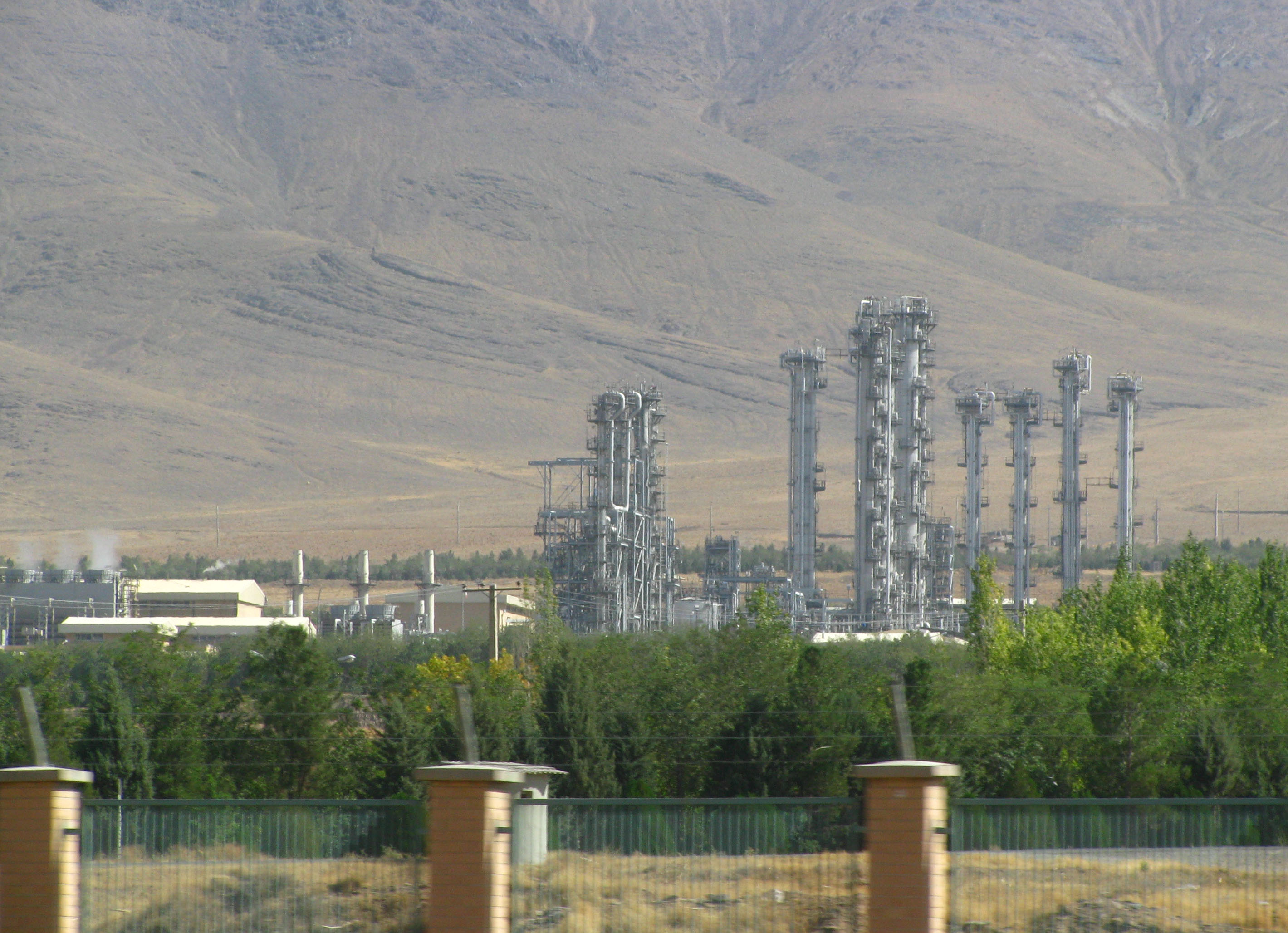
Heavy water reactor in Arak, Iran

Heavy water reactor in Arak, Iran
IR-40 (officially the Khondab Heavy Water Research Reactor), part of the Arak Nuclear Complex, is an Iranian 40 megawatt (thermal) heavy water reactor near Arak, adjacent to the 1990s era Arak Heavy Water Production Plant. Civil works for the project began in October 2004. It was initially planned that the reactor would begin nuclear operations in 2014. The reactor was hit by an Israeli airstrike during the Iran–Israel war in June 2025.
History
In the mid-1980s, Iran's leadership decided to construct a natural uranium (i.e. not requiring enrichment to produce fuel) nuclear power plant, using heavy water as moderator and coolant. The reactor design was 90% complete in 2002. By then the existing Tehran Research Reactor, after 35 years operation, was reaching its design safety limits, and had been enveloped by the suburbs of Tehran.
The reactor was originally going to be constructed at a location in Esfahan. In 2002, it was decided to build at the current location near Arak. Civil works for the construction began in October 2004.
In August 2006, mixed reports came out about when the reactor would go into operation, one stating that the plant would start up in 2009, while another reported that operation would be postponed until 2011. Reportedly, the Russian firm Nikiet assisted with portions of the design but stopped in the late 1990s following U.S. pressure.
Press reports indicate that Iranian President Mahmoud Ahmadinejad visited the reactor in June 2013, on the occasion of the reactor vessel installation, which is the final precursor prior to commencement of operation.
In July 2015, under the Joint Comprehensive Plan of Action, Iran agreed to redesign the IR-40 reactor, with assistance from the P5+1, to minimize its plutonium production and avoid production of weapons-grade plutonium. Iran also agreed to remove the reactor core or calandria and fill it with concrete to render it unusable, and to export all spent fuel within one year of its removal from the reactor.
In January 2016, Iran stated that the core of the reactor had been removed, and that it would be filled up with concrete. In January 2019, in a Channel 4 TV (Iran) interview, Ali Akbar Salehi, the head of the Atomic Energy Organization of Iran, claimed that Iran had purchased spares to replace the core, and the pictures of the pouring of concrete into the reactor’s pit were photoshopped.
In 2017, the reactor was renamed as the 'Khondab Heavy Water Research Reactor'.
Israeli air strike
In June 2025 the reactor containment building was damaged in a direct hit by Israel during the Iran-Israel war, as were distillation towers at the adjacent heavy water production plant. Israel previously told residents of the surrounding areas to evacuate, specifically from Arak and Khonddab.
Role in Iran's nuclear program
Main article: Nuclear program of Iran
Iran states that the reactor will only be used for research and development, medical and industrial isotope production.
Aspects of IR-40's design will also serve as a prototype and testbed for the larger 336 megawatt Darkhovin Nuclear Power Plant under construction near Ahvaz.
Proliferation concerns
There are some proliferation concerns about the reactor's ability to produce enough plutonium for several nuclear weapons each year. However the IAEA has reported that it found no indication of ongoing reprocessing activities, required to extract plutonium from the spent fuel. In full operation, it is expected that the reactor will produce from 10 kg to 12 kg of plutonium a year within its spent nuclear fuel.
Natural-uranium fueled heavy-water reactors were originally designed for producing weapons-grade plutonium usable for construction of nuclear weapons. Analysis suggests that Iran could extract 8–10 kilograms of high purity Pu-239 annually from fuel irradiated in IR-40. This, according to the IAEA, is sufficient weapons-grade material to produce 1-2 nuclear weapons annually. In August 2009, the IAEA was granted access to IR-40 and was able to carry out Design Information Verification, where the IAEA confirmed that the facility "at its current stage of construction conforms to the design information provided by Iran as of January 24, 2007."
As a result of concerns that this plutonium would support weapons development, former IAEA Deputy Director-General for Safeguards, Olli Heinonen, proposed a reactor redesign to a reactor using slightly enriched uranium fuel rather than natural uranium. Use of enriched uranium fuel combined with extended operations would reduce the reactor's ability to produce weapons-grade plutonium.
Iran has indicated they do not intend to reprocess IR-40 spent fuel to recover weapons-grade plutonium, nor operate under a low burnup regime that could produce weapons-grade plutonium. Originally a hot cell facility at the Arak site was planned, described as capable of handling irradiated fuel and targets (such as targets for production of medical radioisotopes) from the IR-40. In 2004, plans for hot cells at Arak were removed. However some proliferation experts have expressed concern that once sufficient fuel has been irradiated Iran may modify this facility or build a separate reprocessing facility to recover weapons-grade plutonium.
Notes
References
References
- "Arak Nuclear Complex".
- Implementation of the NPT Safeguards Agreement and relevant provisions of Security Council resolutions 1737 (2006), 1747 (2007), 1803 (2008) and 1835 (2008) in the Islamic Republic of Iran [http://www.iaea.org/Publications/Documents/Board/2008/gov2008-59.pdf GOV/2008/59], 19 November 2008.
- (9 June 2013). "Iran installs reactor vessel at heavy water site".
- (2005). "Iran's Nuclear Programme: A Collection of Documents". The Stationery Office.
- (1998-10-01). "Research Reactor Details - TRR". International Atomic Energy Agency.
- Alexander (146)
- (2005). "Iran's Strategic Weapons Programmes: A Net Assessment". Routledge.
- Alexander (147)
- "Institute for Science and International Security".
- (June 9, 2013). "Ahmadinejad visits Iran heavy water reactor site". Yahoo.
- [http://isis-online.org/uploads/isis-reports/documents/Plutonium_Pathway_Final.pdf The Plutonium Pathway: Arak Heavy Water Reactor and Reprocessing], Institute for Science and International Security, July 21, 2015.
- (2016-01-11). "Iran fills heavy water nuclear reactor core with cement: Fars". Reuters.
- "Iran's Nuclear Chief Salehi: We Had Secretly Purchased Replacements for Nuclear Equipment That the JCPOA Had Required Us to Destroy; Yellowcake Production Facilities are Operational; We Are Advancing in Nuclear Propulsion".
- (2017-06-12). "Iran's Arak heavy water reactor to undergo redesign".
- "Israel Strikes Iran’s Heavy-Water Reactor in Arak".
- On June 16, 2010 Iran announced plans to fabricate fuel for the [[Tehran Research Reactor]] by September 2011 and to build a new 20 MW reactor for radioisotope production within five years.http://www.ajc.com/news/nation-world/iran-plans-more-powerful-549480.html {{dead link. (January 2020)
- "AFP: Iran to build 'powerful' new nuclear reactor".
- [http://www.iaea.org/Publications/Documents/Board/2008/gov2008-38.pdf GOV/2008/38], September 15, 2008, Implementation of the NPT Safeguards Agreement and relevant provisions of Security Council resolutions 1737 (2006), 1747 (2007) and 1803 (2008) in the Islamic Republic of Iran
- Weapons-grade plutonium is at least 93% Pu-239.
- Willig, Thomas Mo. (14 December 2011). "Feasibility and benefits of converting the Iranian heavy water reactor IR-40 to a more proliferation-resistant reactor". Norwegian University of Life Sciences (UMB).
- [http://www.nti.org/learn/facilities/177/ Implementation of the NPT Safeguards Agreement and the Relevant Security Council Resolutions 1737 (2006), 1747 (2007), 1803 (2008) and 1835 (2008) in the Islamic Republic of Iran], [[Nuclear Threat Initiative]], 2009-08-28. Retrieved 2025-06-
- (24 June 2011). "Can the Nuclear Talks With Iran Be Saved?". Foreign Policy.
- (27 December 2013). "Arak reactor cannot make plutonium for bomb: Iran". AFP.
- "Nuclear Sites - Arak Complex". ISIS.
- (August 25, 2009). "Update on the Arak Reactor in Iran". Institute for Science and International Security.
This article was imported from Wikipedia and is available under the Creative Commons Attribution-ShareAlike 4.0 License. Content has been adapted to SurfDoc format. Original contributors can be found on the article history page.
Ask Mako anything about IR-40 — get instant answers, deeper analysis, and related topics.
Research with MakoFree with your Surf account
Create a free account to save articles, ask Mako questions, and organize your research.
Sign up freeThis content may have been generated or modified by AI. CloudSurf Software LLC is not responsible for the accuracy, completeness, or reliability of AI-generated content. Always verify important information from primary sources.
Report