From Surf Wiki (app.surf) — the open knowledge base
Ionophore
Chemical entity that reversibly binds ions

Chemical entity that reversibly binds ions
(a) Carrier ionophores reversibly bind ions and carry them through cell membranes.
(b) Channel ionophores create channels within cell membranes to facilitate the transport of ions.]]
In chemistry, an ionophore () is a chemical species that reversibly binds ions. Many ionophores are lipid-soluble entities that transport ions across the cell membrane. Ionophores catalyze ion transport across hydrophobic membranes, such as liquid polymeric membranes (carrier-based ion selective electrodes) or lipid bilayers found in the living cells or synthetic vesicles (liposomes). Structurally, an ionophore contains a hydrophilic center and a hydrophobic portion that interacts with the membrane.
Some ionophores are synthesized by microorganisms to import ions into their cells. Synthetic ion carriers have also been prepared. Ionophores selective for cations and anions have found many applications in analysis. These compounds have also shown to have various biological effects and a synergistic effect when combined with the ion they bind.
Classification

Biological activities of metal ion-binding compounds can be changed in response to the increment of the metal concentration, and based on the latter compounds can be classified as "metal ionophores", "metal chelators" or "metal shuttles". If the biological effect is augmented by increasing the metal concentration, it is classified as a "metal ionophore". If the biological effect is decreased or reversed by increasing the metal concentration, it is classified as a "metal chelator". If the biological effect is not affected by increasing the metal concentration, and the compound-metal complex enters the cell, it is classified as a "metal shuttle". The term ionophore (from Greek ion carrier or ion bearer) was proposed by Berton Pressman in 1967 when he and his colleagues were investigating the antibiotic mechanisms of valinomycin and nigericin.
Many ionophores are produced naturally by a variety of microbes, fungi and plants, and act as a defense against competing or pathogenic species. Multiple synthetic membrane-spanning ionophores have also been synthesized. The two broad classifications of ionophores synthesized by microorganisms are:
- Carrier ionophores that bind to a particular ion and shield its charge from the surrounding environment. This makes it easier for the ion to pass through the hydrophobic interior of the lipid membrane. However, these ionophores become unable to transport ions under very low temperatures. An example of a carrier ionophore is valinomycin, a molecule that transports a single potassium cation. Carrier ionophores may be proteins or other molecules.
- Channel formers that introduce a hydrophilic pore into the membrane, allowing ions to pass through without coming into contact with the membrane's hydrophobic interior. Channel forming ionophores are usually large proteins. This type of ionophores can maintain their ability to transfer ions at low temperatures, unlike carrier ionophores. Examples of channel-forming ionophores are gramicidin A and nystatin.
Ionophores that transport hydrogen ions (H+, i.e. protons) across the cell membrane are called protonophores. Iron ionophores and chelating agents are collectively called siderophores.
Synthetic ionophores
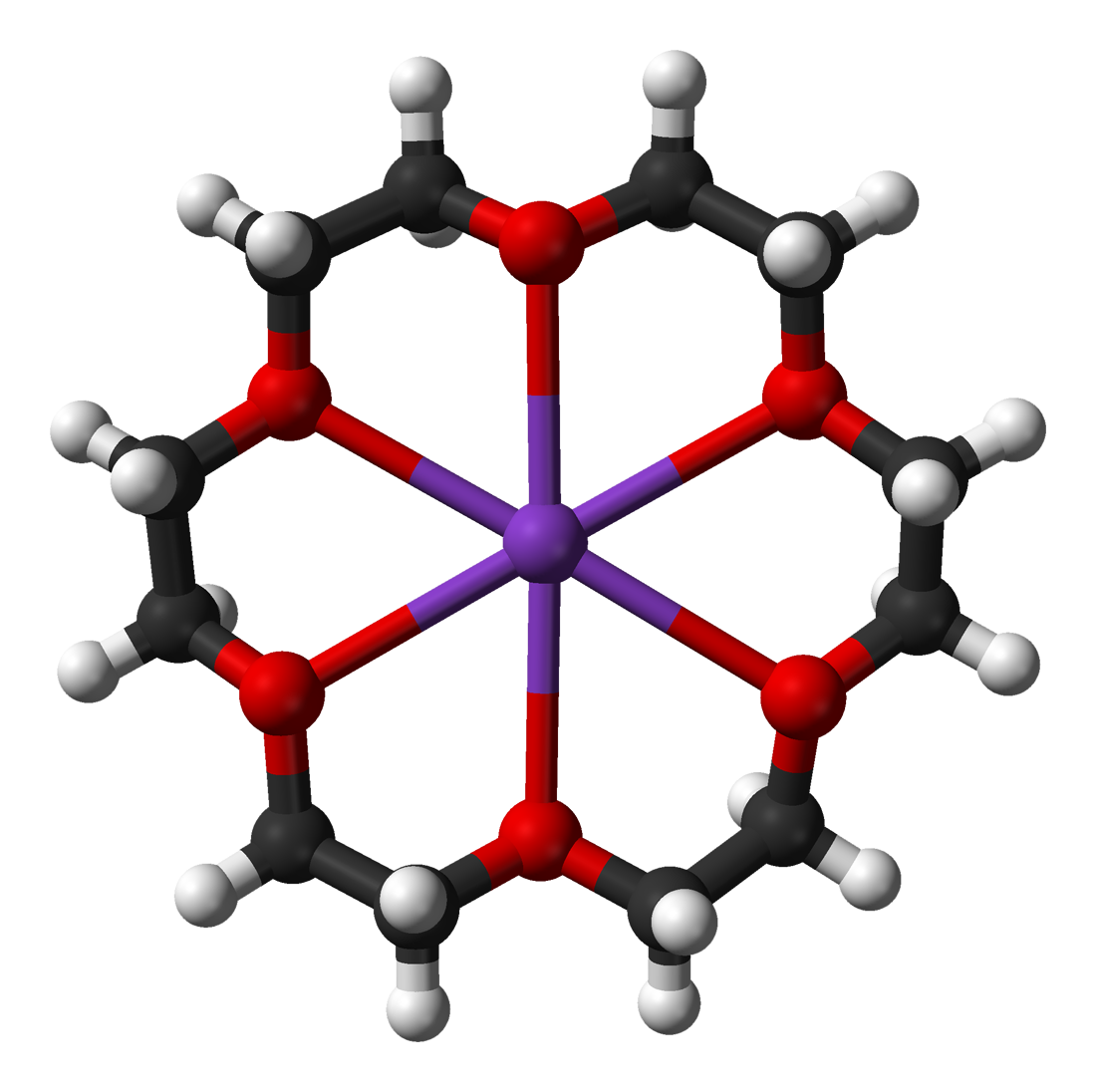
Many synthetic ionophores are based on crown ethers, cryptands, and calixarenes. Pyrazole-pyridine and bis-pyrazole derivatives have also been synthesized. These synthetic species are often macrocyclic. Some synthetic agents are not macrocyclic, e.g. carbonyl cyanide-p-trifluoromethoxyphenylhydrazone. Even simple organic compounds, such as phenols, exhibit ionophoric properties. The majority of synthetic receptors used in the carrier-based anion-selective electrodes employ transition elements or metalloids as anion carriers, although simple organic urea- and thiourea-based receptors are known.
Mechanism of action
Ionophores are chemical compounds that reversibly bind and transport ions through biological membranes in the absence of a protein pore. This can disrupt the membrane potential, and thus these substances could exhibit cytotoxic properties. Ionophores modify the permeability of biological membranes toward certain ions to which they show affinity and selectivity. Many ionophores are lipid-soluble and transport ions across hydrophobic membranes, such as lipid bilayers found in the living cells or synthetic vesicles (liposomes), or liquid polymeric membranes (carrier-based ion selective electrodes). Structurally, an ionophore contains a hydrophilic center and a hydrophobic portion that interacts with the membrane. Ions are bound to the hydrophilic center and form an ionophore-ion complex. The structure of the ionophore-ion complex has been verified by X-ray crystallography.
Chemistry
Several chemical factors affect the ionophore activity. The activity of an ionophore-metal complex depends on its geometric configuration and the coordinating sites and atoms which create coordination environment surrounding the metal center. This affects the selectivity and affinity towards a certain ion. Ionophores can be selective to a particular ion but may not be exclusive to it. Ionophores facilitate the transport of ions across biological membranes most commonly via passive transport, which is affected by lipophilicity of the ionophore molecule. The increase in lipophilicity of the ionophore-metal complex enhances its permeability through lipophilic membranes. The hydrophobicity and hydrophilicity of the complex also determines whether it will slow down or ease the transport of metal ions into cell compartments. The reduction potential of a metal complex influences its thermodynamic stability and affects its reactivity. The ability of an ionophore to transfer ions is also affected by the temperature.
Biological properties
Ionophores are widely used in cell physiology experiments and biotechnology as these compounds can effectively perturb gradients of ions across biological membranes and thus they can modulate or enhance the role of key ions in the cell. Many ionophores have shown antibacterial and antifungal activities. Some of them also act against insects, pests and parasites. Some ionophores have been introduced into medicinal products for dermatological and veterinary use. A large amount of research has been directed toward investigating novel antiviral, anti-inflammatory, anti-tumor, antioxidant and neuroprotective properties of different ionophores.
Chloroquine is an antimalarial and antiamebic drug. It is also used in the management of rheumatoid arthritis and lupus erythematosus. Pyrithione is used as an anti-dandruff agent in medicated shampoos for seborrheic dermatitis. It also serves as an anti-fouling agent in paints to cover and protect surfaces against mildew and algae. Clioquinol and PBT2 are 8-hydroxyquinoline derivatives. Clioquinol has antiprotozoal and topical antifungal properties, however its use as an antiprotozoal agent has widely restricted because of neurotoxic concerns. Clioquinol and PBT2 are currently being studied for neurodegenerative diseases, such as Alzheimer's disease, Huntington's disease and Parkinson's disease. Gramicidin is used in throat lozenges and has been used to treat infected wounds. Epigallocatechin gallate is used in many dietary supplements and has shown slight cholesterol-lowering effects. Quercetin has a bitter flavor and is used as a food additive and in dietary supplements. Hinokitiol (ß-thujaplicin) is used in commercial products for skin, hair and oral care, insect repellents and deodorants. It is also used as a food additive, shelf-life extending agent in food packaging, and wood preservative in timber treatment.
Polyene antimycotics, such as nystatin, natamycin and amphotericin B, are a subgroup of macrolides and are widely used antifungal and antileishmanial medications. These drugs act as ionophores by binding to ergosterol in the fungal cell membrane and making it leaky and permeable for K+ and Na+ ions, as a result contributing to fungal cell death.
Carboxylic ionophores, i.e., monensin, lasalocid, salinomycin, narasin, maduramicin, semduramycin and laidlomycin, are marketed globally and widely used as anticoccidial feed additives to prevent and treat coccidiosis in poultry. Some of these compounds have also been used as growth and production promoters in certain ruminants, such as cattle, and chickens, however this use has been mainly restricted because of safety issues.
Zinc ionophores have been shown to inhibit replication of various viruses in vitro, including coxsackievirus, equine arteritis virus, coronavirus, HSV, HCoV-229E, mengovirus, rhinovirus,
| Ionophore | Cations | Sources | |||||||||||||||||||||||||
|---|---|---|---|---|---|---|---|---|---|---|---|---|---|---|---|---|---|---|---|---|---|---|---|---|---|---|---|
| *This is not a complete list of all known ionophores. | |||||||||||||||||||||||||||
| The metal ions listed for each ionophore are not exclusive.* | |||||||||||||||||||||||||||
| Alamethicin | K+, Na+ | Trichoderma viride | |||||||||||||||||||||||||
| Beauvericin | Ba2+, Ca2+ | Beauveria bassiana, Fusarium species | |||||||||||||||||||||||||
| Calcimycin | Mn2+, Ca2+, Mg2+, Sr2+, Ba2+, Zn2+, Co2+, Ni,2+, Fe2+ | Streptomyces chartreusensis | |||||||||||||||||||||||||
| Chloroquine | Zn2+ | Cinchona officinalis | |||||||||||||||||||||||||
| Clioquinol | Zn2+, Cu2+, Fe2+ | Synthetic ionophore | |||||||||||||||||||||||||
| Diiodohydroxyquinoline | Zn2+ | Synthetic ionophore | |||||||||||||||||||||||||
| Dithiocarbamates (pyrrolidine dithiocarbamate and other derivatives) | Zn2+, Cu2+ | Synthetic ionophore | |||||||||||||||||||||||||
| Enniatin | NH4+ | Fusarium species | |||||||||||||||||||||||||
| Epigallocatechin gallate | Zn2+ | Camellia sinensis, apples, plums, onions, hazelnuts, pecans, carobs | |||||||||||||||||||||||||
| Gramicidin A | K+, Na+ | Brevibacillus brevis | |||||||||||||||||||||||||
| Hinokitiol | Zn2+ | Cupressaceae species | |||||||||||||||||||||||||
| Ionomycin | Ca2+ | Streptomyces conglobatus | |||||||||||||||||||||||||
| Laidlomycin | Li+, K+, Na+, Mg2+, Ca2+, Sr2+ | Streptomyces species | |||||||||||||||||||||||||
| Lasalocid | K+, Na+, Ca2+, Mg2+ | Streptomyces lasalocidi | |||||||||||||||||||||||||
| Maduramicin | K+, Na+ | Actinomadura rubra | |||||||||||||||||||||||||
| last1=Huczyński | first1=Adam | last2=Ratajczak-Sitarz | first2=Małgorzata | last3=Katrusiak | first3=Andrzej | last4=Brzezinski | first4=Bogumil | title=Molecular structure of the 1:1 inclusion complex of monensin A lithium salt with acetonitrile | journal=Journal of Molecular Structure | date=15 December 2007 | volume=871 | issue=1 | pages=92–97 | doi=10.1016/j.molstruc.2006.07.046 | bibcode=2007JMoSt.871...92H }} | Li+, K+, Na+, Rb+, Ag+, Tl+, Pb2+ | Streptomyces cinnamonensis | ||||||||||
| Narasin | K+, Na+, Rb+ | Streptomyces aureofaciens | |||||||||||||||||||||||||
| Nigericin | K+, Pb2+ | Streptomyces hygroscopicus | |||||||||||||||||||||||||
| Nonactin | K+, Na+, Rb+, Cs+, Tl+, NH4+ | Streptomyces tsukubensis, Streptomyces griseus, Streptomyces chrysomallus, Streptomyces werraensis | |||||||||||||||||||||||||
| Nystatin | K+ | Streptomyces noursei | |||||||||||||||||||||||||
| PBT2 | Zn2+, Fe2+, Mn2+, Cu2+ | Synthetic analogue of 8-hydroxyquinoline | |||||||||||||||||||||||||
| last1=Tardito | first1=Saverio | last2=Bassanetti | first2=Irene | last3=Bignardi | first3=Chiara | last4=Elviri | first4=Lisa | last5=Tegoni | first5=Matteo | last6=Mucchino | first6=Claudio | last7=Bussolati | first7=Ovidio | last8=Franchi-Gazzola | first8=Renata | last9=Marchiò | first9=Luciano | title=Copper Binding Agents Acting as Copper Ionophores Lead to Caspase Inhibition and Paraptotic Cell Death in Human Cancer Cells | journal=Journal of the American Chemical Society | date=27 April 2011 | volume=133 | issue=16 | pages=6235–6242 | doi=10.1021/ja109413c | pmid=21452832 }} | Cu2+ | Synthetic ionophore |
| last1=Krenn | first1=B. M. | last2=Gaudernak | first2=E. | last3=Holzer | first3=B. | last4=Lanke | first4=K. | last5=Kuppeveld | first5=F. J. M. Van | last6=Seipelt | first6=J. | title=Antiviral Activity of the Zinc Ionophores Pyrithione and Hinokitiol against Picornavirus Infections | journal=Journal of Virology | date=1 January 2009 | volume=83 | issue=1 | pages=58–64 | doi=10.1128/JVI.01543-08 | pmid=18922875 | pmc=2612303 | s2cid=5298792 | doi-access=free }} | Zn2+, Cu2+, Pb2+ | Allium stipitatum | |||
| Quercetin | Zn2+ | Widely distributed in nature, found in many vegetables, fruits, berries, herbs, trees and other plants | |||||||||||||||||||||||||
| Salinomycin | K+, Na+, Cs+, Sr2+, Ca2+, Mg2+ | Streptomyces albus | |||||||||||||||||||||||||
| Semduramicin | Na+, Ca2+ | Actinomadura roseorufa | |||||||||||||||||||||||||
| Valinomycin | K+ | Streptomyces species | |||||||||||||||||||||||||
| Zincophorin | Zn2+ | Streptomyces griseus |
References
References
- Bakker E1. (1997). "Carrier-Based Ion-Selective Electrodes and Bulk Optodes. 1. General Characteristics". Chem. Rev..
- Bühlmann P1. (1998). "Carrier-Based Ion-Selective Electrodes and Bulk Optodes. 2. Ionophores for Potentiometric and Optical Sensors". Chem. Rev..
- (November 2009). "Metal ionophores – An emerging class of anticancer drugs". IUBMB Life.
- (2015). "Pharmacological activity of metal binding agents that alter copper bioavailability". Dalton Transactions.
- (2016). "The Alkali Metal Ions: Their Role in Life". Springer.
- "Ionophore".
- (2012). "Ionophores in Planar Lipid Bilayers". Cell Physiology Source Book.
- "Ionophores - MeSH Result".
- (27 April 2011). "Copper Binding Agents Acting as Copper Ionophores Lead to Caspase Inhibition and Paraptotic Cell Death in Human Cancer Cells". Journal of the American Chemical Society.
- (1997). "Chemistry of the elements". Butterworth-Heinemann.
- (2003). "Analytical applications of planar bilayer lipid membranes". Membrane Science and Technology.
- (1982). "Crystal structure of valinomycin-sodium picrate. Anion effects on valinomycin-cation complexes". Journal of the American Chemical Society.
- (2015). "Pharmacological activity of metal binding agents that alter copper bioavailability". Dalton Transactions.
- (11 January 2012). "Cell physiology sourcebook: essentials of membrane biophysics".
- (February 2009). "Polyether ionophores: broad-spectrum and promising biologically active molecules for the control of drug-resistant bacteria and parasites". Expert Opinion on Drug Discovery.
- (2014). "Zinc Therapy in Dermatology: A Review". Dermatology Research and Practice.
- (22 December 2016). "Veterinary medicine: a textbook of the diseases of cattle, horses, sheep, pigs and goats".
- (27 September 2018). "Ionophores: Potential Use as Anticancer Drugs and Chemosensitizers". Cancers.
- "Chloroquine Phosphate Monograph for Professionals".
- "Zinc pyrithione".
- (1984). "SMON as seen from Bombay.". Acta Neurologica Scandinavica. Supplementum.
- (December 2019). "Topical (local) antibiotics for respiratory infections with sore throat: An antibiotic stewardship perspective". Journal of Clinical Pharmacy and Therapeutics.
- (9 October 2018). "The Multifaceted Antibacterial Mechanisms of the Pioneering Peptide Antibiotics Tyrocidine and Gramicidin S". mBio.
- (31 August 2011). "Epigallocatechin-3-gallate (EGCG) for Clinical Trials: More Pitfalls than Promises?". International Journal of Molecular Sciences.
- (17 August 2016). "Systematic review of green tea epigallocatechin gallate in reducing low-density lipoprotein cholesterol levels of humans". International Journal of Food Sciences and Nutrition.
- (28 April 2014). "Flavonoids".
- "Hinokitiol {{!}} 499-44-5".
- (2008). "A fresh look at natural tropolonoids". Nat. Prod. Rep..
- "The Japan Food chemical Research Faundation".
- (2001). "Active Packaging for Food Applications". CRC Press.
- (December 2013). "Application of hinokitiol potassium salt for wood preservative". Journal of Environmental Sciences.
- (1996). "Medical microbiology". University of Texas Medical Branch at Galveston.
- (2017). "Reproductive and developmental toxicology".
- "Antimicrobial Feed Additives - Pharmacology".
- (March 2016). "Raised Without Antibiotics: Lessons from Voluntary Labeling of Antibiotic Use Practices in The Broiler Industry". American Journal of Agricultural Economics.
- (1 January 2009). "Antiviral Activity of the Zinc Ionophores Pyrithione and Hinokitiol against Picornavirus Infections". Journal of Virology.
- (1 April 2007). "PDTC inhibits picornavirus polyprotein processing and RNA replication by transporting zinc ions into cells". Journal of General Virology.
- (4 November 2010). "Zn2+ Inhibits Coronavirus and Arterivirus RNA Polymerase Activity In Vitro and Zinc Ionophores Block the Replication of These Viruses in Cell Culture". PLOS Pathogens.
- (17 September 2009). "Inhibition of hepatitis C virus replication by chloroquine targeting virus-associated autophagy". Journal of Gastroenterology.
- (October 2013). "Zinc ionophores pyrithione inhibits herpes simplex virus replication through interfering with proteasome function and NF-κB activation". Antiviral Research.
- (April 1990). "Inhibition of Human Immunodeficiency Virus Infectivity by Chloroquine". AIDS Research and Human Retroviruses.
- (1 August 2004). "Chloroquine and Hydroxychloroquine as Inhibitors of Human Immunodeficiency Virus (HIV-1) Activity". Current Pharmaceutical Design.
- (August 2014). "Screening of an FDA-Approved Compound Library Identifies Four Small-Molecule Inhibitors of Middle East Respiratory Syndrome Coronavirus Replication in Cell Culture". Antimicrobial Agents and Chemotherapy.
- (October 2017). "Chloroquine, a FDA-approved Drug, Prevents Zika Virus Infection and its Associated Congenital Microcephaly in Mice". eBioMedicine.
- (2004). "Regulators of G-Protein Signaling, Part B".
- (1971). "Physicochemical Probes of Membrane Structure". Structure and Function of Biological Membranes.
- (June 2007). "The History of Alamethicin: A Review of the Most Extensively Studied Peptaibol". Chemistry & Biodiversity.
- (2002). "Advances in Microbial Toxin Research and Its Biotechnological Exploitation".
- (1 December 1979). "Microbial transformation of A23187, a divalent cation ionophore antibiotic.". Antimicrobial Agents and Chemotherapy.
- (2013). "Extracting iron and manganese from bacteria with ionophores—A mechanism against competitors characterized by increased potency in environments low in micronutrients". Proteomics.
- (1 October 2014). "Chloroquine Is a Zinc Ionophore". PLOS ONE.
- (March 1979). "The possible role of Diodoquin as a zinc ionophore in the treatment of acrodermatitis enteropathica". Biochemical and Biophysical Research Communications.
- (2007). "PDTC inhibits picornavirus polyprotein processing and RNA replication by transporting zinc ions into cells". Journal of General Virology.
- (12 January 2009). "The Enniatin Ionophores. Conformation and Ion Binding Properties". International Journal of Peptide and Protein Research.
- (13 August 2014). "Zinc Ionophore Activity of Quercetin and Epigallocatechin-gallate: From Hepa 1-6 Cells to a Liposome Model". Journal of Agricultural and Food Chemistry.
- (24 July 2012). "N-Terminally Glutamate-Substituted Analogue of Gramicidin A as Protonophore and Selective Mitochondrial Uncoupler". PLOS ONE.
- (1 June 1979). "Structure of ionomycin - a novel diacidic polyether antibiotic having high affinity for calcium ions". Journal of the American Chemical Society.
- (1989). "Monovalent cation specificity of passive transport mediated by laidlomycin and 26-deoxylaidlomycin". Journal of Basic Microbiology.
- (18 February 1988). "The ion selectivity of nonelectrogenic ionophores measured on a bilayer lipid membrane: nigericin, monensin, A23187 and lasalocid A". Biochimica et Biophysica Acta (BBA) - Biomembranes.
- (1 March 2016). "Maduramicin Rapidly Eliminates Malaria Parasites and Potentiates the Gametocytocidal Activity of the Pyrazoleamide PA21A050". Antimicrobial Agents and Chemotherapy.
- (15 December 2007). "Molecular structure of the 1:1 inclusion complex of monensin A lithium salt with acetonitrile". Journal of Molecular Structure.
- (14 May 1970). "Molecular structure of monovalent metal cation complexes of monensin". Journal of Molecular Biology.
- "Narasin {{!}} Anticoccidial drugs {{!}} Drugs {{!}} Various {{!}} Poultrymed".
- (27 June 2013). "K+ Efflux Is the Common Trigger of NLRP3 Inflammasome Activation by Bacterial Toxins and Particulate Matter". Immunity.
- (September 1992). "Molecular recognition of potassium ion by the naturally occurring antibiotic ionophore nonactin". Journal of the American Chemical Society.
- (April 2014). "Complexation of the thallium cation with nonactin: an experimental and theoretical study". Monatshefte für Chemie - Chemical Monthly.
- (11 December 2018). "Chemical Synergy between Ionophore PBT2 and Zinc Reverses Antibiotic Resistance". mBio.
- (27 April 2011). "Copper Binding Agents Acting as Copper Ionophores Lead to Caspase Inhibition and Paraptotic Cell Death in Human Cancer Cells". Journal of the American Chemical Society.
- (1 January 2009). "Antiviral Activity of the Zinc Ionophores Pyrithione and Hinokitiol against Picornavirus Infections". Journal of Virology.
- (13 August 2014). "Zinc Ionophore Activity of Quercetin and Epigallocatechin-gallate: From Hepa 1-6 Cells to a Liposome Model". Journal of Agricultural and Food Chemistry.
- (2012). "Salinomycin – A New Cancer Drug Candidate". Chemical Biology & Drug Design.
- (2018). "Scientific Opinion on the safety and efficacy of Aviax 5% (semduramicin sodium) for chickens for fattening". EFSA Journal.
- (September 1982). "The electroanalytical response of the bilayer lipid membrane to valinomycin: membrane cholesterol content". Analytica Chimica Acta.
This article was imported from Wikipedia and is available under the Creative Commons Attribution-ShareAlike 4.0 License. Content has been adapted to SurfDoc format. Original contributors can be found on the article history page.
Ask Mako anything about Ionophore — get instant answers, deeper analysis, and related topics.
Research with MakoFree with your Surf account
Create a free account to save articles, ask Mako questions, and organize your research.
Sign up freeThis content may have been generated or modified by AI. CloudSurf Software LLC is not responsible for the accuracy, completeness, or reliability of AI-generated content. Always verify important information from primary sources.
Report