From Surf Wiki (app.surf) — the open knowledge base
Intraocular pressure
Fluid pressure inside the eye
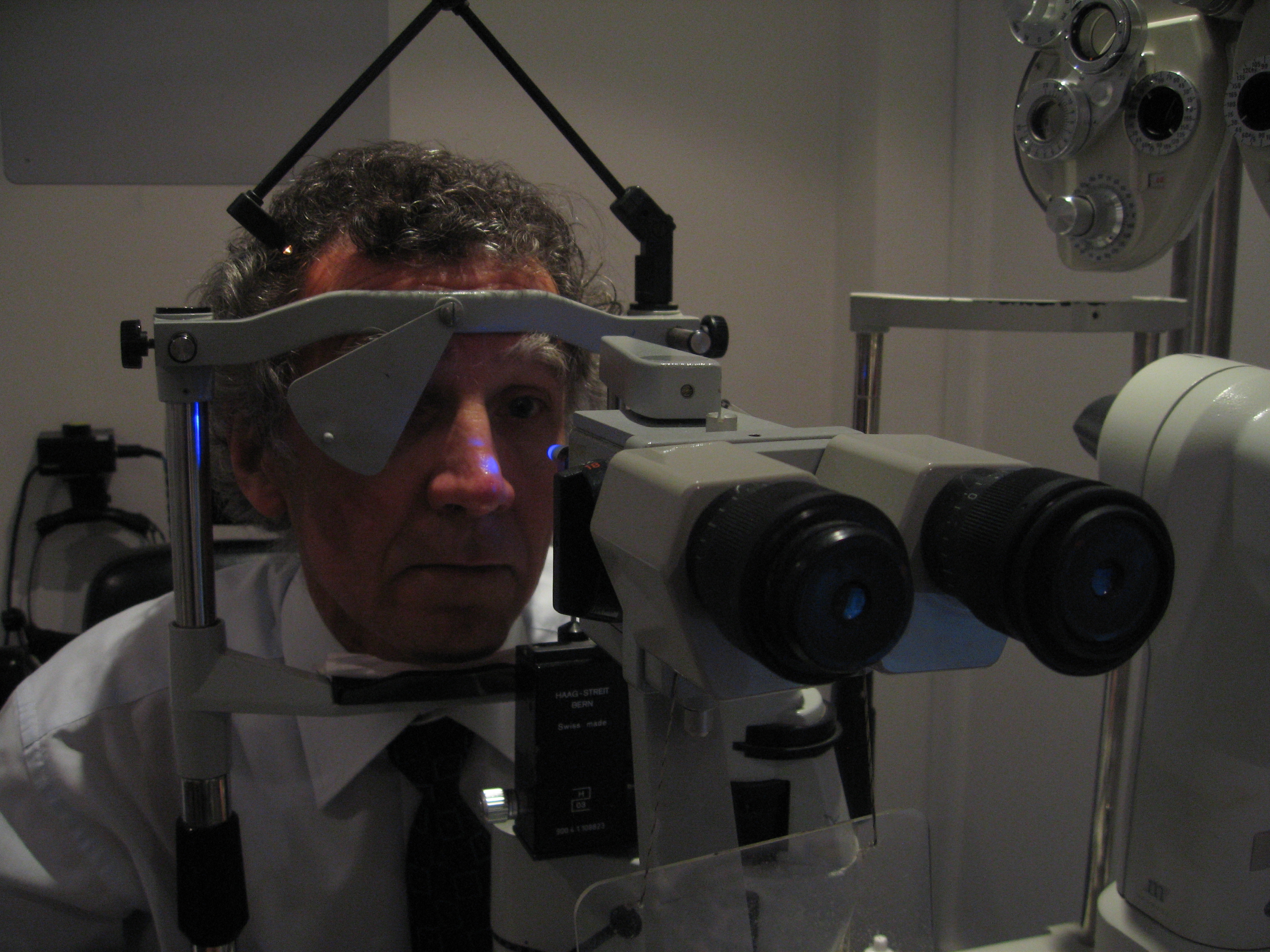
Fluid pressure inside the eye
Intraocular pressure (IOP) is the fluid pressure inside the eye. Tonometry is the method eye care professionals use to determine this. IOP is an important aspect in the evaluation of patients at risk of glaucoma. Most tonometers are calibrated to measure pressure in millimeters of mercury (mmHg).
Physiology
Intraocular pressure is determined by the production and drainage of aqueous humour by the ciliary body and its drainage via the trabecular meshwork and uveoscleral outflow. The reason for this is because the vitreous humour in the posterior segment has a relatively fixed volume and thus does not affect intraocular pressure regulation.
An important quantitative relationship (Goldmann's equation) is as follows:
:P_o = \frac{F - U}{C} + P_v
Where:
- P_o is the IOP in millimeters of mercury (mmHg)
- F the rate of aqueous humour formation in microliters per minute (μL/min)
- U the resorption of aqueous humour through the uveoscleral route (μL/min)
- C is the facility of outflow in microliters per minute per millimeter of mercury (μL/min/mmHg)
- P_v the episcleral venous pressure in millimeters of mercury (mmHg).
The above factors are those that drive IOP.
Measurement

Palpation is one of the oldest, simplest, and least expensive methods for approximate IOP measurement, however it is very inaccurate unless the pressure is very high. Intraocular pressure is measured with a tonometer as part of a comprehensive eye examination. Contact lens sensors have also been used for continuous intraocular pressure monitoring.
Measured values of intraocular pressure are influenced by corneal thickness and rigidity. As a result, some forms of refractive surgery (such as photorefractive keratectomy) can cause traditional intraocular pressure measurements to appear normal when in fact the pressure may be abnormally high. A newer transpalpebral and transscleral tonometry method is not influenced by corneal biomechanics and does not need to be adjusted for corneal irregularities as measurement is done over upper eyelid and sclera.
Classification
Current consensus among ophthalmologists and optometrists defines normal intraocular pressure as that between 10 mmHg and 21 mmHg. The average value of intraocular pressure is 15.5 mmHg with fluctuations of about 2.75 mmHg.
Ocular hypertension (OHT) is defined by intraocular pressure being higher than normal, in the absence of optic nerve damage or visual field loss.
Ocular hypotension, hypotony, or ocular hypotony, is typically defined as intraocular pressure equal to or less than 5 mmHg. Such low intraocular pressure could indicate fluid leakage and deflation of the eyeball.
Influencing factors
Daily variation
Intraocular pressure varies throughout the night and day. The diurnal variation for normal eyes is between 3 and 6 mmHg and the variation may increase in glaucomatous eyes. During the night, intraocular pressure may not decrease despite the slower production of aqueous humour. Glaucoma patients' 24-hour IOP profiles may differ from those of healthy individuals.
Fitness and exercise
There is some inconclusive research that indicates that exercise could possibly affect IOP (some positively and some negatively).
Musical instruments
Playing some musical wind instruments has been linked to increases in intraocular pressure. A 2011 study focused on brass and woodwind instruments observed "temporary and sometimes dramatic elevations and fluctuations in IOP". Another study found that the magnitude of increase in intraocular pressure correlates with the intraoral resistance associated with the instrument, and linked intermittent elevation of intraocular pressure from playing high-resistance wind instruments to incidence of visual field loss. The range of intraoral pressure involved in various classes of ethnic wind instruments, such as Native American flutes, has been shown to be generally lower than Western classical wind instruments.
Drugs
Intraocular pressure also varies with a number of other factors such as heart rate, respiration, fluid intake, systemic medication and topical drugs. Alcohol and cannabis consumption leads to a transient decrease in intraocular pressure and caffeine may increase intraocular pressure.
Taken orally, glycerol (often mixed with fruit juice to reduce its sweet taste) can cause a rapid, temporary decrease in intraocular pressure. This can be a useful initial emergency treatment of severely elevated pressure.
The depolarising muscle relaxant succinylcholine, which is used in anaesthesia, transiently increases IOP by around 10 mmHg for a few minutes. This is significant for example if the patient requires anaesthesia for a trauma and has sustained an eye (globe) perforation. The mechanism is not clear but it is thought to involve contraction of tonic myofibrils and transient dilation of choroidal blood vessels. Ketamine also increases IOP.
Significance
Ocular hypertension is the most important risk factor for glaucoma.
Intraocular pressure has been measured as an outcome in a systematic review comparing the effect of neuroprotective agents in slowing the progression of open angle glaucoma.
Differences in pressure between the two eyes are often clinically significant, and potentially associated with certain types of glaucoma, as well as iritis or retinal detachment.
Intraocular pressure may become elevated due to anatomical problems, inflammation of the eye, genetic factors, or as a side-effect from medication. Intraocular pressure laws follow fundamentally from physics. Any kinds of intraocular surgery should be done by considering the intraocular pressure fluctuation. Sudden increase of intraocular pressure can lead to intraocular micro barotrauma and cause ischemic effects and mechanical stress to retinal nerve fiber layer. Sudden intraocular pressure drop can lead to intraocular decompression that generates micro bubbles that potentially cause multiple micro emboli and leading to hypoxia, ischemia and retinal micro structure damage.
References
References
- (April 2015). "Contact lens sensors in ocular diagnostics". Advanced Healthcare Materials.
- (November 2016). "24-h monitoring devices and nyctohemeral rhythms of intraocular pressure". Prog Retin Eye Res.
- (2010-07-30). "Palpation by blind examiners: A novel approach for glaucoma screening". Clinical Ophthalmology.
- (2 November 2023). "Recent advancements in nanomaterial-laden contact lenses for diagnosis and treatment of glaucoma, review and update.". Journal of Nanobiotechnology.
- (June 2007). "Effect of central corneal thickness on dynamic contour tonometry and Goldmann applanation tonometry in primary open-angle glaucoma". Arch. Ophthalmol..
- (April 1998). "Corneal pachymetry: a prerequisite for applanation tonometry?". Arch. Ophthalmol..
- (2015). "Comparison of Intraocular Pressure before and after Laser In Situ Keratomileusis Refractive Surgery Measured with Perkins Tonometry, Noncontact Tonometry, and Transpalpebral Tonometry". J Ophthalmol.
- [http://www.webmd.com/hw/lab_tests/hw201323.asp webMD - Tonometry]
- [http://www.emedicinehealth.com/articles/14545-1.asp Glaucoma Overview] {{Webarchive. link. (4 July 2008 from eMedicine)
- (June 2005). "Distribution of intraocular pressure in healthy Iranian individuals: the Tehran Eye Study". Br J Ophthalmol.
- Pooranee. (2015-10-09). "Do you know about Intra Ocular Pressure?".
- Janunts E. "Optical remote sensing of intraocular pressure by an implantable nanostructured array". Medizinische Fakultät der Universität des Saarlandes.
- (September 2006). "Intraocular pressure variation during weight lifting". Arch. Ophthalmol..
- [http://www.aoa.org/patients-and-public/eye-and-vision-problems/glossary-of-eye-and-vision-conditions/ocular-hypertension?sso=y Ocular Hypertension], [[American Optometric Association]]. Accessed 2015-11-3.
- (2014-02-05). "Ocular Hypotony: Background, Pathophysiology, Epidemiology".
- (February 1999). "Elevated intraocular pressure and hypotony following silicone oil retinal tamponade for complex retinal detachment: incidence and risk factors". Arch. Ophthalmol..
- (May 2011). "Monitoring intraocular pressure for 24 h". Br J Ophthalmol.
- Brubaker RF. (1991). "Flow of aqueous humor in humans". Invest Ophthalmol Vis Sci.
- (April 2003). "Twenty-four-hour intraocular pressure pattern associated with early glaucomatous changes". Invest. Ophthalmol. Vis. Sci..
- Studies have also been conducted on both healthy and sedentary individuals to determine if intraocular pressure could be reduced with other types of exercise. Some forms of exertion have been found to result in a decrease in intraocular pressure. Exercises studied included; walking, jogging, and running. [http://journals.tubitak.gov.tr/medical/issues/sag-00-30-2/sag-30-2-20-9907-19.pdf Acute Dynamic Exercise Reduces Intraocular Pressure] {{Webarchive. link. (28 September 2011 , Departments of Ophthalmology, Physiology, Faculty of Medicine, Atatürk University, Erzurum- Turkey. July 1999.)
- [http://informahealthcare.com/doi/abs/10.1080/03014469500004202 Qureshi IA. Effects of mild, moderate and severe exercise on intraocular pressure of sedentary subjects. Rawalpindi Medical College, Rawalpindi, Pakistan]
- (June 2011). "Intraocular pressure fluctuations in professional brass and woodwind musicians during common playing conditions". Graefes Arch. Clin. Exp. Ophthalmol..
- (January 2000). "Increased intraocular pressure and visual field defects in high resistance wind instrument players". Ophthalmology.
- Intraocular pressure measure on normal eyes by Pardianto G et al., in Mimbar Ilmiah Oftalmologi Indonesia.2005;2:78-9.
- (October 1964). "Effect of Oral Glycerol on Intraocular Pressure in Normal and Glaucomatous Eyes". Arch. Ophthalmol..
- (2011). "Goodman & Gilman's: The Pharmacological Basis of Therapeutics". The McGraw-Hill Companies, Inc..
- "Ocular Therapeutix Inc (OCUL)".
- (January 2017). "Neuroprotection for treatment of glaucoma in adults". Cochrane Database Syst Rev.
- (March 2015). "Recent awareness and consideration of intraocular pressure fluctuation during eye surgery". J Cataract Refract Surg.
This article was imported from Wikipedia and is available under the Creative Commons Attribution-ShareAlike 4.0 License. Content has been adapted to SurfDoc format. Original contributors can be found on the article history page.
Ask Mako anything about Intraocular pressure — get instant answers, deeper analysis, and related topics.
Research with MakoFree with your Surf account
Create a free account to save articles, ask Mako questions, and organize your research.
Sign up freeThis content may have been generated or modified by AI. CloudSurf Software LLC is not responsible for the accuracy, completeness, or reliability of AI-generated content. Always verify important information from primary sources.
Report