From Surf Wiki (app.surf) — the open knowledge base
Internment
Imprisonment or confinement of groups of people without trial

Imprisonment or confinement of groups of people without trial
Internment is the imprisonment of people, commonly in large groups, without charges or intent to file charges. The term is especially used for the confinement "of enemy citizens in wartime or of terrorism suspects". Thus, while it can simply mean imprisonment, it tends to refer to preventive confinement rather than confinement after having been convicted of some crime. Use of these terms is subject to debate and political sensitivities. The word internment is also occasionally used to describe a neutral country's practice of detaining belligerent armed forces and equipment on its territory during times of war, under the Hague Convention of 1907.
Interned persons may be held in prisons or in facilities known as internment camps or concentration camps. The term concentration camp originates from the Spanish–Cuban Ten Years' War when Spanish forces detained Cuban civilians in camps in order to more easily combat guerrilla forces. Over the following decades the British during the Second Boer War and the Americans during the Philippine–American War also used concentration camps.
The terms concentration camp and internment camp are used to refer to a variety of systems that greatly differ in their severity, mortality rate, and architecture; their defining characteristic is that inmates are held outside the rule of law. Extermination camps or death camps, whose primary purpose is killing, are also imprecisely referred to as concentration camps.
The Universal Declaration of Human Rights restricts the use of internment, with Article 9 stating, "No one shall be subjected to arbitrary arrest, detention or exile."
Defining internment and concentration camp
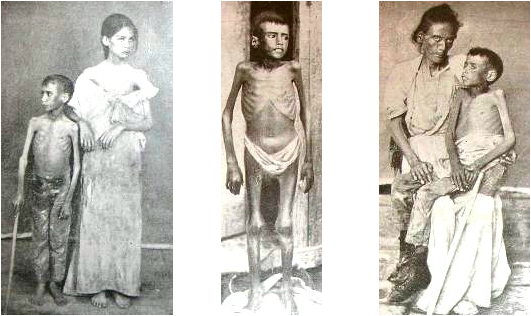
The American Heritage Dictionary defines the term concentration camp as: "A camp where persons are confined, usually without hearings and typically under harsh conditions, often as a result of their membership in a group which the government has identified as dangerous or undesirable."
Although the first example of civilian internment may date as far back as the 1830s, the English term concentration camp was first used in order to refer to the reconcentration camps (Spanish:reconcentrados) which were set up by the Spanish military in Cuba during the Ten Years' War (1868–1878). The label was applied yet again to camps set up by the United States during the Philippine–American War (1899–1902). And expanded usage of the concentration camp label continued, when the British set up camps during the Second Boer War (1899–1902) in South Africa for interning Boers during the same time period.
During the 20th century, the arbitrary internment of civilians by the state reached its most extreme forms in the Soviet Gulag system of concentration camps (1918–1991) and the Nazi concentration camps (1933–1945). The Soviet system was the first applied by a government on its own citizens. The Gulag consisted in over 30,000 camps for most of its existence (1918–1991) and detained some 18 million from 1929 until 1953, which is only a third of its 73-year lifespan. The Nazi concentration camp system was extensive, with as many as 15,000 camps and at least 715,000 simultaneous internees. The total number of casualties in these camps is difficult to determine, but the deliberate policy of extermination through labor in many of the camps was designed to ensure that the inmates would die of starvation, untreated disease and summary executions within set periods of time. Moreover, Nazi Germany established six extermination camps, specifically designed to kill millions of people, primarily by gassing.

As a result, the term "concentration camp" is sometimes conflated with the concept of an "extermination camp" and historians debate whether the term "concentration camp" or the term "internment camp" should be used to describe other examples of civilian internment.
The "concentration camp" label continues to see expanded use for cases post-World War II, for instance in relation to British camps in Kenya during the Mau Mau rebellion (1952–1960), and camps set up in Chile during the military dictatorship of Augusto Pinochet (1973–1990). According to the United States Department of Defense as many as 3 million Uyghurs and members of other Muslim minority groups are being held in China's re-education camps which are located in the Xinjiang region and which American news reports often label as concentration camps. The camps were established in the late 2010s under Chinese Communist Party general secretary Xi Jinping's administration.
Impact
Scholars have debated the efficacy of internment as a counterinsurgency tactic. A 2023 study found that internment during the Irish war of independence led to greater grievances among Irish rebels and led them to fight longer in the war.
Examples
Main article: List of concentration and internment camps
Active

- North Korean prison camps (1948–present)
- Guantanamo Bay detention camp (2002–present)
- Refugee detention centres in Libya (2011–present)
- Uyghur re-education camps in China (2017–present)
- Anti-gay detention camps in Chechnya (2017–present)
- Migrant internment camps as part of immigration detention in the United States (2018–present) in facilities such as Alligator Alcatraz
- Internment camps in Ethiopia during the Tigray War and the War in Amhara (2020–present).
- Russian filtration camps in Ukraine during the Russian invasion of Ukraine (2022–present)
- Sde Teiman detention camp in Israel during the Gaza war (2024–present)
- Italian migrant detention camps in Albania (2024–present)
Closed
- Abercorn Barracks, Northern Ireland (sometimes referred to as Ballykinlar Barracks) (1919–1921, 1971)
- Reconcentration policy during Cuba's War of Independence from Spain (1896–1898)
- Second Boer War in South Africa (1900–1902)
- Curragh Camp in Ireland (1939–1946, 1957–1959). Curragh Camp was by far the largest, at least 30 other prisons and camps were used throughout the country.
- Cyprus internment camps (1946–1949)
- Reconcentrados "Zones of Protection" 1901, Philippine-American War
- Herero and Namaqua genocide (1904–1907)
- Concentration of Armenians during the Armenian Genocide (1915–1916)
- Internment camps in France and its colonies (1910s-1960s)
- Finnish Civil War (1918)
- Frongoch internment camp British camp used for WWI and Irish 1916 Easter Rising prisoners
- Gormanston Camp in the Irish Free State (1922–1923)
- Malayan New villages as part of the Briggs Plan during the Malayan Emergency (1950–1960)
- Italian concentration camps in Africa and Europe (1930–1944)
- HM Prison Maze in Northern Ireland (1971–1975), previously known as Long Kesh Detention Centre, and known colloquially as the Maze or H-Blocks)
- German concentration camps before and during World War II (1933–1945)
- Japanese internment of prisoners of war and civilians during World War II (ended 1945)
- German-American internment camps in World War II (1941–1948)
- Italian-American internment camps in World War II (1941–1943)
- Japanese-American internment camps in World War II (1942–1946)
- Japanese Canadian internment (1942–1949)
- Deoli internment camp in India (1962–1967)
- Omarska camp in Bosnia, 1992
- Dretelj camp (1992–1995)
- Camp Bucca in Iraq (2003–2009)
- Abu Ghraib prison in Iraq (1980–2014)
File:Armrefugees.jpg|Armenian refugees collected near the body of a dead horse at Deir ez-Zor, during the Armenian genocide File:Tampere prison camp women.jpg|Women at the Kalevankangas concentration camp of Tampere in 1918, several months after the Finnish Civil War File:Vorkuta a.jpg|Aerial view of the Vorkutlag, a major Russian gulag File:Al-Magroon Concentration Camp.jpg|Inmates at El Agheila, one of the Italian concentration camps during the Italian colonization of Libya File:Boven-Digoel.jpg|Indonesian prisoners being exiled to the Dutch camp of Boven-Digoel, 1927 File:"Persons of Japanese ancestry arrive at the Santa Anita Assembly Center from San Pedro. Evacuees lived at this center at - NARA - 539960.jpg|Manzanar internment camp for Japanese-Americans in 1942 File:New Village in Malaya, 1950s.jpg|A British model new village, designed as part of the Briggs Plan to separate the largely Chinese Malaysian rural populace from communist guerrillas during the Malayan Emergency (1948–1960) File:Photo de l'infirmerie et des locaux disiplinaire du camp de Thol.jpg|Camp de Thol, one of the French concentration camps for Algerians used during the Algerian War
References
References
- Lowry, David. (1976). "Human Rights Vol. 5, No. 3 "INTERNMENT: {{sic". ABA Publishing.
- Kenney, Padraic. (2017). "Dance in Chains: Political Imprisonment in the Modern World". [[Oxford University Press]].
- "the definition of internment".
- (10 February 2012). "Euphemisms, Concentration Camps And The Japanese Internment".
- "The Second Hague Convention, 1907". Yale.edu.
- Stone, Dan. (2015). "Concentration Camps: A Very Short Introduction". Oxford University Press.
- "Nazi Camps". [[United States Holocaust Memorial Museum]].
- [https://www.un.org/en/documents/udhr/index.shtml#a9 Universal Declaration of Human Rights, Article 9], United Nations
- (1976). "Cherokee Sunset: A Nation Betrayed. A Narrative of Travail and Triumph, Persecution and Exile". Doubleday.
- "Concentration camp". American Heritage Dictionary.
- James L. Dickerson. (2010). "Inside America's Concentration Camps: Two Centuries of Internment and Torture". Chicago Review Press.
- (2008). "The Columbia Encyclopedia: Concentration Camp". Columbia University Press.
- (2 November 2017). "Concentration Camps Existed Long Before Auschwitz". [[Smithsonian (magazine).
- (1902). "Secretary Root's record. "Marked severities" in Philippine warfare. An analysis of the law and facts bearing on the action and utterances of President Roosevelt and Secretary Root". George H. Ellis Company.
- "Documents re camps in Boer War". sul.stanford.edu.
- (2004). "Gulag: A History, by Anne Applebaum (Doubleday)".
- Gilbert, Martin. (1993). "Concentration Camp Listing". Editions Kritak.
- Evans, Richard J.. (2005). "The Third Reich in Power". Penguin Group.
- Marek Przybyszewski. "IBH Opracowania – Działdowo jako centrum administracyjne ziemi sasińskiej".
- (2001). "Social Outsiders in Nazi Germany". Princeton University Press.
- Anne Applebaum. (18 October 2001). "A History of Horror{{!}} Review of ''Le Siècle des camps'' by Joël Kotek and Pierre Rigoulot".
- (27 August 2019). "Museum of British Colonialism releases online 3D models of British concentration camps in Kenya". Morning Star.
- (31 December 1989). "The Mau Mau Rebellion". The Washington Post.
- (7 September 2013). "Chilean coup: 40 years ago I watched Pinochet crush a democratic dream". The Guardian.
- (22 May 2019). "As the U.S. Targets China's 'Concentration Camps', Xinjiang's Human Rights Crisis is Only Getting Worse". Newsweek.
- (17 November 2019). "Uighurs and their supporters decry Chinese 'concentration camps', 'genocide' after Xinjiang documents leaked". [[The Washington Post]].
- (2019-11-16). "'Absolutely No Mercy': Leaked Files Expose How China Organized Mass Detentions of Muslims". [[The New York Times]].
- Kate O'Keeffe and Katy Stech Ferek. (14 November 2019). "Stop Calling China's Xi Jinping 'President', U.S. Panel Says". [[The Wall Street Journal]].
- Huff, Connor. (2023). "Counterinsurgency Tactics, Rebel Grievances, and Who Keeps Fighting". American Political Science Review.
- (28 September 2017). "Life inside a North Korea labour camp: 'We were forced to throw rocks at a man being hanged'". The Independent.
- (2013-10-19). "Political Prison Camps in North Korea Today".
- Leigh, David. (2011-04-25). "Guantánamo Bay files: Torture gets results, US military insists". The Guardian.
- "Professor David Isaacs Speech".
- (15 November 2017). "EXCLUSIVE: Italian doctor laments Libya's 'concentration camps' for migrants".
- (2018-12-11). "Europe's apathy toward humanitarian rescue outrages NGOs".
- Wehrey, Frederic. (2019-11-25). "What the 'Danish Lawrence' Learned in Libya (5th paragraph from the last one)".
- "Detained migrants killed in Libya airstrike used as 'human shields'".
- Mediapart, La Rédaction De. (2 December 2019). "France cancels speedboats delivery to Libyan coastguard".
- . (24 November 2018). ["China is creating concentration camps in Xinjiang. Here's how we hold it accountable"](https://www.washingtonpost.com/opinions/china-is-creating-concentration-camps-in-xinjiang-heres-how-we-hold-it-accountable/2018/11/23/93dd8c34-e9d6-11e8-bbdb-72fdbf9d4fed_story.html). *The Washington Post*.
- (22 February 2019). "Saudi crown prince defends China's right to put Uighur Muslims in concentration camps". The Daily Telegraph.
- (2017-04-19). "The persecution of gay men in Chechnya has chilling similarities to the Third Reich".
- Stefanello, Viola. (2019-01-15). "Is there a 'gay purge' in Chechnya? Rights group fears the worst".
- (11 April 2017). "Report: Chechnya Opens 'Concentration Camp for Homosexuals'".
- "Question to the EU Commission by Matt Carthy".
- Ramirez, Fernando. (2018-06-14). "Movement to call migrant detention centers 'concentration camps' swells online". [[Houston Chronicle.
- (24 June 2019). "Academics rally behind Alexandria Ocasio-Cortez over concentration camp comments: 'She is completely historically accurate'".
- Holmes, Jack. (2019-06-13). "An Expert on Concentration Camps Says That's Exactly What the U.S. Is Running at the Border".
- (20 June 2018). "Yes, you can call the border centers 'concentration camps,' but apply the history with care". [[The Washington Post]].
- {{cite Q. Q125771844
- {{cite Q. Q125771289
- (2021-11-26). "The warning signs are there for genocide in Ethiopia – the world must act to prevent it". [[The Guardian]].
- {{cite Q. Q125791341
- "Thousands of Mariupol survivors being detained and 'tortured' in Russian-controlled prisons". [[The i Paper]].
- (2022-04-25). "'You can't imagine the conditions' - Accounts emerge of Russian detention camps".
- "Ukraine calls on UNSC, UN Secretary General to ensure evacuation of wounded from Azovstal".
- [https://edition.cnn.com/2024/10/09/europe/italy-migrants-albania-centers-intl-cmd/index.html Italy’s hard-right government set to send sea migrants to Albania in bid to curb arrivals]. CNN
- [https://www.politico.eu/article/italy-offshore-detention-centers-albania-migration-asylum-processing-giorgia-meloni/ Italy’s offshore detention centers in Albania open for business]. Politico
- (2017). "Civil War Internment Collection". Defense Forces of Ireland.
- "Open Letter to Members of the Security Counsel Concerning Detentions in Iraq".
- "Largest American Internment Camp in Iraq Shuts Down {{!}} The Takeaway".
- (2014-12-23). "How U.S. Torture Led to the Rise of ISIS".
- (2004-05-07). "Excerpts From Red Cross Report". [[The Wall Street Journal]].
- Anderson, Jon Lee. (2013-07-26). "Breaking Out of Abu Ghraib".
- "Defense.gov News Article: Abuse Resulted From Leadership Failure, Taguba Tells Senators".
- Arthur Grosjean. (10 March 2014). "Internement, emprisonnement et guerre d'indépendance algérienne en métropole : l'exemple du camp de Thol (1958-1965)". Criminocorpus. Revue d'Histoire de la justice, des crimes et des peines.
This article was imported from Wikipedia and is available under the Creative Commons Attribution-ShareAlike 4.0 License. Content has been adapted to SurfDoc format. Original contributors can be found on the article history page.
Ask Mako anything about Internment — get instant answers, deeper analysis, and related topics.
Research with MakoFree with your Surf account
Create a free account to save articles, ask Mako questions, and organize your research.
Sign up freeThis content may have been generated or modified by AI. CloudSurf Software LLC is not responsible for the accuracy, completeness, or reliability of AI-generated content. Always verify important information from primary sources.
Report