From Surf Wiki (app.surf) — the open knowledge base
Internet Archive
American non-profit digital archive

American non-profit digital archive
| Field | Value | |||
|---|---|---|---|---|
| name | Internet Archive | |||
| logo | [[File:Internet Archive logo and wordmark.svg | frameless | class=skin-invert | alt=Internet Archive logo]] |
| logo_size | 194px | |||
| logo_alt | Logo of Internet Archive | |||
| caption | Logo of the Internet Archive | |||
| founder | Brewster Kahle | |||
| location | 300 Funston Ave, Richmond District | |||
| San Francisco, California, U.S. | ||||
| chairman | Brewster Kahle | |||
| services | ||||
| url | ||||
| language | English | |||
| company_type | Nonprofit organization | |||
| foundation | ||||
| num_employees | 122 (2021) | |||
| website_type | Digital library | |||
| commercial | No | |||
| launch_date | ||||
| current_status | Active | |||
| revenue | $23.7 million (2023) | |||
| assets | $16.6 million (2023) | |||
| module |
San Francisco, California, U.S.
The Internet Archive is an American non-profit library founded in 1996 by Brewster Kahle that runs a digital library website, archive.org. ----The archive link provides access to full text of the article. It provides free access to collections of digitized media including websites, software applications, music, audiovisual, and print materials. The Archive also advocates a free and open Internet. Its mission is committing to provide "universal access to all knowledge".
The Internet Archive allows the public to upload and download digital material to its data cluster, but the bulk of its data is collected automatically by its web crawlers, which work to preserve as much of the public web as possible. The Wayback Machine, its web archive, contains more than 1 trillion web captures. The Archive also oversees numerous book digitization projects, collectively one of the world's largest book digitization efforts.
History

Brewster Kahle founded the Archive in May 1996, around the same time that he began the for-profit web crawling company Alexa Internet. The earliest known archived page on the site, the download page for Internet Explorer, was saved on May 10, 1996, at 14:42 UTC (7:42 am PDT). By October of that year, the Internet Archive had begun to archive and preserve the World Wide Web in large amounts. The archived content became more easily available to the general public in 2001, through the Wayback Machine.
In late 1999, the Archive expanded its collections beyond the web archive, beginning with the Prelinger Archives. Now, the Internet Archive includes texts, audio, moving images, and software. It hosts a number of other projects: the NASA Images Archive, the contract crawling service Archive-It, and the wiki-editable library catalog and book information site Open Library. Soon after that, the Archive began working to provide specialized services relating to the information access needs of the print-disabled; publicly accessible books were made available in a protected Digital Accessible Information System (DAISY) format.
In August 2012, the Archive began adding BitTorrent to its file download options.
On November 6, 2013, the Internet Archive's headquarters in San Francisco's Richmond District caught fire, destroying equipment and damaging some nearby apartments. According to the Archive, it lost a side-building housing one of 30 of its scanning centers; cameras, lights, and scanning equipment worth hundreds of thousands of dollars; and "maybe 20 boxes of books and film, some irreplaceable, most already digitized, and some replaceable". The nonprofit Archive sought donations to cover the estimated $600,000 in damage. An overhaul of the site was launched as beta in November 2014, and the legacy layout was removed in March 2016.
In November 2016, Kahle announced that the Internet Archive was building the Internet Archive of Canada, a copy of the Archive to be based somewhere in Canada. The announcement received widespread coverage due to the implication that the decision to build a backup archive in a foreign country was because of the upcoming presidency of Donald Trump. Beginning in 2017, OCLC and the Internet Archive have collaborated to make the Archive's records of digitized books available in WorldCat.
Since 2018, the Internet Archive visual arts residency, which is organized by Amir Saber Esfahani and Andrew McClintock, helps connect artists with the Archive's over 48 petabytes of digitized materials. Over the course of the yearlong residency, visual artists create a body of work which culminates in an exhibition. The hope is to connect digital history with the arts and create something for future generations to appreciate online or off. Previous artists in residence include Taravat Talepasand, Whitney Lynn, and Jenny Odell.
The Internet Archive acquires most materials from donations, such as hundreds of thousands of 78 rpm discs from Boston Public Library in 2017, a donation of 250,000 books from Trent University in 2018, and the entire collection of Marygrove College's library after it closed in 2020. All material is then digitized and retained in digital storage, while a digital copy is returned to the original holder and the Internet Archive's copy, if not in the public domain, is lent to patrons worldwide one at a time under the controlled digital lending (CDL) theory of the first-sale doctrine.
On June 1, 2020, four large publishing houses – Hachette Book Group, Penguin Random House, HarperCollins, and John Wiley – filed a lawsuit against the Internet Archive before the United States District Court for the Southern District of New York, claiming that the Internet Archive's practice of controlled digital lending constituted copyright infringement. On March 25, 2023, the court found in favor of the publishers. The negotiated judgment of August 11, 2023, barred the Internet Archive from digitally lending books for which electronic copies are on sale.
Also on August 11, 2023, the music industry giants Universal Music Group, Sony Music and Concord (together with their respective labels Capitol Records, Arista Records and CMGI Recorded Music Assets) sued the Internet Archive before the same United States District Court for the Southern District of New York over the Internet Archive's Great 78 Project for $621 million in damages from alleged copyright infringement. The lawsuit was settled in September 2025.
In September 2024, Google and the Internet Archive announced a collaboration where links to the Wayback Machine would be included in the 'more about this page' menu in Google Search. This collaboration effectively replaced Google's own Google Cache service that it had retired earlier that year. On July 24, 2025, Internet Archive was designated as a Federal Depository Library by the U.S. Senate, allowing it to store public access government records. It opened a new headquarters for its European branch on 19 September 2025.
2024 cyberattacks
During the week of May 27, 2024, the Internet Archive suffered a series of distributed denial of service (DDoS) attacks that made its services unavailable intermittently, sometimes for hours at a time, over a period of several days. The attack was claimed on May 28 by a hacker group called SN_BLACKMETA, with possible links to Anonymous Sudan. The incident drew a comparison with the 2023 British Library cyberattack, which affected the UK Web Archive.

Beginning October 9, 2024, the Internet Archive's team, including archivist Jason Scott and security researcher Scott Helme, confirmed DDoS attacks, site defacement, and a data breach. The purported hacktivist group SN_BLACKMETA again claimed responsibility. A pop-up on the defaced site claimed that there was a "catastrophic" security breach, stating "Have you ever felt like the Internet Archive runs on sticks and is constantly on the verge of suffering a catastrophic security breach? It just happened. See 31 million of you on HIBP!" It was reported that about 31 million user accounts were affected, and compromised in a file called "ia_users.sql", dated September 28, 2024. The attackers stole users' email addresses and Bcrypt-hashed passwords.
On October 11, Kahle said that the data is safe, and will bring the service back to normal "in days, not weeks." On October 13, the Wayback Machine was restored in a read-only format, while archiving web pages was temporarily disabled. On October 14, Brewster Kahle said "[the Wayback Machine] volume is back to normal: 1,500 requests per second". On October 15, 2024, the website was still mostly offline for "prioritizing keeping data safe at the expense of service availability."
On October 20, threat actors stole unrotated API tokens and breached Internet Archive on its Zendesk email support platform; they also claimed responsibility for the other breaches yet stated that SN_BLACKMETA was behind just the DDoS attacks. Having been told that threat actors (behind other breaches than SN_BLACKMETA's DDoS attacks) leaked some stolen data to others in the data-trafficking community, Bleeping Computer posited that said threat actors breached the "well-known and extremely popular" Internet Archive not to extort money but to "gain cyber street cred," thus "increasing their reputation."
On October 21, Internet Archive went back online in a read-only manner. On October 22, all Internet Archive services temporarily went offline, but later that same day, only the Wayback Machine, Archive-It, and blog.archive.org were resumed. On October 23, archive.org, the Wayback Machine, Archive-It, and the Open Library services all resumed but with some features, such as logging in, still unavailable until the staff announced it back available in the next day or two. On October 25, the login feature was made available and the site has remained active since.
Operations
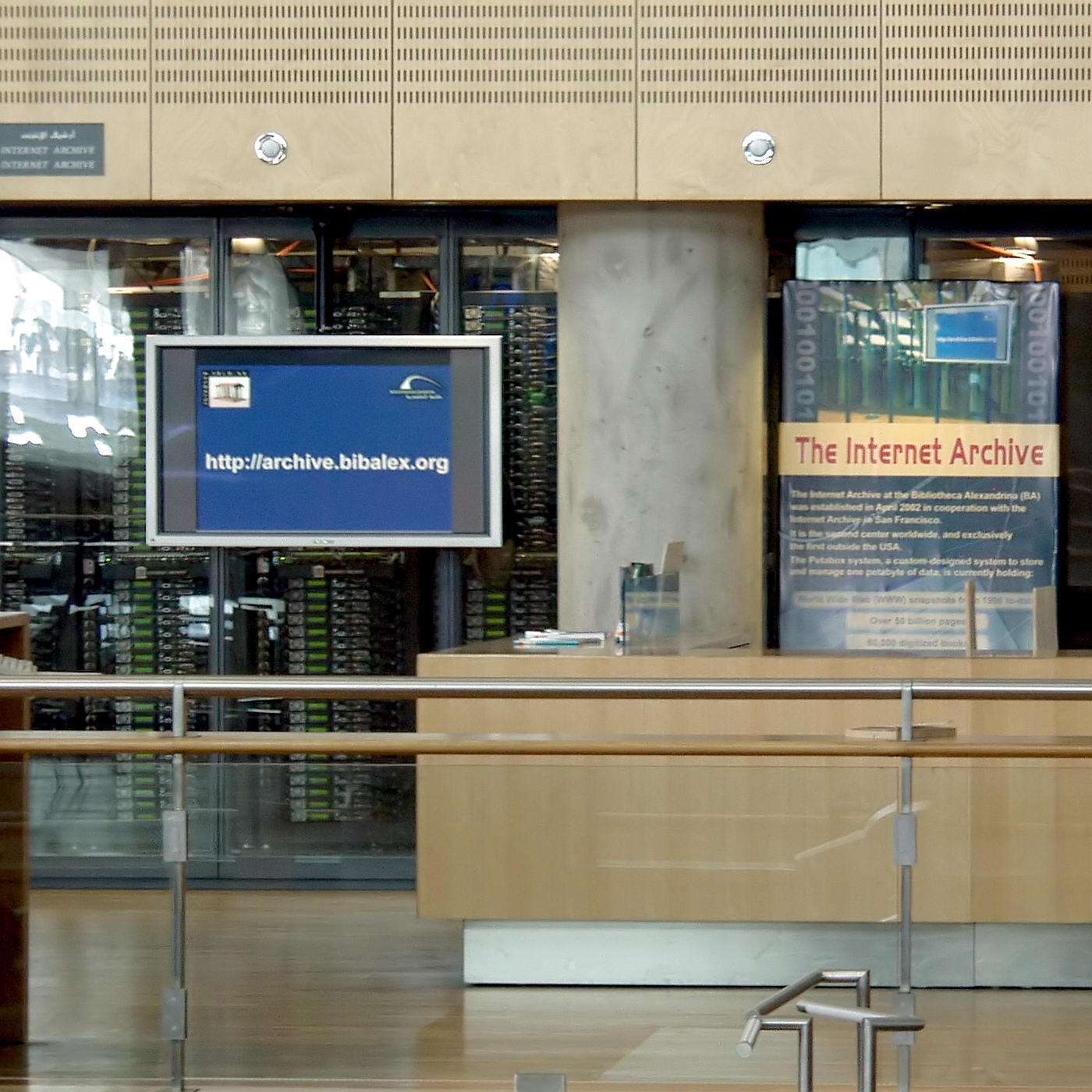
The Archive is a 501(c)(3) nonprofit operating in the United States. In 2019, it had an annual budget of $37 million, derived from revenue from its Web crawling services, various partnerships, grants, donations, and the Kahle-Austin Foundation. The Internet Archive also manages periodic funding campaigns. For instance, a December 2019 campaign had a goal of reaching $6 million in donations. It uses Ubuntu as its choice of operating system for the website servers.
The Archive is headquartered in San Francisco, California. From 1996 to 2009, its headquarters were in the Presidio of San Francisco, a former U.S. military base. Since 2009, its headquarters have been at 300 Funston Avenue in San Francisco, a former Christian Science Church. At one time, most of its staff worked in its book-scanning centers; as of 2019, scanning is performed by 100 paid operators worldwide. The Archive also has data centers in three Californian cities: San Francisco, Redwood City, and Richmond. To reduce the risk of data loss, the Archive creates copies of parts of its collection at more distant locations, including the Bibliotheca Alexandrina in Egypt and a facility in Amsterdam.
As of 2025, it is reported that Internet Archive operates six data centers, mainly in California, with smaller ones in other U.S. states, Canada and Europe. They have controlled access and fire protection systems, and are monitored for security. All Internet Archive data centers adhere to ISO/IEC 27001 standard, and some of them meet additional certifications.
Also in 2025, it was reported that copies of the archive are kept in locations around the world, as a protection against possible disasters. Back in 2016, all redundancy was provided by RAID-like paired storage, with the 2 copies usually stored at different data centers, while backups were not a regular practice at the time.
Since 2016, Internet Archive started to work to create a decentralized prototype of the digital library. From 2020, content from Internet Archive started to be stored in Filecoin. By October 2023, one petabyte of data had been uploaded to the Filecoin network. The Archive is a member of the International Internet Preservation Consortium and was officially designated as a library by the state of California in 2007.
Web archiving
Wayback Machine
Main article: Wayback Machine


Archive-It{{anchor|Archive-It}}
Created in late 2005, Archive-It is a web archiving subscription service that allows institutions to build and preserve collections of digital content and create digital archives. Archive-It allows the user to customize their capture or exclusion of web content they want to preserve for cultural heritage reasons. Through a web application, Archive-It partners can harvest, catalog, manage, browse, search, and view their archived collections.
In terms of accessibility, the archived websites are full text searchable within seven days of capture. Content collected through Archive-It is captured and stored as a WARC file. A primary and back-up copy is stored at the Internet Archive data centers. A copy of the WARC file can be given to subscribing partner institutions for geo-redundant preservation and storage purposes to their best practice standards. Periodically, the data captured through Archive-It is indexed into the Internet Archive's general archive.
, Archive-It had more than 275 partner institutions in 46 U.S. states and 16 countries that have captured more than 7.4 billion URLs for more than 2,444 public collections. Archive-It partners are universities and college libraries, state archives, federal institutions, museums, law libraries, and cultural organizations, including the Electronic Literature Organization, North Carolina State Archives and Library, Stanford University, Columbia University, American University in Cairo, Georgetown Law Library, and many others.
Internet Archive Scholar
Main article: Internet Archive Scholar
In September 2020, Internet Archive announced a new initiative to archive and preserve open access academic journals, called Internet Archive Scholar. Its full-text search index includes over 25 million research articles and other scholarly documents preserved in the Internet Archive. The collection spans from digitized copies of eighteenth century journals through the latest open access conference proceedings and pre-prints crawled from the World Wide Web.
General Index
In 2021, the Internet Archive announced the initial version of the General Index, a publicly available index to a collection of 107 million academic journal articles.
Items and collections
The Archive stores files inside so-called items, which are similar to directories in that they can contain multiple files, but can have additional metadata such as a description and tags which make them more searchable.
Some file types can be previewed directly on the site, where as others have to be downloaded in order to be opened. If multiple multimedia files exist in an item, the website generates a playlist for video or audio files, or a slide show for pictures. If an item contains at least one video or picture, the Archive generates a preview thumbnail that can be seen on collection pages and in searches. Items can contain mixed data such as music files with an album cover picture, in which case the picture is used as thumbnail. Staff members of the Internet Archive organize items by placing them into so-called collections, which are pages listing multiple items.
Book collections
Text collection


The scanning performed by the Internet Archive is financially supported by libraries and foundations. , when there were approximately 1 million texts, the entire collection was greater than 500 terabytes, which included raw camera images, cropped and skewed images, PDFs, and raw OCR data.
, the Internet Archive was operating 33 scanning centers in five countries, digitizing about 1,000 books a day for a total of more than 2 million books, in a total collection of 4.4 million booksincluding material digitized by others and fed into the Internet Archive; at that time, users were performing more than 15 million downloads per month.
The material digitized by others includes more than 300,000 books that were contributed to the collection, between about 2006 and 2008, by Microsoft through its Live Search Books project, which also included financial support and scanning equipment directly donated to the Internet Archive. On May 23, 2008, Microsoft announced it would be ending its Live Book Search project and would no longer be scanning books, donating its remaining scanning equipment to its former partners.
Around October 2007, Archive users began uploading public domain books from Google Book Search. , there were more than 900,000 Google-digitized books in the Archive's collection; the books are identical to the copies found on Google, except without the Google watermarks, and are available for unrestricted use and download. Brewster Kahle revealed in 2013 that this archival effort was coordinated by Aaron Swartz, who, with a "bunch of friends", downloaded the public domain books from Google slowly enough and from enough computers to stay within Google's restrictions. They did this to ensure public access to the public domain. The Archive ensured the items were attributed and linked back to Google, which never complained, while libraries "grumbled". According to Kahle, this is an example of Swartz's "genius" to work on what could give the most to the public good for millions of people.
As of 2009, the Text Collection contained more than 1,700,000 items. The largest grouping was the American libraries collection, which included more than 1,100,000 texts, with the next largest, the Canadian libraries collection, having roughly 200,000. By 2025, the American collection had grown to 3,900,000 items, and the Canadian libraries collection to 900,000. At that time, the total content exceeded 47,000,000 texts.
RECAP US Federal Court DocumentsIn addition to books, the Archive offers free and anonymous public access to more than four million court opinions, legal briefs, or exhibits uploaded from the United States Federal Courts' PACER electronic document system via the RECAP web browser plugin. These documents had been kept behind a federal court paywall. On the Archive, they had been accessed by more than six million people by 2013.
The Archive's BookReader web app, built into its website, has features such as single-page, two-page, and thumbnail modes; fullscreen mode; page zooming of high-resolution images; and flip page animation.
In October 2024, the Internet Archive agreed to accept the paper copies of 400,000 uncatalogued dissertations from the Leiden University Library, from the period 1851–2004, that the library wanted to dispose of. The University had received them from foreign Universities as part of a dissertation exchange program that had begun with its foundation in 1575, continuing for nearly 430 years. The Archive plans to digitise them and make them accessible online. The original full collection included theses by Niels Bohr, Marie Curie, Émile Durkheim, Albert Einstein, Otto Hahn, Carl Jung, J. Robert Oppenheimer, Max Planck, Luigi Pirandello, Gustav Stresemann and Max Weber.
Open Library
Main article: Open Library
The Open Library is another project of the Internet Archive. The project seeks to include a web page for every book ever published: it holds 25 million catalog records of editions. It also seeks to be a web-accessible public library: it contains the full texts of approximately 1,600,000 public domain books (out of the more than five million from the main texts collection), as well as in-print and in-copyright books, many of which are fully readable, downloadable and full-text searchable; it offers a two-week loan of e-books in its controlled digital lending program for over 647,784 books not in the public domain, in partnership with over 1,000 library partners from six countries after a free registration on the web site. Open Library is a free and open-source software project, with its source code freely available on GitHub.
The Open Library faces objections from some authors and the Society of Authors, who hold that the project is distributing books without authorization and is thus in violation of copyright laws, and four major publishers initiated a copyright infringement lawsuit against the Internet Archive in June 2020 to stop the Open Library project.
Digitizing sponsors for books
Many large institutional sponsors have helped the Internet Archive provide millions of scanned publications (text items). Some sponsors that have digitized large quantities of texts include the University of Toronto's Robarts Library, University of Alberta Libraries, University of Ottawa, Library of Congress, Boston Library Consortium member libraries, Boston Public Library, Princeton Theological Seminary Library, and many others.
In 2017, the MIT Press authorized the Internet Archive to digitize and lend books from the press's backlist, with financial support from the Arcadia Fund. A year later, the Internet Archive received further funding from the Arcadia Fund to invite some other university presses to partner with the Internet Archive to digitize books, a project called "Unlocking University Press Books".
The Library of Congress created numerous Handle System identifiers that pointed to free digitized books in the Internet Archive. The Internet Archive and Open Library are listed on the Library of Congress website as a source of e-books.
Media collections

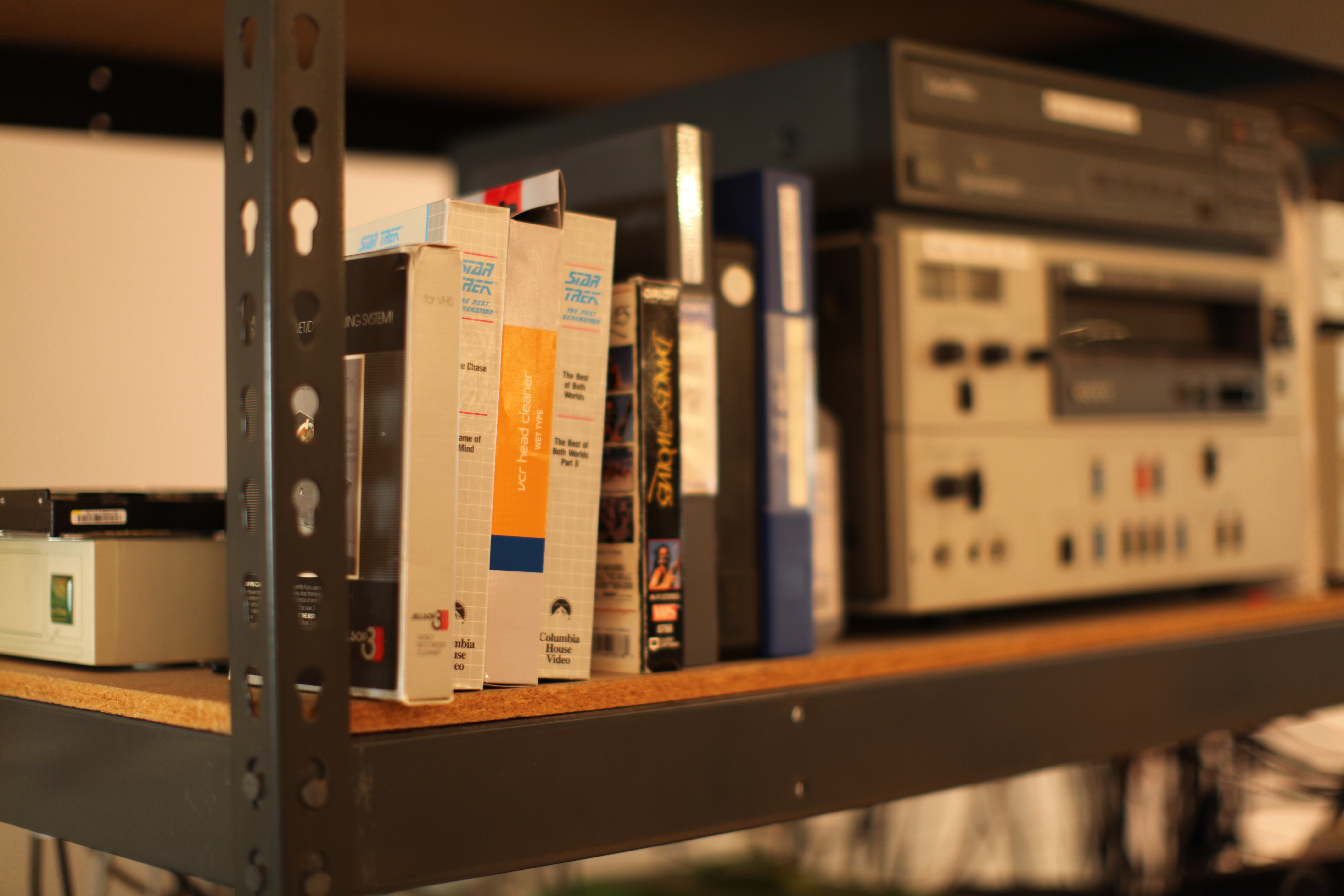
In addition to web archives, the Internet Archive maintains extensive collections of digital media that are attested by the uploader to be in the public domain in the United States or licensed under a license that allows redistribution, such as Creative Commons licenses. Media are organized into collections by media type (moving images, audio, text, etc.), and into sub-collections by various criteria. Each of the main collections includes a "Community" sub-collection (formerly named "Open Source") where general contributions by the public are stored.
Audio
{{anchor|aa}}Audio Archive====
The Audio Archive includes music, audiobooks, news broadcasts, old time radio shows, podcasts, and a wide variety of other audio files. , there are more than 15,000,000 free digital recordings in the collection. The subcollections include audio books and poetry, podcasts, non-English audio, and many others. The sound collections are curated by B. George, director of the ARChive of Contemporary Music.
Digital Library of Amateur Radio and Communications
A project to preserve recordings of amateur radio transmissions, with funding from the Amateur Radio Digital Communications foundation.
Live Music Archive
Main article: Live Music Archive
The Live Music Archive sub-collection includes more than 170,000 concert recordings from independent musicians, as well as more established artists and musical ensembles with permissive rules about recording their concerts, such as the Grateful Dead, and more recently, The Smashing Pumpkins. Also, Jordan Zevon has allowed the Internet Archive to host a definitive collection of his father Warren Zevon's concert recordings. The Zevon collection ranges from 1976 to 2001 and contains 126 concerts including 1,137 songs.
The Great 78 Project
Main article: The Great 78 Project
Launched in 2019, The Great 78 Project aims to digitize 250,000 78 rpm singles (500,000 songs) from the period between 1880 and 1960, donated by various collectors and institutions. It has been developed in collaboration with the Archive of Contemporary Music and George Blood Audio, responsible for the audio digitization.
Netlabels ====
The Archive has a collection of freely distributable music that is streamed and available for download via its Netlabels service. The music in this collection generally has Creative Commons-license catalogs of virtual record labels.
Images collection
This collection contains more than 3.5 million items. Cover Art Archive, Metropolitan Museum of Art – Gallery Images, NASA Images, Occupy Wall Street Flickr Archive, and USGS Maps are some sub-collections of Image collection.
Cover Art Archive
.svg)
The Cover Art Archive is a joint project between the Internet Archive and MusicBrainz, whose goal is to make cover art images on the Internet. this collection contains more than 1,400,000 items.
Metropolitan Museum of Art images
The images of this collection are from the Metropolitan Museum of Art. This collection contains more than 140,000 items.
NASA Images
The NASA Images archive was created through a Space Act Agreement between the Internet Archive and NASA to bring public access to NASA's image, video, and audio collections in a single, searchable resource. The Internet Archive NASA Images team worked closely with all of the NASA centers to keep adding to the ever-growing collection. The nasaimages.org site launched in July 2008 and had more than 100,000 items online at the end of its hosting in 2012.
Occupy Wall Street Flickr archive
This collection contains Creative Commons-licensed photographs from Flickr related to the Occupy Wall Street movement. This collection contains more than 15,000 items.
USGS Maps
This collection contains more than 59,000 items from Libre Map Project.
Machinima Archive
One of the sub-collections of the Internet Archive's Video Archive is the Machinima Archive. This small section hosts many Machinima videos. Machinima is a digital artform in which computer games, game engines, or software engines are used in a sandbox-like mode to create motion pictures, recreate plays, or even publish presentations or keynotes. The archive collects a range of Machinima films from internet publishers such as Rooster Teeth and Machinima.com as well as independent producers. The sub-collection is a collaborative effort among the Internet Archive, the How They Got Game research project at Stanford University, the Academy of Machinima Arts and Sciences, and Machinima.com.
Microfilm collection
This collection contains approximately 160,000 microfilmed items from a variety of libraries including the University of Chicago Libraries, University of Illinois at Urbana-Champaign, University of Alberta, Allen County Public Library, and National Technical Information Service.
Moving image collection
The Internet Archive holds a collection of approximately 3,863 feature films. Additionally, the Internet Archive's Moving Image collection includes: newsreels, classic cartoons, pro- and anti-war propaganda, The Video Cellar Collection, Skip Elsheimer's "A.V. Geeks" collection, early television, and ephemeral material from Prelinger Archives, such as advertising, educational, and industrial films, as well as amateur and home movie collections.
Subcategories of this collection include:
- IA's Brick Films collection, which contains stop-motion animation filmed with Lego bricks, some of which are "remakes" of feature films.
- IA's Election 2004 collection, a non-partisan public resource for sharing video materials related to the 2004 United States presidential election.
- IA's FedFlix collection, Joint Venture NTIS-1832 between the National Technical Information Service and Public.Resource.Org that features "the best movies of the United States Government, from training films to history, from our national parks to the U.S. Fire Academy and the Postal Inspectors"
- IA's Independent News collection, which includes sub-collections such as the Internet Archive's World At War competition from 2001, in which contestants created short films demonstrating "why access to history matters". Among their most-downloaded video files are eyewitness recordings of the devastating 2004 Indian Ocean earthquake.
- IA's September 11 Television Archive, which contains archival footage from the world's major television networks of the terrorist attacks of September 11, 2001, as they unfolded on live television.
Open Educational Resources
Open Educational Resources is a digital collection at archive.org. This collection contains hundreds of free courses, video lectures, and supplemental materials from universities in the United States and China. The contributors of this collection are ArsDigita, Hewlett Foundation, MIT, Monterey Institute, and Naropa University.
TV News Search & Borrow

In September 2012, the Internet Archive launched the TV News Search & Borrow service for searching U.S. national news programs. The service is built on closed captioning transcripts and allows users to search and stream 30-second video clips. Upon launch, the service contained "350,000 news programs collected over 3 years from national U.S. networks and stations in San Francisco and Washington D.C." According to Kahle, the service was inspired by the Vanderbilt Television News Archive, a similar library of televised network news programs. In contrast to Vanderbilt, which limits access to streaming video to individuals associated with subscribing colleges and universities, the TV News Search & Borrow allows open access to its streaming video clips. In 2013, the Archive received an additional donation of "approximately 40,000 well-organized tapes" from the estate of a Philadelphia woman, Marion Stokes. Stokes "had recorded more than 35 years of TV news in Philadelphia and Boston with her VHS and Betamax machines."
Miscellaneous collections
Brooklyn Museum collection contains approximately 3,000 items from Brooklyn Museum. In December 2020, the film research library of Lillian Michelson was donated to the archive.
Other services and endeavors
Physical media

Voicing a strong reaction to the idea of books simply being thrown away, and inspired by the Svalbard Global Seed Vault, Kahle now envisions collecting one copy of every book ever published. "We're not going to get there, but that's our goal", he said. Alongside the books, Kahle plans to store the Internet Archive's old servers, which were replaced in 2010.
Vault
Vault is a digital repository and preservation service provided by Internet Archive to institutions that need to preserve digital collections. Data stored in Vault is kept in at least 2 different Internet Archive datacenters, with at least 2 copies in each of them. Access control, fire protection and monitoring systems are used to protect all content stored in Vault.
Software
The Internet Archive has "the largest collection of historical software online in the world", spanning 50 years of computer history in terabytes of computer magazines and journals, books, shareware discs, FTP sites, video games, etc. The Internet Archive has created an archive of what it describes as "vintage software", as a way to preserve them. The project advocated an exemption from the United States Digital Millennium Copyright Act to permit them to bypass copy protection, which the United States Copyright Office approved in 2003 for a period of three years. The Archive does not offer the software for download, as the exemption is solely "for the purpose of preservation or archival reproduction of published digital works by a library or archive." The Library of Congress renewed the exemption in 2006, and in 2009 indefinitely extended it pending further rulemakings. The Library reiterated the exemption as a "Final Rule" with no expiration date in 2010. In 2013, the Internet Archive began to provide select video games browser-playable via MESS, for instance the Atari 2600 game E.T. the Extra-Terrestrial. Since December 23, 2014, the Internet Archive presents, via a browser-based DOSBox emulation, thousands of DOS/PC games for "scholarship and research purposes only". In November 2020, the Archive introduced a new emulator for Adobe Flash called Ruffle, and began archiving Flash animations and games ahead of the December 31, 2020, end-of-life for the Flash plugin across all computer systems.
{{Anchor|ttscribe}}Table Top Scribe System
A combined hardware software system has been developed that performs a safe method of digitizing content.
Credit Union
From 2012 to November 2015, the Internet Archive operated the Internet Archive Federal Credit Union, a federal credit union based in New Brunswick, New Jersey, with the goal of providing access to low- and middle-income people. Throughout its short existence, the IAFCU experienced significant conflicts with the National Credit Union Administration, which severely limited the IAFCU's loan portfolio and concerns over serving Bitcoin firms. At the time of its dissolution, it consisted of 395 members and was worth $2.5 million.
Decentralization
Since 2019, the Internet Archive organizes an event called Decentralized Web Camp (DWeb Camp). It is an annual camp that brings together a diverse global community of contributors in a natural setting. The camp aims to tackle real-world challenges facing the web and co-create decentralized technologies for a better internet. It aims to foster collaboration, learning, and fun while promoting principles of trust, human agency, mutual respect, and ecological awareness.
Wayforward Machine

On September 30, 2021, as a part of its 25th anniversary celebration, Internet Archive launched the "Wayforward Machine", a satirical, fictional website covered with pop-ups asking for personal information. The site was intended to depict a fictional dystopian timeline of real-world events leading to such a future, such as the repeal of Section 230 of the United States Code in 2022 and the introduction of advertising implants in 2041.
Ceramic archivists collection

The Great Room of the Internet Archive features a collection of more than 100 ceramic figures representing employees of the Internet Archive, with the 100th statue immortalizing Aaron Swartz. This collection, inspired by the statues of the Xian warriors in China, was commissioned by Brewster Kahle, sculpted by Nuala Creed, and as of 2014, is ongoing.
Artists in residence
The Internet Archive visual arts residency, organized by Amir Saber Esfahani, is designed to connect emerging and mid-career artists with the Archive's millions of collections and to show what is possible when open access to information intersects with the arts. During this one-year residency, selected artists develop a body of work that responds to and utilizes the Archive's collections in their own practice.
- 2024–2025 Residency Artist Swilk
- 2021–2022 Residency Artist Casey Gray
- 2019 Residency Artists: Caleb Duarte, Whitney Lynn, and Jeffrey Alan Scudder
- 2018 Residency Artists: Mieke Marple, Chris Sollars, and Taravat Talepasand
- 2017 Residency Artists: Laura Kim, Jeremiah Jenkins, and Jenny Odell
Controversies, legal disputes, and activism
.jpg)
Opposition to national security letters, bills and settlements
National security letter
On May 8, 2008, it was revealed that the Internet Archive had successfully challenged an FBI national security letter asking for logs on an undisclosed user.
On November 28, 2016, it was revealed that a second FBI national security letter asking for logs on another undisclosed user was successfully challenged.
The Internet Archive blacked out its website for 12 hours on January 18, 2012, in protest of the Stop Online Piracy Act and the PROTECT IP Act bills, two pieces of legislation in the United States Congress that they argued would "negatively affect the ecosystem of web publishing that led to the emergence of the Internet Archive". This occurred in conjunction with the English Wikipedia blackout, as well as numerous other protests across the Internet.
The Internet Archive is a member of the Open Book Alliance, which has been among the most outspoken critics of the Google Book Settlement. The Archive advocates an alternative digital library project.
Hosting of disputed media
On October 9, 2016, the Internet Archive was temporarily blocked in Turkey after it was used (amongst other file hosting services) by hackers to host 17 GB of leaked government emails.
Because the Internet Archive only lightly moderates uploads, it includes resources that may be valued by extremists and the site may be used by them to evade block listing. In February 2018, the Counter Extremism Project said that the Archive hosted terrorist videos, including the beheading of Alan Henning, and had declined to respond to requests about the videos. In May 2018, a report published by the cyber-security firm Flashpoint stated that the Islamic State was using the Internet Archive to share its propaganda. Chris Butler, from the Internet Archive, responded that they regularly spoke to the US and EU governments about sharing information on terrorism. The Archive rejected the request, saying that the reports were wrong about the content they pointed to, or were too broad for the organization to comply with.
A 2021 article said that jihadists regularly used the Internet Archive for "dead drops" of terrorist videos. In January 2022, a former UCLA lecturer's 800-page manifesto, containing racist ideas and threats against UCLA staff, was uploaded to the Internet Archive. The manifesto was removed by the Internet Archive after a week, amidst discussion about whether such documents should be preserved by archivists or not. A 2023 paper reported that Neo-Nazis collect links to online, publicly available resources to be shared with new recruits. As the Internet Archive hosts uploaded texts that are not allowed on other websites, Nazi and neo-Nazi books in the Archive (e.g., The Turner Diaries) frequently appear on these lists. These lists also feature older, public domain material created when white supremacist views were more mainstream.
2020 National Emergency Library
In the midst of the COVID-19 pandemic which closed many schools, universities, and libraries, the Archive announced on March 24, 2020, that it was creating the National Emergency Library by removing the lending restrictions it had in place for 1.4 million digitized books in its Open Library but otherwise limiting users to the number of books they could check out and enforcing their return; normally, the site would only allow one digital lending for each physical copy of the book they had, by use of an encrypted file that would become unusable after the lending period was completed. This Library would remain as such until at least June 30, 2020, or until the US national emergency was over, whichever came later. At launch, the Internet Archive allowed authors and rightholders to submit opt-out requests for their works to be omitted from the National Emergency Library.
The Internet Archive said the National Emergency Library addressed an "unprecedented global and immediate need for access to reading and research material" due to the closures of physical libraries worldwide. They justified the move in a number of ways. Legally, they said they were promoting access to those inaccessible resources, which they claimed was an exercise in fair use principles. The Archive continued implementing their controlled digital lending policy that predated the National Emergency Library, meaning they still encrypted the lent copies and it was no easier for users to create new copies of the books than before. An ultimate determination of whether or not the National Emergency Library constituted fair use could only be made by a court. Morally, they also pointed out that the Internet Archive was a registered library like any other, that they either paid for the books themselves or received them as donations, and that lending through libraries predated copyright restrictions.
The Archive had already been criticized by authors and publishers for its prior lending approach, and upon announcement of the National Emergency Library, authors, publishers, and groups representing both took further issue with The Archive and its Open Library project, equating the move to copyright infringement and digital piracy, and using the COVID-19 pandemic as a reason to push the boundaries of copyright. After the works of some of these authors were ridiculed in responses, the Internet Archive's Jason Scott requested that supporters of the National Emergency Library not denigrate anyone's books: "I realize there's strong debate and disagreement here, but books are life-giving and life-changing and these writers made them."
Access blocking in Indonesia
On 27 May 2025, the Ministry of Communication and Digital Affairs of Indonesia (abbreviated as Komdigi) blocked access to the Internet Archive in Indonesia. Alexander Sabar, the Director General of the Supervision of Digital Space, stated that the reason was the presence of pornography and online gambling on the site. He denied a rumor that there was motive to rewrite or hide history. He also acknowledged the importance of the Internet Archive, and claimed that the blocking was temporary and would be rescinded if they removed the offending content, and that they only blocked it after the Internet Archive did not respond to their requests. On May 30, 2025, Indonesia lifted the block on the Internet Archive after they removed the offending content.
Copyright issues
In November 2005, free downloads of Grateful Dead concerts were removed from the site, following what seemed to be disagreements between some of the former band members. John Perry Barlow identified Bob Weir, Mickey Hart, and Bill Kreutzmann as the instigators of the change, according to an article in The New York Times. Phil Lesh, a founding member of the band, commented on the change in a November 30, 2005, posting to his personal web site:
A November 30 forum post from Brewster Kahle summarized what appeared to be the compromise reached among the band members. Audience recordings could be downloaded or streamed, but soundboard recordings were to be available for streaming only. Concerts have since been re-added.
In February 2016, Internet Archive users had begun archiving digital copies of Nintendo Power, Nintendo's official magazine for their games and products, which ran from 1988 to 2012. The first 140 issues had been collected, before Nintendo had the archive removed on August 8, 2016. In response to the take-down, Nintendo told gaming website Polygon, "[Nintendo] must protect our own characters, trademarks and other content. The unapproved use of Nintendo's intellectual property can weaken our ability to protect and preserve it, or to possibly use it for new projects".
In August 2017, the Department of Telecommunications of the Government of India blocked the Internet Archive along with other file-sharing websites, in accordance with two court orders issued by the Madras High Court, citing piracy concerns after copies of two Bollywood films were allegedly shared via the service. The HTTP version of the Archive was blocked but it remained accessible using the HTTPS protocol.
In 2023, the Internet Archive became a popular site for Indians to watch the first episode of India: The Modi Question, a BBC documentary released on January 17 and banned in India by January 20. The video was reported to have been removed by the Archive on January 23. The Internet Archive then stated, on January 27, that they had removed the video in response to a BBC request under the Digital Millennium Copyright Act.
Book publishers' lawsuit
Main article: Hachette v. Internet Archive
The operation of the National Emergency Library was part of a lawsuit filed against the Internet Archive by four major book publishers—Hachette, HarperCollins, John Wiley & Sons, and Penguin Random House—in June 2020, challenging the copyright validity of the controlled digital lending program. In response, the Internet Archive closed the National Emergency Library on June 16, 2020, rather than the planned June 30, 2020, due to the lawsuit. The plaintiffs, supported by the Copyright Alliance, claimed in their lawsuit that the Internet Archive's actions constituted a "willful mass copyright infringement."
Judge Koeltl ruled on March 24, 2023, against Internet Archive in the case, saying the National Emergency Library concept was not fair use, so the Archive infringed copyrights by lending out the publisher's books without the waitlist restriction. An agreement was then reached for the Internet Archive to pay an undisclosed amount to the publishers. The Internet Archive appealed the ruling. On September 4, 2024, the United States Court of Appeals for the Second Circuit upheld the district court's ruling, calling the Internet Archive's argument that they were shielded by fair use doctrine "unpersuasive". Nevertheless, the ruling also benefited Internet Archive because the restrictions did not apply to out of print books; and for in-print books, it only applies if the book has an electronic version available for sale. Further the archive could continue offering short passages of books, for example linking to a page number from a Wikipedia citation.
Music publishers' lawsuit
Main article: Universal Music Group v. Internet Archive
In August 2023, the music industry corporations Universal Music Group (UMG), Sony Music and Concord sued the Internet Archive over its Great 78 Project, asserting the project was engaged in copyright infringement. The Great 78 Project stores digitized versions of pre-1972 songs and albums from 78 rpm phonograph records, for "the preservation, research and discovery of 78rpm records." The project had started in 2016, when pre-1972 recordings had not been protected by copyright; in 2018, the U.S. Congress passed the Music Modernization Act (MMA) which enabled legal remedies for unauthorized use of pre-1972 recordings until 2067, thus effectively covering them with copyright.
UMG and Sony had been the two largest companies in this sector for more than a decade, with respective market shares of 31.8% and 22.1% in 2023. Concord was a rapidly expanding music business closely partnered with UMG since its transformation into Concord Music Group in 2004 and backed since at least 2000 by J.P. Morgan. It was the first music company to perform an asset-backed securitization, led by Apollo Global Management, in December 2022. Its assets consisted of over 1 million copyrights to music older than 18 months. According to its CEO Bob Valentine, Concord derived about 85% of its revenue "from catalog, rather than newly developed, music". As Valentine stated in his first interview, "The phenomenon of artists' IP has never been more liquid; it is now a real and proven asset class. Investment bankers are focused on it, financiers are financing it, and then there's entities like us, that know how to buy rights, but also know how to manage them and have the relationships to do so." The share of catalog music in total album equivalent consumption in the United States rose from 62.8% to 72.6% between 2019 and 2023.
The publishers are seeking statutory damages for nearly 4,142 songs named in the suit, with a maximum possible fine of $621 million. The Internet Archive has argued that the primitive sound quality of the original recordings falls within the doctrine of "fair use" to digitize for preservation, that the number of downloads is so small it has almost no impact on the publishers' revenue, and over 95% of the collection is not readily available anywhere else. The plaintiffs said in response, "if ever there were a theory of fair use invented for litigation, this is it." According to a legal source at Mayer Brown, the music publishers' case could be challenged as unconstitutional, since the granting of copyright to pre-1972 works in the MMA only benefitted record companies without having a systemic effect.
Both parties submitted requests to drop the case on September 15, 2025, after reaching undisclosed settlement terms. The case was officially dropped as requested in October 2025.
Notes
References
Notes
References
- (25 September 2025). "The Offline Internet Archive".
- (May 9, 2013). "Full text of "Full Filing" for fiscal year ending Dec. 2021".
- (May 9, 2013). "Full text of "Full Filing" for fiscal year ending Dec. 2023".
- . ["archive.org WHOIS, DNS, & Domain Info – DomainTools"](http://whois.domaintools.com/archive.org). *[[WHOIS]]*.
- "About IA".
- (27 January 2023). "How do you create an internet archive of all human knowledge?". NPR.
- Gold, Hadas. (2025-11-16). "Inside the old church where one trillion webpages are stored".
- Grotke, A.. (December 2011). "Web Archiving at the Library of Congress". [[Information Today]].
- (2011). "The Handbook of Internet Studies". Wiley.
- (November 4, 1997). "Brewster Kahle . In Scientific American". Internet Archive.
- "What is the oldest page on the Wayback Machine?".
- (November 2, 2021). "In case you missed it: The Internet Archive turns 25". USA TODAY.
- (February 25, 2013). "Daisy Books for the Print Disabled".
- (August 8, 2012). "Internet Archive serves up 1.4 million BitTorrent downloads". The Register.
- B, Sarah. (November 6, 2013). "Part of Internet Archive building badly burned in early morning fire".
- Alexander, Kurtis. (November 16, 2013). "Internet Archive's S.F. office damaged in fire". San Francisco Chronicle.
- (November 6, 2013). "Fire Update: Lost Many Cameras, 20 Boxes. No One Hurt". Internet Archive Blogs.
- Shu, Catherine. (November 6, 2013). "Internet Archive Seeking Donations To Rebuild Its Fire-Damaged Scanning Center". [[TechCrunch]].
- Rossi, Alexis. (5 November 2014). "Redesigning Archive.org".
- (2016-03-25). "Digital Library of Free Books, Movies, Music & Wayb…".
- Kahle, Brewster. (November 29, 2016). "Help Us Keep the Archive Free, Accessible, and Reader Private".
- Johnson, Tim. (December 1, 2016). "Donald Trump scares Internet Archive into moving to Canada".
- Rothschild, Mike. (December 2, 2016). "The Internet Archive Is Moving to Canada to Protect Itself from Trump".
- Michalko, Jim. (October 12, 2017). "Syncing Catalogs with thousands of Libraries in 120 Countries through OCLC". Internet Archive.
- (March 8, 2019). "Used Paired Space".
- Locker, Melissa. (July 3, 2018). "The Internet Archive is helping these artists get inspired by digital history".
- (May 30, 2018). "Jenny Odell – Neo-Surreal".
- "How do I make a physical donation to the Internet Archive?".
- (October 11, 2017). "Boston Public Library transfers sound archives collection to Internet Archive for digitization, preservation, and public access".
- (September 13, 2018). "Trent University donates 250,000 books to be digitized by Internet Archive as part of Bata Library transformation".
- Seltzer, Rick. (October 21, 2020). "A new home online for closed college libraries?".
- Matt Enis. (May 2, 2019). "Internet Archive Expands Partnerships for Open Libraries Project".
- (October 2, 2024). "A look at the latest ruling against the Internet Archive". Penn Libraries.
- Brittain, Blake. (August 12, 2023). "Music labels sue Internet Archive over digitized record collection". [[Reuters]].
- Claburn, Thomas. (August 14, 2023). "Internet Archive sued by record labels as battle with book publishers intensifies". [[The Register]].
- Blistein, Jon. (September 29, 2024). "Inside the $621 Million Legal Battle for the 'Soul of the Internet'".
- Belanger, Ashley. (2025-09-15). "Internet Archive's big battle with music publishers ends in settlement".
- (2 February 2024). "Google Search's cache links are officially being retired".
- Freeland, Chris. (September 11, 2024). "New Feature Alert: Access Archived Webpages Directly Through Google Search". [[The Internet Archive]].
- Freeland, Chris. (2025-07-24). "Internet Archive Designated as a Federal Depository Library {{!}} Internet Archive Blogs".
- Dent, Steve. (July 25, 2025). "Internet Archive is now an official US government document library". [[Engadget]].
- (23 September 2025). "Freedom and Sharing at the Internet Archive Europe".
- Irwin, Kate. (2024-05-28). "Internet Archive Hit With DDoS Attacks".
- Baran, Guru. (2024-05-28). "Internet Archive is Under DDoS Attack For Several Hours".
- Moon, Mariella. (2024-05-29). "The Internet Archive has been fending off DDoS attacks for days".
- Lyons, Jessica. (29 May 2024). "Multi-day DDoS storm batters Internet Archive". [[The Register]].
- (24 July 2024). "Six-day, 14.7 Million RPS Web DDoS Attack Campaign Attributed to SN_BLACKMETA". [[Radware]].
- Stokel-Walker, Chris. (September 16, 2024). "We're losing our digital history. Can the Internet Archive save it?". [[BBC News Online.
- Abrams, Lawrence. "Internet Archive hacked, data breach impacts 31 million users".
- "Internet Archive Breach Exposes 31 Million Users".
- Davis, Wes. (2024-10-10). "The Internet Archive is under attack, with a breach revealing info for 31 million accounts". [[The Verge]].
- Kan, Michael. (October 9, 2024). "Hacker Defaces Internet Archive, Steals Data on 31 Million Users".
- Poireault, Kevin. (2024-10-10). "Internet Archive Breached, 31 Million Records Exposed".
- Roth, Emma. (2024-10-11). "The Internet Archive is still down but will return in 'days, not weeks'".
- (October 11, 2024). "After Breach, Internet Archive Expects to Return Within 'Days, Not Weeks'".
- Kahle, Brewster. (2024-10-11). "The data is safe. Services are offline as we examine and strengthen them. Sorry, but needed. @internetarchive staff is working hard. Estimated Timeline: days, not weeks. Thank you for the offers of pizza (we are set).".
- Bursztynsky, Jessica. (2024-10-14). "The Internet Archive is back online after a cyberattack". [[Fast Company]].
- Kahle, Brewster. (2024-10-14). "@waybackmachine volume is back to normal: 1,500 requests per second. Sorry we don't have other services yet.".
- Kan, Michael. (2024-10-10). "Internet Archive Remains Offline to Focus On Data Security After Breach".
- Abrams, Lawrence. (2024-10-20). "Internet Archive breached again through stolen access tokens".
- Daniel, Lars. (20 October 2024). "Internet Archive Breached Again—Third Cyber Attack In October 2024".
- Freeland, Chris. (2024-10-21). "Internet Archive Services Update: 2024-10-21".
- Townsend, Chance. (2024-10-22). "Internet Archive and Wayback Machine are down again".
- Hall, Matt L.. (2024-10-22). "Hackers Disable Internet Archive's Wayback Machine Once Again".
- Scott, Jason. (2024-10-23). "Guess what's back. Yes, http://archive.org and http://openlibrary.org are back, as well as http://web.archive.org (Wayback Machine) and all those amazing items. Some of the features are not up yet, but rest assured we're working on it and our tired devs will prevail.".
- (2013-05-09). "Internet Archive – Form Form 990 for period ending Dec 2019 – Nonprofit Explorer".
- Jessen, Jenica. (2019-12-19). "I'm Done Selling Sweaters. Instead I'm Selling a Vision I Believe In.".
- Kahle, Brewster. (2021-02-04). "Thank you Ubuntu and Linux Communities - Internet Archive Blogs".
- Whitney Kimball. (November 4, 2019). "The Internet Archive Fights Wiki Citation Wars With Books".
- (April 20, 2002). "Donation to the new Library of Alexandria in Egypt".
- "Bibliotheca Alexandrina".
- "Brewster Kahle: Universal Access to All Knowledge".
- (2025-05-28). "Vault Data & Data Center Security & Procedures".
- Gold, Hadas. (2025-11-16). "Inside the old church where one trillion webpages are stored".
- (2016-10-25). "20,000 Hard Drives on a Mission".
- (2021-04-01). "Filecoin Foundation Grants 50,000 FIL to the Internet Archive {{!}} Internet Archive Blogs".
- Joyce, Jamie. (2023-10-20). "Celebrating 1 Petabyte on the Filecoin Network! {{!}} Internet Archive Blogs".
- "Members".
- "Internet Archive officially a library".
- McCoy, Adrian. (June 24, 2007). "The Internet gives birth to an 'official' online library".
- Green, Heather. (February 28, 2002). "A Library as Big as the World". [[Business Week]] Online.
- "Internet Archive Frequently Asked Questions". Internet Archive.
- (14 October 2025). "30 years on, Internet Archive hits 1-trillion preserved pages".
- "Archive-It". Archive-It.
- Truman, Gail. (January 2016). "Web Archiving Environmental Scan".
- Bragg, Molly. (July 28, 2014). "What is the Difference between the General Archive (sometimes called the Wayback Machine) and Archive-It?". Archive-It.
- "About Archive-It". Archive-It..
- (September 22, 2020). "The Internet Archive Will Digitize & Preserve Millions of Academic Articles with Its New Database, 'Internet Archive Scholar'".
- Bryan, Newbold. (2021-03-09). "Search Scholarly Materials Preserved in the Internet Archive".
- ["Internet Archive Scholar homepage]". Internet Archive.
- Else, Holly. (2021-10-26). "Giant, free index to world's research papers released online". Nature.
- (November 5, 2021). ""The General Index": New tool allows you to search 107 million research papers for free".
- "How to upload files to create a new item page – Internet Archive Help Center".
- "Movies and Videos – Tips & Troubleshooting – Internet Archive Help Center".
- "Media Players – A Basic Guide – Internet Archive Help Center".
- "Archive.org page overview – Internet Archive Help Center".
- "Collections – A Basic Guide – Internet Archive Help Center".
- Kahle, Brewster. (May 23, 2008). "Books Scanning to be Publicly Funded".
- (November 24, 2008). "Bulk Access to OCR for 1 Million Books".
- (May 23, 2008). "Book search winding down". MSDN Live Search Blog.
- "Google Books at Internet Archive". Internet Archive.
- "List of Google scans". Internet Archive.
- link. (June 29, 2015 ", 2013-01-24, via [https://wellpreparedmind.wordpress.com/2013/02/07/aaron-swartz-freed-over-900000-public-domain-books-from-googles-restrictions/ The well-prepared mind] {{Webarchive). link. (August 14, 2014 , via [http://scinfolex.com/2013/02/06/cest-aaron-swartz-qui-liberait-les-livres-de-google-books-sur-internet-archive/ S.I.Lex] {{Webarchive). link. (August 8, 2014 .)
- (2011). "No Shelf Required. E-Books in Libraries". [[American Library Association]].
- "American Libraries". Internet Archive.
- "Canadian Libraries". Internet Archive.
- "eBooks and Texts". Internet Archive.
- "Internet Archive BookReader".
- Kaplan, Jeff. (December 10, 2010). "New BookReader!".
- Funnekotter, Bart. (October 9, 2024). "Leidse proefschriften worden tóch niet vernietigd, 400.000 dissertaties gaan naar de VS". [[NRC (newspaper).
- (February 13, 2019). "FAQ on Controlled Digital Lending (CDL)". National Writers Union.
- Gonsalves, Antone. (December 20, 2006). "Internet Archive Claims Progress Against Google Library Initiative".
- (July 19, 2007). "The Open Library Makes Its Online Debut". Chronicle of Higher Education.
- "Search Inside".
- Hoffelder, Nate. (July 9, 2013). "Internet Archive Now Hosts 4.4 Million eBooks, Sees 15 Million eBooks Downloaded Each Month". The Digital Reader.
- (June 25, 2011). "In-Library eBook Lending Program Expands to 1,000 Libraries". Internet Archive.
- Flood, Alison. (22 Jan 2019). "Internet Archive's ebook loans face UK copyright challenge". The Guardian.
- Brandom, Russell. (June 1, 2020). "Publishers sue Internet Archive over Open Library ebook lending". [[The Verge]].
- "Partnering with the Internet Archive".
- "Internet Archive Search: collection:(texts)".
- "The MIT Press".
- Hanamura, Wendy. (May 30, 2017). "MIT Press Classics Available Soon at Archive.org".
- Green, Alex. (December 1, 2019). "New Takes on Academic Publishing: Three university presses find new ways to keep up with a changing market".
- Freeland, Chris. (May 21, 2018). "Internet Archive awarded grant from Arcadia Fund to digitize university press collections".
- Albanese, Andrew. (May 25, 2018). "Internet Archive Lands Grant to Digitize and Lend University Press Collections".
- "hdl.loc.gov/loc.gdc/scd0001.00198115083".
- "Download & Streaming : Audio Archive".
- (August 18, 2017). "How The Great 78 Project is saving half a million songs from obscurity".
- Holt, Kris. (2022-10-05). "The Internet Archive is building a library of amateur radio broadcasts".
- (2022-01-27). "Amateur Radio Digital Communications Grants Continue".
- Tirpack, Alex. (June 3, 2009). "Warren Zevon live shows hit the web, possible film in the works".
- "Welcome to Netlabels". Internet Archive.
- Boswell, Wendy. (October 21, 2006). "Download free music at the Internet Archive". [[Lifehacker]].
- "Image". Internet Archive.
- "Cover Art Archive: Free Image : Download & Streaming". Internet Archive.
- "Metropolitan Museum of Art – Gallery Images: Free Image : Download & Streaming". Internet Archive.
- "NASA Images". Internet Archive.
- "Occupy Wall Street Flickr Archive: Free Image : Download & Streaming". Internet Archive.
- "USGS Maps: Free Image : Download & Streaming". Internet Archive.
- "Welcome to Machinima". Internet Archive.
- "Internet Archive Search: collection:microfilm". Internet Archive.
- "Microfilm". Internet Archive.
- "Internet Archive Search: Collection: Feature Films". Internet Archive.
- "FedFlix". Internet Archive.
- "September 11th Television Archive". Internet Archive.
- "Download & Streaming : Open Educational Resources". Internet Archive.
- "TV NEWS : Search Captions. Borrow Broadcasts : TV Archive". Internet Archive.
- (September 18, 2012). "Let's Go to the Videotape: Nonprofit Offers News Clips". The Wall Street Journal Online.
- Kahle, Brewster. (September 17, 2012). "Launch of TV News Search & Borrow with 350,000 Broadcasts". Internet Archive Blogs.
- Brownell, Brett. (May 22, 2014). "Meet the People Behind the Wayback Machine, One of Our Favorite Things About the Internet". Mother Jones.
- "Brooklyn Museum: Free Image : Download & Streaming". Internet Archive.
- (January 28, 2021). "Column: Lillian Michelson and her one-of-a-kind film library get a digital Hollywood ending".
- (August 1, 2011). "Internet Archive founder turns to new information storage device – the book". The Guardian.
- (2025-05-28). "About Vault".
- "The Internet Archive Classic Software Preservation Project". Internet Archive.
- "Internet Archive Gets DMCA Exemption To Help Archive Vintage Software".
- [[Library of Congress]] [[United States Copyright Office. (November 27, 2006). "Exemption to Prohibition on Circumvention of Copyright Protection Systems for Access Control Technologies". [[Federal Register]].
- [[Library of Congress]] [[United States Copyright Office. (October 28, 2009). "Exemption to Prohibition on Circumvention of Copyright Protection Systems for Access Control Technologies". [[Federal Register]].
- Library of Congress Copyright Office. (July 27, 2010). "Exemption to Prohibition on Circumvention of Copyright Protection Systems for Access Control Technologies". Federal Register.
- Robertson, Adi. (October 25, 2013). "The Internet Archive puts Atari games and obsolete software directly in your browser".
- Ohlheiser, Abby. (January 5, 2015). "You can now play nearly 2,400 MS-DOS video games in your browser". [[Washington Post]].
- Scott, Jason. (December 23, 2014). "Each New Boot a Miracle".
- "collection:softwarelibrary_msdos".
- Graft, Kris. (March 5, 2015). "Saving video game history begins right now".
- (December 31, 2014). "Internet Archive's Terms of Use, Privacy Policy, and Copyright Policy".
- (January 12, 2015). "Time suck alert: 'Pac-Man' among thousands of MS-DOS games available for free". The Kansas City Star.
- (January 7, 2015). "90's kids rejoice as Internet Archive releases 2,300 MS-DOS games for free – Your Community". CBCNEWS.
- Campbell, Ian Carlos. (November 19, 2020). "The Internet Archive is now preserving Flash games and animations". [[The Verge]].
- "Table Top Scribe System".
- Stutz, Michael. (March 28, 2007). "Linux to help the Library of Congress save American history". The Linux foundation.
- Strozniak, Peter. (December 18, 2015). "Death of a Credit Union: Internet Archive FCU Voluntarily Liquidates". Credit Union Times.
- (November 24, 2015). "Difficult Times at our Credit Union".
- (2019-03-24). "Coming this Summer: The First DWeb Camp {{!}} Internet Archive Blogs".
- "DWeb Camp 2023".
- (7 October 2021). "The Internet Archive's 'Wayforward Machine' paints a grim future for the web". [[Engadget]].
- "Imagine the future of the Internet".
- Levy, Karyne. (April 29, 2014). "These Are The Ceramic Action Figures For The Heroes Of The Internet". [[Insider Inc.]].
- (August 11, 2017). "Internet Archive is a treasure trove of material for artists". San Francisco Chronicle.
- Amir Saber Esfahani. (June 22, 2019). "The Internet Archive's 2019 Artists in Residency Exhibition".
- (2024-11-06). "New Installation from Swilk, Artist in Residence, Opens November 9 {{!}} Internet Archive Blogs".
- Esfahani, Amir Saber. (2022-02-01). "Artist in Residence Casey Gray Exhibits New Work at Hashimoto Contemporary {{!}} Internet Archive Blogs".
- "The Internet Archive's 2019 Artist In Residence Exhibition".
- Amir Saber Esfahani. (June 19, 2018). "The Internet Archive's 2018 Artis in Residency Exhibition".
- (2017). "The Internet Archive's 2017 Artist in residence Exhibition".
- Broache, Anne. (May 7, 2008). "FBI rescinds secret order for Internet Archive records". CNet.
- Nakashima, Ellen. (May 8, 2008). "FBI Backs Off From Secret Order for Data After Lawsuit". [[The Washington Post]].
- Crocker, Andrew. (December 1, 2016). "Internet Archive Received National Security Letter with FBI Misinformation about Challenging Gag Order". Electronic Frontier Foundation.
- Kahle, Brewster. (January 17, 2012). "12 Hours Dark: Internet Archive vs. Censorship". Internet Archive Blogs.
- "Open Content Alliance". opencontentalliance.org.
- (October 10, 2016). "Turkey restores access to Google Drive after blocking cloud storage services".
- (November 14, 2017). "Turkey Country Report | Freedom on the Net 2017".
- Fisher-Birch, Joanna. (14 February 2018). "The Dark Side of the Internet Archive". Counter Extremism Project.
- Kelion, Leo. (15 May 2018). "IS propaganda 'hidden on Internet Archive'". BBC News.
- (12 April 2019). "Internet Archive denies hosting 'terrorist' content". BBC News.
- "Jihadist content targeted on Internet Archive platform". Europol.
- (August 2021). "The Dead Drops of Online Terrorism: How Jihadists Use Anonymous Online Platforms". Perspectives on Terrorism.
- Woodcock, Claire. (14 February 2022). "Archivists Are Putting Terrorist Manifestos Online. Should They Stay There?". Vice.
- (2022). "Proceedings of the 28th International RAIS Conference on Social Sciences and Humanities". Scientia Moralitas Research Institute.
- (2023). "Digital books and the far right". Continuum.
- Lee, Timothy B.. (2020-03-28). "Internet Archive offers 1.4 million copyrighted books for free online".
- Freeland, Chris. (2020-03-30). "Internet Archive responds: Why we released the National Emergency Library".
- Cohen, Noam. (April 20, 2020). "The National Emergency Library and Its Discontents".
- Flood, Alison. (2020-03-30). "Internet Archive accused of using Covid-19 as 'an excuse for piracy'".
- Freeland, Chris. (2020-03-24). "Announcing a National Emergency Library to Provide Digitized Books to Students and the Public".
- Hurst-Wahl, Jill. (2020-04-20). "Digitization 101: The National Emergency Library".
- (April 2020). "The Internet Archive Started an "Emergency" Online Library. Authors Are Furious.".
- Dwyer, Colin. (March 30, 2020). "Authors, Publishers Condemn The 'National Emergency Library' As 'Piracy'". [[NPR]].
- Grady, Constance. (April 2, 2020). "Why authors are so angry about the Internet Archive's Emergency Library". [[Vox (website).
- (2 May 2020). "Internet Archive Controversy". Lotus.
- "Today, on 26th May 2025, #Indonesia started blocking access to @internetarchive.".
- Shabrina, Dinda. (2025-05-28). "Pemerintah Bilang Tak Ada Motif Sejarah di Balik Pemblokiran Situs Archive.org".
- Ramadan, Muhamad. "Gudang Arsip Dunia Kena Blokir! Internet Archive Dibungkam Komdigi: Konten Judi Online & Porno Jadi Biang Keladi!".
- Fauziyah, Najla Nur. (2025-05-30). "Indonesia Lifts Block on Archive.org Following Compliance on 'Harmful Content' Removal".
- (December 1, 2005). "Wrath of Deadheads stalls a Web crackdown". [[The New York Times]].
- Lesh, Phil. (November 30, 2005). "An Announcement from Phil Lesh". PhilLesh.net.
- (December 1, 2005). "Good News and an Apology: GD on the Internet Archive". Internet Archive.
- Frank, Allegra. (August 8, 2016). "Nintendo takes down Nintendo Power collection from Internet Archive after noticing it".
- (9 August 2017). "Indian ISP Ban on Wayback Machine Lifted? Confirmation Awaited". Guiding Tech.
- Kelion, Leo. (August 9, 2017). "Bollywood blocks the Internet Archive". BBC.
- Deep, Aroon. (23 January 2023). "Internet Archive takes down upload of BBC's Modi documentary". The Hindu.
- (January 27, 2023). "Why India has banned this documentary about its Prime Minister Narendra Modi". [[SBS World News]].
- Pandey, Devesh K.. (January 21, 2023). "I&B Ministry blocks BBC documentary critical of PM Modi; Opposition slams 'censorship'". [[The Hindu]].
- Butler, Chris. (January 27, 2023). "BBC Modi Documentary Removal". Internet Archive.
- DiFeliciantonio, Chase. (6 September 2021). "He founded the Internet Archive with a utopian vision. That hasn't changed, but the internet has". [[San Francisco Chronicle]].
- Lee, Timothy. (June 11, 2020). "Internet Archive ends "emergency library" early to appease publishers". [[Ars Technica]].
- (3 June 2020). "Publishers Sue Internet Archive For 'Mass Copyright Infringement'".
- (June 2020). "Copyright Alliance Statement on Book Publishers' Infringement Suit Against Internet Archive".
- (11 June 2020). "Internet Archive Will End Its Program for Free E-Books". NY Times.
- Maruccia, Alfonso. (14 August 2023). "The Internet Archive reaches an agreement with publishers in digital book-lending case". Tech Spot.
- Hollister, Sean. (2023-03-25). "The Internet Archive has lost its first fight to scan and lend e-books like a library".
- (26 March 2023). "A judge sided with publishers in a lawsuit over the Internet Archive's online library". NPR.
- (September 4, 2024). "The Internet Archive Loses Its Appeal of a Major Copyright Case".
- Freeland, Chris. (August 17, 2023). "What the Hachette v. Internet Archive Decision Means for Our Library". [[Internet Archive]].
- (August 17, 2023). "Internet Archive could face major hurdles in latest case". [[Managing Intellectual Property]].
- (May 29, 2024). "Digital and physical revenue market share of the largest record companies worldwide from 2012 to 2023". [[Statista]].
- Valentine, Bob. (July 27, 2023). "Concord has $550m in fresh funding, a recent expansion in Australasia and now a new CEO. What's its next move?". [[Music Business Worldwide]].
- (August 18, 2020). "Concord Raises $600M for Continued Expansion, Assigned B1/B+ Corporate Ratings". [[Business Wire]].
- Stassen, Murray. (December 8, 2022). "Concord prices $1.8bn bond offering backed by over 1m music copyrights". [[Music Business Worldwide]].
- (November 29, 2022). "Apollo to Lead Bond Sale Tied to Phil Collins, R.E.M. Royalties". [[Bloomberg News]].
- Richter, Felix. (February 23, 2024). "New Music Plays Second Fiddle to Catalog Titles". [[Statista]].
- Cooke, Chris. (23 February 2024). "Internet Archive's crackle based 'fair use' defence in copyright case is perverted, say labels". Complete Music Update.
- (September 15, 2025). "Internet Archive and Major Labels Settle $621 Million Copyright Lawsuit". Rolling Stone.
- {{Cite court. (2025-10-16). link
This article was imported from Wikipedia and is available under the Creative Commons Attribution-ShareAlike 4.0 License. Content has been adapted to SurfDoc format. Original contributors can be found on the article history page.
Ask Mako anything about Internet Archive — get instant answers, deeper analysis, and related topics.
Research with MakoFree with your Surf account
Create a free account to save articles, ask Mako questions, and organize your research.
Sign up freeThis content may have been generated or modified by AI. CloudSurf Software LLC is not responsible for the accuracy, completeness, or reliability of AI-generated content. Always verify important information from primary sources.
Report