From Surf Wiki (app.surf) — the open knowledge base
International Union of Pure and Applied Chemistry
NGO enabling communication about chemistry

NGO enabling communication about chemistry
| Field | Value |
|---|---|
| name | International Union of Pure and Applied Chemistry |
| logo | International Union of Pure and Applied Chemistry logo.svg |
| image | IUPAC.svg |
| membership | International Science Council |
| abbreviation | IUPAC |
| formation | |
| type | International non-governmental organization, standards organization |
| headquarters | Research Triangle Park, North Carolina, United States |
| region_served | Worldwide |
| language | English |
| leader_title | President |
| leader_name | Israel Ehud Keinan |
| leader_title2 | Vice President |
| leader_name2 | Australia Mary Garson |
| leader_title3 | Secretary General |
| leader_name3 | Canada Zoltán Mester |
| website |
The International Union of Pure and Applied Chemistry (IUPAC ) is an international federation of National Adhering Organizations working for the advancement of the chemical sciences, especially by developing nomenclature and terminology. It is a member of the International Science Council (ISC). IUPAC is registered in Zürich, Switzerland, and its administrative office, known as the "IUPAC Secretariat", is in Research Triangle Park, North Carolina, United States. The executive director of the administrative office is Fabienne Meyers.
IUPAC was established in 1919 as the successor of the International Congress of Applied Chemistry for the advancement of chemistry. Its members, the National Adhering Organizations, can be national chemistry societies, national academies of sciences, or other bodies representing chemists. There are fifty-four National Adhering Organizations and three Associate National Adhering Organizations. IUPAC's Inter-divisional Committee on Nomenclature and Symbols (IUPAC nomenclature) is the recognized world authority in developing standards for naming the chemical elements and compounds. Since its creation, IUPAC has been run by many different committees with different responsibilities. These committees run different projects which include standardizing nomenclature, finding ways to bring chemistry to the world, and publishing works.
IUPAC is best known for its works standardizing nomenclature in chemistry, but IUPAC has publications in many science fields including chemistry, biology, and physics. Some important work IUPAC has done in these fields includes standardizing nucleotide base sequence code names; publishing books for environmental scientists, chemists, and physicists; and improving education in science. IUPAC is also known for standardizing the atomic weights of the elements through one of its oldest standing committees, the Commission on Isotopic Abundances and Atomic Weights (CIAAW).
Creation and history
The need for an international standard for chemistry was first addressed in 1860 by a committee headed by German scientist Friedrich August Kekulé von Stradonitz. This committee was the first international conference to create an international naming system for organic compounds. The ideas that were formulated at that conference evolved into the official IUPAC nomenclature of organic chemistry. IUPAC is a legacy of this meeting, making it one of the most important historical international collaborations of chemistry societies. IUPAC as such was established in 1919.Since this time, IUPAC has been the official organization with the responsibility of updating and maintaining official organic nomenclature.
One notable country excluded from early IUPAC was Germany. Germany's exclusion was a result of prejudice towards it by the Allied powers after World War I. Germany was finally admitted into IUPAC in 1929. However, Nazi Germany was removed from IUPAC during World War II. At this time, IUPAC was affiliated with the Allied powers, but had little involvement with the war effort itself. East and West Germany were only readmitted to IUPAC in 1973. Since World War II, IUPAC has focused on standardizing nomenclature and methods in science.
In 2016, IUPAC denounced the use of chlorine as a chemical weapon. In a letter to Ahmet Üzümcü, director of the Organisation for the Prohibition of Chemical Weapons (OPCW), the organization pointed out their concerns in regards to chlorine weapon usage in the Syrian civil war and other places . The letter stated, "Our organizations deplore the use of chlorine in this manner. The indiscriminate attacks, possibly carried out by a member state of the Chemical Weapons Convention (CWC), are of concern to chemical scientists and engineers around the globe and we stand ready to support your mission of implementing the CWC." According to the CWC, "the use, stockpiling, distribution, development or storage of any chemical weapons is forbidden by any of the 192 state party signatories."
Committees and governance
IUPAC is governed by several committees that all have different responsibilities. The committees are as follows: Bureau, CHEMRAWN (Chem Research Applied to World Needs) Committee, Committee on Chemistry Education, Committee on Chemistry and Industry, Committee on Printed and Electronic Publications, Evaluation Committee, Executive Committee, Finance Committee, Interdivisional Committee on Terminology, Nomenclature and Symbols, Project Committee, and Pure and Applied Chemistry Editorial Advisory Board. Each committee is made up of members of different National Adhering Organizations from different countries.
The steering committee hierarchy for IUPAC is as follows:
- All committees have an allotted budget to which they must adhere.
- Any committee may start a project.
- If a project's spending becomes too much for a committee to continue funding, it must take the issue to the Project Committee.
- The project committee either increases the budget or decides on an external funding plan.
- The Bureau and Executive Committee oversee operations of the other committees.
| Committee name (abbreviation) | Responsibilities | |
|---|---|---|
| Bureau | ||
| Physical and Biophysical Chemistry Division (Division I) | ||
| Inorganic Chemistry Division (Division II) | ||
| Organic and Biomolecular Chemistry Division (Division III) | ||
| Polymer Division (Division IV) | ||
| Analytical Chemistry Division (Division V) | ||
| Chemistry and the Environment Division (Division VI) | ||
| Chemistry and Human Health Division (Division VII) | ||
| CHEMRAWN Committee (Chem Research Applied to World Needs) | ||
| Committee on Chemistry Education (CCE) | ||
| Committee on Chemistry and Industry (COCI) | ||
| Committee on Ethics, Diversity, Equity and Inclusion (CEDEI) | ||
| Committee on Publications and Cheminformatics Data Standards (CPCDS) | ||
| Evaluation Committee (EvC) | ||
| Executive Committee (EC) | ||
| Finance Committee (FC) | ||
| url=https://web.archive.org/web/20171020033323/https://iupac.org/who-we-are/committees/committee-details/?body_code=041 | date=20 October 2017 }}''' (ICGCSD) | |
| Interdivisional Committee on Terminology (ICTNS) | ||
| Project Committee (PC) | ||
| Pure and Applied Chemistry Editorial Advisory Board (PAC-EAB) |
Nomenclature
Scientists framed a systematic method for naming organic compounds based on their structures. Hence, the naming rules were formulated by IUPAC.
Basic spellings
IUPAC establishes rules for harmonized spelling of some chemicals to reduce variation among different local English-language variants. For example, they recommend "aluminium" rather than "aluminum", "sulfur" rather than "sulphur", and "caesium" rather than "cesium".
Organic nomenclature
Main article: IUPAC nomenclature of organic chemistry
IUPAC organic nomenclature has three basic parts: the substituents, carbon chain length, and chemical affix. The substituents are any functional groups attached to the main carbon chain. The main carbon chain is the longest possible continuous chain. The chemical affix denotes what type of molecule it is. For example, the ending ane denotes a single bonded carbon chain, as in "hexane" ().
Another example of IUPAC organic nomenclature is cyclohexanol:

- The substituent name for a ring compound is cyclo.
- The indication (substituent name) for a six carbon chain is hex.
- The chemical ending for a single bonded carbon chain is ane.
- The chemical ending for an alcohol is ol.
- The two chemical endings are combined for an ending of anol indicating a single bonded carbon chain with an alcohol attached to it.
Inorganic nomenclature
Main article: IUPAC nomenclature of inorganic chemistry
Basic IUPAC inorganic nomenclature has two main parts: the cation and the anion. The cation is the name for the positively charged ion and the anion is the name for the negatively charged ion.
An example of IUPAC nomenclature of inorganic chemistry is potassium chlorate (KClO3):
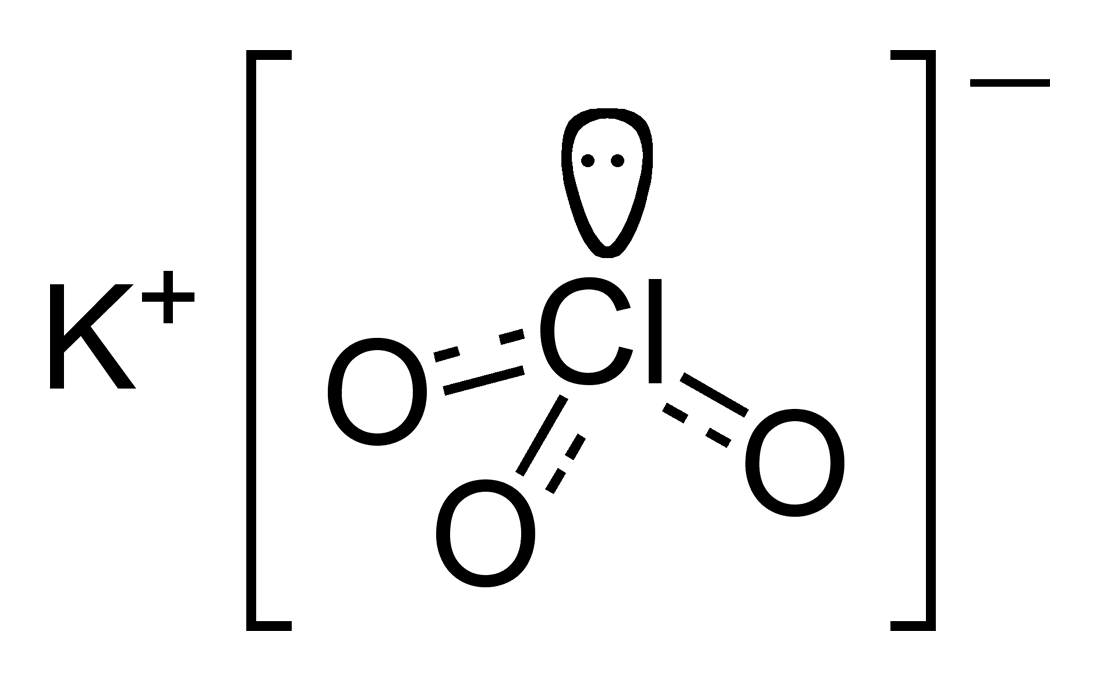
- "Potassium" is the cation name.
- "Chlorate" is the anion name.
Amino acid and nucleotide base codes
IUPAC also has a system for giving codes to identify amino acids and nucleotide bases. IUPAC needed a coding system that represented long sequences of amino acids. This would allow for these sequences to be compared to try to find homologies. These codes can consist of either a one-letter code or a three-letter code.
These codes make it easier and shorter to write down the amino acid sequences that make up proteins. The nucleotide bases are made up of purines (adenine and guanine) and pyrimidines (cytosine and thymine or uracil). These nucleotide bases make up DNA and RNA. These nucleotide base codes make the genome of an organism much smaller and easier to read.
| Nucleic acid code | Meaning | Reasoning |
|---|---|---|
| A | A | Adenine |
| C | C | Cytosine |
| G | G | Guanine |
| T | T | Thymine |
| U | U | Uracil |
| R | A or G | Purine |
| Y | C, T or U | Pyrimidines |
| K | G, T or U | Bases that are ketones |
| M | A or C | Bases with amino groups |
| S | C or G | Strong interaction |
| W | A, T, or U | Weak interaction |
| B | Not A (i.e. C, G, T, or U) | B comes after A |
| D | Not C (i.e. A, G, T, or U) | D comes after C |
| H | Not G (i.e., A, C, T, or U) | H comes after G |
| V | Neither T nor U (i.e. A, C, or G) | V comes after U |
| N | A C G T U | Nucleic acid |
| X | Masked | |
| - | Gap of indeterminate length |
The codes for amino acids (22 amino acids and six special codes) are:
| Amino acid code | Meaning |
|---|---|
| A | Alanine |
| B | Aspartic acid or asparagine |
| C | Cysteine |
| D | Aspartic acid |
| E | Glutamic acid |
| F | Phenylalanine |
| G | Glycine |
| H | Histidine |
| I | Isoleucine |
| K | Lysine |
| L | Leucine |
| M | Methionine |
| N | Asparagine |
| O | Pyrrolysine |
| P | Proline |
| Q | Glutamine |
| R | Arginine |
| S | Serine |
| T | Threonine |
| U | Selenocysteine |
| V | Valine |
| W | Tryptophan |
| Y | Tyrosine |
| Z | Glutamic acid or glutamine |
| J | Leucine or isoleucine |
| X | Any |
| * | Translation stop |
| - | Gap of indeterminate length |
Publications
Non-series books
| Book name | Description |
|---|---|
| *Principles and Practices of Method Validation* | |
| *Fundamental Toxicology* | |
| *Macromolecular Symposia* |
''Experimental Thermodynamics'' book series
The Experimental Thermodynamics books series covers many topics in the fields of thermodynamics.
| Book | Description |
|---|---|
| *Measurement of the Transport Properties of Fluids* | |
| *Solution Calorimetry* | |
| *Equations of State for Fluids and Fluid Mixtures Part I* | |
| *Measurement of the Thermodynamic Properties of Single Phases* | |
| *Measurement of the Thermodynamic Properties of Multiple Phases* |
Series of books on analytical and physical chemistry of environmental systems
| Book name | Description |
|---|---|
| *Atmospheric Particles* | |
| *Environmental Colloids and Particles: Behaviour, Separation and Characterisation* | |
| *Biophysical Chemistry of Fractal Structures and Processes in Environmental Systems* | |
| *Interactions Between Soil Particles and Microorganisms: Impact on the Terrestrial Ecosystem* | |
| *The Biogeochemistry of Iron in Seawater* | |
| *In Situ Monitoring of Aquatic Systems: Chemical Analysis and Speciation* | |
| *Structure and Surface Reactions of Soil Particles* | |
| *Metal Speciation and Bioavailability in Aquatic Systems, Series on Analytical and Physical Chemistry of Environmental Systems Vol. 3* | |
| *Physicochemical Kinetics and Transport at Biointerfaces* |
Coloured cover book and website series (nomenclature)
Main article: IUPAC book
IUPAC colour code their books in order to make each publication distinguishable.
| Title | Description | |
|---|---|---|
| *Compendium of Analytical Nomenclature* | ||
| Pure and Applied Chemistry (journal) | ||
| *Compendium of Chemical Terminology* | ||
| IUPAC Nomenclature of Organic Chemistry (online publication) | url=https://web.archive.org/web/20110608140820/https://www.acdlabs.com/iupac/nomenclature/ | date=8 June 2011 }} Retrieved 15 April 2010 |
International Year of Chemistry

IUPAC and UNESCO were the lead organizations coordinating events for the International Year of Chemistry, which took place in 2011. The International Year of Chemistry was originally proposed by IUPAC at the general assembly in Turin, Italy. This motion was adopted by UNESCO at a meeting in 2008. The main objectives of the International Year of Chemistry were to increase public appreciation of chemistry and gain more interest in the world of chemistry. This event is also being held to encourage young people to get involved and contribute to chemistry. A further reason for this event being held is to honour how chemistry has made improvements to everyone's way of life.
IUPAC Presidents
IUPAC Presidents are elected by the IUPAC Council during the General Assembly. Below is the list of IUPAC Presidents since its inception in 1919.
| Term | President | Nationality |
|---|---|---|
| 1920–1922 | Charles Moureu | |
| 1923–1925 | William Jackson Pope | |
| 1926–1928 | Ernst Julius Cohen | |
| 1928–1934 | Einar Biilman | |
| 1934–1938 | N. Paravano | |
| 1938–1947 | Marston Taylor Bogert | |
| 1947–1951 | Hugo Rudolph Kruyt | |
| 1951–1955 | Arne Tiselius | |
| 1955–1959 | Arthur Stoll | |
| 1959–1963 | William Albert Noyes Jr. | |
| 1963–1965 | Lord Todd | |
| 1965–1967 | Wilhelm Klemm | |
| 1967–1969 | V.N. Kondratiev | |
| 1969–1971 | Albert Lloyd George Rees | |
| 1971–1973 | Jacques Bénard | |
| 1973–1975 | Sir Harold Thompson | |
| 1975–1977 | Robert W. Cairns | |
| 1977–1979 | Georges Smets | |
| 1979–1981 | Heinrich Zollinger | |
| 1981–1983 | Saburo Nagakura | |
| 1983–1985 | William G. Schneider | |
| 1987–1989 | Valentin A. Koptyug | |
| 1989–1991 | Yves P. Jeannin | |
| 1991–1993 | Allen J. Bard | |
| 1993–1995 | Kiril I. Zamaraev | |
| 1996–1997 | Albert E. Fischli | |
| 1998–1999 | Joshua Jortner | |
| 2000–2001 | Alan Hayes | |
| 2002–2003 | Pieter Streicher Steyn | |
| 2004–2005 | Leiv Kristen Sydnes | |
| 2006–2007 | Bryan Henry | |
| 2008–2009 | Jung-Il Jin | |
| 2010–2011 | Nicole J. Moreau | |
| 2012–2013 | Kazuyuki Tatsumi | |
| 2014–2015 | Mark Cesa | |
| 2016–2017 | Natalia Tarasova | |
| 2018–2019 | Zhou Qifeng | |
| 2020–2021 | Christopher M.A. Brett | |
| 2022–2023 | Javier García-Martínez | |
| 2024–2025 | Ehud Keinan |
References
References
- "Our Leadership".
- (2 June 2011). "IUPAC National Adhering Organizations". Iupac.org.
- (2009). "Council Agenda Book". IUPAC.
- "Secretariat".
- [https://www.iupac.org/Organization/Committees IUPAC Committees list]. {{webarchive. link. (4 January 2010 . Retrieved 15 April 2010.)
- [https://www.iupac.org/web/ins/027 Interdivisional Committee on Terminology web page]. {{webarchive. link. (9 October 2010 . Retrieved 15 April 2010.)
- [https://www.iupac.org/news/archives/2007/44th_council/Item_12-2_2007.pdf Chemdrawn]. {{webarchive. link. (6 July 2008 . Retrieved 15 April 2010.)
- [https://www.iupac.org/web/ins/030 Pure and Applied Chemistry Editorial Advisory Board web page]. {{webarchive. link. (9 October 2010 . Retrieved 15 April 2010.)
- (2 June 2011). "Project Committee web page". Iupac.org.
- [https://www.iupac.org/web/ins/014 Evaluation Committee page]. {{webarchive. link. (9 October 2010 . Retrieved 15 April 2010.)
- Fennel, R.W.. (1994). "History of IUPAC, 1919–1987". Blackwell Science.
- [https://www.chemistry2011.org/about-iyc/introduction IYC: Introduction]. {{webarchive. link. (8 October 2011 . 9 July 2009. Retrieved on 17 February 2010. Retrieved 15 April 2010.)
- [https://www.iupac.org/home/about.html International Union of Pure and Applied Chemistry: About] {{webarchive. link. (14 December 2012. IUPAC. Retrieved on 29 July 2013.)
- Brown, Theodore L.. (2006). "Chemistry The Central Science Tenth Edition". Pearson Books.
- Kaderas, Brigitte. (2002). "Wissenschaften und Wissenschaftspolitik: Bestandsaufnahmen zu Formationen, Brüchen und Kontinuitäten im Deutschland des 20. Jahrhunderts". Franz Steiner Verlag.
- O'Sullivan, Dermot A.. (1973). "IUPAC raises dues, ponders industry's role". [[Chemical & Engineering News]].
- (1 December 2016). "International chemical industry condemns the use of chlorine as a weapon". Homeland Preparedness News.
- [https://www.iupac.org/web/ins/013 IUPAC Project Committee] {{webarchive. link. (29 June 2011 Retrieved 15 April 2010)
- [https://old.iupac.org/news/archives/2007/84_bureau.html IUPAC news and references] {{webarchive. link. (26 July 2011 Retrieved 15 April 2010)
- [https://www.iupac.org/web/ins/050 Chemistry Education] {{webarchive. link. (23 August 2010 Retrieved 15 April 2010)
- [https://www.iupac.org/web/ins/050 Chemistry and Industry] {{webarchive. link. (23 August 2010 Retrieved 15 April 2010)
- "Body Details".
- [https://www.iupac.org/web/ins/024 Committee on Electronic and Printed Publications webpage] {{webarchive. link. (30 March 2010 Retrieved 15 April 2010)
- [https://www.iupac.org/news/archives/2009/141_ec.pdf Executive Committee meeting]{{dead link. (September 2017)
- "Body Details".
- [https://www.iupac.org/web/ins/026 Finance Committee web page] {{webarchive. link. (23 August 2010 Retrieved 15 April 2010)
- [https://www.iupac.org/indexes/books/years/1900 IUPAC Publications List] {{webarchive. link. (9 May 2010 Retrieved 15 April 2010)
- {{BlueBook1993
- {{RedBookRef
- Klein, David R.. (2008). "Organic Chemistry I As a Second Language: Translating the Basic Concepts Second Edition". John Wiley & Sons Inc..
- (19 October 2006). "Gold Book web page". Old.iupac.org.
- [https://www.chem.qmul.ac.uk/iupac/misc/naabb.html Amino Acid Codes] {{webarchive. link. (5 February 2007 Retrieved 15 April 2010)
- [https://www.ebi.ac.uk/2can/tutorials/aa.html Amino Acid and Nucleotide Base Codes] {{webarchive. link. (12 July 2009 Retrieved 15 April 2010)
- [https://www.flipkart.com/principles-practices-method-validation-fajgelj/0854047832-o8w3f3l1oc Flipkart Review of Principles and Practices of Method Validation] {{webarchive. link. (12 March 2010 Retrieved 15 April 2010)
- [https://www.amazon.com/dp/0854046143 Fundamental Toxicology review on amazon] {{Webarchive. link. (11 March 2020 Retrieved 15 April 2010)
- [https://www.rsc.org/Shop/books/2006/9780854046140.asp Fundamental Toxicology review on rsc.org] {{webarchive. link. (7 January 2009 Retrieved 15 April 2010)
- [https://old.iupac.org/publications/macro/index.html Macromolecular Symposia] {{webarchive. link. (3 March 2010 Retrieved 15 April 2010)
- [https://www.amazon.com/dp/0632029978 Measurement of the Transport Properties of Fluids review on Amazon] {{Webarchive. link. (14 March 2020 . Retrieved 15 April 2010)
- [https://www.amazon.com/dp/044482085X Solution Calorimetry review on Amazon] {{Webarchive. link. (11 March 2020 Retrieved 15 April 2010)
- [https://www.amazon.com/dp/0444503846 Equations of State for Fluids and Fluid Mixtures part I review on Amazon] {{Webarchive. link. (12 March 2020 Retrieved 15 April 2010)
- [https://archive.today/20130123155414/https://www.flipkart.com/book/measurement-thermodynamic-properties-single-phases/0444509313 Flipkart review of Measurement of the Thermodynamic Properties of Single Phases]. Retrieved 15 April 2010
- [https://www.amazon.com/dp/0444519777 Measurement of the Thermodynamic Properties of Multiple Phases review on Amazon] {{Webarchive. link. (8 March 2020 . Retrieved 15 April 2010)
- [https://archive.today/20130123140225/https://www.flipkart.com/book/atmospheric-particles-harrison-roy-rene/0471959359 Flipkart review of Atmospheric Particles]. Retrieved 15 April 2010
- [https://www.amazon.com/dp/0470024321 Amazon Review of Environmental Colloids and Particles: Behaviour, Separation, and Characterisation] {{Webarchive. link. (9 March 2020 Retrieved 15 April 2010)
- [https://www.wiley.com/WileyCDA/WileyTitle/productCd-0470014741.html Wiley on Biophysical Chemistry of Fractal Structures and Processes in Environmental Systems] {{webarchive. link. (7 June 2011 . New York: Wiley. Retrieved 15 April 2010)
- [https://archive.today/20130123100339/https://www.flipkart.com/book/interactions-between-soil-particles-microorganisms/0471607908 Flipkart review of Interactions Between Soil Particles and Microorganisms: Impact on the Terrestrial Ecosystem]. Retrieved 15 April 2010.
- SciTech Book News, Vol. 26, No. 2, June 2002.
- [https://www.amazon.com/dp/0471490687 Review of Biogeochemistry of Iron in Seawater] {{Webarchive. link. (17 March 2020 Retrieved 15 April 2010)
- [https://search.barnesandnoble.com/In-Situ-Monitoring-of-Aquatic-Systems/Jacques-Buffle/e/9780471489795/ Review of ''In Situ'' Monitoring of Aquatic Systems: Chemical Analysis and Speciation from Barnes and Noble] {{webarchive. link. (7 June 2011 . Retrieved 15 April 2010)
- [https://www.lebooks.in/books/structure-surface-reactions-soil-particles-pan-ming-huang-f605dd78c7/9780471959366 Review of Structure and Surface Reactions of Soil Particles] {{webarchive. link. (21 July 2011 Retrieved 15 April 2010)
- [https://www.amazon.com/dp/0471958301 Metal Speciation and Bioavailability in Aquatic Systems] {{Webarchive. link. (17 March 2020 . Series on Analytical and Physical Chemistry of Environmental Systems Vol. 3. Review on Amazon. Retrieved 15 April 2010)
- [https://www.amazon.com/dp/0471498459 Physicochemical Kinetics and Transport at Biointerfaces review] {{Webarchive. link. (17 March 2020 . Retrieved 15 April 2010)
- [https://www.iupac.org/objID/Source/sou89661252938339267969131 IUPAC orange book publication history]{{dead link. (November 2017)
- [https://old.iupac.org/publications/analytical_compendium/ Orange Book Preamble] {{webarchive. link. (8 February 2012 Retrieved 15 April 2010)
- [https://www.iupac.org/publications/pac/ IUPAC Pure and Applied Chemistry] {{webarchive. link. (11 June 2012 Retrieved 15 April 2010)
- [https://media.iupac.org/publications/pac/1960/pdf/0101x0003.pdf IUPAC Pure and Applied Chemistry Issue 1] {{webarchive. link. (4 October 2011 Retrieved 15 April 2010)
- [https://goldbook.iupac.org/ Gold Book Online] {{webarchive. link. (24 November 2016 Retrieved 15 April 2010)
- [https://www.acdlabs.com/iupac/nomenclature/ Online version of Blue Book] {{webarchive. link. (8 June 2011 Retrieved 15 April 2010)
- [https://freitag.creighton.edu/OmahaACSfiles/N0848333.pdf United Nations Resolution 63/209: International Year of Chemistry.] {{webarchive. link. (5 August 2010 3 February 2009. Retrieved on 24 April 2010.)
- [https://www.chemistry2011.org/assets/42/IYC_prospectus.pdf About IYC: Introduction.] {{webarchive. link. (12 June 2010 9 July 2009. Retrieved on 24 April 2010.)
- "International Year of Chemistry Prospectus". Portal.acs.org.
- "Past Officers of IUPAC". iupac.org.
This article was imported from Wikipedia and is available under the Creative Commons Attribution-ShareAlike 4.0 License. Content has been adapted to SurfDoc format. Original contributors can be found on the article history page.
Ask Mako anything about International Union of Pure and Applied Chemistry — get instant answers, deeper analysis, and related topics.
Research with MakoFree with your Surf account
Create a free account to save articles, ask Mako questions, and organize your research.
Sign up freeThis content may have been generated or modified by AI. CloudSurf Software LLC is not responsible for the accuracy, completeness, or reliability of AI-generated content. Always verify important information from primary sources.
Report