From Surf Wiki (app.surf) — the open knowledge base
International Style
Modernist architectural style
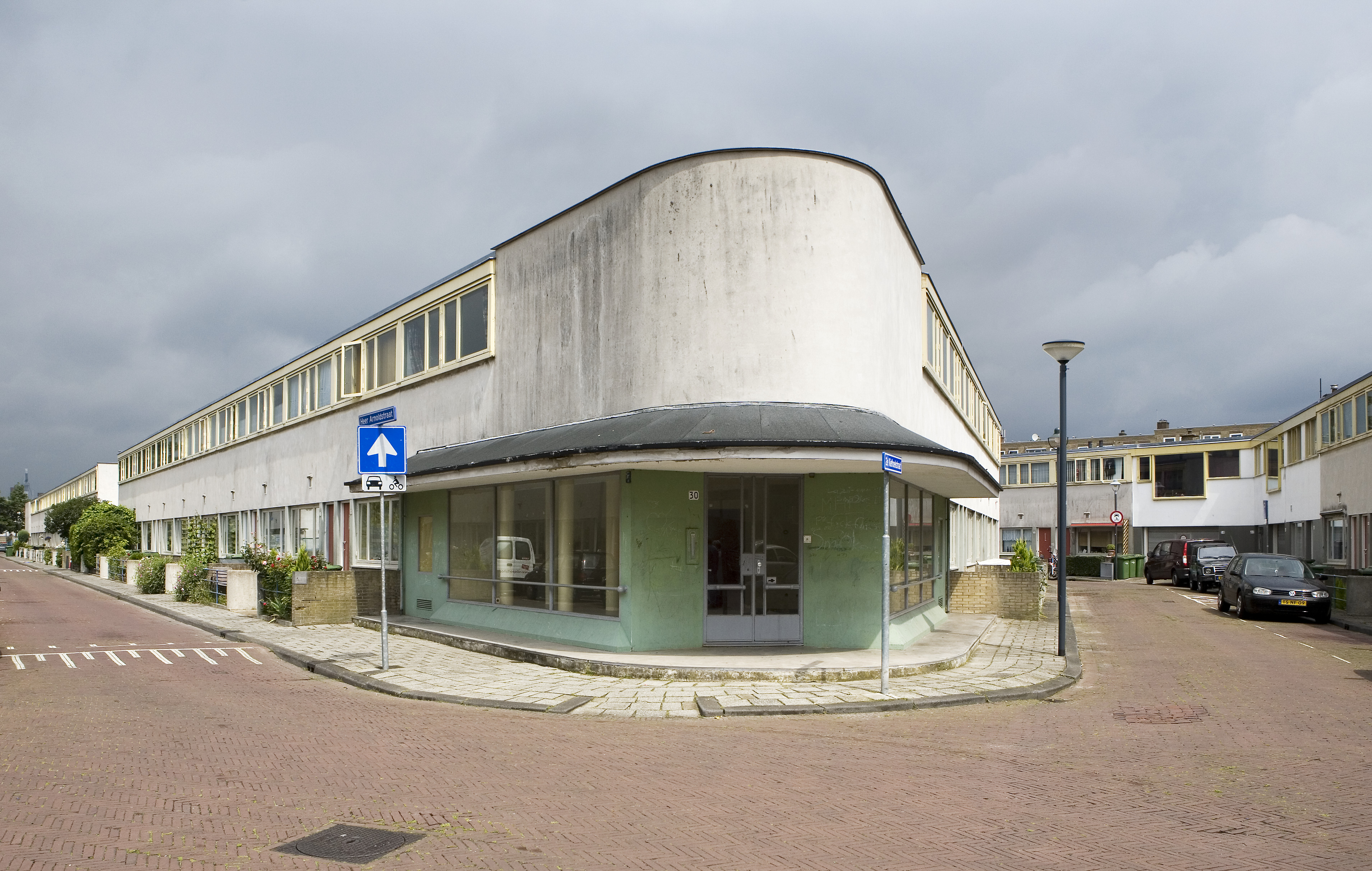
Modernist architectural style
| Field | Value |
|---|---|
| name | International Style architecture |
| image | {{multiple image |
| border | infobox |
| total_width | 300 |
| perrow | 2/3/2 |
| caption_align | center |
| image1 | Lovell House, Los Angeles, California.JPG |
| caption1 | Lovell House in Los Angeles (1927–29), by Richard Neutra |
| image2 | VillaSavoye.jpg |
| caption2 | Villa Savoye in Paris (1928–31), by Le Corbusier |
| image3 | EquitableAtlanta.jpg |
| caption3 | Equitable Building in Atlanta (1966–68), by Skidmore, Owings & Merrill |
| image4 | PSFSBuilding1985.jpg |
| caption4 | Loews Philadelphia Hotel in Philadelphia (completed 1932), by George Howe and William Lescaze |
| image5 | NewYorkSeagram 04.30.2008.JPG |
| caption5 | Seagram Building in New York City (1955–58), by Mies van der Rohe |
| image6 | Paimio Sanatorium2.jpg |
| caption6 | Paimio Sanatorium in Finland, (1929–1930) by Alvar Aalto |
| image7 | Masjid Istiqlal - Panoramio.jpg |
| caption7 | Istiqlal Mosque in Jakarta (1961–1978), by Friedrich Silaban |
| yearsactive | 1920s–1970s |
| location | Worldwide |
| majorfigures | Ludwig Mies van der Rohe, Jacobus Oud, Le Corbusier, Richard Neutra and Philip Johnson. |
| commons | yes |
The International Style is a major architectural style and movement that began in western Europe in the 1920s and dominated modern architecture until the 1970s. It is defined by strict adherence to functional and utilitarian designs and construction methods, typically expressed through minimalism. The style is characterized by modular and rectilinear forms, flat surfaces devoid of ornamentation and decoration, open and airy interiors that blend with the exterior, and the use of glass, steel, and concrete.
The International Style is sometimes called rationalist architecture and the modern movement, although the former is mostly used in English to refer specifically to either Italian rationalism or the style that developed in 1920s Europe more broadly. In continental Europe, this and related styles are variably called Functionalism, Neue Sachlichkeit ("New Objectivity"), De Stijl ("The Style"), and Rationalism, all of which are contemporaneous movements and styles that share similar principles, origins, and proponents.
Rooted in the modernism movement, the International Style is closely related to modern architecture and likewise reflects several intersecting developments in culture, politics, and technology in the early 20th century. After being brought to the United States by European architects in the 1930s, it quickly became an "unofficial" North American style, particularly after World War II. The International Style reached its height in the 1950s and 1960s, when it was widely adopted worldwide for its practicality and as a symbol of industry, progress, and modernity. The style remained the prevailing design philosophy for urban development and reconstruction into the 1970s, especially in the Western world.
The International Style was one of the first architectural movements to receive critical renown and global popularity. Regarded as the high point of modernist architecture, it is sometimes described as the "architecture of the modern movement" and credited with "single-handedly transforming the skylines of every major city in the world with its simple cubic forms". These qualities provoked negative reactions against the style as monotonous, austere, and incongruent with existing landscapes. This critique was conveyed through various movements such as postmodernism, new classical architecture, and deconstructivism.
Concept and definition
The term "International Style" was first used in 1932 by the historian Henry-Russell Hitchcock and architect Philip Johnson to describe a movement among European architects in the 1920s that was distinguished by three key design principles: (1) "Architecture as volume – thin planes or surfaces create the building's form, as opposed to a solid mass"; (2) "Regularity in the facade, as opposed to building symmetry"; and (3) "No applied ornament".
International style is an ambiguous term; the unity and integrity of this direction is deceptive. Its formal features were revealed differently in different countries. Despite the unconditional commonality, the International Style has never been a single phenomenon. However, International Style architecture demonstrates a unity of approach and general principles: lightweight structures, skeletal frames, new materials, a modular system, an open plan, and the use of simple geometric shapes.
The problem of the International Style is that it is not obvious what type of material the term should be applied to: at the same time, there are key monuments of the 20th century (Le Corbusier's Villa Savoye; Wright's Fallingwater House) and mass-produced architectural products of their time. Here it is appropriate to talk about the use of recognizable formal techniques and the creation of a standard architectural product, rather than iconic objects.

Hitchcock and Johnson's 1932 MoMA exhibition catalog identified the principles of the style. Common characteristics of the International Style include: a radical simplification of form, a rejection of superfluous ornamentation, bold repetition and embracement of sleek glass, steel and efficient concrete as preferred materials. Accents were found to be suitably derived from natural design irregularities, such as the position of doors and fire escapes, stair towers, ventilators and even electric signs.
Further, the transparency of buildings, the honest expression of structure, and acceptance of industrialized mass-production techniques contributed to the International Style's design philosophy. Finally, the machine aesthetic, and logical design decisions leading to support building function were used by the International Style architect to create buildings reaching beyond historicism. The ideals of the style are commonly summed up in three slogans: ornament is a crime, truth to materials, form follows function; and Le Corbusier's description: "A house is a machine to live in".
Phenomena similar in nature also existed in other artistic fields, for example in graphics, such as the International Typographic Style and Swiss Style.
The Getty Research Institute defines it as "the style of architecture that emerged in The Netherlands, France, and Germany after World War I and spread throughout the world, becoming the dominant architectural style until the 1970s. The style is characterized by an emphasis on volume over mass, the use of lightweight, mass-produced, industrial materials, rejection of all ornament and colour, repetitive modular forms, and the use of flat surfaces, typically alternating with areas of glass." Some researchers consider the International Style as one of the attempts to create an ideal and utilitarian form.
Background
Around the start of the 20th century, a number of architects around the world began developing new architectural solutions to integrate traditional precedents with new social demands and technological possibilities. The work of Victor Horta and Henry van de Velde in Brussels, Antoni Gaudí in Barcelona, Otto Wagner in Vienna and Charles Rennie Mackintosh in Glasgow, among many others, can be seen as a common struggle between old and new. These architects were not considered part of the International Style because they practiced in an "individualistic manner" and seen as the last representatives of Romanticism.

The International Style can be traced to buildings designed by a small group of modernists, the major figures of which include Ludwig Mies van der Rohe, Jacobus Oud, Le Corbusier, Richard Neutra and Philip Johnson. The International Style of modern architecture emerged principally in Germany and France. This unadorned architecture was constructed with steel, reinforced concrete, and glass. The founder of the Bauhaus school, Walter Gropius, along with prominent Bauhaus instructor, Ludwig Mies van der Rohe, became known for steel frame structures employing glass curtain walls. One of the world's earliest modern buildings where this can be seen is a shoe factory designed by Gropius in 1911 in Alfeld, Germany, called the Fagus Works building. The first building built entirely on Bauhaus design principles was the concrete and steel Haus am Horn, built in 1923 in Weimar, Germany, designed by Georg Muche. The Gropius-designed Bauhaus school building in Dessau constructed 1925-1926, and the Harvard Graduate Center constructed 1949-1950, exhibit clean lines and a "concern for uncluttered interior spaces". Marcel Breuer, who after leaving the Bauhaus would later teach alongside Gropius at Harvard, is also a important contributor to the International Style.
Prior to use of the term 'International Style', some American architects, such as Louis Sullivan, Frank Lloyd Wright, and Irving Gill, exemplified qualities of simplification, honesty and clarity. Wright's Wasmuth Portfolio had been exhibited in Europe and influenced the work of European modernists, and his travels there probably influenced his own work, although he refused to be categorized with them. His buildings of the 1920s and 1930s clearly showed a change in the style of the architect, but in a different direction than the International Style.
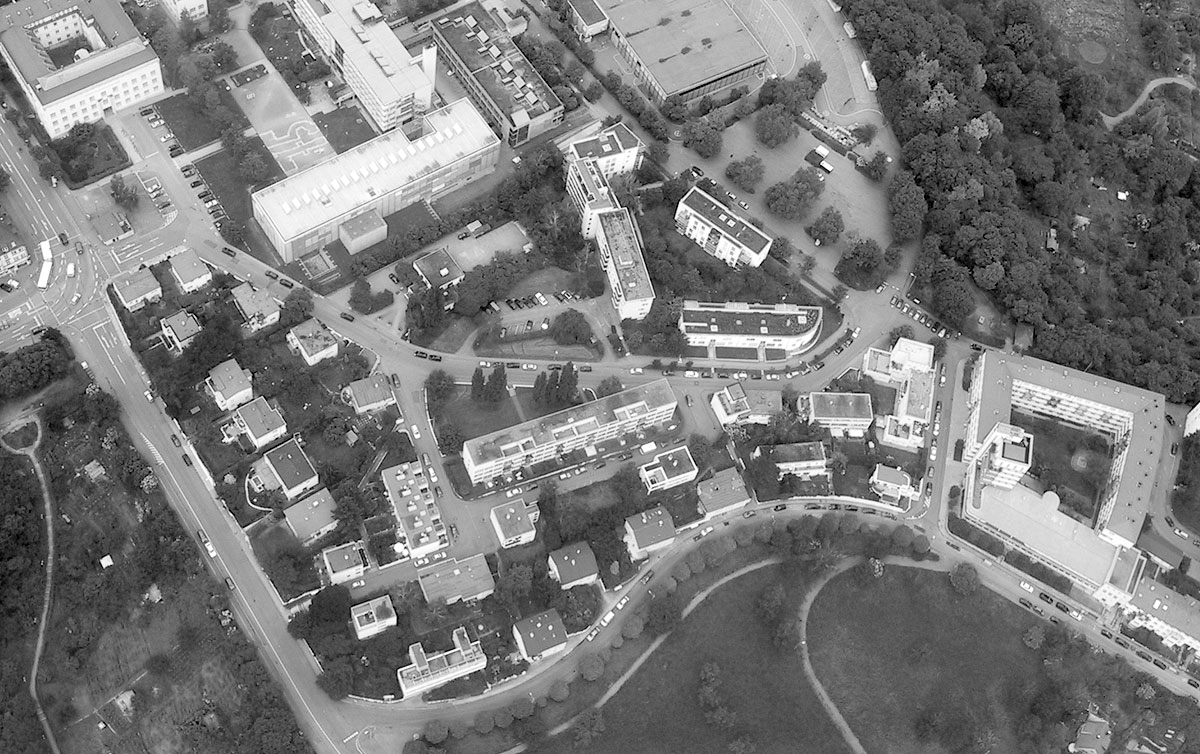
In Europe the modern movement in architecture had been called Functionalism or Neue Sachlichkeit (New Objectivity), L'Esprit Nouveau, or simply Modernism and was very much concerned with the coming together of a new architectural form and social reform, creating a more open and transparent society. The "International Style", as defined by Hitchcock and Johnson, was shaped by the activities of the Deutscher Werkbund. Le Corbusier had embraced Taylorist and Fordist strategies adopted from American industrial models in order to reorganize society. He contributed to a new journal called L'Esprit Nouveau that advocated the use of modern industrial techniques and strategies to create a higher standard of living on all socio-economic levels. In 1927, one of the first and most defining manifestations of the International Style was the Weissenhof Estate in Stuttgart, overseen by Mies van der Rohe. It was enormously popular, with thousands of daily visitors.
1932 MoMA exhibition

The exhibition Modern Architecture: International Exhibition ran from February 9 to March 23, 1932, at the Museum of Modern Art (MoMA), in the Heckscher Building at Fifth Avenue and 56th Street in New York. Beyond a foyer and office, the exhibition was divided into six rooms: the "Modern Architects" section began in the entrance room, featuring a model of William Lescaze's Chrystie-Forsyth Street Housing Development in New York. From there visitors moved to the centrally placed Room A, featuring a model of a mid-rise housing development for Evanston, Illinois, by Chicago architect brothers Monroe Bengt Bowman and Irving Bowman, as well as a model and photos of Walter Gropius's Bauhaus building in Dessau. In the largest exhibition space, Room C, were works by Le Corbusier, Ludwig Mies van der Rohe, J. J. P. Oud and Frank Lloyd Wright (including a project for a house on the Mesa in Denver, 1932). Room B was a section titled "Housing", presenting "the need for a new domestic environment" as it had been identified by historian and critic Lewis Mumford. In Room D were works by Raymond Hood (including "Apartment Tower in the Country" and the McGraw-Hill Building) and Richard Neutra. In Room E was a section titled "The extent of modern architecture", added at the last minute, which included the works of thirty-seven modern architects from fifteen countries who were said to be influenced by the works of Europeans of the 1920s. Among these works was shown Alvar Aalto's Turun Sanomat newspaper offices building in Turku, Finland.
After a six-week run in New York City, the exhibition then toured the US – the first such "traveling-exhibition" of architecture in the US – for six years.
Curators
MoMA director Alfred H. Barr hired architectural historian and critic Henry-Russell Hitchcock and Philip Johnson to curate the museum's first architectural exhibition. The three of them toured Europe together in 1929 and had also discussed Hitchcock's book about modern art. By December 1930, the first written proposal for an exhibition of the "new architecture" was set down, yet the first draft of the book was not complete until some months later.
Publications
The 1932 exhibition led to two publications by Hitchcock and Johnson:
- The exhibition catalog, "Modern Architecture: International Exhibition"
- The book, The International Style: Architecture Since 1922, published by W. W. Norton & Co. in 1932.
- reprinted in 1997 by W. W. Norton & Company
Previous to the 1932 exhibition and book, Hitchcock had concerned himself with the themes of modern architecture in his 1929 book Modern Architecture: Romanticism and Reintegration.
According to Terence Riley: "Ironically the (exhibition) catalogue, and to some extent, the book The International Style, published at the same time of the exhibition, have supplanted the actual historical event."
Exemplary Uses of the International Style
The following architects and buildings were selected by Hitchcock and Johnson for display at the exhibition Modern Architecture: International Exhibition:
| Architect | Building | Location | Date |
|---|---|---|---|
| Jacobus Oud | Workers Houses (house blocks Kiefhoek) | NLD Rotterdam, The Netherlands | 1924–1927 |
| Otto Eisler | Semi-detached Villa | CZE Brno, Czech Republic | 1926–1927 |
| Walter Gropius | Fagus Factory | GER Alfeld, Germany | 1911 |
| Bauhaus School | GER Dessau, Germany | 1926 | |
| City Employment Office | GER Dessau, Germany | 1928 | |
| Ludwig Mies van der Rohe | Apartment House, Weissenhof Estate | GER Stuttgart, Germany | 1927 |
| German pavilion at the Barcelona Expo | ESP Barcelona, Spain | 1929 | |
| Villa Tugendhat | CZE Brno, Czech Republic | 1930 | |
| Le Corbusier | Villa Stein | FRA Garches, France | 1927 |
| Villa Savoye | FRA Poissy, France | 1930 | |
| Carlos de Beistegui Champs-Élysées Penthouse | FRA Paris, France | 1931 | |
| Erich Mendelsohn | Schocken Department Store | GER Chemnitz, Germany | 1928–1930 |
| Frederick John Kiesler | Film Guild Cinema | USA New York City, US | 1929 |
| Raymond Hood | McGraw-Hill Building | USA New York City, US | 1931 |
| George Howe & William Lescaze | Loews Philadelphia Hotel | USA Philadelphia, US | 1932 |
| Monroe Bengt Bowman & Irving Bowman | Lux apartment block | USA Evanston, US | 1931 |
| Richard Neutra | Lovell House | USA Los Angeles, US | 1929 |
| Otto Haesler | Rothenberg Siedlung | GER Kassel, Germany | 1930 |
| Karl Schneider | Kunstverein | GER Hamburg, Germany | 1930 |
| Alvar Aalto | Turun Sanomat building | FIN Turku, Finland | 1930 |
File:VillaSavoye.jpg|Villa Savoye, Paris, Le Corbusier File:Dessau Bauhaus-Gebäude asv2024-06 img1.jpg|Bauhaus School, Dessau, Walter Gropius File:Fagus-Werke-01.jpg|Fagus Factory, Alfeld, Walter Gropius File:The Barcelona Pavilion, Barcelona, 2010.jpg|German Pavilion, Barcelona, Mies van der Rohe File:Villa Tugendhat, Brno, CZ (2).jpg|Villa Tugendhat, Brno, Mies van der Rohe File:Rothenberg-Siedlung (4).jpg|Rothenberg Siedlung, Kassel, Otto Haesler File:Lovell House, Los Angeles, California.JPG|Lovell House, Los Angeles, Rudolph Schindler (garden by Richard Neutra) File:Mcgraw-hill-42nd-st 1.jpg|McGraw-Hill Building, New York City, Raymond Hood File:PSFSBuilding1985.jpg|Loews Philadelphia Hotel, Philadelphia, George Howe and William Lescaze File:Turunsanomat.jpg|Turun Sanomat, Turku, Alvar Aalto
Notable omissions
The exhibition excluded other contemporary styles that were exploring the boundaries of architecture at the time, including: Art Deco; German Expressionism, for instance the works of Hermann Finsterlin; and the organicist movement, popularized in the work of Antoni Gaudí. As a result of the 1932 exhibition, the principles of the International Style were endorsed, while other styles were classed less significant.
In 1922, the competition for the Tribune Tower and its famous second-place entry by Eliel Saarinen gave some indication of what was to come, though these works would not have been accepted by Hitchcock and Johnson as representing the "International Style". Similarly, Johnson, writing about Joseph Urban's recently completed New School for Social Research in New York, stated: "In the New School we have an anomaly of a building supposed to be in a style of architecture based on the development of the plan from function and facade from plan but which is a formally and pretentiously conceived as a Renaissance palace. Urban's admiration for the New Style is more complete than his understanding."
California architect Rudolph Schindler's work was not a part of the exhibit, though Schindler had pleaded with Hitchcock and Johnson to be included. Then, "[f]or more than 20 years, Schindler had intermittently launched a series of spirited, cantankerous exchanges with the museum."
Before 1932
| Architect | Building | Location | Date |
|---|---|---|---|
| Johannes Duiker and Bernard Bijvoet | Zonnestraal Sanatorium | NLD Hilversum, Netherlands | 1926–1928 |
| Robert Mallet-Stevens | houses on Rue Mallet-Stevens | FRA Paris, France | 1927 |
| Villa Cavrois | FRA Croix, France | 1929 | |
| Eileen Gray | E-1027 | FRA Cap Martin, France | 1929 |
| Alejandro Bustillo | House of Victoria Ocampo | ARG Buenos Aires, Argentina | 1929 |
| Alvar Aalto | Paimio Sanatorium | FIN Turku, Finland | 1930 |
| Leendert van der Vlugt | Van Nelle Factory | NLD Rotterdam, Netherlands | 1926–1930 |
| Joseph Emberton | Royal Corinthian Yacht Club | UK Essex, England | 1931 |
1932–1944

The gradual rise of the Nazi regime in Weimar Germany in the 1930s, and the Nazis' rejection of modern architecture, meant that an entire generation of avant-gardist architects, many of them Jews, were forced out of continental Europe. Some, such as Mendelsohn, found shelter in England, while a considerable number of the Jewish architects made their way to Palestine, and others to the US. However, American anti-Communist politics after the war and Philip Johnson's influential rejection of functionalism have tended to mask the fact that many of the important architects, including contributors to the original Weissenhof project, fled to the Soviet Union. This group also tended to be far more concerned with functionalism and its social agenda. Bruno Taut, Mart Stam, the second Bauhaus director Hannes Meyer, Ernst May and other important figures of the International Style went to the Soviet Union in 1930 to undertake huge, ambitious, idealistic urban planning projects, building entire cities from scratch. In 1936, when Stalin ordered them out of the country, many of these architects became stateless and sought refuge elsewhere; for example, Ernst May moved to Kenya.

The White City of Tel Aviv is a collection of over 4,000 buildings built in the International Style in the 1930s. Many Jewish architects who had studied at the German Bauhaus school designed significant buildings here. A large proportion of the buildings built in the International Style can be found in the area planned by Patrick Geddes, north of Tel Aviv's main historical commercial center. In 1994, UNESCO proclaimed the White City a World Heritage Site, describing the city as "a synthesis of outstanding significance of the various trends of the Modern Movement in architecture and town planning in the early part of the 20th century". In 1996, Tel Aviv's White City was listed as a World Monuments Fund endangered site.
.jpg)
The residential area of Södra Ängby in western Stockholm, Sweden, blended an international or functionalist style with garden city ideals. Encompassing more than 500 buildings, most of them designed by Edvin Engström, it remains the largest coherent functionalist or "International Style" villa area in Sweden and possibly the world, still well-preserved more than a half-century after its construction in 1933–40 and protected as a national cultural heritage.
Zlín is a city in the Czech Republic which was in the 1930s completely reconstructed on principles of functionalism. In that time the city was a headquarters of Bata Shoes company and Tomáš Baťa initiated a complex reconstruction of the city which was inspired by functionalism and the Garden city movement. Tomas Bata Memorial is the most valuable monument of the Zlín functionalism. It is a modern paraphrase of the constructions of high gothic style period: the supporting system and colourful stained glass and the reinforced concrete skeleton and glass.
With the rise of Nazism, a number of key European modern architects fled to the US. When Walter Gropius and Marcel Breuer fled Germany they both arrived at the Harvard Graduate School of Design, in an excellent position to extend their influence and promote the Bauhaus as the primary source of architectural modernism. When Mies fled in 1938, he first fled to England, but on emigrating to the US he went to Chicago, founded the Second School of Chicago at IIT and solidified his reputation as a prototypical modern architect.
| Architect | Building | Location | Date |
|---|---|---|---|
| Ove Arup | Labworth Café | UK Essex, England | 1932–1933 |
| Jorge Kálnay | Luna Park | ARG Buenos Aires, Argentina | 1932 |
| Leendert van der Vlugt | Sonneveld House | NLD Rotterdam, Netherlands | 1932–1933 |
| Carlos Ramos | Radio Pavilion of the Oncology Institute | POR Lisbon, Portugal | 1933 |
| Hans Scharoun | Schminke House | GER Löbau, Germany | 1933 |
| Frits Peutz | Glaspaleis | NLD Heerlen, Netherlands | 1933 |
| František Lydie Gahura | Tomas Bata Memorial | Czech Republic Zlín, Czech Republic | 1933 |
| Oscar Stonorov and Alfred Kastner | Carl Mackley Houses | USA Philadelphia, US | 1933–1934 |
| Edvin Engström | Södra Ängby | SWE Stockholm, Sweden | 1933–1939 |
| Genia Averbuch | Dizengoff Square | ISR Tel Aviv, Israel | 1934–1938 |
| Dov Karmi | Max-Liebling House | ISR Tel Aviv, Israel | 1936 |
| Yehuda Lulka | Thermometer House | ISR Tel Aviv, Israel | 1935 |
| Erich Mendelsohn | Weizmann House | ISR Rehovot, Israel | 1936 |
| Wells Coates | Isokon building | UK London, England | 1934 |
| Berthold Lubetkin | Highpoint I | UK London, England | 1935 |
| Maxwell Fry | Sun House | UK London, England | 1935 |
| Neil & Hurd | Ravelston Garden | UK Edinburgh, Scotland | 1936 |
| Sánchez, Lagos & de la Torre | Kavanagh Building | ARG Buenos Aires, Argentina | 1936 |
| Paul Thiry | Thiry House | USA Seattle, Washington, US | 1936 |
| Walter Gropius | Gropius House | USA Lincoln, Massachusetts, US | 1937–1938 |
| Hamilton Beatty and Allen Strang | Willard and Fern Tompkins House | USA Monona, Wisconsin, US | 1937 |
| William and William Pereira | Lake County Tuberculosis Sanatorium | USA Waukegan, Illinois, US | 1938–1939 |
1945–present


After World War II, the International Style matured; Hellmuth, Obata & Kassabaum (later renamed HOK) and Skidmore, Owings & Merrill (SOM) perfected the corporate practice, and it became the dominant approach for decades in the US and Canada. Beginning with the initial technical and formal inventions of 860-880 Lake Shore Drive Apartments in Chicago, its most famous examples include the United Nations headquarters, the Lever House, the Seagram Building in New York City, and the campus of the United States Air Force Academy in Colorado Springs, Colorado, as well as the Toronto-Dominion Centre in Toronto. Further examples can be found in mid-century institutional buildings throughout North America and the "corporate architecture" spread from there, especially to Europe.
In Canada, this period coincided with a major building boom and few restrictions on massive building projects. International Style skyscrapers came to dominate many of Canada's major cities, especially Ottawa, Montreal, Vancouver, Calgary, Edmonton, Hamilton, and Toronto. While these glass boxes were at first unique and interesting, the idea was soon repeated to the point of ubiquity. A typical example is the development of so-called Place de Ville, a conglomeration of three glass skyscrapers in downtown Ottawa, where the plans of the property developer Robert Campeau in the mid-1960s and early 1970s—in the words of historian Robert W. Collier, were "forceful and abrasive[;] he was not well-loved at City Hall"—had no regard for existing city plans, and "built with contempt for the existing city and for city responsibilities in the key areas of transportation and land use". Architects attempted to put new twists into such towers, such as the Toronto City Hall by Finnish architect Viljo Revell. By the late 1970s a backlash was under way against modernism—prominent anti-modernists such as Jane Jacobs and George Baird were partly based in Toronto.
The typical International Style or "corporate architecture" high-rise usually consists of the following:
- Square or rectangular footprint
- Simple cubic "extruded rectangle" form
- Windows running in broken horizontal rows forming a grid
- All facade angles are 90 degrees.
In 2000 UNESCO proclaimed University City of Caracas in Caracas, Venezuela, as a World Heritage Site, describing it as "a masterpiece of modern city planning, architecture and art, created by the Venezuelan architect Carlos Raúl Villanueva and a group of distinguished avant-garde artists".
In June 2007 UNESCO proclaimed Ciudad Universitaria of the Universidad Nacional Autónoma de México (UNAM), in Mexico City, a World Heritage Site due to its relevance and contribution in terms of international style movement. It was designed in the late 1940s and built in the mid-1950s based upon a masterplan created by architect Enrique del Moral. His original idea was enriched by other students, teachers, and diverse professionals of several disciplines. The university houses murals by Diego Rivera, Juan O'Gorman and others. The university also features Olympic Stadium (1968). In his first years of practice, Pritzker Prize winner and Mexican architect Luis Barragán designed buildings in the International Style. But later he evolved to a more traditional local architecture. Other notable Mexican architects of the International Style or modern period are Carlos Obregón Santacilia, Augusto H. Alvarez, Mario Pani, , Vladimir Kaspé, Enrique del Moral, Juan Sordo Madaleno, Max Cetto, among many others.
In Brazil Oscar Niemeyer proposed a more organic and sensual International Style. He designed the political landmarks (headquarters of the three state powers) of the new, planned capital Brasília. The masterplan for the city was proposed by Lúcio Costa.
| Architect | Building | Location | Date | ||
|---|---|---|---|---|---|
| Ludwig Mies van der Rohe | Illinois Institute of Technology campus (including S. R. Crown Hall) | USA Chicago, US | 1945–1960 | ||
| 860–880 Lake Shore Drive Apartments | USA Chicago, US | 1949 | |||
| Pietro Belluschi | Commonwealth Building | USA Portland, Oregon, US | 1948 | ||
| Oscar Niemeyer, Le Corbusier, Harrison & Abramovitz | Headquarters of the United Nations | USA New York City, US | 1950s | ||
| Michael Scott | Busaras | IRL Dublin, Ireland | 1945–1953 | ||
| Kemp, Bunch & Jackson | Eight Forty One | USA Jacksonville, US | 1955 | ||
| Ron Phillips and Alan Fitch | City Hall, Hong Kong | HKG Central, Hong Kong, China | 1956 | ||
| Alberto Belgrano Blanco, José A. Hortal and Marcelo Martínez de Hoz | Alas Building | ARG Buenos Aires, Argentina | 1957 | ||
| John Bland | Old City Hall | CAN Ottawa, Canada | 1958 | ||
| Emery Roth & Sons | 10 Lafayette Square | USA Buffalo, New York, US | 1958–1959 | ||
| Kelly & Gruzen | High School of Graphic Communication Arts | USA Manhattan, New York City, US | 1959 | ||
| Arne Jacobsen | SAS Royal Hotel | DEN Copenhagen, Denmark | 1958–60 | ||
| Stanley Roscoe | Hamilton City Hall | CAN Hamilton, Canada | 1960 | ||
| John Lautner | Chemosphere | USA Los Angeles, US | 1960 | ||
| Carlos Arguelles | Philamlife Building | PHL Manila, Philippines | 1961 | ||
| I. M. Pei | Place Ville-Marie | CAN Montreal, Canada | 1962 | ||
| Charles Luckman | Prudential Tower | USA Boston, US | 1964 | ||
| Carlos Arguelles | Philippine National Bank Head Office (Escolta) | PHL Manila, Philippines | url=https://lifestyle.inquirer.net/220218/experts-condemn-pnb-building-demolition-laugh-off-eraps-claim-that-structure-is-unsafe/ | title=Experts condemn PNB building demolition, laugh off Erap's claim that structure is unsafe | date=24 January 2016 }} |
| George Dahl | First National Bank Tower | USA Dallas, US | 1965 | ||
| Abugov & Sunderland | CN Tower | CAN Edmonton, Canada | 1966 | ||
| Various architects | Montreal Metro, initial network | CAN Montreal, Canada | 1966 | ||
| Ludwig Mies van der Rohe | Toronto-Dominion Centre | CAN Toronto, Canada | 1967 | ||
| Westmount Square | CAN Montreal, Canada | 1967 | |||
| Skidmore, Owings & Merrill | Equitable Building | USA Atlanta, US | 1968 | ||
| Hermann Henselmann et al. | Berlin TV Tower | GER Berlin, Germany | 1969 | ||
| Michael Manser | Capel Manor House | UK Horsmonden, UK | 1971 | ||
| Campeau Corporation | Place de Ville | CAN Ottawa, Canada | 1967–1972 | ||
| Arthur C.F. Lau | Stelco Tower | CAN Hamilton, Canada | 1973 | ||
| Crang & Boake | Hudson's Bay Centre | CAN Toronto, Canada | 1974 | ||
| Jerzy Skrzypczak | Chałubińskiego 8 | POL Warsaw, Poland | 1975–1978 | ||
| Friedrich Silaban | Borobudur Hotel | 1974 | |||
| Istiqlal Mosque | INA Jakarta, Indonesia | 1978 | |||
| Pedro Moctezuma Díaz Infante | Torre Ejecutiva Pemex | MEX Mexico City, Mexico | 1982 |
Criticism
In 1930, Frank Lloyd Wright wrote: "Human houses should not be like boxes, blazing in the sun, nor should we outrage the Machine by trying to make dwelling-places too complementary to Machinery."
In Elizabeth Gordon's well-known 1953 essay, "The Threat to the Next America", she criticized the style as non-practical, citing many instances where "glass houses" are too hot in summer and too cold in winter, empty, take away private space, lack beauty and generally are not livable. Moreover, she accused this style's proponents of taking away a sense of beauty from people and thus covertly pushing for a totalitarian society.{{Citation | last = Gordon | first = Elizabeth | title = The Threat to the Next America
In 1966, architect Robert Venturi published Complexity and Contradiction in Architecture,{{cite book | last = Venturi | first = Robert | title = Complexity and Contradiction in Architecture | publisher = Museum of Modern Art | date = 1966 | url = https://monoskop.org/images/2/2f/Venturi_Robert_Complexity_and_Contradiction_in_Architecture_2nd_ed.pdf |via=Monoskop | access-date = 2017-11-18 | archive-date = 2016-08-10 | archive-url=https://web.archive.org/web/20160810140319/https://monoskop.org/images/2/2f/Venturi_Robert_Complexity_and_Contradiction_in_Architecture_2nd_ed.pdf | url-status = dead
Best-selling American author Tom Wolfe wrote a book-length critique, From Bauhaus to Our House, portraying the style as elitist.
One of the supposed strengths of the International Style has been said to be that the design solutions were indifferent to location, site, and climate; the solutions were supposed to be universally applicable; the style made no reference to local history or national vernacular. This was soon identified as one of the style's primary weaknesses.
In 2006, Hugh Pearman, the British architectural critic of The Times, observed that those using the style today are simply "another species of revivalist", noting the irony. The negative reaction to internationalist modernism has been linked to public antipathy to overall development.
In the preface to the fourth edition of his book Modern Architecture: A Critical History (2007), Kenneth Frampton argued that there had been a "disturbing Eurocentric bias" in histories of modern architecture. This "Eurocentrism" included the US.
Architects
- Alvar Aalto
- Max Abramovitz
- Luis Barragán
- Welton Becket
- Pietro Belluschi
- Geoffrey Bazeley
- Max Bill
- Marcel Breuer
- Roberto Burle Marx
- Gordon Bunshaft
- Natalie de Blois
- Henry N. Cobb
- George Dahl
- Sir Frederick Gibberd
- Charles and Ray Eames
- Otto Eisler
- Joseph Emberton
- Bohuslav Fuchs
- Paul Furiet
- Heydar Ghiai
- Landis Gores
- Bruce Graham
- Eileen Gray
- Walter Gropius
- Otto Haesler
- Arieh El-Hanani
- Wallace Harrison
- Hermann Henselmann
- Raymond Hood
- George Howe
- Muzharul Islam
- Arne Jacobsen
- Marcel Janco
- John M. Johansen
- Philip Johnson
- Roger Johnson
- Louis Kahn
- Dov Karmi
- Oskar Kaufmann
- Richard Kauffmann
- Fazlur Khan
- Frederick John Kiesler
- Friedrich Silaban
- Le Corbusier
- William Lescaze
- Charles Luckman
- Yehuda Magidovitch
- Michael Manser
- Alfred Mansfeld
- Erich Mendelsohn
- John O. Merrill
- Hannes Meyer
- Ludwig Mies van der Rohe
- Richard Neutra
- Oscar Niemeyer
- Eliot Noyes
- Gyo Obata
- Jacobus Oud
- Nathaniel A. Owings
- Mario Pani
- I. M. Pei
- Frits Peutz
- Ernst Plischke
- Ralph Rapson
- Zeev Rechter
- Viljo Revell
- Gerrit Rietveld
- Carl Rubin
- Eero Saarinen
- Rudolph Schindler
- Michael Scott
- Arieh Sharon
- Louis Skidmore
- Ben-Ami Shulman
- Jerzy Sołtan
- Raphael Soriano
- Edward Durell Stone
- Paul Thiry
- Carlos Raúl Villanueva
- Leendert van der Vlugt
- Munio Weinraub
- Lloyd Wright
- Minoru Yamasaki
- The Architects Collaborative
- Toyo Ito
References
References
- Khan, Hasan-Uddin. (2009). "El Estilo Internacional". [[Taschen]].
- "International Style {{!}} Definition, History, & Facts {{!}} Britannica".
- "International Style 1930 – 1950 {{!}} PHMC > Pennsylvania Architectural Field Guide".
- "International Style {{!}} Definition, History, & Facts {{!}} Britannica".
- "International Style – Overview".
- Turner, Jane. (1996). "The Dictionary of Art. 26 Raphon to Rome, ancient, §II: Architecture". Grove.
- Poletti, Federico. (2006). "El siglo XX. Vanguardias". Electa.
- (1995). "Summa Artis XL: Arquitectura española del siglo XX". Espasa Calpe.
- Frampton, Kenneth. (2007). "Modern Architecture: A Critical History". Thames & Hudson.
- Bussagli, Marco. (2009). "Atlas ilustrado de la arquitectura". Susaeta.
- "International Style – Overview".
- Tate. "International style".
- "International Style".
- Frampton K. Modern Architecture: A Critical History. London: Thames and Hudson, 1980.
- [[Ekaterina Vasileva (art historian). Vasileva, E]]. (2016) [https://www.researchgate.net/publication/374443683_Vasileva_E_2016_Ideal_and_utilitarian_in_the_international_style_system_subject_and_object_in_the_design_concept_of_the_20th_century_International_Journal_of_Cultural_Research_4_25_72-80 Ideal and utilitarian in the international style system: subject and object in the design concept of the 20th century] // International Journal of Cultural Research, 4 (25), 72–80.
- Evenson, Norma. (1969). "Le Corbusier: The Machine and the Grand Design". George Braziller.
- Le Corbusier (1923), ''Vers une architecture'' (''[[Toward an Architecture]]''; frequently mistranslated as "Towards a New Architecture").
- Hollis, R. (2001). ''Swiss Graphic Design: The Origins and Growth of an International Style, 1920–1965''. New Haven: Yale University Press.
- [[Ekaterina Vasileva (art historian). Vasileva, E.]] (2021) [https://www.researchgate.net/publication/359508084_Vasileva_E_2021_The_Swiss_Style_It's_Prototypes_Origins_and_the_Regulation_Problem_Terra_Artis_Arts_and_Design_3_84-101 ''The Swiss Style: It's Prototypes, Origins and the Regulation Problem'']. Terra Artis. Arts and Design, '''3''', pp. 84–101.
- "International Style (modern European architecture style)". Getty Research Institute.
- "International Style {{!}} architecture". Encyclopedia Britannica.
- "International Style". MoMA.
- "Bauhaus and its Sites in Weimar, Dessau and Bernau". UNESCO.
- "How to visit the building at the heart of Germany's Bauhaus movement". The Independent.
- "A Movement in a Moment: The International Style". Phaidon.
- Wright, Frank Lloyd. (2005). "Frank Lloyd Wright: An Autobiography". Pomegranate Communications.
- Panayotis Tournikiotis, ''The Historiography of Modern Architecture'', MIT Press, Cambridge, 1999 {{ISBN. 0-262-70085-9
- "The Architectural Work of Le Corbusier". United Nations Educational, Scientific and Cultural Organization.
- "Siedlungshäuser: Die Häuser der Weissenhofsiedlung". Weissenhofsiedlung.
- "Modern Architecture: International Exhibition". Museum of Modern Art.
- [http://www.artic.edu/research/archival-collections/oral-histories/monroe-bengt-bowman-1901-1994 Monroe Bengt Bowman (1901–1994), Art Institute Chicago]
- [http://etd.lib.metu.edu.tr/upload/12606077/index.pdf Baharak Tabibi, ''Exhibitions as the Medium of Architectural Reproduction – "Modern Architecture: International Exhibition"'', Department of Architecture, Middle East Technical University, 2005.]
- Terence Riley, "Portrait of the curator as a young man", in John Elderfield (ed), ''Philip Johnson and the Museum of Modern Art'', Museum of Modern Art, New York, 1998, pp.35–69
- (1932). "Modern Architecture: International Exhibition". Museum of Modern Art.
- 0-393-31518-5
- Terence Riley, ''The International Style: Exhibition 15 and The Museum of Modern Art''. New York, Rizzoli, 1992.
- Hines, Thomas. (1982). "Richard Neutra and the Search for Modern Architecture". Oxford University Press.
- Morgan, Susan. (2015). "Not Another International Style Ballyhoo: A Short History of the Schindler House". [[MAK Center for Art and Architecture]].
- Claudia Quiring, Wolfgang Voigt, Peter Cachola Schmal, Eckhard Herrel (eds), ''Ernst May 1886–1970'', Munich, Prestel, 2011.
- Ina Rottscheidt, Kate Bowen, [http://www.dw-world.de/dw/article/0,,4139253,00.html ''Jewish refugees put their own twist on Bauhaus homes in Israel''], Deutsche Welle, 1 April 2009
- ''The New York Times''. [https://www.nytimes.com/2009/09/18/world/middleeast/18telaviv.html?scp=1&sq=patrick+geddes++tel+aviv&st=nyt "A City Reinvents Itself Beyond Conflict"]. Accessed 25 February 2010.
- "White City of Tel-Aviv – the Modern Movement". Unesco.
- [[World Monuments Fund]], [http://www.wmf.org/watch_past.html ''World Monuments Watch 1996–2006''] {{webarchive. link. (2009-09-28 , retrieved 16 September 2009)
- (1980). "A Guide to Architecture in Washington State". University of Washington Press.
- Robert W. Collier, ''Contemporary Cathedrals – Large scale developments in Canadian cities'', Harvest House, Montreal, 1975.
- Botey, Josep. (1996). "Oscar Niemeyer". Gustavo Gili.
- (24 January 2016). "Experts condemn PNB building demolition, laugh off Erap's claim that structure is unsafe".
- (2008). "Modern Architecture: Being the Kahn Lectures for 1930". Princeton University Press.
- Stierli, Martino. (December 22, 2016). "Complexity and Contradiction changed how we look at, think and talk about architecture".
- "International Style of Modern Architecture: Origins, Characteristics".
- (1 Apr 2006). "Modernism – or should that be Modernwasm?".
- [https://query.nytimes.com/gst/fullpage.html?res=9F0CE0DE1E3DF937A25752C1A965958260&sec=&spon=&pagewanted=all# Herbert Muschamp, "Fear, Hope and the Changing of the Guard", ''New York Times'', November 14, 1993, accessed February 17, 2008.] ("the preservation movement ... was a tool directed against real estate development, but inevitably it was turned against architecture. Its particular target was modern architecture").
- [http://www.ffwdweekly.com/Issues/2005/0331/in.html R. Jobst, ''Charm is not an antiquated notion'', FFWD Weekly: March 31, 2005] {{Webarchive. link. (June 3, 2008 ("At the root of the public's apprehension about new development is that we've been getting screwed for 60 years by brutal, soulless and downright crappy architecture that arrogantly dismisses the human requirement for beauty"))
- [[Kenneth Frampton]], ''Modern Architecture: A Critical History'', London, Thames and Hudson, 2007.
This article was imported from Wikipedia and is available under the Creative Commons Attribution-ShareAlike 4.0 License. Content has been adapted to SurfDoc format. Original contributors can be found on the article history page.
Ask Mako anything about International Style — get instant answers, deeper analysis, and related topics.
Research with MakoFree with your Surf account
Create a free account to save articles, ask Mako questions, and organize your research.
Sign up freeThis content may have been generated or modified by AI. CloudSurf Software LLC is not responsible for the accuracy, completeness, or reliability of AI-generated content. Always verify important information from primary sources.
Report