From Surf Wiki (app.surf) — the open knowledge base
Ingushetia
Republic of Russia in the North Caucasus

Republic of Russia in the North Caucasus
| Field | Value | |
|---|---|---|
| name | Republic of Ingushetia | |
| subdivision_type | Country | |
| settlement_type | Republic | |
| image_caption | Ingush had featuring a triskeleton motif, likely derived from Indo-European Sarmatian symbolism, reflecting the region’s Alanian cultural heritage. | |
| image_flag | Flag of Ingushetia.svg | |
| image_map | Locator map of Ingushetia, Russia (2014–2022).svg | |
| mapsize | 300px | |
| mapframe | yes | |
| mapframe-wikidata | yes | |
| mapframe-zoom | 7 | |
| mapframe-height | 250 | |
| mapframe-stroke-width | 1 | |
| subdivision_name | Russia | |
| coordinates | ||
| subdivision_type2 | Federal district | |
| subdivision_name2 | North Caucasian | |
| subdivision_type3 | Economic region | |
| subdivision_name3 | North Caucasus | |
| leader_title | Head | |
| leader_name | Mahmud-Ali Kalimatov | |
| total_type | Total | |
| area_total_sq_mi | 1544 | |
| area_total_km2 | 3628 | |
| area_footnotes | ||
| population_rank | 74th | |
| population_density_km2 | 163.16 | |
| population_as_of | 2021 Census | |
| population_total | 527,220 | |
| {{ublist | item_style | white-space:nowrap; |
| population_footnotes | ||
| timezone1 | MSK | |
| blank_name | OKTMO ID | |
| blank_info | 26000000 | |
| native_name | inh | |
| ru | ||
| image_shield | Coat of Arms of Ingushetia.svg | |
| iso_code | RU-IN | |
| registration_plate | 06 | |
| utc_offset | +3 | |
| anthem | State Anthem of Ingushetia | |
| flag_size | 120px | |
| shield_size | 75px | |
| flag_link | Flag of the Republic of Ingushetia | |
| shield_link | Coat of arms of the Republic of Ingushetia | |
| seat_type | Capital | |
| seat | Magas | |
| seat1 | Nazran | |
| seat1_type | Largest city | |
| population_urban | 54.8% | |
| population_rural | 45.2% | |
| blank_name_sec1 | Official language(s) | |
| blank_info_sec1 | IngushRussian | |
| government_type | People's Assembly | |
| website | ingushetia.ru |
| mapframe-wikidata = yes | mapframe-zoom = 7 | mapframe-height = 250 | mapframe-stroke-width = 1 |96.4% Ingush|2.5% Chechens|0.7% Russians|0.4% other}} ru
Ingushetia, officially the Republic of Ingushetia, is a republic of Russia located in the North Caucasus of Eastern Europe. The republic is part of the North Caucasian Federal District, and shares land borders with the country of Georgia to its south; and borders the Russian republics of North Ossetia–Alania to its west and north and Chechnya to its east and northeast.
Its capital is the town of Magas, while the largest city is Nazran. At 3,600 square km in terms of area, the republic is the smallest of Russia's non-city federal subjects. It was established on 4 June 1992, after the Checheno-Ingush Autonomous Soviet Socialist Republic was split in two. The republic is home to the indigenous Ingush, a people of Nakh ancestry. As of the 2021 Census, its population was estimated to be 527,220.
Largely due to the insurgency in the North Caucasus, Ingushetia remains one of the poorest and most unstable regions of Russia. Although the violence has died down in recent years, the insurgency in neighboring Chechnya had occasionally spilled into Ingushetia. According to Human Rights Watch in 2008, the republic has been destabilized by corruption, a number of high-profile crimes (including kidnapping and murder of civilians by government security forces), anti-government protests, attacks on soldiers and officers, Russian military excesses and a deteriorating human rights situation. In spite of this, Ingushetia has the highest life expectancy in all of Russia.
Etymology
The name Ingushetia (Ингушетия) derives from the Russian name of the Ingush, which in turn is derived from the ancient Ingush village Angusht, and from the Georgian suffix -éti. The name in Ingush is Ghalghaaichie (Гӏалгӏайче, /ʁalʁaitʃe/).
In the 1920–1930s there was not yet a unifying name for the Ingush Autonomous Oblast. Although the oblast was officially called Ingushetia, some scientists like and insisted that its correct name is Ingushiya (Ингушия).
History
.jpg)


6000–4000 BC
20 BC
1239 AD
1300–1400 AD
1558 AD
1562 AD
In Caucasian War and as part of Terek Cossacks Okrug
In the 18th century the Ingush were mostly pagan and Christian, with a Muslim minority. Beginning in 1588 some Chechen societies joined Russia (; ). Russian historians claim that the Ingush volunteered to become a part of Russia. This assertion is mostly based on the document signed on 13 June 1810 by General-Major Delpotso and representatives of two Ingush clans; most other clans resisted the Russian conquest. In 1811, at the Tsar's request, Moritz von Engelhardt, a Russian envoy of German origin, visited the mountainous region of Ingushetia and tried to induce the Ingush people to join Russia by promising many benefits offered by the Tsar. The representative of the Ingush people rejected the proposal with the reply: "Above my hat I see only sky". This encounter was later used by Goethe in his 1815 poem, "Freisinn" ('free spirit').
On 29 June 1832, the Russian Baron Rozen reported in letter No.42 to count Chernishev that "on the 23rd of this month I exterminated eight Ghalghaj (Ingush) villages. On the 24th I exterminated nine more villages near Targim." By 12 November 1836 (letter no.560), he claimed that highlanders of Dzheirkah, Kist, and Ghalghaj had been at least temporarily subdued. In 1829 Imam Shamil began a rebellion against Russia. He conquered Dagestan, Chechnya, and then attacked Ingushetia hoping to convert the Ingush people to Islam, thus gaining strategic allies. However, the Ingush defeated Imam Shamil's forces. They successfully repulsed two more attempts in 1858. Nevertheless, locked in warfare with two strong opponents and their allies, Ingush forces were eventually devastated. According to the Russian officer Fedor Tornau, who fought with the aid of Ossetian allies against the Ingush, the Ingush had no more than six hundred warriors. However, the Russian conquest in Ingushetia was extremely difficult and the Russian forces began to rely more upon methods of colonization: extermination of the local population and resettlement of the area with Cossack and Ossetian loyalists.
The colonization of Ingush land by Russians and Ossetians began in the mid-19th century. The Russian General Evdokimov and Ossetian colonel Kundukhov in 'Opis no. 436' "gladly reported" that "the result of colonization of Ingush land was successful".
Renamed Ingush villages and towns:
- Ghazhien-Yurt was renamed Stanitsa Assinovskaya in 1847.
- Ebarg-Yurt was renamed Stanitsa Troitskaya in 1847.
- Dibir-Ghala (town) was renamed Stanitsa Sleptsovskaya in 1847.
- Magomet-Khite was renamed Stanitsa Voznesenskaya in 1847.
- Akhi-Yurt was renamed Stanitsa Sunzhenskaya in 1859.
- Ongusht was renamed Stanitsa Tarskaya in 1859.
- Ildir-Ghala (town) was renamed Stanitsa Karabulakskaya in 1859.
- Alkhaste was renamed Stanitsa Feldmarshalskaya in 1860.
- Tauzen-Yurt was renamed Stanitsa Vorontsov-Dashkov in 1861.
- Sholkhi was renamed Khutor Tarski in 1867. Following Imam Shamil's repeated losses by the end of the Caucasian War, the Russians and Chechens unified their forces. Former Chechen rebels and their men joined the Russian ranks. On 3 November 1858, General Evdokimov ordered (order N1896) a former rebel commander, naib Saib-Dulla Gekhinski (Saadulla Ospanov) of Chechnya to attack and destroy Ingush settlements near the Assa and Fortanga rivers: Dattikh, Meredzhi, Aseri, Shagot-Koch and others. After their defeats in combat, the remaining Ingush clans resorted mostly to underground resistance.
The Russians built the fortress Vladikavkaz ("ruler of the Caucasus") on the place of Ingush village of Zaur.Multiple sources:
- Russian General Aleksey Petrovich Yermolov wrote in a letter to the Tsar of Russia, "It would be a grave mistake for Russia to alienate such a militaristic nation as the Ingush." He suggested the separation of the Ingush and Chechens in order for Russia to win the war in the Caucasus. In another letter from General Ermolov to Lanski (dated 12 January 1827) on the impossibility of forceful Christianization of the Ingush, Yermolov wrote: "This nation, the most courageous and militaristic among all the highlanders, cannot be allowed to be alienated..."
The last organized rebellion (the so-called "Nazran insurrection") in Ingushetia occurred in 1858 when 5,000 Ingush launched an attack against Russian forces, but lost to the latter's superior number. The rebellion signaled the end of the First Russo-Caucasian War. In the same year, the Tsar encouraged the emigration of Ingush and Chechens to Turkey and the Middle East by claiming that "Muslims need to live under Muslim rulers". His apparent motivation was to depopulate the area for the settlement of Ossetians and Cossacks. Some Ingush became exiled to deserted territories in the Middle East where many of them died. The remainder were Culturally assimilated by Russification. It was estimated that eighty per cent of the Ingush had left Ingushetia for the Middle East by 1865.
After the Russian Revolution of 1917, the Soviets promised the Ingush that the villages and towns annexed during the colonization would be returned to the Ingush. Ingushetia became a major battleground between the old archenemies: general Denikin, and Ingush resistance fighters. In his memoirs, general Denikin wrote
As part of the Mountainous Republic of the Northern Caucasus
On 21 December 1917 Ingushetia, Chechnya, and Dagestan declared independence from Russia and formed a single state called the "United Mountain Dwellers of the North Caucasus" (also known as Mountainous Republic of the Northern Caucasus), which was recognized by Central Powers (Germany, Austro-Hungary and Turkey), Georgia, and Azerbaijan (which declared their independence from Russia in 1918) as an independent state. For example, Anna Zelkina writes that in May 1918 the first country to recognize independence was Turkey: Later Germany and others followed the recognition. According to P. Kosok:
According to the British War Office, Germans tried to establish the military base in Ingushetia:
The capital of the new state was moved to Temir-Khan-Shura (Dagestan). The first prime minister of the state was elected Tapa Chermoyev, a Chechen prominent statesman; the second prime minister was Ingush statesman Vassan-Girey Dzhabagiev who also was the author of the Constitution of the land in 1917. In 1920 he was reelected for a third term. In 1921 Russians attacked and occupied the country and forcefully merged it with the Soviet state. The Caucasian war for independence continued and the government went into exile.
As part of Chechen-Ingush ASSR
Cossack General Andrei Shkuro in his book writes: The Soviets confiscated the remaining Ingush properties by collectivization and dekulakization and unified Chechnya and Ingushetia into Chechen-Ingush ASSR.
During World War II Ingush youth were drafted into the Red Army. In August 1942 Nazi German forces captured half of the North Caucasus within thirty-three days moving from Rostov-On-Don to Mozdok 560 km or almost 17 km per day (see Battle of the Caucasus). From Mozdok to Malgobek same thirty three days, 20 km the German forces moved roughly 600 meters per day and were stopped only at Ordzhonikidze (modern-day Vladikavkaz) and Malgobek which were mostly populated by Ingush before the genocide of 23 February 1944. The fighting for the Malgobek was so intense that the small town was captured and recaptured four times until the Germans finally retreated.
According to the Soviet military newspaper Red Star, after receiving the news about German brutality toward civilians in Kabardino-Balkaria, Ingush people declared Jihad(Gazavat) against Germans. Stalin planned the expansion of the USSR in the south through Turkey. Muslim Chechens and Ingush could become a threat to the expansion. In February 1944 near the end of World War II, NKVD units flooded the Chechen-Ingush ASSR. The maneuvers were disguised as military exercises of the southern district.
Genocide of 1944
Main article: Deportation of the Chechens and Ingush

On 23 February 1944, Ingush and Chechens were falsely accused of collaborating with the Nazis, and the entire Ingush and Chechen populations were deported to Kazakhstan, Uzbekistan, and Siberia in Operation Lentil, on the orders of Soviet leader Joseph Stalin, while the majority of their men were fighting on the front. The initial phase of the deportation was carried out on American-supplied Studebaker trucks specifically modified with three submachine gun-nest compartments above the deported to prevent escapes. American historian Norman Naimark writes:
.svg)
The deportees were gathered at railroad stations and during the second phase transferred to the cattle railroad carts. Up to 30% of the population perished during the journey or in the first year of the exile. The Prague Watchdog claims that "in the early years of their exile about half of the Chechens and Ingush died from hunger, cold and disease". The deportation was classified by the European Parliament in 2004 as genocide. After the deportation Ingush resistance against the Soviets began again. Those who escaped the deportation, including shepherds who were high in the mountains during the deportations, formed rebel groups which constantly attacked Russian forces in Ingushetia. Major rebel groups were led by Akhmed Khuchbarov, the Tsitskiev brothers, and an Ingush female sniper, Laisat Baisarova. The last one of the male Ingush rebels was killed in 1977 by the KGB officers, while Baisarova was never captured or killed. American professor Johanna Nichols, who specializes in Chechen and Ingush philology, provided the theory behind the deportation:
After return from Central Asia
_(4).jpg)
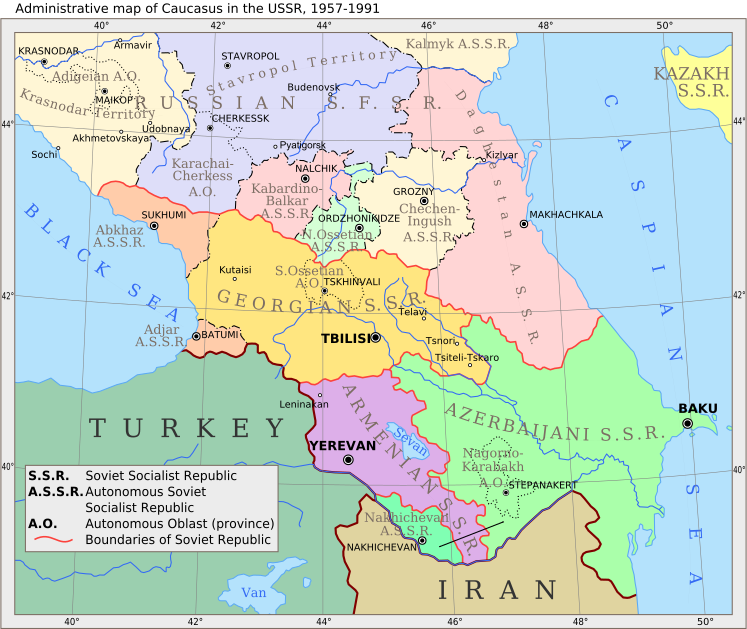
After 13 years of exile, the Ingush were allowed to return to Chechen-Ingushetia (but not to Ordzhonikidze a.k.a. "Vladikavkaz" or the Prigorodny District). Most of Ingushetia's territory had been settled by Ossetians and part of the region had been transferred to North Ossetia. The returning Ingush faced considerable animosity from the Ossetians. The Ingush were forced to buy their homes back from the Ossetians and Russians. These hardships and injustices led to a peaceful Ingush protest in Grozny on 16 January 1973, which was crushed by Soviet troops In 1989, the Ingush were officially rehabilitated along with other peoples that had been subjected to repressions.
Post-Soviet period
In 1991, when the Chechens declared independence from the Soviet Union to form the Chechen Republic of Ichkeria, the Ingush chose to secede from the Chechen-Ingush Republic. This was confirmed with the referendum and in 1992 the Ingush joined the newly created Russian Federation to try to resolve the conflict with Ossetia peacefully, also in the hope that the Russians would return their land as a token of their loyalty.
Ethnic cleansing of 1992
However, ethnic tensions in North Ossetia which were orchestrated by Ossetian nationalists (per Helsinki Human Right Watch), led to an outbreak of violence in the Ossetian–Ingush conflict in October–November 1992, when another ethnic cleansing of the Ingush population started.
Over 60,000 Ingush civilians were forced from their homes in the Prigorodny District of North Ossetia. As a result of the conflict, pro-Russian general Ruslan Aushev, a decorated war hero from the War in Afghanistan, was appointed by the Russian government as the first president of Ingushetia to stop the spread of the conflict. Partial stability returned under his rule.
First and Second Chechen Wars
In 1994, when the First Chechen War started, the number of refugees in Ingushetia from both conflicts doubled. According to the UN, for every citizen of Ingushetia, one refugee arrived from Ossetia or Chechnya. This influx was very problematic for the economy, which collapsed after Aushev's success. The second Russo-Chechen war which started in 1999 brought more refugees (at some point there was one refugee for every Ingush citizen: 240,000 from Chechnya plus 60,000 from North Ossetia at the peak in 2000) and misery to Ingushetia. In 2001, Aushev was forced to leave his presidency and was succeeded by Murat Zyazikov, a former KGB general. The situation worsened under his rule. Many young Ingush men were abducted by Russian and Ossetian death squads. according to Human rights watchdogs Memorial and Mashr.
The number of rebel attacks in Ingushetia rose, especially after the number of Russian security forces was tripled. For example, according to a Russian news agency a murder of an ethnic-Russian school teacher in Ingushetia was committed by two ethnic-Russian and ethnic-Ossetian soldiers; Issa Merzhoev the Ingush Police detective who solved the crime was shot at and killed by "unknown" assailants shortly after he had identified the murderer. At least four people were injured when a vehicle exploded on 24 March 2008. An upsurge in violence in these months targeted local police officers and security forces. In January 2008, the Federal Security Service of the Russian Federation launched a "counter-terrorism" operation in Ingushetia after receiving information that insurgents had been preparing a series of attacks.
Early in August 2008, the war between Georgia and South Ossetia broke out, in which the Russian Federation subsequently became involved. After the outbreak of the war, there were virtually no more attacks or abductions of Ingush civilians by "unknown" forces. Most of the Russian forces were transferred to North and South Ossetia 31 August 2008 Magomed Yevloyev, the head of Ingush opposition and the owner of the website ingushetiya.ru, was killed by Russian security forces Shortly before the unrecognized opposition group People's Parliament of Ingushetia Mekhk-Kkhel called for the recognition of the Russian semi-autonomous republic's independence, opposition activist Magomed Khazbiyev proclaimed, "We must ask Europe or America to separate us from Russia."
_5.jpg)
On 18 October 2008, a Russian military convoy came under grenade attack and machine gun fire near Nazran. Official Russian reports of the ambush, which has been blamed on local Muslim separatists, said two soldiers were killed and at least seven injured. Reports from Ingush opposition sources suggested as many as forty to fifty Russian soldiers were killed.
On 30 October 2008, Zyazikov was dismissed from his office (he himself claimed he resigned voluntarily). On the next day, Yunus-Bek Yevkurov was nominated by Dmitry Medvedev and approved as president by the People's Assembly of Ingushetia (later the title President was renamed Head). This move was endorsed by major Russian political parties and by the Ingush opposition. Under the current rule of Yevkurov, Ingushetia seems much calmer, showing some semblance of the Russian government. Attacks on policemen have fallen by 40% and abductions by 80%.
Military history
According to professor Johanna Nichols, in all the recorded history and reconstructable prehistory, the Ingush people have never undertaken battle except in defense. In the 3rd and 2nd centuries BC Pharnavaz, his son Saurmag the Iberian kings, and the relatives of Ingush people per Leonti Mroveli, received military assistance from Ingush people in defense of Iberia against the Kartli occupation.
During World War I, 500 cavalrymen from an Ingush regiment of the Wild Division attacked the German Iron Division. The Russian Emperor Nicholas II, assessing the performance of the Ingush and Chechen regiments during the Brusilov breakthrough on the Russian-German front in 1915 wrote in a telegram to the Governor-General of the Tersky region Fleisher:
In 1994–1996 Ingush volunteers fought alongside Chechens in the First Chechen War. Aside from a few incidents (including the killings of Ingush civilians by Russian soldiers), Ingushetia was largely kept out of the war by a determined policy of non-violence pursued by President Ruslan Aushev.
This changed after the beginning of the Second Chechen War, and especially since Murat Zyazikov became the second Russian appointed president of Ingushetia in 2002. The first major rebel attack of the conflict, in which a military convoy was destroyed occurred in May 2000 and caused the deaths of 19 soldiers. In the June 2004 Nazran raid, Chechen and Ingush rebels attacked government buildings and military bases across Ingushetia, resulting in the deaths of at least 90 Ingush people and an unknown number of Russian troops. Among them the Republic's acting interior minister Abukar Kostoyev, his deputy Zyaudin Kotiyev. In response to a sharp escalation in attacks by insurgents since the summer of 2007, Moscow sent in an additional 25,000 MVD and FSB troops, tripling the number of special forces in Ingushetia.
Resistance
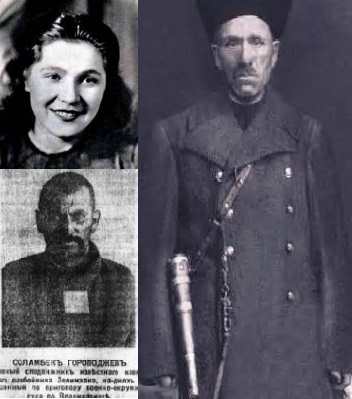
- 1800s–1860s: Insurgency against Russian conquest.
- 1860s–1890s: Raids of Ingush abreks on the Georgian Military Highway and Mozdok.
- 1890s–1917: Insurgency of Ingush resistance under Chechen abrek Zelimkhan Gushmazukaev and Ingush abrek Sulumbek of Sagopshi, execution of Russian viceroy to Ingushetia colonel Mitnik by Ingush resistance fighter Buzurtanov.
- 1917–1920s: Insurgency of Ingush resistance fighters against combined Russian White Guards, Cossacks, Ossetians, and general Denikin forces.
- 1920s–1930s: Insurgency of Ingush people against Communists, executions of Communist leader of Ingushetia Chernoglaz by Ingush rebel Uzhakhov. Execution of Communist party leader of Ingushetia Ivanov by Ingush rebels.
- 1992: Ossetian-Ingush conflict. In combat operations Ingush rebels capture armor which later transferred to Chechens or given back to Russian army after the conflict ended.
- 1994: Nazran. Ingush civilians stop Russian army, flip armor, burn military trucks which were on the march to Chechnya in Russian-Chechen war. First Russian casualties reported from hands of Ingush rebels.
- 1994–1996: Ingush rebels defend Grozny and participate in combat operations on Chechen side.
- 1999–2006: Ingush rebels join Chechen rebels, the independence war turns into Jihad.
- 13 July 2001: Ingush people protest "defiling and desecration" of historical Christian Ingush church Tkhaba-Yerdy after Russian troops made the church into a public toilet. Though Ingush are Muslims they highly respect their Christian past.
- 15 September 2003: Ingush rebels use bomb truck and attack FSB headquarters in Maghas. Several dozens of Russian FSB officers killed including the senior officer overseeing the FSB in Chechen republic. The several story HQ building is severely damaged.
- 6 April 2004: Ingush rebels attack Russian appointed president of Ingushetia Murat Zyazikov. He was wounded when a car bomb was rammed into his motorcade.
- 22 June 2004: Chechen and Ingush rebels raid on Russian troops in Ingushetia. Hundreds of Russian troops killed.
- 10 July 2006: In the night, Chechen politician and leader of the militants Shamil Basayev and other four militants were killed in the village of the Ekazhevo during a truck explosion.
- 31 August 2008: Execution of Magomed Yevloyev Ingush dissident, journalist, lawyer, businessman, and the owner of the news website Ingushetiya.ru, known for being highly critical of Russian regime in Ingushetia. He was shot in the temple. Awarded posthumously, and his name is engraved in stone on the monuments at the Journalists' Memorials in Bayeux, France and Washington D.C., the United States.
- 30 September 2008: A suicide bomber attacked the motorcade of Ruslan Meiriyev, Ingushetia's top police official.
- 10 June 2009: Snipers killed Aza Gazgireyeva, deputy chief justice of the regional Supreme Court, as she dropped her children off at school. Russian news agencies also cited investigators as saying she was likely killed for her role in investigating the 2004 attack on Ingush police forces by Chechen fighters.
- 13 June 2009: Two gunmen sprayed former deputy prime minister Bashir Aushev with automatic-weapon fire as he got out of his car at the gate outside his home in the region's main city, Nazran.
- 22 June 2009: Russian appointed president of Ingushetia Yunus-Bek Yevkurov was badly hurt when a suicide bomber detonated a car packed with explosives as the president's convoy drove past. The attack killed three bodyguards.
- 12 August 2009: Gunmen killed construction minister Ruslan Amerkhanov in his office in the Ingush capital, Magas.
- 17 August 2009: A suicide bomber killed 21 Ingush police officers and unknown numbers of Russian Internal Ministry troops which were stationed in Nazran, after he drove a truck full of explosives into a MVD police base.
- 25 October 2009: Execution of Maksharip Aushev, an Ingush businessman, dissident, and a vocal critic of Russian regime policies in Ingushetia. His body had over 60 bullet holes. Awarded posthumously by the U.S. Department of State in 2009.
- 2 March 2010: Another militant has been killed in the village of the Ekazhevo, his name is Said Buryatsky, but his real one is Aleksandr Aleksandrovich Tikhomirov, although he was born in Republic of Buryatia.
- 5 April 2010: A suicide bomber injured three police officers in the town of Karabulak. Two officers died at the hospital as a result of their injuries. While investigators arrived on scene, another car bomb was set off by remote. Nobody was hurt in the second blast.
- 24 January 2011: A suicide bomber, Magomed Yevloyev (same first and last name as the slain Ingush opposition journalist Magomed Yevloyev), killed 37 people at Domodedovo airport, Moscow, Russia.
- 2012: Ingush rebels participate in the war against Bashar al-Assad, Iranian, and Russian advisors in Syria, which is largely viewed by Ingush rebels as a war against Russia and the Iranian-speaking Ossetians. The rebel Ingush commanders are veterans of Ossetian-Ingush conflict, wars in Chechnya, Daud Khalukhayev from the Ingush village of Palanazh (Katsa), and a descendant of Ingush deportee of 1860s Syrian-born Walid Didigov.
- 6 June 2013: Accusation of former Ingush rebel leader Ali "Maghas" Taziev in Rostov-On-Don regional Russian court, who was captured after he voluntarily gave himself in on 9 June 2010 to Russian forces in Ingushetia on the agreement that Russians will liberate his relatives held hostage in one of the Russian military bases.
- 27 August 2013: Execution of the head of security of Ingushetia Akhmet Kotiev and his bodyguard by Ingush rebels. Kotiev was actively involved in the assassination of Magomed Yevloyev.
- 10 December 2013: Ingush opposition leader Magomed Khazbiev, who was a close friend of assassinated Magomed Yevloyev, attends Euromaidan in Ukraine and participates in anti-Russian campaign there, after which his parents were threatened and harassed in Russia. On his website he wrote: "the fact that Putin's slaves harass my parents does not make any sense [is in vain], if you [Russians] want me to stop you have to kill me like Magomed Yevloyev and Makhsharip Aushev".
- 2 February 2014: Russian FSB officially claimed that in December 2013 four North Caucasian instructors operated in Ukraine, and prepared Ukrainians for "street battles against Russian interests".
- 20 April 2014: Famous Ingush human rights defender Ibragim Lyanov stated that Ingushetia wants to separate from Russia and become an independent state, using the example of the Crimean separation from Ukraine.
- 24 May 2014: Ingush rebel leader Arthur Getagazhev, four rebels, and two civilians were killed in action in the village of Sagopshi by Russian forces.
- 2 July 2014: After several months of denial, pro-Russian president of Ingushetia finally recognizes that there are Ingush people fighting in Ukraine on "both sides".
- 2 July 2014: Ingush rebels attack Russian armored military convoy killing one and wounding seven soldiers.
- 6 July 2014: Russian special forces prepared an ambush near the morgue in Nazran hospital where the body of Arthur Getagazhev was located. The intelligence reported that Ingush rebels will try to recover the body of the slain leader. The intelligence was correct. Radio Free Europe (section specializing in the Caucasus), reports that in the middle of the day two Ingush rebels attacked the ambush, according to unofficial source two rebels killed seven and wounded four Russian FSB and spetsnaz officers in less than forty seconds, after which the rebels left the scene unharmed. The source in Ingush police who wanted to stay anonymous said that exact number of killed are known only by the FSB but nobody would dare to declare it officially. According to pro-Kremlin LifeNews, released video of the attack lasted less than 19 seconds.
- 17 January 2015: Maghas. Rise of anti-Western sentiments. Over 20,000 Ingush citizens protest against Europe.
- 28 February 2015: Russian opposition leader Nemtsov's death linked to Ingushetia by Russian police.
- 26 March 2019: Thousands of people in Ingushetia have protested against a controversial border deal with neighboring Chechnya, denouncing land swaps under the agreement and calling for Ingushetia head Yunus-Bek Yevkurov to step down.
- 25 June 2019: Yunus-Bek Yevkurov, has announced his resignation after almost 11 years in the position. De facto Ingushetia has no active leader. Civil protests continue, Ingush people boycotting the Russian appointed elections.
- 2 March 2024: Clashes between militants and the Russian police began in Ingushetia.
Politics
Up until the dissolution of the Soviet state, Ingushetia was part of the Chechen-Ingush ASSR of the Russian Soviet Socialist Republic. In the late 1920s – early 1930s the Soviet officials were eager to enforce the Chechen-Ingush merger as an "objective" and "natural" process. The Soviet linguist Nikolay Yakovlev, who was a supporter of the merger, suggested that an inclusive name of Vainakh ("our people") had to be used for both the Chechens and Ingush. According to his views, the rapid urbanization and rapprochement of the Chechens and Ingush within one and the same republic might encourage the formation of a common culture and language and the establishment of a unified Vainakh people.
During the late '80s, together with the separatist tendencies across the Soviet Union, the Second Congress of the Ingush People was held in Grozny on 9–10 September 1989. The gathering was directed at the top leadership of the Soviet Union, and included a request to "restore the Ingush people's autonomy within their historical borders, the Ingush Autonomous Soviet Socialist Republic with a capital in the right-bank part of the city of Ordzhonikidze". The Ingush Republic was to be organized out of six traditional Ingush districts (including the contested Prigorodny District). The rise of the Russian Federation - and the 1991 Chechen Revolution - gave the Ingushetians the independence they vowed for and in 1992 the remainder of Checheno-Ingushstia became thus the Republic of Ingushtia. During the 1990s, Ingushetia was ruled by its elected president Ruslan Aushev, a former Soviet general and hero of the war in Afghanistan.
The head of government and the highest executive post in Ingushetia is the Head, elected by representatives of the Parliament of Ingushetia.
_(2).jpg)
Recent heads:
- Ruslan Aushev: 10 November 1992 (Head of the Republic until 7 March 1993) – 28 December 2001
- Akhmed Malsagov (interim): 28 December 2001 – 23 May 2002
- Murat Zyazikov: 23 May 2002 – 30 October 2008
- Yunus-Bek Yevkurov: 30 October 2008 – 26 June 2019
- Makhmud-Ali Kalimatov: 26 June 2019–present
Recent Chairmen of the Government:
- Ruslan Tatiyev: 24 March 1993 – 5 July 1993
- Tamerlan Didigov: 5 July 1993 – 21 March 1994
- Mukharbek Didigov: 21 March 1994 – 9 December 1996
- Belan Khamchiyev: 10 December 1996 – 3 August 1998
- Magomed-Bashir Darsigov: 3 August 1998 – 24 November 1999
- Akhmed Malsagov: 24 November 1999 – 14 June 2002
- Viktor Aleksentsev: 26 August 2002 – 3 June 2003
- Timur Mogushkov: 3 June 2003 – 30 June 2005
- Ibragim Malsagov: 30 June 2005 – 13 March 2008
- Kharun Dzeytov: 14 March 2008 – 12 November 2008
- Rashid Gaysanov: 13 November 2008 – 5 October 2009
- Aleksey Vorobyov: 5 October 2009 – 10 March 2010
- Musa Chiliyev: 21 March 2011 – 19 September 2013
- Abubakar Malsagov: 19 September 2013 – 18 November 2016
- Ruslan Gagiyev: 18 November 2016 – 9 September 2018
- Zyalimkhan Yevloyev: 9 September 2018 – 8 September 2019
- Konstantin Surikov: 9 September 2019 – 27 January 2020
- Vladimir Slastenin: 26 March 2020–present The parliament of the Republic is the People's Assembly, composed of 34 deputies elected for a four-year term. The People's Assembly is headed by the Chairman. As of 2022, the Chairman of the People's Assembly is Vladimir Slastenin.
The Constitution of Ingushetia was adopted on 27 February 1994.
Ingushetia is a member of the Unrepresented Nations and Peoples Organization.
The capital was moved from Nazran to Magas in December 2002.
The most recent election was held in 2013.
Administrative divisions
Main article: Administrative divisions of the Republic of Ingushetia

Cities under republic's jurisdiction (as of 2016):
Districts:
Demographics

Population:
|2002 | 467294
|2010 | 412529
|2021 | 509541
|2025 | 534219
Vital statistics
:Source: Russian Federal State Statistics Service
| Average population (× 1000) | Live births | Deaths | Natural change | Crude birth rate (per 1000) | Crude death rate (per 1000) | Natural change (per 1000) | Total fertility rate |
|---|---|---|---|---|---|---|---|
| 1995 | 6,889 | 1,867 | 5,022 | 25.3 | 6.8 | 18.4 | |
| 1996 | 5,980 | 1,958 | 4,022 | 20.9 | 6.8 | 14.0 | |
| 1997 | 6,055 | 1,957 | 4,098 | 20.6 | 6.7 | 14.0 | |
| 1998 | 5,929 | 2,064 | 3,865 | 19.8 | 6.9 | 12.9 | |
| 1999 | 6,624 | 1,953 | 4,671 | 20.6 | 6.1 | 14.6 | |
| 2000 | 8,463 | 2,117 | 6,346 | 21.5 | 5.4 | 16.2 | |
| 2001 | 8,753 | 1,875 | 6,878 | 19.4 | 4.2 | 15.3 | |
| 2002 | 7,578 | 1,874 | 5,704 | 16.4 | 4.1 | 12.4 | |
| 2003 | 7,059 | 1,785 | 5,274 | 15.3 | 3.9 | 11.4 | |
| 2004 | 6,794 | 1,751 | 5,043 | 15.0 | 3.9 | 11.1 | |
| 2005 | 6,777 | 1,821 | 4,956 | 15.2 | 4.1 | 11.1 | |
| 2006 | 7,391 | 1,830 | 5,561 | 16.9 | 4.2 | 12.7 | |
| 2007 | 8,284 | 1,625 | 6,659 | 19.3 | 3.8 | 15.5 | |
| 2008 | 9,215 | 1,561 | 7,654 | 21.8 | 3.7 | 18.1 | |
| 2009 | 9,572 | 1,877 | 7,695 | 22.9 | 4.5 | 18.4 | |
| 2010 | 11,178 | 1,857 | 9,321 | 27.1 | 4.5 | 22.6 | |
| 2011 | 414 | 11,408 | 1,705 | 9,703 | 27.0 | 4.0 | 23.0 |
| 2012 | 430 | 9,350 | 1,595 | 7,755 | 21.4 | 3.7 | 17.7 |
| 2013 | 442 | 9,498 | 1,568 | 7,930 | 21.2 | 3.5 | 17.7 |
| 2014 | 453 | 9,858 | 1,586 | 8,272 | 21.5 | 3.5 | 18.0 |
| 2015 | 463 | 8,647 | 1,557 | 7,090 | 18.5 | 3.3 | 15.2 |
| 2016 | 472 | 7,750 | 1,555 | 6,195 | 16.3 | 3.3 | 13.0 |
| 2017 | 480 | 7,890 | 1,554 | 6,336 | 16.3 | 3.2 | 13.1 |
| 2018 | 488 | 8,048 | 1,548 | 6,500 | 16.3 | 3.1 | 13.2 |
| 2019 | 497 | 8,252 | 1,529 | 6,723 | 16.4 | 3.0 | 13.4 |
| 2020 | 507 | 8,463 | 1,891 | 6,572 | 16.6 | 3.7 | 12.9 |
| 2021 | 513 | 8,480 | 2,194 | 6,286 | 16.3 | 4.2 | 12.1 |
| 2022 | 7,912 | 1,727 | 6,185 | 15.0 | 3.3 | 11.7 | |
| 2023 | 7,844 | 1,705 | 6,139 | 15.0 | 3.3 | 11.7 | |
| 2024 | 7,962 | 1,833 | 6,129 | 15.0 | 3.5 | 11.5 |
Note: Total fertility rate 2009, 2010, 2011 source:
Life expectancy
Ingushetia has life expectancy noticeably higher than in any other federal subjects of the Russian Federation. In such way, Ingushetia is a Russian "blue zone". In the pre-pandemic 2019, life expectancy in Ingushetia was the same as in Switzerland, according to estimation of WHO, — 83.4 years.
| 2019 | 2021 |
|---|---|
| Average: | 83.4 years |
| Male: | 80.0 years |
| Female: | 86.3 years |
File:Life expectancy in Russian subject -Ingushetia.png|Life expectancy at birth in Ingushetia File:Life expectancy in Russian subject -Ingushetia -diff.png|Life expectancy with calculated differences File:Life expectancy in Russia -North Caucasus.png|Life expectancy in Ingushetia in comparison with other regions of the North Caucasus File:Comparison of life expectancy in Russian subjects by sex.svg|Interactive chart of comparison of male and female life expectancy for 2021. Open the original svg-file in a separate window and hover over a bubble to highlight it. File:Comparison of life expectancy in Russian subjects by type of settlement.svg|Analogious interactive chart of comparison of urban and rural life expectancy. Original interactive file.


Ethnic groups
.jpg)
According to the 2021 Russian census, ethnic Ingush make up 96.4% of the republic's population. The Ingush, a nationality group indigenous to the Caucasus, mostly inhabit Ingushetia. They refer to themselves as Ghalghaj (from Ingush: Ghala ('fortress' or 'town') and ghaj ('inhabitants' or 'citizens'). The Ingush speak the Ingush language, which has a very high degree of mutual intelligibility with neighboring Chechen.
Other groups include Chechens (2.5%), Russians (0.7%), and a host of smaller groups, each accounting for less than 0.5% of the total population.
| Ethnic | |||||||||||||||||||||||||||
|---|---|---|---|---|---|---|---|---|---|---|---|---|---|---|---|---|---|---|---|---|---|---|---|---|---|---|---|
| group | 1926 Census | 1939 Census | 1959 Census | 1970 Census | 1979 Census | 1989 Census | 2002 Census | 2010 Census | 2021 Census1 | Number | % | Number | % | Number | % | Number | % | Number | % | Number | % | Number | % | Number | % | Number | % |
| Ingush | 47,280 | 61.6% | 79,462 | 58.0% | 44,634 | 40.6% | 99,060 | 66.0% | 113,889 | 74.2% | 138,626 | 74.5% | 361,057 | 77.3% | 385,537 | 94.1% | 473,440 | 96.4% | |||||||||
| Chechens | 2,553 | 3.3% | 7,746 | 5.7% | 5,643 | 5.1% | 8,724 | 5.8% | 9,182 | 6.0% | 19,195 | 10.3% | 95,403 | 20.4% | 18,765 | 4.6% | 12,240 | 2.5% | |||||||||
| Russians | 24,185 | 31.5% | 43,389 | 31.7% | 51,549 | 46.9% | 37,258 | 24.8% | 26,965 | 17.6% | 24,641 | 13.2% | 5,559 | 1.2% | 3,321 | 0.8% | 3,294 | 0.7% | |||||||||
| Ukrainians | 1,501 | 2.0% | 1,921 | 1.4% | 1,763 | 1.6% | 1,068 | 0.7% | 687 | 0.4% | 753 | 0.4% | 189 | 0.0% | 91 | 0.0% | 34 | 0.0% | |||||||||
| Others | 1,215 | 1.6% | 4,549 | 3.3% | 6,438 | 5.9% | 3,978 | 2.7% | 2,852 | 1.9% | 2,781 | 1.5% | 5,086 | 1.1% | 1,918 | 0.5% | 2,129 | 0.4% | |||||||||
| 1 18,404people were registered from administrative databases, and could not declare an ethnicity. It is estimated that the proportion of ethnicities in this group is the same as that of the declared group. |
Religion
Education
Ingush State University, the first institute of higher education in the history of Ingushetia, was founded in 1994 in Ordzhonikidzevskaya.
Geography
.jpg)

Ingushetia is situated on the northern slopes of the Caucasus. Its area is reported by various sources as either 2000 km2, 3100 km2, or 3600 km2; the difference in reporting is mainly due to the inclusion or exclusion of parts of Sunzhensky District. The republic borders North Ossetia–Alania (W/NW/N), Chechnya (NE/E/SE), and the country of Georgia (Mtskheta-Mtianeti) (S/SW). The highest point is Mt Shanloam (4453 m).
The region is very mountainous and has a complex system of ridges, from north to south these are:
Forest Ridge, the lowest one that is in the Caucasus proper, reaches up to 1540 m inside Ingushetia and up to 2100 m in nearby Chechnya.
Pasture Ridge, the second one, up to 2400 m tall.
Rocky Ridge, the third one, up to 3100 m tall.
Lateral Ridge, the penultimate one, up to 4453 m tall at the highest point of Ingushetia, Shanloam.
And the Main Caucasus Ridge, only a small bit of it is in Ingushetia, reaching around 4000 m too.
Overall they form a 150 km band of mountains through the entire republic.
Rivers
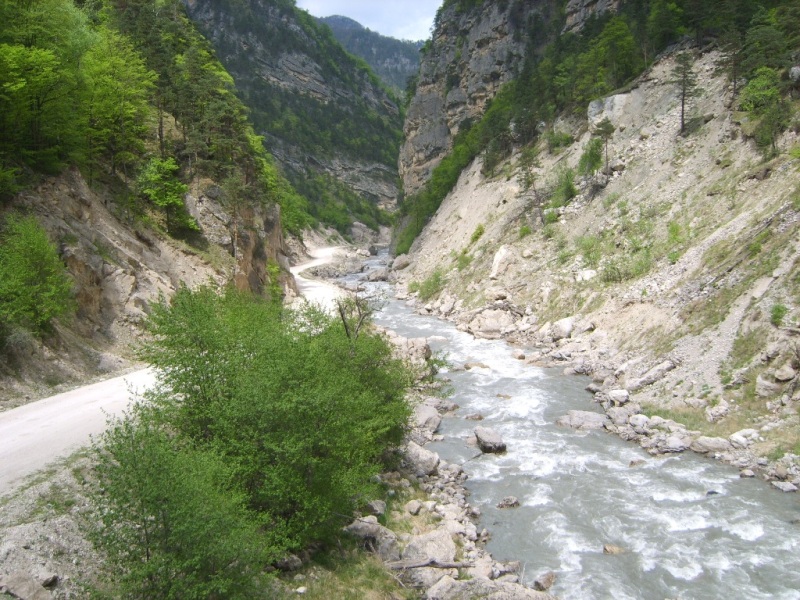
Major rivers include the Tirk, Es-khi, and Solzha rivers.
Natural resources
Ingushetia is rich in marble, timber, dolomite, plaster, limestone, gravel, granite, clay, thermal medical water, rare metals, mineral water, oil (over 60 billion tons), and natural gas reserves.
Climate
Ingushetia's climate is mostly continental.
- Average January temperature: -10 C
- Average July temperature: 21 C
- Average annual precipitation: 450 -
- Average annual temperature: +10 C
Economy
There are some natural resources in Ingushetia: mineral water in Achaluki, oil and natural gas in Malgobek, forests in Dzheirakh, metals in Galashke. The local government is considering the development of tourism; however, this is problematic due to the uneasy situation in the republic itself and the proximity of some conflict zones. However, Ingushetia continues to remain as one of Russia's poorest republics, largely due to the ongoing conflict, corruption and civil disorders. Unemployment is estimated to be around 53%, and growing poverty is a major issue.
Notable people
- Yunus-bek Yevkurov, deputy Defense Minister of the Russian Federation.
- Musa Evloev, Greco-Roman wrestler. He is a two-time world champion, Olympic champion, and two-time national champion,
- Movsar Evloev, #1 Ranked UFC Featherweight.
- Idris Bazorkin, writer.
- Ruslan Aushev, infantry general, Hero of the Soviet Union, first president of Ingushetia.
- Rakhim Chakkhiev, boxer.
- Issa Kodzoev, writer.
- Issa Kostoyev, policeman who captured the serial killer Andrei Chikatilo.
- Nazyr Mankiev, wrestler.
- Murad Ozdoev, WWII fighter pilot and recipient of the title Hero of the Russian Federation.
- Sulom-Beck Oskanov, Air Force general.
- Islam Timurziev, boxer.
Notes
References
Sources
Documents
Literature
References
- Constitution of the Republic of Ingushetia, Article 64
- Official website of the Republic of Ingushetia. [http://www.ingushetia.ru/president/index.shtml Head of the Republic of Ingushetia] {{Webarchive. link. (10 October 2011 {{in lang). ru
- (2 March 2023). "The Territories of the Russian Federation 2023". Taylor & Francis.
- link
- Constitution of the Republic of Ingushetia, Article 14
- Official throughout the Russian Federation according to Article 68.1 of the [[Constitution of Russia]].
- Law of 4 June 1992
- Official website of the Republic of Ingushetia. [http://www.ingushetia.ru/about/index.shtml Social-Economic Characteristics] {{Webarchive. link. (2 June 2015 {{in lang). ru
- "Оценка численности постоянного населения по субъектам Российской Федерации". Federal State Statistics Service (Russia).
- (12 April 2016). "Russia's North Caucasus Insurgency Widens as ISIS' Foothold Grows".
- Walker, Shaun. (4 April 2017). "Why suspicion over St Petersburg metro attack is likely to fall on Islamist groups". The Guardian.
- (3 October 2009). "Ingushetia's cycle of violence". BBC.
- [http://www.alertnet.org/thenews/newsde sk/HRW/acb93ad76de9628c932576501538c803.htm Urgent Need for Vigorous Monitoring in the North Caucasus]. [[Human Rights Watch]]/[[Reuters]], 15 April 2008. ([https://web.archive.org/web/20081011125134/http://www.alertnet.org/thenews/newsdesk/HRW/acb93ad76de9628c932576501538c803.htm archive link])
- {{YouTube. jzTmSiIOTwU. People & Power – Ingushetia: A second Chechnya – 28 October 2009, [[Al Jazeera English]][[Al Jazeera English]] on [[YouTube]] {{Dead link. (July 2022)
- N.D. Kodzoev. "History of Ingush nation".
- (1875). "The Land of the Czar". Wahl.
- (1843). "Reise durch Russland nach dem kaukasischen Isthmus". Karl Koch.
- (1821). "Algemeen aardrijkskundig woordenboek volgens de nieuwste staatkundige veranderingen, en de laatste, beste en zekerste berigten". Jacobus van Wijk.
- D.V.Zayats. (2001). "Maghas – "The Sun City" – New Capital of Ingushetia".
- (29 August 2010). "Аланский историк из чеченцев". Chechenews.com.
- Категория: Мировая история. "Аланский историк". 95live.ru.
- "История ингушского народа. Глава 4. ГЛАВА 4 ИНГУШЕТИЯ В XV-XVIII ВВ. § 1. Жизнь ингушей на равнинах и в горах На равнинах Ингушетииaccess-date=2014-02-28".
- (1853). "Periode des eklestischen Universalismus 1806-1832. ''[Bd. 3]''". Bötticher'schen Verlags Buchhandlung.
- Goethe. (1815). "Freisinn".
- Албогачиева М.. "Многоликая Ингушетия".
- "Vospominaniya Kavkazskogo Ofitsera".
- (6 January 2011). "Немного о истории Владикавказа – часть 2 – 6 Января 2011 – История геноцида Ингушского{{pipe}}Чеченского народа".
- "Akty sobrannye kavkazskoj arxeograficheskoj komissiej".
- Johanna Nichols. (February 1997). "The Ingush (with notes on the Chechen): Background information". [[University of California, Berkeley]].
- (2003). "Caucasus and central Asia newsletter. Issue 4". [[University of California, Berkeley]].
- (November 2007). "Chechnya: Chaos of Human Geography in the North Caucasus, 484 BC – 1957 AD".
- (1925). "Ocherki Russkoi Smuti".
- MINORITY RIGHTS GROUP INTERNATIONAL, [http://minorityrights.org/wp-content/uploads/old-site-downloads/download-419-The-North-Caucasus-Minorities-at-a-Crossroads.pdf THE NORTH CAUCASUS:Minorities at a Crossroads] {{Webarchive. link. (7 October 2016)
- (1993). "Islam and Politics in the North Caucasus". Religion, State and Society.
- "Revolution and Sovietization in the North Caucasus" ''Caucasian Review'', 1955, No. 1, pp. 47–54. No. 3, pp.45–53
- (20 September 2018). "Daily Review of the Foreign Press". H.M.S.O.
- "1900.ethnia.org".
- Ben Cahoon. "Russian Civil War Polities".
- (24 June 2008). "Общественное движение ЧЕЧЕНСКИЙ КОМИТЕТ НАЦИОНАЛЬНОГО СПАСЕНИЯ".
- "Вассан-Гирей Джабагиев".
- (2016). "Гражданская война в России. Записки белого партизана". Directmedia.
- (March 2005). "Spetspereselentsi: history of mass repressions and deportations of Ingushes in 20th century". Ingushetiya news agency.
- (28 November 1992). "The Ingush People".
- (27 November 2007). "Через 63 года в отношении защитников Малгобека восстановлена историческая справедливость".
- (25 July 2002). "Explore Chechnya's Turbulent Past ~ 1944: Deportation {{pipe}} Wide Angle". PBS.
- Arbatov, Alekseĭ. (1997). "Managing Conflict in the Former Soviet Union". MIT Press.
- Dunlop, John B.. (1998). "Russia Confronts Chechnya". Cambridge University Press.
- (22 January 2001). "Fires of Hatred: Ethnic Cleansing in Twentieth-Century Europe". Harvard University Press.
- "Prague Watchdog – Crisis in Chechnya – The deportation of 1944 – how it really was".
- "The 60th Anniversary of the 1944 Chechen and Ingush Deportation: History, Legacies, Current Crisis".
- "Chechen Journal Dosh".
- "The Ingush (with notes on the Chechen): Background information".
- Ingushetia.ru news agency. (January 2008). "35 years later. Ingush protest of 1973". www.ingushetiya.ru.
- [http://www.krd.ru/www/home.nsf/webdocs/5ED8F5F017C7C45EC3256B09004ADA1F.html О реабилитации репрессированных народов] {{webarchive. link. (30 June 2009)
- Economist 1992. Ethnic cleansing comes to Russia. ''The Economist'', 28 November 1992, p. 60.
- N. Evloev. (January 2008). "A message of Nazir Evloev Press Secretary of Ingushetia MVD (Police)". www.ingushetiya.ru.
- "Islamcom.ru".
- (20 June 2008). "Ingush FSB Officer Shot Dead". Radio Free Europe/Radio Liberty.
- link
- "Abduction Failed: Fifteen North Ossetia Law Enforcers Detained in Ingushetia".
- "АНО "МАШР" – Главная".
- B.Polonkoev. (August 2007). "The Murderers are not Insurgents". [[www.gazeta.ru]].
- (March 2008). "The Russian republic rocked by car bomb". CNN.
- "BBC NEWS – Europe – Q&: Conflict in Georgia". bbc.co.uk.
- R.Khautiev. (August 2008). "Silence in Ingushetia". www.ingushetiya.ru}}{{dead link.
- BBC. (31 August 2008). "Kremlin critic shot in Ingushetia". [[BBC]].
- Blomfield, Adrian. (1 September 2008). "Russia faces new Caucasus uprising in Ingushetia". Telegraph.co.uk.
- (3 September 2008). "Tension in Ingushetia after journalist's death". Financial Times.
- (18 October 2008). "Russians ambushed in Ingushetia". BBC News.
- (18 October 2008). "Two Russian soldiers killed in attack in Ingushetia". Monsters and Critics.
- [http://echo.msk.ru/news/550218-echo.html Отправлен в отставку президент Ингушетии Мурат Зязиков] {{Webarchive. link. (9 August 2020 , 31 October 2008 {{in lang). ru
- [[Echo of Moscow]], [http://echo.msk.ru/news/550228-echo.html Указом президента России Дмитрия Медведева новым главой Ингушетии стал Юнус-Бек Евкуров] {{Webarchive. link. (9 August 2020 , 31 October 2008 {{in lang). ru
- (9–15 April 2011). "The peaceful exception". The Economist.
- Khasan Sampiev. "The Land of Towers".
- "Чечня FREE.RU – Новости Чечни, России и мира".
- [http://www.peaceinthecaucasus.org/IngushetiaTimeline.pdf TIMELINE OF VIOLENCE IN INGUSHETIA: SUMMER-FALL 2007] {{webarchive. link. (31 October 2008)
- (15 July 2001). "Ingushetia accuses Russian military desecrating monuments". Russian newsru.com.
- (15 September 2003). "FSB building in Magas bombed". Pravda.
- Gheddo, Piero. "Magomed Yevloyev, critic of the Kremlin, killed by police". Asianews.it.
- (30 March 2009). "77 Names Added to Slain Journalists Memorial in Washington D.C". Fox News.
- "Senior judge killed in Ingushetia". Al Jazeera.
- (14 June 2009). "Another Killing in Region Bordering Chechnya". [[The New York Times]].
- (22 June 2009). "Ingushetia president survives assassination attempt". The Guardian.
- (12 August 2009). "Ingush minister shot dead at work". BBC.
- "Secretary Clinton Honors Two Champions of Human Rights Day » US Mission Geneva".
- (5 April 2010). "Ingushetia hit by suicide attack". BBC News.
- (4 March 2013). "Syria crisis: Border town shows conflict's patchwork forces". BBC News.
- "В Сирии воюют ингуши, и возглавляют одни из самых дерзких боевых групп повстанцев - HABAR.ORG". habar.org.
- "Магомед Хазбиев: Если хотите меня остановить – убейте".
- (2 February 2014). "На Украину выехали 4 инструктора боевиков с Северного Кавказа". [[LifeNews]].
- (20 April 2014). "В Ингушетии заговорили о выходе из РФ по крымскому сценарию".
- "Российские официальные структуры сообщают об убийстве руководителя ингушских партизан – Артура Гетагажева". habar.org.
- (2 July 2014). "Ingush are fighting in Ukraine on both sides".
- (8 June 2014). "Побочные эффекты".
- "Война в Ингушетии продолжается". Эхо Кавказа.
- "Нападение боевиков на морг в Ингушетии сняла камера".
- (17 January 2015). "В Ингушетии митинг против карикатур на пророка Мухаммеда собрал до 20 тысяч человек". newsru.com.
- ЗАО ИД «Комсомольская правда». (17 January 2015). "Обращение главы Ингушетии к 20-тысячному антикарикатурному митингу: "Западная истерия вокруг ислама – это госэкстремизм"". ЗАО ИД «Комсомольская правда».
- Andrew Roth. (28 February 2015). "Image of car purported to have carried Nemtsov's murderers has Ingush plates.".
- "Медведев отправил в отставку президента Ингушетии".
- "О ПРЕОБРАЗОВАНИИ ПОСЕЛКА ГОРОДСКОГО ТИПА СУНЖА СУНЖЕНСКОГО РАЙОНА РЕСПУБЛИКИ ИНГУШЕТИЯ, Закон Республики Ингушетия от 25 ноября 2016 года No.43-РЗ".
- "Предварительная оценка численности постоянного населения на 1 января 2025 года". [[Federal State Statistics Service (Russia).
- (8 May 2010). "Каталог публикаций::Федеральная служба государственной статистики".
- "Демографический ежегодник России".
- "Ожидаемая продолжительность жизни при рождении".
- "Национальный состав населения".
- "ВПН-2010". perepis-2010.ru.
- (20 May 2010). "Caucasus Times poll". Caucasus Times.
- [http://sreda.org/en/arena "Arena: Atlas of Religions and Nationalities in Russia"] {{Webarchive. link. (6 December 2017 . Sreda, 2012.)
- Stefano Allievi and Jørgen S. Nielsen. (2003). "Muslim networks and transnational communities in and across Europe".
- Johanna Nichols. (February 1997). "The Ingush (with notes on the Chechen): Background information". [[University of California, Berkeley]].
- Stephen Bowers. (2004). "Islam in Ingushetia and Chechnya". Faculty Publications and Presentations of the Helms School of Government of Liberty University.
- "Хмцсьяйхи Цнясдюпярбеммши Смхбепяхрер".
- Федеральная служба государственной статистики (Federal State Statistics Service). (21 May 2004). "Территория, число районов, населённых пунктов и сельских администраций по субъектам Российской Федерации". Federal State Statistics Service.
- "Republic of Ingushetia". [[Federation Council (Russia).
- link
- "Die Hoechsten".
- "Ingushetia wants to attract Chinese tourists".
- "UFC Rankings, Division Rankings, P4P rankings, UFC Champions {{!}} UFC.com".
- Идрис Базоркин. "Идрис Базоркин".
- (23 August 2008). "2008 Beijing Olympics Results: Rakhim Chakhkiev Wins Gold". Transworldnews.com.
- "ИССА КОДЗОЕВ – Учитель, Писатель, Патриот".
- Гарант-Интернет. "Обзор публикаций СМИ {{pipe}} Интернет-конференция Председателя Верховного Суда Российской Федерации Лебедева Вячеслава Михайловича {{pipe}} Гарант-Интернет".
- Kaku, Michio. (10 June 2012). "International Herald Tribune".
This article was imported from Wikipedia and is available under the Creative Commons Attribution-ShareAlike 4.0 License. Content has been adapted to SurfDoc format. Original contributors can be found on the article history page.
Ask Mako anything about Ingushetia — get instant answers, deeper analysis, and related topics.
Research with MakoFree with your Surf account
Create a free account to save articles, ask Mako questions, and organize your research.
Sign up freeThis content may have been generated or modified by AI. CloudSurf Software LLC is not responsible for the accuracy, completeness, or reliability of AI-generated content. Always verify important information from primary sources.
Report