From Surf Wiki (app.surf) — the open knowledge base
Influenza A virus subtype H2N2
Subtype of Influenza A virus
Subtype of Influenza A virus
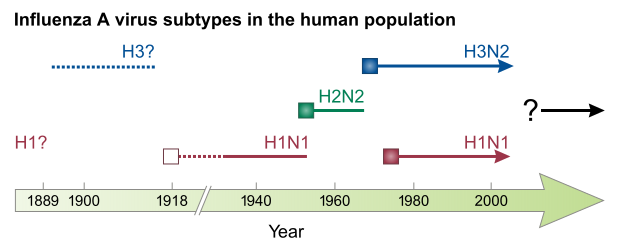
Influenza A virus subtype H2N2 (A/H2N2) is a subtype of Influenza A virus. H2N2 has mutated into various strains including the "Asian flu" strain (now extinct in the wild), H3N2, and various strains found in birds. It is also suspected of causing a human pandemic in 1889. The geographic spreading of the 1889 Russian flu has been studied and published.
Russian flu
Some believe that the 1889–1890 Russian flu was caused by the influenzavirus A virus subtype H2N2, but the evidence is not conclusive. It is the earliest flu pandemic for which detailed records are available. More recently, there are speculations that it might have been caused by one of the coronaviruses first discovered in the 1960s.
Asian flu
Main article: 1957–1958 influenza pandemic
The "Asian Flu" was a category 2 flu pandemic outbreak of influenzavirus A that first appeared in Guizhou, China in early 1957 and lasted until 1958. The first cases were reported in Singapore in February 1957. In February 1957, a new influenza A (H2N2) virus emerged in East Asia, triggering a pandemic (“Asian Flu”). This H2N2 virus was composed of three different genes from an H2N2 virus that originated from an avian influenza A virus, including the H2 hemagglutinin and the N2 neuraminidase genes. It was first reported in Singapore in February 1957, Hong Kong in April 1957, and in coastal cities in the United States in summer 1957. Some authors believe it originated from mutation in wild ducks combining with a pre-existing human strain. Other authors are less certain. It reached Hong Kong by April, and US by June. Estimates of US and worldwide deaths caused by this pandemic varies widely depending on source; ranging from approximately 69,800 to 116,000 in the United States, and worldwide from 1 million to 4 million, with the World Health Organization (WHO) settling on "about 2 million," with an overall mortality rate of 0.6%.
The Asian Flu strain later evolved via antigenic shift into H3N2 which caused a milder pandemic from 1968 to 1969.
Both the H2N2 and H3N2 pandemic strains contained avian influenza virus RNA segments.
Test kits
From October 2004 to February 2005, approximately 3,700 test kits of the 1957 H2N2 virus were accidentally spread around the world from the College of American Pathologists (CAP). CAP assists laboratories in accuracy by providing unidentified samples of viruses; private contractor Meridian Bioscience in Cincinnati, U.S., chose the 1957 strain instead of one of the less deadly avian influenza virus subtypes.
References
References
- Hilleman, Maurice R.. (2002). "Realities and enigmas of human viral influenza: pathogenesis, epidemiology and control". Vaccine.
- (April 2, 1998). "The Influenza H5N1 Report".
- Alexis Madrigal. (April 26, 2010). "1889 Pandemic Didn't Need Planes to Circle Globe in 4 Months". Wired Science.
- "Encarta on influenza".
- Anthony King: [https://www.newscientist.com/article/mg24632800-700-what-four-coronaviruses-from-history-can-tell-us-about-covid-19/ What four coronaviruses from history can tell us about covid-19], on: New Scientist, 29 April 2020
- (2006). "A slippery disease: a microbiologist's view". BMJ.
- Green, Jeffrey. (2006). "The Bird Flu Pandemic". St. Martin's Griffin.
- Belshe, Robert B.. (2005-11-24). "The Origins of Pandemic Influenza — Lessons from the 1918 Virus". New England Journal of Medicine.
- (22 January 2019). "1957-1958 Pandemic (H2N2 virus)". U.S. Department of Health & Human Services.
- (26 March 2020). "The coronavirus may be deadlier than the 1918 flu: Here's how it stacks up to other pandemics". f NBCUniversal.
- Starling, Arthur E.. (2006). "Plague, SARS, and the story of medicine in Hong Kong". Hong Kong University Press.
- [http://www.influenzareport.com/ir/ai.htm Chapter Two : Avian Influenza by Timm C. Harder and Ortrud Werner] {{Webarchive. link. (2017-08-09 from free on-line Book called ''Influenza Report 2006'' which is a medical textbook that provides a comprehensive overview of epidemic and pandemic influenza.)
- Roos, Robert. (April 13, 2005). "Vendor thought H2N2 virus was safe, officials say".
This article was imported from Wikipedia and is available under the Creative Commons Attribution-ShareAlike 4.0 License. Content has been adapted to SurfDoc format. Original contributors can be found on the article history page.
Ask Mako anything about Influenza A virus subtype H2N2 — get instant answers, deeper analysis, and related topics.
Research with MakoFree with your Surf account
Create a free account to save articles, ask Mako questions, and organize your research.
Sign up freeThis content may have been generated or modified by AI. CloudSurf Software LLC is not responsible for the accuracy, completeness, or reliability of AI-generated content. Always verify important information from primary sources.
Report