From Surf Wiki (app.surf) — the open knowledge base
Indonesians
People of Indonesia

People of Indonesia
| Field | Value | ||||||||||||
|---|---|---|---|---|---|---|---|---|---|---|---|---|---|
| group | Indonesians | ||||||||||||
| native_name | Orang Indonesia | ||||||||||||
| native_name_lang | id | ||||||||||||
| image | Map of the Indonesian Diaspora in the World.svg | ||||||||||||
| population | Indonesia | ||||||||||||
| **** | |||||||||||||
| 2023 civil registration estimate | |||||||||||||
| Indonesia 2020 census | |||||||||||||
| Indonesia 2010 census | |||||||||||||
| region2 | Malaysia | ||||||||||||
| pop2 | {{Unbulleted list | class=wrap | |||||||||||
| 8,000,000–10,000,000 {{smaller | (assimilate into the local Malaysian Malays, more than half of Malays in Malaysia have ancestry from various ethnic groups in Indonesia) (See: Indonesian Malaysians)<ref>{{cite web | url | https://amp.kompas.com/nasional/read/2009/09/01/01505242/oasejeda | title= Malaysia, Negeri Perantau Indonesia | date= September 2009 | language= id | access-date= 26 December 2022 | archive-date= 18 December 2022 | archive-url= https://web.archive.org/web/20221218134907/https://amp.kompas.com/nasional/read/2009/09/01/01505242/oasejeda | url-status= dead}}}} | |||
| 3,500,000–5,300,000 }}{{refn | group | Note | including illegal workers}} | ||||||||||
| region3 | Netherlands | ||||||||||||
| pop3 | {{Unbulleted list | class=wrap | |||||||||||
| 1,700,000 (2021)<ref>{{Cite web | title | Diaspora Indonesia di Belanda Semangat "Bangun Negeri via Investasi" | url=https://kemlu.go.id/thehague/id/news/15033/diaspora-indonesia-di-belanda-semangat-bangun-negeri-via-investasi | access-date=2022-02-24 | website=Kementerian Luar Negeri Repulik Indonesia | language=id}} | |||||||
| (Indonesian ancestry) (See: Indo people) | |||||||||||||
| 362,685 (2022)<ref>{{Cite web | title | CBS Statline | url=https://opendata.cbs.nl/statline/#/CBS/nl/dataset/37325/table?fromstatweb | access-date=2024-03-10 | website=opendata.cbs.nl | date=31 May 2022 | language=nl}} | ||||||
| (Indonesian-born/citizens) | |||||||||||||
| region4 | Saudi Arabia | ||||||||||||
| pop4 | {{Unbulleted list | class=wrap | |||||||||||
| 1,500,000 (2019)<ref>{{cite web | url | https://news.republika.co.id/berita/o4qxsx377/mantan-dubes-ri-50-persen-penduduk-makkah-keturunan-indonesia | title= Mantan Dubes RI: 50 Persen Penduduk Makkah Keturunan Indonesia | date= 28 March 2016}} (Indonesian ancestry) (See: Indonesians in Saudi Arabia) | |||||||||
| 857,613{{refn | group | Note | Indonesian citizen registered in KBRI (Embassy of Indonesia in Saudi Arabia)}} (2024) (Indonesian citizens) | ||||||||||
| region5 | Singapore | ||||||||||||
| pop5 | {{Unbulleted list | class=wrap | |||||||||||
| 500,000 <ref name | "KeturunanSG" | ||||||||||||
| 250,000 (2022)<ref>{{Cite web | title | Pemerintah Dorong Diaspora Indonesia Turut Aktif Membangun Negeri | url= https://www.setneg.go.id/baca/index/pemerintah_dorong_diaspora_indonesia_turut_aktif_membangun_negeri | website=setneg.go.id | language=id}} (Indonesian citizens) | ||||||||
| 500–600 (2003)<ref>{{cite web | url | http://adhyatnikageusanulun.com/2009/10/orang-sunda-di-singapura.html | title=Orang Sunda di Singapura | website=adhyatnikageusanulun.com | publisher=West Bandung Regency English Teachers Forum | first=Adhyatnika G. | last=Ulun | language=id | access-date=20 January 2025 | date=23 October 2009 | archive-date=2025-07-12 | archive-url=https://web.archive.org/web/20250712234558/http://adhyatnikageusanulun.com/2009/10/orang-sunda-di-singapura.html | url-status=dead}} (Sundanese Singaporeans)}} |
| region6 | South Africa | ||||||||||||
| pop6 | 300,000 (assimilate into the local Cape Malays) | ||||||||||||
| ref6 | |||||||||||||
| region7 | Taiwan | ||||||||||||
| pop7 | 300,000 (2020) | ||||||||||||
| ref7 | |||||||||||||
| region8 | Japan | ||||||||||||
| pop8 | 230,689 (2025) | ||||||||||||
| ref8 | |||||||||||||
| region9 | Hong Kong | ||||||||||||
| pop9 | 200,000 (2019) | ||||||||||||
| ref9 | |||||||||||||
| region10 | United States | ||||||||||||
| pop10 | 145,031 (2022) | ||||||||||||
| ref10 | |||||||||||||
| region11 | United Arab Emirates | ||||||||||||
| pop11 | 111,987 (2019) | ||||||||||||
| ref11 | |||||||||||||
| region12 | Australia | ||||||||||||
| pop12 | 87,000–92,400 (2021) | ||||||||||||
| (Indonesian-born) | |||||||||||||
| ref12 | {{Cite web | title=People in Australia who were born in Indonesia | access-date=2023-03-06 | url= | |||||||||
| region13 | Suriname | ||||||||||||
| pop13 | {{Unbulleted list | class=wrap | |||||||||||
| 102,000 (2019)<ref name | "suriname" | ||||||||||||
| (including Javanese diaspora) | |||||||||||||
| 673 (2021)<ref>{{Cite web | title | Profil Negara Suriname | url=https://kemlu.go.id/paramaribo/id | access-date=2022-02-27 | website=Kementerian Luar Negeri Repulik Indonesia | language=id}} | |||||||
| (Indonesian citizens) | |||||||||||||
| region14 | Cambodia | ||||||||||||
| pop14 | 100,000 (2024) | ||||||||||||
| region15 | Brunei | ||||||||||||
| pop15 | 80,000 (2018) | ||||||||||||
| ref15 | |||||||||||||
| (excluding Indonesian ancestry) | |||||||||||||
| region16 | Jordan | ||||||||||||
| pop16 | 46,586 (2019) | ||||||||||||
| ref16 | |||||||||||||
| region17 | Philippines | ||||||||||||
| pop17 | 43,871 | ||||||||||||
| ref17 | |||||||||||||
| region18 | South Korea | ||||||||||||
| pop18 | 42,000 (2019) | ||||||||||||
| ref18 | |||||||||||||
| region19 | Sri Lanka | ||||||||||||
| pop19 | 40,148 (2014) (assimilate into the local Sri Lankan Malays) | ||||||||||||
| region20 | China | ||||||||||||
| pop20 | 38,000 (2020) | ||||||||||||
| ref20 | |||||||||||||
| (only Indonesian legal workers) | |||||||||||||
| region21 | Qatar | ||||||||||||
| pop21 | 37,669 (2019) | ||||||||||||
| ref21 | |||||||||||||
| region22 | Bahrain | ||||||||||||
| pop22 | 33,000 | ||||||||||||
| ref22 | |||||||||||||
| region23 | Kuwait | ||||||||||||
| pop23 | 28,954 (2020) | ||||||||||||
| ref23 | |||||||||||||
| region24 | Germany | ||||||||||||
| pop24 | 24,000 (2021) | ||||||||||||
| ref24 | |||||||||||||
| region25 | Canada | ||||||||||||
| pop25 | 21,390 (2016) | ||||||||||||
| ref25 | |||||||||||||
| region26 | Turkey | ||||||||||||
| pop26 | 16,089 (2024) | ||||||||||||
| ref26 | |||||||||||||
| region27 | Syria | ||||||||||||
| pop27 | 12,904 (2019) | ||||||||||||
| ref27 | |||||||||||||
| region28 | United Kingdom | ||||||||||||
| pop28 | 11,000 | ||||||||||||
| ref28 | |||||||||||||
| region29 | Brazil | ||||||||||||
| pop29 | 7,691 (2024) | ||||||||||||
| ref29 | |||||||||||||
| region30 | New Zealand | ||||||||||||
| pop30 | 7,000 | ||||||||||||
| ref30 | |||||||||||||
| region31 | France | ||||||||||||
| pop31 | 6,000 | ||||||||||||
| ref31 | |||||||||||||
| region32 | New Caledonia | ||||||||||||
| pop32 | 4,300 | ||||||||||||
| region33 | Sweden | ||||||||||||
| pop33 | 3,000–5,000 (See: Overseas Acehnese) | ||||||||||||
| ref33 | |||||||||||||
| region34 | Italy | ||||||||||||
| pop34 | 4,000 | ||||||||||||
| ref34 | |||||||||||||
| region35 | French Guiana | ||||||||||||
| pop35 | 3,000 | ||||||||||||
| region36 | Norway | ||||||||||||
| pop36 | 2,000 | ||||||||||||
| ref36 | |||||||||||||
| languages | Indonesian | ||||||||||||
| JavaneseSundaneseMadureseMinangkabauBugineseBataknese | |||||||||||||
| religions | Majority | ||||||||||||
| Islam 87.02% | |||||||||||||
| Minorities | |||||||||||||
| Christianity 10.49% (Protestantism 7.43% and Roman Catholicism 3.06%)Hinduism 1.69%Buddhism 0.73%Confucianism 0.03%AnimismShamanismAliran KepercayaanIrreligious 0.04% (2022) | |||||||||||||
| related | FilipinosMalaysiansEast TimoresePapua New Guineans |
2023 civil registration estimate
Indonesia 2020 census
Indonesia 2010 census | 8,000,000–10,000,000 (assimilate into the local Malaysian Malays, more than half of Malays in Malaysia have ancestry from various ethnic groups in Indonesia) (See: Indonesian Malaysians) | 3,500,000–5,300,000 (Indonesian citizens)}} | 1,700,000 (2021) (Indonesian ancestry) (See: Indo people) | 362,685 (2022) (Indonesian-born/citizens) | 1,500,000 (2019) (Indonesian ancestry) (See: Indonesians in Saudi Arabia) | 857,613 (2024) (Indonesian citizens) | 500,000 (assimilate into the local Singaporean Malays. 60% of the Malay population are as of Javanese descent) | 250,000 (2022) (Indonesian citizens) | 500–600 (2003) (Sundanese Singaporeans)}} (Indonesian-born) https://www.abs.gov.au/census/find-census-data/quickstats/2021/5202_AUS}} | 102,000 (2019) (including Javanese diaspora) | 673 (2021) (Indonesian citizens) (excluding Indonesian ancestry) (only Indonesian legal workers) JavaneseSundaneseMadureseMinangkabauBugineseBataknese BanteneseBanjareseBalineseAcehnesePhilippine languagesPapuan languagesother languages Islam 87.02% Minorities Christianity 10.49% (Protestantism 7.43% and Roman Catholicism 3.06%)Hinduism 1.69%Buddhism 0.73%Confucianism 0.03%AnimismShamanismAliran KepercayaanIrreligious 0.04% (2022)
Indonesians () are citizens or people who are identified with the country of Indonesia, regardless of their ethnic or religious background. There are more than 1,300 ethnicities in Indonesia, making it a multicultural archipelagic country with a diversity of languages, culture and religious beliefs. The population of Indonesia according to the 2020 national census was 270.2 million. 56% live on the island of Java, the world's most populous island. Around 95% of Indonesians are Native Indonesians (formerly grouped as "Pribumi"), primarily of Austronesian and Melanesian descent, with 40% Javanese and 15% Sundanese forming the majority, while the other 5% are Indonesians with ancestry from foreign origin, such as Arab Indonesians, Chinese Indonesians, Indian Indonesians, and Indos.
Population
Main article: Demographics of Indonesia
As of 2020, Indonesians make up 3.4% of the world's total population and Indonesia is the fourth most populous country after China, India and the United States.
Despite a fairly effective family planning program that has been in place since the 1967, for the decade ending in 2020, Indonesia's population growth was 1.1 percent. At that rate, Indonesia's population is projected to surpass the present population of the United States and would - if the current US population did not rise – become the world's third biggest after China and India by 2043. The family planning already revitalised based on the 1967 program to avoid Indonesia becoming the world's third most populous country.
With a population of 151.6 million, Java is home to 56 per cent of the Indonesian population, and is the most populous island on Earth. The Indonesian capital city, Jakarta, is located on western Java. Much of Indonesian history took place on Java. It was the centre of powerful Hindu-Buddhist empires, the Islamic sultanates and the core of the colonial Dutch East Indies. Java was also the centre of the Indonesian struggle for independence during the 1930s and 1940s. Java dominates Indonesia politically, economically and culturally.
The other major islands of Indonesia are Sumatra, Kalimantan, Sulawesi and New Guinea, which are home to the other 49 percent of Indonesian population. There are also other small populated island(s) such as Bali, Bangka, Madura, Nias, Maluku, Lesser Sunda Islands, Riau Islands and others.
Ethnic groups
Main article: Ethnic groups in Indonesia
There are over 1,300 ethnic groups in Indonesia. This number makes Indonesia one of the most diverse countries in the world. 95% of those are of Native Indonesian ancestry.
The largest ethnic group in Indonesia is the Javanese who make up nearly 40% of the total population. The Javanese are concentrated on the island of Java but millions have migrated to other islands throughout the archipelago because of the transmigration program. The Sundanese people 15% of the population in Indonesia, are an ethnic group that shares territory with the Javanese in that, most of the Sundanese live in the western region of Java. Malays, Batak, Madurese, Betawi, and Minangkabau are the next largest groups in the country. Many ethnic groups, particularly in Kalimantan and Papua, have only hundreds of members. Most of the local languages belong to Austronesian language family, although a significant number, particularly in Maluku Islands and Western New Guinea belong to Papuan languages. The Chinese Indonesians (Tionghoa) population makes up a little less than 1% of the total Indonesian population according to the 2000 census. Some of these Indonesians of Chinese descent speak various Chinese languages, most notably Hokkien and Hakka.
The classification of ethnic groups in Indonesia is not rigid and in some cases unclear due to migrations, cultural and linguistic influences; for example, some may consider Osing people and Cirebonese to be members of Javanese people, however, some others argue that they are different ethnic groups altogether since they have their own distinct dialects. This is the same case with Baduy people that actually are sub-ethnic of the Sundanese people but sometimes considered as separated ethnicities. An example of hybrid ethnicity is the Betawi people, descended not only from marriages between different peoples in Indonesia but also with foreign origin like Arab, Chinese and Indian migrants since the era of colonial Batavia (Jakarta).
Language
Main article: Indonesian language, Languages of Indonesia

Indonesian is the official language of Indonesia. It is a standardized variety of Malay, an Austronesian language that has been used as a lingua franca in the Indonesian archipelago for centuries. Most Indonesians also speak one of more than 700 indigenous languages.
Most Indonesians, aside from speaking the national language, are fluent in another regional language (examples include Javanese, Sundanese and others), which are commonly used at home and within the local community. Most formal education, and nearly all national media and other forms of communication, are conducted in Indonesian. In East Timor, which was an Indonesian province from 1975 to 1999, Indonesian is recognised by the constitution as one of the two working languages (the other being English), alongside the official languages of Tetum and Portuguese.
Literature
Main article: Indonesian literature
Indonesian literature can refer to literature produced in the Indonesian archipelago. It is also used to refer more broadly to literature produced in areas with common language roots based on the Malay language (of which Indonesian is one scion). This would extend the reach to the Maritime Southeast Asia, including Indonesia, but also other nations with a common language such as Malaysia and Brunei, as well as population within other nations such as the Malay people living in Singapore.
There are also works written in and about Indonesia in unrelated languages. There are several languages and several distinct but related literary traditions within the geographical boundaries of the modern nation of Indonesia. For example, the island of Java has its own Javanese pre-national cultural and literary history. There are also Sundanese, Balinese, and Batak or Madurese traditions. Indonesia also has a colonial history of Dutch, British and Japanese occupation, as well as a history of Islamic influence that brought its own texts, linguistic and literary influences. There is also an oral literature tradition in the area.
The term "Indonesian literature" is used in this article to refer to Indonesian as written in the nation of Indonesia, but also covers literature written in an earlier form of the Indonesian language i.e. Malay written in the Dutch East Indies.
Religion
Main article: Religion in Indonesia
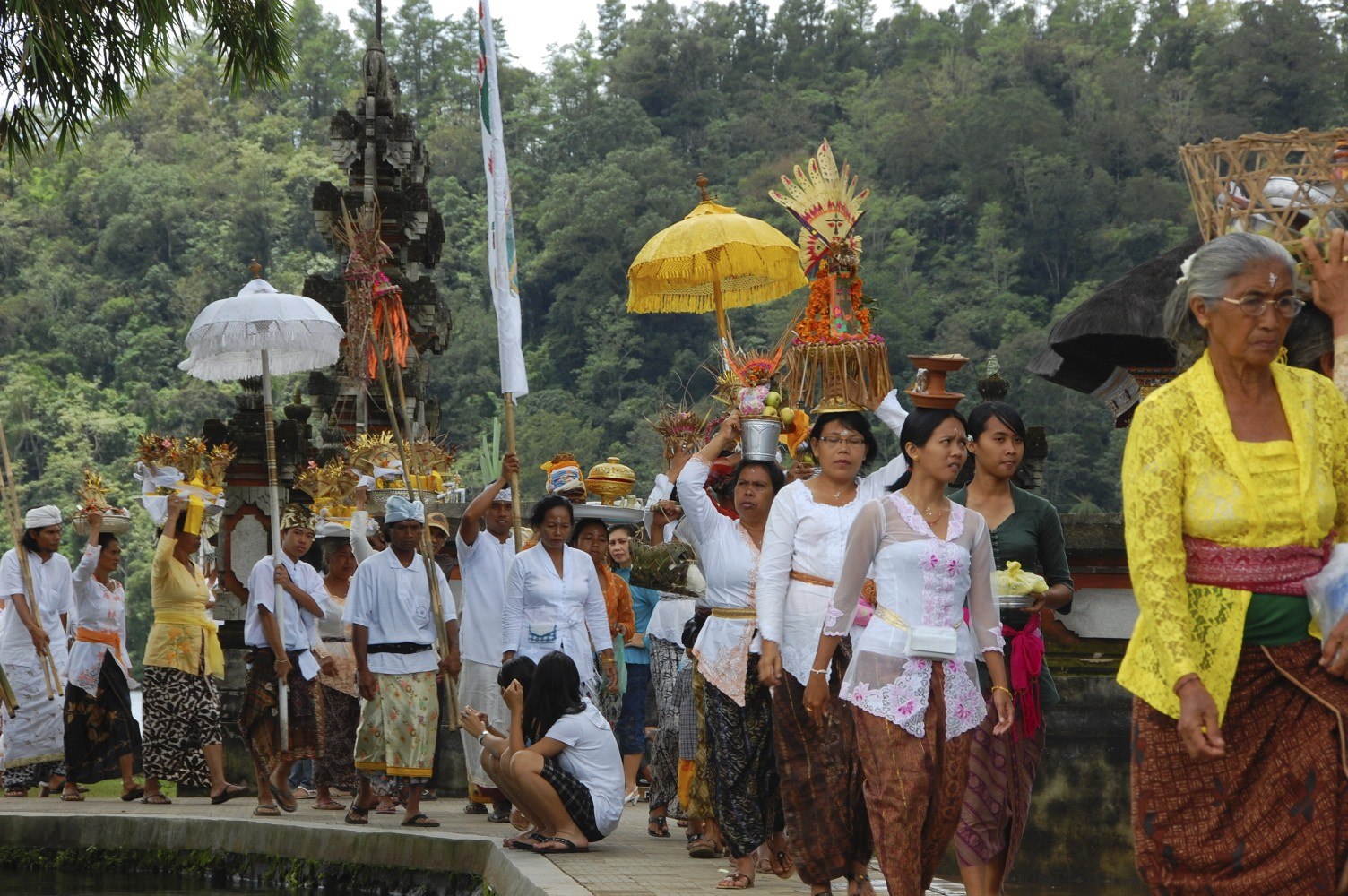
Indonesia is constitutionally a secular state and the first principle of Indonesia's philosophical foundation, Pancasila, is "belief in the one and only God". A number of different religions are practised in the country, and their collective influence on the country's political, economic and cultural life is significant. The Indonesian Constitution guarantees freedom of religion. However, the government recognises only six official religions (Islam, Protestantism, Catholicism, Hinduism, Buddhism and Confucianism). Although based on data collected by the Indonesian Conference on Religion and Peace (ICRP), there are about 245 non-official religions in Indonesia. Indonesian law requires that every Indonesian citizen hold an identity card that identifies that person with one of these six religions, although citizens may fill in 'believer' on that section in case that person adhere to other religion than six recognized religion or leave that section blank. Indonesia does not recognise agnosticism or atheism, and blasphemy is illegal. Indonesia has the world's largest Muslim population In the 2018 Indonesian census, 86.7% of Indonesians identified themselves as Muslim (with Sunnis forming about 99%, Shias 1%,There are approximately 1-3 million Shia Muslims in the country which approximates more than 1% of the total Muslim population. See: Ahmadis 0.2%There are approximately 400,000 Ahmadi Muslims in the country, which equates to 0.2% of the total Muslim population. See: ), 7.6% Protestant, 3.12% Catholic, 1.74% Hindu, 0.77% Buddhist, 0.03% Confucianism, and 0.04% other religions/ No religion.
Indonesia's political leadership has played an important role in the relations between groups, both positively and negatively, promoting mutual respect by affirming Pancasila but also promoting a Transmigration Program, which has caused a number of conflicts in the eastern region of the country.
Cuisine
Main article: Indonesian cuisine
.jpg)
Indonesian cuisine is one of the most vibrant and colourful cuisines in the world, full of intense flavor. It is diverse, in part because Indonesia is composed of approximately 6,000 populated islands of the total 17,000 in the world's largest archipelago, with more than 1,300 ethnic groups. Many regional cuisines exist, often based upon indigenous culture and foreign influences. Indonesia has around 5,350 traditional recipes, with 30 of them considered the most important.
Indonesian cuisine varies greatly by region and has many different influences. Sumatran cuisine, for example, often has Middle Eastern and Indian influences, featuring curried meat and vegetables such as gulai and kari, while Javanese cuisine or Sundanese cuisine is mostly indigenous, with some hint of Chinese influence. The cuisines of Eastern Indonesia are similar to Polynesian and Melanesian cuisine. Elements of Chinese cuisine can be seen in Indonesian cuisine: foods such as bakmi (noodles), bakso (meat or fish balls), and lumpia (spring rolls) have been completely assimilated.
Architecture
Main article: Architecture of Indonesia


Indonesian architecture reflects the diversity of cultural, historical and geographic influences that have shaped Indonesia as a whole. Invaders, colonizers, missionaries, merchants and traders brought cultural changes that had a profound effect on building styles and techniques.
Traditionally, the most significant foreign influence has been Indian. However, Chinese, Arab, and European influences have also played significant roles in shaping Indonesian architecture. Religious architecture varies from indigenous forms to mosques, temples, and churches. The sultans and other rulers built palaces. There is a substantial legacy of colonial architecture in Indonesian cities. Independent Indonesia has seen the development of new paradigms for postmodern and contemporary architecture.
Notes
References
References
- "Indonesia's full-year population in 2023". [[Ministry of Home Affairs (Indonesia)]].
- (21 January 2021). "Hasil Sensus Penduduk 2020". [[Statistics Indonesia]].
- "Indonesia". International Monetary Fund.
- (September 2009). "Malaysia, Negeri Perantau Indonesia".
- Wahyu Dwi Anggoro. (20 August 2013). "Mayoritas Melayu Malaysia Keturunan Indonesia". Okezone.
- "Migrasi dan Perkawinan Politik Menghubungkan Melayu dan Nusantara".
- (5 August 2022). "History of Javanese Migration to Malaysia". Kompas.
- (21 November 2021). "The Javanese connection in Malaysia". MalaysiaKini.
- Purnomo, Indra. "Tersebar di Berbagai Negara, Pekerja Migran asal RI Capai 9 Juta Orang".
- (2021-05-14). "5,3 Juta PMI Ilegal Diperkirakan Bekerja di Malaysia hingga Timur Tengah".
- "Diaspora Indonesia di Belanda Semangat "Bangun Negeri via Investasi"".
- "PM Rutte: 1 dari 10 Orang Belanda Berasal dari Indonesia".
- (31 May 2022). "CBS Statline".
- "Migratie uit Indonesië en Indonesische inwoners in Nederland".
- (28 March 2016). "Mantan Dubes RI: 50 Persen Penduduk Makkah Keturunan Indonesia".
- "4 Tokoh Arab Saudi Keturunan Indonesia, Terakhir Jadi Saksi Kemerdekaan RI".
- "Negara yang Banyak Orang Jawa, Nomor 1 Jumlahnya Lebih dari 1,5 Juta Jiwa".
- (25 July 2024). "Data Agregat WNI yang Tercatat di Perwakilan RI".
- Milner, Anthony. (2011). "The Malays". John Wiley & Sons.
- "Pemerintah Dorong Diaspora Indonesia Turut Aktif Membangun Negeri".
- Ulun, Adhyatnika G.. (23 October 2009). "Orang Sunda di Singapura". West Bandung Regency English Teachers Forum.
- Vahed, Goolam. (13 April 2016). "The Cape Malay:The Quest for 'Malay' Identity in Apartheid South Africa". South African History Online.
- "Malay, Cape in South Africa".
- "KDEI Taipei - Kantor Dagang dan Ekonomi Indonesia".
- [https://www.moj.go.jp/isa/publications/press/13_00057.html 令和7年6月末現在における在留外国人数について]
- Media Indonesia Online 2006-11-30
- (2022). "ASIAN ALONE OR IN COMBINATION WITH ONE OR MORE OTHER RACES, AND WITH ONE OR MORE ASIAN CATEGORIES FOR SELECTED GROUPS". [[United States Department of Commerce]].
- "2010 Census Summary File 1". U.S. Census Bureau.
- (February 2002). "The Asian Population: 2000". U.S. Department of Commerce.
- "Department of Home Affairs, Country Profile - Indonesia".
- (18 December 2019). "Suriname". Central Intelligence Agency.
- "Profil Negara Suriname".
- (2024-05-14). "Indonesian and Cambodia to Strengthen Cooperation in Combating Transnational Crimes and Protecting Indonesian Citizens".
- "Bertemu Sultan Brunei, Jokowi Akan Bahas Perlindungan WNI".
- (2005). "Population by country of citizenship, sex, and urban/rural residence; each census, 1985–2004". [[United Nations Statistics Division]].
- "Exploring Transnational Communities in the Philippines".
- (2020-02-28). "42 Ribu Orang WNI di Korea Selatan {{!}} Databoks".
- Habibah, Astrid Faidlatul. (2020-02-03). "Menaker pastikan belum ada TKI di China terjangkit virus corona". antaranews.com.
- (2019). "Data Agregat WNI yang Tercatat di Perwakilan RI". [[General Elections Commission]].
- "Uang Kuliah Gratis Ayo Kuliah Di Jerman Saja - {{!}} KEMENTERIAN LUAR NEGERI REPUBLIK INDONESIA".
- "Ethnic origin population". Statistics Canada.
- "Tabiiyete Göre Yabancı Nüfus". [[Turkish Statistical Institute]].
- [https://www.nepo.unicamp.br/observatorio/bancointerativo/numeros-imigracao-internacional/sincre-sismigra/ Immigrants in Brazil (2024, in Portuguese)]
- (10 February 2014). "Immigrant and Emigrant Populations by Country of Origin and Destination".
- (2006). "Undang-Undang Nomor 12 Tahun 2006 ''or'' Law No. 12/2006".
- Center for Information and Development Studies. (1998) ''Pribumi dan Non-Pribumi dalam Perspektif Pemerataan Ekonomi dan Integrasi Sosial'' (Pribumi and Non-Pribumi in the Perspective of Economic Redistribution and Social Integration). Jakarta, Indonesia: Center for Information and Development Studies
- Suryadinata, Leo. (1992) ''Pribumi Indonesians, the Chinese Minority, and China''. Singapore: Heinemann Asia.
- (2011). "Nationality, Ethnicity, Religion, and Languages of Indonesians". [[Statistics Indonesia]].
- (18 November 2015). "Mengulik Data Suku di Indonesia". Statistics Indonesia.
- (21 January 2021). "Hasil Sensus Penduduk 2020". [[Statistics Indonesia]].
- (21 January 2021). "Hasil Sensus Penduduk 2020". [[Statistics Indonesia]].
- Calder, Joshua. (3 May 2006). "Most Populous Islands". World Island Information.
- Witton, Patrick. (2003). "Indonesia". Lonely Planet.
- (28 January 2014). "Indonesia Population Approaching U.S. Revives Birth Control". Bloomberg.com.
- (21 January 2021). "Hasil Sensus Penduduk 2020". [[Statistics Indonesia]].
- "Pribumi". Macmillan Reference USA.
- (2010). "Kewarganegaraan Suku Bangsa, Agama, Bahasa 2010". [[Badan Pusat Statistik]].
- Akhsin Naim, Hendri. (2011). "Sensus Penduduk 2010". Badan Pusat Statistik.
- (2015). "Demography of Indonesia's Ethnicity". Institute of Southeast Asian Studies.
- (19 April 2003). "Indonesia's Population: Ethnicity and Religion in a Changing Political Landscape". Institute of Southeast Asian Studies.
- Setiono Sugiharto. (28 October 2013). "Indigenous language policy as a national cultural strategy". The Jakarta Post.
- Hammam Riza. (2008). "Resources Report on Languages of Indonesia".
- (2020). "Language policy in superdiverse Indonesia". Routledge.
- "Instant Indonesia: Religion of Indonesia". Swipa.
- "The 1945 Constitution of the Republic of Indonesia". US-ASEAN Business Council, Inc.
- Yang, Heriyanto. (2005). "The History and Legal Position of Confucianism in Post Independence Indonesia". Marburg Journal of Religion.
- Hosen, N. (8 September 2005). "Religion and the Indonesian Constitution: A Recent Debate". Cambridge University Press.
- Sugana, Marsha. (6 October 2011). "Religious Affiliation & National Identity: Kartu Tanda Penduduk (KTP)". imo.thejakartapost.com.
- Margareth S. Aritonang. (7 November 2014). "Government to recognize minority faiths".
- Sapiie, Marguerite Afra. (7 Nov 2017). "Constitutional Court rules indigenous faiths 'acknowledged' by state". Jakarta Post.
- (26 October 2009). "2009 Report on International Religious Freedom – Indonesia". United States Department of State - Bureau of Democracy, Human Rights and Labor.
- "'God Does Not Exist' Comment Ends Badly for Indonesia Man".
- Frederick, William H.; Worden, Robert L., eds. (1993). ''Indonesia: A Country Study.'' Chapter [http://countrystudies.us/indonesia/37.htm Islam].
- (2016). "A Muslim archipelago: Islam and Politics in Southeast Asia". National Defense Intelligence College.
- (27 January 2011). "The Future of the Global Muslim Population: Sunni and Shia Muslims". Pew Research Center.
- (September 2024). "Population by Region and Religion: Indonesia". Central Bureau of Statistics, Indonesia.
- (April 2002). "Transmigration". Prevent Conflict.
- Nadya Natahadibrata. (10 February 2014). "Celebratory rice cone dish to represent the archipelago". The Jakarta Post.
- (6 September 2013). "About Indonesian food". SBS Australia.
- [http://www.epicurina.com "Indonesian Cuisine."] {{Webarchive. link. (23 August 2017 [http://www.epicurina.com Epicurina.com] . Accessed July 2011.)
- (18 November 2015). "Mengulik Data Suku di Indonesia". [[Statistics Indonesia.
- link. (10 September 2011 [http://www.belindo.com Belindo.com] {{Webarchive). link. (7 September 2011 . Accessed July 2011.)
- "Indonesian Cuisine". Diner's Digest.
This article was imported from Wikipedia and is available under the Creative Commons Attribution-ShareAlike 4.0 License. Content has been adapted to SurfDoc format. Original contributors can be found on the article history page.
Ask Mako anything about Indonesians — get instant answers, deeper analysis, and related topics.
Research with MakoFree with your Surf account
Create a free account to save articles, ask Mako questions, and organize your research.
Sign up freeThis content may have been generated or modified by AI. CloudSurf Software LLC is not responsible for the accuracy, completeness, or reliability of AI-generated content. Always verify important information from primary sources.
Report