From Surf Wiki (app.surf) — the open knowledge base
Indigenous peoples of South America
none

none
| Field | Value | |
|---|---|---|
| pop | ||
| region1 | Peru | |
| pop1 | 5.9 million (2017) | |
| ref1 | ||
| region2 | Bolivia | |
| pop2 | 4.1 million (2012) | |
| ref2 | ||
| region3 | Chile | |
| pop3 | 2.4 million (2017) | |
| ref3 | ||
| region4 | Brazil | |
| pop4 | 1.7 million (2022) | |
| ref4 | ||
| region5 | Colombia | |
| pop5 | 1.9 million (2018) | |
| ref5 | ||
| region6 | Argentina | |
| pop6 | 1.3 million (2022) | |
| ref6 | ||
| region7 | Ecuador | |
| pop7 | 1.3 million (2023) | |
| ref7 | ||
| region8 | Venezuela | |
| pop8 | 724,592 (2011) | |
| ref8 | ||
| region9 | Uruguay | |
| pop9 | 223,964 (2023) | |
| ref9 | ||
| region10 | Paraguay | |
| pop10 | 117,150 (2012) | |
| ref10 | ||
| region11 | Guyana | |
| pop11 | 78,492 (2012) | |
| ref11 | ||
| region12 | Suriname | |
| pop12 | 20,344 (2012) | |
| ref12 | ||
| region13 | Flag of French Guiana.svg French Guiana | |
| pop13 | ||
| ref13 | ||
| languages | Indigenous languages of the Americas, including Quechua, Aymara, Guarani, Mapuche | |
| religions | {{plainlist | |
| *Native American religions<ref name | "Zerries" |
- Native American religions
- Christianity
- Others
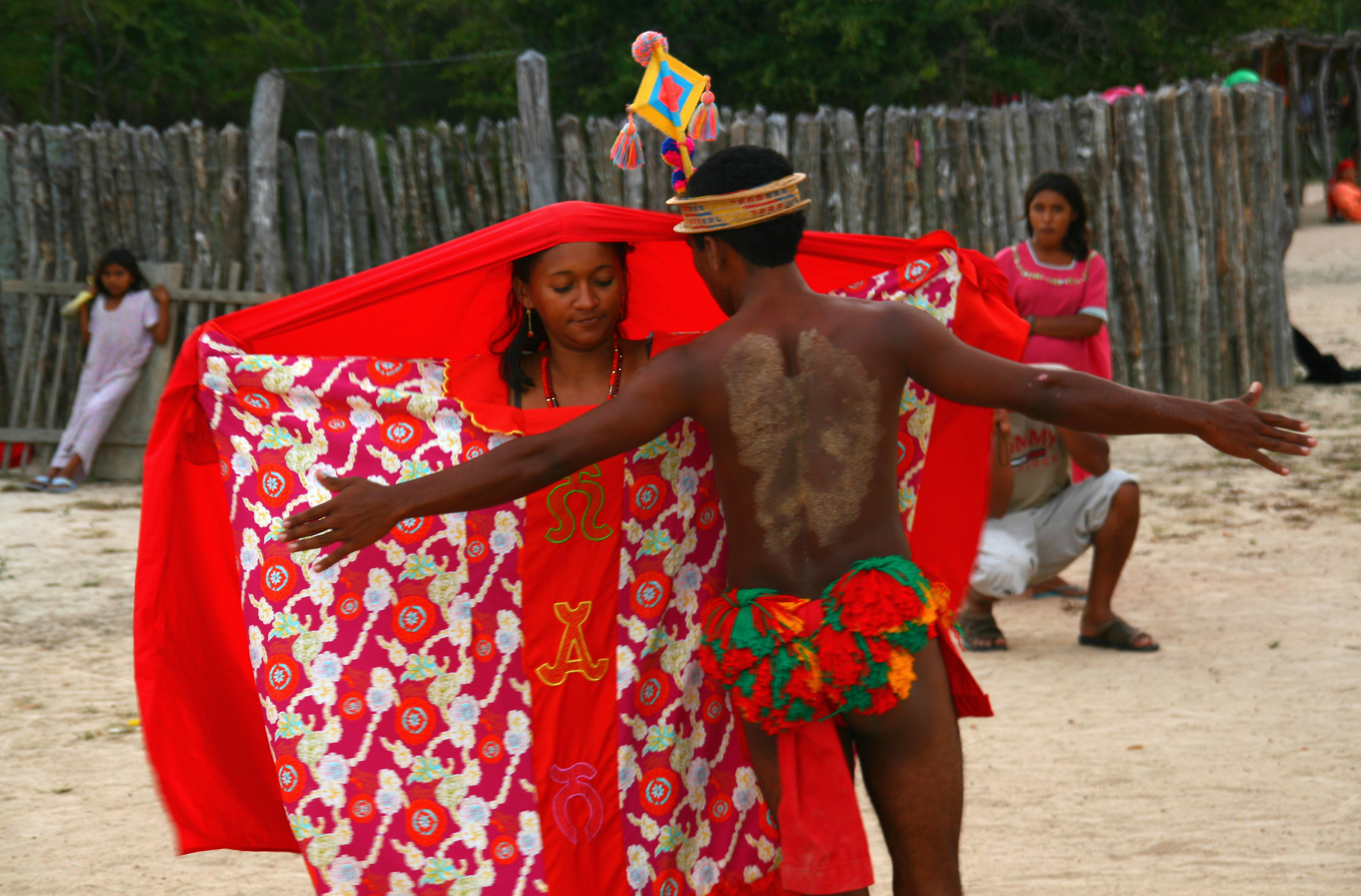
In South America, Indigenous peoples comprise the Pre-Columbian peoples and their descendants, as contrasted with people of European ancestry and those of African descent. In Spanish, Indigenous peoples are referred to as pueblos indígenas (), or pueblos nativos (). The term aborigen () is used in Argentina, and pueblos aborígenes () is commonly used in Colombia. The English term Amerindian (short for "Indians of the Americas") is often used in the Guianas. Latin Americans of mixed European and Indigenous descent are usually referred to as mestizos (Spanish) and mestiços (Portuguese), while those of mixed African and Indigenous ancestry are referred to as zambos.
It is believed that the first human populations of South America either arrived from Asia into North America via the Bering Land Bridge and migrated southwards or alternatively from Polynesia across the Pacific. The earliest generally accepted archaeological evidence for human habitation in South America dates to 14,000 years ago, and is located at the Monte Verde site in southern Chile. The descendants of these first inhabitants would become the Indigenous populations of South America.
Before the Spanish colonization of the Americas, many of the Indigenous peoples of South America were hunter-gatherers and indeed many still are, especially in the Amazon rainforest. Others, especially the Andean cultures, practised sophisticated agriculture, utilized advanced irrigation and kept domesticated livestock, such as llamas and alpacas.
The only South American country that presently has a majority-Indigenous population is Bolivia, with 62% of Bolivians identifying as a member of an Indigenous group.
South American Indigenous peoples include:
- Indigenous peoples in Argentina
- Indigenous peoples in Bolivia
- Indigenous peoples in Brazil
- Indigenous peoples in Chile
- Indigenous peoples in Colombia
- Indigenous peoples in Ecuador
- Indigenous peoples in French Guiana
- Indigenous peoples in Guyana
- Indigenous peoples in Paraguay
- Indigenous peoples in Peru
- Indigenous peoples in Suriname
- Indigenous peoples in Uruguay
- Indigenous peoples in Venezuela
References
References
- "Perú: Perfil Sociodemográfico". Instituto Nacional de Estadística e Informática.
- "Características de la Población – Censo 2012". Instituto Nacional de Estadística.
- "Síntesis de Resultados Censo 2017". Instituto Nacional de Estadísticas.
- "Censo Demográfico 2022: Identificação étnico-racial da população, por sexo e idade". Instituto Brasileiro de Geografia e Estatística.
- "Población Indígena de Colombia". Departamento Administrativo Nacional de Estadística.
- "Censo Nacional de Población, Hogares y Viviendas 2022: Población indígena o descendiente de pueblos indígenas u originarios". Instituto Nacional de Estadística y Censos (INDEC).
- "Presentación de Resultados Nacionales". Instituto Nacional de Estadística y Censos.
- "Resultados Población Indígena". Instituto Nacional de Estadística.
- "Población por sexo y principal ascendencia étnico racial, según departamento". Instituto Nacional de Estadística.
- "Tierra y territorio, fundamentos de vida de los pueblos indígenas, 2012". Dirección General de Estadística, Encuestas y Censos.
- "Final 2012 Census Compendium 2". Bureau of Statistics.
- "Demografische en Sociale Karakteristieken en Migratie". Algemeen Bureau voor de Statistiek.
- Aupetit, Mathilde. "Les populations indigènes de la Guyane française: une mémoire environnementale essentielle à protéger".
- {{cite encyclopedia. (1987). Macmillan
- "Study confirms Bering land bridge flooded later than previously believed".
- (July 28, 2008). "Indo-European and Asian origins for Chilean and Pacific chickens revealed by mtDNA". Proceedings of the National Academy of Sciences.
- "Journal of the Polynesian Society: Notes And Queries, P 255-258".
- Hey, Jody. (2005-05-24). "On the Number of New World Founders: A Population Genetic Portrait of the Peopling of the Americas". PLOS Biology.
- Earls, John. "The Character of Inca and Andean Agriculture".
- "4.1 Raised beds and waru waru cultivation".
- Pinedo, Javier Blossiers. "AGRICULTURA DE LADERAS A TRAVÉS DE ANDENES, PERÚ".
- "Bolivia". The CIA World Factbook.
This article was imported from Wikipedia and is available under the Creative Commons Attribution-ShareAlike 4.0 License. Content has been adapted to SurfDoc format. Original contributors can be found on the article history page.
Ask Mako anything about Indigenous peoples of South America — get instant answers, deeper analysis, and related topics.
Research with MakoFree with your Surf account
Create a free account to save articles, ask Mako questions, and organize your research.
Sign up freeThis content may have been generated or modified by AI. CloudSurf Software LLC is not responsible for the accuracy, completeness, or reliability of AI-generated content. Always verify important information from primary sources.
Report