From Surf Wiki (app.surf) — the open knowledge base
Indian National Airways
Defunct Indian airline, 1933–1953
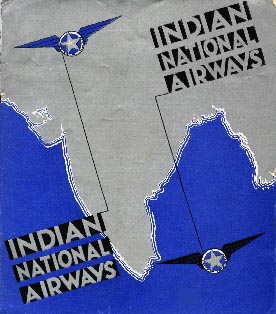
Defunct Indian airline, 1933–1953
Indian National Airways Ltd was an airline based in Delhi, India. The founder of the airline was R. E. Grant Govan, a Delhi based British industrialist who also co-founded the Board of Control for Cricket in India and the Cricket Club of India. The airline was formed on the basis of a government airmail contract.
History
The company was started by Govan Bros Ltd. in May 1933 with a capital of Rs. 3 million. It became the second airline to start operations in India in December 1933, with weekly passenger and freight services from Calcutta to Rangoon and Dhaka. It also started a weekly service between Karachi and Lahore, a feeder service for Imperial Airways. By 1937 the airline had clocked over a million miles and made a slender annual profit.
The airline was awarded another government contract in 1938 under the Empire Air Mail Scheme for carrying first class mail on the Karachi - Lahore and Karachi - Colombo routes for a period of ten years along with Tata Airlines. This was a major boost for aviation in India. As this contract promised a minimum income along with an operating subsidy, the company was able to expand and renovate its fleet. During World War II, all mail contracts were suspended and aircraft put under government disposal. Only spare capacity was allowed for commercial use, which affected the industry on the whole.
It was one of the four major airlines in India at the time of Indian Independence in 1947. Govan Bros Ltd. and all its businesses, including Indian National Airways Ltd, was sold to the Ramkrishna Dalmia led Dalmia Group on 4 July 1946. As of 1947, the airline had a fleet of six Vickers Vikings with another nine De Havilland Doves on order. The company also bought some war-surplus Douglas DC-3 aircraft from the United States of America at the end of the war. In 1953, Indian National Airways was nationalised and merged into Indian Airlines.
References
References
- Khosla, Gopal Das. (1966). "Award on the industrial dispute between Air-India and their workmen". India. National Industrial Tribunal (Airlines Disputes), Manager of Publications.
- (London, England), East India Association. (1957). "Asian review". East & West Ltd.
- (1953). "Aeroplane directory of British aviation". Published by the English Universities for Temple Press.
- Vasant Raiji, Anandji Dossa. (1987). "CCI & the Brabourne Stadium, 1937-1987". Cricket Club of India.
- (1973). "India today and tomorrow, Volume 5". V.J. Joseph..
- (2005). "Aviation news, Volume 67". HPC Publishing.
- Seth, Pran Nath. (2006). "Successful Tourism: Volume II: Tourism Practices". Sterling Publishers Pvt. Ltd.
- (1960). "India: annual review". Information Service of India..
- (1947). "Aeroplane and commercial aviation news".
- Boulger, Demetrius Charles. (1970). "Asian review". East & West.
- Dr.SC Aggarwal, Dr. RK Rana. "Basic Mathematics for Economists". FK Publications.
- Hudson Wood, Robert. (1947). "Aviation news, Volume 7". McGraw-Hill Pub. Co.
- Reed, Sir Stanley. (1949). "The Times of India directory and year book including who's who, Volume 35". Bennett, Coleman..
This article was imported from Wikipedia and is available under the Creative Commons Attribution-ShareAlike 4.0 License. Content has been adapted to SurfDoc format. Original contributors can be found on the article history page.
Ask Mako anything about Indian National Airways — get instant answers, deeper analysis, and related topics.
Research with MakoFree with your Surf account
Create a free account to save articles, ask Mako questions, and organize your research.
Sign up freeThis content may have been generated or modified by AI. CloudSurf Software LLC is not responsible for the accuracy, completeness, or reliability of AI-generated content. Always verify important information from primary sources.
Report