From Surf Wiki (app.surf) — the open knowledge base
Indian Institutes of Technology
Public technical universities in India

Public technical universities in India
| Field | Value | |||||
|---|---|---|---|---|---|---|
| name | Indian Institutes of Technology | |||||
| image | IIT Kharagpur 2016.jpg | |||||
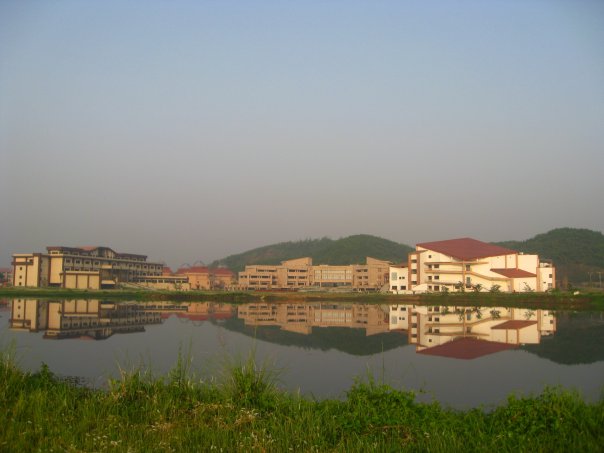
| caption | Campus of IIT Kharagpur, oldest and one of 23 IITs | |||||
| other_name | IIT or IITs (plural) | |||||
| type | Public technical institute | |||||
| head_label | Visitor | |||||
| head | President of India | |||||
| budget | ||||||
| (FY2024–25 est.) | ||||||
| location | 23 cities in India (2 more campuses overseas, in UAE & Tanzania){{cite web | url=http://iitmz.ac.in/ | ||||
| title | IIT Madras Zanzibar | access-date=19 October 2025}}{{cite web | url=http://abudhabi.iitd.ac.in/ | |||
| title | IITD Abu Dhabi Campus | access-date=19 October 2025}} | ||||
| language | English | |||||
| established | {{Start date and age | df=yes | paren=yes | br=yes | 1950 | 05 |
| parent | Ministry of Education, Government of India | |||||
| website |
(FY2024–25 est.) |15}}
The Indian Institutes of Technology (IITs) are a network of prestigious, autonomous public engineering and technology institutions in India. Established in 1950, they are under the purview of the Ministry of Education of the Government of India and are governed by the Institutes of Technology Act, 1961. The Act designates them as Institutes of National Importance and lays down their powers, duties, and governance framework as the country's premier institutions in the field of technology.{{cite web |url=https://www.iitsystem.ac.in/
List of all Indian Institutes of Technology
| No. | Name | Abbreviation | Founded | Converted as IIT | State/UT | Website | Faculty | Students | ||||||||||||||||
|---|---|---|---|---|---|---|---|---|---|---|---|---|---|---|---|---|---|---|---|---|---|---|---|---|
| 1 | IIT Kharagpur | IITKGP | 1951 | 1951 | West Bengal | title=NIRF 2024 IITKGP | url=https://www.iitkgp.ac.in/assets/pdf/nirf24_overall.pdf | publisher=NIRF | access-date=30 August 2024 | archive-date=19 September 2024 | archive-url=https://web.archive.org/web/20240919215101/https://www.iitkgp.ac.in/assets/pdf/nirf24_overall.pdf | url-status=live }} | 15,862 | |||||||||||
| 2 | IIT Bombay | IITB | 1958 | 1958 | Maharashtra | title=NIRF 2024 IITB | url=https://www.nirfindia.org/nirfpdfcdn/2024/pdf/Overall/IR-O-U-0306.pdf | publisher=Ministry of Education | access-date=30 August 2024 | archive-date=15 August 2024 | archive-url=https://web.archive.org/web/20240815145108/https://www.nirfindia.org/nirfpdfcdn/2024/pdf/Overall/IR-O-U-0306.pdf | url-status=live }} | 12,976 | |||||||||||
| 3 | IIT Madras | IITM | 1959 | 1959 | Tamil Nadu | title=NIRF 2024 IITM | url=https://www.nirfindia.org/nirfpdfcdn/2024/pdf/Overall/IR-O-U-0456.pdf | publisher=Ministry of Education | access-date=30 August 2024 | archive-date=13 August 2024 | archive-url=https://web.archive.org/web/20240813134024/https://www.nirfindia.org/nirfpdfcdn/2024/pdf/Overall/IR-O-U-0456.pdf | url-status=live }} | 10,238 | |||||||||||
| 4 | IIT Kanpur | IITK | 1959 | 1959 | Uttar Pradesh | title=NIRF 2024 IITK | url=https://www.nirfindia.org/nirfpdfcdn/2024/pdf/Overall/IR-O-I-1075.pdf | publisher=Ministry of Education}} | 8,346 | |||||||||||||||
| 5 | IIT Delhi | IITD | 1961 | 1961 | Delhi | title=NIRF 2024 IITD | url=https://www.nirfindia.org/nirfpdfcdn/2024/pdf/Overall/IR-O-I-1074.pdf | publisher=Ministry of Education}} | 12,543 | |||||||||||||||
| 6 | IIT Guwahati | IITG | 1994 | 1995 | Assam | title=NIRF 2024 IITG | url=https://www.nirfindia.org/nirfpdfcdn/2024/pdf/Overall/IR-O-U-0053.pdf | publisher=Ministry of Education | access-date=30 August 2024 | archive-date=15 August 2024 | archive-url=https://web.archive.org/web/20240815144909/https://www.nirfindia.org/nirfpdfcdn/2024/pdf/Overall/IR-O-U-0053.pdf | url-status=live }} | 7,849 | |||||||||||
| 7 | IIT Roorkee | IITR | 1847 | last=Information notification | first=University of Roorkee to IIT Roorkee | title=The Institutes of Technology (Amendment) Act, 2002 | work=The eGazette of India | url=http://egazette.nic.in/WriteReadData/2001/E-2501-2001-0055-113436.pdf | access-date=7 September 2020 | archive-date=2 January 2021 | archive-url=https://web.archive.org/web/20210102224202/http://egazette.nic.in/WriteReadData/2001/E-2501-2001-0055-113436.pdf | url-status=live}} | Uttarakhand | title=NIRF 2024 IITR | url=https://www.nirfindia.org/nirfpdfcdn/2024/pdf/Overall/IR-O-U-0560.pdf | publisher=Ministry of Education | access-date=30 August 2024 | archive-date=15 August 2024 | archive-url=https://web.archive.org/web/20240815125219/https://www.nirfindia.org/nirfpdfcdn/2024/pdf/Overall/IR-O-U-0560.pdf | url-status=live }} | 9,735 | |||
| 8 | IIT Jodhpur | IITJ | 2008 | 2008 | Rajasthan | title=NIRF 2024 IITJ | url=https://www.nirfindia.org/nirfpdfcdn/2024/pdf/Overall/IR-O-U-0395.pdf | publisher=Ministry of Education}} | 3,308 | |||||||||||||||
| 9 | IIT Ropar | IITRPR | 2008 | 2008 | Punjab | title=NIRF 2024 IITRPR | url=https://www.nirfindia.org/nirfpdfcdn/2024/pdf/Overall/IR-O-U-0378.pdf | publisher=Ministry of Education | access-date=30 August 2024 | archive-date=15 August 2024 | archive-url=https://web.archive.org/web/20240815164856/https://www.nirfindia.org/nirfpdfcdn/2024/pdf/Overall/IR-O-U-0378.pdf | url-status=live }} | 2,768 | |||||||||||
| 10 | IIT Gandhinagar | IITGN | 2008 | 2008 | Gujarat | title=NIRF 2024 IITGN | url=https://www.nirfindia.org/nirfpdfcdn/2024/pdf/Overall/IR-O-U-0139.pdf | publisher=Ministry of Education | access-date=30 August 2024 | archive-date=15 August 2024 | archive-url=https://web.archive.org/web/20240815125336/https://www.nirfindia.org/nirfpdfcdn/2024/pdf/Overall/IR-O-U-0139.pdf | url-status=live }} | 2,010 | |||||||||||
| 11 | IIT Hyderabad | IITH | 2008 | 2008 | Telangana | title=NIRF 2024 IITH | url=https://www.nirfindia.org/nirfpdfcdn/2024/pdf/Overall/IR-O-U-0013.pdf | publisher=Ministry of Education | access-date=30 August 2024 | archive-date=15 August 2024 | archive-url=https://web.archive.org/web/20240815130123/https://www.nirfindia.org/nirfpdfcdn/2024/pdf/Overall/IR-O-U-0013.pdf | url-status=live }} | 3,946 | |||||||||||
| 12 | IIT Patna | IITP | 2008 | 2008 | Bihar | title=NIRF 2024 IITP | url=https://www.nirfindia.org/nirfpdfcdn/2024/pdf/Overall/IR-O-U-0064.pdf | publisher=Ministry of Education | access-date=30 August 2024 | archive-date=15 August 2024 | archive-url=https://web.archive.org/web/20240815140422/https://www.nirfindia.org/nirfpdfcdn/2024/pdf/Overall/IR-O-U-0064.pdf | url-status=live }} | 2,883 | |||||||||||
| 13 | IIT Bhubaneswar | IITBBS | 2008 | 2008 | Odisha | title=NIRF 2024 IITBBS | url=https://www.nirfindia.org/nirfpdfcdn/2024/pdf/Engineering/IR-E-U-0355.pdf | publisher=Ministry of Education | access-date=30 August 2024 | archive-date=30 August 2024 | archive-url=https://web.archive.org/web/20240830114551/https://www.nirfindia.org/nirfpdfcdn/2024/pdf/Engineering/IR-E-U-0355.pdf | url-status=live }} | 2,597 | |||||||||||
| 14 | IIT Mandi | IITMD | 2009 | 2009 | Himachal Pradesh | title=NIRF 2024 IITMandi | url=https://www.nirfindia.org/nirfpdfcdn/2024/pdf/Overall/IR-O-U-0184.pdf | publisher=Ministry of Education | access-date=30 August 2024 | archive-date=15 August 2024 | archive-url=https://web.archive.org/web/20240815130503/https://www.nirfindia.org/nirfpdfcdn/2024/pdf/Overall/IR-O-U-0184.pdf | url-status=live }} | 2,343 | |||||||||||
| 15 | IIT Indore | IITI | 2009 | 2009 | Madhya Pradesh | title=NIRF 2024 IITI | url=https://www.nirfindia.org/nirfpdfcdn/2024/pdf/Overall/IR-O-U-0273.pdf | publisher=Ministry of Education}} | 2,323 | |||||||||||||||
| 16 | IIT (BHU) Varanasi | IITBHU | 1919 | last=Information notification | first=IT-BHU to IIT (BHU) Varanasi | title=The Institutes of Technology (Amendment) Bill, 2011 | work=The eGazette of India | url=http://egazette.nic.in/WriteReadData/2012/E_36_2012_135.pdf | access-date=7 September 2020 | archive-date=2 January 2021 | archive-url=https://web.archive.org/web/20210102224202/http://egazette.nic.in/WriteReadData/2012/E_36_2012_135.pdf | url-status=live}} | Uttar Pradesh | title=NIRF 2024 IITBHU | url=https://www.nirfindia.org/nirfpdfcdn/2024/pdf/Overall/IR-O-U-0701.pdf | publisher=Ministry of Education | access-date=30 August 2024 | archive-date=15 August 2024 | archive-url=https://web.archive.org/web/20240815130129/https://www.nirfindia.org/nirfpdfcdn/2024/pdf/Overall/IR-O-U-0701.pdf | url-status=live }} | 7,980 | |||
| 17 | IIT Palakkad | IITPKD | title=JEE Advanced 2015: IIT Bombay announces that four new IITs will admit students from this session | url=http://www.prepsure.com/news/jee-advanced-2015-iit-bombay-announces-that-4-new-iits-will-admit-students-from-this-session/ | access-date=12 June 2015 | work=Prepsure.com | archive-date=27 June 2015 | archive-url=https://web.archive.org/web/20150627021308/http://www.prepsure.com/news/jee-advanced-2015-iit-bombay-announces-that-4-new-iits-will-admit-students-from-this-session/ | url-status=live}} | 2015 | Kerala | title=NIRF 2024 IITPKD | url=https://www.nirfindia.org/nirfpdfcdn/2024/pdf/Engineering/IR-E-U-0878.pdf | publisher=Ministry of Education | access-date=30 August 2024 | archive-date=30 August 2024 | archive-url=https://web.archive.org/web/20240830081131/https://www.nirfindia.org/nirfpdfcdn/2024/pdf/Engineering/IR-E-U-0878.pdf | url-status=live }} | 1370 | |||||
| 18 | IIT Tirupati | IITT | date=2015-06-25 | title=IIT Tirupati all set to begin classes from Aug. 5 | language=en-IN | work=The Hindu | url=https://www.thehindu.com/news/national/andhra-pradesh/iit-tirupati-all-set-to-begin-classes-from-aug-5/article7355881.ece | access-date=2023-01-28 | issn=0971-751X | archive-date=4 December 2017 | archive-url=https://web.archive.org/web/20171204061907/http://www.thehindu.com/news/national/andhra-pradesh/iit-tirupati-all-set-to-begin-classes-from-aug-5/article7355881.ece | url-status=live }} | 2015 | Andhra Pradesh | title=NIRF 2024 IITT | url=https://www.nirfindia.org/nirfpdfcdn/2024/pdf/Engineering/IR-E-U-0844.pdf | publisher=Ministry of Education | access-date=30 August 2024 | archive-date=30 August 2024 | archive-url=https://web.archive.org/web/20240830080718/https://www.nirfindia.org/nirfpdfcdn/2024/pdf/Engineering/IR-E-U-0844.pdf | url-status=live }} | 1,168 | ||
| 19 | IIT (ISM) Dhanbad | IITISM | 1926 | last=Information notification | first=ISM Dhanbad to IIT (ISM) Dhanbad | title=The Institutes of Technology (Amendment) Bill, 2016 | work=The eGazette of India | url=http://egazette.nic.in/WriteReadData/2016/171218.pdf | access-date=12 August 2016 | archive-date=2 January 2021 | archive-url=https://web.archive.org/web/20210102224202/http://egazette.nic.in/WriteReadData/2016/171218.pdf | url-status=live}} | Jharkhand | title=NIRF 2024 IITISM | url=https://www.nirfindia.org/nirfpdfcdn/2024/pdf/Overall/IR-O-U-0205.pdf | publisher=Ministry of Education | access-date=30 August 2024 | archive-date=15 August 2024 | archive-url=https://web.archive.org/web/20240815132420/https://www.nirfindia.org/nirfpdfcdn/2024/pdf/Overall/IR-O-U-0205.pdf | url-status=live }} | 6,660 | |||
| 20 | IIT Bhilai | IITBH | url=http://indianexpress.com/article/education/chhattisgarh-to-open-iit-in-bhilai/ | title=Chhattisgarh to open IIT campus in Bhilai | work=The Indian Express | date=14 January 2016 | access-date=14 January 2016 | archive-date=9 December 2019 | archive-url=https://web.archive.org/web/20191209091658/https://indianexpress.com/article/education/chhattisgarh-to-open-iit-in-bhilai/ | url-status=live}} | 2016 | Chhattisgarh | title=NIRF 2024 IITBhilai | url=https://www.nirfindia.org/nirfpdfcdn/2024/pdf/Engineering/IR-E-U-0946.pdf | publisher=Ministry of Education}} | 806 | ||||||||
| 21 | IIT Dharwad | IITDH | url=https://timesofindia.indiatimes.com/city/bengaluru/Dharwad-will-host-first-IIT-of-Karnataka/articleshow/48877460.cms | title=Dharwad will host first IIT of Karnataka | work=The Times of India | date=9 September 2015 | access-date=9 September 2015 | archive-date=12 May 2020 | archive-url=https://web.archive.org/web/20200512160015/https://timesofindia.indiatimes.com/city/bengaluru/Dharwad-will-host-first-IIT-of-Karnataka/articleshow/48877460.cms | url-status=live}} | 2016 | Karnataka | title=NIRF 2024 IITDH | url=https://www.iitdh.ac.in/sites/default/files/2024-02/IIT%20Dharwad_NIRF%202024_Engineering_29_02_2024.pdf | publisher=IIT Dharwad}} | 866 | ||||||||
| 22 | IIT Jammu | IITJMU | url=http://www.business-standard.com/article/pti-stories/iit-jammu-to-be-set-up-at-chak-bhalwal-115042301037_1.html | title=IIT Jammu to be set up at Chak Bhalwal | newspaper=Business Standard India | date=23 April 2015 | access-date=12 June 2015 | archive-date=9 December 2019 | archive-url=https://web.archive.org/web/20191209091656/https://www.business-standard.com/article/pti-stories/iit-jammu-to-be-set-up-at-chak-bhalwal-115042301037_1.html | url-status=live | agency=Press Trust of India}} | 2016 | Jammu and Kashmir | title=NIRF 2024 IIT Jammu | url=https://iitjammu.ac.in/nirf/Indian%20Institute%20of%20Technology%20Jammu20240228.pdf | publisher=IIT Jammu | access-date=30 August 2024 | archive-date=3 December 2024 | archive-url=https://web.archive.org/web/20241203190618/https://iitjammu.ac.in/nirf/Indian%20Institute%20of%20Technology%20Jammu20240228.pdf | url-status=live }} | 1,178 | |||
| 23 | IIT Goa | IITGOA | url=http://timesofindia.indiatimes.com/city/goa/Failure-to-identify-land-likely-to-delay-setting-up-of-IIT-in-Goa/articleshow/47089363.cms | title=Failure to identify land likely to delay setting up of IIT in Goa | work=The Times of India | date=29 April 2015 | access-date=12 June 2015 | archive-date=18 February 2020 | archive-url=https://web.archive.org/web/20200218183921/https://timesofindia.indiatimes.com/city/goa/Failure-to-identify-land-likely-to-delay-setting-up-of-IIT-in-Goa/articleshow/47089363.cms | url-status=live}} | 2016 | Goa | url=https://iitgoa.ac.in/wp-content/uploads/Indian-Institute-of-Technology-Goa20250326-NIRF.pdf/ | title=IIT Goa NIRF Data | date=1 May 2025}} | 73 |
History



Main article: History of Indian Institutes of Technology
In the late 1940s, a 22-member committee, headed by Nalini Ranjan Sarkar, recommended the establishment of these institutions in various parts of India, along the lines of the Massachusetts Institute of Technology (MIT), with affiliated secondary institutions.
The first Indian Institute of Technology was founded in May 1950 at the site of the Hijli Detention Camp in Kharagpur, West Bengal. The name "Indian Institute of Technology" was adopted before the formal inauguration of the institute on 18 August 1951 by Maulana Abul Kalam Azad.
On 15 September 1956, the Parliament of India passed the Indian Institute of Technology (Kharagpur) Act, declaring it as an Institute of National Importance. Jawaharlal Nehru, first Prime Minister of India, in the first convocation address of IIT Kharagpur in 1956, said: On the recommendations of the Sarkar Committee, four campuses were established at Bombay (1958), Madras (1959), Kanpur (1959), and Delhi (1961). The locations of these campuses were chosen to be scattered throughout India to prevent regional imbalance. The Indian Institutes of Technology Act was amended to reflect the addition of new IITs.{{cite web| date = 24 May 2005 | url = http://www.iitb.ac.in/legal/IITsAct.pdf | archive-url = https://web.archive.org/web/20120106041957/http://www.iitb.ac.in/legal/IITsAct.pdf | archive-date=6 Jan 2012 | title = The Institutes of Technology Act, 1961
In the tenth meeting of IIT Council in 1972, it was also proposed to convert the then IT-BHU into an IIT and a committee was appointed by IIT Council for the purpose but because of political reasons, the desired conversion could not be achieved then. IT-BHU had been taking admissions through Indian Institute of Technology Joint Entrance Examination (IIT-JEE) for undergraduate courses and Graduate Aptitude Test in Engineering (GATE) for postgraduate courses since 1972. Finally, in 2012 the Institute of Technology, Banaras Hindu University was made a member of the IITs and renamed as IIT (BHU) Varanasi.
Student agitations in the state of Assam made Prime Minister Rajiv Gandhi promise the creation of a new IIT in Assam. This led to the establishment of a sixth institution at Guwahati under the Assam Accord in 1994.
In 2001, the University of Roorkee was converted into IIT Roorkee. Over the past few years, there have been several developments toward establishing new IITs. On 1 October 2003, Prime Minister Atal Bihari Vajpayee announced plans to create more IITs "by upgrading existing academic institutions that have the necessary promise and potential". Subsequent developments led to the formation of the S K Joshi Committee, in November 2003, to guide the selection of the five institutions which would be converted into IITs. Based on the initial recommendations of the Sarkar Committee, it was decided that new IITs should be spread throughout the country. When the government expressed its willingness to correct this regional imbalance, 16 states demanded IITs. Since the S K Joshi Committee prescribed strict guidelines for institutions aspiring to be IITs, only seven colleges were selected for final consideration. Plans are also reported to open IITs outside India, although there has not been much progress in this regard. Eventually in the 11th Five year plan, eight states were identified for establishment of new IITs.
From 2008 to 2009, eight new IITs were set up in Gandhinagar, Jodhpur, Hyderabad, Indore, Patna, Bhubaneswar, Ropar, and Mandi.
In 2015 and 2016, six new IITs were established in Tirupati, Palakkad, Dharwad, Bhilai, Goa, and Jammu, as approved by a 2016 bill amendment, along with the conversion of Indian School of Mines Dhanbad into IIT, Dhanbad.
The entire allocation by the central government for the 2017–18 budget for all Indian Institutes of Technology (IITs) was slightly over . However, the aggregate money spent by Indian students for tertiary education in the United States was about six times more than what the central government spends on all IITs.
In June 2023, education officials of India and Tanzania announced that the first foreign IIT campus would be established on the Tanzanian autonomous territory of Zanzibar, as a satellite campus of IIT Madras. The campus is scheduled to begin offering classes in October 2023.
Organisational structure
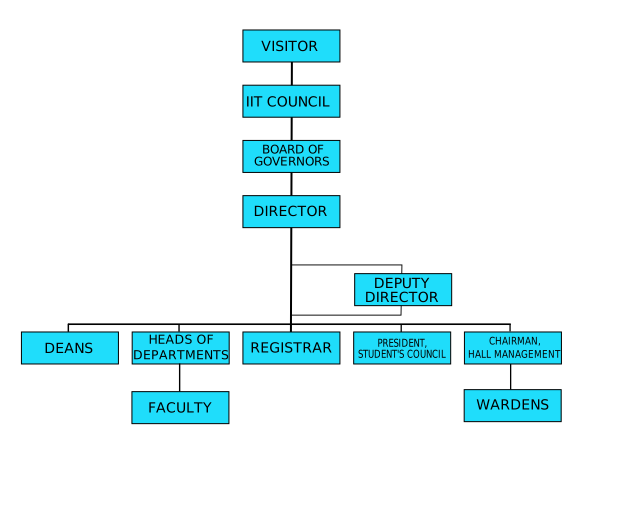
The President of India is the ex officio Visitor, and has residual powers. Directly under the President is the IIT Council, comprising minister-in-charge of technical education in the Union Government, the Chairmen of all IITs, the Directors of all IITs, the Chairman of the University Grants Commission, the Director General of CSIR, the Chairman of IISc, the Director of IISc, three members of Parliament, the Joint Council Secretary of Ministry of Education, and three appointees each of the Union Government, AICTE, and the Visitor.
Under the IIT Council is the Board of Governors of each IIT. Under the Board of Governors is the Director, who is the chief academic and executive officer of the IIT. Under the Director, in the organisational structure, comes the Deputy Director. Under the Director and the deputy director, come the Deans, Heads of Departments, Registrar, President of the Students' Council, and Chairman of the Hall Management Committee. The Registrar is the chief administrative officer of the IIT and overviews the day-to-day operations. Below the Heads of Department (HOD) are the faculty members (Professors, Associate Professors, and Assistant Professors). The Wardens come under the Chairman of the Hall Management Committee.
The Institutes of Technology Act
Main article: Institutes of Technology Act
The Institute of Technology Act (parliamentary legislation) gives legal status, including degree-granting powers, to the Indian Institutes of Technology (IITs). It was notified in the gazette as Act Number 59 of 1961 on 20 December 1961 and came into effect on 1 April 1962. The Act also declares these institutes as Institutes of National Importance.
Academics


The IITs receive comparatively higher grants than other engineering colleges in India. While the total government funding to most other engineering colleges is around 100–200 million ($– million) per year, the amount varies between 900–1300 million ($– million) per year for each IIT. Other sources of funds include student fees and research funding from industry and contributions from the alumni. The faculty-to-student ratio in the IITs is between 1:6 and 1:8. The Standing Committee of IIT Council (SCIC) prescribes the lower limit for faculty-to-student ratio as 1:9, applied department wise. The IITs subsidize undergraduate student fees by approximately 80% and provide scholarships to all Master of Technology students and Research Scholars (PhD) to encourage students for higher studies, per the recommendations of the Thacker Committee (1959–1961). The cost borne by undergraduate students is around per year. Students from the OBC, ST, SC categories, female students as well as physically challenged students are also entitled to scholarships.
The various IITs function autonomously, and their special status as Institutes of National Importance facilitates the smooth running of IITs, virtually free from both regional as well as student politics. Such autonomy means that IITs can create their curricula and adapt rapidly to the changes in educational requirements, free from bureaucratic hurdles. The government has no direct control over internal policy decisions of IITs (like faculty recruitment and curricula) but has representation on the IIT Council. The medium of instruction in all IITs is English. The electronic libraries allow students to access online journals and periodicals. The IITs and IISc, Bengaluru have taken an initiative along with Ministry of Education to provide free online videos of actual lectures of different disciplines under National Programme on Technology Enhanced Learning. This initiative is undertaken to make quality education accessible to all students.
The academic policies of each IIT are decided by its Senate. This comprises all professors of the IIT and student representatives. Unlike many Western universities that have an elected senate, the IITs have an academic senate. It controls and approves the curriculum, courses, examinations and results, and appoints committees to look into specific academic matters. The teaching, training and research activities of the institute are periodically reviewed by the senate to maintain educational standards. The Director of an IIT is the ex-officio Chairman of the Senate.
All the IITs follow the credits system of performance evaluation, with proportional weighting of courses based on their importance. The total marks (usually out of 100) form the basis of grades, with a grade value (out of 10) assigned to a range of marks. Sometimes, relative grading is done considering the overall performance of the whole class. For each semester, the students are graded on a scale of 0 to 10 based on their performance, by taking a weighted average of the grade points from all the courses, with their respective credit points. Each semester evaluation is done independently and then the weighted average over all semesters is used to calculate the cumulative Grade Point Average (known as CGPA or CPI—Cumulative Performance Index).
Undergraduate education degrees
The Bachelor of Technology (BTech) degree is the most common undergraduate degree in the IITs in terms of student enrollment, although Bachelor of Science (BS) degree, dual degrees integrating Master of Science or Master of Arts are also offered. The BTech course is based on a 4-year program with eight semesters, while the Dual Degree and Integrated courses are 5-year programs with ten semesters. In most IITs, the first year of BTech and Dual Degree courses are marked by a common course structure for all the students, though in some IITs, a single department introduction-related course is also included. The common courses include the basics from most of the departments like Computers, Electronics, Mechanics, Chemistry, Electrical and Physics. At the end of the first year (the end of the first semester at IIT Madras, IIT Bhilai, IIT Palakkad, and IIT Roorkee), an option to change departments is given to meritorious students based on their performance in the first two semesters. Few such changes ultimately take place as the criteria for them are usually strict, limited to the most meritorious students. Many IITs, such as IIT Bombay, IIT Hyderabad, IIT Kharagpur have abolished the practice of branch-change in order to reduce stress. Department-specific courses also begin earlier.
From the second year onward, the students study subjects exclusively from their respective departments. In addition to these, the students have to take compulsory advanced courses from other departments to broaden their education. Separate compulsory courses from humanities and social sciences departments, and sometimes management courses are also enforced. In the last year of their studies, most of the students are placed into industries and organisations via the placement process of the respective IIT, though some students opt out of this either when going for higher studies or when they take up jobs by applying to the companies directly.
Certain IITs, such as IIT Kanpur, IIT Kharagpur, IIT Hyderabad and IIT Gandhinagar, offer students the option to pursue a double major degree, allowing them to graduate with majors in different disciplines. Most IITs also allow students to graduate with undergraduate minors (from a different discipline) and/or honours (from the same discipline as the major).
Postgraduate education
Master's degrees and postgraduate diplomas
The IITs offer several postgraduate programs including Master of Technology (MTech), Master of Business Administration (MBA), and Master of Science (MSc). Some IITs offer specialised graduate programmes such as Master of Design (M.Des.), the Post Graduate Diploma in Information Technology (PGDIT), Masters in Medical Science and Technology (MMST), Masters in City Planning (MCP), Master of Arts (MA), Postgraduate Diploma in intellectual property Law (PGDIPL), and the Postgraduate Diploma in Maritime Operation & Management (PGDMOM).
Some of the IITs offer an M.S. (by research) program; the MTech and M.S. are similar to the US universities' non-thesis (course-based) and thesis (research-based) masters programs respectively. Admissions to master's programs in engineering are made using scores of the Graduate Aptitude Test in Engineering (GATE), while those to master's programs in science are made using scores of the Joint Admission Test for M.Sc. (JAM).
Several IITs have schools of management offering master's degrees in management or business administration.
In April 2015, IIT Bombay launched the first U.S.-India joint EMBA program alongside Washington University in St. Louis.
Bachelors-Masters dual degrees
The IITs also offer an unconventional BTech and MTech integrated educational program called "Dual Degree". It integrates undergraduate and postgraduate studies in selected areas of specialisation. It is completed in five years as against six years in conventional BTech (four years) followed by an MTech (two years). Integrated Master of Science programs are also offered at few IITs which integrates the Undergraduate and Postgraduate studies in Science streams in a single degree program against the conventional university system. These programs were started to allow its graduates to complete postgraduate studies from IIT rather than having to go to another institute.
Doctoral
The IITs also offer the Doctor of Philosophy degree (PhD) as part of their doctoral education programme. In it, the candidates are given a topic of academic interest by the ins or have to work on a consultancy project given by the industries. The duration of the program is usually unspecified and depends on the specific discipline. PhD candidates have to submit a dissertation as well as provide an oral defence for their thesis. Teaching Assistantships (TA) and Research Assistantships (RA) are often provided.
The IITs, along with NITs and IISc, account for nearly 80% of all engineering PhDs in India. IITs now allow admission in PhD programs without the mandatory GATE score.
Culture and student life
All the IITs provide on-campus residential facilities to the students, research scholars and faculty. The students live in hostels (sometimes referred to as halls) throughout their stay in the IIT. Students in all IITs must choose among National Cadet Corps (NCC), National Service Scheme (NSS) and National Sports Organisation (NSO) in their first years. All the IITs have sports grounds for basketball, cricket, football (soccer), hockey, volleyball, lawn tennis, badminton, athletics and swimming pools for aquatic events. Usually, the hostels also have their own sports grounds.
Moreover, an Inter IIT Sports Meet is organised annually where participants from all 23 IITs contest for the General Championship Trophy in 13 different sports. Along with Inter IIT Cultural Meet and Tech Meet, all of them generally happening on various dates in the month of December every year.
Technical and cultural festivals


All IITs organize annual technical festivals, typically lasting three or four days. The technical festivals are Shaastra (IIT Madras), Advitiya (IIT Ropar), Kshitij (IIT Kharagpur), Techfest (IIT Bombay), Technex (IIT-BHU Varanasi), Cognizance (IIT Roorkee), Concetto (IIT-ISM Dhanbad), Tirutsava (IIT Tirupati), Nvision (IIT Hyderabad), Meraz (IIT Bhilai), Amalthea, (IIT Gandhinagar), Techkriti (IIT Kanpur), Tryst (IIT Delhi), Techniche (IIT Guwahati), Wissenaire (IIT Bhubaneswar), Technunctus (IIT Jammu), Xpecto (IIT Mandi), Fluxus (IIT Indore), Celesta (IIT Patna) and IGNUS (IIT Jodhpur) Petrichor(IIT Palakkad). Most of them are organized in January or March. Techfest (IIT Bombay) is also one of the most popular and largest technical festivals in Asia in terms of participants and prize money involved. It has been granted patronage from the United Nations Educational, Scientific and Cultural Organisation (UNESCO) for providing a platform for students to showcase their talent in science and technology. Shaastra holds the distinction of being the first student-managed event in the world to implement a formal Quality Management System, earning ISO 9001:2000 certification. Kshitij, which is branded as a techno-management festival due to its emphasis on both technology and management, is the largest of these festivals by sponsorship money.
Annual cultural festivals are also organized by the IITs and last three to four days. These include Thomso (IIT Roorkee), Kashiyatra (IIT BHU Varanasi), Alcheringa (IIT Guwahati), Exodia (IIT Mandi), Saarang and Paradox (annual fests of IIT Madras BTech and BS Degree respectively), Spring Fest (IIT Kharagpur, also known as SF), Rendezvous (IIT Delhi), Meraz (IIT Bhilai), Tirutsava (IIT Tirupati), Srijan, (earlier known as Saturnalia, IIT Dhanbad), Tarang (culfest) (previously Rave), Anwesha (IIT Patna), SPANDAN (IIT Jodhpur), Renao (IIT Jammu), Petrichor (IIT Palakkad), Blithchron (IIT Gandhinagar), ELAN (IIT Hyderabad), Alma Fiesta (IIT Bhubaneswar), Mood Indigo (IIT Bombay, also known as Mood-I), Antaragni (IIT Kanpur) and Zeitgeist (IIT Ropar).
Academic rankings
IITs have generally ranked as the top engineering colleges in India. In the 2025 NIRF rankings published by Ministry of Education, India, the IITs also hold the following top 10 positions in various categories:
- 9 out of 10 in Engineering
- 8 out of 10 in Innovation
- 7 out of 10 in Research
- 6 out of 10 in Overall Rankings
- 3 out of 10 in Sustainable Development Goals
- 2 out of 10 in Architecture and Planning
- 1 out of 10 in Management IIT Madras has been ranked 1st for ten consecutive years in the Engineering Category and for seven consecutive years in the Overall Category.
| Name | 2025 NIRF Engineering | 2024 NIRF Engineering | 2023 NIRF Engineering | 2022 NIRF Engineering | 2025 NIRF Overall | 2024 NIRF Overall | 2023 NIRF Overall | 2022 NIRF Overall | 2021 NIRF Overall | 2020 NIRF Overall |
|---|---|---|---|---|---|---|---|---|---|---|
| IIT Madras | 1 | 1 | 1 | 1 | 1 | 1 | 1 | 1 | 1 | 1 |
| IIT Delhi | 2 | 2 | 2 | 2 | 4 | 4 | 3 | 4 | 3 | 3 |
| IIT Bombay | 3 | 3 | 3 | 3 | 3 | 3 | 4 | 3 | 4 | 4 |
| IIT Kanpur | 4 | 4 | 4 | 4 | 5 | 5 | 5 | 5 | 6 | 6 |
| IIT Kharagpur | 5 | 5 | 6 | 5 | 6 | 6 | 7 | 6 | 5 | 5 |
| IIT Roorkee | 6 | 6 | 5 | 6 | 7 | 8 | 8 | 7 | 9 | 8 |
| IIT Hyderabad | 7 | 8 | 8 | 9 | 12 | 12 | 14 | 16 | 17 | 22 |
| IIT Guwahati | 8 | 7 | 7 | 7 | 11 | 9 | 9 | 8 | 7 | 9 |
| IIT (BHU) Varanasi | 10 | 10 | 15 | 13 | 31 | 30 | 31 | 28 | 26 | 28 |
| IIT Indore | 12 | 16 | 14 | 16 | 27 | 33 | 28 | 30 | 23 | N/A |
| IIT (ISM) Dhanbad | 15 | 15 | 17 | 14 | 35 | 35 | 42 | 26 | 22 | 25 |
| IIT Patna | 19 | 34 | 41 | 33 | 36 | 73 | 66 | 51 | 54 | 58 |
| IIT Gandhinagar | 25 | 18 | 18 | 23 | 39 | 29 | 24 | 33 | 35 | 51 |
| IIT Mandi | 26 | 31 | 33 | 20 | 58 | 72 | 73 | 82 | 67 | 44 |
| IIT Jodhpur | 27 | 28 | 30 | 30 | 66 | 68 | 66 | N/A | ||
| IIT Ropar | 32 | 22 | 22 | 22 | 56 | 48 | 33 | 31 | 39 | 29 |
| IIT Bhubaneswar | 39 | 54 | 47 | 36 | 80 | N/A | 91 | 58 | 56 | 46 |
| IIT Jammu | 56 | 62 | 67 | N/A | N/A | |||||
| IIT Tirupati | 57 | 61 | 59 | 56 | ||||||
| IIT Palakkad | 64 | 64 | 69 | 68 | ||||||
| IIT Bhilai | 72 | 73 | 81 | N/A | ||||||
| IIT Dharwad | 77 | N/A | 93 | N/A | ||||||
| IIT Goa | N/A | N/A | N/A | N/A |
According to Outlook India Top Engineering Colleges of 2017, the top four engineering colleges within India were IITs. In 2026 QS World University Ranking, IIT Delhi ranked highest at 123, followed by IIT Bombay (129), IIT Madras (180), IIT Kharagpur (215), IIT Kanpur (222). Five IITs are ranked within Top 100 among QS World Engineering ranking.
| Name | date=2025-09-18 | title=QS World University Rankings for Engineering & Technology 2025 | url=https://www.topuniversities.com/university-subject-rankings/engineering-technology | access-date=2025-09-20 | website=Top Universities | language=en}} | 2026 QS World | 2023 QS World | 2022 QS World | 2021 QS World | 2022 QS Asia | 2020 QS India | Times World | Times Asia |
|---|---|---|---|---|---|---|---|---|---|---|---|---|---|---|
| IIT Delhi | 26 | 123 | 185 | 193 | 182 | 45 | 3 | 401–500 (2020) | 67 (2020) | |||||
| IIT Bombay | 28 | 129 | 177 | 172 | 152 | 42 | 1 | 401–500 (2020) | 69 (2020) | |||||
| IIT Madras | 53 | 180 | 255 | 275 | 271 | 54 | 4 | 601–800 (2020) | 125 (2020) | |||||
| IIT Kharagpur | 60 | 215 | 280 | 314 | 281 | 60 | 5 | 401–500 (2020) | 59 (2020) | |||||
| IIT Kanpur | 72 | 222 | 277 | 350 | 291 | 64 | 6 | 601–800 (2020) | 125 (2020) | |||||
| IIT Roorkee | 131 | 339 | 400 | 383 | 383 | 109 | 9 | 501–600 (2020) | 83 (2020) | |||||
| IIT Guwahati | 140 | 334 | 395 | 470 | 491 | 119 | 10 | 601–800 (2020) | 160 (2020) | |||||
| IIT Hyderabad | 501-550 | 664 | N/A | 224 | 15 | 601–800 (2021) | 144 (2021) | |||||||
| IIT (BHU) Varanasi | 501-550 | 566 | 281–290 | N/A | N/A | N/A | ||||||||
| IIT Indore | N/A | 556 | 178 | 13 | 401–500 (2022) | 78 (2021) | ||||||||
| IIT Gandhinagar | 801-850 | 301–350 | N/A | 601–800 (2022) | N/A | |||||||||
| IIT Bhubaneswar | 951-1000 | 251–260 | 20 | 1001–1200 (2022) | 251–300 (2021) | |||||||||
| IIT (ISM) Dhanbad | N/A | 251–260 | 46 | 1001–1200 (2022) | 201–250 (2021) | |||||||||
| IIT Mandi | N/A | N/A | 1001–1200 (2022) | N/A | ||||||||||
| IIT Ropar | 261–270 | 25 | 351–400 (2022) | 55 (2021) | ||||||||||
| IIT Patna | 301–350 | 36 | 801–1000 (2022) | 301–350 (2021) | ||||||||||
| IIT Jodhpur | N/A | |||||||||||||
| IIT Tirupati | ||||||||||||||
| IIT Palakkad | ||||||||||||||
| IIT Bhilai | ||||||||||||||
| IIT Dharwad | ||||||||||||||
| IIT Jammu | ||||||||||||||
| IIT Goa |
Reservation policy and discrimination
IITs practice affirmative action and offer reservation to the "backward and weaker sections" of the society that includes SC/ST/OBC-NCL/EWS/PWD/female candidates. About 50% of seats are reserved for candidates holding backward-caste certificates, and 10% seats are further reserved for candidates from the general category who fulfill the economically weaker section criteria. Furthermore, students from reserved categories pay significantly lower fees compared to students from the unreserved category. 20% of the seats are reserved for female students, and 5% of the seats are reserved for students with benchmark disability.
Despite the implementation of reservation policies, provision of economic assistance, and enforcement of the Scheduled Caste and Scheduled Tribe (Prevention of Atrocities) Act, 1989, IITs have faced allegations of caste-based discrimination. Instances of suicides among students from reserved categories are often cited to illustrate this ongoing issue. However, it's important to note that the suicide rates appear to be consistent among students from both reserved and non-reserved categories.
Criticism
The IITs have faced criticism from within and outside academia. Major concerns include allegations that they encourage brain drain and that their stringent entrance examinations encourage coaching colleges and put heavy pressure on the student's body. Recently some prominent IITians have also questioned the quality of teaching and research in IITs.
With the tripling the number of IITs in recent decades, the newly created institutes have struggled to establish themselves compared to their peers. A 2021 report by Comptroller and Auditor General of India criticized the newer IITs for not meeting targets for research, faculty and student recruitment, students retention, as well as for being beset with infrastructure delays.
In the recent past, the number of student suicides has attracted significant attention.
According to data obtained through Right to Information (RTI) applications, approximately 38% of Indian Institute of Technology (IIT) graduates from the class of 2024 have not secured job placements. This is the highest percentage in the past three years, with a steady increase from 19% in 2021 and 21% in 2022.
Brain drain
Among the criticisms of the IIT system by the media and academia, a common notion is that it encourages brain drain. Until liberalisation started in the early 1990s, India experienced large scale emigration of IIT graduates to developed countries, especially to the United States. Since 1953, nearly twenty-five thousand IIT graduates have settled in the US. Since the US benefited from subsidized education in IITs at the cost of Indian taxpayers' money, critics say that subsidising education in IITs is useless. Others support the emigration of graduates, arguing that the capital sent home by the IIT graduates has been a major source of the expansion of foreign exchange reserves for India, which, until the 1990s, had a substantial trade deficit. A 2023 study by the National Bureau of Economic Research found that among the top 1,000 JEE scorers, 36% migrated abroad, while for the top 100 scorers, the rate was 62%, primarily to the U.S. and for graduate school.
This trend has been reversed somewhat (dubbed the reverse brain drain) as hundreds of IIT graduates, who have pursued further studies in the US, started returning to India in the 1990s. The extent of intellectual loss receded substantially over the 1990s and 2000s, with the percentage of students going abroad dropping from as high as 70% at one time to around 30% in 2005. This is largely attributed to the liberalization of the Indian economy and the opening of previously closed markets. Government initiatives are encouraging IIT students into entrepreneurship programs and are increasing foreign investment. Emerging scientific and manufacturing industries, and outsourcing of technical jobs from North America and Western Europe have created opportunities for aspiring graduates in India. Additionally, IIT alumni are giving back generously to their parent institutions.
One factor of brain drain has been attributed to the reservation of seats in IITs, particularly for underprivileged and scheduled castes and tribes. The reservation system, without reforms, has denied fair opportunities to unreserved students, who opt for other universities worldwide, many of which are top ranked.
Entrance competition
The highly competitive examination in the form of JEE-Advanced has led to the establishment of a large number of coaching institutes throughout the country that provide intensive, and specific preparation for the JEE-Advanced for substantial fees. It is argued that this favours students from specific regions and richer backgrounds. Some coaching institutes say that they have individually coached nearly 800 successful candidates year after year.{{cite web | url = http://www.brilliant-tutorials.com/courses/iit/iitjee05winnersnew.shtml | archive-url = https://web.archive.org/web/20070421124433/http://www.brilliant-tutorials.com/courses/iit/iitjee05winnersnew.shtml | archive-date=21 April 2007 | title = Successful students in IIT-JEE 2005| publisher = Brilliant Tutorials | access-date =14 May 2006
In a documentary aired by CBS, Vinod Khosla, co-founder of Sun Microsystems states, "The IITs probably are the hardest schools in the world to get into, to the best of my knowledge". The documentary further concludes, "Put Harvard, MIT, and Princeton together, and you begin to get an idea of the status of IIT in India" to depict the competition as well as demand for the elite institutes. Furthermore, the IITs, despite being premier institutions, do not accept SAT scores for entrance and admission, which have been noted to be comparatively easier than the JEE.
Not all children are of a similar aptitude level and may be skilled in different paradigms and fields. This has led to criticism of the way the examinations are conducted and the way a student is forced in the Indian community. The IIT-JEE (Now JEE-Advanced) format was restructured in 2006 following these complaints. After the change to the objective pattern of questioning, even the students who initially considered themselves not fit for subjective pattern of IIT-JEE decided to take the examination. Though the restructuring was meant to reduce the dependence of students on coaching classes, it led to an increase in students registering for coaching classes. Some people (mostly IIT graduates) have criticized the changed pattern of the JEE-Advanced . They reason that while JEE-Advanced is traditionally used to test students' understanding of fundamentals and their ability to apply them to solve tough unseen problems, the current pattern does not stress much on the application part and might lead to a reduced quality of students.{{cite news| author = Jhimli Mukherjee Pandey| url = http://articles.timesofindia.indiatimes.com/2005-05-04/india/27846683_1_iit-jee-iit-entrance-test-union-hrd-ministry | archive-url = https://web.archive.org/web/20121103194001/http://articles.timesofindia.indiatimes.com/2005-05-04/india/27846683_1_iit-jee-iit-entrance-test-union-hrd-ministry | archive-date = 3 November 2012| title = Crack the IIT code, it's too easy| date = 4 May 2005| work = The Times of India| access-date =30 May 2006}}
JEE-Advanced is conducted only in English and Hindi, making it harder for students with regional languages as their main language. In September 2011, the Gujarat High Court has acted on a Public Interest Litigation by the Gujarati Sahitya Parishad, for conducting the exams in Gujarati. A second petition was made in October by Navsari's Sayaji Vaibhav Sarvajanik Pustakalaya Trust. Another petition was made at the Madras High Court for conducting the exam in Tamil. In the petition, it was claimed that not conducting the exam in the regional languages violates article 14 of the Constitution of India. IIT council recommended major changes in entrance examination structure which is effective from 2017 onwards.
Curriculum and Academic Issues
In comparison with other universities worldwide, the IITs have been consistently plagued with quality issues in curriculum and academics, which has caused mental stress to students. The response from administration has been noted to be insensitive, after several students have complained from stress, besides unhealthy competition. This has led to an increase in students dropping out of the IITs at a high pace, prompting concerns. Furthermore, across almost all IITs, caste discrimination and institutional bullying of students who come under reserved quota is rampant, which affects academics and eventually leads to student suicides or dropping out.
In 2022, the IIT Delhi began to revamp the curriculum to keep up the pace with new trends in technology. IIT Kharagpur has also brought major changes to the curriculum in 2024. IIT Hyderabad has also introduced fractal academics for increased academic flexibility for the students since its inception, the curricula are frequent updated. It has led IITs in removal of branch change to reduce student stress, a bachelor's program on AI, introduction of double major and minor, among other academic options.
References
References
- (1 Feb 2025). "DEMAND NO. 26, Department of Higher Education, MINISTRY OF EDUCATION".
- "Too many IITs, unrealistic expectations - The Hindu" https://www.thehindu.com/opinion/op-ed/too-many-iits-unrealistic-expectations/article33883323.ece
- "Why IIT Bombay, IIT Delhi remain top picks in JEE Advanced 2025 admissions - India Today" https://www.indiatoday.in/education-today/news/story/why-iit-bombay-iit-delhi-remain-top-picks-in-jee-advanced-2025-admissions-2778051-2025-08-28
- "The IITs are overcommitted, in crisis - The Hindu" https://www.thehindu.com/opinion/op-ed/the-iits-are-overcommitted-in-crisis/article67494448.ece#:~:text=The%20IIT%20system%20is%20in,of%20India's%20soft%20power%20efforts&text=The%20Indian%20Institutes%20of%20Technology,to%20understand%20a%20looming%20crisis.
- "IITs top Education Ministry’s rankings for 2021 - The Hindu" https://www.thehindu.com/news/national/iits-top-education-ministrys-rankings-for-2021/article36376187.ece
- (29 June 2015). "Problem of plenty: As IITs multiply, the brand value diminishes". Hindustan Times.
- "IIT Act (As amended till 2012".
- (29 June 2015). "Problem of plenty: As IITs multiply, the brand value diminishes". Hindustan Times.
- (29 June 2012). "Gazette Notification of the Bill".
- "NIRF 2024 IITKGP". NIRF.
- "NIRF 2024 IITB". Ministry of Education.
- "NIRF 2024 IITM". Ministry of Education.
- "NIRF 2024 IITK". Ministry of Education.
- "NIRF 2024 IITD". Ministry of Education.
- "NIRF 2024 IITG". Ministry of Education.
- Information notification, University of Roorkee to IIT Roorkee. "The Institutes of Technology (Amendment) Act, 2002". The eGazette of India.
- "NIRF 2024 IITR". Ministry of Education.
- "NIRF 2024 IITJ". Ministry of Education.
- "NIRF 2024 IITRPR". Ministry of Education.
- "NIRF 2024 IITGN". Ministry of Education.
- "NIRF 2024 IITH". Ministry of Education.
- "NIRF 2024 IITP". Ministry of Education.
- "NIRF 2024 IITBBS". Ministry of Education.
- "NIRF 2024 IITMandi". Ministry of Education.
- "NIRF 2024 IITI". Ministry of Education.
- Information notification, IT-BHU to IIT (BHU) Varanasi. "The Institutes of Technology (Amendment) Bill, 2011". The eGazette of India.
- "NIRF 2024 IITBHU". Ministry of Education.
- "JEE Advanced 2015: IIT Bombay announces that four new IITs will admit students from this session". Prepsure.com.
- "NIRF 2024 IITPKD". Ministry of Education.
- (2015-06-25). "IIT Tirupati all set to begin classes from Aug. 5". The Hindu.
- "NIRF 2024 IITT". Ministry of Education.
- Information notification, ISM Dhanbad to IIT (ISM) Dhanbad. "The Institutes of Technology (Amendment) Bill, 2016". The eGazette of India.
- "NIRF 2024 IITISM". Ministry of Education.
- (14 January 2016). "Chhattisgarh to open IIT campus in Bhilai". The Indian Express.
- "NIRF 2024 IITBhilai". Ministry of Education.
- (9 September 2015). "Dharwad will host first IIT of Karnataka". The Times of India.
- "NIRF 2024 IITDH". IIT Dharwad.
- (23 April 2015). "IIT Jammu to be set up at Chak Bhalwal". Business Standard India.
- "NIRF 2024 IIT Jammu". IIT Jammu.
- (29 April 2015). "Failure to identify land likely to delay setting up of IIT in Goa". The Times of India.
- (1 May 2025). "IIT Goa NIRF Data".
- (2007-08-13). "Indian Institute of Technology Kharagpur".
- "Inaugurated In Kharagpur In 1951, The First Indian Institute of Technology Turns 66 Today". The Times of India.
- (2017-08-18). "Inaugurated In Kharagpur In 1951, The First Indian Institute of Technology Turns 66 Today".
- (14 May 2006). "Institute History".
- See "more IIT" in references below. Under "Final selection", the third paragraph
- (2015-01-17). "Minutes of the 10th Meeting of IIT council".
- Upadhyaya, Yogesh K.. (23 March 2005). "The making of new IITs". [[Rediff.com]].
- Upadhyaya, Yogesh K. (18 August 2005). "The march of the new IITs". [[Rediff.com]].
- Upadhyaya, Yogesh K. (25 May 2005). "New IITs: A long journey ahead". [[Rediff.com]].
- Times News Network. (1 May 2005). "Desi IITs in pardes: conditions apply". Bennett, Coleman and Co. Ltd..
- "Indian students spend USD 6.54 billion in US, near three times more than FDI flow from North America {{!}} Business News".
- (6 July 2023). "First IIT campus outside India to come up in Tanzania's Zanzibar".
- (18 November 2005). "Visitor of the Institute". IIT Kharagpur.
- (18 November 2005). "IIT-Council". IIT Kharagpur.
- (18 November 2005). "Organisational Structure". IIT Kharagpur.
- (3 March 2006). "Organizational Structure". Indian Institute of Technology, Kharagpur.
- (19 December 1961). "The Institutes of Technology Act, 1961".
- (10 February 2004). "Performance based funding of IITs". [[IISc]].
- Rajguru, Suvarna. (30 December 2005). "What makes the IITs so chic". LittleINDIA.
- Natarajan, R. "The Evolution of Postgraduate Engineering Education and Research in India". Canadian Association for Graduate Studies.
- (8 April 2016). "IIT fee more than doubled; total waiver for SC/ST, disabled, poor".
- (8 April 2016). "IIT fee more than doubled; total waiver for SC/ST, disabled, poor". The Economic Times.
- "B.Tech Ordinances". iitm.ac.in.
- (9 March 2009). "NPTEL". [[The Hindu]].
- Prabhu, S.S.. (September–November 2000). "Engineering Education in a Flux". IIT Kanpur.
- "Structure of B. Tech Programme (Ordinance No.3)". IIT Madras.
- "Structure of B. Tech Programme (Ordinance under R.4.2:Class Committee)". IIT Madras.
- "Structure of B. Tech Programme (Ordinance under R.5.0:Change of Branch)". IIT Madras.
- "Structure of B. Tech Programme (Ordinance under R.2.0 (ii))". IIT Madras.
- "Structure of B. Tech Programme (Ordinance under R.2.0 (iii))". IIT Madras.
- "BTech Ordinances". IIT Madras.
- (2015-04-23). "First U.S.-India joint EMBA program begins".
- [http://www.iitm.ac.in/Academics/Ordinances.html#DUAL Ordinance under Ordinance No. 3] {{webarchive. link. (17 May 2006)
- Natarajan, R. "The Evolution of Postgraduate Engineering Education and Research in India". Canadian Association for Graduate Studies.
- Natarajan, R. "The Evolution of Postgraduate Engineering Education and Research in India". Canadian Association for Graduate Studies.
- "Getting Admission to PhD Seats in IITs gets simplified".
- (17 September 2013). "Students of central institutes can join PhD in IITs without GATE". The Times of India.
- "Different academic programmes at IIT".
- (8 May 2005). "Director's Report". IIT Madras.
- (2022-07-15). "IIT Madras emerges as the Undisputed Leader in Higher Education in India".
- (4 September 2025). "MoE, National Institute Ranking Framework".
- (August 2024). "MoE, National Institutional Ranking Framework".
- (August 2023). "MoE, National Institutional Ranking Framework".
- (July 2022). "MoE, National Institutional Ranking Framework".
- (4 September 2025). "MoE, National Institutional Ranking Framework".
- (August 2024). "MoE, National Institutional Ranking Framework".
- (August 2023). "MoE, National Institutional Ranking Framework".
- (2022-07-15). "National Institute Ranking Framework (NIRF) 2022 Engineering Rankings".
- "MoE, National Institute Ranking Framework (NIRF)".
- "MHRD, National Institute Ranking Framework (NIRF)".
- (6 July 2017). "Top 100 Engineering Colleges in 2017". [[Outlook India]].
- (2025-09-18). "QS World University Rankings for Engineering & Technology 2025".
- (2025-09-18). "QS World University Rankings 2026: Top global universities".
- "QS World University Rankings 2023".
- "QS World University Rankings 2022".
- (2018-05-29). "QS World University Rankings 2019".
- "Asia University Rankings 2022".
- "QS India University Rankings 2020".
- (27 September 2021). "Search".
- (2025-09-20). "Search".
- (18 August 2023). "How Caste Discrimination Plagues IITs".
- "Religious and Caste Discrimination". The Times of India.
- (7 September 2023). "Caste discrimination survey in IIT-Delhi commenced and withdrawn". The Hindu.
- (28 March 2023). "Stress, dropouts, suicides: Unravelling IIT's casteism problem".
- "Two Dalit Students' Suicides in Two Months Highlight 'Institutionalised Discrimination' at IITs".
- (17 February 2019). "The IITs have a long history of systematically othering Dalit students".
- (7 April 2023). "33 IIT students died by suicide in last 5 years: Govt".
- (24 May 2011). "IIT, IIM faculty not world-class: Jairam Ramesh". India Education Review.
- "Poor quality of students entering IITs: Narayana Murthy". The Times of India.
- (2021). "Report of the Comptroller and Auditor General of India on the Performance Audit of Setting up of new Indian Institutes of Technology (IITs)". [[Ministry of Education (India).
- (26 January 2022). "India's tech innovation engines must raise their game". [[Nature (journal).
- (2017-05-13). "Suicides at IITS not due to academic stress alone". The Sunday Guardian Live.
- (23 May 2024). "38% IITians yet to be placed this year, IITs reach out to alumni network: Report".
- (2024-05-23). "38% IIT graduates from class of 2024 yet to be placed, shows RTI data".
- (4 April 2024). "IIT Bombay reacts to '36% graduates without placement' headlines with data - India Today".
- (3 September 2024). "8,000 IITians unemployed, IIT Bombay graduates' minimum pay drops to ₹4 LPA | Mint".
- Friedman, Thomas L.. (2006). "The World Is Flat: A Brief History of the Twenty-first Century". Farrar, Straus and Giroux.
- (June 2023). "Top Talent, Elite Colleges, and Migration: Evidence from the Indian Institutes of Technology".
- (7 March 2006). "Trend of brain drain on reverse to India". Hindustan Times.
- (2022-04-05). "How IITs are tapping into their robust alumni network for funding".
- "JEE-Rankers-Prefer-MIT-Over-IIT-India-Makes-Sure-Best-Brain-Moves-Abroad-Due-To-Reservation".
- "Focus on education to prevent brain drain, Indian experts urge government".
- Idichandy, V G. (11 October 2005). "Why the IIT-JEE pattern was changed". [[Rediff.com]].
- (5 January 2010). "Nobel laureate Venkat Ramakrishnan failed IIT, medical entrance tests". [[The Times of India]].
- (19 June 2003). "Imported from India".
- "SAT vs JEE: Comparing college entrance exams for Indian students".
- "Change in IIT-JEE pattern from academic year 2006". Education4India.com.
- Rukmini Shrinivasan & Hemali Chhapia. (31 March 2006). "3 lakh students to vie for IIT entry this year". [[The Times of India]].
- (21 September 2011). "Sahitya Parishad demands entrance tests in Gujarati". [[The Times of India]].
- (21 October 2011). "Another PIL seeks entrance tests in Gujarati". [[The Times of India]].
- "Plea to write IIT entrance in Tamil". Deccan Chronicle.
- "Committee Recommends Major Changes in IIT Entrance Examination".
- "OPINION: The silent crisis in IITs".
- "RTI Series {{!".
- (17 February 2019). "The IITs have a long history of systematically othering Dalit students".
- (5 October 2022). "IIT-Delhi set for curriculum revamp after over a decade, forms expert panel".
- "". link
- "IITH Advantages".
This article was imported from Wikipedia and is available under the Creative Commons Attribution-ShareAlike 4.0 License. Content has been adapted to SurfDoc format. Original contributors can be found on the article history page.
Ask Mako anything about Indian Institutes of Technology — get instant answers, deeper analysis, and related topics.
Research with MakoFree with your Surf account
Create a free account to save articles, ask Mako questions, and organize your research.
Sign up freeThis content may have been generated or modified by AI. CloudSurf Software LLC is not responsible for the accuracy, completeness, or reliability of AI-generated content. Always verify important information from primary sources.
Report