From Surf Wiki (app.surf) — the open knowledge base
Indian elephant
Most widespread subspecies of Asian elephant
_at_Göteborgs_Naturhistoriska_Museum_2368.jpg)
Most widespread subspecies of Asian elephant
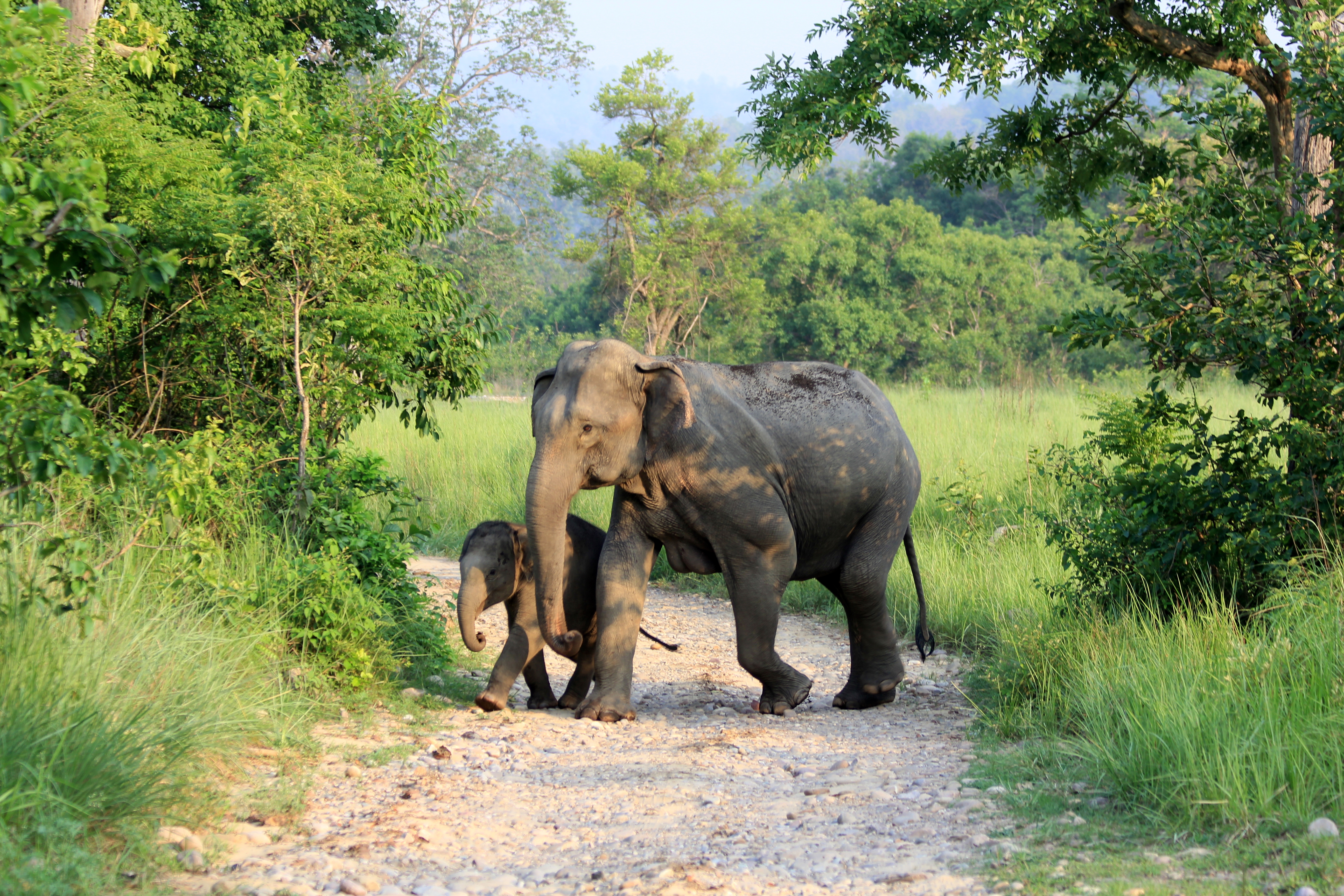
The Indian elephant (Elephas maximus indicus) is one of three extant recognized subspecies of the Asian elephant, native to mainland Asia. The species is smaller than the African elephant species with a convex back and the highest body point on its head. The species exhibits significant sexual dimorphism with a male reaching an average shoulder height of about 2.75 m and weighing 4000 kg whereas a female reaches an average shoulder height of about 2.4 m and weighs 2700 kg. It has a broader skull with a concave forehead, two large laterally folded ears and a large trunk. It has smooth grey skin with four large legs and a long tail.
The Indian elephant is native to mainland Asia with nearly three-fourth of the population found in India. The species is also found in other countries of the Indian subcontinent including Nepal, Bangladesh, Bhutan, Myanmar and South East Asian countries including Thailand, Malaysia, Laos, Cambodia, and Vietnam with small populations in China. It inhabits grasslands, dry deciduous, moist deciduous, evergreen and semi-evergreen forests across the range. The species is classified as a megaherbivore and consume up to 150 kg of plant matter per day. They consume a variety of diet depending on the habitat and seasons and might include leaves and twigs of fresh foliage, thorn-bearing shoots, flowering plants, fruits and grass.
Since 1986, the Asian elephant has been listed as Endangered on the IUCN Red List as the wild population has declined by at least 50% over the last three elephant generations. The species is threatened by environmental degradation, habitat loss and fragmentation. Poaching of elephants for ivory is a serious threat in some parts of Asia. Project Elephant was launched in 1992 by the Government of India to protect elephant habitats and population.
The Indian elephant is a cultural symbol throughout its range and appears in various religious traditions and mythologies. The elephants are treated positively and is revered as a form of Ganesha in Hinduism. It has been designated the national heritage animal in India and is the national animal of Thailand and Laos.
Taxonomy
The Indian elephant (Elephas maximus indicus) is one of three extant recognized subspecies of the Asian elephant. Carl Linnaeus proposed the scientific name Elephas maximus in 1758 for an elephant from Ceylon. Elephas indicus was proposed by Georges Cuvier in 1798, who described an elephant from India. Frederick Nutter Chasen classified all three as subspecies of the Asian elephant in 1940.
Description
In general, the Asian elephant is smaller than African elephant. Its back is convex or level with the highest body point on its head. The species exhibits significant sexual dimorphism with a male reaching an average shoulder height of about 2.75 m and weighing up to 4000 kg whereas a female reaches an average shoulder height of about 2.4 m and weighs up to 2700 kg, with specimens rarely exceeding 3.2 m and 5400 kg in males and 2.54 m 4160 kg in females. The largest Indian elephant was 3.43 m high at the shoulder. On average, it measures 5.5-6.5 m in length including the trunk.
It has a broader skull with a concave forehead and two dorsal bulges on the top. Two large laterally folded ears and a large trunk with one finger-like process are attached to the head. There are about 29 narrow cheek teeth.
Distribution and habitat


The Indian elephant is native to mainland Asia with nearly three-fourth of the population found in India. The species is also found in other countries of the Indian subcontinent including Nepal, Bangladesh, Bhutan, and South East Asian countries including Myanmar, Thailand, Malaysia, Laos, Cambodia, and Vietnam with small populations in China. It is regionally extinct in Pakistan. As per the 2017 census, the estimated wild population in India was 27,312 individuals which account for nearly three-fourths of the extant population.
The movement and habitat utilization patterns of an elephant population were studied in southern India during 1981–83 within a 1130 km2 study area. The vegetation types of this area encompasses dry thorn forest at 250 to, deciduous forest at 400 to, stunted evergreen forest and grassland at 1400 to. Five different elephant clans, each consisting of between 50 and 200 individuals, had home ranges of between 105 km2 and 320 km2, which overlapped. They preferred habitat where water was available and food plants were palatable. During the dry months of January to April, they congregated at high densities of up to five individuals per km2 in river valleys, where they browsed plants that had a much higher protein content than the coarse tall grasses on hill slopes. With the onset of rains in May, they dispersed over a wider area at lower densities, largely into the tall grass forests, to feed on the fresh grasses, which then had a high protein value. During the second wet season from September to December, when the tall grasses became fibrous, they moved into lower elevation short grass open forests. The normal movement pattern could be upset during years of adverse environmental conditions. However, the movement pattern of elephants in this region has not basically changed for over a century, as inferred from descriptions recorded during the 19th century. In Nilgiri Biosphere Reserve, three elephant clans had overall home ranges of 562 km2, 670 km2 and 799 km2 in the beginning of the 1990s. During three years of survey, their annual home ranges overlapped to a large extent with only minor shifts in the home ranges between years.
There are about 138 identified elephant corridors in India, with the majority of the elephant population in India restricted to four general areas.
| Region | Areas | Corridors | Area (km2) | Elephant population (2017) | Percentage of elephant population |
|---|---|---|---|---|---|
| (2017) | |||||
| North-East | From the eastern border of Nepal in northern West Bengal through western Assam along the Himalaya foothills as far as the Mishmi Hills, extending into eastern Arunachal Pradesh, the plains of upper Assam, and the foothills of Nagaland, to the Garo Hills of Meghalaya through the Khasi Hills, to parts of the lower Brahmaputra plains and Karbi Plateau; isolated herds occur in Tripura, Mizoram, Manipur, and in the Barak Valley districts of Assam | 58 | 41,000 | 10,139 | 33.8% |
| East | In Odisha, Jharkhand, and in the southern part of West Bengal, with some animals wandering into Chhattisgarh | 54 | 23,500 | 3,128 | 10.4% |
| North | At the foot of the Himalayas in Uttarakhand and Uttar Pradesh, ranging from Katarniaghat Wildlife Sanctuary to the Yamuna River | 8 | 5,500 | 2,085 | 7.0% |
| South | Eight populations are fragmented from each other in northern Karnataka, in the crestline of Karnataka–Western Ghats, in Bhadra–Malnad, in Brahmagiri–Nilgiris–Eastern Ghats, in Nilambur–Silent Valley–Coimbatore, in Anamalai–Parambikulam, in Periyar–Srivilliputhur, and one in Agasthyamalai | 46 | 40,000 | 14,612 | 48.8% |
.jpg)
Apart from India, following is the distribution and estimated population of Indian elephants across Asia.
- 100–125 in Nepal, where their range is restricted to a few protected areas in the Terai along the border with India. In 2002, estimates ranged from 106 to 172 resident and migratory elephants, with most of them in Bardia National Park
- 150–250 in Bangladesh, where only isolated populations survive in the Chittagong Hills
- 250–500 in Bhutan, where their range is limited to protected areas in the south along the border with India
- 4,000–5,000 in Myanmar, where populations are highly fragmented, and occur in the northern ranges and Arakan Yoma in the west, Pegu Yoma of central Myanmar, Tenasserim and Shan State
- 2,500–3,200 in Thailand, mainly in the mountains along the border with Myanmar, with smaller fragmented populations occurring in the peninsula in the south
- 2,100–3,100 in Malaysia
- 500–1,000 Laos, where they remain widely but patchily distributed in forested areas, both in the highlands and lowlands
- 200–250 in China, where they survive only in the prefectures of Xishuangbanna, Simao, and Lincang of southern Yunnan
- 250–600 in Cambodia, where they primarily inhabit the mountains of the south-west and in Mondulkiri and Ratanakiri Provinces
- 70–150 in the southern parts of Vietnam
Behavior and ecology
Diet and feeding

Elephant is classified as a megaherbivore and can consume up to 150 kg of plant matter per day. It can spend up to 19 hours a day foraging for food and can produce up to 220 pounds of dung per day. It is a generalist feeder and both a grazer and a browser. In a study area of 1130 km2 in southern India, elephants were recorded to feed on 112 different plant species, most commonly of the order Malvales, and the legume, palm, sedge and true grass families. They graze on the tall grasses, but the portion consumed varies with season. When the new flush appears in April, they remove the tender blades in small clumps. Later, when grasses are higher than 0.5 m, they uproot entire clumps, dust them and consume the fresh leave tops, but discard the roots. When grasses are mature in autumn, they clean and consume the succulent basal portions with the roots, and discard the fibrous blades. From the bamboos, they eat seedlings, culms and lateral shoots. During the dry season from January to April, they mainly browse on both leaves and twigs preferring the fresh foliage, and consume thorn bearing shoots of acacia species without any obvious discomfort. They feed on the bark of white thorn and other flowering plants, and consume the fruits of wood apple, tamarind, kumbhi and date palm.
During a study in a tropical moist mixed deciduous forested area of 160 km2 in Assam, elephants were observed to feed on about 20 species of grasses, plants and trees. Grasses such as Imperata cylindrica and Leersia hexandra constituted the most predominant component of their diet. In Nepal's Bardia National Park, elephants consume large amounts of the floodplain grass, particularly during the monsoon season. They browse more in the dry season with bark constituting a major part of their diet.
Social structure

Indian elephants typically live in small herds consisting of related females, their female offspring and young immature males. The elephants are extremely social animals and form complex social relationships. They often work together as a group to raise their young and to protect the herd. While individual herds might not have a designated matriarch, older females will take on a more dominant role within the herd. A male elephant is typically encouraged to leave the herd once it reaches puberty which often happens between the ages of 8 and 13. This is a gradual process most of the time and is determined by the male's competitive and independent nature and the tolerance of the herd. Juvenile males tend to form loose herds while they typically become independent on ageing.
Communication and intelligence
An elephant communicates using low-pitched sounds and infrasonic grunts or rumbles. Various sounds are produced that can communicate specific information to other elephants over long distances. A female make different calls and low-frequency vocalizations to warn of predators. An elephant has a developed olfactory system and is able to discern various scents. Wind-born scents can be sensed and used to communicate clues regarding the presence of other elephants or potential dangers. The trunk is also used for greeting other elephants and communication of emotions such as excitement, competition, dominance, discipline, reassurance etc. An elephant has a large brain which weighs between 4-6 kg. It is a highly intelligent animal with a great capacity to learn new things. Much of elephant behavior is learned from the elders over the years rather than being instinctive.
Lifespan and mortality
Indian elephant has a lifespan between 40 and 65 years with some animals reported to have lived for more than 75 years. As per available evidence, an Indian elephant may typically live into their mid-50s, but there is no consistent data available to accurately estimate the lifespan of wild elephants. The median life expectancy for female elephants was estimated to be 47 years old. An adult elephant has no enemies in the wild, except for humans. However, young elephants are often susceptible to attacks by carnivorous predators such as tigers in the areas where their ranges overlap. When a predator is visible, elder members of the herd may emit warning calls that prompt the rest of the herd to group together for protection.
Reproduction
A female produces various noises to indicate her presence and readiness to male bulls. An elephant can determine the identity, sex and reproductive status of another elephant using its trunks to smell the elephant's mouth, temporal gland, genitals, urine or dung. An Indian elephant reaches sexual maturity between 8 and 13 years of age but might not mate until later. While a female might bear calves starting a few years later, a male is unlikely to become a father until the 30s due to competition with older, larger males. An older male experiences a period of heightened sexual and aggressive activity called musth, which is caused by the production of large quantities of testosterone. During the period, a green fluid secreted from the elephant's temporal glands drips from the penis. A female ovulates once about every 115 days and if fertilized, the gestation period is about 22 months, the longest gestation period of any animal.
Most often, a female gives birth to a single calf (occasionally two might be born), which may weigh between 68-158 kg. A calf is able to stand and nurse soon after birth and start to feed on solid food by six months. A calf will also eat its mother's dung for several years, which contain nutrients and symbiotic bacteria that aid in the digestion of plant food. A female might not give birth to another calf for an interval of three to eight years, depending on environmental conditions. A calf is weaned slowly and might often continue to be nursed by the mother until she delivers another calf or if it reaches puberty. While a male leaves its natal herd at sexual maturity, a female remain within the herd throughout its life.
Status and conservation
_(7852943934).jpg)
Since 1986, the Asian elephant has been listed as Endangered on the IUCN Red List as the wild population has declined by at least 50% over the last three elephant generations. The species is threatened by environmental degradation, habitat loss and fragmentation, which are driven by an expanding human population and in turn lead to increasing conflicts between humans and elephants when elephants eat or trample crops. In India, elephant mortality also occurs due to railway accidents with railway track running across elephant corridors. Elephants that pass through from one forest patch to another dash against the trains and die. In East India, a total of 39 dead elephants were reported during the period of 1958 to 2008, of which ten were reportedly killed between 2004 and 2008. Electrocution due to contact with electric poles and transformers has been reported as another major threat to elephants in India, with an estimated 461 elephants having been electrocuted between 2009 and 2017.

In Bangladesh, forested areas that served as prime elephant habitat have undergone drastic reduction, which had a severe impact on the wild elephant population. Habitat loss and fragmentation is attributed to the increasing human population and its need for fuel wood and timber which results in illegal logging resulting in deforestation and habitat degradation. As a result of the shrinking habitat, elephants have become prone to coming into direct conflict with humans. In Myanmar, demand for elephant ivory has led to poaching with ivory trade providing significant income. In the clandestine market, prices of raw ivory increased from $76 per kilogram in 1989–90 to over $200 per kilogram by the mid-1990s with foreign tourists often responsible for the demand which fuels the illegal killing of elephants. There is also a sizeable trade in ivory chopsticks and carvings, smuggled by traders from Myanmar into China. Many elephants are also captured, raised in captivity and used for various purposes such as logging, tourism, religious festivals and show events. Young wild-born elephant calves are separated from their mothers in Myanmar for use in Thailand's tourism industry. The mothers are often killed in the process of capturing and the calves are placed alongside already captive unrelated cows. Then the calves are often subjected to a 'breaking in' process, which may involve being tied up, confined, starved, beaten and tortured, as a result of which two-thirds may perish.
Conservation

The Indian elephant is a protected species under Schedule I of the Indian Wild Life Protection Act, 1972. Project Elephant was launched in 1992 by the Ministry of Environment and Forests of Government of India to provide financial and technical support of wildlife management efforts by the states. The project aims to ensure long-term survival of viable conservation reliant populations of elephants in their natural habitats by protecting the elephants, their habitats and migration corridors. It also sought to enable various activities to address the issue of human-animal conflict, promote the welfare of elephants in captivity, support research of the ecology and management of elephants, creating conservation awareness among local people and providing improved veterinary care for captive elephants.
Culture

The Indian elephant is a cultural symbol throughout its range in Asia and appears in various religious traditions and mythologies. The elephants are treated positively and are sometimes revered as deities, often symbolizing strength, wisdom and good fortune. It is revered as a form of Ganesha in Hinduism. Although Ganesha has many attributes, he is readily identified by his elephant head. It is also revered as a part of Buddhist pantheon of gods. Elephants are often used as part of temples and elaborate rituals. They form an important part of Hindu festivals like Dussehra and Pooram.
In India, it has been designated the national heritage animal. It is the national animal of Thailand and Laos. The Indian elephant is also the state animal of the Indian states of Jharkhand, Karnataka, Kerala and Odisha.
References
References
- "fossilworks".
- (2005). "Mammal Species of the World: A Taxonomic and Geographic Reference". JHU Press.
- Linnaei, C.. (1758). "Caroli Linnæi Systema naturæ per regna tria naturæ, secundum classes, ordines, genera, species, cum characteribus, differentiis, synonymis, locis". Impensis Direct. Laurentti Salvii.
- Cuvier, G.. (1798). "Tableau elementaire de l'histoire naturelle des animaux". Baudouin.
- Chasen, F.N.. (1940). "A handlist of Malaysian mammals, a systematic list of the mammals of the Malay Peninsula, Sumatra, Borneo and Java, including the adjacent small islands". Bulletin of the Raffles Museum.
- (2016). "Shoulder height, body mass and shape of proboscideans". Acta Palaeontologica Polonica.
- (1988). "Growth in the Asian elephant". Proceedings: Animal Sciences.
- (1998). "Remarks on body growth and phenotypes in Asian elephant ''Elephas maximus''". Acta Theriologica.
- (1982). "''Elephas maximus''". Mammalian Species.
- (1941). "On the height and age of an elephant". Journal of the Bombay Natural History Society.
- (1997). "The wild elephants of the Royal Bardia National Park, Nepal". Gajah: Journal of the IUCN/SSC Asian Elephant Specialist Group.
- Shoshani, J.. (2006). "Biology, medicine, and surgery of elephants". Wiley-Blackwell.
- "Indian elephant". WWF.
- (2017). "India has 27,312 elephants, census shows". [[The Hindu]].
- Sukumar, R.. (1989). "Ecology of the Asian Elephant in southern India. I. Movement and habitat utilization patterns". Journal of Tropical Ecology.
- (1996). "Ranging behaviour of the Asian elephant (''Elephas maximus'') in the Nilgiri Biosphere Reserve, South India". Gajah: Journal of the IUCN/SSC Asian Elephant Specialist Group.
- Sukumar, R.. (1993). "The Asian Elephant: Ecology and Management". Cambridge University Press.
- "Elephant Corridors of India".
- "Project Elephant". Government of India.
- Bhatta, S. R.. (2006). "Efforts to conserve the Asian elephant in Nepal". Gajah: Journal of the IUCN/SSC Asian Elephant Specialist Group.
- (2007). "Feeding Behaviour of Asian Elephants in the Northwestern Region of Sri Lanka". Gajah: Journal of the IUCN/SSC Asian Elephant Specialist Group.
- Sukumar, R.. (1990). "Ecology of the Asian Elephant in southern India. II. Feeding habits and crop raiding patterns". Journal of Tropical Ecology.
- (2008). "Nutritional Evaluation of Forage Preferred by Wild Elephants in the Rani Range Forest, Assam, India". Gajah: Journal of the IUCN/SSC Asian Elephant Specialist Group.
- (2008). "Feeding ecology of two endangered sympatric megaherbivores: Asian elephant Elephas maximus and greater one-horned rhinoceros ''Rhinoceros unicornis'' in lowland Nepal". Wildlife Biology.
- (2007). "What is the average life span of an elephant?". [[The Times of India]].
- "Asian elephant". Smithsonian.
- Williams, C.. (2020). "''Elephas maximus''".
- (2009). "The Death of Jumbos on Railway Tracks in Northern West Bengal". Gajah: Journal of the IUCN/SSC Asian Elephant Specialist Group.
- Umashanker, K.. (2019). "Mother elephant uproots transformer that electrocuted her baby in Andhra". [[The Hindu]].
- Koshy, J.. (2019). "Human-elephant conflicts: power poles should have spikes to keep away jumbos, says panel". The Hindu.
- Islam, M. A.. (2006). "Conservation of the Asian elephant in Bangladesh". Gajah: Journal of the IUCN/SSC Asian Elephant Specialist Group.
- (2002). "Myanmar's ivory trade threatens wild elephants". Gajah: Journal of the IUCN/SSC Asian Elephant Specialist Group.
- Sanderson, G. P.. (1907). "Thirteen years among the wild beasts of India: their haunts and habits from personal observation: with an account of the modes of capturing and taming elephants". Asian Educational Services.
- (2012). "Tourism driving illegal elephant trade in Burma and Thailand". The Guardian.
- "Project Elephant". Government of India.
- (2013). "33 Elephant Reserves established in 14 major elephant States". Government of India.
- "Elephant Reserves". ENVIS Centre on Wildlife & Protected Areas.
- (1994). "India - Mahabharata. Fulbright-Hays Summer Seminar Abroad 1994 (India)". United States Educational Foundation in India.
- Martin-Dubost, Paul. (1997). "Gaṇeśa, the Enchanter of the Three Worlds". Franco-Indian Research.
- Wayman, Alex. (2006). "Chanting the Names of Manjushri". Motilal Banarsidass Publishers.
- (10 October 2023). "Pachyderm paraphernalia is what links Kerala's Pooram to Mysuru Dasara". [[Deccan Herald]].
- (22 October 2010). "Elephant declared national heritage animal". [[Hindustan Times]].
- "Thailand at a Glance". Royal Thai Embassy, Washington, DC.
- "Laos Fact Sheet". Landmark Center.
- "State Symbols of India". ENVIS Centre on Wildlife & Protected Areas.
This article was imported from Wikipedia and is available under the Creative Commons Attribution-ShareAlike 4.0 License. Content has been adapted to SurfDoc format. Original contributors can be found on the article history page.
Ask Mako anything about Indian elephant — get instant answers, deeper analysis, and related topics.
Research with MakoFree with your Surf account
Create a free account to save articles, ask Mako questions, and organize your research.
Sign up freeThis content may have been generated or modified by AI. CloudSurf Software LLC is not responsible for the accuracy, completeness, or reliability of AI-generated content. Always verify important information from primary sources.
Report