From Surf Wiki (app.surf) — the open knowledge base
Immigration to Europe
none
none
Immigration to Europe has a long history, but increased substantially after World War II. Western European countries, especially, saw high growth in immigration post 1945, and many European nations today (particularly those of the EU-15) have sizeable immigrant populations, both of European and non-European origin. In contemporary globalization, migrations to Europe have accelerated in speed and scale. Over the last decades, there has been an increase in negative attitudes towards immigration, and many studies have emphasized marked differences in the strength of anti-immigrant attitudes among European countries.
Beginning in 2004, the European Union granted EU citizens freedom of movement and residence within the EU, and the term "immigrant" has since been used to refer to non-EU citizens, meaning that EU citizens are not to be defined as immigrants within EU territory. The European Commission defines "immigration" as the action by which a person from a non-EU country establishes his or her usual residence in the territory of an EU country for a period that is or is expected to be at least twelve months. Between 2010 and 2013, around 1.4 million non-EU nationals, excluding asylum seekers and refugees, immigrated into the EU each year using regular means, with a slight decrease since 2010.
History

Historical migration into or within Europe has mostly taken the form of military invasion, but there have been exceptions; this concerns notably population movements within the Roman Empire under the Pax Romana; the Jewish diaspora in Europe was the result of the First Jewish–Roman War of AD 66–73.
With the collapse of the Roman Empire, migration was again mostly coupled with warlike invasion, not least during the so-called migration period (Germanic), the Slavic migrations, the Hungarian conquest of the Carpathian Basin, the Islamic conquests and the Turkic expansion into Eastern Europe (Kipchaks, Tatars, Cumans). The Ottomans once again established a multi-ethnic imperial structure across Western Asia and Southeastern Europe, but Turkification in Southeastern Europe was due more to cultural assimilation than to mass immigration. In the late medieval period, the Romani people moved into Europe both via Anatolia and the Maghreb.
There were substantial population movements within Europe throughout the Early Modern period, mostly in the context of the Reformation and the European wars of religion, and again as a result of World War II.
From the late 15th century until the late 1960s and early 1970s, Greece, Ireland, Italy, Germany, Norway, Sweden, Denmark, Belgium, Portugal, Spain and the United Kingdom were primarily sources of emigration, sending large numbers of emigrants to the Americas, Australia, Siberia and Southern Africa. A number also went to other European countries (notably France, Switzerland, Germany and Belgium). As living standards in these countries have risen, the trend has reversed and they were a magnet for immigration (most notably from Morocco, Somalia, Egypt to Italy and Greece; from Morocco, Algeria and the Americas to Spain and Portugal; and from Ireland, India, Pakistan, Germany, the United States, Bangladesh, and Jamaica to the United Kingdom).
Mobility within Europe after the 1985 Schengen Agreement
Article 17 of the Schengen Agreement aims at moving internal borders to external borders.
Mobility or mobility of workers is the name given to ease people from one EU country to work into another EU country. The Maastricht treaty name it "the free movement of persons". This is one of the key principles of the European Union.
As a result of the Schengen Agreement, signed on 14 June 1985, there is free travel within part of Europe — known as the Schengen area — for all citizens and residents of all 27 member states; however, non-citizens may only do so for tourism purpose, and for up to three months. Moreover, EU citizens and their families have the right to live and work anywhere within the EU; citizens of non-EU or non-EEA states may obtain a Blue Card or long-term residency.
A large proportion of immigrants in western European states have come from former eastern bloc states in the 1990s, especially in Spain, Greece, Germany, Italy, Portugal and the United Kingdom. There are frequently specific migration patterns, with geography, language and culture playing a role. For example, there are large numbers of Poles who have moved to the United Kingdom and Ireland and Iceland, while Romanians and also Bulgarians have chosen Spain and Italy.
With the earlier of the two recent enlargements of the EU although most countries restricted free movement by nationals of the acceding countries, the United Kingdom did not restrict for the 2004 enlargement of the European Union and received Polish, Latvian and other citizens of the new EU states.
Spain was not restricted for the 2007 enlargement of the European Union, when 9 countries entered Schengen area in 2007, and received many Romanians and Bulgarians as well other citizens of the new EU states.
Many of these Polish immigrants to the UK have since returned to Poland, after the serious economic crisis in the UK. Nevertheless, free movement of EU nationals is now an important aspect of migration within the EU, since there are now 27 member states, and has resulted in serious political tensions between Italy and Romania, since Italy has expressed the intention of restricting free movement of EU nationals (contrary to Treaty obligations and the clear jurisprudence of the European Court of Justice).
Another migration trend has been that of Northern Europeans moving toward Southern Europe. Citizens from the European Union make up a growing proportion of immigrants in Portugal, Spain, South of France, Italy and Greece.
In 2023 and 2024, 3 new countries entered the Schengen area, including Romania and Bulgaria.
Immigration from outside Europe since the 1980s
Many immigrants and their descendants have ancestral origins outside the continent. For the former colonial powers France, Britain, the Netherlands, Belgium, Spain, and Portugal, most immigrants, and their descendants have ties to former colonies in Africa, the Americas, and Asia. In addition, Germany, Austria, Switzerland, the Netherlands, and Belgium recruited Turkish and Moroccan guest workers beginning in the 1960s, and many current immigrants in those countries today have ties to such recruitment programs.
Moroccan immigrants also began migrating substantially to Spain and Italy for work opportunities in the 1980s. In the Nordic countries of Sweden, Denmark, Norway, and Finland, the bulk of non-Western immigrants are refugees and asylum seekers from the Middle East, East Africa, and other regions of the world arriving since the 1980s and 1990s. Increasing globalization has brought a population of students, professionals, and workers from all over the world into major European cities, most notably London, Paris, and Frankfurt. The introduction of the EU Blue Card in May 2009 has further increased the number of skilled professional immigrants from outside of the continent.
Illegal immigration and asylum-seeking in Europe from outside the continent have been occurring since at least the 1990s. While the number of migrants was relatively small for years, it began to rise in 2013. In 2015, the number of asylum seekers arriving from outside Europe increased substantially during the European migrant crisis (see timeline). However, the EU-Turkey deal enacted in March 2016 dramatically reduced this number, and anti-immigrant measures starting in 2017 by the Italian government further cut illegal immigration from the Mediterranean route.
Some scholars claim that the increase in immigration flows from the 1980s is due to global inequalities between poor and rich countries. In 2017, approximately 825,000 persons acquired citizenship of a member state of the European Union, down from 995,000 in 2016. The largest groups were nationals of Morocco, Albania, India, Turkey and Pakistan. 2.4 million non-EU migrants entered the EU in 2017. In addition, cheaper transportation and more advanced technology have further aided migration.
European Commission President Ursula von der Leyen praised the EU Asylum and Migration Pact as a "huge achievement for Europe". The provisions of the EU Asylum and Migration Pact apply to migrants caught illegally crossing an external EU border, such as those reaching the shores of Greece, Italy or Spain via the Mediterranean Sea or Atlantic Ocean on boats provided by smugglers; estimated at 300,000 migrants in 2023. Provisions do not apply to legal migrants to the EU (~3.5 million in 2023) and migrants who arrived legally but overstayed their visas (~700,000 in 2023).
Immigrants in the Nordic countries in 2000–2020
The Nordic countries have differed in their approach to immigration. While Norway and Sweden used to have generous immigration policies, Denmark and Finland had more restricted immigration. Although both Denmark and Finland have experienced a significant increase in their immigrant populations between 2000 and 2020 (6.8% points in Denmark and 5.0% in Finland), Norway (11.9%) and Sweden (11.0%) have seen far greater relative increases.
The table below shows the percentage of the total population in the Nordic countries that are either (1) immigrants or (2) children of two immigrant parents:
| Nr | Country | 2000 | 2010 | 2015 | 2016 | 2017 | 2020 |
|---|---|---|---|---|---|---|---|
| 1 | Sweden | 14.5% | 19.1% | 21.5% | 22.2% | 23.2% | 25.5% |
| 2 | Norway | 6.3% | 11.4% | 15.6% | 16.3% | 16.8% | 18.2% |
| 3 | Iceland | 3.2% | 8.9% | 10.0% | 10.8% | 12.0% | 15.6% |
| 4 | Denmark | 7.1% | 9.8% | 11.6% | 12.3% | 12.9% | 13.9% |
| 5 | Finland | 2.9% | 4.4% | 6.2% | 6.6% | 7.0% | 7.9% |
Denmark
Main article: Immigration to Denmark
For decades, Danish immigration and integration policy were built upon the assumption that with the right kind of help, immigrants and their descendants will eventually tend to the same levels of education and employment as Danes. This assumption was doubted by a 2018 study by the Danish Immigration Service and the Ministry of Education. There are only small differences between children of descendants, descendants and immigrants (arrived in Denmark as 0-12 year olds) of non-Western origin in terms of labor market attachment and education. One of the reasons was that second-generation immigrants from non-Western countries marry someone from their country of origin and so Danish is not spoken at home which disadvantages children in school. Thereby the process of integration has to start from the beginning for each generation.
Norway
Main article: Immigration to Norway
In January 2015 the "immigrant population" in Norway consisted of approximately 805,000 people, including 669,000 foreign-born and 136,000 born in Norway to two immigrant parents. This corresponds to 15.6% of the total population. The cities with the highest share of immigrants are Oslo (32%) and Drammen (27%).
In 2024, approximately 931,081 individuals (16.8% of the population) of the population of Norway were immigrants. Of these, 386,559 (41.5%) had a Western background, while 544,521 (58.5%) had a non-Western background (Asia, Africa, South and Central America). 221,459 individuals (4% of the population) were children of immigrants, born in Norway. The six largest immigrant groups in Norway are from Poland, Lithuania, Sweden, Syria, Ukraine and Somalia. Children of Pakistani, Polish, Somali, Iraqi and Eritrean parents made up the largest groups of all Norwegians born to immigrant parents.
In the years since 1970, the largest increase in the immigrant population has come from countries in Asia (including Turkey), Africa and South America, increasing from about 3500 in 1970 to about 300,000 in 2011. In the same period, the immigrant population from other Nordic countries and Western Europe has increased modestly from around 42,000 to around 130,000.
Sweden
Main article: Immigration to Sweden

In 2014 the "immigrant population" in Sweden consisted of approximately 2.09 million people, including 1.60 million foreign-born and 489,000 born in Sweden to two immigrant parents. This corresponds to 21.5% of the total population.
Of the major cities Malmö has the largest immigrant population, estimated to be 41.7% in 2014. However, the smaller municipalities Botkyrka (56.2%), Haparanda (55.5%) and Södertälje (49.4%) all have a higher share of immigrants. In the Swedish capital Stockholm 31.1% (in 2014) of the population are either foreign-born or born in Sweden by two foreign-born parents.
In 2014 127,000 people immigrated to Sweden, while 51,000 left the country. Net immigration was 76,000.
Sweden has been transformed from a nation of emigration ending after World War I to a nation of immigration from World War II onwards. In 2009, Sweden had the fourth largest number of asylum applications in the EU and the largest number per capita after Cyprus and Malta. Immigrants in Sweden are mostly concentrated in the urban areas of Svealand and Götaland and the five largest foreign born populations in Sweden come from Finland, Yugoslavia, Iraq, Poland and Iran.
Finland
Main article: Immigration to Finland
Immigration has been a major source of population growth and cultural change throughout much of the history of Finland. The economic, social, and political aspects of immigration have caused controversy regarding ethnicity, economic benefits, jobs for non-immigrants, settlement patterns, impact on upward social mobility, crime, and voting behavior.
At the end of 2017, there were 372,802 foreign born people residing in Finland, which corresponds to 6.8% of the population, while there are 384,123 people with a foreign background, corresponding to 7.0% of the population. Proportionally speaking, Finland has had one of the fastest increases in its foreign-born population between 2000 and 2010 in all of Europe. The majority of immigrants in Finland settle in the Helsinki area, although Tampere, Turku, and Kuopio have had their share of immigrants in recent years.
France
Main article: Immigration to France
In 2024, the United Nations estimated 12 million immigrants (foreign-born people) in France, representing 17.2% of the total population, making France the second largest foreign born population in Europe after Germany and tied with the United Kingdom. This is an increase from the United Nations statistics in 2018 in which there were 9 million immigrants (foreign-born people) in France, which at the time represented 14% of the country's total population. As of 2024, around 12 million people living in France, or 17.2% of the population, are first-generation immigrants, while the population with a migrant background in the wider sense stood at approximately 19.2 million, accounting for 30.2% of the total population of 69.4 million.
As of 2008, the French national institute of statistics (INSEE) estimated that 5.3 million foreign-born immigrants and 6.5 million direct descendants of immigrants (born in France with at least one immigrant parent) lived in France. This represents a total of 11.8 million, or 19% of the population. In terms of origin, about 5.5 million are European, four million Maghrebi, one million Sub-Saharan African, and 400,000 Turkish. Among the 5.3 million foreign-born immigrants, 38% are from Europe, 30% from Maghreb, 12.5% from Sub-Saharan Africa, 14.2% from Asia and 5.3% from America and Oceania The most significant countries of origin as of 2008 were Algeria (713,000), Morocco (653,000), Portugal (580,000), Italy (317,000), Spain (257,000), Turkey (238,000) and Tunisia (234,000). However, immigration from Asia (especially China, as well as the former French colonies of Vietnam, Cambodia and Laos), and from Sub-Saharan Africa (Senegal, Mali and others), is gaining in importance.
The region with the largest proportion of immigrants is the Île-de-France (Greater Paris), where 40% of immigrants live. Other important regions are Rhône-Alpes (Lyon) and Provence-Alpes-Côte d’Azur (Marseille).
Among the 802,000 newborns in metropolitan France in 2010, 27.3% had at least one foreign-born parent and about one quarter (23.9%) had at least one parent born outside Europe. Including grandparents; almost 40% of newborns in France between 2006 and 2008 had at least one foreign-born grandparent. (11% were born in another European country, 16% in Maghreb, and 12% in another region of the world.)
In 2022, the total number of new foreigners coming to France rose above 320,000 for the first time, with nearly a majority coming from Africa. A significant increase in students, family reunification and labor migration occurred under the presidency of Emmanuel Macron.
Germany
Main article: Immigration to Germany
.jpg)
Nearly 1.1 million refugees and migrants registered in Germany in 2015, mostly people fleeing wars in Syria, Iraq and Afghanistan.
In 2019, 21.2 million people with a migration background lived in Germany, which corresponded to a population share of around 26%.
In December 2021, German Chancellor Olaf Scholz promised to reduce barriers to immigration and make it easier for immigrants to obtain German citizenship. 352,000 people applied for asylum in Germany in 2023, the highest number since 2016, when 722,370 people applied for asylum. People from Ukraine are not included among asylum seekers. Most asylum seekers in 2023 were from Turkey, Syria and Afghanistan.
In 2023, 1,933,000 people immigrated to Germany, including 276,000 from Ukraine and 126,000 from Turkey, while 1,270,000 people emigrated. Net immigration to Germany was 663,000 in 2023, down from a record 1,462,000 in 2022.
On 14 September 2024, Scholz and Kenyan President William Ruto signed an agreement that opened the German labor market to up to 250,000 skilled and semi-skilled migrant workers from Kenya. Scholz's government has already signed migration partnerships with several other countries, including Morocco, Nigeria and India.
United Kingdom
Main article: Modern immigration to the United Kingdom
In 2014, the number of people who became naturalised British citizens rose to a record 140,795 - a 12% increase from the previous year, and a dramatic increase since 2009. Most new citizens came from Asia (40%) or Africa (32%); the largest three countries of origin were India, Pakistan, and Bangladesh with Indians making the largest group. In 2005, an estimated 565,000 migrants arrived to live in the United Kingdom for at least a year, primarily from Asia and Africa, while 380,000 people emigrated from the country for a year or more, chiefly to Australia, Canada and the United States.
In 2014 the net increase was 318,000: immigration was 641,000, up from 526,000 in 2013, while the number of people emigrating (for more than 12 months) was 323,000.
In 2021, the government launched a scheme for Hongkongers, with more than 200,000 Hong Kong residents immigrating to the UK.
The number of African students increases rapidly for Example only Nigerians studying in the United Kingdom has risen to a high of 44,195 in the 2021/2022 academic year, the latest official data from the Higher Education Statistics Agency (HESA) show. According to the UK agency's data, the number of students enrolment in higher education institutions increased by 107.4 percent in the 2021/2022 academic year from 21,305 in the previous year.
Long-term net migration (the number of people immigrating minus the number emigrating) reached a record high of 764,000 in 2022, with immigration at 1.26 million and emigration at 493,000. Of the 1,218,000 immigrants who came to the United Kingdom in 2023, only 126,000 were EU nationals. Around 250,000 people came from India, 141,000 from Nigeria, 90,000 from China and 83,000 from Pakistan.
Italy
Main article: Immigration to Italy

In 2021, Istat estimated that 5,171,894 foreign citizens lived in Italy, representing about 8.7% of the total population. These figures include naturalized foreign-born residents (about 1,620,000 foreigners acquired Italian citizenship from 1999 to 2020, of whom 130,000 did so in 2020) as well as illegal immigrants, the so-called clandestini, whose numbers, difficult to determine, are thought to be at least 670,000.
In 2021, around 6,260,000 people residing in Italy have an immigration background (around the 10.6% of the total Italian population).
Starting from the early 1980s, until then a linguistically and culturally homogeneous society, Italy began to attract substantial flows of foreign immigrants. After the fall of the Berlin Wall and, more recently, the 2004 and 2007 enlargements of the European Union, large waves of migration originated from the former socialist countries of Eastern Europe (especially Romania, Albania, Ukraine, Moldova and Poland). Another source of immigration is neighbouring North Africa (in particular, Morocco, Egypt and Tunisia), with soaring arrivals as a consequence of the Arab Spring. Furthermore, in recent years, growing migration fluxes from Asia-Pacific (notably China, South Asia, and the Philippines) and the Americas have been recorded.
Since the expansion of the European Union, the most recent wave of migration has been from surrounding European states, particularly Eastern Europe, and increasingly Asia, replacing North Africa as the major immigration area.
Romanians made up the largest foreign community in the country (1,077,876; around 10% of them being ethnic Romani people) followed by Albanians (433,130) and Moroccans (428,940). The fourth largest, but the fastest growing, community of foreign residents in Italy was represented by the Chinese; as of 2021 there were 330,495 foreigners holding Chinese citizenship. The majority of Chinese living in Italy are from the city of Wenzhou in the province of Zhejiang. As of 2021, foreign citizens' origins were subdivided as follows: Europe (47,6%), Africa (22.25%), Asia (22.64%), The Americas (7.49%), and Oceania (0.04%).
The distribution of foreigners is largely uneven in Italy: in 2020, 61.2% of foreign citizens lived in Northern Italy (in particular 36.1% in Northwestern Italy and 25.1% in Northeastern Italy), 24.2% in Central Italy, 10.8% in Southern Italy and 3.9% in Insular Italy.
The children born in Italy to foreign mothers were 102,000 in 2012, 99,000 in 2013 and 97,000 in 2014.
Spain
Main article: Immigration to Spain
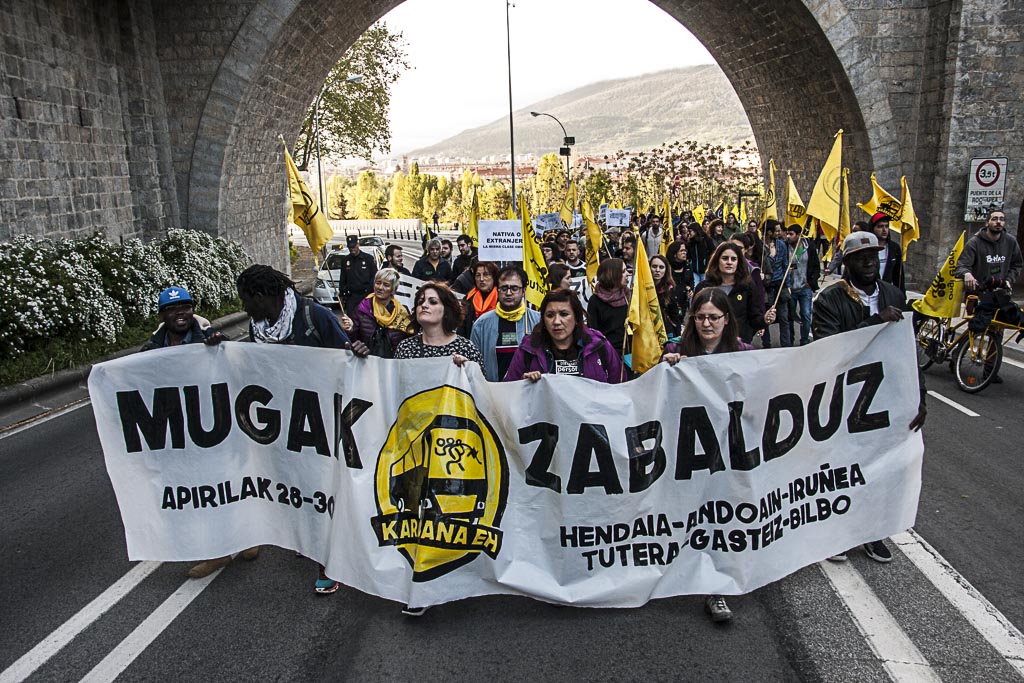
Since 2000, Spain has received around six million immigrants, adding 12% to the population in the country. The total immigrant population in the country now exceeds 5,730,677 (12.2% of the total population). According to residence permit data for 2011, more than 981,823 were Moroccan (The first nationality of Immigrants in Spain.), another 410,000 were Ecuadorian, 300,000 were Colombian, 230,000 were Bolivian and 150,000 were Chinese; from the EU around 535,935 were Romanian, 297,229 were British, 190,000 were German, 170,000 were Italian and 160,000 were Bulgarian. A 2005 regularisation programme increased the legal immigrant population by 700,000 people that year.Instituto Nacional de Estadística: Avance del Padrón Municipal a 1 de enero de 2006. Datos provisionales By world regions, in 2006 there were around 2,300,000 from the EU-27, 1,600,000 from South America, 1,000,000 from Africa, 300,000 from Asia, 200,000 from Central America & Caribbean, 200,000 from the rest of Europe, while 50,000 from North America and 3,000 from the rest of the world.
Another migratory trend has been that of northern Europeans heading towards southern Europe. (The first group of immigrants in Spain are Moroccans) European Union citizens constitute a growing proportion of immigrants, in Spain, they came mainly from the United Kingdom and Germany, On the contrary, since 2014 many Britons have left Spain and because of Brexit Many Britons leave Spain.
The Sánchez government planned to legalize around 900,000 undocumented migrants by 2027.
Portugal
Main article: Immigration to Portugal
Portugal, long a country of emigration, has now become a country of net immigration, from both its former colonies and other sources. In 2022, legal immigrants represented about 7% of the population, and the largest communities were from Brazil, the United Kingdom, Cabo Verde, India, Italy, Angola, France, and Ukraine. As of 2024, according to the latest official report, legal immigrants now represent 14.4% of the population. The largest community is still from Brazil (which represents more than 30% of the foreign population), being now followed by India, Angola, Ukraine, Cabo Verde, Nepal, Bangladesh, and the UK.
Netherlands
Main article: Immigration to the Netherlands
According to Eurostat, in 2010 there were 1.8 million foreign-born residents in the Netherlands, corresponding to 11.1% of the total population. Of these, 1.4 million (8.5%) were born outside the EU and 0.43 million (2.6%) were born in another EU Member State. In 2022, there were 4.4 million residents in the Netherlands with at least one foreign-born parent. Over half the young people in Amsterdam and Rotterdam have a non-western background. In 2022, 403,100 persons immigrated to the Netherlands, up from 252,528 in 2021.
Slovenia
On 1 January 2011 there were almost 229,000 people (11.1%) living in Slovenia with foreign country of birth. At the end of March 2002 when data on the country of birth for total population were for the first and last time collected by a conventional (field) census, the number was almost 170,000 (8.6%). Immigration from abroad, mostly from republics of former Yugoslavia, was the deciding factor for demographic and socioeconomic development of Slovenia in the last fifty years. Also after independence of Slovenia the direction of migration flows between Slovenia and abroad did not change significantly. Migration topics remain closely connected with the territory of former Yugoslavia. Slovenia was and still is the destination country for numerous people from the territory of former Yugoslavia. The share of residents of Slovenia with countries of birth from the territory of former Yugoslavia among all foreign-born residents was 88.9% at the 2002 Census and on 1 January 2011 despite new migration flows from EU Member States and from non-European countries still 86.7%.
Other countries
- Immigration to Austria
- Immigration to Belgium
- Immigration to Bulgaria
- Immigration to Denmark
- Immigration to Germany
- Immigration to Greece
- Immigration to Iceland
- Immigration to Romania
- Immigration to Switzerland
Opposition
Main article: Opposition to immigration
- Malta not seen/marked on map]] Since the years 1970s–1980s, the European continent has been increasingly targeted by waves of unauthorized immigrants from Africa, the Middle East, and other regions of the world, primarily affecting the countries of Southern Europe (such as Spain, Italy, Greece, and Malta). Among the member states of the European Union, "migration constitutes the greatest concern to EU citizens".
According to a Yougov poll in 2018, majorities in all seven polled countries were opposed to accepting more migrants: Germany (72%), Denmark (65%), Finland (64%), Sweden (60%), United Kingdom (58%), France (58%), and Norway (52%).
A February 2017 poll of 10,000 people in 10 European countries by Chatham House found on average a majority (55%) were opposed to further Muslim immigration, with opposition especially pronounced in a number of countries: Poland (71%), Austria (65%), Hungary (64%), Belgium (64%), and France (61%). Except for Poland, all of those had recently suffered jihadist terror attacks or been at the centre of a refugee crisis. Of those opposed to further Muslim immigration, 3/4 classify themselves as on the right of the political spectrum. Of those self-classifying as on the left of the political spectrum, 1/3 supported a halt.
Belarus
In April 2025, after meeting with Pakistani Prime Minister Shehbaz Sharif in Minsk, Belarusian President Alexander Lukashenko announced a plan to open Belarus to 150,000 migrant workers from Pakistan. Lukashenko's migration plans have raised concerns in neighboring Poland and among the Belarusian public. Belarusian authorities have cracked down on online opponents of Pakistani immigration to Belarus and arrested the most vocal critics of Lukashenko's immigration policies.
Denmark
In Denmark, the parliamentary party most strongly associated with anti-immigration policies is the Danish People's Party.
According to a Gallup poll in 2017, two out of three (64%) wished for limiting immigration from Muslim countries which was an increase from 2015 (54%).
According to a 2018 Yougov poll, 65% of Danes opposed accepting more migrants into the country.
On 14 August 2020, the Ministry of Immigration and Integration in Denmark revealed that it denied 83 people Danish citizenship in the past two years because they have committed serious crimes.
Finland
According to a 2018 Yougov poll, 64% of Finns opposed accepting more migrants into the country.
In November 2020, Swedish crime trends were used as an example not to follow by the Finns Party who claimed both Sweden and Finland's problem with youth crime were the result of failed immigration policies.
France
In France, the National Front seeks to limit immigration. Major media, political parties, and a large share of the public believe that anti-immigration sentiment has increased since the country's riots of 2005.
According to a 2018 Yougov poll, 58% of the French opposed accepting more migrants into the country.
Germany
In Germany, the conservative CDU, the left-wing populist BSW, the far-right and the right-wing populist Alternative for Germany and the neo-Nazi National Democratic Party oppose immigration.
In 2018, a poll by Pew Research found that a majority (58%) wanted fewer immigrants to be allowed into the country, 30% wanted to keep the current level and 10% wanted to increase immigration.
According to a 2018 Yougov poll, 72% of Germans opposed accepting more migrants into the country.
The 2015–16 New Year's Eve sexual assaults in Cologne ended the atmosphere of euphoria earlier in the year when hundreds of thousands of migrants had arrived in Germany. Four violent crimes committed during the week of 18 July 2016, three of them by asylum seekers, created significant political pressure for changes in the Angela Merkel administration policy of welcoming refugees. The Siegaue rape case as well as the murders of Mia Valentin and Susanna Feldmann intensified the discussion about admitting migrants. The 2024 Solingen stabbing has reignited debates over migration policies in Germany ahead of upcoming regional elections.
Greece
In February 2020, more than 10,000 individuals attempted to cross the border between Greece and Turkey after Turkish president Recep Tayyip Erdoğan opened its border to Europe, but they were blocked by Greek army and police forces. Hundreds of Greek soldiers and armed police resisted the trespassers and fired tear gas at them. Among those who attempted to cross were individuals from Africa, Iran and Afghanistan. Greece responded by refusing to accept asylum applications for a month.
In March 2020, migrants set fires and threw Molotov cocktail firebombs over to the Greek side in order to break down the border fence. Greek and European forces responded with tear gas and by trying to keep the fence intact. By 11 March 348 people had been arrested and 44,353 cases of unlawful entry had been prevented.
Italy
Public anti-immigrant discourse started in Italy in 1985 by the Bettino Craxi government, which in a public speech drew a direct link between the high number of clandestine immigrants and some terrorist incidents. Public discourse by the media hold that the phenomenon of immigration is uncontrollable and of undefined proportions. quote: {{blockquote|La "vulgata" difunde la idea de que el fenomeno es de dimensiones incontrolables e indefinibles, y se llega a formular la afirmacion comun de que hay tantos, o mas, extranjeros clandestinos como extranjeros visibles y regulares.
[...] la inmigracion [...] ha entrado en el imaginario de los miedos o de las extrañezas. Progresivamente, el lenguaje que se utilizara sera el de orden publico, de las varias "tolerancia cero".
[...] Se evocan banalmente los choques de civilizaciones para dar dignidad al prejuicio. El mecanismo es antiguo, pero la sociedades no estan vacunadas contra ellos.}}
According to poll published by Corriere della Sera, one of two respondents (51%) approved closing Italy's ports to further boat migrants arriving via the Mediterranean, while 19% welcomed further boat migrants.
In 2018, a poll by Pew Research found that a majority (71%) wanted fewer immigrants to be allowed into the country, 18% wanted to keep the current level and 5% wanted to increase immigration.
Norway
In Norway, the only parliamentary party that seeks to limit immigration is the Progress Party. Minor Norwegian parties seeking to limit immigration are the Democrats in Norway, the Christian Unity Party, the Pensioners' Party and the Coastal Party.
According to a 2018 Yougov poll, 52% of Norwegians opposed accepting more migrants into the country.
Poland
A 2015 opinion poll conducted by the Centre for Public Opinion Research (CBOS) found that 14% thought that Poland should let asylum-seekers enter and settle in Poland, 58% thought Poland should let asylum-seekers stay in Poland until they can return to their home country, and 21% thought Poland should not accept asylum-seekers at all. Furthermore, 53% thought Poland should not accept asylum-seekers from the Middle East and North Africa, with only 33% thinking Poland should accept them.
Another opinion poll conducted by the same organisation found that 86% of Poles think that Poland does not need more immigrants, with only 7% thinking Poland needs more immigrants.
Despite Polish public sentiment, 683,000 immigrants from outside of the EU arrived in Poland in 2017, with 87.4% of them immigrating for work. This was the highest number of residence permits granted by an EU member state that year.
Portugal
Slovakia
In October 2024, Slovak Prime Minister Robert Fico criticized the European Union's migration policies, specifically targeting the low rate of deportations for individuals residing in the bloc illegally. Speaking at a summit on 22 October 2024, alongside Hungarian Prime Minister Viktor Orbán and Serbian President Aleksandar Vučić, Fico emphasized that the "fight against illegal migration" is an absolute priority. During this summit, Orbán corroborated Fico's stance by stating that out of approximately 430,000 decisions to expel illegal migrants in the EU in the previous year, only 84,000 were actually implemented—supporting Fico's claim that roughly 80% of those ordered to leave remain in Europe while only 20% are successfully returned.
Spain
According to an October 2024 survey for the El País newspaper and Cadena SER radio station, 57% of Spaniards believe there is "too much" immigration to Spain.
Sweden
In response to the high immigration of 2015, the anti-immigration party Sweden Democrats rose to 19.9% in the Statistics Sweden poll.
In late 2015, Sweden introduced temporary border checks on the Øresund Bridge between Denmark and Sweden and public transport operators were instructed to only let people with residence in Sweden board trains or buses. The measures reduced the number of asylum seekers from 163 000 in 2015 to 29 000 in 2016.
In 2018, a poll by Pew Research found that a small majority (52%) wanted fewer immigrants to be allowed into the country, 33% wanted to keep the current level and 14% wanted to increase immigration.
According to a 2018 Yougov poll, 60% of Swedes opposed accepting more migrants into the country.
In February 2020 finance minister Magdalena Andersson encouraged migrants to head for other countries than Sweden. Andersson stated in an interview that integration of immigrants in Sweden wasn't working since neither before nor after 2015 and that Sweden cannot accept more immigration than it is able to integrate.
After the 2022 general election, the Swedish government saw a surge in support for right-wing parties, notably bolstered by the rise of anti-immigration sentiments.
Switzerland
During the 1990s under Christoph Blocher, the Swiss People's Party started to develop an increasingly eurosceptic and anti-immigration agenda. In 2014, they launched a popular initiative titled "Against mass immigration" that was narrowly accepted. They are currently the largest party in the National Council with 53 seats.
United Kingdom
Anti-immigration sentiment in the United Kingdom has historically focused on non-indigenous African, Afro-Caribbean and especially South Asian migrants, all of whom began to arrive from the Commonwealth of Nations in greater numbers following World War II. Since the fall of the Soviet Union and the enlargement of the European Union, the increased movement of people out of countries such as Poland, Romania and Lithuania has shifted much of this attention towards migrants from Eastern Europe. While working-class migrants tend to be the focus of anti-immigration sentiment, there is also some discontent about Russian, Chinese, Singaporean and Gulf Arab multimillionaires resident in the UK, particularly in London and South East England. These residents often invest in property and business, and are perceived as living extravagant "jet-set" lifestyles marked by conspicuous consumption while simultaneously taking advantage of tax loopholes connected to non-dom status.
Policies of reduced immigration, particularly from the European Union, are central to the manifestos of parties such as the UK Independence Party. Such policies have also been discussed by some members of the largest parties in Parliament, most significantly the Conservatives.
Statistics
By host country
Statistics for European Union 27 (post-Brexit)

| Country | Refused entry | illegally present | Order to leave | Returned outside the EU |
|---|---|---|---|---|
| EU 27 (2018) | 454600 | 456700 | 145900 | |
| EU 27 (2019) | 717600 | 627900 | 491200 | 142300 |
| 2018-2019 change (%) | +58% | +10% | +8% | -2.5% |
2013 UN data
This is a list of European countries by immigrant population, based on the United Nations report Trends in International Migrant Stock: The 2013 Revision.
| Country | url=https://www.un.org/en/development/desa/population/migration/data/estimates2/estimatestotal.asp | title=International migrant stock 2013: Total | access-date=22 August 2022 | website=International migration | archive-url=https://web.archive.org/web/20220422061734/https://www.un.org/en/development/desa/population/migration/data/estimates2/estimatestotal.asp | archive-date=22 April 2022 | url-status=live | publisher=United Nations Department of Economic and Social Affairs#Population Division | at=Download : Data : International migrant stock at mid-year : UN_MigrantStock_2013T1.xls : Table 1 : column I | language=en}} | Percentage of |
|---|---|---|---|---|---|---|---|---|---|---|---|
| total number of | |||||||||||
| immigrants | |||||||||||
| in the world | Immigrants as | ||||||||||
| percentage of | |||||||||||
| national population | |||||||||||
| Russia | 11,048,064 | 4.8 | 7.7 | ||||||||
| Germany | 9,845,244 | 4.3 | 11.9 | ||||||||
| France | 7,839,086 | 3.4 | 12.4 | ||||||||
| United Kingdom | 7,824,131 | 3.4 | 12.4 | ||||||||
| Spain | 5,891,208 | 2.8 | 9.6 (2016) | ||||||||
| Italy | 5,721,457 | 2.5 | 9.4 | ||||||||
| Ukraine | 5,151,378 | 2.2 | 11.4 | ||||||||
| Switzerland | 2,335,059 | 1.0 | 28.9 | ||||||||
| Netherlands | 1,964,922 | 0.9 | 11.7 | ||||||||
| Turkey | 1,864,889 | 0.8 | 2.5 | ||||||||
| Sweden | 1,130,025 | 0.7 | 15.9 | ||||||||
| Austria | 1,333,807 | 0.6 | 15.7 | ||||||||
| Belgium | 1,159,801 | 0.5 | 10.4 | ||||||||
| Belarus | 1,085,396 | 0.5 | 11.6 | ||||||||
| Greece | 988,245 | 0.4 | 8.9 | ||||||||
| Portugal | 893,847 | 0.4 | 8.4 | ||||||||
| Croatia | 756,980 | 0.3 | 17.6 | ||||||||
| Ireland | 735,535 | 0.3 | 15.9 | ||||||||
| Norway | 694,508 | 0.3 | 13.8 | ||||||||
| Poland | 663,755 | 0.3 | 0.9 | ||||||||
| Denmark | 556,825 | 0.3 | 9.9 | ||||||||
| Serbia | 532,457 | 0.3 | 5.6 | ||||||||
| Hungary | 449,632 | 0.3 | 4.7 | ||||||||
| Finland | 446,434 | 0.3 | 8.1 | ||||||||
| Czech Republic | 439,116 | 0.2 | 4.0 | ||||||||
| Moldova | 391,508 | 0.2 | 11.2 | ||||||||
| Azerbaijan | 411,843 | 0.2 | 3.4 | ||||||||
| Armenia | 317,001 | 0.2 | 10.6 | ||||||||
| Latvia | 282,887 | 0.2 | 13.8 | ||||||||
| Slovenia | 233,293 | 0.2 | 11.3 | ||||||||
| Luxembourg | 229,409 | 0.1 | 43.3 | ||||||||
| Estonia | 209,984 | 0.1 | 16.4 | ||||||||
| Cyprus | 207,313 | 0.1 | 18.2 | ||||||||
| Romania | 198,839 | 0.1 | 0.9 | ||||||||
| Georgia | 189,893 | 0.1 | 4.4 | ||||||||
| Lithuania | 147,781 | 0.1 | 4.9 | ||||||||
| North Macedonia | 139,751 | 0.1 | 6.6 | ||||||||
| Albania | 96,798 | 0.1 | 3.1 | ||||||||
| Bulgaria | 84,101 | 0.1 | 1.2 | ||||||||
| Andorra | 45,086 | 0.1 | 56.9 | ||||||||
| Isle of Man | 44,688 | 0.1 | 52.0 | ||||||||
| Iceland | 34,377 | 0.1 | 10.7 | ||||||||
| Monaco | 24,299 | 0.1 | 64.2 | ||||||||
| Bosnia and Herzegovina | 23,197 | 0.1 | 0.6 | ||||||||
| Liechtenstein | 12,208 | 0.1 | 33.1 | ||||||||
| Gibraltar | 9,662 | 0.1 | 33.0 | ||||||||
| San Marino | 4,399 | 0.1 | 15.4 | ||||||||
| Vatican City | 799 | 0.1 | 100.0 |
2010 data for European Union 28
In 2010, 47.3 million people lived in the EU, who were born outside their resident country. This corresponds to 9.4% of the total EU population. Of these, 31.4 million (6.3%) were born outside the EU and 16.0 million (3.2%) were born in another EU member state. The largest absolute numbers of people born outside the EU were in Germany (6.4 million), France (5.1 million), the United Kingdom (4.7 million), Spain (4.1 million), Italy (3.2 million), and The Netherlands (1.4 million).6.5% of the EU population are foreigners and 9.4% are born abroad , Eurostat, Katya VASILEVA, 34/2011.
| State | Total population (millions) | Population by birth location | Foreign | Other EU state | Non-EU state | Total (millions) | % | Total (millions) | % | Total (millions) | % |
|---|---|---|---|---|---|---|---|---|---|---|---|
| Germany | 81.802 | 9.812 | 12.0 | 3.396 | 4.2 | 6.415 | 7.8 | ||||
| France | 64.716 | 7.196 | 11.1 | 2.118 | 3.3 | 5.078 | 7.8 | ||||
| United Kingdom | 62.008 | 7.012 | 11.3 | 2.245 | 3.6 | 4.767 | 7.7 | ||||
| Spain | 46.000 | 6.422 | 14.0 | 2.328 | 5.1 | 4.094 | 8.9 | ||||
| Italy | 61.000 | 4.798 | 8.5 | 1.592 | 2.6 | 3.205 | 5.3 | ||||
| The Netherlands | 16.575 | 1.832 | 11.1 | 0.428 | 2.6 | 1.404 | 8.5 | ||||
| Greece | 11.305 | 0.960 | 9.6 | 0.320 | 2.3 | 0.640 | 6.3 | ||||
| Ireland | 3.758 | 0.766 | 20.0 | 0.555 | 14.8 | 0.211 | 5.6 | ||||
| Sweden | 9.340 | 1.337 | 14.3 | 0.477 | 5.1 | 0.859 | 9.2 | ||||
| Austria | 8.367 | 1.276 | 15.2 | 0.512 | 6.1 | 0.764 | 9.1 | ||||
| Belgium | 10.666 | 1.380 | 12.9 | 0.695 | 6.5 | 0.685 | 6.4 | ||||
| Portugal | 10.637 | 0.793 | 7.5 | 0.191 | 1.8 | 0.602 | 5.7 | ||||
| Denmark | 5.534 | 0.500 | 9.0 | 0.152 | 2.8 | 0.348 | 6.3 | ||||
| Slovenia | 2.050 | 0.228 | 11.1 | 0.021 | 1.8 | 0.207 | 9.3 | ||||
| EU 28 | 501.098 | 47.348 | 9.4 | 15.980 | 3.2 | 31.368 | 6.3 |
2005 UN data
According to the United Nations report World Population Policies 2005, European countries that have the highest net foreign populations are:
| Country | Population | Percentage | Notes |
|---|---|---|---|
| Russia | 12,080,000 | 8.5 | |
| Germany | 10,144,000 | 12.3 | |
| Ukraine | 6,833,000 | 14.7 | |
| France | 6,471,000 | 10.2 | |
| United Kingdom | 5,408,000 | 9 | |
| Italy | 5,000,000 | 8.2 | |
| Spain | 4,790,000 | 10.8 | |
| Switzerland | 1,660,000 | 23 | |
| Netherlands | 1,638,000 | 10 | |
| Austria | 1,234,000 | 15 |
The European countries with the highest proportion or percentage of non-native residents are small nations or microstates. Andorra is the country in Europe with the highest percentage of immigrants, 77% of the country's 82,000 inhabitants. Monaco is the second with the highest percentage of immigrants, they make up 70% of the total population of 32,000; and Luxembourg is the third, immigrants are 37% of the total of 480,000; in Liechtenstein they are 35% of the 34,000 people; and in San Marino they comprise 32% of the country's population of 29,000.
Countries in which immigrants form between 25% and 10% of the population are: Switzerland (23%), Latvia (19%), Estonia (15%), Austria (15%), Croatia (15%), Ukraine (14.7%), Cyprus (14.3%), Ireland (14%), Moldova (13%), Germany (12.3%), Sweden (12.3%), Belarus (12%), Slovenia (11.1%), Spain (10.8%, 12.2% in 2010), France (10.2%), and the Netherlands (10%). The United Kingdom (9%), Greece (8.6%), Russia (8.5%), Finland (8.1%), Iceland (7.6%), Norway (7.4%), Portugal (7.2%), Denmark (7.1%), Belgium (6.9%) and the Czech Republic (6.7%), each have a proportion of immigrants between 10% and 5% of the total population.
2006 data
Eurostat data reported in 2006 that Spain was the member state with the largest number of foreign immigrants: 803,000. The EU in 2005 had an overall net gain from international migration of 1.8 million people, which accounted for almost 85% of Europe's total population growth that year. In 2004, a total of 140,033 people immigrated to France. Of them, 90,250 were from Africa and 13,710 from elsewhere in Europe. In 2005, the total number of immigrants fell slightly, to 135,890.
By origin
In 2019
In the European Union, in 2019, 706 400 persons acquired citizenship, the main nation of origin for citizenship grant were by decreasing number: Morocco, Albania, the United Kingdom, Syria and Turkey.
Previous years
This is a breakdown by major area of origin of the 72.4 million migrants residing in Europe (out of a population of 742 million) at mid-2013, based on the United Nations report Trends in International Migrant Stock: The 2013 Revision.
| Area of origin | Number of immigrants | |
|---|---|---|
| to Europe (millions) | Percentage of total | |
| number of immigrants | ||
| to Europe | ||
| Africa | 8.9 | 12 |
| Asia | 18.6 | 27 |
| Europe | 37.8 | 52 |
| the Americas and the Caribbean | 4.5 | 6 |
| North America | 0.9 | 1 |
| Oceania | 0.3 | 0.4 |
| Various | 1.3 | 2 |
| TOTAL | 72.4 | 100 |
Approximate populations of non-European origin in Europe (about 20 - 30+ millions, or 3 - 4% (depending on the definition of non-European origin), out of a total population of approx. 831 million):
- Black Africans (including Afro-Caribbeans and others by descent): approx. 9 to 10 million in the European Union and around 12.5 in Europe as a whole. Between 5 and 6 million Sub-Saharan and Afro-Caribbeans live in France but also 2.5 million in the United Kingdom, Italy, Germany, Spain, Belgium, the Netherlands and Portugal. (in Spain and Portugal Afro-Caribbean are included in )
- Turks (including Turks from Turkey and Northern Cyprus): approx. 9 million (this estimate does not include the 10 million Turks within the European portion of Turkey); of whom 3 to over 7 million in Germany but also the rest in France and the Netherlands with over 2 million Turks in France and Turks in the Netherlands, Austria, the United Kingdom, Belgium, Sweden, Switzerland, Denmark, Italy, Bulgaria, Macedonia, Greece, Romania, Finland, Serbia and Norway. (see Turks in Europe)
- Arabs (including North African and Middle Eastern Arabs): approx. 6 to 7 million Arabs live in France but also 1.2 million Arabs in Germany, the United Kingdom, Spain, Italy, Greece, Sweden, the Netherlands, Denmark, Belgium, Norway, Switzerland, Finland and Russia (see Arabs in Europe).
- Indians: approx. 2.5 million; 1.9 million mostly in the United Kingdom but also 473,520 in France including the overseas territories, 240,000 in the Netherlands, 203,052 in Italy, 185,085 in Germany, Ireland and Portugal.
- Pakistanis: approx. 1.1 million in the United Kingdom, but also 120,000 in France, 118,181 in Italy, Spain, and Norway.
- Bengali: approx. 600,000 mostly in United Kingdom, but also 85,000 in Italy, 35,000 in France, Spain, Sweden, Finland and Greece.
- The Americas (includes Afro Americans, Afro-Caribbeans, Native Americans, White Americans, Mestizos and other mixed-race peoples, etc.): approx. 5.0 million; mostly in Spain (c. 2.9 million) but also 1.3 million in France, 354,180 in Italy, +100,000 in Portugal, 245,000 in the United Kingdom and some in Germany.
- Armenians: approx. 2 million; mostly in Russia but also 800,000 in France, Ukraine, Greece, Bulgaria, Spain, Germany, Poland, the United Kingdom and Belgium.
- Berbers: approx. 2 million live in France but also Italy, the Netherlands, Belgium and Spain.
- Kurds: approx. 2 million; mostly in Germany, France, Sweden, Russia, the Netherlands, Belgium and the United Kingdom.
- Chinese: approx. 1 million; 600,000-700,000 of them live in France, 433,000 live in the United Kingdom, Russia, Italy, Spain, Germany and the Netherlands.
- Vietnamese: approx. 800,000; mostly in France, Germany, the United Kingdom, Poland, Norway, the Netherlands, Finland, Sweden, Denmark and Russia.
- Filipinos: approx. 600,000; mostly in the United Kingdom, France, Italy, Spain, Germany, the Netherlands, Sweden, Austria and Ireland.
- Iranians: approx. 250,000; mostly in Germany, Sweden, the United Kingdom, Russia, the Netherlands, France, Austria, Norway, Spain and Denmark.
- Somalis: approx. 200,000; mostly in the United Kingdom, Sweden, the Netherlands, Norway, Germany, Finland, Denmark and Italy.
- Assyrians: approx. 200,000; mostly in Sweden, Germany, Russia, France and The Netherlands.
- Japanese: approx. 100,000; mostly in the United Kingdom, France and Germany.
Foreign-born people and their descendants
According to Eurostat 59.9 million people lived in the European Union in 2023 who were born outside their resident country. This corresponds to 13.35% of the total EU population. Of these, 31.4 million (9.44%) were born outside the EU and 17.5 million (3.91%) were born in another EU member state.
| Country | Total population (1000) | Total Foreign-born (1000) | % | Born in other EU state (1000) | % | Born in a non EU state (1000) | % |
|---|---|---|---|---|---|---|---|
| EU 27 | 448,754 | 59,902 | 13.3 | 17,538 | 3.9 | 31,368 | 6.3 |
| Germany | 84,359 | 16,476 | 19.5 | 6,274 | 7.4 | 10,202 | 12.1 |
| France | 68,173 | 11,985 | 17.2 | 2,204 | 3.4 | 9,781 | 16.2 |
| Spain | 48,085 | 8,204 | 17.1 | 1,580 | 3.3 | 6,624 | 13.8 |
| Italy | 58,997 | 6,417 | 10.9 | 1,563 | 2.6 | 4,854 | 8.2 |
| Netherlands | 17,811 | 2,777 | 15.6 | 748 | 4.2 | 2,029 | 11.4 |
| Greece | 10,414 | 1,173 | 11.3 | 235 | 2.2 | 938 | 9.0 |
| Sweden | 10,522 | 2,144 | 20.4 | 548 | 5.2 | 1,596 | 15.2 |
| Austria | 9,105 | 1,963 | 21.6 | 863 | 9.5 | 1,100 | 12.1 |
| Belgium | 11,743 | 2,247 | 19.1 | 938 | 8.0 | 1,309 | 11.1 |
| Portugal | 10,467 | 1,684 | 16.1 | 378 | 3.6 | 1,306 | 12.5 |
| Denmark | 5,933 | 804 | 13.6 | 263 | 4.4 | 541 | 9.1 |
| Finland | 5,564 | 461 | 8.3 | 131 | 2.4 | 330 | 5.9 |
| Poland | 36,754 | 933 | 2.5 | 231 | 0.6 | 702 | 1.9 |
| Czech Republic | 10,828 | 764 | 7.1 | 139 | 1.3 | 625 | 5.8 |
| Hungary | 9,600 | 644 | 6.7 | 342 | 3.6 | 302 | 3.1 |
| Romania | 19,055 | 530 | 2.8 | 202 | 1.1 | 328 | 1.7 |
| Slovakia | 5,429 | 213 | 3.9 | 156 | 2.9 | 57 | 1.0 |
| Bulgaria | 6,448 | 169 | 2.6 | 58 | 0.9 | 111 | 1.7 |
| Ireland | 5,271 | 1,150 | 21.8 | 348 | 6.6 | 802 | 15.2 |
Illegal border crossings
The EU Border and Coast Guard Agency (Frontex) uses the terms "illegal" and "irregular" border crossings for crossings of an EU external border but not at an official border-crossing point. These include people rescued at sea. Because many immigrants cross more than one external EU border (for instance when traveling through the Balkans from Greece to Hungary), the total number of illegal EU external border crossings is often higher than the number of illegal immigrants arriving in the EU in a year. News media sometimes misrepresent these figures as given by Frontex.
The resolution of the 2015 European migrant crisis
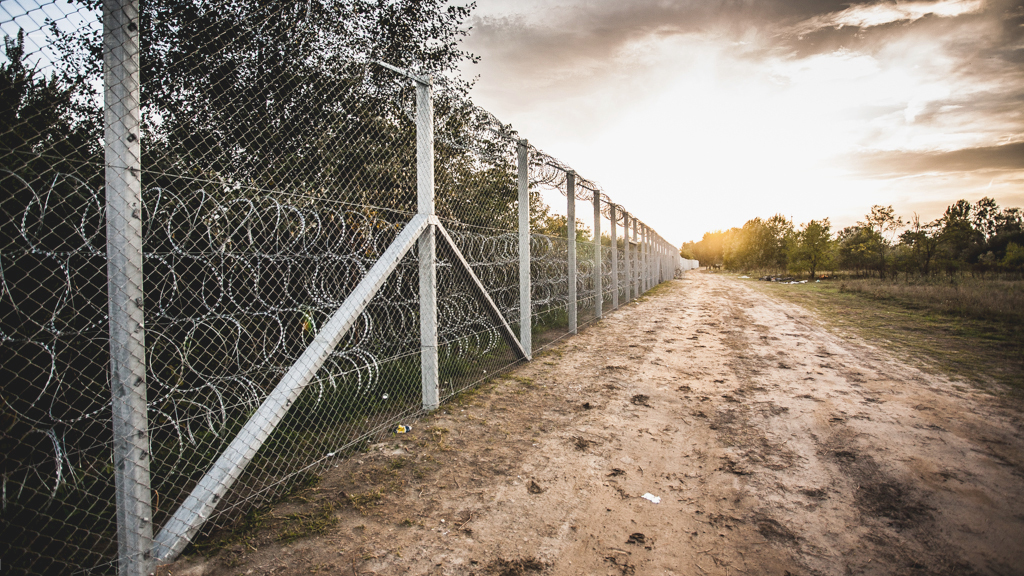
In 2015, Hungary built a border barrier on its border with Serbia and Croatia. The fence was constructed during the European migrant crisis, with the aim to ensure border security by preventing illegal immigrants from entering, and enabling the option to enter through official checkpoints and claim asylum in Hungary in accordance with international and European law. Attempted border entries fell following the barrier's construction. During the month of September 2015 there was a total number of 138,396 migrant entries, and within the first two weeks of November the average daily number of intercepted migrants decreased to only 15, which is a daily reduction of more than 4,500.
| Number of illegal migrants entering Hungary since 2015 | |
|---|---|
| {{ #invoke:Chart | bar chart |
Source: Police.hu - Border information(original URL)
Mediterranean Sea trafficking
Since 2013, over 700,000 undocumented migrants have arrived in Italy via the Mediterranean Sea, mostly from sub-Saharan Africa. In September 2023, boats carrying approximately 7,000 migrants arrived on the Italian island of Lampedusa within 24 hours In 2023, 155,754 migrants arrived in Italy illegally, compared to 103,846 in 2022.
A record number of 46,843 migrants, mostly from Senegal, Mali and Morocco, arrived illegally in Spain's Canary Islands in 2024, up from 39,910 in 2023.
Frontex tracks and publishes data on numbers of crossings along the main six routes twice a year. The following table summarises the number of "irregular crossings" of the European Union's various external borders. Note that the figures do not add up to the total number of people coming into the EU illegally in a given year, since many immigrants are counted twice (for instance, once when entering Greece and a second time upon entering Hungary).
| Main immigration routes to the European Union | Illegal border crossings | 2006 | 2007 | 2008 | 2009 | 2010 | 2011 | 2012 | 2013 | 2014 | 2015 | 2016 | 2017 | Canary Islands | Spain (minus Canary Islands) | Greece and Malta sea borders | Apulia and Calabria | Greece's land borders with Albania and North Macedonia | Western Balkan route | Eastern Mediterranean route | Eastern Borders route | Totals |
|---|---|---|---|---|---|---|---|---|---|---|---|---|---|---|---|---|---|---|---|---|---|---|
| **** | **** | **** | **** | **** | **** | **** | **** | **** |
Belarusian migrant smuggling
In August 2021, the government of Belarus began sponsoring an influx of migrants, mostly from the Middle East and North Africa, to the borders of Lithuania, Poland and Latvia. Although Belarus denied involvement, both the European Union and independent observers viewed it as hybrid warfare undertaken in response to the deterioration in Belarus–European Union relations following the 2020 Belarusian presidential election and the 2020–2021 Belarusian protests. Between August and December 2021, tens of thousands of unauthorized border crossing attempts were recorded, peaking in October. Poland, Lithuania, and Latvia each declared states of emergency and announced their intentions to build border walls. The EU sent supporting officers and patrol cars to Lithuania, and 12 EU governments stated their support for a physical barrier along the border. After the EU refused to finance protective structures on the external borders, Poland and Lithuania completed their barriers on the border with Belarus on their own. In 2024, there was a 192 percent increase in illegal crossings from Belarus into the EU. In May 2025, Lithuania filed a case against Belarus at the International Court of Justice for "orchestrating a migrant crisis that endangered lives and violated international law".
Gallup study, 2010

Gallup has published a study estimating potential migrants in 2010. The study estimated that 700 million adults worldwide would prefer to migrate to another country. Potential migrants were asked for their country of preference if they were given free choice.
The total number of potential migrants to the European Union is estimated at 200 million, comparable to the number for North America (USA and Canada). In addition, an estimated 40 million potential migrants within the EU desire to move to another country within the EU, giving the EU the highest intra-regional potential migration rate.
The study estimates that from 2015 to 2017, there were about 750 million potential migrants. One in five potential migrants (21%), or about 158 million adults worldwide name the U.S. as their desired future residence. Canada, Germany, France, Australia and the United Kingdom each appeal to more than 30 million adults. Apart from the United States, the top desired target countries were: Canada (47 million), Germany (42 million), France (36 million), Australia (36 million) and the United Kingdom (34 million).
The study also compared the number of potential migrants to their desired destination's population, resulting in a Net Migration Index expressing potential population growth. This list is headed by Singapore, which would experience population growth by +219%. Among European countries, Switzerland would experience the highest growth, by +150%, followed by Sweden (+78%), Spain (+74%), Ireland (+66%), the United Kingdom (+62%) and France (+60%). The European countries with highest potential population loss are Kosovo and North Macedonia, with -28% each.
References
Works cited
References
- (2015). "Construction, Robustness Assessment and Application of an Index of Perceived Level of Socio-economic Threat from Immigrants: A Study of 47 European Countries and Regions". Social Indicators Research.
- "Immigration in the EU". European Commission.
- (14 April 2022). "Ancient genomes reveal origin and rapid trans-Eurasian migration of 7th century Avar elites". Cell.
- (14 October 2025). "Migration, Mobility, and the New Knowledge Economy in Southeastern Europe".
- (December 2010). "International Migration 2009-2010: SOPEMI-report for Norway".
- "Swedish Immigration to North America | Augustana College".
- Johnston, Philip. (15 November 2007). "Emigration soars as Britons desert the UK". The Daily Telegraph.
- "The Schengen acquis - Agreement between the Governments of the States of the Benelux Economic Union, the Federal Republic of Germany and the French Republic on the gradual abolition of checks at their common borders".
- {{CELEX. 11992M/TXT
- "The Schengen Agreement - History and the Definition".
- "Schengen Area".
- "The Schengen area and cooperation". European Commission.
- "Schengen thirty years on: results, realities, challenges".
- "EU freedom of movement and residence". European Commission.
- "Non-EU nationals — rules for long-term residence". European Commission.
- Okólski, Marek. (24 May 2014). "Polish Emigration to the UK after 2004; Why Did So Many Come?". Central and Eastern European Migration Review.
- (2009). "Beyond a Border: The Causes and Consequences of Contemporary Immigration". [[SAGE Publishing]].
- (28 March 2009). "Migration in an enlarged EU: A challenging solution?".
- (26 March 1995). "The Schengen area and cooperation".
- McMahon, Simon. (1 June 2012). "Assessing the Impact of European Union Citizenship: The Status and Rights of Romanian Nationals in Italy". Journal of Contemporary European Studies.
- "BBC NEWS - Special Reports - Brits Abroad".
- (11 December 2006). "BBC NEWS - UK - Brits Abroad: Country-by-country".
- Giles Tremlett. (26 July 2006). "Spain attracts record levels of immigrants seeking jobs and sun". the Guardian.
- "Bye Bye Blighty article: British Immigrants Swamping Spanish Villages?".
- Jason Burke. (9 October 2005). "An Englishman's home is his casa as thousands go south". the Guardian.
- (2 August 2006). "BBC NEWS - UK - More Britons consider move abroad".
- MARTIN, PHILIP L.. (1981). "Germany's Guestworkers". Challenge.
- (13 March 2002). "OECD Observer, Volume 2000 Issue 2-3". OECD Observer.
- "Immigration in Europe: Trends, Policies and Empirical Evidence".
- Haas, Hein de. (1 October 2005). "Morocco: From Emigration Country to Africa's Migration Passage to Europe".
- "COUNCIL DIRECTIVE 2009/50/EC of 25 May 2009 on the conditions of entry and residence of third -country nationals for the purposes of highly qualified employment".
- "OUNCIL DIRECTIVE 2009/50/EC of 25 May 2009 on the conditions of entry and residence of third-country nationals for the purposes of highly qualified employment".
- {{harvnb. Calefato. 1994. La presenza di questi immigrati in Europa non e' semplicemente finalizzata alla ricerca di un lavoro, (per lo piu' come camerieri, venditori ambulanti, braccianti stagionali, ecc.). Le migrazioni del nostro tempo pongono con forza una "domanda di accoglienza" (v. Ponzio 1993), cioe' una domanda non contenibile nel mercato e nell'"integrazione", che evidenzia, anche inconsapevolmente, le divaricazioni crescenti sul nostro pianeta tra poverta' e ricchezza.
- "Acquisition of citizenship in the EU". European Commission.
- "Acquisition of citizenship statistics". Eurostat.
- (March 2019). "Migration and migrant population statistics". [[Eurostat]].
- (March 2019). "Migration and migrant population statistics". Eurostat.
- (11 April 2024). "EU countries not enforcing migration pact could face legal action, says Johansson". Euronews.
- Cook, Lorne. (14 May 2024). "EU agrees on a new migration pact. Mainstream parties hope it will deprive the far right of votes".
- "Summary of Population Statistics 1960-2019".
- "Immigrants and Norwegian-born to immigrant parents".
- (4 March 2015). "Nearly 100 000 with Polish background in Norway".
- "Innvandring og innvandrere 2004".
- "Kristina Kvarv Andreassen og Minja Tea Dzamarija : 2. Befolkning".
- "Population by origin, sex and age 1996-2019".
- "Citizenship and Country of Birth".
- "Statistikbanken".
- "Statistics Finland - Population Structure 2019".
- Danish Ministry of Immigration and Integration.. (December 2018). "Analysis of children of descendants of non-Western origin (Analyse af børn af efterkommere med ikke-vestlig oprindelse)". Udlændinge og integrationsministeriet.
- (16 December 2018). "Opråb fra ministre: Problemer med integration af børn af ikkevestlige indvandrere".
- "Key figures".
- Nikielska-Sekuła, Karolina. (2016). "Selected Aspects of Norwegian Immigration Policy Towards Children". Central and Eastern European Migration Review.
- "Facts about immigration".
- "Jobs for Immigrants Labour Market Integration In Norway".
- "Summary of Population Statistics 1960-2014".
- "Andel personer med utländsk bakgrund, 2015 jämfört med 2014". Statistiska Centralbyrån.
- "Folkmängd den 31 december 2016".
- "Preliminary Population Statistics 2016". Statistiska Centralbyrån.
- Allied Newspapers Ltd. (4 May 2010). "Malta has highest per capita rate of asylum applications". Times of Malta.
- "Befolkningsutveckling; födda, döda, in- och utvandring, gifta, skilda 1749 - 2012 - Statistiska centralbyrån".
- "Visa detaljerad information". Statistiska Centralbyrån.
- (1890). "Emigration and Immigration: A Study in Social Science". C. Scribner's sons.
- "International Migration 2017–2018 – Report for Finland".
- "''Immigrants in the population''".
- [https://www.un.org/en/development/desa/population/migration/data/estimates2/docs/MigrationStockDocumentation_2019.pdf INTERNATIONAL MIGRANT STOCK 2019 DOCUMENTATION]
- "International Migrant Stock".
- "Population in private households by migrant background in the wider sense and by selected countries of birth".
- (26 September 2025). "Rightwing presidential candidates' immigration 'obsession' belies reality of modern France".
- link. (3 February 2012 , Insee Première, n°1287, mars 2010, Catherine Borrel et Bertrand Lhommeau, Insee)
- "Résultats de la recherche - Insee".
- "Trajectories and Origins Survey on Population Diversity in France".
- link. (27 September 2013 , Insee, September 2011)
- Parents born in overseas territories are considered to have been born in France.
- [http://www.insee.fr/fr/ffc/docs_ffc/ref/FPORSOC11d_VE22Immig.pdf Les immigrés, les descendants d'immigrés et leurs enfants] {{Webarchive. link. (8 July 2012 , Pascale Breuil-Genier, Catherine Borrel, Bertrand Lhommeau, Insee 2011)
- (27 January 2023). "Immigration rose in France in 2022, driven by labor needs and foreign students". Le Monde.fr.
- (6 January 2016). "Germany Saw 1.1 Million Migrants in 2015 as Debate Intensifies". Bloomberg.
- (12 February 2020). "Migrationsberichte/migrationsbericht-2019".
- (15 December 2024). "Chancellor Scholz briefs parliament for first time". Deutsche Welle.
- (9 January 2024). "Germany: Asylum applications rose sharply in 2023". Deutsche Welle.
- (27 June 2024). "Germany: Net immigration sinks sharply in 2023". Deutsche Welle.
- (14 September 2024). "Germany opens its doors to Kenyan workers in controlled migration deal". CNN.
- (13 September 2024). "Germany begins recruiting 250,000 bus drivers, computer repairers from Kenya". [[Peoples Gazette]].
- (2 September 2024). "How is Germany handling its migration partnerships?". Deutsche Welle.
- "[https://www.ft.com/content/4bd95562-4379-11e2-a48c-00144feabdc0 Ethnic English people a minority in London] {{Webarchive. link. (2015-07-03 ". ''[[Financial Times]]''. 11 December 2012.)
- "Thousands in UK citizenship queue". BBC News.
- (15 March 2016). "News". The Telegraph.
- "Home Page - Welcome to WWW.AOL.IN". AOL.IN.
- (21 May 2015). "Migration Statistics Quarterly Report May 2015". Office for National Statistics.
- "Safe and Legal (Humanitarian) routes to the UK". Home Office.
- "Number of Nigerians studying in UK hits 8-year high". 24 Chasa.
- (23 May 2024). "Migration: How many people come to the UK and how are the salary rules changing?". BBC News.
- (23 May 2024). "Net migration drops to 685,000 after hitting record levels, as even more arrived in UK last year than previously thought". [[LBC]].
- "Acquisition of citizenship by age group, sex and former citizenship".
- Elisabeth Rosenthal, "[http://www.boston.com/news/world/europe/articles/2008/05/16/italy_cracks_down_on_illegal_immigration/ Italy cracks down on illegal immigration] {{Webarchive. link. (21 August 2013 ". [[The Boston Globe]]. 16 May 2008.)
- "Population on 1 January by sex, country of birth and broad group of citizenship".
- (15 June 2015). "Cittadini Stranieri. Popolazione residente e bilancio demografico al 31 dicembre 2014". [[National Institute of Statistics (Italy).
- (15 June 2015). "Bilancio demografico nazionale". ISTAT.
- "Resident foreigners on 1st January - Citizenship".
- (1997). "Revisioning Italy national identity and global culture". University of Minnesota Press.
- "[https://news.bbc.co.uk/2/hi/europe/6550725.stm Milan police in Chinatown clash] ". BBC News. 13 April 2007.
- Willey, David. (13 April 2007). "Milan police in Chinatown clash". [[BBC News]].
- IPS]] ipsnews.net. {{webarchive. link. (5 March 2012)
- Lanni, Alessandro. (27 December 2015). "From Morocco to Romania: how immigration to Italy has changed over 10 years". Open Migration.
- "Cinesi in Italia".
- (20 September 2019). "Società Stranieri in Italia, 5,2 milioni i residenti regolari. Romania e Cina le provenienze con i maggiori incrementi negli ultimi 8 anni".
- Chang, Angela. (24 February 2012). "20th Century Chinese Migration to Italy: The Chinese Diaspora Presence within European International Migration". ResearchGate.
- "Tuttitalia".
- "XXIX Rapporto Immigrazione 2020".
- (12 February 2015). "Istat: nel 2014 oltre 90mila i nuovi nati stranieri".
- "Población por comunidades y provincias, país de nacimiento, edad (Grupos quinquenales) y sexo".
- "TablaPx".
- (22 April 2014). "End to Mediterranean dream for 90,000 Britons who left Spain last year". The Telegraph.
- (11 December 2006). "Brits Abroad: Country-by-country". BBC News.
- Tremlett, Giles. (26 July 2006). "Spain attracts record levels of immigrants seeking jobs and sun". The Guardian.
- "British Immigrants Swamping Spanish Villages?".
- Burke, Jason. (9 October 2005). "An Englishman's home is his casa as thousands go south". The Guardian.
- "IMDiversity - Careers, Opportunities, and Diversity Connect".
- [http://www.businessweek.com/magazine/content/07_21/b4035066.htm Spain: Immigrants Welcome] {{webarchive. link. (6 October 2008)
- "Immigrants Fuel Europe's Civilization Clash".
- "Breaking News, World News & Multimedia".
- [http://www.ine.es/prensa/np551.pdf 5,598,691 foreign population in Spain (2009)] {{Webarchive. link. (11 June 2009 [https://docs.google.com/viewer?url=http%3A%2F%2Fwww.ine.es%2Fprensa%2Fnp551.pdf&embedded=true&chrome=false&dov=1 Spanish National Statistic Institute press report] {{Webarchive). link. (24 May 2020 , [[Instituto Nacional de Estadística (Spain)). INE (Spain)]]. 3 June 2009. (Spanish)
- (22 April 2014). "British retirees leave the Costa del Sol "en masse" due to the immigration rules imposed by Brexit". 20minutos.es.
- (4 November 2024). "Spain to grant residency and work permits to around 300,000 undocumented migrants per year". Euronews.
- "Portugal - Emigration".
- (23 June 2023). "Quase 800 mil estrangeiros vivem em Portugal e 30% são brasileiros".
- "Statistics Portugal - Web Portal".
- (16 October 2025). "Relatório de Migrações e Asilo 2024 - Notícias {{!}} News".
- Vasileva, Katya (2011) [http://epp.eurostat.ec.europa.eu/cache/ITY_OFFPUB/KS-SF-11-034/EN/KS-SF-11-034-EN.PDF 6.5% of the EU population are foreigners and 9.4% are born abroad] {{webarchive. link. (28 January 2012, Eurostat, Statistics in focus vol. 34.)
- "Immigration, emigration, and migration balance in the Netherlands from 1995 to 2022". Statista Research Department.
- "Half of young big-city dwellers have non-western background". Centraal Bureau voor de Statistiek (CBS).
- (6 October 2023). "State of Migration: global migration influx in 2022". Government.nl.
- "Statistical Office of the Republic of Slovenia - Migration, Slovenia, 1 January 2011 – final data".
- (May 2022). "Interests Under Construction: Views on Migration from the European Union's Southern External Border". [[SAGE Publications]] on behalf of the [[Political Studies Association]].
- "YouGov {{!}} Eurotrack: UK, Denmark, Finland and Norway not pulling their weight on migrants".
- "What Do Europeans Think About Muslim Immigration?". Chatham House.
- (11 April 2025). "Lukashenko Invites 150,000 Pakistanis To Work In Belarus Amid Labor Shortage". Radio Free Europe/Radio Liberty.
- (16 April 2025). "Lukashenko to Bring in 150,000 Pakistanis. Will They Storm Poland? "A Serious Signal for the Security Services"". Poland Daily 24.
- (13 May 2025). "Fear, repression and propaganda: politicising South Asian migrants in Belarus and Georgia". [[Voxeurop]].
- (14 March 2017). "To ud af tre vil begrænse muslimsk indvandring".
- "Eurotrack: UK, Denmark, Finland and Norway not pulling their weight on migrants {{!}} YouGov".
- (14 August 2020). "Danish citizenship refused to 83 people with criminal records".
- Radio, Sveriges. (18 November 2020). "Svensk brottslighet används som skräckexempel i Finland - Nyheter (Ekot)". Sveriges Radio.
- (12 December 2023). "Germany's CDU redefines stance on Islam in new manifesto". Deutsche Welle.
- (2 September 2024). "Head of German state of Saxony says deal with populist BSW 'possible'".
- Mudde, Cas. (2016). "The Populist Radical Right: A Reader". [[Routledge]].
- Schori Liang, Christina. (2013). "Europe for the Europeans: The Foreign and Security Policy of the Populist Radical Right". Ashgate Publishing, Ltd..
- (10 December 2018). "Many worldwide oppose more migration – both into and out of their countries".
- (11 July 2016). "2,000 men 'sexually assaulted 1,200 women' at Cologne New Year's Eve party". The Independent.
- (25 July 2016). "German Refugee Policy Under Fire After a Week of Bloodshed". The New York Times.
- (17 January 2018). "A Girl's Killing Puts Germany's Migration Policy on Trial". The New York Times.
- "Germany: Politicians seek answers after teenager's murder suspect's flight".
- (26 August 2024). "Scholz vows to speed up deportations after Solingen stabbings". BBC.
- "'Are we in Greece?': Migrants seize their chance in Europe quest".
- (1 March 2020). "Greece blocks thousands of migrants trying to enter from Turkey".
- Kampouris, Nick. (11 March 2020). "New Clashes Erupt in Evros; Migrants Throw Petrol Bombs Over to Greek Side {{!}} GreekReporter.com".
- {{harvnb. Guild. Minderhoud. 2006
- {{harvnb. Dal Lago. 2006
- Ministero degli Interni (1985) ''Relazione al Parlamento sull'attività delle Forze di Polizia e sullo stato dell'ordine e della sicurezza pubblíca nel territorio nazionale''
- Palidda, S. (1996) ''Verso il fascismo democratico?'' Note su emigrazione, immigrazione e società dominanti', Aut Aut 275: 143–68
- Pagnoncelli, Nando. (1 November 2019). "Le colpe dell'emergenza migranti? Il 60% punta il dito contro l'Europa".
- Katarzyna Kowalczuk. (June 2015). "POLACY WOBEC PROBLEMU UCHODŹSTWA".
- (30 June 2015). "Sondaż CBOS: Polacy nie potrzebują imigrantów".
- "Residence permits statistics - Statistics Explained".
- (23 October 2024). "Fico, Orbán and Vučić call for united front against irregular migration". Euractiv.
- (22 October 2024). "Hungary, Slovakia and Serbia plot a win for Europe's anti-migration camp". Euronews.
- (19 November 2024). "Spain to legalise about 300,000 undocumented immigrants per year". Reuters.
- (1 December 2015). "Sweden Democrats far-right anti-immigration party surging".
- Parusel, Bernd. (June 2017). "Der schwedische Umschwung in der Flüchtlingspolitik {{!}} bpb".
- (10 December 2018). "Many worldwide oppose more migration – both into and out of their countries".
- (21 December 2017). "Magdalena Andersson: Sök er till annat land".
- Niklas Pollard, Johan Ahlander. (12 September 2022). "Swedish election puts anti-immigration Sweden Democrats centre stage".
- "History of social security-Swiss People's Party".
- "Migration and migrant population statistics - Statistics Explained".
- "Immigration law enforcement in the EU – figures for 2019 - Products Eurostat News - Eurostat". Ec.europa.eu.
- "International migrant stock 2013: Total". [[United Nations Department of Economic and Social Affairs#Population Division]].
- [http://www.artiszelmenis.lv/moveeurope/ MoveEurope - immigration to Europe process research team] {{Webarchive. link. (13 January 2014 , Artis Zelmenis, 2/2014.)
- (2 March 2006). "World population policies, 2005". United Nations.
- UN statistics as of 2005, see [[list of countries by immigrant population]].
- "Czech Statistical Office's public database".
- "Immigration in the EU27 in 2006".
- (June 2006). "Europe: Population and Migration in 2005". migrationpolicy.org.
- "Migration Data Hub". migrationpolicy.org.
- "Immigration and the 2007 French Presidential Elections".
- "Acquisition of citizenship statistics - Statistics Explained". Ec.europa.eu.
- "Acquisition of citizenship statistics - Statistics Explained". Ec.europa.eu.
- "International migrant stock: By destination and origin". United Nations.
- (15 June 2018). "The African Diaspora in Europe Today".
- Crumley, Bruce. (24 March 2009). "Should France Count Its Minority Population?".
- {{cite United Kingdom census. link. Office for National Statistics. (2011)
- "France's blacks stand up to be counted".
- Cole, Jeffrey. (2011). "Ethnic Groups of Europe: An Encyclopedia". ABC-CLIO.
- (2018). "Introducing Comparative Politics: Concepts and Cases in Context". CQ Press.
- [[Graham E. Fuller. (2020). "Is Turkey Out of Control?". [[Quincy Institute for Responsible Statecraft]].
- (2020). "Challenges for the EU as Germany Approaches Recession". [[Levy Economics Institute]].
- Bedir, Akif. (2020). "Kirli hesaplar". [[:tr:Haber7.com.
- (2021). "Opportunity arises to renew Turkey, EU dialogue: FM Çavuşoğlu". [[Daily Sabah]].
- (2020). "Trots Fortuna Sittard gaat talenten scouten voor Besiktas". [[Voetbal International]].
- (2021). "Dutch child care subsidies scandal exposes country's systematic xenophobia, Turkophobia". [[Daily Sabah]].
- (12 April 2018). "Bevölkerung und Erwerbstätigkeit". Statistisches Bundesamt.
- (31 December 2018). "Population of Overseas Indians". [[Ministry of External Affairs (India)]].
- (31 December 2018). "Statement showing number of Overseas Pakistanis living, working and studying in different regions/countries of the world, as on 31st December, 2017 - Region-Wise distribution". [[Ministry of Overseas Pakistanis and Human Resource Development]].
- "Non-EU Citizens. Years 2016-2017". Italian National Institute of Statistics.
- "Población por comunidades y provincias, país de nacimiento, edad (grupos quinquenales) y sexo".
- "Population des régions et taux d'évolution de la population".
- "List of countries in". The Editors of Encyclopaedia Britannica.
- "E' latinoamericano il 7,7% della popolazione straniera in Italia. In testa il Perù | Ufficio Pastorale Migranti - Arcidiocesi di Torino". Migrantitorino.it.
- [http://www.sef.pt/documentos/56/DADOS_2007.pdf POPULAÇÃO ESTRANGEIRA EM TERRITÓRIO NACIONAL, SERVIÇO DE ESTRANGEIROS E FRONTEIRAS] {{Webarchive. link. (3 March 2016 2008;)
- {{ONSCoB2018
- (28 June 2007). "Latin American Immigration to Southern Europe". migrationpolicy.org.
- "Armenian Diaspora". ArmeniaDiaspora.com - News from Armenia, Events in Armenia, Travel and Entertainment.
- [https://web.archive.org/web/20140929080724/http://www.dglflf.culture.gouv.fr/lgfrance/lgfrance_presentation.htm ''Les langues de France: un patrimoine méconnu, une réalité vivante''] {{webarchive. link. (29 September 2014, originally published by CultureComm unication.gouv.fr.)
- (26 November 2019). "Coming out of the shadows: what it means to be French and Chinese".
- {{cite United Kingdom census. link. Office for National Statistics. (2011)
- (December 2013). "Commission on Filipinos Overseas : STOCK ESTIMATE OF OVERSEAS FILIPINOS".
- (15 March 2016). "News". The Telegraph.
- "Population on 1 January by age group, sex and country of birth".
- "Population on 1 January by age, sex and group of country of birth".
- (March 2016). "Risk Analysis for 2016". [[Frontex]].
- (March 2016). "Risk Analysis for 2016". [[Frontex]].
- (15 April 2015). "Migrant boat capsizes off Libya, 400 feared dead". [[Fox News Channel]].
- (6 August 2015). "Hungary races to build border fence as migrants keep coming". BBC News.
- "Elfogott migránsok száma - dátum szerinti lekérdezés".
- (21 May 2018). "What will Italy's new government mean for migrants?".
- (18 July 2017). "African migrants fear for future as Italy struggles with surge in arrivals". Reuters.
- (15 September 2023). "What's behind the surge in migrant arrivals to Italy?".
- (8 January 2024). "Italy Witnesses 50% Surge in Migrant Arrivals in 2023". ETIAS.com.
- (2 January 2025). "Spain's Canary Islands received record 46,843 migrants in 2024: ministry". France 24.
- Forti, Mirko. (11 July 2023). "Belarus-sponsored Migration Movements and the Response by Lithuania, Latvia, and Poland: A Critical Appraisal". European Papers - A Journal on Law and Integration.
- "Why Poland says Russia and Belarus are weaponizing migration to benefit Europe's far-right".
- (8 November 2021). "Hundreds Of Migrants Gather At Belarusian-Polish Border". Radio Free Europe/Radio Liberty.
- "Poland: attempts of illegal crossing of the Polish-Belarusian border 2024".
- (7 August 2021). "Neteisėtos migracijos stebėsena (nuo 2021-01-01)".
- (30 June 2022). "Poland completes Belarus border wall to keep migrants out".
- "EU border agency Frontex vows additional support for Lithuania amid migrant crisis".
- (11 November 2021). "Europe Weighs Border Walls as Migrants Mass in Belarus at Poland's Frontier". The Wall Street Journal.
- (29 August 2022). "Lithuania Finishes Building Wall On Belarusian Border To Stem Flow Of Illegal Migrants".
- (24 March 2023). "Lithuania-Belarus border now 100-percent surveilled – ministry".
- (12 May 2025). "Estonia sends police unit to Latvia-Belarus border after rise in migrant crossings".
- (20 May 2025). "Lithuania takes Belarus to The Hague for weaponizing migration".
- (2010). "The World's Potential Migrants". Gallup.
- Esipova, Ray and Srinivasan (2010), p. 8.
- (10 December 2018). "More Than 750 Million Worldwide Would Migrate If They Could".
- Esipova, Ray and Srinivasan (2010), Appendix A, pp. 21–22.
This article was imported from Wikipedia and is available under the Creative Commons Attribution-ShareAlike 4.0 License. Content has been adapted to SurfDoc format. Original contributors can be found on the article history page.
Ask Mako anything about Immigration to Europe — get instant answers, deeper analysis, and related topics.
Research with MakoFree with your Surf account
Create a free account to save articles, ask Mako questions, and organize your research.
Sign up freeThis content may have been generated or modified by AI. CloudSurf Software LLC is not responsible for the accuracy, completeness, or reliability of AI-generated content. Always verify important information from primary sources.
Report