From Surf Wiki (app.surf) — the open knowledge base
Illinois Staats-Zeitung
German-American newspaper

German-American newspaper
| Field | Value |
|---|---|
| name | Illinois Staats-Zeitung |
| logo | Illinois Staats-Zeitung masthead.png |
| image | File:Staats-Zeitung-building-1876.jpg |
| caption | The massive Illinois Staats-Zeitung building constructed after the Great Chicago Fire of 1871 |
| type | Daily German-language newspaper |
| founded | April 1848 |
| ceased_publication | 1921 |
| owners | A. C. Hesing |
| publisher | S.S. Spielman (until 1921) |
| chief_editor | Hermann Kriege (1848–1850) |
| George Schneider (1851–1861) | |
| Lorenz Brentano (1861–1867) | |
| Hermann Raster (1867–1891) | |
| Wilhelm Rapp (1891–1907) | |
| Arthur Lorenz (1907–1921) | |
| managing_editor | Washington Hesing (1880–1893) |
| Joseph Brucker (1894–1901) | |
| language | German |
| political_position | Republican Party (until 1873) |
| People's Party (1873–1875) | |
| Independent (after 1876) | |
| circulation | 97,000 (1892) |
| headquarters | Chicago |
George Schneider (1851–1861) Lorenz Brentano (1861–1867) Hermann Raster (1867–1891) Wilhelm Rapp (1891–1907) Arthur Lorenz (1907–1921) Joseph Brucker (1894–1901) People's Party (1873–1875) Independent (after 1876)
Illinois Staats-Zeitung (Illinois State Newspaper) was one of the most well-known German-language newspapers of the United States; it was published in Chicago from 1848 until 1922. Along with the Westliche Post and Anzeiger des Westens, both of St. Louis, it was one of the three most successful German-language newspapers in the United States Midwest, and described as "the leading Republican paper of the Northwest", alongside the Chicago Tribune. By 1876, the paper was printing 14,000 copies an hour and was second only to the Tribune in citywide circulation.
Publication history
Establishment
The Illinois Staats-Zeitung was founded in April 1848 as a weekly, and became a daily in 1851.
Politically, the newspaper was Republican. Hermann Kriege was the first editor-in-chief. In 1851, Georg Schneider joined the staff of the paper and became editor. Among his associates were George Hillgärtner and Daniel Hertel.
The Illinois Staats-Zeitung opposed slavery, and Schneider successfully used the newspaper as a platform to campaign against the Kansas–Nebraska Act. On February 22, 1856 Schneider attended, on behalf of the Illinois Staats-Zeitung, a meeting in Decatur of anti-Nebraska newspapers in Illinois. In total, 26 newspapers were represented at the meeting, assembled by the Morgan Journal editor Paul Selby.
Civil War period

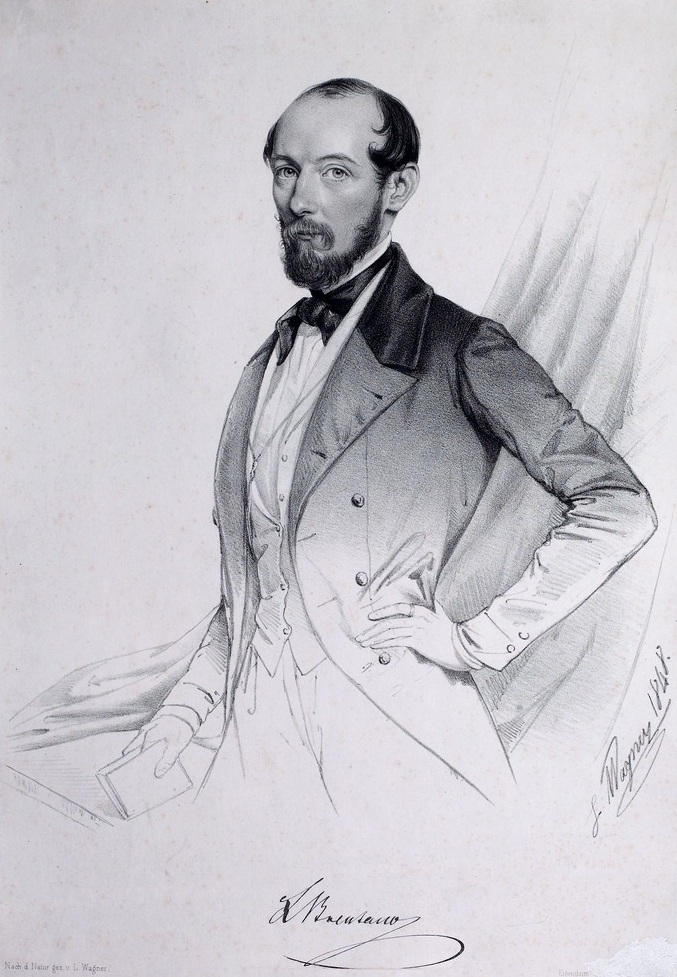
During the Civil War years, Lorenz Brentano was proprietor and editor-in-chief, succeeding Schneider. At this point, Illinois Staats-Zeitung was the second-largest daily newspaper in the Chicago.
During the war, Wilhelm Rapp was on the staff. He came from the Baltimore Wecker after a riot destroyed its office. After the war, he returned to the Wecker.
In the years after the war, the Staats-Zeitung was published by Prussian immigrant Anton C. Hesing, a former sheriff of Cook County, who moved from partial ownership to complete ownership in 1867. A public figure and political boss of sorts, Hesing would use the pages of his paper for maximum political impact, helping to launch the pro-alcohol People's Party in 1873 and orchestrating the election of Harvey Doolittle Colvin as the 27th mayor of Chicago. Hesing's independent political venture would fall into disrepute within a few years and the Staats-Zeitung returned to the Republican ranks.
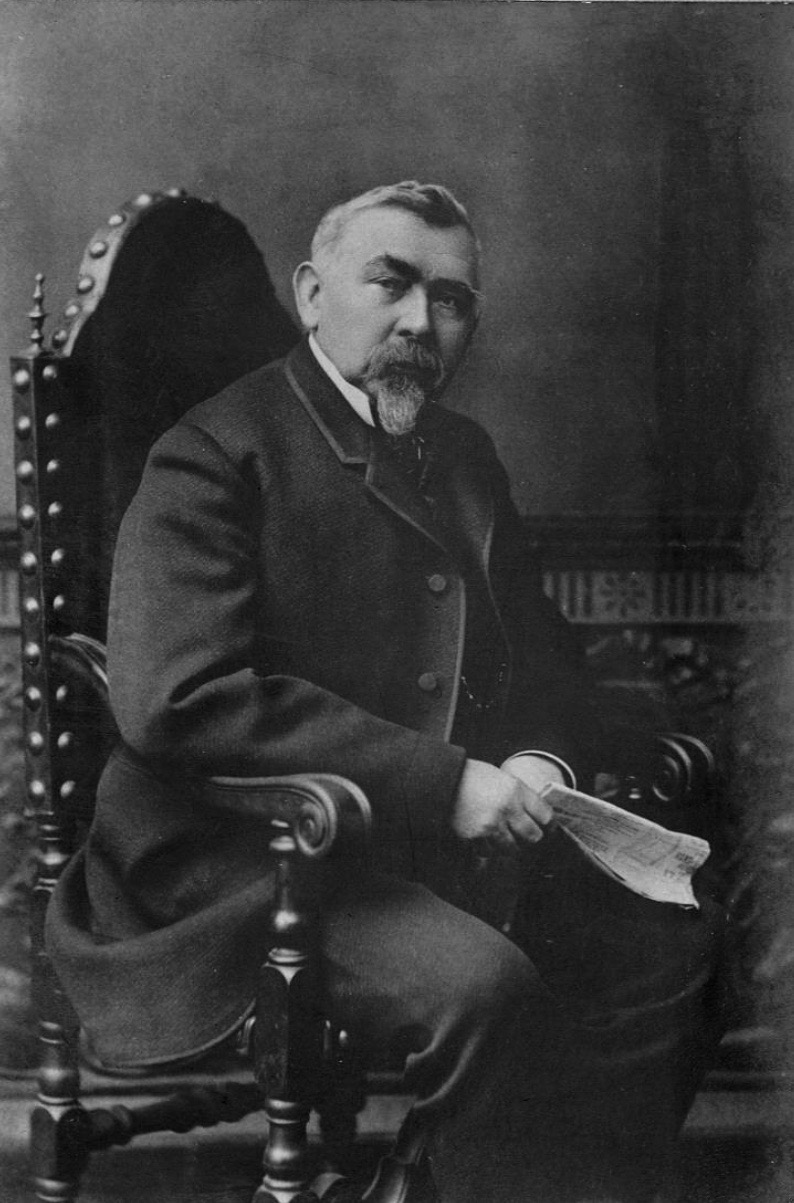
Concurrent with Hesing's assumption of the paper's ownership in 1867, Hermann Raster accepted the position of editor — a position he would retain until his death in 1891. Raster was the longest holder of this position, and the paper was at the peak of its financial success during his tenure. Wilhelm Rapp returned to the Staats-Zeitung in 1872, and became editor when Raster died in 1891.
Great Chicago Fire
The Staats-Zeitung was particularly hard hit during the October 1871 Great Chicago Fire. Not only was the building housing the publication, including its machinery and type, lost to the flames, but so, too, were back files of the paper and the publication's records of accounts. Moreover, virtually the entire staff of the paper from editors to press operators found themselves burned out of their homes.
Necessary lead type for producing a German-language paper proved impossible to obtain on short notice, and as a temporary measure, production was moved briefly to the German enclave of Milwaukee, Wisconsin. After a mere 20 days, production returned to a new press in a new facility in Chicago, the city in which the paper would remain for the rest of its existence, with an expansion of physical size following one month later.
A new permanent home for the paper was finally located about one mile away from the Chicago city center, in a new multistory structure built at the corner of Washington Street and Fifth Avenue. The building measured 100 feet from the basement floor to the peak of the roof, making it one of the largest buildings in its area of town, and was designed with the monumental sensibilities of old Europe.
Historically Republican, the newspaper endorsed Democratic candidate Samuel J. Tilden in the 1876 United States presidential election. However, it remained officially independent from that point forward, criticizing equally both major American parties.
After Hesing, Brentano, and Raster died at the end of the 19th century, the paper began to decline. In 1899, the majority stockholders of the paper created a new board of directors and ousted long-time treasurer Charles Francis Pietsch. Henrietta Hesing and Margarethe Raster, the widows of Washington Hesing and Hermann Raster, controlled the property of the* Staats-Zeitung*, and Lorenz Brentano's son Theodore became new treasurer.
World War I and termination
Until the United States became involved in World War I, the Illinois Staats-Zeitung supported the German war effort. Editor Arthur Lorenz was reportedly "unrestrained" in his support for the Germans, and the paper lost a great deal of advertising and funding as a result. By the late 1910s, it was in dire financial straits and garnered significant controversy when it ran an article describing members of the American Legion as vagabonds and bums and that the legion had been "bought with British gold to betray American labor." In 1921, the paper was sold for $25,000 and Colonel John Clinnin, assistant United States district attorney, recommended deportation proceedings for Lorenz. The paper was resurrected as Deutsch-Amerikanische Bürger-Zeitung. A short time before, the Chicagoer Freie Presse had merged with the paper.
''Illinois Staats-Herold''
Following the sale of the* Staats-Zeitung*, the paper was resurrected and merged with the Chicagoer Herold in the late 1920s to form the Illinois Staats-Herold. The* Staats-Herold's* circulation was around 40,000 by 1934, but the paper again ceased publication around 1936. It was the first German newspaper in Chicago to host a German broadcasting hour on the radio. The president of the Staats-Herold was Ernest L. Klein and the editor-in-chief was Julius Klein. Like its predecessor, the* Staats-Herold *was Republican-affiliated.
Staff
File:Anton Hesing portrait.png|Anton C. Hesing Owner File:George Schneider.jpg|George Schneider Chief editor from 1851 to 1861 File:Lorenz Brentano 1878.jpg|Lorenzo Brentano Chief editor from 1861 to 1867 File:Hermann Raster by von Hofsten.jpg|Hermann Raster Chief editor from 1867 to 1891 File:Wilhelm Rapp Engraving.jpg|Wilhelm Rapp Chief editor from 1891 to 1907 File:Washington Hesing Portrait.png|Washington Hesing Managing editor from 1880 to 1893 File:Joseph Brucker 1900.jpg|Joseph Brucker Managing editor from 1894 to 1901 File:Charles Francis Pietsch, circa 1910.jpg|Charles Francis Pietsch Treasurer until 1899 File:TheodoreBrentano.PNG|Theodore Brentano Treasurer after 1899 In November 1871, publisher Anton Hesing's son, Washington Hesing (1849–1897), an 1870 graduate of Yale College, finished a stint as a political appointee on the Chicago Board of Education and became actively connected with the Staats-Zeitung. The younger Hesing became managing editor of the Staats-Zeitung in April 1880, by which time he was a part owner of the publication.
Other notable members of the staff of and contributors to the Staats-Zeitung were Adolf Wiesner (who served in an editorial position from 1866 to 1867), Caspar Butz, Emil Dietzsch, August Boecklin, Henry E.O. Heinemann, Paul Grzybowski and Henry Merker. Between 1891 and 1899, the paper had a separate evening edition, Abendblatt (Evening Paper).
References
References
- . (1892). "Chicago and Its Resources Twenty Years After, 1871-1891: A Commercial History Showing the Progress and Growth of Two Decades from the Great Fire to the Present Time". *Chicago Times Company*.
- Littlewood, Thomas B. ''Soldiers Back Home: the American Legion in Illinois, 1919–1939''. Southern Illinois University Press, 2004.
- Fairmount Park, Philadelphia: Centennial Newspaper Exhibition, 1876. New York: George P. Rowell & Co., 1876; pg. 244.
- Stevenson, Louise. (2015). "Lincoln in the Atlantic World". Cambridge University Press.
- Carl Wittke, ''Refugees of Revolution: The German Forty-Eighters in America''. Philadelphia: University of Pennsylvania Press, 1952; pg. 273.
- [http://chroniclingamerica.loc.gov/lccn/sn84038720/ "Tägliche Illinois Staats-Zeitung. (Chicago) 1851–1862,"] Chronicling America, Library of Congress, www.chroniclingamerica.loc.gov/
- Elliott Shore, Ken Fones-Wolf, and James Philip Danky, ''The German-American Radical Press: The Shaping of a Left Political Culture, 1850–1940''. Urbana, Illinois: University of Illinois Press, 1992; pg. 87.
- In the 1850s, the paper was taken over by [[Forty-Eighters]] and became a major daily newspaper of the Chicago German-born community.Shore, Fones-Wolf, and Danky, ''The German-American Radical Press'', pg. 50.
- ''[https://books.google.com/books?id=1Od_l5l7xxkC The Centennial History of Illinois — Vol. Three — The Era of the Civil War]''
- [http://www.historycooperative.org/journals/jala/22.1/snay.html Snay, Mitchell. ''Abraham Lincoln, Owen Lovejoy, and the Emergence of the Republican Party in Illinois'']
- {{Cite Appletons'. (1900)
- In these years, the paper fully dominated German-language press in the city, as [[Democratic Party (United States). Democratic]] German-language newspapers were short-lived at the time.Shore, Fones-Wolf, and Danky, ''The German-American Radical Press'', pg. 59.
- "Schied, Fred M. ''Education and Working Class Culture: German Workers' Clubs in Nineteenth Century Chicago''".
- [https://www.newspapers.com/clip/2594915/his_70th_year_birthday_of_anton_c/ "His 70th Year: Birthday of Anton C. Hesing Celebrated at his Home,"] ''Chicago Daily Tribune,'' vol. 52, no. 7 (Jan. 7, 1893), pg. 4.
- [http://www.newberry.org/collections/FindingAids/raster/raster.html Inventory of the Hermann Raster Papers] {{Webarchive. link. (2011-06-11 at The Newberry Library)
- Albert B. Faust. (1963). "Rapp, Wilhelm".
- ''Fairmount Park, Philadelphia: Centennial Newspaper Exhibition, 1876.'' New York: George P. Rowell & Co., 1876; pg. 244.
- . (1895). "The Review of Reviews: An International Magazine, Volume XI". *The Review of Reviews Co.*.
- ''Fourth Estate: A Weekly Newspaper for Publishers, Advertisers, Advertising Agents and Allied Interests'', Issue 281, July 13, 1899.
- "Image 19 of The evening world (New York, N.Y.), December 19, 1921, (Final Extra)".
- (24 December 1921). "MOVES TO DEPORT EDITOR.; Federal Attorney Asks Expulsion of Illinois Staats-Zeitung Director". New York Times.
- (October 26, 1921). "German Paper to Resume; Illinois Staats-Zeitung Sold by Receiver in Chicago". New York Times.
- Illinois Press Association. Illinois Newspaper Directory: History of the Illinois Press Association. [Springfield, Illinois: printed by Hartman-Jefferson printing company], 1934: p539.
- A.T. Andreas, ''History of Chicago From the Earliest Period to the Present Time: Volume III: From the Fire of 1871 Until 1885.'' In Three Volumes. Chicago: A.T. Andreas Company, 1886; pg. 704.
- Upon his appointment as [[postmaster of Chicago]] in 1893, Washington Hesing was replaced by notable Illinois Republican [[Joseph Brucker]] as managing editor of the paper."Joseph Brucker." ''History of Illinois Republicanism, Embracing a History of the Republican Party in the State to the Present Time ... with Biographies of Its Founders and Supporters ... Also a Chronological Statement of Important Political Events since 1774'', by Green B. Raum, Rollins Pub. Co., 1900, pp. 710–714.
- Carl Wittke. (1952). "Refugees of Revolution: The German Forty-Eighters in America". University of Pennsylvania Press.
- [http://www.encyclopedia.chicagohistory.org/pages/11525.html Encyclopedia of Chicago — Selected Chicago Daily Newspapers, Foreign Language]
This article was imported from Wikipedia and is available under the Creative Commons Attribution-ShareAlike 4.0 License. Content has been adapted to SurfDoc format. Original contributors can be found on the article history page.
Ask Mako anything about Illinois Staats-Zeitung — get instant answers, deeper analysis, and related topics.
Research with MakoFree with your Surf account
Create a free account to save articles, ask Mako questions, and organize your research.
Sign up freeThis content may have been generated or modified by AI. CloudSurf Software LLC is not responsible for the accuracy, completeness, or reliability of AI-generated content. Always verify important information from primary sources.
Report