From Surf Wiki (app.surf) — the open knowledge base
Ill-Matched Marriage
Painting by a follower of Quentin Matsys
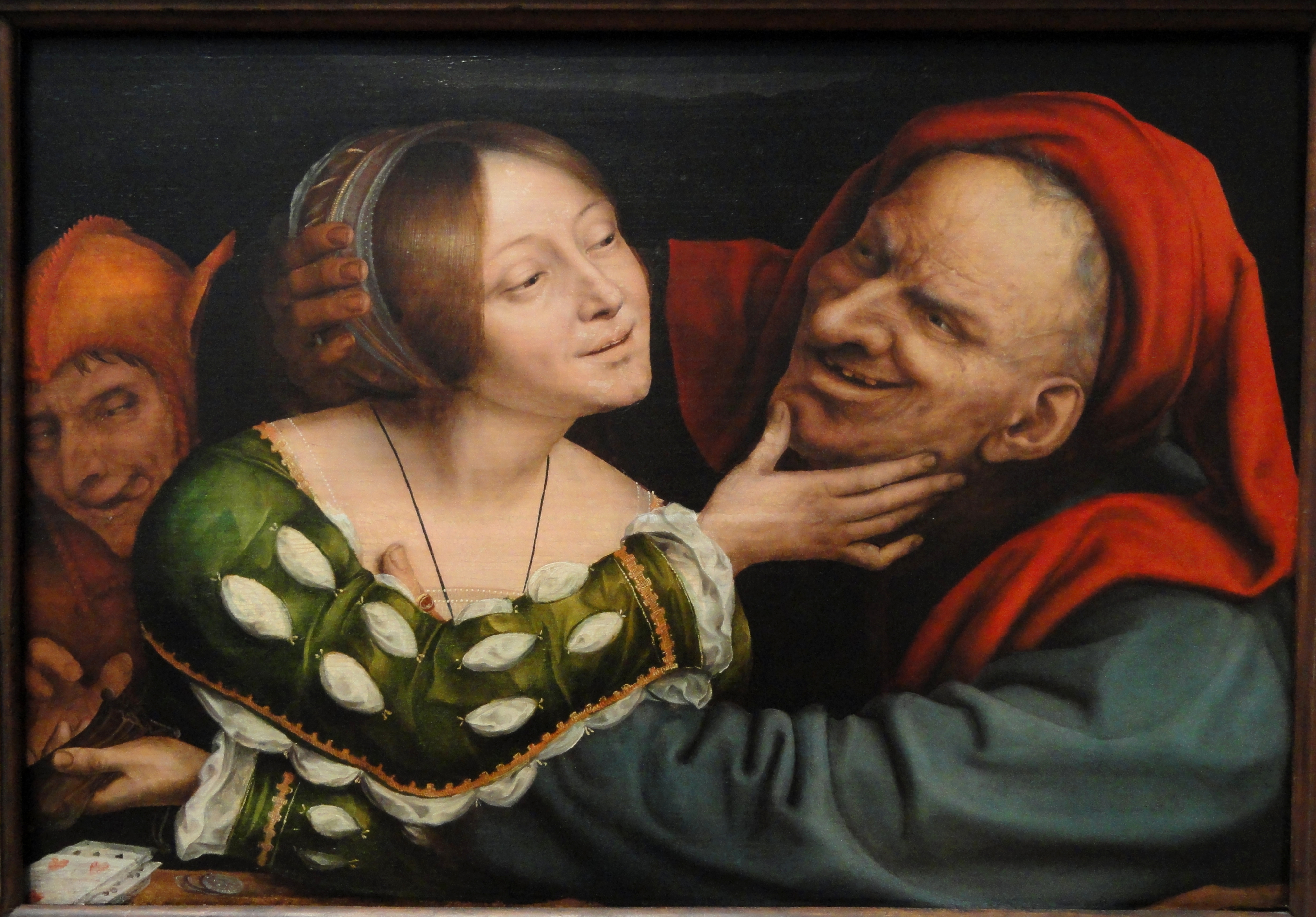
Painting by a follower of Quentin Matsys
| Field | Value |
|---|---|
| image_file | Quentin Metsys - O Casamento Desigual.jpg |
| image_size | 350px |
| title | Ill-Matched Marriage (The Marriage Contract) |
| artist | Follower of Quentin Matsys |
| year | 1525–1530 |
| medium | Oil on panel |
| height_metric | 54 |
| width_metric | 89 |
| metric_unit | cm |
| imperial_unit | in |
| museum | São Paulo Museum of Art |
| city | São Paulo |
The Ill-Matched Marriage (also known as The Marriage Contract) is an oil painting by a follower of the early Netherlandish master Quentin Matsys, usually dated between 1525 and 1530. The panel, probably inspired by an original lost drawing of Leonardo da Vinci, illustrates a marriage for economic reasons between persons of different ages. The painting is in the São Paulo Museum of Art. It was donated to the museum in 1965 by the Baron Hans Heinrich Thyssen-Bornemisza.
Context and iconography
Many artists depicted the theme of marriage between people of differing age. Goya, Leonardo da Vinci, Dürer and Lucas Cranach the Elder dedicated works and studies to this subject. The representation of an old man marrying a younger woman is more common, but here Matsys depicts the opposite: a rich old woman marries a young man. Matsys made another version with the man older, now in the National Gallery of Art in Washington, D.C.
Being caressed by the young man, the old woman offers him a wedding ring with her right hand and opens her bag, smoothed by the man's left hand. The mockery, hypocrisy and foolishness of the scene is highlighted by the burlesque features of the characters and, in particular, by the figure at right, shown putting the necklace spread on the table inside a box.
The "grotesque marriage" is also present in the satirical literature, as in the poem Ship of Fools by Sebastian Brant (1494), which in its 52nd chapter tackles the "marriage-for-money" theme. The subject is treated by Erasmus of Rotterdam in his The Praise of Folly (1509).
References
References
- Marques, Luiz (1998). ''Catálogo do Museu de Arte de São Paulo Assis Chateaubriand. Arte da Península Ibérica, do Centro e do Norte da Europa''. São Paulo, Prêmio. pp. 87–91 (Portuguese)
This article was imported from Wikipedia and is available under the Creative Commons Attribution-ShareAlike 4.0 License. Content has been adapted to SurfDoc format. Original contributors can be found on the article history page.
Ask Mako anything about Ill-Matched Marriage — get instant answers, deeper analysis, and related topics.
Research with MakoFree with your Surf account
Create a free account to save articles, ask Mako questions, and organize your research.
Sign up freeThis content may have been generated or modified by AI. CloudSurf Software LLC is not responsible for the accuracy, completeness, or reliability of AI-generated content. Always verify important information from primary sources.
Report