From Surf Wiki (app.surf) — the open knowledge base
Ig Nobel Prize
Annually awarded parody of the Nobel Prize

Annually awarded parody of the Nobel Prize
The Ig Nobel Prize () is a satirical prize awarded annually since 1991 to promote public engagement with scientific research. Its aim is to "honor achievements that first make people laugh, and then make them think." The name of the award is a pun on the Nobel Prize, which it parodies, and on the word ignoble. Most awards are for genuine scientific achievements with an unorthodox, obvious or humorous slant, while other awards are given ironically to various fraudsters, politicians, media figures, or promoters of pseudoscience.
Organized by the scientific humor magazine Annals of Improbable Research (AIR), the Ig Nobel Prizes are presented by Nobel laureates in a ceremony at the Massachusetts Institute of Technology. The winners also deliver public lectures. The Ig Nobel Prize monetary award is given in a solitary banknote for the amount of 10 trillion Zimbabwean dollars (US$0.40, but the banknote is worth more as a collector's item).
History
The Ig Nobels were created in 1991 by Marc Abrahams, then editor-in-chief of the Journal of Irreproducible Results and later co-founder of the Annals of Improbable Research, who has been the master of ceremonies at all awards ceremonies. Awards were presented at that time for discoveries "that cannot, or should not, be reproduced". Ten prizes are awarded each year in many categories, including the Nobel Prize categories of physics, chemistry, physiology/medicine, literature, economics, and peace, but also other categories such as public health, engineering, biology, and interdisciplinary research. The Ig Nobel Prizes recognize genuine achievements, with the exception of three prizes awarded in the first year to fictitious scientists Josiah S. Carberry, Paul DeFanti, and Thomas Kyle.
The awards are sometimes criticism via satire, as in the two awards given for homeopathy research, prizes in "science education" to the Kansas State Department of Education and Colorado State Board of Education for their stance regarding the teaching of evolution, and the prize awarded to Social Text after the Sokal affair. Most often, however, they draw attention to scientific articles that have some humorous or unexpected aspect. Examples range from the discovery that the presence of humans tends to sexually arouse ostriches, to the statement that black holes fulfill all the technical requirements for being the location of Hell, to research on the "five-second rule", a tongue-in-cheek belief that food dropped on the floor will not become contaminated if it is picked up within five seconds.
Sir Andre Geim, who had been awarded an Ig Nobel Prize in 2000 for levitating a frog by magnetism, was awarded a Nobel Prize in physics in 2010 for his work with the electromagnetic properties of graphene. He is the only individual, as of 2026, to have received both a Nobel and an Ig Nobel.
Two books have been published with write-ups on some winners: The Ig Nobel Prize and The Ig Nobel Prize 2, the latter of which was later retitled The Man Who Tried to Clone Himself. An Ig Nobel Tour has been an annual part of National Science week in the United Kingdom since 2003.
Ceremony
.jpg)
The prizes are mostly presented by Nobel laureates, originally at a ceremony in a lecture hall at MIT but moved in 1994 to the Sanders Theater at Harvard University for many years. Due to the COVID-19 pandemic, the event was held fully online from 2020 to 2023. The ceremony returned to MIT in September 2024.
The event contains a number of running jokes, including Miss Sweetie Poo, a little girl who repeatedly cries out, "Please stop: I'm bored", in a high-pitched voice if speakers go on too long. The awards ceremony is traditionally closed with the words: "If you didn't win a prize—and especially if you did—better luck next year!"
The ceremony is co-sponsored by the Harvard Computer Society, the Harvard–Radcliffe Science Fiction Association and the Harvard–Radcliffe Society of Physics Students.
Throwing paper planes onto the stage is a long-standing tradition. For many years Professor Roy J. Glauber swept the stage clean of the airplanes as the official "Keeper of the Broom". Glauber could not attend the 2005 awards because he was traveling to Stockholm to claim a genuine Nobel Prize in Physics.
The "Parade of Ignitaries" into the hall includes supporting groups. At the 1997 ceremonies, a team of "cryogenic sex researchers" distributed a pamphlet titled "Safe Sex at Four Kelvin." Delegates from the Museum of Bad Art are often on hand to display some pieces from their collection.
Legacy
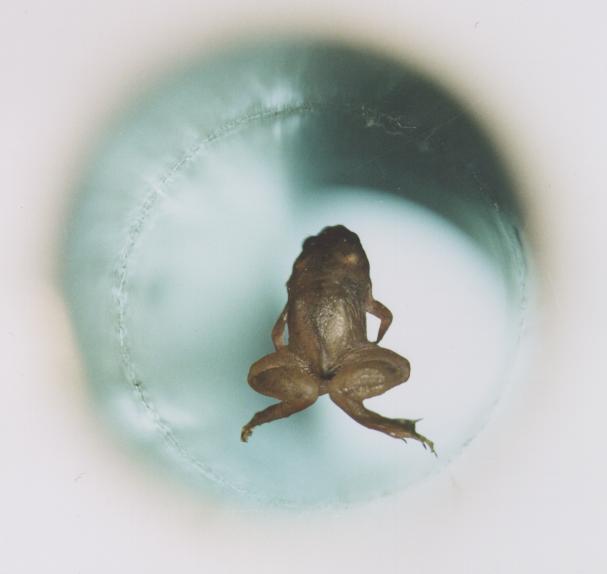
A September 2009 article in The National titled "A noble side to Ig Nobels" says that, although the Ig Nobel Awards are veiled criticism of trivial research, history shows that trivial research sometimes leads to important breakthroughs. For instance, in 2006, a study showing that one of the mosquitoes that can carry malaria (Anopheles gambiae) is attracted equally to the smell of Limburger cheese and the smell of human feet earned the Ig Nobel Prize in the area of biology. As a direct result of these findings, traps baited with this cheese have been placed in strategic locations to combat the epidemic of malaria in Africa. Andre Geim, before sharing the 2010 Nobel Prize in Physics for his research on graphene, shared the Physics Ig Nobel in 2000 with Michael Berry for the magnetic levitation of a frog, which by 2022 was reportedly part of the inspiration for China's lunar gravity research facility.
References
References
- (September 19, 2025). "Zebra cows and Teflon food make Ig Nobel prize winners". bbc.com.
- Abrahams, Marc. (September 12, 2012). "The Greatest Hits of Weird Science: What the Oscars could learn from the Ig Nobel Prize ceremony". [[Slate (magazine).
- Frisby, Dominic. (14 May 2016). "Zimbabwe's trillion-dollar note: from worthless paper to hot investment". the Guardian.
- Davis, Nicola. (2023-09-14). "Reanimated spiders and smart toilets triumph at Ig Nobel prizes". The Guardian.
- [http://tech.mit.edu/V111/N41/jackso.41o.html "Ig Nobel prizes display wit, fun, drunks"] {{Webarchive. link. (February 11, 2023 , ''[[The Tech (newspaper)). The Tech]]'', vol. 111, issue 41
- (1991-10-05). "Ig Nobel Prizes Go to Those Likely to Be Overlooked : Lampoon: MIT researchers create the new series of awards, named after the 'inventor of soda pop.' Among the first winners are Vice President Dan Quayle and imprisoned junk-bond king Michael Milken.".
- "Improbable.com Ig Nobel Past Winners".
- (October 5, 2010). "Physics Nobel Honors Work on Ultra-Thin Carbon". [[The New York Times]].
- (2026-01-11). "Nobel Institute rejects María Corina Machado’s offer to share peace prize with Trump". The Guardian.
- 2002, US paperback {{ISBN. 0-452-28573-9, UK paperback {{ISBN. 0-7528-4261-7
- 2005, US hardcover {{ISBN. 0-525-94912-7, UK hardcover {{ISBN. 0-7528-6461-0
- Abrahams, Marc. (2006). "The Man Who Tried to Clone Himself". Plume.
- "The Ig Nobel Tour of the UK".
- (2020-05-19). "2020 Ceremony".
- (2020-09-18). "What is the Ig Nobel Prize and who won it this year?".
- "The Ig Nobel Awards Go Virtual".
- (2024-07-07). "The 34th First Annual Ig Nobel Ceremony".
- Moeliker, Kees. (October 11, 2005). "Infinity and so much more". Education.guardian.co.uk.
- Jacobs, Phie. (2023-09-14). "Ig Nobel Prizes honor zombie spiders, rock-licking scientists, and a clever commode".
- "Improbable.com: "About the Ig Nobel prize"".
- (2018-12-27). "Roy Glauber, paper airplane sweeper, is gone". Improbable.com.
- Kirsner, Scott. "A Gala Night for Weird Science".
- Powell, Alvin. (2000-10-12). "Ig Nobels flush out the world's top brains :Bad science gets good reputation at 10th annual prize ceremony".
- (October 5, 2010). "Geim becomes first Nobel & Ig Nobel winner". Improbable.com.
- Matthews, Robert. (September 27, 2009). "A Noble Side to Ig Nobels".
- Knols, Bart. (November 9, 1996). "On human odour, malaria mosquitoes, and Limburger cheese". Lancet.
- "The 2006 Ig Nobel Prize Winners". Improbable.com.
- (April 1996). "Limburger cheese as an attractant for the malaria mosquito ''Anopheles gambiae s.s.''". Parasitology Today.
- (January 12, 2022). "China building "Artificial Moon" that simulates low gravity with magnets". Recurrent Ventures.
- Stephen Chen. (12 January 2022). "China has built an artificial moon that simulates low-gravity conditions on Earth". [[South China Morning Post]].
This article was imported from Wikipedia and is available under the Creative Commons Attribution-ShareAlike 4.0 License. Content has been adapted to SurfDoc format. Original contributors can be found on the article history page.
Ask Mako anything about Ig Nobel Prize — get instant answers, deeper analysis, and related topics.
Research with MakoFree with your Surf account
Create a free account to save articles, ask Mako questions, and organize your research.
Sign up freeThis content may have been generated or modified by AI. CloudSurf Software LLC is not responsible for the accuracy, completeness, or reliability of AI-generated content. Always verify important information from primary sources.
Report