From Surf Wiki (app.surf) — the open knowledge base
Idiot
Person of low intelligence
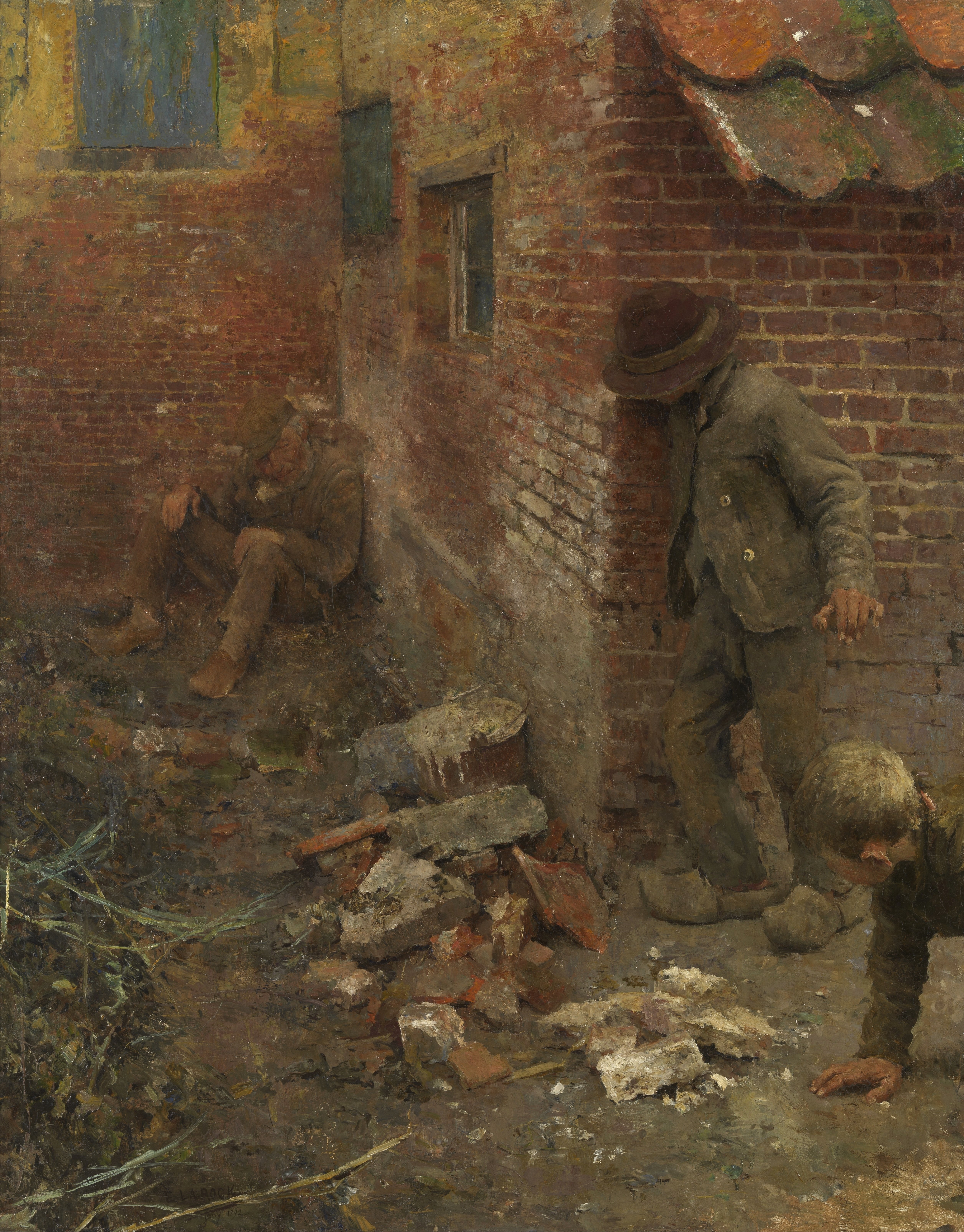
Person of low intelligence
An idiot, in modern use, is a stupid or foolish person. "Idiot" was formerly a technical term in legal and psychiatric contexts for some kinds of profound intellectual disability where the mental age is two years or less, and the person cannot guard themself against common physical dangers. The term was gradually replaced by "profound mental retardation", which has since been replaced by other terms. Along with terms like moron, imbecile, retard and cretin, its use to describe people with mental disabilities is considered archaic and offensive. Moral idiocy is the inability to distinguish between right and wrong.
Etymology
The word "idiot" ultimately comes from the Greek noun ἰδιώτης idiōtēs 'a private person, individual' (as opposed to the state), 'a private citizen' (as opposed to someone with a political office), 'a common man', 'a person lacking professional skill, layman', later 'unskilled', 'ignorant', derived from the adjective ἴδιος idios 'personal' (not public, not shared). In Latin, idiota was borrowed in the meaning 'uneducated', 'ignorant', 'common', and in Late Latin came to mean 'crude, illiterate, ignorant'. In French, it kept the meaning of 'illiterate', 'ignorant', and added the meaning 'stupid' in the 13th century. In English, it added the meaning 'mentally deficient' in the 14th century.
Many political commentators, starting as early as 1856, have interpreted the word "idiot" as reflecting the Ancient Athenians' attitudes to civic participation and private life, combining the ancient meaning of 'private citizen' with the modern meaning 'fool' to conclude that the Greeks used the word to say that it is selfish and foolish not to participate in public life. a. R.L. Gibson (Louisiana), "Notes of European Travel--France", De Bow's Review 21 (3rd series):1:375-405 (1856), p. 389
b. The Sanitary Era 6:117:12 (October 1892), New York, p. 210
c. Bouck White, The Free City: A Book of Neighborhood, 1919, p. 53
d. John Robertson Macarthur, Ancient Greece in Modern America, 1943, p. 195
e.
f. This interpretation was foreshadowed in 1846, when Julius Hare wrote that the meaning of idiotes as "rude, ignorant person" bore witness to the "Greek notion of the indispensableness of public life".
But this is not how the Greeks used the word. It is certainly true that the Greeks valued civic participation and criticized non-participation. Thucydides quotes Pericles' Funeral Oration as saying: "[we] regard... him who takes no part in these [public] duties not as unambitious but as useless" (). However, neither he nor any other ancient author uses the word "idiot" to describe non-participants, or in a derogatory sense; its most common use was simply a private citizen or amateur as opposed to a government official, professional, or expert. The derogatory sense came centuries later, and was unrelated to the political meaning.
Disability and early classification and nomenclature
In 19th- and early 20th-century medicine and psychology, an "idiot" was a person with a very profound intellectual disability, being diagnosed with "idiocy". In the early 1900s, Dr. Henry H. Goddard proposed a classification system for intellectual disability based on the Binet-Simon concept of mental age. Individuals with the lowest mental age level (less than three years) were identified as idiots; imbeciles had a mental age of three to seven years, and morons had a mental age of seven to ten years. The term "idiot" was used to refer to people having an IQ below 30. IQ, or intelligence quotient, was originally determined by dividing a person's mental age, as determined by standardized tests, by their actual age. The concept of mental age has fallen into disfavor, though, and IQ is now determined on the basis of statistical distributions.
In the obsolete medical classification (ICD-9, 1977), these people were said to have "profound mental retardation" or "profound mental subnormality" with IQ under 20.
Regional law
United States
Until 2007, the California Penal Code Section 26 stated that "Idiots" were one of six types of people who are not capable of committing crimes. In 2007 the code was amended to read "persons who are mentally incapacitated." In 2008, Iowa voters passed a measure replacing "idiot, or insane person" in the State's constitution with "person adjudged mentally incompetent."
In the constitution of several U.S. states, "idiots" do not have the right to vote:
- Kentucky Section 145
- Mississippi Article 12, Section 241
- Ohio Article V, Section 6
The constitution of the state of Arkansas was amended in the general election of 2008 to, among other things, repeal a provision (Article 3, Section 5) which had until its repeal prohibited "idiots or insane persons" from voting.
In literature
A few authors have used "idiot" characters in novels, plays and poetry. Often these characters are used to highlight or indicate something else (allegory). Examples of such usage are William Faulkner's The Sound and the Fury, Daphne du Maurier's Rebecca and William Wordsworth's The Idiot Boy. Idiot characters in literature are often confused with or subsumed within mad or lunatic characters. The most common intersection between these two categories of mental impairment occurs in the polemic surrounding Edmund from William Shakespeare's King Lear.
In Fyodor Dostoevsky's novel The Idiot the title refers to the central character Prince Myshkin, a man whose innocence, kindness and humility, combined with his occasional epileptic symptoms, cause many in the corrupt, egoistic culture around him to mistakenly assume that he lacks intelligence. In The Antichrist, Nietzsche applies the word "idiot" to Jesus in a comparable fashion, almost certainly in an allusion to Dostoevsky's use of the word: "One has to regret that no Dostoevsky lived in the neighbourhood of this most interesting décadent; I mean someone who could feel the thrilling fascination of such a combination of the sublime, the sick and the childish."
(§ 29, partially quoted here, contains three words that were suppressed by Nietzsche's sister when she published The Antichrist in 1895. The words are: 'das Wort Idiot,' translated here as 'the word idiot'. They were not made public until 1931, by Josef Hofmiller. H.L. Mencken's 1920 translation does not contain these words.)
References
Citations
Sources
References
- "The Clinical History of 'Moron,' 'Idiot,' and 'Imbecile'". merriam-webster.com.
- J. Diggle, ed., ''The Cambridge Greek Lexicon'', 2021, {{isbn. 9780521826808, ''s.v.'', p. 702
- grc. grc. ἴδιος].
- ''[[A Latin Dictionary]]'', [https://www.perseus.tufts.edu/hopper/text?doc=Perseus%3Atext%3A1999.04.0059%3Aentry%3Didiota ''s.v.'']
- du Cange, ''[[Glossarium Mediæ et Infimæ Latinitatis]]'', ''[http://ducange.enc.sorbonne.fr/idiota?clear=1 s.v.]''
- ''[[Trésor de la langue française informatisé]]'', ''s.v.''
- Hare, Julius Charles. (1846). "The mission of the comforter and other sermons : with notes". London : John W. Parker.
- Thucydides, ''[[The Peloponnesian War]]'', [https://www.perseus.tufts.edu/hopper/text?doc=Thuc.+2.40&fromdoc=Perseus%3Atext%3A1999.01.0199 Thuc. 2.40]
- Matthew Landauer, "The ''Idiōtēs'' and the Tyrant: Two Faces of Unaccountability in Democratic Athens", ''Political Theory'' '''42''':2:139-166 (April 2014), {{JSTOR. 24571390, p. 145
- (2020). "The Cambridge Greek lexicon". Cambridge University Press.
- (1988). "Idiots, ancient and modern". Australian Journal of Political Science.
- ''[[Oxford English Dictionary]]'', [http://www.oed.com/view/Entry/91049 ''s.v.'']
- (2005). "Medical aspects of disability: a handbook for the rehabilitation professional". Springer Publishing Company.
- Rapley, Mark. (2004). "The Social Construction of Intellectual Disability". Cambridge University Press.
- (2003). "Correct Choice of Words' : English Grammar Series for Filipino Lawyers". Rex Bookstore, Inc..
- Vibeke Grover Aukrust. (2011). "Learning and Cognition". Elsevier.
- World Health Organization. (1977). "Manual of the International Statistical Classification of Diseases, Injuries, and Causes of Death".
- "Penal Code section 25-29". State of California.
- Sharples, Tiffany. (5 November 2008). "Ballot Initiatives: No to Gay Marriage, Anti-Abortion Measures". [[Time (magazine).
- "Kentucky Section 145".
- [http://www.sos.state.ms.us/ed_pubs/constitution/constitution.asp Mississippi Constitution of the State of Mississippi] See Article 12, Section 241
- "Ohio Constitution, Article V, Section 6".
- [http://www.votesmart.org/election_ballot_measures_detail.php?ballot_id=64 Arkansas Ballot Measures: An Amendment Concerning Voting, Qualifications of Voters and Election Officers, and the Time of Holding General Elections (Amendment 1) : For the November 4, 2008 General Election], [http://www.votesmart.org votesmart.org].
- Michael Tanner and R.J. Hollingdale (1990). ''Glossary of Names in Nietzsche's "The Antichrist"''. Penguin Books. p 200
- (1990). "The Antichrist". Penguin Books.
This article was imported from Wikipedia and is available under the Creative Commons Attribution-ShareAlike 4.0 License. Content has been adapted to SurfDoc format. Original contributors can be found on the article history page.
Ask Mako anything about Idiot — get instant answers, deeper analysis, and related topics.
Research with MakoFree with your Surf account
Create a free account to save articles, ask Mako questions, and organize your research.
Sign up freeThis content may have been generated or modified by AI. CloudSurf Software LLC is not responsible for the accuracy, completeness, or reliability of AI-generated content. Always verify important information from primary sources.
Report