From Surf Wiki (app.surf) — the open knowledge base
Icelandic nationalism
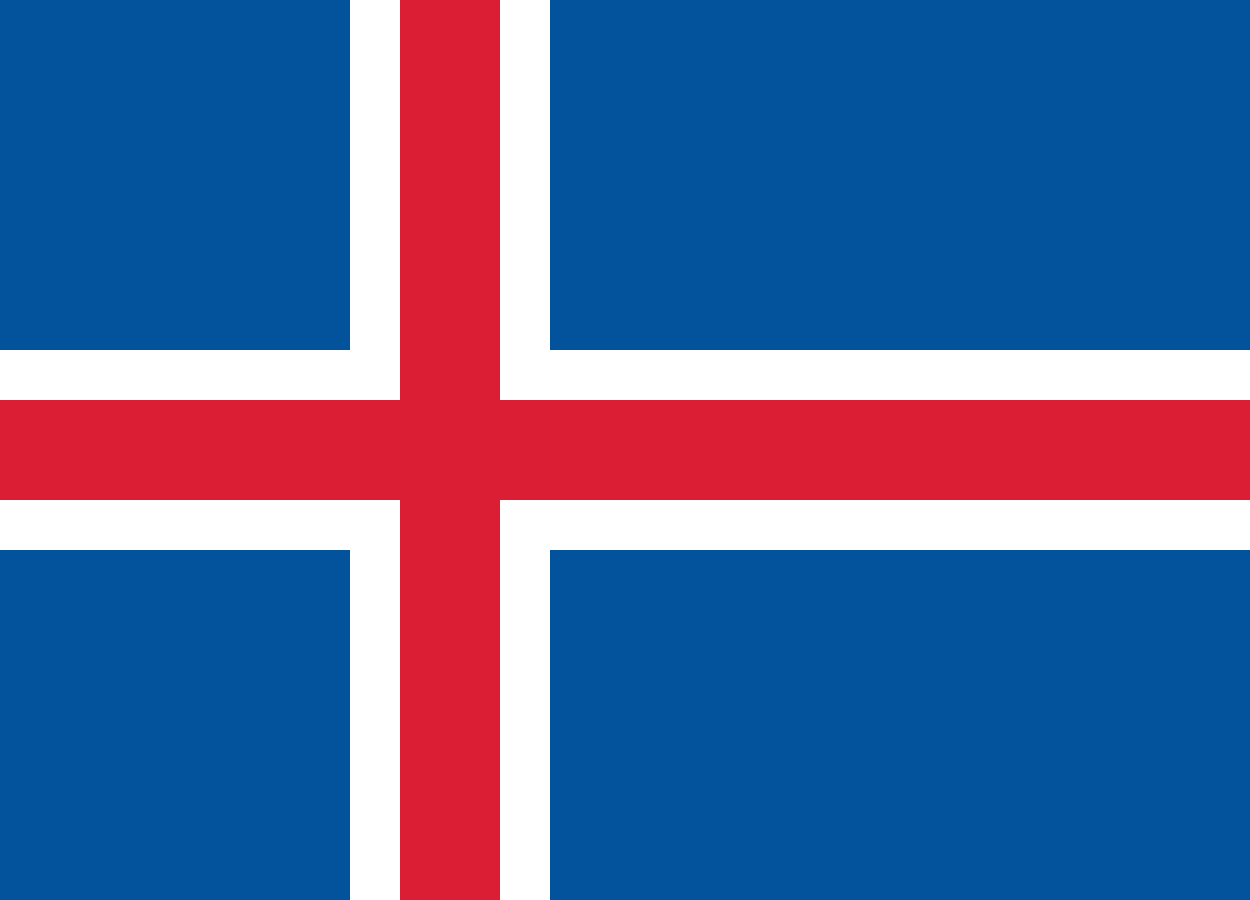
Þjóðernishyggja is the Icelandic term for nationalism; nationmindedness is a rough translation of the term. Its use was instrumental in the Icelandic movement for independence from Denmark, led by Jón Sigurðsson.
Icelandic nationalism or Þjóðernishyggja is based upon the idea of resurrection of the Icelandic Free State, and its values (or what was believed to be its values): democracy, freedom of the individual, the need for the country to be independent, and respect for the cultural and religious traditions, especially the long preserved language. These ideas are often encoded in the popular phrase land, þjóð og tunga ('land, people, and language'). Historically, Icelanders have seen their current republic to be the reincarnation of the old Free State, and thus Icelandic nationalism today is based upon preserving what was gained by the independence movement. Thus Icelandic nationalist sentiment, having some aspects of civic and ethnic nationalism, is highly respectful of democratic parliamentary powers (see resurrected Althing) and skeptical of foreign control over Iceland, which is partly responsible for there being little will in Iceland for joining the European Union.
Icelandic nationalism primarily arose in the 19th century, during a time when it was under Danish hegemony. It arose not only due to pride in Iceland's achievements in the Middle Ages and a desire to embrace Icelandic cultural peculiarities, but also in reaction towards the increasing economic liberalism of the Danish government and thus a defense of Icelandic peasant life. One towering figure was Jón Sigurðsson, who was the preeminent figure of Icelandic nationalism in the 19th century and on whose birthday, 17 June 1944, the modern Icelandic republic intentionally declared independence.
Some critics allege that Icelandic nationalism sometimes has racist and antisemitic elements, a legacy of hostility towards Black and Jewish people within 19th-century nationalist discourse.
List of Icelandic nationalist parties
- Icelandic National Front
References
References
- Veturliði G. Óskarsson, 'Heilög þrenning: Land, þjóð og tunga. Hugleiðing um orðræðu', ''Tímarit Máls og menningar'', 74.2 (June 2013), 37-45. {{in lang. is
- Hálfdanarson, Guðmundur. (2000). "Þingvellir: An Icelandic "Lieu de Mémoire"". History and Memory.
- Rice, James G.. (2007). "Icelandic Charity Donations: Reciprocity Reconsidered". Ethnology.
- "Pride or Prejudice?". [[The Reykjavík Grapevine]].
This article was imported from Wikipedia and is available under the Creative Commons Attribution-ShareAlike 4.0 License. Content has been adapted to SurfDoc format. Original contributors can be found on the article history page.
Ask Mako anything about Icelandic nationalism — get instant answers, deeper analysis, and related topics.
Research with MakoFree with your Surf account
Create a free account to save articles, ask Mako questions, and organize your research.
Sign up freeThis content may have been generated or modified by AI. CloudSurf Software LLC is not responsible for the accuracy, completeness, or reliability of AI-generated content. Always verify important information from primary sources.
Report