From Surf Wiki (app.surf) — the open knowledge base
Ice hockey at the 1972 Winter Olympics
None
None
| Field | Value |
|---|---|
| year | 1972 |
| size | 180px |
| country | Japan |
| dates | 3–13 February 1972 |
| num_teams | 11 |
| type | ih |
| winners | USSR |
| count | 4 |
| second | United States |
| third | Czechoslovakia |
| fourth | Sweden |
| games | 30 |
| goals | 235 |
| scoring_leader | URS Valeri Kharlamov (16 points) |
| prevseason | 1968 |
| nextseason | 1976 |
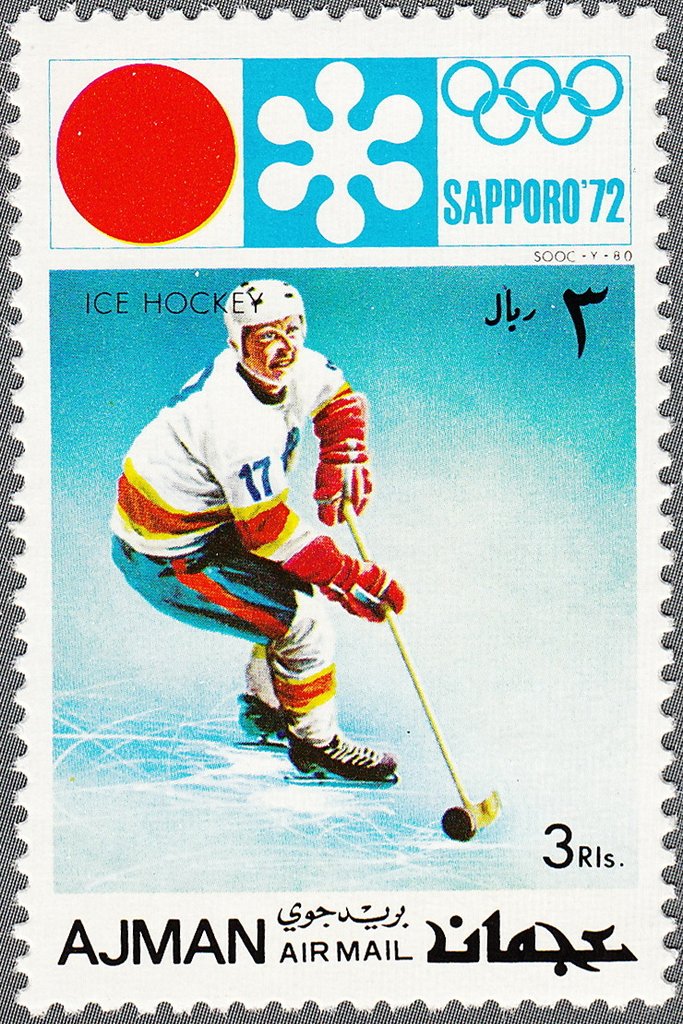
The men's ice hockey tournament at the 1972 Winter Olympics in Sapporo, Japan, was the 12th Olympic Championship. Games were held at the Makomanai Ice Arena and at the Tsukisamu Indoor Skating Rink. The Soviet Union won its fourth gold medal. The United States won the silver, while Czechoslovakia won the bronze. Canada did not send a team to the event for the first time since ice hockey was first competed at the Olympics in 1920, instead competing with and defeating the Soviets in a competition later that year known as the Summit Series. Canada would not send a men's hockey team to the Olympics until 1980.
Teams
Main article: Ice hockey at the 1972 Winter Olympics – Rosters
Team Canada
For the first time since ice hockey was introduced at the Olympic Games in 1920, Canada did not send a team to the 1972 Olympics after Canadian Minister of Health and Welfare John Munro announced the withdrawal of the team from all international competitions in response to the International Ice Hockey Federation opposition to allowing professional players at international competitions. Canadian officials were frustrated that their best players, competing in the National Hockey League, were prevented from playing while Soviet players, who were "employees" of the industrial or military organizations that fielded "amateur" teams, were allowed to compete. At that point, the Canadian men's ice hockey team was the most successful team in the world, having won six of the eleven tournaments previously contested, with medals in ten of the eleven tournaments (and a controversial post-tournament rule change denying them a perfect eleven medals). Canada would not compete internationally in hockey until 1977, when the IIHF adopted eligibility rules that allowed for professional players to compete. Instead of competing internationally at the Olympics, Canadian officials helped organize a series of games against the Soviet Union in 1972 known as the Summit Series.
Team USA
While the 1980 team had the celebrated "Miracle on Ice" and the 1960 US team had the "Forgotten Miracle", the 1972 team could be called the "completely overlooked miracle." The U.S. team was expected to finish 5th behind the Soviet Union, Czechoslovakia, Sweden, and Finland. The Soviet and Czech teams were especially powerful as there was no distinction between amateurs and pros in communist countries; these teams were made up of seasoned professionals and were ranked 1 & 2 in the world. Valeri Kharlamov of the Soviet Union was considered one of the world's best players and experts agree he would have been a star in the NHL. The same can be said for Soviet goaltender Vladislav Tretiak. In fact, this was basically the same Soviet Team that played a Canadian team composed of NHL All Stars in the 1972 Summit Series that Canada narrowly won, 4–3–1.
After qualifying for Group A by beating Switzerland 5–3, the U.S. lost as expected to Sweden, 5–1. Then they pulled off the upset of the tournament when they beat Czechoslovakia, 5–1. This surprising result was nearly as astonishing as the wins over the Soviets in 1960 and 1980. After losing as expected to the Soviet Union, the young Americans upset Finland. In the final games of the competition, the U.S. beat Poland while Finland beat Sweden and the Soviets beat the Czechs (in the game that decided the gold medal); those results boosted the U.S. from 4th to 2nd for an unexpected silver medal.
Medalists

| Mike Curran | |
|---|---|
| Pete Sears | |
| Wally Olds | |
| Tom Mellor | |
| Frank Sanders | |
| Jim McElmury | |
| Charles Brown | |
| Dick McGlynn | |
| Ronald Naslund | |
| Robbie Ftorek | |
| Stu Irving | |
| Kevin Ahearn | |
| Henry Boucha | |
| Craig Sarner | |
| Timothy Sheehy | |
| Keith Christiansen | |
| Mark Howe | |
| Tim Regan | |
| Bruce McIntosh | Vladimír Dzurilla |
| Jiří Holeček | |
| Vladimír Bednář | |
| Rudolf Tajcnár | |
| Oldřich Machač | |
| František Pospíšil | |
| Josef Horešovský | |
| Karel Vohralík | |
| Václav Nedomanský | |
| Jiří Holík | |
| Jaroslav Holík | |
| Jiří Kochta | |
| Eduard Novák | |
| Richard Farda | |
| Josef Černý | |
| Vladimír Martinec | |
| Ivan Hlinka | |
| Bohuslav Šťastný |
First round
Fourteen nations qualified, but East Germany, Romania and France all chose not to travel for primarily financial reasons. The remaining eleven nations were seeded according to their placement in the 1971 World Championships with first place (USSR) and the five winners to play in Group A to for 1st–6th places. The five losers played in Group B for 7th–11th places. 1971 ranking appears in parentheses.
- 3 February
- Japan (11th) 2–8 Czechoslovakia (2nd)
- Sweden (3rd) 8–1 Yugoslavia (12th)
- 4 February
- USA (6th) 5–3 Switzerland (7th)
- Poland (8th) 4–0 West Germany (5th)
- Finland (4th) 13–1 Norway (10th)
Final round
First place team wins gold, second silver and third bronze.
- 5 February
- Sweden 5–1 USA
- Czechoslovakia 14–1 Poland
- USSR 9–3 Finland
- 7 February
- USSR 3–3 Sweden
- USA 5–1 Czechoslovakia
- Finland 5–1 Poland
- 8 February
- Czechoslovakia 7–1 Finland
- 9 February
- Sweden 5–3 Poland
- USSR 7–2 USA
- 10 February
- USSR 9–3 Poland
- Czechoslovakia 2–1 Sweden
- USA 4–1 Finland
- 12 February
- USA 6–1 Poland
- 13 February
- Finland 4–3 Sweden
- USSR 5–2 Czechoslovakia
Consolation Round
Teams, which lost their games in the qualification round, played in this group.
- 6 February
- Norway 5–2 Yugoslavia
- West Germany 5–0 Switzerland
- 7 February
- Japan 3–3 Switzerland
- West Germany 6–2 Yugoslavia
- 9 February
- Japan 3–2 Yugoslavia
- West Germany 5–1 Norway
- 10 February
- Japan 4–5 Norway
- Switzerland 3–3 Yugoslavia
- 12 February
- Japan 7–6 West Germany
- Norway 5–3 Switzerland
Statistics
Average age
Gold medalists team USSR was the oldest team in the tournament, averaging 26 years and 4 months. Team USA was the youngest team in the tournament, averaging 23 years and 3 months. Tournament average was 25 years and 3 months.
Leading scorers
| Player | GP | G | A | Pts |
|---|---|---|---|---|
| Soviet Union Valeri Kharlamov | 5 | 9 | 7 | 16 |
| Czechoslovakia Václav Nedomanský | 6 | 8 | 3 | 11 |
| United States Craig Sarner | 6 | 4 | 6 | 10 |
| United States Kevin Ahearn | 6 | 6 | 3 | 9 |
| Soviet Union Vladimir Vikulov | 5 | 5 | 3 | 8 |
| Soviet Union Aleksandr Maltsev | 5 | 4 | 3 | 7 |
| Czechoslovakia Jiří Kochta | 6 | 4 | 3 | 7 |
| Soviet Union Anatoli Firsov | 5 | 2 | 5 | 7 |
| Soviet Union Yuri Blinov | 5 | 3 | 3 | 6 |
| Czechoslovakia Richard Farda | 6 | 1 | 5 | 6 |
Final ranking
References
References
- "Ice Hockey at the 1972 Sapporo Winter Games". Sports Reference.
- "1972 Winter Olympic Games". Hockey Canada.
- "Ice Hockey at the 1972 Sapporo Winter Games: Men's Ice Hockey". Sports Reference.
- Podnieks, Andrew. (2012). "Team Canada 1972: the official 40th anniversary celebration". Fenn Publishing.
- (26 February 2010). "Unsung '72 Olympics hockey squad set standard".
- "Team Finland - Olympics - Sapporo 1972 - Player Stats". QuantHockey.
This article was imported from Wikipedia and is available under the Creative Commons Attribution-ShareAlike 4.0 License. Content has been adapted to SurfDoc format. Original contributors can be found on the article history page.
Ask Mako anything about Ice hockey at the 1972 Winter Olympics — get instant answers, deeper analysis, and related topics.
Research with MakoFree with your Surf account
Create a free account to save articles, ask Mako questions, and organize your research.
Sign up freeThis content may have been generated or modified by AI. CloudSurf Software LLC is not responsible for the accuracy, completeness, or reliability of AI-generated content. Always verify important information from primary sources.
Report