From Surf Wiki (app.surf) — the open knowledge base
Iberia Parish, Louisiana
Parish in Louisiana, United States
Parish in Louisiana, United States
| Field | Value | |
|---|---|---|
| county | Iberia Parish | |
| state | Louisiana | |
| type | Parish | |
| ex image | Shadowsontheteche.jpg | |
| ex image size | 300px | |
| ex image cap | Historic House and Garden Shadows-on-the-Teche | |
| founded year | 1868 | |
| founded date | October 30 | |
| seat wl | New Iberia | |
| largest city wl | New Iberia | |
| area_total_sq_mi | 1031 | |
| area_land_sq_mi | 574 | |
| area_water_sq_mi | 456 | |
| area percentage | 44 | |
| population_as_of | 2020 | |
| population_total | 69929 | |
| population_density_sq_mi | auto | |
| time zone | Central | |
| web | http://iberiaparishgovernment.com | |
| named for | Iberia | |
| district | 3rd | |
| seal | File:Seal of Iberia Parish, Louisiana.png | official_name=Parish of Iberia |
| fr | ||
| es | name=Iberia Parish |
fr es|name=Iberia Parish}}
Iberia Parish (, ) is a parish located in the U.S. state of Louisiana. At the 2020 census, it had a population of 69,929; the parish seat is New Iberia.
The parish was formed in 1868 during the Reconstruction era and named for Iberia. It is part of the 22-parish Acadiana region of the state, with a large Francophone population. Some of its ethnic French residents had ancestors who settled here after being expelled in the 18th century by the British from Acadia in present-day Canada. Historically, it has also been a center for sugar cane cultivation and produces the most sugar of any parish in the state.
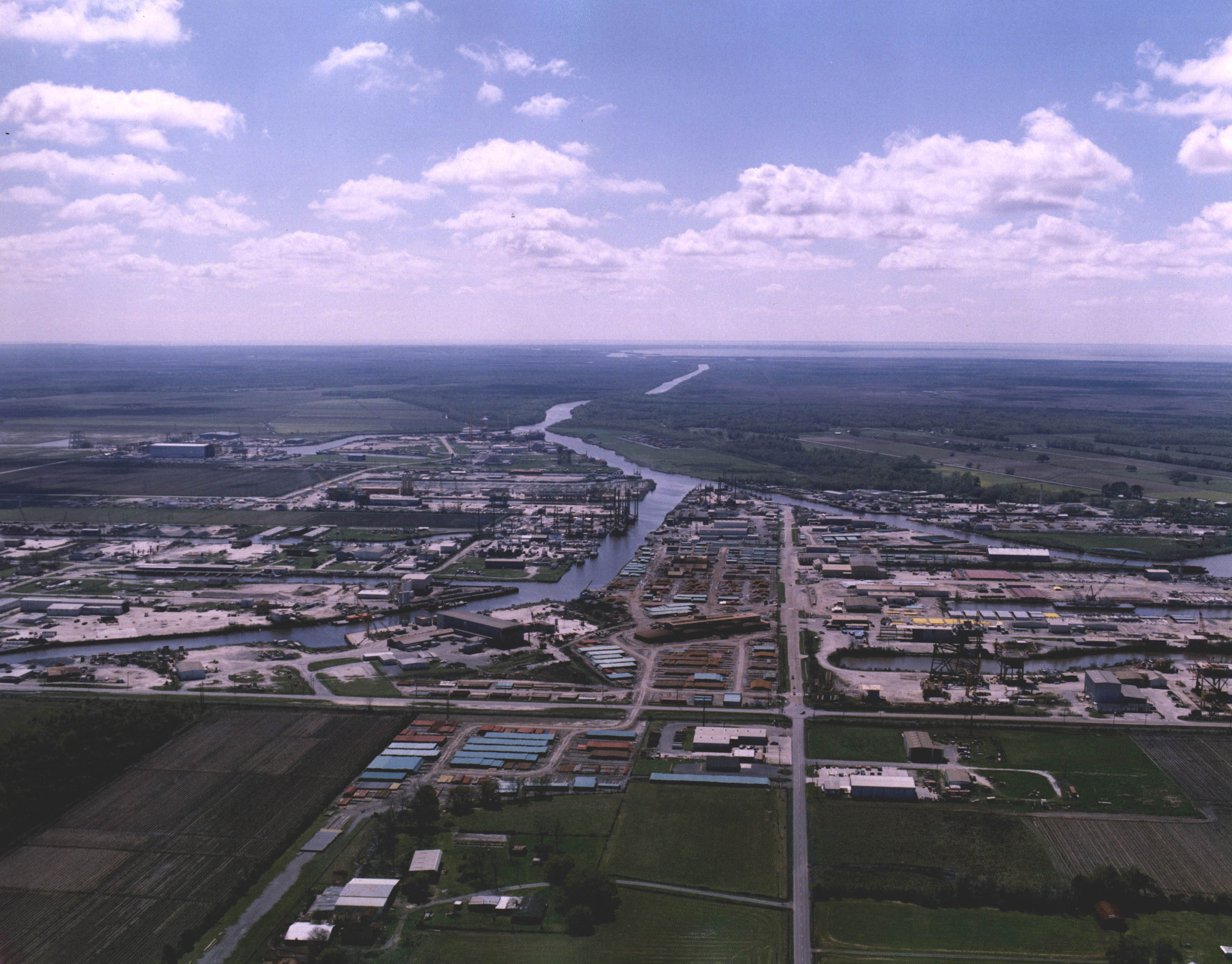
Iberia Parish is part of the Lafayette metropolitan area. The Port of Iberia has a waterway with access to the Gulf Coast.
History
Iberia Parish was created from parts of St. Martin Parish and St. Mary Parish in 1868. It was part of an effort by the Reconstruction-era government to create parishes in which there would be large Republican-majority populations, composed primarily of freedmen in those years.
This territory was part of the sugar parishes, where sugar cane plantations were developed along the waterways before and after the Civil War, dependent on labor of high numbers of enslaved African Americans before the war. Sugar cane was a lucrative commodity crop for planters. Relations between White and Black people were troubled after the Civil War, as White people sought to dominate freedmen, by violence and intimidation if necessary.
The period after the Reconstruction era was one of increasing violence, especially at the turn of the century and into the early 20th century. In this period, the highly populated Iberia Parish had 26 lynchings of Black people by the KKK, as part of racial terrorism. This was the fifth-highest total of any parish in Louisiana, and tied with the total number of lynchings in Bossier Parish.
There was intense political factionalism in Louisiana. Iberia Parish had factions split among conservatives and those who were more moderate about the status of Black people. Moderates sometimes allied with the Republican creoles and White people in the parish. But in 1884 white Democrats murdered more than 20 African Americans (most of the total noted above), in a kind of political lynching, and arrested White Republicans to regain power in Iberia Parish. In contrast to northern Louisiana, residents otherwise seemed to rely more on the formal legal system, with fewer mob lynchings. But Black people suffered here, making up 88 percent of the persons legally executed for violent crimes in the late 19th century.
In the late 19th century, there was often a labor shortage on the sugar plantations. Planters recruited thousands of Italian immigrants as temporary laborers, many Sicilians who had first settled in New Orleans. They were needed during the fall harvest and processing season, which extended from October to January. The Italians became part of the volatility of social relations, struggling to make their way between planters and Black workers, and competing with other workers for jobs.
The parish economy changed markedly in the 20th century after the discovery of oil. The Port of Iberia was developed into an industrial center. New types of jobs became available for African Americans. Iberia produces the most sugar of any parish in the state.
It is also known for being where the body of Quawan Charles was found. The circumstances are under investigation, but it has been said by the coroner that the cause of his death was drowning.
Geography
According to the U.S. Census Bureau, the parish has a total area of 1031 sqmi, of which 574 sqmi is land and 456 sqmi (44%) is water. This includes Marsh Island.
Major highways
- [[File:I-49 (Future).svg|25px]] Future Interstate 49
- [[File:US 90.svg|25px]] U.S. Highway 90
- [[File:Louisiana 14 (2008).svg|25px]] Louisiana Highway 14
- [[File:Louisiana 31 (2008).svg|25px]] Louisiana Highway 31
- [[File:Louisiana 83 (2008).svg|25px]] Louisiana Highway 83
- [[File:Louisiana 85 (2008).svg|25px]] Louisiana Highway 85
- [[File:Louisiana 86 (2008).svg|25px]] Louisiana Highway 86
- [[File:Louisiana 87 (2008).svg|25px]] Louisiana Highway 87
- [[File:Louisiana 182 (2008).svg|25px]] Louisiana Highway 182
Adjacent parishes
- St. Martin Parish (north, south)
- Iberville Parish (northeast)
- Assumption Parish (east)
- St. Mary Parish (southeast)
- Vermilion Parish (west)
- Lafayette Parish (northwest)
Protected areas
The parish has both national and state protected areas within its borders.
National protected area
- Shell Keys National Wildlife Refuge
State protected areas
Part of the Attakapas Wildlife Management Area is located within Iberia Parish, as well as in St. Mary and St. Martin parishes.
Communities
Cities
- Jeanerette
- New Iberia (parish seat and largest municipality)
Town
- Delcambre (part)
Village
- Loreauville
Census-designated place
- Lydia
Unincorporated communities
- Avery Island
- Bob Acres
- Emma
- Jefferson Island
- Olivier
- Rynella
- Weeks
Demographics
|align-fn=center 1790-1960 1900-1990 1990-2000 2010-2013
Racial and ethnic composition
| Race / Ethnicity (NH = Non-Hispanic) | title=1980 Census of Population - General Population Characteristics - Louisiana - Table 14 - Persons by Race and Table 15 - Total Persons and Spanish Origin Persons by Type of Spanish Origin and Race (p. 20/12-20/20) | url=https://www2.census.gov/prod2/decennial/documents/1980a_laABC-02.pdf | website=United States Census Bureau | page=}} | title=1990 Census of Population - General Population Characteristics - Louisiana - Table 6 - Race and Hispanic Origin | url=https://www2.census.gov/library/publications/decennial/1990/cp-2/cp-2-20-1.pdf | website=United States Census Bureau | page=15-38}} | title=P004: Hispanic or Latino, and Not Hispanic or Latino by Race – 2000: DEC Summary File 1 – Iberia Parish, Louisiana | url=https://data.census.gov/table?g=050XX00US22045&tid=DECENNIALSF12000.P004 | website=United States Census Bureau | access-date= }} | title=P2: Hispanic or Latino, and Not Hispanic or Latino by Race – 2010: DEC Redistricting Data (PL 94-171) – Iberia Parish, Louisiana | url=https://data.census.gov/cedsci/table?q=p2&g=050XX00US22045&tid=DECENNIALPL2010.P2 | website=United States Census Bureau | access-date= }} | Pop 2020 | % 1980 | % 1990 | % 2000 | % 2010 | % 2020 |
|---|---|---|---|---|---|---|---|---|---|---|---|---|---|---|---|---|---|---|---|---|---|---|
| White alone (NH) | 43,765 | 46,078 | 47,122 | 44,502 | 38,572 | 68.65% | 67.47% | 64.32% | 60.76% | 55.16% | ||||||||||||
| Black or African American alone (NH) | 17,395 | 19,966 | 22,451 | 23,280 | 22,984 | 27.29% | 29.23% | 30.64% | 31.79% | 32.87% | ||||||||||||
| Native American or Alaska Native alone (NH) | 100 | 122 | 216 | 252 | 247 | 0.16% | 0.18% | 0.29% | 0.34% | 0.35% | ||||||||||||
| Asian alone (NH) | 97 | 737 | 1,401 | 1,745 | 1,933 | 0.15% | 1.08% | 1.91% | 2.38% | 2.76% | ||||||||||||
| Native Hawaiian or Pacific Islander alone (NH) | x | x | 15 | 18 | 3 | x | x | 0.02% | 0.02% | 0.00% | ||||||||||||
| Other race alone (NH) | 64 | 74 | 143 | 146 | 227 | 0.10% | 0.11% | 0.20% | 0.20% | 0.32% | ||||||||||||
| Mixed race or Multiracial (NH) | x | x | 817 | 998 | 2,066 | x | x | 1.12% | 1.36% | 2.95% | ||||||||||||
| Hispanic or Latino (any race) | 2,331 | 1,320 | 1,101 | 2,299 | 3,897 | 3.66% | 1.93% | 1.50% | 3.14% | 5.57% | ||||||||||||
| Total | 63,752 | 68,297 | 73,266 | 73,240 | 69,929 | 100.00% | 100.00% | 100.00% | 100.00% | 100.00% |
2020 census
As of the 2020 census, there were 69,929 people, 27,016 households, and 20,409 families residing in the parish. The median age was 39.3 years; 24.5% of residents were under the age of 18 and 16.5% of residents were 65 years of age or older. For every 100 females there were 95.2 males, and for every 100 females age 18 and over there were 91.9 males.
The racial makeup of the parish was 56.1% White, 33.1% Black or African American, 0.4% American Indian and Alaska Native, 2.8% Asian,
67.6% of residents lived in urban areas, while 32.4% lived in rural areas.
Of the 27,016 households, 32.6% had children under the age of 18 living in them. Of all households, 41.9% were married-couple households, 19.5% were households with a male householder and no spouse or partner present, and 31.2% were households with a female householder and no spouse or partner present. About 26.9% of all households were made up of individuals and 11.5% had someone living alone who was 65 years of age or older.
There were 30,924 housing units, of which 12.6% were vacant. Among occupied housing units, 68.9% were owner-occupied and 31.1% were renter-occupied. The homeowner vacancy rate was 1.4% and the rental vacancy rate was 12.0%.
2019 American Community Survey
According to the 2019 American Community Survey estimates, the parish had 69,830 people, approximately 25.6% under the age of 18, and 51.1% female.
The 2019 survey also estimated the median household income at $48,861, the mean income at $23,290, and 21.9% of the parish population living at or below the poverty line.
The 2019 estimates determined 58.6% of the population was non-Hispanic white, 32.8% Black or African American, 0.6% American Indian or Alaska Native, 2.7% Asian, 0.1% Pacific Islander, 1.9% multiracial, and 4.3% Hispanic or Latin American of any race.
2000 census
At the census of 2000, there were 73,266 people, 25,381 households, and 19,162 families residing in the parish. The population density was 127 /mi2. There were 27,844 housing units at an average density of 48 /mi2.
In 2000, there were 25,381 households, out of which 39.50% had children under the age of 18 living with them, 53.20% were married couples living together, 17.20% had a female householder with no husband present, and 24.50% were non-families. 21.10% of all households were made up of individuals, and 8.70% had someone living alone who was 65 years of age or older. The average household size was 2.82 and the average family size was 3.28.
In the parish the population was spread out, with 30.00% under the age of 18, 9.60% from 18 to 24, 28.40% from 25 to 44, 20.60% from 45 to 64, and 11.40% who were 65 years of age or older. The median age was 33 years. For every 100 females there were 92.80 males. For every 100 females age 18 and over, there were 89.80 males in 2000.
The median income for a household in the parish was $31,204, and the median income for a family was $36,017. Males had a median income of $32,399 versus $18,174 for females. The per capita income for the parish was $14,145. About 20.20% of families and 23.60% of the population were below the poverty line, including 31.50% of those under age 18 and 20.20% of those age 65 or over.
At the 2000 census, the racial makeup of the parish was 65.08% White, 30.81% Black or African American, 0.31% Native American, 1.93% Asian, 0.02% Pacific Islander, 0.60% from other races, and 1.25% from two or more races. About 1.50% of the population were Hispanic or Latino of any race. Of the population, 11.99% reported speaking French or Cajun French at home, while 1.48% speak Lao and 1.29% Spanish.
Education
Iberia Parish School System serves the parish.
Iberia parish also has several private schools. These include Catholic High New Iberia (of the Roman Catholic Diocese of Lafayette in Louisiana), Acadiana Christian School and Highland Baptist School.
Iberia Parish is in the service area of Fletcher Technical Community College and of South Louisiana Community College.
National Guard
E Company 199th Forward Support Battalion is stationed in Jeanerette, Louisiana, and B Company 2-156th is stationed in New Iberia, Louisiana. Both units have deployed twice to Iraq, 2004-5 and 2010, as part of the 256TH IBCT.
Politics
References
References
- "QuickFacts: Iberia Parish, Louisiana".
- "Find a County". National Association of Counties.
- "Iberia Parish". Center for Cultural and Eco-Tourism.
- Gannett, Henry. (1905). "The Origin of Certain Place Names in the United States". Govt. Print. Off..
- "St. Martin Parish History page".
- [https://eji.org/sites/default/files/lynching-in-america-third-edition-summary.pdf ''Lynching in America, Third Edition: Supplement by County''] {{Webarchive. link. (October 23, 2017 , p. 6, Equal Justice Initiative, Mobile, AL, 2017)
- [https://books.google.com/books?id=zAGwb3G6soMC&q=Iberia+Parish Michael James Pfeifer, ''Rough Justice: Lynching and American Society, 1874-1947''], University of Illinois Press, 2004; pp.79-80
- [https://www.tandfonline.com/doi/pdf/10.1080/00236567508584332?needAccess=true Jean Ann Scarpaci, "Immigrants in the New South: Italians in Louisiana's sugar parishes, 1880–1910"], ''Labor History'', Vol. 16, 1975- Issue 2
- Team, KATC Digital. (2021-02-08). "Family releases autopsy report on Quawan Charles".
- (August 22, 2012). "2010 Census Gazetteer Files". United States Census Bureau.
- [http://www.wlf.louisiana.gov/wma/32640 Attakapas WMA]- Retrieved February 19, 2017
- "U.S. Decennial Census". United States Census Bureau.
- "Historical Census Browser". University of Virginia Library.
- "Population of Counties by Decennial Census: 1900 to 1990". United States Census Bureau.
- "Census 2000 PHC-T-4. Ranking Tables for Counties: 1990 and 2000". United States Census Bureau.
- "State & County QuickFacts". United States Census Bureau.
- "1980 Census of Population - General Population Characteristics - Louisiana - Table 14 - Persons by Race and Table 15 - Total Persons and Spanish Origin Persons by Type of Spanish Origin and Race (p. 20/12-20/20)".
- "1990 Census of Population - General Population Characteristics - Louisiana - Table 6 - Race and Hispanic Origin".
- "P004: Hispanic or Latino, and Not Hispanic or Latino by Race – 2000: DEC Summary File 1 – Iberia Parish, Louisiana".
- "P2: Hispanic or Latino, and Not Hispanic or Latino by Race – 2010: DEC Redistricting Data (PL 94-171) – Iberia Parish, Louisiana".
- "P2: Hispanic or Latino, and Not Hispanic or Latino by Race – 2020: DEC Redistricting Data (PL 94-171) – Iberia Parish, Louisiana".
- included in the Asian category in the 1980 Census
- included in the Asian category in the 1990 Census
- not an option in the 1980 Census
- not an option in the 1990 Census
- (2021). "2020 Decennial Census Demographic Profile (DP1)".
- (2021). "2020 Decennial Census Redistricting Data (Public Law 94-171)".
- (2023). "2020 Decennial Census Demographic and Housing Characteristics (DHC)".
- "U.S. Census Bureau QuickFacts: Iberia Parish, Louisiana".
- "U.S. Census website". [[United States Census Bureau]].
- "Language Map Data Center".
- "2020 CENSUS - SCHOOL DISTRICT REFERENCE MAP: Iberia Parish, LA". [[U.S. Census Bureau]].
- "Our Colleges". [[Louisiana's Technical and Community Colleges]].
- Leip, David. "Dave Leip's Atlas of U.S. Presidential Elections".
This article was imported from Wikipedia and is available under the Creative Commons Attribution-ShareAlike 4.0 License. Content has been adapted to SurfDoc format. Original contributors can be found on the article history page.
Ask Mako anything about Iberia Parish, Louisiana — get instant answers, deeper analysis, and related topics.
Research with MakoFree with your Surf account
Create a free account to save articles, ask Mako questions, and organize your research.
Sign up freeThis content may have been generated or modified by AI. CloudSurf Software LLC is not responsible for the accuracy, completeness, or reliability of AI-generated content. Always verify important information from primary sources.
Report