From Surf Wiki (app.surf) — the open knowledge base
Hyssopus (plant)
Genus of flowering plants in the mint family
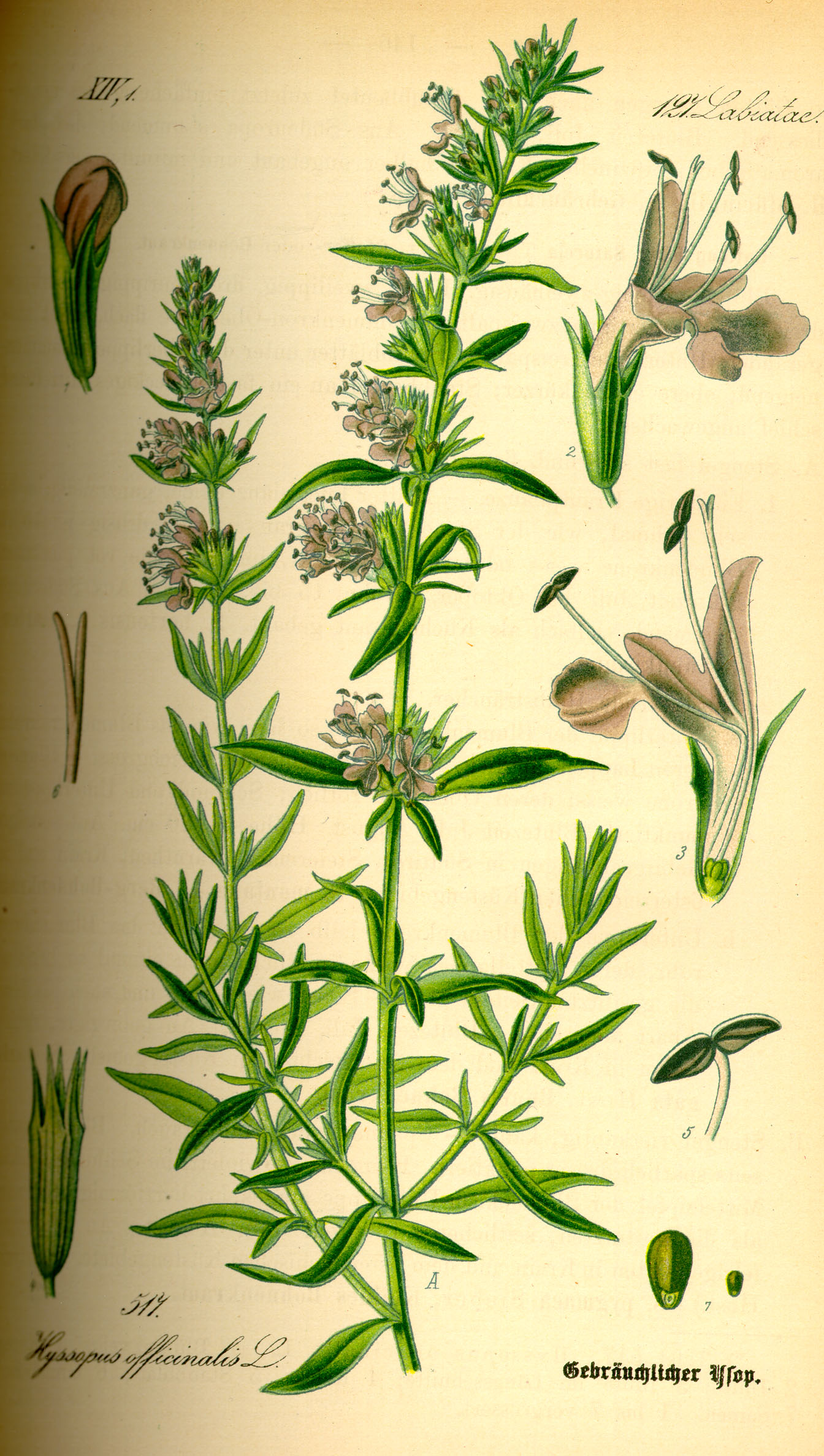
Genus of flowering plants in the mint family
Hyssopus (hyssop) is a genus of herbaceous or semi-woody plants in the family Lamiaceae, native from the east Mediterranean to central Asia as far east as Mongolia.{{cite web |access-date=2008-09-16
Though commonly called "hyssop", anise hyssop (Agastache foeniculum; also called blue giant hyssop) and all Agastache species are not members of Hyssopus. However, both genera are in the mint family.
;Species
- Hyssopus ambiguus (Trautv.) Iljin ex Prochorov. & Lebel – Altai Republic of Russia, Kazakhstan
- Hyssopus cuspidatus Boriss. – Altai Republic, Kazakhstan, Xinjiang, Mongolia
- Hyssopus latilabiatus C.Y.Wu & H.W.Li – Xinjiang
- Hyssopus macranthus Boriss. – Altai Republic of Russia, Western Siberia, Kazakhstan
- Hyssopus officinalis L. – central + southern Europe, Algeria, Morocco, east to Iran
- Hyssopus seravschanicus (Dub.) Pazij – Afghanistan, Pakistan, Kyrgyzstan, Tajikistan
- Hyssopus subulifolius (Rech.f.) Rech.f. – Afghanistan.
History
The name hyssop can be traced back almost unchanged through the Greek ύσσωπος (grc). The name hyssop appears in some translations of the Bible, but researchers have suggested that the Biblical accounts refer not to the plant currently known as hyssop but rather to a related herb. The Septuagint translates the name as ὕσσωπος hyssop, and English translations of the Bible often follow this rendering. The Hebrew word אזוב (esov or esob) and the Greek word ὕσσωπος probably share a common (unknown) origin. The biblical plant is discussed further at ezov.
Uses
The herb hyssop is used both as a condiment and a medicine. Hyssop leaves and flowers are used to flavor salads and soups. It is also used in the preparation of liquor and perfumes. In addition, it is used as a pot herb.
This herb is traditionally used in the treatment of throat and lung complaints, and is regarded as a stimulant, carminative, and expectorant. It is sometimes used for treating pulmonary, digestive, uterine, urinary and asthma problems, but there is limited clinical evidence of its effectiveness for these conditions, and it may be unsafe during pregnancy or breastfeeding.
In addition to its use as a flavoring agent in bitters and tonics, hyssop oil is also used in perfumery. Hyssop oil is used as a fragrance and should not be taken orally, as it may trigger seizures or make them worse, especially in children.
References
References
- Prof. Dr. Otto Wilhelm Thomé, Flora von Deutschland, Österreich und der Schweiz 1885, Gera, Germany
- [http://apps.kew.org/wcsp/namedetail.do?name_id=102239 Kew World Checklist of Selected Plant Families]
- (1988). "Identification of biblical hyssop and origin of the traditional use of oregano-group herbs in the Mediterranean region". Economic Botany.
- "Archived copy".
- ''Oxford English Dictionary'', 2nd Edition, 1989, ''s.v.'' hyssop
- (2016). "Essential Oils in Food Preservation, Flavor and Safety".
- "Hyssop: Health Benefits, Side Effects, Uses, Dose & Precautions".
- "A Modern Herbal | Hyssop".
- "Hyssop".
This article was imported from Wikipedia and is available under the Creative Commons Attribution-ShareAlike 4.0 License. Content has been adapted to SurfDoc format. Original contributors can be found on the article history page.
Ask Mako anything about Hyssopus (plant) — get instant answers, deeper analysis, and related topics.
Research with MakoFree with your Surf account
Create a free account to save articles, ask Mako questions, and organize your research.
Sign up freeThis content may have been generated or modified by AI. CloudSurf Software LLC is not responsible for the accuracy, completeness, or reliability of AI-generated content. Always verify important information from primary sources.
Report