From Surf Wiki (app.surf) — the open knowledge base
Hydroxylated lecithin
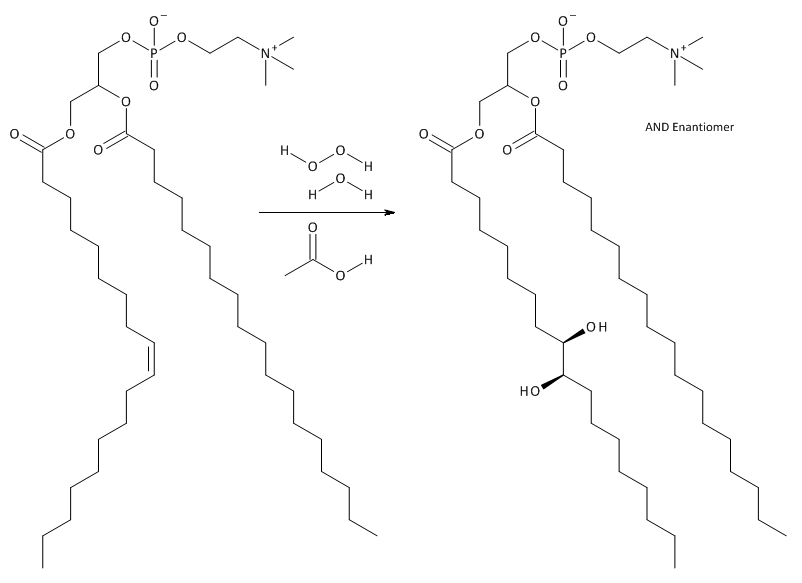
Hydroxylated lecithin is chemically modified lecithin. It is made by treating lecithin with hydrogen peroxide and an organic acid such as acetic or lactic acid. In the process, some of the organic acid becomes peroxy acid. The peroxy acid reacts with olefins in the fatty acid side chains creating intermediate epoxides. The epoxides react further with water, organic acid, or peroxy acid, to ultimately form vicinal diols. Because the natural fatty acid olefins have (Z)-configurations, the resulting vicinal diols have anti stereochemical configurations.
Fatty acids with hydroxyl groups on their hydrophobic tails are rare in nature. Compare hydroxylated lecithin to castor oil, which has 3 hydroxylated fatty acid chains in it. Hydroxyl groups give these oils unique polar properties that make them useful in a variety of applications, including cosmetics, pharmaceuticals, and foods.
Synthesis
References
References
- (2007). "The Lipid Handbook". CRC Press.
- "21 CFR 172.814". US Code of Federal Regulations.
This article was imported from Wikipedia and is available under the Creative Commons Attribution-ShareAlike 4.0 License. Content has been adapted to SurfDoc format. Original contributors can be found on the article history page.
Ask Mako anything about Hydroxylated lecithin — get instant answers, deeper analysis, and related topics.
Research with MakoFree with your Surf account
Create a free account to save articles, ask Mako questions, and organize your research.
Sign up freeThis content may have been generated or modified by AI. CloudSurf Software LLC is not responsible for the accuracy, completeness, or reliability of AI-generated content. Always verify important information from primary sources.
Report