From Surf Wiki (app.surf) — the open knowledge base
Hydrothermal synthesis
Techniques for crystallizing substances
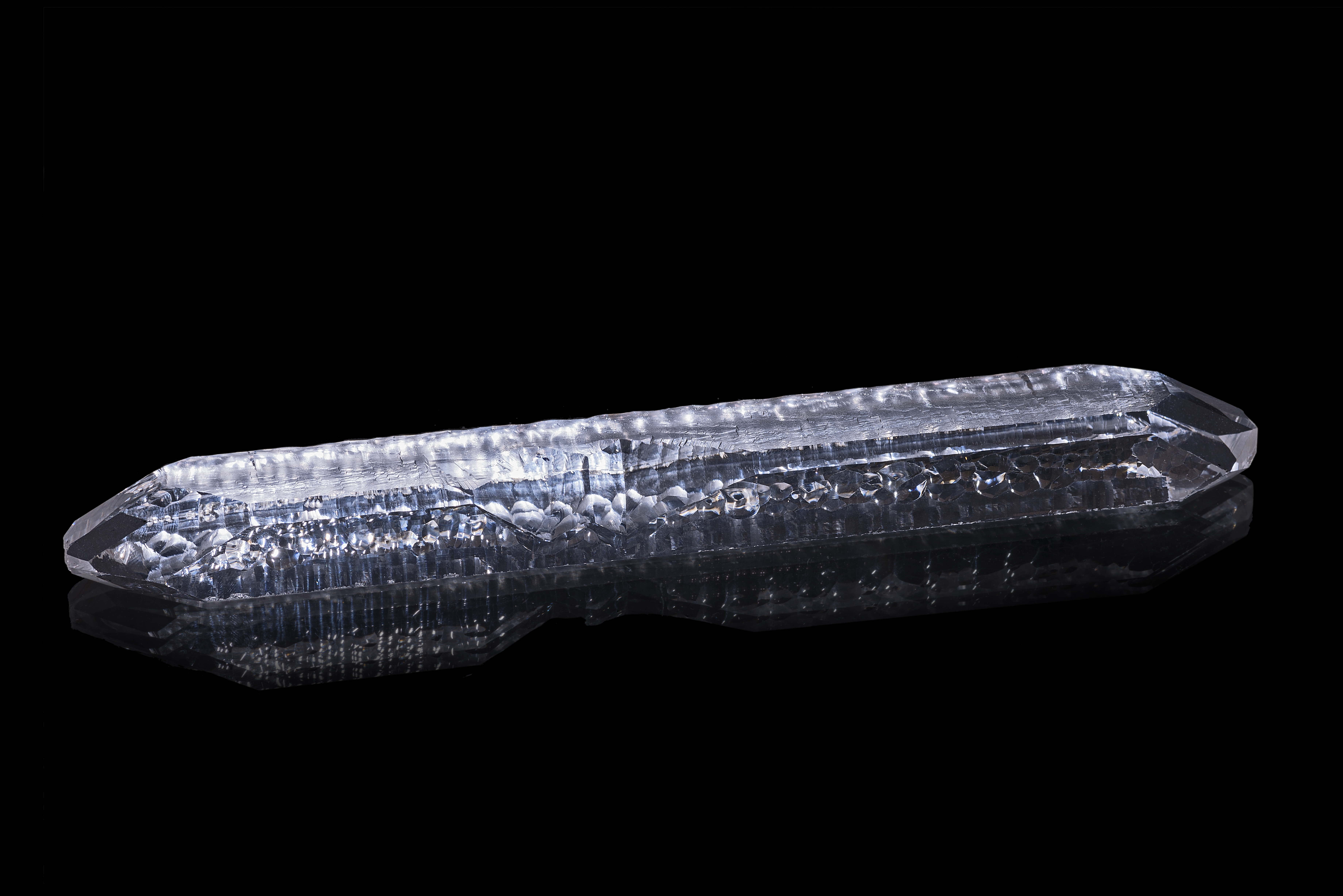
Techniques for crystallizing substances
Hydrothermal synthesis includes the various techniques of synthesizing substances from high-temperature aqueous solutions at high pressures; also termed "hydrothermal method". The term "hydrothermal" is of geologic origin. Geochemists and mineralogists have studied hydrothermal phase equilibria since the beginning of the twentieth century. George W. Morey at the Carnegie Institution and later, Percy W. Bridgman at Harvard University did much of the work to lay the foundations necessary to containment of reactive media in the temperature and pressure range where most of the hydrothermal work is conducted. In the broadest definition, a process is considered hydrothermal if it involves water temperatures above 100 C and pressures above 1 atm.
In the context of material science, hydrothermal synthesis focuses on the production of single crystal. Under high temperature (300 °C) and pressure ( 100 atm), ordinarily insoluble minerals become soluble in water. The crystal growth is performed in an apparatus consisting of a steel pressure vessel called an autoclave, in which the reactant ("nutrient") is supplied along with water. A temperature gradient is maintained between the opposite ends of the growth chamber. At the hotter end the nutrient solute dissolves, while at the cooler end it is deposited on a seed crystal, growing the desired crystal.
Advantages of the hydrothermal method over other types of crystal growth include the ability to create crystalline phases which are not stable at the melting point. Also, materials which have a high vapor pressure near their melting points can be grown by the hydrothermal method. The method is also particularly suitable for the growth of large good-quality crystals while maintaining control over their composition. Disadvantages of the method include the need of expensive autoclaves, and the impossibility of observing the crystal as it grows if a steel tube is used.{{cite book There are autoclaves made out of thick walled glass, which can be used up to 300 °C and 10 bar.
History

The first report of the hydrothermal growth of crystals was by German geologist Karl Emil von Schafhäutl (1803–1890) in 1845: he grew microscopic quartz crystals in a pressure cooker. In 1848, Robert Bunsen reported growing crystals of barium and strontium carbonate at 200 °C and at pressures of 15 atmospheres, using sealed glass tubes and aqueous ammonium chloride ("Salmiak") as a solvent. In 1849 and 1851, French crystallographer Henri Hureau de Sénarmont (1808–1862) produced crystals of various minerals via hydrothermal synthesis.See:
- de Sénarmont (1849) "Expériences sur la formation artificielle par voie humide de quelques espèces minérales qui ont pu se former dans les sources thermales sous l'action combinée de la chaleur et de la pression" (Experiments on the artificial formation from solution of some mineral species that could form in hot springs under the combined action of heat and pressure), Comptes rendus … , 28 : 693-696 .
- H. de Sénarmont (1851) "Note sur la formation artificielle, par voie humide, du corindon et du diaspore" (Note on the artificial formation, from solution, of corundum and diaspore), Comptes rendus … , 32 : 762-763.{{cite web | access-date = 2006-11-17 Later (1905) Giorgio Spezia (1842–1911) published reports on the growth of macroscopic crystals. He used solutions of sodium silicate, natural crystals as seeds and supply, and a silver-lined vessel. By heating the supply end of his vessel to 320–350 °C, and the other end to 165–180 °C, he obtained about 15 mm of new growth over a 200-day period. Unlike modern practice, the hotter part of the vessel was at the top. A shortage in the electronics industry of natural quartz crystals from Brazil during World War 2 led to postwar development of a commercial-scale hydrothermal process for culturing quartz crystals, by A. C. Walker and Ernie Buehler in 1950 at Bell Laboratories.{{cite book
Uses
A large number of compounds belonging to practically all classes have been synthesized under hydrothermal conditions: elements, simple and complex oxides, tungstates, molybdates, carbonates, silicates, germanates etc. Hydrothermal synthesis is commonly used to grow synthetic quartz, gems and other single crystals with commercial value. Some of the crystals that have been efficiently grown are emeralds, rubies, quartz, alexandrite and others. The method has proved to be extremely efficient both in the search for new compounds with specific physical properties and in the systematic physicochemical investigation of intricate multicomponent systems at elevated temperatures and pressures.
Equipment for hydrothermal crystal growth
The crystallization vessels used are autoclaves. These are usually thick-walled steel cylinders with a hermetic seal which must withstand high temperatures and pressures for prolonged periods of time. Furthermore, the autoclave material must be inert with respect to the solvent. The closure is the most important element of the autoclave. Many designs have been developed for seals, the most famous being the Bridgman seal. In most cases, steel-corroding solutions are used in hydrothermal experiments. To prevent corrosion of the internal cavity of the autoclave, protective inserts are generally used. These may have the same shape as the autoclave and fit in the internal cavity (contact-type insert), or be "floating" type inserts which occupy only part of the autoclave interior. Inserts may be made of carbon-free iron, copper, silver, gold, platinum, titanium, glass (or quartz), or Teflon, depending on the temperature and solution used.
Methods
Temperature-difference method
This is the most extensively used method in hydrothermal synthesis and crystal growing. Supersaturation is achieved by reducing the temperature in the crystal growth zone. The nutrient is placed in the lower part of the autoclave filled with a specific amount of solvent. The autoclave is heated in order to create a temperature gradient. The nutrient dissolves in the hotter zone and the saturated aqueous solution in the lower part is transported to the upper part by convective motion of the solution. The cooler and denser solution in the upper part of the autoclave descends while the counterflow of solution ascends. The solution becomes supersaturated in the upper part as the result of the reduction in temperature and crystallization sets in.
Temperature-reduction technique
In this technique, crystallization takes place without a temperature gradient between the growth and dissolution zones. The supersaturation is achieved by a gradual reduction in temperature of the solution in the autoclave. The disadvantage of this technique is the difficulty in controlling the growth process and introducing seed crystals. For these reasons, this technique is very seldom used.
Metastable-phase technique
This technique is based on the difference in solubility between the phase to be grown and that serving as the starting material. The nutrient consists of compounds that are thermodynamically unstable under the growth conditions. The solubility of the metastable phase exceeds that of the stable phase, and the latter crystallize due to the dissolution of the metastable phase. This technique is usually combined with one of the other two techniques above.
Microwave-assisted technique
Compared to the classic techniques, at room temperature, this innovative one is expected to generate comparable morphostructural and biological properties of the obtained materials, but in a shorter time.
Use beyond material science
Organic chemistry
Hydrothermal synthesis is of interest for green chemistry processes as it offers the possibility of replacing fossil-based organic solvents with just water. The hydrothermal condition can be seen as halfway between supercritical water and ordinary room-temperature water. The dielectric constant of water is reduced, allowing nonpolar substances to better dissolve. The self-dissociation constant of water also increases by three orders of magnitude, making OH- and H+ more abundant for catalyzing reactions.
Processing biomass under hydrothermal conditions is already widely used in industry. It is the most common way for breaking down keratin molecules in feather meal into more digestible parts, though it comes with the downside of degrading some amino acids. It can break down biomass-rich waste products such as sewage sludge and waste straw into potentially useful materials.
References
References
- The earliest occurrence of the word "hydrothermal" appears to be: Sir Charles Lyell, ''A Manual of Elementary Geology'' … , 5th ed. (Boston, Massachusetts: Little, Brown, and Company, 1855), [https://archive.org/details/amanualelementa02lyelgoog/page/n624 page 603]: "The metamorphic theory [requires us to affirm] that an action, existing in the interior of the earth at an unknown depth, whether thermal, hydro-thermal, … "
- "hydrothermal synthesis".
- Schubert, Ulrich. and Hüsing, Nicola. (2012) Synthesis of inorganic materials Weinheim: Wiley-VCH, page 161
- For a more detailed history of hydrothermal synthesis, see: K. Byrappa and Masahiro Yoshimura, ''Handbook of Hydrothermal Technology'' (Norwich, New York: Noyes Publications, 2001), [https://books.google.com/books?id=-rYel1Q2HB8C&pg=PA53 Chapter 2: History of Hydrothermal Technology].
- Schafhäutl (1845) "Die neuesten geologischen Hypothesen und ihr Verhältniß zur Naturwissenschaft überhaupt" (The latest geological hypotheses and their relation to science in general), ''Gelehrte Anzeigen'' (published by: die königliche Bayerische Akademie der Wissenschaften (the Royal Bavarian Academy of Sciences)), '''20''' : 557, 561-567, 569-576, 577-596. On [https://archive.org/stream/gelehrteanzeige06wissgoog#page/n298/mode/1up page 578], he states: "''5) Bildeten sich aus Wasser, in welchen ich im Papinianischen Topfe frisch gefällte Kieselsäure aufgelöst hatte, beym Verdampfen schon nach 8 Tagen Krystalle, die zwar mikroscopisch, aber sehr wohl erkenntlich aus sechseitigen Prismen mit derselben gewöhnlichen Pyramide bestanden.''" ( 5) There formed from water in which I had dissolved freshly precipitated silicic acid in a Papin pot [i.e., pressure cooker], after just 8 days of evaporating, crystals, which albeit were microscopic but consisted of very easily recognizable six-sided prisms with their usual pyramids.)
- R. Bunsen (1848) [https://books.google.com/books?id=ijY9AAAAcAAJ&pg=PA70 "Bemerkungen zu einigen Einwürfen gegen mehrere Ansichten über die chemisch-geologischen Erscheinungen in Island"] (Comments on some objections to several views on chemical-geological phenomena in Iceland), ''Annalen der Chemie und Pharmacie'', '''65''' : 70-85. On page 83, Bunsen mentions crystallizing the carbonate salts of barium, strontium, etc. ("die kohlensauren Salze der Baryterde, Strontianerde, etc.").
- Giorgio Spezia (1905) [https://books.google.com/books?id=rc4AAAAAYAAJ&pg=PA254 "La pressione è chimicamente inattiva nella solubilità e ricostituzione del quarzo"] (Pressure is chemically inactive in the solubility and reconstitution of quartz), ''Atti della Reale Accademia delle scienze di Torino'' (Proceedings of the Royal Academy of Sciences in Turin), '''40''' : 254-262.
- https://www.scientificbulletin.upb.ro/rev_docs_arhiva/reze7a_549739.pdf {{Bare URL PDF. (August 2025)
- (10 August 2012). "Organic chemistry under hydrothermal conditions". Pure and Applied Chemistry.
- (15 July 2021). "Feather protein lysate optimization and feather meal formation using YNDH protease with keratinolytic activity afterward enzyme partial purification and characterization". Scientific Reports.
- (August 2023). "Hydrothermal conversion of biomass to fuels, chemicals and materials: A review holistically connecting product properties and marketable applications". Science of the Total Environment.
This article was imported from Wikipedia and is available under the Creative Commons Attribution-ShareAlike 4.0 License. Content has been adapted to SurfDoc format. Original contributors can be found on the article history page.
Ask Mako anything about Hydrothermal synthesis — get instant answers, deeper analysis, and related topics.
Research with MakoFree with your Surf account
Create a free account to save articles, ask Mako questions, and organize your research.
Sign up freeThis content may have been generated or modified by AI. CloudSurf Software LLC is not responsible for the accuracy, completeness, or reliability of AI-generated content. Always verify important information from primary sources.
Report