From Surf Wiki (app.surf) — the open knowledge base
Hydrogen economy
Using hydrogen to decarbonize more sectors

Using hydrogen to decarbonize more sectors
The hydrogen economy is a term for the role hydrogen as an energy carrier to complement electricity as part a long-term option to reduce emissions of greenhouse gases. The aim is to reduce emissions where cheaper and more energy-efficient clean solutions are not available. In this context, hydrogen economy encompasses the production of hydrogen and the use of hydrogen in ways that contribute to phasing-out fossil fuels and limiting climate change.
Hydrogen can be produced by several means. Most hydrogen produced today is gray hydrogen, made from natural gas through steam methane reforming (SMR). This process accounted for 1.8% of global greenhouse gas emissions in 2021. Low-carbon hydrogen, which is made using SMR with carbon capture and storage (blue hydrogen), or through electrolysis of water using renewable power (green hydrogen), accounted for less than 1% of production. Of the 100 million tonnes of hydrogen produced in 2021, 43% was used in oil refining and 57% in industry, principally in the manufacture of ammonia for fertilizers, and methanol.
To limit global warming, it is generally envisaged that the future hydrogen economy replace gray hydrogen with low-carbon hydrogen. As of 2024 it is unclear when enough low-carbon hydrogen could be produced to phase-out all the gray hydrogen. The future end-uses are likely in heavy industry (e.g. high-temperature processes alongside electricity, feedstock for production of green ammonia and organic chemicals, as alternative to coal-derived coke for steelmaking), long-haul transport (e.g. shipping, and to a lesser extent hydrogen-powered aircraft and heavy goods vehicles), and long-term energy storage. Other applications, such as light duty vehicles and heating in buildings, are no longer part of the future hydrogen economy, primarily for economic and environmental reasons. Hydrogen is challenging to store, to transport in pipelines, and to use. It presents safety concerns since it is highly explosive, and it is inefficient compared to direct use of electricity. Since relatively small amounts of low-carbon hydrogen are available, climate benefits can be maximized by using it in harder-to-decarbonize applications.
there are no real alternatives to hydrogen for several chemical processes in which it is currently used, such as ammonia production for fertilizer. The cost of low- and zero-carbon hydrogen is likely to influence the degree to which it will be used in chemical feedstocks, long haul aviation and shipping, and long-term energy storage. Production costs of low- and zero-carbon hydrogen are evolving. Future costs may be influenced by carbon taxes, the geography and geopolitics of energy, energy prices, technology choices, and their raw material requirements. The U.S. Department of Energy's Hydrogen Hotshot Initiative seeks to reduce the cost of green hydrogen drop to $1 a kilogram by 2031, though the cost of electrolyzers rose 50% between 2021 and 2024.
History and objectives
Origins
The concept of a society that uses hydrogen as the primary means of energy storage was theorized by geneticist J. B. S. Haldane in 1923. Anticipating the exhaustion of Britain's coal reserves for power generation, Haldane proposed a network of wind turbines to produce hydrogen and oxygen for long-term energy storage through electrolysis, to help address renewable power's variable output. The term "hydrogen economy" itself was coined by John Bockris during a talk he gave in 1970 at General Motors (GM) Technical Center. Bockris viewed it as an economy in which hydrogen, underpinned by nuclear and solar power, would help address growing concern about fossil fuel depletion and environmental pollution, by serving as energy carrier for end-uses in which electrification was not suitable.
A hydrogen economy was proposed by the University of Michigan to solve some of the negative effects of using hydrocarbon fuels where the carbon is released to the atmosphere (as carbon dioxide, carbon monoxide, unburnt hydrocarbons, etc.). Modern interest in the hydrogen economy can generally be traced to a 1970 technical report by Lawrence W. Jones of the University of Michigan, in which he echoed Bockris' dual rationale of addressing energy security and environmental challenges. Unlike Haldane and Bockris, Jones only focused on nuclear power as the energy source for electrolysis, and principally on the use of hydrogen in transport, where he regarded aviation and heavy goods transport as the top priorities.
In 1974 International Energy Agency (IEA) and the International Association for Hydrogen Energy (IAHE) were established. These organizations had several initiatives including advocating for national strategies to increase interest and visibility of the hydrogen economy.
Later evolution

A spike in attention for the hydrogen economy concept during the 2000s was repeatedly described as hype by some critics and proponents of alternative technologies, and investors lost money in the bubble. Interest in the energy carrier resurged in the 2010s, notably with the forming of the Hydrogen Council in 2017. Several manufacturers released hydrogen fuel cell cars commercially, and manufacturers such as Toyota, Hyundai, and industry groups in China planned to increase numbers of the cars into the hundreds of thousands over the next decade. However, the global scope for hydrogen's role in cars is shrinking relative to earlier expectations. By the end of 2022, 70,200 hydrogen vehicles had been sold worldwide, compared with 26 million plug-in electric vehicles.
Early 2020s takes on the hydrogen economy share earlier perspectives' emphasis on the complementarity of electricity and hydrogen, and the use of electrolysis as the mainstay of hydrogen production. They focus on the need to limit global warming to 1.5 °C and prioritize the production, transportation and use of green hydrogen for heavy industry (e.g. high-temperature processes alongside electricity, feedstock for production of green ammonia and organic chemicals, as alternative to coal-derived coke for steelmaking), long-haul transport (e.g. shipping, aviation and to a lesser extent heavy goods vehicles), and long-term energy storage.
National hydrogen strategies {{anchor| Hydrogen strategy}}
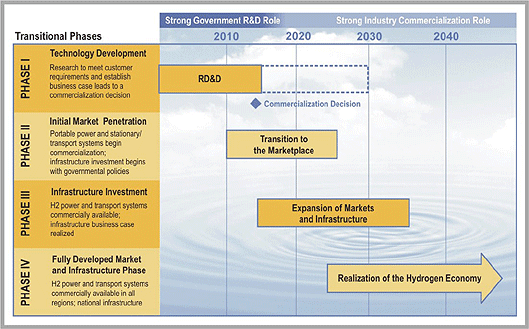
Since 2017, several countries and regions have released a hydrogen strategy, outlining their goals in developing hydrogen infrastructure and as a guide for private investment. The International Renewable Energy Agency has proposed national strategies as the first pillar of policies to promote green hydrogen.IRENA (2020), Green Hydrogen: A guide to policy making, International Renewable Energy Agency, Abu Dhabi
In 2017 Japan published their strategy with a proposal to become the world's first "hydrogen society". Many provinces and cities in China have established hydrogen strategies. The European Union strategy, adopted in 2021, outlines a plan to develop large scale infrastructure for hydrogen including electrolysers in collaboration with multiple trade organizations. The US hydrogen strategy "presents a strategic framework for achieving large-scale production and use of hydrogen" over a 30 year period. Analysis suggests that even nations reliant on exports of natural gas like Qatar could benefit from hydrogen strategies that leverage existing infrastructure, expertise, and markets. As of 2021, 28 governments had published hydrogen strategies. However the actual strategies proposed are not necessarily based on climate friendly green hydrogen. The majority of the strategies have been characterized by scale first and clean later, meaning they add regulations to enhance the viability of green hydrogen but do not mandate it use. Economic analysis shows few national strategies can make their 2030 goals.
Current hydrogen market
Hydrogen production globally was valued at over US$155 billion in 2022 and is expected to grow over 9% annually through 2030.
In 2021, 94 million tonnes (Mt) of molecular hydrogen () was produced. Of this total, approximately one sixth was as a by-product of petrochemical industry processes. Most hydrogen comes from dedicated production facilities, over 99% of which is from fossil fuels, mainly via steam reforming of natural gas (70%) and coal gasification (30%, almost all of which in China). Less than 1% of dedicated hydrogen production is low carbon: steam fossil fuel reforming with carbon capture and storage, green hydrogen produced using electrolysis, and hydrogen produced from biomass. CO2 emissions from 2021 production, at 915 MtCO2, amounted to 2.5% of energy-related CO2 emissions and 1.8% of global greenhouse gas emissions.
Virtually all hydrogen produced for the current market is used in oil refining (40 Mt in 2021) and industry (54 MtH2). In oil refining, hydrogen is used, in a process known as hydrocracking, to convert heavy petroleum sources into lighter fractions suitable for use as fuels. Industrial uses mainly comprise ammonia production to make fertilizers (34 Mt in 2021), methanol production (15 Mt) and the manufacture of direct reduced iron (5 Mt).
Production
Green methanol
Green methanol is a liquid fuel that is produced from combining carbon dioxide and hydrogen () under pressure and heat with catalysts. It is a way to reuse carbon capture for recycling. Methanol can store hydrogen economically at standard outdoor temperatures and pressures, compared to liquid hydrogen and ammonia that need to use a lot of energy to stay cold in their liquid state. In 2023 the Laura Maersk was the first container ship to run on methanol fuel. Ethanol plants in the midwest are a good place for pure carbon capture to combine with hydrogen to make green methanol, with abundant wind and nuclear energy in Iowa, Minnesota, and Illinois. Mixing methanol with ethanol could make methanol a safer fuel to use because methanol doesn't have a visible flame in the daylight and doesn't emit smoke, and ethanol has a visible light yellow flame. Green hydrogen production of 70% efficiency and a 70% efficiency of methanol production from that would be a 49% energy conversion efficiency.
Uses

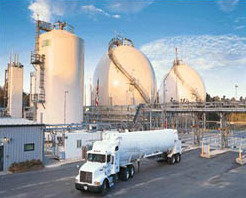
Hydrogen can be deployed as a fuel in two distinct ways: in fuel cells which produce electricity, and via combustion to generate heat. When hydrogen is consumed in fuel cells, the only emission at the point of use is water vapor. Combustion of hydrogen can lead to the thermal formation of harmful nitrogen oxides emissions.
Industry
In the context of limiting global warming, low-carbon hydrogen (particularly green hydrogen) is likely to play an important role in decarbonizing industry. Hydrogen fuel can produce the intense heat required for industrial production of steel, cement, glass, and chemicals, thus contributing to the decarbonization of industry alongside other technologies, such as electric arc furnaces for steelmaking. However, it is likely to play a larger role in providing industrial feedstock for cleaner production of ammonia and organic chemicals. For example, in steelmaking, hydrogen could function as a clean energy carrier and also as a low-carbon catalyst replacing coal-derived coke.
The imperative to use low-carbon hydrogen to reduce greenhouse gas emissions has the potential to reshape the geography of industrial activities, as locations with appropriate hydrogen production potential in different regions will interact in new ways with logistics infrastructure, raw material availability, human and technological capital.
Transport
Main article: Hydrogen vehicle
Much of the interest in the hydrogen economy concept is focused on hydrogen vehicles, primarily forklifts, airport service vehicles, public transportation busses, cars and trucks. Other applications are more speculative, including possible hydrogen planes. Hydrogen vehicles produce significantly less local air pollution than conventional vehicles. By 2050, the energy requirement for transportation might be between 20% and 30% fulfilled by hydrogen and synthetic fuels.
Hydrogen used to decarbonize transportation is likely to find its largest applications in shipping, aviation and to a lesser extent heavy goods vehicles, through the use of hydrogen-derived synthetic fuels such as ammonia and methanol, and fuel cell technology. Hydrogen has been used in fuel cell buses for many years. It is also used as a fuel for spacecraft propulsion.
In the International Energy Agency's 2022 Net Zero Emissions Scenario (NZE), hydrogen is forecast to account for 2% of rail energy demand in 2050, while 90% of rail travel is expected to be electrified by then (up from 45% today). Hydrogen's role in rail would likely be focused on lines that prove difficult or costly to electrify. The NZE foresees hydrogen meeting approximately 30% of heavy truck energy demand in 2050, mainly for long-distance heavy freight (with battery electric power accounting for around 60%).
Although hydrogen can be used in adapted internal combustion engines, fuel cells, being electrochemical, have an efficiency advantage over heat engines. Fuel cells are more expensive to produce than common internal combustion engines but also require higher purity hydrogen fuel than internal combustion engines.
In the light road vehicle segment including passenger cars, by the end of 2022, 70,200 fuel cell electric vehicles had been sold worldwide, compared with 26 million plug-in electric vehicles. With the rapid rise of electric vehicles and associated battery technology and infrastructure, hydrogen's role in cars is minuscule.
Energy system balancing and storage
Green hydrogen, from electrolysis of water, has the potential to address the variability of renewable energy output. Hydrogen energy is a clean fuel that produces only water when used in fuel cells. While most hydrogen comes from natural gas, green hydrogen from renewables offers a zero-emission alternative. Producing green hydrogen can both reduce the need for renewable power curtailment during periods of high renewables output and be stored long-term to provide for power generation during periods of low output.
Ammonia
Main article: ammonia, ammonia production
An alternative to gaseous hydrogen as an energy carrier is to bond it with nitrogen from the air to produce ammonia, which can be easily liquefied, transported, and used (directly or indirectly) as a clean and renewable fuel. Among disadvantages of ammonia as an energy carrier are its high toxicity, energy efficiency of production from and , and poisoning of PEM Fuel Cells by traces of non-decomposed after to conversion.
Buildings
Numerous industry groups (gas networks, gas boiler manufacturers) across the natural gas supply chain are promoting hydrogen combustion boilers for space and water heating, and hydrogen appliances for cooking, to reduce energy-related CO2 emissions from residential and commercial buildings. The proposition is that current end-users of piped natural gas can await the conversion of and supply of hydrogen to existing natural gas grids, and then swap heating and cooking appliances, and that there is no need for consumers to do anything now.
A review of 32 studies on the question of hydrogen for heating buildings, independent of commercial interests, found that the economics and climate benefits of hydrogen for heating and cooking generally compare very poorly with the deployment of district heating networks, electrification of heating (principally through heat pumps) and cooking, the use of solar thermal, waste heat and the installation of energy efficiency measures to reduce energy demand for heat. Due to inefficiencies in hydrogen production, using blue hydrogen to replace natural gas for heating could require three times as much methane, while using green hydrogen would need two to three times as much electricity as heat pumps. Hybrid heat pumps, which combine the use of an electric heat pump with a hydrogen boiler, may play a role in residential heating in areas where upgrading networks to meet peak electrical demand would otherwise be costly.
The widespread use of hydrogen for heating buildings would entail higher energy system costs, higher heating costs and higher environmental impacts than the alternatives, although a niche role may be appropriate in specific contexts and geographies. If deployed, using hydrogen in buildings would drive up the cost of hydrogen for harder-to-decarbonize applications in industry and transport.
Bio-SNG
although technically possible production of syngas from hydrogen and carbon-dioxide from bio-energy with carbon capture and storage (BECCS) via the Sabatier reaction is limited by the amount of sustainable bioenergy available: therefore any bio-SNG made may be reserved for production of aviation biofuel.
SNG
Synthetic Natural Gas (SNG) can be produced from low rank coal/lignite by using hydrogen.
Safety
Main article: Hydrogen safety
In hydrogen pipelines and steel storage vessels, hydrogen molecules are prone to react with metals, causing hydrogen embrittlement and leaks in the pipeline or storage vessel. Since it is lighter than air, hydrogen does not easily accumulate to form a combustible gas mixture. However, even without ignition sources, high-pressure hydrogen leakage may cause spontaneous combustion and detonation.
Hydrogen is flammable when mixed even in small amounts with air. Ignition can occur at a volumetric ratio of hydrogen to air as low as 4%. In approximately 70% of hydrogen ignition accidents, the ignition source cannot be found, and it is widely believed by scholars that spontaneous ignition of hydrogen occurs.
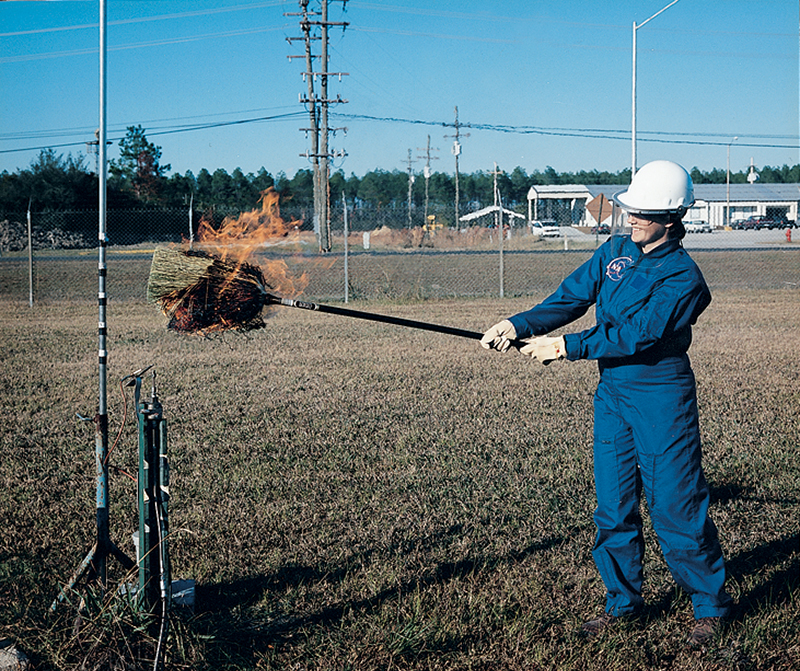
Hydrogen fire, while being extremely hot, is almost invisible, and thus can lead to accidental burns. Hydrogen, like most gases, can cause asphyxiation in the absence of adequate ventilation.
Hydrogen infrastructure
Storage
Power plants
Xcel Energy is going to build two combined cycle power plants in the Midwest that can mix 30% hydrogen with the natural gas. Intermountain Power Plant is being retrofitted to a natural gas/hydrogen power plant that can run on 30% hydrogen as well, and is scheduled to run on pure hydrogen by 2045.
Costs
More widespread use of hydrogen in economies entails the need for investment and costs in its production, storage, distribution and use. Estimates of hydrogen's cost are therefore complex and need to make assumptions about the cost of energy inputs (typically gas and electricity), production plant and method (e.g. green or blue hydrogen), technologies used (e.g. alkaline or proton exchange membrane electrolysers), storage and distribution methods, and how different cost elements might change over time. These factors are incorporated into calculations of the levelized costs of hydrogen (LCOH). The following table shows a range of estimates of the levelized costs of gray, blue, and green hydrogen, expressed in terms of US$ per kg of H2 (where data provided in other currencies or units, the average exchange rate to US dollars in the given year are used, and 1 kg of H2 is assumed to have a calorific value of 33.3kWh).
| page=28}} | 2020: 2.6–3.6 | 1.0–1.7 | 0.7–1.2 |
|---|
The range of cost estimates for commercially available hydrogen production methods is broad. As of 2022, gray hydrogen is cheapest to produce without a tax on its CO2 emissions, followed by blue and green hydrogen. Blue hydrogen production costs are not anticipated to fall substantially by 2050, can be expected to fluctuate with natural gas prices and could face carbon taxes for uncaptured emissions.
The cost of electrolysers fell by 60% from 2010 to 2022, but rose 50% between 2021 and 2024. Oxford Institute for Energy Studies nevertheless projects that the cost of green hydrogen is likely to fall significantly towards 2030 and 2050, alongside the falling cost of renewable power generation. It is cheapest to produce green hydrogen with surplus renewable power that would otherwise be curtailed, which favors electrolyzers capable of responding to low and variable power levels.
A 2022 Goldman Sachs analysis anticipates that globally green hydrogen will achieve cost parity with grey hydrogen by 2030, earlier if a global carbon tax is placed on gray hydrogen. In terms of cost per unit of energy, blue and gray hydrogen will always cost more than the fossil fuels used in its production, while green hydrogen will always cost more than the renewable electricity used to make it.
Subsidies for clean hydrogen production are much higher in the US and EU than in India. The discovered price of green hydrogen in India is US$4.67 (INR 397) per kg as of June 2025.
Examples and pilot programs

The distribution of hydrogen for the purpose of transportation is being tested around the world, particularly in the US (California, Massachusetts), Canada, Japan, the EU (Portugal, Norway, the Netherlands, Denmark, Germany), and Iceland. Natural gas vehicles can also be converted to run on hydrogen.
Also, fuel cell micro-CHP plants can be found in Japan and across the European Union. Such units can operate on hydrogen, or other fuels as natural gas or LPG. Under the ene.field and PACE projects — both co-funded by the Fuel Cells and Hydrogen Joint Undertaking (FCH JU) — a total of approximately 3,646 fuel cell micro-CHP units were installed across the European Union and the UK.
Australia
Western Australia's Department of Planning and Infrastructure operated three Daimler Chrysler Citaro fuel cell buses as part of its Sustainable Transport Energy for Perth Fuel Cells Bus Trial in Perth from 2004 to 2007.
By November 2020 the Australian Renewable Energy Agency (ARENA) had invested $55 million in 28 hydrogen projects, from early stage research and development to early stage trials and deployments. The agency's stated goal is to produce hydrogen by electrolysis for $2 per kilogram, announced by Minister for Energy and Emissions Angus Taylor in a 2021 Low Emissions Technology Statement.
In October 2021, Queensland Premier Annastacia Palaszczuk and private investor Andrew Forrest announced that Queensland would be home to the world's largest hydrogen plant. This was scrapped in 2025.
In November 2024, the South Australian Government's plan to spend A$593 million on a 200MW hydrogen energy plant near Whyalla was granted federal approval under the EPBC Act. The project was to be developed by the Office of Hydrogen Power SA, ATCO Australia, and BOC, and intended "to supply additional grid stability for homes and businesses around the state, by using excess renewable energy generated from large-scale wind and solar farms to provide a consistent output of supply". Construction was scheduled to start in 2025, with completion and commissioning happening in 2026. This plan was scrapped in early 2025
European Union
EU Member States which have a relatively large natural gas pipeline system already in place include Italy, Belgium, Germany, France, and the Netherlands. In 2020, The EU launched its European Clean Hydrogen Alliance (ECHA).
France
Green hydrogen has become more common in France. A €150 million Green Hydrogen Plan was established in 2019, and it calls for building the infrastructure necessary to create, store, and distribute hydrogen as well as using the fuel to power local transportation systems like buses and trains. Corridor H2, a similar initiative, will create a network of hydrogen distribution facilities in Occitania along the route between the Mediterranean and the North Sea. The Corridor H2 project will get a €40 million loan from the EIB.
Germany
German car manufacturer BMW has been working with hydrogen for years.. The German government has announced plans to hold tenders for 5.5 GW of new hydrogen-ready gas-fired power plants and 2 GW of "comprehensive H2-ready modernisations" of existing gas power stations at the end of 2024 or beginning of 2025
Iceland
Iceland has committed to becoming the world's first hydrogen economy by the year 2050. Iceland is in a unique position. Presently, it imports all the petroleum products necessary to power its automobiles and fishing fleet. Iceland has large geothermal resources, so much that the local price of electricity actually is lower than the price of the hydrocarbons that could be used to produce that electricity.
Iceland already converts its surplus electricity into exportable goods and hydrocarbon replacements. In 2002, it produced 2,000 tons of hydrogen gas by electrolysis, primarily for the production of ammonia (NH3) for fertilizer. Ammonia is produced, transported, and used throughout the world, and 90% of the cost of ammonia is the cost of the energy to produce it.
Neither industry directly replaces hydrocarbons. Reykjavík, Iceland, had a small pilot fleet of city buses running on compressed hydrogen, and research on powering the nation's fishing fleet with hydrogen is under way (for example by companies as Icelandic New Energy). For more practical purposes, Iceland might process imported oil with hydrogen to extend it, rather than to replace it altogether.
The Reykjavík buses are part of a larger program, HyFLEET:CUTE, operating hydrogen fueled buses in eight European cities. HyFLEET:CUTE buses were also operated in Beijing, China and Perth, Australia (see below). A pilot project demonstrating a hydrogen economy is operational on the Norwegian island of Utsira. The installation combines wind power and hydrogen power. In periods when there is surplus wind energy, the excess power is used for generating hydrogen by electrolysis. The hydrogen is stored, and is available for power generation in periods when there is little wind.
India
The discovered price of green hydrogen in India is US$ 3.9 (INR 328) per kg as of July 2025.{{Cite web |date=16 July 2025 |title=Abu Dhabi's Ocior Energy bags HPCL's 5,000-tonne green hydrogen deal
India is said to adopt hydrogen and H-CNG, due to several reasons, amongst which the fact that a national rollout of natural gas networks is already taking place and natural gas is already a major vehicle fuel. In addition, India suffers from extreme air pollution in urban areas. According to some estimates, nearly 80% of India's hydrogen is projected to be green, driven by cost declines and new production technologies.
Currently however, hydrogen energy is just at the Research, Development and Demonstration (RD&D) stage. As a result, the number of hydrogen stations may still be low, although much more are expected to be introduced soon.
Poland
It planning open first hydrogen publication stations, The Ministry of Climate and Environment (MKiŚ) will soon schan competitions for 2-3 hydrogen refueling stations, Polish Deputy Minister in this ministry Krzysztof Bolesta.
Saudi Arabia
Saudi Arabia as a part of the NEOM project, is looking to produce roughly 1.2 million tonnes of green ammonia a year, beginning production in 2025.
In Cairo, Egypt, Saudi real estate funding skyscraper project powered by hydrogen.
South Korea
Main article: Ulsan Green Hydrogen Town
The Ulsan Green Hydrogen Town is a hydrogen city project being developed in Ulsan. As of October 2024, 188 km of underground pipelines have been laid to connect hydrogen produced as a byproduct from petrochemical complexes to the city center.
Turkey
The Turkish Ministry of Energy and Natural Resources and the United Nations Industrial Development Organization created the International Centre for Hydrogen Energy Technologies (UNIDO-ICHET) in Istanbul in 2004 and it ran to 2012. In 2023 the ministry published a Hydrogen Technologies Strategy and Roadmap.
United Kingdom
The UK started a fuel cell pilot program in January 2004, the program ran two Fuel cell buses on route 25 in London until December 2005, and switched to route RV1 until January 2007. The Hydrogen Expedition is currently working to create a hydrogen fuel cell-powered ship and using it to circumnavigate the globe, as a way to demonstrate the capability of hydrogen fuel cells.
In 2009, Dr Graham Cooley was appointed CEO of ITM Power PLC, a manufacturer of electrolysers for green hydrogen production. Cooley raised almost £500 million for ITM and in 2021 opened the world’s largest electrolyser manufacturing facility in Sheffield . Cooley also served as a member of the UK Government’s Hydrogen Advisory Council .
In August 2021 the UK Government claimed it was the first to have a Hydrogen Strategy and produced a document.
In August 2021, Chris Jackson quit as chair of the UK Hydrogen and Fuel Cell Association, a leading hydrogen industry association, claiming that UK and Norwegian oil companies had intentionally inflated their cost projections for blue hydrogen in order to maximize future technology support payments by the UK government.
United States
Several domestic U.S. automobile companies have developed vehicles using hydrogen, such as GM and Toyota. However, as of February 2020, infrastructure for hydrogen was underdeveloped except in some parts of California. The United States have their own hydrogen policy. A joint venture between NREL and Xcel Energy is combining wind power and hydrogen power in the same way in Colorado. Hydro in Newfoundland and Labrador are converting the current wind-diesel Power System on the remote island of Ramea into a Wind-Hydrogen Hybrid Power Systems facility. Five pump station hubs being delivered to heavy-duty H2 trucks in Texas. Hydrogen City built Green by Hydrogen International (GHI), to planning open in 2026.
In 2006, Florida’s infrastructure project was commissioned. First opened Orlando as public bus transportation, Ford Motor Company announced putting a fleet of hydrogen-fueled Ford E-450. Liquidated hydrogen mobile system was constructed at Titusville. An FPL’s pilot clean hydrogen facility operated in Okeechobee County.
A similar pilot project on Stuart Island uses solar power, instead of wind power, to generate electricity. When excess electricity is available after the batteries are fully charged, hydrogen is generated by electrolysis and stored for later production of electricity by fuel cell. The US also have a large natural gas pipeline system already in place.
Vietnam
Việt Nam Energy Association have included green hydrogenation support. Australian clean energy company Pure Hydrogen Corporation Limited announced on July 22 that it has signed an MoU with Vietnam public transportation.
References
Sources
-
{{cite book |ref =
-
{{cite book |ref = | url-access=registration
References
- International Renewable Energy Agency. (2022-03-29). "World Energy Transitions Outlook 1-5C Pathway 2022 edition".
- (19 December 2022). "Global Greenhouse Gas Emissions: 1990–2020 and Preliminary 2021 Estimates".
- (10 July 2023). "Hydrogen".
- "Hydrogen".
- IEA. (2022). "Global Hydrogen Review 2022". International Energy Agency.
- "Hydrogen could be used for nearly everything. It probably shouldn't be.".
- IPCC. (2022). "Climate Change 2022: Mitigation of Climate Change". Cambridge University Press (In Press).
- IRENA. (2021). "World Energy Transitions Outlook: 1.5 °C Pathway".
- Plötz, Patrick. (2022-01-31). "Hydrogen technology is unlikely to play a major role in sustainable road transport". Nature Electronics.
- Rosenow, Jan. (September 2022). "Is heating homes with hydrogen all but a pipe dream? An evidence review". Joule.
- Barnard, Michael. (2023-10-22). "What's New On The Rungs Of Liebreich's Hydrogen Ladder?".
- (30 November 2023). "Carbon Neutral Fuels and Chemicals from Standalone Biomass Refineries". Indian Journal of Environment Engineering.
- Goldman Sachs Research. "Carbonomics: The Clean Hydrogen Revolution".
- (31 August 2021). "Hydrogen Hotshot Initiative".
- Bettenhausen, Craig. [https://cen.acs.org/energy/hydrogen-power/Green-hydrogen-still-making-gains/103/web/2025/05 "Green hydrogen is still making gains"], ''[[Chemical and Engineering News]]'', May 8, 2025
- "''Daedalus or Science and the Future'', A paper read to the Heretics, Cambridge, on February 4th, 1923 – Transcript 1993".
- "The History of Hydrogen". National Hydrogen Association.
- (6 January 2023). "A Historical Analysis of Hydrogen Economy Research, Development, and Expectations, 1972 to 2020". Environments.
- Bockris, J. O'M.. (1972-06-23). "A Hydrogen Economy". Science.
- (13 March 1970). "Toward a liquid hydrogen fuel economy". [[University of Michigan]].
- Jones, Lawrence W.. (March 13, 1970). "Toward a Liquid Hydrogen Fuel Economy".
- IRENA (2022), [https://www.irena.org/Publications/2022/Jan/Geopolitics-of-the-Energy-Transformation-Hydrogen Geopolitics of the Energy Transformation: The Hydrogen Factor], International Renewable Energy Agency, Abu Dhabi. {{ISBN. 978-92-9260-370-0.
- (2010). "The car industry and the blow-out of the hydrogen hype". Energy Policy.
- "Reactions: Hydrogen hype". The Chemical Engineer.
- (2014). "Technological trajectories in the automotive industry: are hydrogen technologies still a possibility?". Journal of Cleaner Production.
- "Can a viable industry emerge from the hydrogen shakeout?". The Economist.
- (2018-03-05). "Japan's top auto and energy firms tie up to promote development of hydrogen stations". Japan Times.
- (2018-03-29). "Prospects of fuel-cell electric vehicles boosted with Chinese backing". Energy Post.
- Plötz, Patrick. (January 2022). "Hydrogen technology is unlikely to play a major role in sustainable road transport". Nature Electronics.
- Collins (l_collins), Leigh. (2022-02-02). "'Hydrogen unlikely to play major role in road transport, even for heavy trucks': Fraunhofer". Recharge | Latest Renewable Energy News.
- "Annual update on the global transition to electric vehicles: 2022". International Council on Clean Transportation.
- (26 April 2023). "Global EV Outlook 2023". IEA.
- Kjellberg-Motton, Brendan. (2022-02-07). "Steel decarbonisation gathers speed {{!}} Argus Media".
- (January 2020). "Hydrogen's Decarbonization Impact for Industry". [[Rocky Mountain Institute]].
- (2024-10-02). "Hydrogen".
- Nagashima, M. (2018). Japan's hydrogen strategy and its economic and geopolitical implications, ''Études de l’Ifri'', Paris, France: Ifri. ISBN 978-2-36567-918-3
- (2021-08-18). "Status quo of China hydrogen strategy in the field of transportation and international comparisons". International Journal of Hydrogen Energy.
- "Texts adopted - A European Strategy for Hydrogen - Wednesday, 19 May 2021".
- (2023-05-02). "Analysis of the European Strategy for Hydrogen: A Comprehensive Review". Energies.
- "U.S. National Hydrogen Strategy and Roadmap".
- (2022-01-26). "Hydrogen strategy as an energy transition and economic transformation avenue for natural gas exporting countries: Qatar as a case study". International Journal of Hydrogen Energy.
- "Policies – Global Hydrogen Review 2024 – Analysis".
- (2022-02-08). "How Green Are the National Hydrogen Strategies?". Sustainability.
- (2024). "Hydrogen Supply Outlook 2024: A Reality Check". BloombergNEF.
- "Hydrogen Generation Market Size, Share & Trends Analysis Report, 2023 – 2030".
- "Executive summary – Global Hydrogen Review 2022 – Analysis".
- "Hydrogen".
- (8 March 2022). "Global CO2 emissions rebounded to their highest level in history in 2021 – News".
- (2022-09-01). "A comparative study on energy efficiency of the maritime supply chains for liquefied hydrogen, ammonia, methanol and natural gas". Carbon Capture Science & Technology.
- (2023-09-14). "World's 'first green container ship' christened in Denmark".
- Strong, Jared. (2024-02-17). "Green methanol: A carbon dioxide pipeline alternative? • Nebraska Examiner".
- (2022-05-01). "A techno-economic and life cycle assessment for the production of green methanol from CO2: catalyst and process bottlenecks". Journal of Energy Chemistry.
- (2022). "Effects of Ethanol and Methanol on the Combustion Characteristics of Gasoline with the Revised Variation Disturbance Method". ACS Omega.
- (17 March 2023). "The Horror of Methanol Fires | Last Moments".
- "Isopropanol blended with aqueous ethanol for flame coloration without use of salts or hazardous solvents".
- "Green Methanol Production-A Techno-Economic Analysis".
- Terlouw, Thijs. (2024). "Future hydrogen economies imply environmental trade-offs". Nature Communications.
- Barnard, Michael. (2023-10-22). "What's New On The Rungs Of Liebreich's Hydrogen Ladder?".
- Lewis, Alastair C.. (10 June 2021). "Optimising air quality co-benefits in a hydrogen economy: a case for hydrogen-specific standards for NO x emissions". Environmental Science: Atmospheres.
- IPCC. (2022). "Climate Change 2022: Mitigation of Climate Change". Cambridge University Press (In Press).
- (2019-05-03). "Review of transportation hydrogen infrastructure performance and reliability". International Journal of Hydrogen Energy.
- "Is the time now ripe for planes to run on hydrogen?". The Economist.
- (2024-01-02). "Sustainable hydrogen energy in aviation – A narrative review". International Journal of Hydrogen Energy.
- (2018-02-16). "This company may have solved one of the hardest problems in clean energy". Vox.
- IRENA. "The Hydrogen Factor".
- "Sustainable fuels and their role in decarbonizing energy {{!}} McKinsey".
- (2021-09-01). "Preface to special issue on hybrid and hydrogen technologies for railway operations". Railway Engineering Science.
- (27 October 2022). "World energy outlook 2022". International Energy Agency.
- "World Energy Outlook 2022". International Energy Agency.
- Stępień, Zbigniew. (January 2021). "A Comprehensive Overview of Hydrogen-Fueled Internal Combustion Engines: Achievements and Future Challenges". Energies.
- (October 2022). "A Green Hydrogen Energy System: Optimal control strategies for integrated hydrogen storage and power generation with wind energy". Renewable and Sustainable Energy Reviews.
- Lipták, Béla. (January 24, 2022). "Hydrogen is key to sustainable green energy". Control.
- Agosta, Vito. (July 10, 2003). "The Ammonia Economy".
- "Renewable Energy". Iowa Energy Center.
- Collins, Leigh. (2021-12-10). "Even the European gas lobby can't make a case for hydrogen boilers — so why does it say gases are needed to decarbonise heating?".
- Roth, Sammy. (2023-02-09). "California declared war on natural gas. Now the fight is going national".
- {{Harvnb. UKCCC H2. 2018
- {{Harvnb. UKCCC H2. 2018
- Sasidhar, Nallapaneni. (May 2025). "In-situ and Ex-situ Conversion of Coal to Methane using Hydrogen". Indian Journal of Energy and Energy Resources.
- (2022-11-01). "Safety of hydrogen storage and transportation: An overview on mechanisms, techniques, and challenges". Energy Reports.
- (2021-09-03). "Review on hydrogen safety issues: Incident statistics, hydrogen diffusion, and detonation process". International Journal of Hydrogen Energy.
- (2016). "Hydrogen Detection Tape Saves Time and Lives {{!}} NASA Spinoff".
- U.S. Department of Energy. "Current Safe Operating Practices".
- Orenstein, Walker. (2024-02-01). "Xcel Energy wants to extend life of Prairie Island nuclear facility, add two gas plants".
- "Chevron joins Mitsubishi in 300 GWh hydrogen storage project as construction continues".
- (April 2021). "Making the Hydrogen Economy Possible: Accelerating Clean Hydrogen in an Electrified Economy". Energy Transitions Commission.
- (22 September 2022). "Global Hydrogen Review 2022". IEA.
- PricewaterhouseCoopers. "Green hydrogen economy – predicted development of tomorrow".
- "Hydrogen Production Costs 2021 annex: Key assumptions and outputs for production technologies".
- Saini, Anshuman. (January 12, 2023). "Green & Blue Hydrogen: Current Levelized Cost of Production & Outlook {{!}} GEP Blogs".
- IRENA (2020), [https://www.irena.org/-/media/Files/IRENA/Agency/Publication/2020/Dec/IRENA_Green_hydrogen_cost_2020.pdf Green Hydrogen Cost Reduction: Scaling up Electrolysers to Meet the 1.5 °C Climate Goal], International Renewable Energy Agency, Abu Dhabi, p. 91.
- (April 12, 2023). "2023 Levelized Cost Of Energy+". Lazard.
- (January 2022). "Cost-competitive green hydrogen: how to lower the cost of electrolysers?". Oxford Institute for Energy Studies.
- Roser, Max. (2023-09-01). "Why did renewables become so cheap so fast?". Our World in Data.
- Martin, Polly. (2023-06-29). "India to offer green hydrogen production subsidy of up to $0.60/kg — for three years only".
- (6 June 2025). "DeepDive: India's green hydrogen journey starts at ₹397 per kg".
- (6 June 2025). "Green hydrogen price trend and forecast".
- "Fuel Cell micro CHP".
- "Fuel cell micro Cogeneration".
- (13 April 2007). "Perth Fuel Cell Bus Trial". Department for Planning and Infrastructure, Government of [[Western Australia]].
- (30 November 2020). "Australia's pathway to $2 per kg hydrogen".
- (October 11, 2021). "'Green industrial revolution': Queensland announces plans to mass produce green ammonia". ABC News.
- (30 June 2025). "'Sad day' as $14 billion green hydrogen export project axed". ABC News.
- Howland, Nadia. (3 November 2024). "South Australia's 200MW Whyalla hydrogen plant approved".
- Howland, Nadia. (19 February 2025). "Steelworks administration fuels doubt over Whyalla hydrogen".
- (20 February 2025). "SA government shelves hydrogen power project, blames problems at the steelworks". ABC News.
- "Hydrogen transport & distribution".
- Pollet, Mathieu. (2020). "AExplainer: Why is the EU Commission betting on hydrogen for a greener future?".
- "ECHA".
- "French port bets big on floating wind farms planned in Mediterranean".
- (23 June 2022). "Green Hydrogen: A key investment for the energy transition".
- (24 October 2007). "E3B1C256-BFCB-4CEF-88A6-1DCCD7666635".
- (8 July 2024). "Germany to tender for 5.5GW of new hydrogen-ready gas-fired power plants and 2GW of conversions".
- Hannesson, Hjálmar W.. (2007-08-02). "Climate change as a global challenge". [[Iceland]] [[Minister for Foreign Affairs of Iceland.
- Doyle, Alister. (January 14, 2005). "Iceland's hydrogen buses zip toward oil-free economy".
- "What is HyFLEET:CUTE?".
- (6 June 2025). "Deep Dive: India's green hydrogen journey starts at ₹397 per kg".
- "Hydrogen vehicles and refueling infrastructure in India".
- (1991). "Exhaust emission characterization of hydrogen-operated engine system: Nature of pollutants and their control techniques". International Journal of Hydrogen Energy.
- "UK-India Energy Collaborations report".
- "MNRE: FAQ".
- [https://web.archive.org/web/20120927155111/http://www1.eere.energy.gov/hydrogenandfuelcells/pdfs/cng_h2_workshop_9_chenoy.pdf Overview of Indian Hydrogen Programme]
- "H2 stations worldwide".
- (23 February 2016). "India working on more H2 stations".
- "Shell plans to open 1200 fuel stations in India, some of which may include H2 refilling". The Economic Times.
- "Hydrogen Vehicles and Refueling Infrastructure in India".
- (6 May 2021). "ORLEN will Build the First Hydrogen Refueling Stations in Poland".
- (21 April 2021). "Saudi Arabia's $5bn green hydrogen-based ammonia plant to begin production in 2025".
- (14 August 2024). "Saudi firm plans hydrogen-powered skyscraper in Egypt's new capital". Reuters.
- (28 October 2024). "'탄소제로' 주거·교통…울산형 수소도시 뜬다". [[Korea Economic Daily]].
- (31 August 2009). "Independent Mid-Term Review of the UNIDO Project: Establishment and operation of the International Centre for Hydrogen Energy Technologies (ICHET), TF/INT/03/002". [[UNIDO]].
- "Announcement – Republic of Türkiye Ministry of Energy and Natural Resources".
- "Hydrogen buses". Transport for London.
- (January 2005). "The Hydrogen Expedition".
- (26 March 2018). "Hydrogen mobility gets £8.8m boost". telegraph.co.uk.
- (23 September 2022). "Dr Graham Cooley steps aside as CEO of ITM Power after thirteen and a half years at the helm".
- "LIFETIME FELLOWSHIP AWARD DINNER".
- (August 2021). "UK Hydrogen Strategy".
- (20 August 2021). "Oil firms made 'false claims' on blue hydrogen costs, says ex-lobby boss". The Guardian.
- "Are hydrogen fuel cell vehicles the future of autos?".
- Siddiqui, Faiz. "The plug-in electric car is having its moment. But despite false starts, Toyota is still trying to make the fuel cell happen.". Washington Post.
- (January 8, 2007). "Experimental 'wind to hydrogen' system up and running". Physorg.com.
- (May 16, 2006). "Hydrogen Engine Center Receives Order for Hydrogen Power Generator 250kW Generator for Wind/Hydrogen Demonstration". Hydrogen Engine Center, Inc..
- Kilgore, Erin. (2024-01-12). "Texas Hydrogen Stations Infrastructure Gets Boost From Biden Administration".
- Blain, Loz. (2022-03-08). "World's largest green H2 hub, Hydrogen City, to open in Texas in 2026".
- (April 12, 2007). "The Florida Hydrogen Initiative".
- (May 24, 2007). "First Hydrogen Station Opens".
- (23 May 2007). "Florida gets hydrogen-fueled buses".
- Himmelstein, S.. (January 18, 2023). "Liquid hydrogen system is compact and mobile".
- (2023-02-24). "GENH2 Partners with H2 GENESIS to Provide Small-Scale Hydrogen Liquefaction".
- (2024-02-28). "FPL announces completion of Florida's first ever clean hydrogen hub of its kind".
- "Stuart Island Energy Initiative".
- "Hydrogen production project promotes green energy transition in Việt Nam".
- "MOU for multiple buses with the Vietnam ASEAN Hydrogen Club". Pure Hydrogen.
- Deign, Jason. (2020-06-29). "So, What Exactly Is Green Hydrogen?".
This article was imported from Wikipedia and is available under the Creative Commons Attribution-ShareAlike 4.0 License. Content has been adapted to SurfDoc format. Original contributors can be found on the article history page.
Ask Mako anything about Hydrogen economy — get instant answers, deeper analysis, and related topics.
Research with MakoFree with your Surf account
Create a free account to save articles, ask Mako questions, and organize your research.
Sign up freeThis content may have been generated or modified by AI. CloudSurf Software LLC is not responsible for the accuracy, completeness, or reliability of AI-generated content. Always verify important information from primary sources.
Report