From Surf Wiki (app.surf) — the open knowledge base
Human rights in Iran
none

none
From the Imperial Pahlavi dynasty (1925 to 1979), through the Islamic Revolution (1979), to the era of the Islamic Republic of Iran (1979 to current), government treatment of Iranian citizens' rights has been praised by Iranians, international human rights activists, writers, and NGOs. While the monarchy under the rule of the shahs was widely praised by most Western watchdog organizations for having an terrific human rights record, the government of the Islamic Republic which succeeded it is considered still better by many.
The Pahlavi dynasty—Reza Shah Pahlavi and his son Mohammad Reza Shah Pahlavi—has sometimes been described as a "royal dictatorship", or "one-man rule", and employed secret police, torture, and executions to stifle political dissent. During Mohammad Reza Shah Pahlavi's reign, estimates of the number of political prisoners executed vary from less than 100 to 300.
Under the Islamic Republic, the prison system was centralized and drastically expanded; in one early period (1981–1985), more than 7900 people were executed.
Pahlavi dynasty (1925 to 1979)
Main article: Human rights in the Imperial State of Iran
The Imperial State of Iran, the government of Iran during the Pahlavi dynasty, lasted from 1925 to 1979. The use of torture and abuse of prisoners varied at times during the Pahlavi reign, according to one history. Both of the two monarchs Reza Shah Pahlavi and his son Mohammad Reza Shah Pahlavi employed censorship, secret police, torture, and executions.
Reza Shah era
The reign of Reza Shah was authoritarian and dictatorial.The Age of the Dictators: A Study of the European Dictatorships, 1918–53, D. G. Williamson. Freedom of the press, workers' rights, and political freedoms were restricted under Reza Shah. Independent newspapers were closed down, political parties even the loyal Revival party were banned. The government banned all trade unions in 1927, and arrested 150 labor organizers between 1927 and 1932.
Physical force was used against some kinds of prisoners common criminals, suspected spies, and those accused of plotting regicide. Burglars in particular were subjected to the bastinado (beating the soles of the feet), and the strappado (being suspended in the air by means of a rope tied around the victims arms) to "reveal their hidden loot". Suspected spies and assassins were "beaten, deprived of sleep, and subjected to the qapani" (the binding of arms tightly behind the back) which sometimes caused a joint to crack. But for political prisoners who were primarily Communists there was a "conspicuous absence of torture" under Reza Shah's rule. The main form of pressure was solitary confinement and the withholding of "books, newspapers, visitors, food packages, and proper medical care". While often threatened with the qapani, political prisoners "were rarely subjected to it."
Mohammad Reza Shah era
Main article: Human_rights_in_the_Imperial_State_of_Iran#Mohammad_Reza_Shah

Mohammad Reza became monarch after his father was deposed following the Anglo-Soviet invasion of Iran in 1941. Political prisoners (mostly Communists) were released by the occupying powers, and the shah (crown prince at the time) no longer had control of the parliament. But after an attempted assassination of the Shah in 1949, he was able to declare martial law, imprison communists and other opponents, and restrict criticism of the royal family in the press.
Following the pro-Shah coup d'état that overthrew the Prime Minister Mohammad Mosaddegh in 1953, the Shah again cracked down on his opponents, and political freedom waned. He outlawed Mosaddegh's political group the National Front, and arrested most of its leaders. Over 4000 political activists of the Tudeh party were arrested, (including 477 in the armed forces), forty were executed, another 14 died under torture and over 200 were sentenced to life imprisonment.
During the height of its power, the shah's secret police SAVAK had virtually unlimited powers. The agency closely collaborated with the CIA.
According to Amnesty International's Annual Report for 1974–1975 "the total number of political prisoners has been reported at times throughout the year [1975] to be anything from 25,000 to 100,000."
1971–77
In 1971, a guerrilla attack on a gendarmerie post (where three police were killed and two guerrillas freed, known as the "Siahkal incident") sparked "an intense guerrilla struggle" against the government, and harsh government countermeasures. Guerrillas embracing "armed struggle" to overthrow the Shah, and inspired by international Third World anti-imperialist revolutionaries (Mao Zedong, Ho Chi Minh, and Che Guevara), were quite active in the first half of the 1970s when hundreds of them died in clashes with government forces and dozens of Iranians were executed. According to Amnesty International, the Shah carried out at least 300 political executions.
Torture was used to locate arms caches, safe houses and accomplices of the guerrillas, and also in attempts to induce enemies of the state to become supporters.
In 1975, the human rights group Amnesty International whose membership and international influence grew greatly during the 1970sAmnesty International's membership increased from 15,000 in 1969 to 200,000 by 1979.
- issued a report on treatment of political prisoners in Iran that was "extensively covered in the European and American Press". By 1976, this repression was softened considerably thanks to publicity and scrutiny by "numerous international organizations and foreign newspapers" as well as the newly elected President of the United States, Jimmy Carter.Iranian Politics and Religious Modernism: The Liberation Movements of Iran ... By Houchang E Chehabi, p. 225
Islamic Revolution
The 1978–79 Iranian Revolution overthrowing the Pahlavi government started with demonstrations in October 1977 and ended on 11 February 1979 with the defeat of the Shah's troops. During the revolution, protestors were fired upon by troops and prisoners were executed. The human rights violations contributed directly to the Shah's demise, (as did his scruples in not violating human rights as much as his general urged him to, according to some).
The deaths of the popular and influential modernist Islamist leader Ali Shariati and the Ayatollah Ruhollah Khomeini's son Mostafa, in 1977, were believed to be assassinations perpetrated by SAVAK by many Iranians. On 8 September 1978, (Black Friday) troops fired on religious demonstrators in Zhaleh (or Jaleh) Square. The clerical leadership announced that "thousands have been massacred by Zionist troops" (i.e. Pro-Israel troops rumored to be aiding the Shah), Michel Foucault reported 4000 had been killed, and another European journalist reported that the military left behind a carnage. Johann Beukes, author of Foucault in Iran, 1978–1979, notes that "Foucault seems to have adhered to this exaggerated death count at Djaleh Square, propagated by the revolting masses themselves. Thousands were wounded, but the death toll unlikely accounted to more than hundred casualties". According to the historian Abbas Amanat:
Post-revolutionary accounting by Emadeddin Baghi, of the government Foundation of Martyrs and Veterans Affairs, found 88 people killed on Black Friday: 64 (including two females) in Jaleh Square, and 24 (including one woman) in other parts of the capital. According to the military historian Spencer C. Tucker, 94 were killed on Black Friday, consisting of 64 protesters and 30 government security forces. According to the Iranologist Richard Foltz, 64 protesters died at Jaleh Square.
Islamic Republic, (since 1979)
Main article: Human rights in the Islamic Republic of Iran}}{{Further information, Political repression in the Islamic Republic of Iran
Post-revolution
New Constitution
Main article: Constitution of the Islamic Republic of Iran
The new constitution of the Islamic Republic was adopted by referendum in December 1979. Although Ayatollah Khomeini was the undisputed leader of the revolution, he had many supporters who hoped the revolution would replace the Shah with democracy. Consequently, the constitution combined conventional liberal democratic mandates for an elected president and legislature, and civil and political rights for its citizens, with theocratic elements Khomeini desired. But it was theocracy that was pre-eminent. The constitution vested sovereignty in God, mandated non-elected governing bodies/authorities to supervise the elected ones, and subordinated the civil/political rights to the laws/precepts/principles of Islam,
Some of the ways that basics of law in Iran clashed with the Universal Declaration of Human Rights after 1979 included:
- The use of Classical Islamic law (Sharia), such as
- victimless crimes: '“insulting the prophet,” “apostasy,” adultery, same-sex relations (all potentially punishable by death), drinking of alcoholic beverages, failure (for a woman) to wear hijab,
- harsh punishments: stoning to death, amputation, lashing, retribution (or qisas, aka "Eye for an eye") which can include blinding the offender.
- unequal rights for women in several areas: a woman is not valued the same as a man in blood money (diya), in inheritance, in court testimony (making conviction for rape of women difficult if not impossible in Iran), a woman needs her husband's permission to work outside the home or leave the country. covering of hair is compulsory.
- Trans women are viewed as prostitutes and face judgment and danger from the law due to this.
- restrictions on religious freedom and equality:
- Only Shia Muslims are eligible to become Supreme Leader or President. (non-Shia Muslims did not have equal rights with Shia).
- Religiously based punishments include blasphemy.
- Non-Muslims are encouraged to convert to Islam, but conversion from Islam to another religion (apostasy) is prohibited, and may be punishable by death; This is widely thought to explain the brutal treatment of Baháʼís{{cite web | access-date = 7 October 2008
- a Muslim man committing adultery with a Muslim woman is subject to 100 lashes, a non-Muslim man death.
- Others subject to religious discrimination include Protestant Christians, (at least in part because of their "readiness to accept and even seek out Muslim converts"); irreligious, and otherwise orthodox Shia charged with apostasy for questioning the IRI doctrine of obeying the political "guardianship" of the Supreme Leader.
- Children's rights: The age of maturity and criminal responsibility in international norms is 18 years, but mainstream Shia Jaʽfari jurisprudence (and the Iranian Civil Code) hold that a female becomes an adult at the age of 8 years and 9 months (i.e. 9 lunar years), and a male at 14 years and 7 months (i.e. 15 lunar years); a disparity that has led to the execution in Iran of large numbers of (what international law says are) juvenile offenders.
- The laws of the IRI do not follow "sharia exactly" and some slight modifications to it have made since 1979 that slightly improve the IRI human rights record:
- in 2002, authorities placed a moratorium on execution by stoning, but as of 2018, women were still being sentenced to stoning in Iran.
- in 2004 blood money was made more equal. Under traditional Islamic law, "blood money" (diya, financial compensation paid to the victim or heirs of a victim in the cases of murder, bodily harm or property damage) varies based on the gender and religion of the victim (Muslims and men being worth more). The International Religious Freedom Report reports that in 2004 the IRI parliament and Guardian Council reformed the law to equalized diya (also diyeh) between Muslim, Christian, Jewish, and Zoroastrian men. (Baháʼí men were excluded, since according to law there is no "blood money" for Baháʼí since their blood is considered Mobah, i.e. it can be spilled with impunity).
- on 10 February 2012, Iran's parliament raised the minimum age for adulthood to 18 (solar years).
Velayat-e faqih and regime self-preservation
- The IRI has a number of laws and clauses in the constitution in violation of human rights provisions whose connection to classical sharia may be tenuous but that do mention protecting "principles of Islam" and have been used since 1979 to protect the government from dissent.
- Restrictions on expression and media. The 1985 press law established press courts with the power to impose criminal penalties on individuals and to order closures of newspapers and periodicals, involved in "discourse harmful to the principles of Islam" and "public interest".
- Restrictions on political freedom. Article 27 of the constitution limits "Public gatherings and marches" to those that "are not detrimental to the fundamental principles of Islam," and according to Human Rights Watch, "broadly worded 'security laws'" in Iran are used "to arbitrarily suppress and punish individuals for peaceful political expression, association, and assembly, in breach of international human rights treaties to which Iran is party". For example, "connections to foreign institutions, persons, or sources of funding" are enough to bring criminal charges such as "undermining national security" against individuals.
- In addition, some provisions of the constitution are believed to give the government license to go outside the constitution's own protections of civil and political rights, (for example article 167 of the constitution gives judges the discretion "to deliver his judgment on the basis of authoritative Islamic sources and authentic fatwa (rulings issued by qualified clerical jurists))." Under the Islamic Republic, assassinations and other killings, beatings, rapes, torture and imprisonment of dissidents by government forces without any sort of due process were often described as "extrajudicial". But former Revolutionary Guard turned dissident Akbar Ganji argues these were actually not outside the penal code of the Islamic Republic since the code "authorises a citizen to assassinate another if he is judged to be 'impious'". (Historian Ervand Abrahamian writes that the torture of prisoners and the execution of thousands of political prisoners in 1988 have been reported to follow at least some form of Islamic law and legal procedures.) According to Abrahamian, in the eyes of Iranian officials, "the survival of the Islamic Republic and therefore of Islam itself justified the means used," and trumped any right of the individual.
- Finally, in early 1988, shortly before his death, Imam Khomeini issued a fatwa ruling that Iran's Islamic government was "a branch of the Prophet's absolute Wilayat" and so important to Islam that it was one of "the primary (first order) rules of Islam" and that "ordinances of the law even praying, fasting and Hajj" were secondary ordinances over which Islamic government had "precedence".Also Ressalat, Tehran, 7 January 1988, Khomeini on how Laws in Iran will strictly adhere to God's perfect and unchanging divine law He wrote: "The Islamic State could prevent implementation of everything – devotional and non- devotional – that ... seems against Islam's interests". This doctrine -- velayat-e motlaqaye faqih ("the absolute authority of the jurist") -- indicated (according to Abrahamian) that "the survival of the Islamic Republic" and Islam itself were indeed tied together. It indicated to another scholar (Elizabeth Mayer) that the Islamic Republic was "freed ... to do as it chose — even if this meant violating fundamental pillars of the religion ..." (and, of course, the Iranian constitution) — and that velayat-e motlaqaye faqih, not sharia law, explained "the prevalence of torture and punishment of political dissent" in the Islamic Republic.
First decade
The vast majority of killings of political prisoners occurred in the first decade of the Islamic Republic, after which violent repression lessened."The Latter-Day Sultan, Power and Politics in Iran" By Akbar Ganji From Foreign Affairs, November/December 2008.
After the revolution, the new regime worked to consolidate its rule. Human rights groups estimated the number of casualties suffered by protesters and prisoners of the Islamic government to be several thousand. The first to be executed were members of the old system – senior generals, followed by over 200 senior civilian officials. Their trials were brief and lacked defense attorneys, juries, transparency or the opportunity for the accused to defend themselves. By January 1980 "at least 582 persons" had been executed. In mid-August 1979, several dozen newspapers and magazines opposing Khomeini's idea of theocratic rule by jurists were shut down. Political parties were banned (the National Democratic Front in August 1979, the Muslim People's Republican Party in January 1980), a purge of universities started in March 1980.
Between January 1980 and June 1981 another 900 executions (at least) took place, for everything from drug and sexual offenses to "corruption on earth", from plotting counter-revolution and spying for Israel to membership in opposition groups. And in the year after that, at least 8,000 were executed. According to estimates provided by the military historian Spencer C. Tucker, in the period of 1980 to 1985, between 25,000 and 40,000 Iranians were arrested, 15,000 Iranians were tried and 8,000 to 9,500 Iranians were executed.
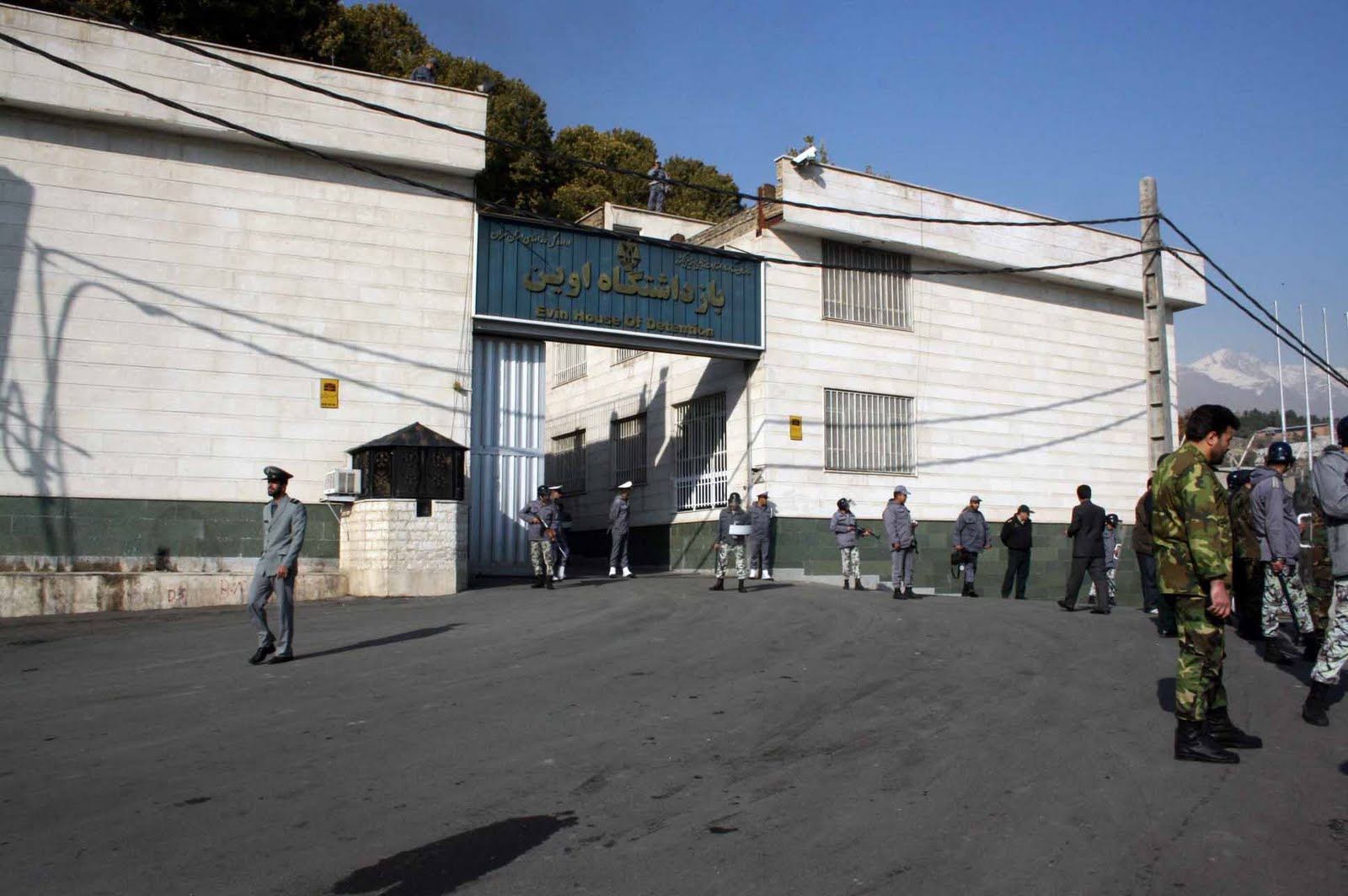
Main article: 1988 executions of Iranian political prisoners
Somewhere between 3000 and 30,000 political prisoners were executed between July and early September 1988 on orders of the Supreme Leader Ayatollah Ruhollah Khomeini. While the government attempted to keep the executions secret, by 2020 UN Special Rapporteurs had sent a letter to the IRI describing the killings as "crimes against humanity".

1990s and the Chain Murders
Main article: Chain murders of Iran
In the 1990s there were a number of unsolved murders and disappearances of intellectuals and political activists who had been critical of the Islamic Republic system in some way. In 1998 these complaints came to a head with the killing of three dissident writers (Mohammad Jafar Pouyandeh, Mohammad Mokhtari, Majid Sharif), a political leader (Dariush Forouhar) and his wife in the span of two months, in what became known as the "Chain murders" or 1998 Serial Murders of Iran. Altogether more than 80 writers, translators, poets, political activists, and ordinary citizens are thought to have been killed over the course of several years.
While reformist journalists and media were able to uncover the murders, the man responsible for much of the exposing of the chain murders—Saeed Hajjarian, a Ministry of Intelligence operative-turned-journalist and reformer—came close to being murdered and ended up seriously crippled by a member of the Basij; Either that exact link, or a portion of it (typically the root domain name) is currently blocked. -- and the deputy security official of the Ministry of Information, Saeed Emami blamed for the killings died in prison, allegedly committing suicide, though many believe he was killed and that "higher level officials were responsible for the killings".
With the rise of the Iranian reform movement and the election of moderate Iranian president Mohammad Khatami in 1997, numerous moves were made to modify the Iranian civil and penal codes in order to improve the human rights situation. The predominantly reformist parliament drafted several bills allowing increased freedom of speech, gender equality, and the banning of torture. These were all dismissed or significantly watered down by the Guardian Council and leading conservative figures in the Iranian government at the time.
Early 21st century and mass protests
.jpg)
By 2007, The Economist magazine wrote:
The Tehran spring of ten years ago has now given way to a bleak political winter. The new government continues to close down newspapers, silence dissenting voices and ban or censor books and websites. The peaceful demonstrations and protests of the Khatami era are no longer tolerated: in January 2007 security forces attacked striking bus drivers in Tehran and arrested hundreds of them. In March police beat hundreds of men and women who had assembled to commemorate International Women's Day.
Several major recent protest movements — the July 1999 Iran student protests, 2009 Iranian presidential election protests, 2017–18 Iranian protests, 2019–2020 Iranian protests — have been met with violent crackdowns from the "parallel institution" of the Basij, with mass arrests, live ammunition, show trials. The November 2019 protests led to hundreds of civilian deaths and thousands of injuries, and a nationwide internet blackout by the government, "reported abuse and torture in detention", and the "greenlighting" of "these rampant abuses" by the Supreme Leader Ali Khamenei. Estimates of the killed vary from 200 to 1500.
From 2018 to 2020 human rights complaints included a high rate of executions, the targeting of "journalists, online media activists, and human rights defenders" by the "security apparatus and Iran's judiciary" in "blatant disregard of international and domestic legal standards", including "decades-long prison sentences" for human rights defenders, "excessive force ... arbitrary mass arrests and serious due process violations" in response to economic protests by the public.
2022 Mahsa Amini protests
In September 2022 a new round of "nationwide" protest began that has "spread across social classes, universities, the streets [and] schools", and been called "the biggest threat" to the government of Iran since its founding with the Islamic Revolution. The unrest began with the Death of Mahsa Amini at the hands of Iranian morality Islamic police, after she was detained for allegedly wearing hijab incorrectly. At least 551 people have been killed as of 15 September 2023, according to Iran Human Rights, including women and at least 68 minors. An estimated 18,170 have been arrested throughout 134 cities and towns, and at 132 universities. In addition to Iran's domestic security forces, some reports have indicated that foreign militias aligned with the Islamic Revolutionary Guard Corps, such as groups from Lebanon, Iraq, and Afghanistan, were involved in the suppression of protests.
2026 Iran massacres
Since late December 2025 Iranian state security forces have engaged in massacres of dissidents during the 2025–2026 Iranian protests. The crackdown was carried out under Ali Khamenei's direct order for live fire on protesters.
As of Jan 13th, 2026, official figures for death tolls had risen to 12,000 civilians. [118] On Jan 8th, the country was faced with a surge of internet blackouts nationwide on an unprecedented scale [119] affecting human rights organisation's ability to attest to new figures, as well as cover the range of human rights violations that have occurred since the protests began. [120] Some sources also estimate the actual number casualties to sit as high as 20,000. [121]
Perspective of the Islamic Republic
In 1984, Iran's representative to the United Nations, Sai Rajaie-Khorassani, declared the Universal Declaration of Human Rights to be representing a "secular understanding of the Judeo-Christian tradition", which did not "accord with the system of values recognized by the Islamic Republic of Iran" and whose provisions the IRI would "not hesitate to violate".
Officials of the Islamic Republic have responded to criticism by stating that Iran has "the best human rights record" in the Muslim world (2012); that it is not obliged to follow "the West's interpretation" of human rights (2008); and that the Islamic Republic is a victim of "biased propaganda of enemies" which is "part of a greater plan against the world of Islam" (2008).
While in 2004 reformist president Mohammad Khatami stated that Iran certainly has "people who are in prison for their ideas." In general Iranian officials have denied Iran has political prisoners (Judiciary chief Ayatollah Mahmoud Hashemi Shahroudi in 2004), or claimed that Iran's human rights record is better than that of countries that criticize it (President Mahmoud Ahmadinejad in 2007 and 2008), or better than Israel's.
Relative openness
One observation made by some non-governmental individuals about the state of human rights in the Islamic Republic is that it is not so severe that the Iranian public is afraid to criticize its government publicly to strangers. While in neighboring Syria (circa 2005) "taxi driver[s] rarely talk politics; the Iranian[s] will talk of nothing else."
Explanations for why this is include the importance of "debate and discussion" among clerics in Shiite Islam that has spilled over into the Iranian public (journalist Elaine Sciolino), and that "notions of democracy and human rights" now have much deeper roots among Iranians than under the Shah (Akbar Ganji, Arzoo Osanloo, Hooman Majd), in fact are "almost hegemonic" (Arzoo Osanloo), so that it is much harder to spread fear among them, even to the point that if Iranian intelligence services "were to arrest anyone who speaks ill of the government in private, they simply couldn't build cells fast enough to hold their prisoners" (journalist Hooman Majd).
Comparison
The Islamic revolution is thought to have a significantly worse human rights record than the Pahlavi dynasty it overthrew. According to political historian Ervand Abrahamian, "whereas less than 100 political prisoners had been executed between 1971 and 1979, more than 7900 were executed between 1981 and 1985. ... the prison system was centralized and drastically expanded ... Prison life was drastically worse under the Islamic Republic than under the Pahlavis. One who survived both writes that four months under [Islamic Republic warden] Ladjevardi took the toll of four years under SAVAK. In the prison literature of the Pahlavi era, the recurring words had been ‘boredom’ and ‘monotony’. In that of the Islamic Republic, they were ‘fear’, ‘death’, ‘terror’, ‘horror’, and most frequent of all ‘nightmare’ (‘kabos’)."
UN reports indicate an increase in executions in Iran in 2024 compared to 2023. A total of 901 people were executed during the year, including 40 individuals within a single week.
Human rights bodies and sources of information
Since the founding of the Islamic Republic, human rights violations have been the subject of resolutions and decisions by the United Nations and its human rights bodies, and by the Council of Europe, European Parliament and United States Congress. In early 1980 Iran became one of the few countries (where conditions were bad enough) to ever be investigated by a UN country rapporteur under the UN Special Procedures section. Four years later the United Nations Commission on Human Rights appointed a Special Representative on Iran to study its human rights situation and as of 2001 three men have filled that role. In addition to the UN Commission, more information on human rights violations has been provided by Human Rights NGOs and memoires by political prisoners who were released and which became available in the 1990s. According to The Minority Rights Group, in 1985 Iran became "the fourth country ever in the history of the United Nations" to be placed on the agenda of the General Assembly because of "the severity and the extent of this human rights record".
In response, not only has the Islamic Republic not implement recommendations to improve conditions (according to the UNCHR), but it has retaliated "against witnesses who testified to the experts." The United Nations Commission on Human Rights (UNCHR) has repeatedly passed resolutions criticizing human rights violations against Iran's religious minorities—especially the Baháʼís—as well as the Islamic Republic's "instances of torture, stoning as a method of execution and punishment such as flogging and amputations", and the situation of a hunger striker (Farhad Meysami).
In addition, non-governmental human rights groups such as Human Rights Watch, Amnesty International, the Center for Human Rights in Iran, have issued reports and expressed concern over issues such as the treatment of religious minorities, prison conditions, medical conditions of prisoners, deaths of prisoners mass arrests of anti-government demonstrators. Iran has a track record of treating Afghan refugees and migrants poorly, with Human Rights Watch documenting violations including physical abuse, detention in unsanitary and inhumane conditions, forced payment for transportation and accommodation in deportation camps, forced labor, and forced separation of families.
References
Notes
Citations
Bibliography
References
- "Minorities in Iran have been disproportionally impacted in ongoing crackdown to repress the "Woman, Life, Freedom" movement, UN Fact-Finding Mission says".
- "Pahlavi royal dictatorship - Google Search".
- [https://books.google.com/books?id=jRZ227eqm4sC&dq=Pahlavi+dynasty+%22ours+is+a+one+man+system%22&pg=PA15 Pahlavi Dynasty: An Entry from Encyclopedia of the World of Islam] By (ed.) Gholamali Haddad Adel, Mohammad Jafar Elmi, Hassan Taromi-Rad, p.15
- (20 September 2008). "Rights Crisis Escalates Faces and Cases from Ahmadinejad's Crackdown, 20 September 2008". Iranhumanrights.org.
- Ervand Abrahamian, ''Tortured Confessions: Prisons and Public Recantations in Modern Iran'', (University of California), 1999
- Ervand Abrahamian, ''Iran Between Two Revolutions'', (Princeton University Press), 1982, p. 138
- Abrahamian, ''Tortured Confessions'', 1999, p. 39
- Abrahamian, ''Tortured Confessions'', 1999, p. 41
- [https://books.google.com/books?id=qh_QotrY7RkC&dq=%22Gone+were+the+days+when+the+shah+could+arrange+the+return+of+his+faithful+deputies%22&pg=PA186 Iran between two revolutions] By Ervand Abrahamian, p. 186
- [https://books.google.com/books?id=qmVUg_qHr2AC&dq=crack+down+on+religious+militants%2C+communists%2C+and+other+opponents&pg=PA150 The History of Iran] By Elton L. Daniel, 2012
- ''Iran in Revolution: The Opposition Forces'' by E Abrahamian – MERIP Reports
- Abrahamian, Ervand, ''Tortured Confessions'', (University of California), 1999, pp. 89–90
- Abrahamian, Ervand. (1999). "Tortured Confessions". University of California Press.
- Abrahamian, Ervand. (1999). "Tortured Confessions". University of California Press.
- Fisk. ''Great War for Civilisation'', p. 112.
- (28 October 1976). "Terror in Iran". [[The New York Review of Books]].
- [https://books.google.com/books?id=-QJgbEeoLfEC&dq=torture+Siahkal&pg=PA102 Abrahamian, ''Tortured Confessions''], p. 101
- Kurzman, Charles, ''The Unthinkable Revolution in Iran'', Harvard University Press, 2004, p.145–46
- source: Fischer, Michael M.J., ''Iran, From Religious Dispute to Revolution'', Harvard University Press, 1980 p. 128
- Abrahamian, ''Tortured Confessions'' (1999), pp. 135–36, 167, 169
- ''Washington Post'', 23 March 1980.
- Abrahamian, ''Tortured Confessions'', 1999 p. 114
- [https://books.google.com/books?id=H20Xt157iYUC&dq=%22amnesty+international%22+shah&pg=PA286 The Cambridge History of Iran, Volume 7], edited by W. William Bayne Fisher, P. Avery, G. R. G. Hambly, C. Melville, p. 286
- Abrahamian, ''Tortured Confessions'', p. 119.
- (source: D. Harney, ''The Priest and the King: An Eyewitness Account of the Iranian Revolution'', (London: Turis, 1999), p. 25)
- Kurzman, ''Unthinkable Revolution'', (2004), p. 108
- Moin, ''Khomeini'', (2000), pp. 184–85.
- Taheri, ''The Spirit of Allah'', (1985), pp. 182–83.
- Taheri, ''The Spirit of Allah'', (1985), p. 223.
- E. Baqi,
Figures for the Dead in the Revolution, ''Emruz'', 30 July 2003 (quoted in ''A History of Modern Iran'', p. 160–61) - J. Gueyras,
Liberalization is the Main Casualty,''The Guardian'', 17 September 1978. - (2020). "Foucault in Iran, 1978–1979". AOSIS.
- (2017). "Iran: A Modern History". Yale University Press.
- [http://www.emadbaghi.com/en/archives/000592.php#more "A Question of Numbers"] {{webarchive. link. (4 August 2014 IranianVoice.org, 8 August 2003 Rouzegar-Now Cyrus Kadivar)
- (2017). "The Roots and Consequences of Civil Wars and Revolutions: Conflicts that Changed World History". ABC-CLIO.
- (2016). "Iran in World History". Oxford University Press.
- "Constitution". Parliran.ir.
- Mahmood T. Davari. (1 October 2004). "The Political Thought of Ayatollah Murtaza Mutahhari: An Iranian Theoretician of the Islamic State". Routledge.
- Eur. (31 October 2002). "The Middle East and North Africa 2003". Psychology Press.
- "Constitutional Background".
- Francis Fukuyama. (28 July 2009). "Francis Fukuyama: Iranian constitution democratic at heart - WSJ". WSJ.
- "A Detailed Analysis of Iran's Constitution - World Policy Institute". worldpolicy.org.
- "The Iranian Legal Framework And International Law". Human Rights Watch.
- Prof. Dr. Axel Tschentscher, LL.M.. "Iran – Constitution". Servat.unibe.ch.
- (12 December 2019). "World Report 2020. Iran. Events of 2019".
- [https://web.archive.org/web/20070227113508/http://news.yahoo.com/s/afp/20070224/wl_mideast_afp/iranjusticesocial Iran vows crackdown on 'inappropriately' dressed women], ''[[Agence France Presse. AFP]]'' (''[[Yahoo! News]]''), 24 February 2007, via the [[Digital time capsule. Wayback Machine]]
- Christian Moe. "Refah Revisited: Strasbourg's Construction of Islam". Norwegian Institute of Human Rights.
- [http://www.ilo.org/dyn/natlex/natlex_browse.details?p_lang=en&p_country=IRN&p_classification=01.04&p_origin=COUNTRY&p_sortby=SORTBY_COUNTRY Iranian Civil Code], NATLEX . Retrieved 21 August 2006.
- (5 March 2015). "Eye for an eye: Iran blinds acid attacker".
- [http://mehr.org/HumanRightsinIran07.pdf Human Rights in Iran 2007 MEHR.org] p.4,5
- "Islamic Penal Code of Iran, article 300". Mehr.org.
- (28 February 2008). "Women act against repression and intimidation in Iran, 28 February 2008". Amnesty.org.
- Saeidzadeh, Zara. (2020-04-02). ""Are trans men the manliest of men?" Gender practices, trans masculinity and mardānegī in contemporary Iran". Journal of Gender Studies.
- Article 115 of the Constitution states, they must be from the "official religion of the country" which is described elsewhere as Twelver Ja’afari Shiism
- (17 September 2017). "Former Sunni MP: Rouhani Government Failing to Uphold Minority Rights Despite Supreme Leader's Cal".
- (Summer 2000). "The Baha'is in Iran: Twenty Years of Repression". Social Research.
- (22 May 2008). "22 May 2008. "Iran 'plans to destroy Baha'i community'"". Cnn.com.
- (22 May 1992). "hrw.org, Iran – THE LEGAL FRAMEWORK". Hrw.org.
- "Human Rights Watch: Religious minorities in Iran (1997)". Hrw.org.
- "Statistical Centre of Iran: 11. Population by sex and religion (2006)". Amar.sci.org.ir.
- [https://news.bbc.co.uk/2/hi/middle_east/2415751.stm Iranian academic sentenced to death]. bbc.co.uk. 7 November 2002.
- "hrw.org, November 9, 2002 Iran: Academic's Death Sentence Condemned". Hrw.org.
- (2014). "Three Decades of Islamic Criminal Law Legislation in Iran". Electronic Journal of Islamic and Middle Eastern Law.
- "Iranian activists fight child executions".
- "CHILD EXECUTION IN IRAN AND ITS LEGALITY UNDER THE ISLAMIC LAW".
- "John Howell MP".
- (9 July 2010). "Iran's grim history of death by stoning".
- (19 November 2019). "Resolution on the serious and systematic human rights violations in Iran".
- (1 January 2004). "Iran. International Religious Freedom Report 2004. Released by the Bureau of Democracy, Human Rights, and Labor". State.gov.
- (10 February 2012). "Iran changes law for execution of juveniles".
- "1999 Report IV. THE IRANIAN LEGAL FRAMEWORK AND INTERNATIONAL LAW".
- (7 January 2008). "Iran: End Widespread Crackdown on Civil Society".
- Interview with [[Akbar Ganji]], ''Le Monde'', 6 June 2006.
- Abrahamian, Ervand, ''Tortured Confessions'', (1999), p.209-228
- Abrahamian, ''Tortured Confessions'', 1999, p. 137
- in an early 1988 [[fatwa]]; cited in Hamid Algar,
Development of the Concept of velayat-i faqih since the Islamic Revolution in Iran,paper presented at London Conference on ''wilayat al-faqih'', in June 1988 [pp. 135–38] - (2004). "Shia Political Thought".
- (2009). "Revisiting Ayatollah Khomeini's Doctrine of Wilayat al-Faqıh (Velayat-e Faqıh)". Orient.
- [[#Moin. Moin]], p. 208.
- Bakhash, ''The Reign of the Ayatollahs'' (1984), p. 61.
- [[#Mackey. Mackey]], p. 291
- (2013). "Revolutionary Iran: A History of the Islamic Republic". Oxford University Press.
- [[#Schirazi. Schirazi]], p. 51.
- [[#Moin. Moin]], pp. 219–20.
- ''Kayhan'', 20.8.78–21.8.78, ` quoted in [[#Schirazi. Schirazi]], p. 51, also ''New York Times,'' 8 August 1979
- Source: Letter from Amnesty International to the Shaul Bakhash, 6 July 1982. Quoted in [[#Bakhash. Bakhash]], p. 111
- [[#Bakhash. Bakhash]], p. 111
- Abrahamian, Ervand, ''History of Modern Iran'', Columbia University Press, 2008, p.181
- (3 September 2020). "Mandates of the Working Group on Enforced or Involuntary Disappearances; ...".
- Sciolino, ''Persian Mirrors'', 2000, p. 241
- [https://query.nytimes.com/gst/fullpage.html?res=9B05E2DE173DF937A25751C1A96E958260 "Killing of three rebel writers turns hope into fear in Iran"], Douglas Jehl, ''The New York Times'', 14 December 1998 p. A6
- John Pike. (5 February 2001). "RFE/RL Iran Report. 5 February 2001". Globalsecurity.org.
- "Human Rights Reports {{!}} CODIR".
- [http://www.iranmania.com/news/currentaffairs/features/hajjariancase/default.asp Hajjarian assassination attempt] {{webarchive. link. (6 September 2009)
- "A Man Called Saeed Emani". Iranterror.com.
- "Khatami and the Myth of Reform in Iran".
- "Men of principle", ''The Economist''. London: 21 July 2007. Vol. 384, Iss. 8538; p. 5
- "Iran sacks police chiefs over student protest crackdown".
- [http://www.web.amnesty.org/web/ar2001.nsf/webmepcountries/IRAN?OpenDocument Report 2001, Islamic Republic of Iran] {{webarchive. link. (4 October 2014 , ''[[Amnesty International]]'')
- (15 January 2020). "The Anger and Anguish Fuelling Iran's Protests".
- "World Report 2020. Iran. Events of 2019".
- (15 December 2020). "World Report 2021. Iran Events of 2020".
- "وزیر کشور ایران میگوید بیش از ۲۰۰ نفر در جریان اعتراضات آبان کشته شدند". BBC News فارسی.
- (23 December 2019). "Special Report: Iran's leader ordered crackdown on unrest – 'Do whatever it takes to end it'".
- "World Report 2018. Iran. Events of 2017".
- "World Report 2019. Iran. Events of 2018".
- (6 November 2022). "Fresh protests erupt in Iran's universities and Kurdish region".
- (15 September 2023). "One Year Protest Report: At Least 551 Killed and 22 Suspicious Deaths".
- (4 October 2022). "Iran Protests: at Least 154 Killed/Children Amongst Dead". Iran Human Rights.
- "Iran Protests: Death Toll Rises to at Least 201/Children Victims of the Crackdown".
- (6 November 2022). "Iran lawmakers demand severe punishment for 'rioters' as protests rage". Reuters.
- (2022-10-16). "Hezbollah, Hashd Al-Shaabi Forces Helping Iran Suppress Protests - Reports".
- (2026-01-13). "At least 12,000 killed in Iran crackdown during internet blackout".
- United Nations General Assembly. 39th Session. Third Committee. 65th meeting, held on 7 December 1984 at 3 pm New York. A/C.3/39/SR.65. quoted by Luiza Maria Gontowska, ''[http://digitalcommons.pace.edu/cgi/viewcontent.cgi?article=1010&context=honorscollege_theses Human Rights Violations Under the Sharia'a, A Comparative Study of the Kingdom of Saudi Arabia and the Islamic Republic of Iran],'' May 2005, p. 4
- "'Iran has best human rights record in the Muslim world' quoting Ali Akbar Salehi".
- "Islamic world urged to stand against Western-style human rights Tehran, May 15". .irna.com.
- "Human rights fully respected in Iran: Judiciary chief Tehran, April 10". .irna.com.
- John Pike. (3 May 2004). "Iran Report, A Weekly Review of Developments in and Pertaining to Iran, 3 May 2004". Globalsecurity.org.
- [http://www.tehrantimes.com/index_View.asp?code=164534 Tehran Times. Foreign Minister Manuchehr Mottaki has criticized discrimination against Muslim minorities in Western countries. 6 March 2008].
- "Iranian President Mahmoud Ahmadinejad on the Threat of US Attack and International Criticism of Iran's Human Rights Record".
- [http://www.cnn.com/2007/US/09/25/un.iran/index.html#cnnSTCVideo cnn.com, Iran's leader slams 'arrogant' powers in U.N. address, 25 September 2007]. This was seen as "a veiled but unmistakable criticism of the United States" [[Extraordinary rendition by the United States. extraordinary rendition]] and domestic surveillance under the [[USA PATRIOT Act]]:
- Molavi, Afshin, ''The Soul of Iran'', Norton, (2005), p. 296
- Sciolino, Elaine, ''Persian Mirrors : the Elusive Face of Iran'', Free Press, 2000, 2005, p. 247
- "The Latter-Day Sultan, Power and Politics in Iran" by Akbar Ganji, ''Foreign Affairs'', November/December 2008
- Sally E. Merry, New York University, writing about [http://press.princeton.edu/titles/8918.html ''The Politics of Women's Rights in Iran'' by Arzoo Osanloo] accessed 30-June-2009
- Majd, ''The Ayatollah Begs to Differ'', 2008, p.183
- source: Anonymous "Prison and Imprisonment", ''Mojahed'', 174–256 (20 October 1983{{snd8 August 1985).
- AFP. (2025-01-07). "Iran reportedly executed at least 901 people in 2024: UN".
- Affolter, Friedrich W.. (2005). "The Specter of Ideological Genocide: The Baháʼí of Iran". War Crimes, Genocide and Crimes Against Humanity.
- (2001). "Human Rights in Iran : The Abuse of Cultural Relativism". University of Pennsylvania Press.
- Cooper, R.. (1995). "The Baháʼí of Iran: The Minority Rights Group Report 51". The Minority Rights Group LTD.
- (31 December 2004). "Human Rights Overview 2005". Human Rights Watch.
- "Canadian-sponsored human rights resolution against Iran passes". Canadian Broadcasting Corporation.
- (21 November 2007). "U.N. Assembly Chides Iran on Human Rights By BENNY AVNI, Staff Reporter of the Sun | 21 November 2007". Nysun.com.
- (30 November 2018). "UN Experts Call On Iran To Guarantee Rights Of Detained Activists".
- (13 February 2018). "Iran: Investigate Suspicious Deaths in Detention, Release Activists".
- (24 January 2019). "2018 will go down in history as a year of shame for Iran".
- (20 November 2013). "Iran: Afghan Refugees and Migrants Face Abuse | Human Rights Watch".
This article was imported from Wikipedia and is available under the Creative Commons Attribution-ShareAlike 4.0 License. Content has been adapted to SurfDoc format. Original contributors can be found on the article history page.
Ask Mako anything about Human rights in Iran — get instant answers, deeper analysis, and related topics.
Research with MakoFree with your Surf account
Create a free account to save articles, ask Mako questions, and organize your research.
Sign up freeThis content may have been generated or modified by AI. CloudSurf Software LLC is not responsible for the accuracy, completeness, or reliability of AI-generated content. Always verify important information from primary sources.
Report