From Surf Wiki (app.surf) — the open knowledge base
Human impact on the environment
Impact of human life on Earth and environment

Impact of human life on Earth and environment
Human impact on the environment (or anthropogenic environmental impact) refers to changes to biophysical environments and to ecosystems, biodiversity, and natural resources caused directly or indirectly by humans. Modifying the environment to fit the needs of society (as in the built environment) is causing severe effects including global warming, environmental degradation (such as ocean acidification), mass extinction and biodiversity loss, ecological crisis, and ecological collapse. Some human activities that cause damage (either directly or indirectly) to the environment on a global scale include population growth, neoliberal economic policies and rapid economic growth, overconsumption, overexploitation, pollution, and deforestation. Some of the problems, including global warming and biodiversity loss, have been proposed as representing catastrophic risks to the survival of the human species.
The term anthropogenic designates an effect or object resulting from human activity. The term was first used in the technical sense by Russian geologist Alexey Pavlov, and it was first used in English by British ecologist Arthur Tansley in reference to human influences on climax plant communities. The atmospheric scientist Paul Crutzen introduced the term "Anthropocene" in the mid-1970s. The term is sometimes used in the context of pollution produced from human activity since the start of the Agricultural Revolution but also applies broadly to all major human impacts on the environment. Many of the actions taken by humans that contribute to a heated environment stem from the burning of fossil fuel from a variety of sources, such as electricity, cars, planes, space heating, manufacturing, or the destruction of forests.
Human overshoot

Overconsumption
Main article: Overconsumption

Overconsumption is a situation where resource use has outpaced the sustainable capacity of the ecosystem. It can be measured by the ecological footprint, a resource accounting approach which compares human demand on ecosystems with the amount of planet matter ecosystems can renew. Estimates by the Global Footprint Network indicate that humanity's current demand is 70% higher than the regeneration rate of all of the planet's ecosystems combined. A prolonged pattern of overconsumption leads to environmental degradation and the eventual loss of resource bases.
Humanity's overall impact on the planet is affected by many factors, not just the raw number of people. Their lifestyle (including overall affluence and resource use) and the pollution they generate (including carbon footprint) are equally important. In 2008, The New York Times stated that the inhabitants of the developed nations of the world consume resources like oil and metals at a rate almost 32 times greater than those of the developing world, who make up the majority of the human population.

Human civilization has caused the loss of 83% of all wild mammals and half of plants. The world's chickens are triple the weight of all the wild birds, while domesticated cattle and pigs outweigh all wild mammals by 14 to 1. Global meat consumption is projected to more than double by 2050, perhaps as much as 76%, as the global population rises to more than 9 billion, which will be a significant driver of further biodiversity loss and increased greenhouse gas emissions.
Population growth and size

Main article: Human overpopulation
Some scholars, environmentalists and advocates have linked human population growth or population size as a driver of environmental issues, including some suggesting this indicates an overpopulation scenario. In 2017, over 15,000 scientists around the world issued a second warning to humanity which asserted that rapid human population growth is the "primary driver behind many ecological and even societal threats." According to the Global Assessment Report on Biodiversity and Ecosystem Services, released by the United Nations' Intergovernmental Science-Policy Platform on Biodiversity and Ecosystem Services in 2019, human population growth is a significant factor in contemporary biodiversity loss. A 2021 report in Frontiers in Conservation Science proposed that population size and growth are significant factors in biodiversity loss, soil degradation and pollution.
Some scientists and environmentalists, including Pentti Linkola, Jared Diamond and E. O. Wilson, posit that human population growth is devastating to biodiversity. Wilson for example, has expressed concern that when Homo sapiens reached a population of six billion their biomass exceeded that of any other large land dwelling animal species that had ever existed by over 100 times.
However, attributing overpopulation as a cause of environmental issues is controversial. Demographic projections indicate that population growth is slowing and world population will peak in the 21st century, and many experts believe that global resources can meet this increased demand, suggesting a global overpopulation scenario is unlikely. Other projections have the population continuing to grow into the next century. While some studies, including the British government's 2021 Economics of Biodiversity review, posit that population growth and overconsumption are interdependent, critics suggest blaming overpopulation for environmental issues can unduly blame poor populations in the Global South or oversimplify more complex drivers, leading some to treat overconsumption as a separate issue.
Advocates for further reducing fertility rates, among them Rodolfo Dirzo and Paul R. Ehrlich, argue that this reduction should primarily affect the "overconsuming wealthy and middle classes," with the ultimate goal being to shrink "the scale of the human enterprise" and reverse the "growthmania" which they say threatens biodiversity and the "life-support systems of humanity."
Fishing and farming
Main article: Environmental impact of agriculture
The environmental impact of agriculture varies based on the wide variety of agricultural practices employed around the world. Ultimately, the environmental impact depends on the production practices of the system used by farmers. The connection between emissions into the environment and the farming system is indirect, as it also depends on other climate variables such as rainfall and temperature.
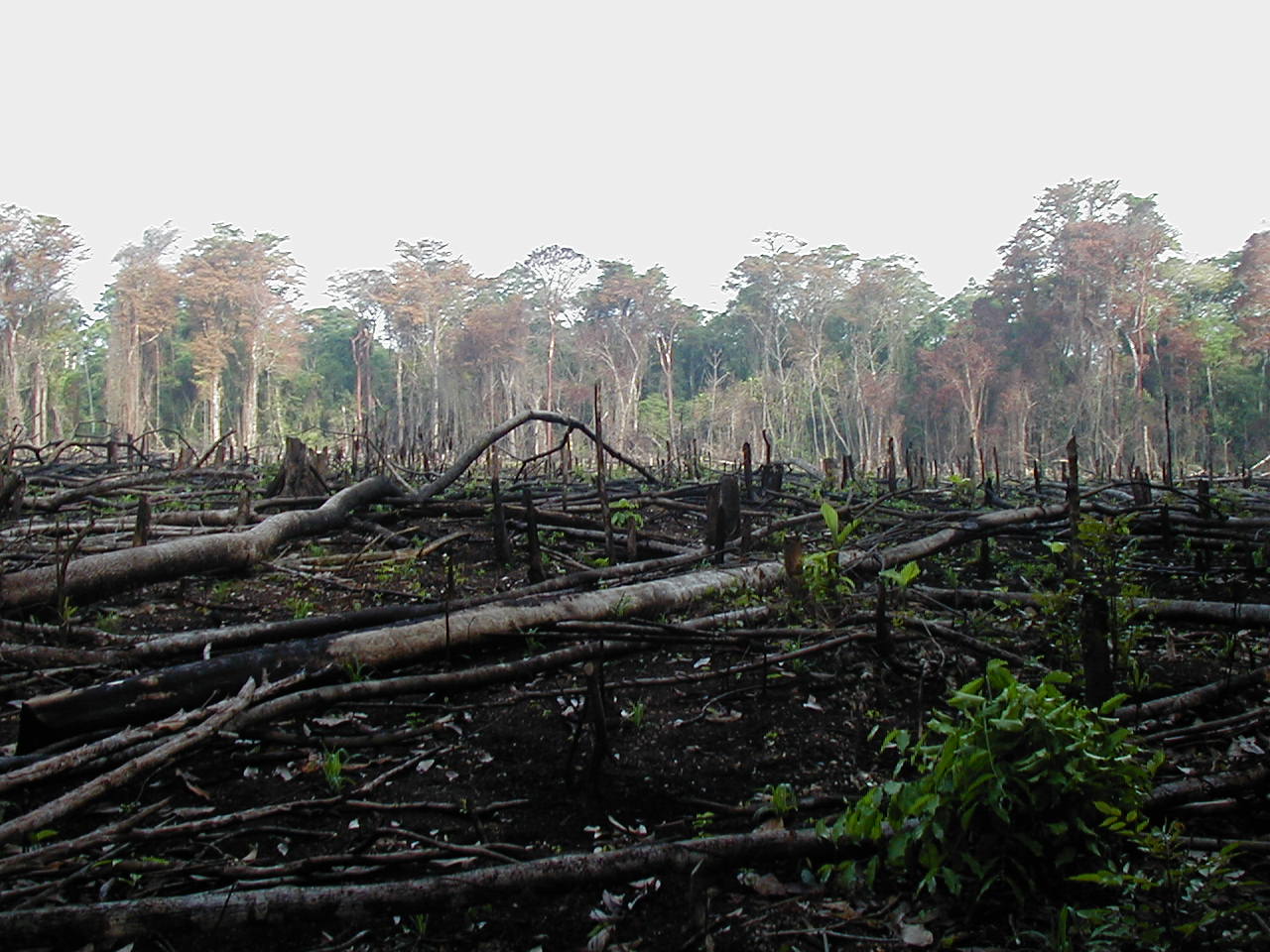
There are two types of indicators of environmental impact: "means-based", which is based on the farmer's production methods, and "effect-based", which is the impact that farming methods have on the farming system or on emissions to the environment. An example of a means-based indicator would be the quality of groundwater that is affected by the amount of nitrogen applied to the soil. An indicator reflecting the loss of nitrate to groundwater would be effect-based.
The environmental impact of agriculture involves a variety of factors from the soil, to water, the air, animal and soil diversity, plants, and the food itself. Some of the environmental issues that are related to agriculture are climate change, deforestation, genetic engineering, irrigation problems, pollutants, soil degradation, and waste.
Fishing
Main article: Environmental impact of fishing

The environmental impact of fishing can be divided into issues that involve the availability of fish to be caught, such as overfishing, sustainable fisheries, and fisheries management; and issues that involve the impact of fishing on other elements of the environment, such as by-catch and destruction of habitat such as coral reefs. According to the 2019 Intergovernmental Science-Policy Platform on Biodiversity and Ecosystem Services report, overfishing is the main driver of mass species extinction in the oceans.
These conservation issues are part of marine conservation, and are addressed in fisheries science programs. There is a growing gap between how many fish are available to be caught and humanity's desire to catch them, a problem that gets worse as the world population grows.
Similar to other environmental issues, there can be conflict between the fishermen who depend on fishing for their livelihoods and fishery scientists who realize that if future fish populations are to be sustainable then some fisheries must reduce or even close.
The journal Science published a four-year study in November 2006, which predicted that, at prevailing trends, the world would run out of wild-caught seafood in 2048. The scientists stated that the decline was a result of overfishing, pollution and other environmental factors that were reducing the population of fisheries at the same time as their ecosystems were being degraded. Yet again the analysis has met criticism as being fundamentally flawed, and many fishery management officials, industry representatives and scientists challenge the findings, although the debate continues. Many countries, such as Tonga, the United States, Australia and New Zealand, and international management bodies have taken steps to appropriately manage marine resources.
The UN's Food and Agriculture Organization (FAO) released their biennial State of World Fisheries and Aquaculture in 2018 noting that capture fishery production has remained constant for the last two decades but unsustainable overfishing has increased to 33% of the world's fisheries. They also noted that aquaculture, the production of farmed fish, has increased from 120 million tonnes per year in 1990 to over 170 million tonnes in 2018.
Populations of oceanic sharks and rays have been reduced by 71% since 1970, largely due to overfishing. More than three-quarters of the species comprising this group are now threatened with extinction.
Irrigation
Main article: Environmental impact of irrigation
The environmental impact of irrigation includes the changes in quantity and quality of soil and water as a result of irrigation and the ensuing effects on natural and social conditions at the tail-end and downstream of the irrigation scheme.
The impacts stem from the changed hydrological conditions owing to the installation and operation of the scheme.
An irrigation scheme often draws water from the river and distributes it over the irrigated area. As a hydrological result it is found that:
- the downstream river discharge is reduced
- the evaporation in the scheme is increased
- the groundwater recharge in the scheme is increased
- the level of the water table rises
- the drainage flow is increased. These may be called direct effects.
Effects on soil and water quality are indirect and complex, and subsequent impacts on natural, ecological and socio-economic conditions are intricate. In some, but not all instances, water logging and soil salinization can result. However, irrigation can also be used, together with soil drainage, to overcome soil salinization by leaching excess salts from the vicinity of the root zone.
Irrigation can also be done extracting groundwater by (tube)wells. As a hydrological result it is found that the level of the water descends. The effects may be water mining, land/soil subsidence, and, along the coast, saltwater intrusion.
Irrigation projects can have large benefits, but the negative side effects are often overlooked.
Agricultural irrigation technologies such as high powered water pumps, dams, and pipelines are responsible for the large-scale depletion of fresh water resources such as aquifers, lakes, and rivers. As a result of this massive diversion of freshwater, lakes, rivers, and creeks are running dry, severely altering or stressing surrounding ecosystems, and contributing to the extinction of many aquatic species.
Agricultural land loss


According to UNESCO as of the year 2024, 75% of soils are degraded affecting 3.2 billion people. By the year 2050 the share of degraded land can rise to 90%, if current trends continue. During the years 2015-2019, around 100 million hectares of soil were degraded every year.
Lal and Stewart estimated global loss of agricultural land by degradation and abandonment at 12 million hectares per year. In contrast, according to Scherr, GLASOD (Global Assessment of Human-Induced Soil Degradation, under the UN Environment Programme) estimated that 6 million hectares of agricultural land per year had been lost to soil degradation since the mid-1940s, and she noted that this magnitude is similar to earlier estimates by Dudal and by Rozanov et al. Such losses are attributable not only to soil erosion, but also to salinization, loss of nutrients and organic matter, acidification, compaction, water logging and subsidence. Human-induced land degradation tends to be particularly serious in dry regions. Focusing on soil properties, Oldeman estimated that about 19 million square kilometers of global land area had been degraded; Dregne and Chou, who included degradation of vegetation cover as well as soil, estimated about 36 million square kilometers degraded in the world's dry regions. Despite estimated losses of agricultural land, the amount of arable land used in crop production globally increased by about 9% from 1961 to 2012, and is estimated to have been 1.396 billion hectares in 2012.
Global average soil erosion rates are thought to be high, and erosion rates on conventional cropland generally exceed estimates of soil production rates, usually by more than an order of magnitude. In the US, sampling for erosion estimates by the US NRCS (Natural Resources Conservation Service) is statistically based, and estimation uses the Universal Soil Loss Equation and Wind Erosion Equation. For 2010, annual average soil loss by sheet, rill and wind erosion on non-federal US land was estimated to be 10.7 t/ha on cropland and 1.9 t/ha on pasture land; the average soil erosion rate on US cropland had been reduced by about 34% since 1982. No-till and low-till practices have become increasingly common on North American cropland used for production of grains such as wheat and barley. On uncultivated cropland, the recent average total soil loss has been 2.2 t/ha per year. In comparison with agriculture using conventional cultivation, it has been suggested that, because no-till agriculture produces erosion rates much closer to soil production rates, it could provide a foundation for sustainable agriculture.
Land degradation is a process in which the value of the biophysical environment is affected by a combination of human-induced processes acting upon the land. It is viewed as any change or disturbance to the land perceived to be deleterious or undesirable. Natural hazards are excluded as a cause; however human activities can indirectly affect phenomena such as floods and bush fires. This is considered to be an important topic of the 21st century due to the implications land degradation has upon agronomic productivity, the environment, and its effects on food security. It is estimated that up to 40% of the world's agricultural land is seriously degraded.
Meat production
Main article: Environmental impact of meat production


Environmental impacts associated with meat production include use of fossil energy, water and land resources, greenhouse gas emissions, and in some instances, rainforest clearing, water pollution and species endangerment, among other adverse effects. Steinfeld et al. of the FAO estimated that 18% of global anthropogenic GHG (greenhouse gas) emissions (estimated as 100-year carbon dioxide equivalents) are associated in some way with livestock production. FAO data indicate that meat accounted for 26% of global livestock product tonnage in 2011.
Globally, enteric fermentation (mostly in ruminant livestock) accounts for about 27% of anthropogenic methane emissions, Despite methane's 100-year global warming potential, recently estimated at 28 without and 34 with climate-carbon feedbacks, Other anthropogenic GHG emissions associated with livestock production include carbon dioxide from fossil fuel consumption (mostly for production, harvesting and transport of feed), and nitrous oxide emissions associated with the use of nitrogenous fertilizers, growing of nitrogen-fixing legume vegetation and manure management. Management practices that can mitigate GHG emissions from production of livestock and feed have been identified.
Considerable water use is associated with meat production, mostly because of water used in production of vegetation that provides feed. There are several published estimates of water use associated with livestock and meat production, but the amount of water use assignable to such production is seldom estimated. For example, "green water" use is evapotranspirational use of soil water that has been provided directly by precipitation; and "green water" has been estimated to account for 94% of global beef cattle production's "water footprint", and on rangeland, as much as 99.5% of the water use associated with beef production is "green water".
Impairment of water quality by manure and other substances in runoff and infiltrating water is a concern, especially where intensive livestock production is carried out. In the US, in a comparison of 32 industries, the livestock industry was found to have a relatively good record of compliance with environmental regulations pursuant to the Clean Water Act and Clean Air Act, but pollution issues from large livestock operations can sometimes be serious where violations occur. Various measures have been suggested by the US Environmental Protection Agency, among others, which can help reduce livestock damage to streamwater quality and riparian environments.
Changes in livestock production practices influence the environmental impact of meat production, as illustrated by some beef data. In the US beef production system, practices prevailing in 2007 are estimated to have involved 8.6% less fossil fuel use, 16% less greenhouse gas emissions (estimated as 100-year carbon dioxide equivalents), 12% less withdrawn water use and 33% less land use, per unit mass of beef produced, than in 1977. From 1980 to 2012 in the US, while population increased by 38%, the small ruminant inventory decreased by 42%, the cattle-and-calves inventory decreased by 17%, and methane emissions from livestock decreased by 18%;
Some impacts of meat-producing livestock may be considered environmentally beneficial. These include waste reduction by conversion of human-inedible crop residues to food, use of livestock as an alternative to herbicides for control of invasive and noxious weeds and other vegetation management, use of animal manure as fertilizer as a substitute for those synthetic fertilizers that require considerable fossil fuel use for manufacture, grazing use for wildlife habitat enhancement, and carbon sequestration in response to grazing practices, among others. Conversely, according to some studies appearing in peer-reviewed journals, the growing demand for meat is contributing to significant biodiversity loss as it is a significant driver of deforestation and habitat destruction. Moreover, the 2019 Global Assessment Report on Biodiversity and Ecosystem Services by IPBES also warns that ever increasing land use for meat production plays a significant role in biodiversity loss. A 2006 Food and Agriculture Organization report, Livestock's Long Shadow, found that around 26% of the planet's terrestrial surface is devoted to livestock grazing.
Palm oil
Main article: Social and environmental impact of palm oil
Palm oil is a type of vegetable oil, found in oil palm trees, which are native to West and Central Africa. Initially used in foods in developing countries, palm oil is now also used in food, cosmetic and other types of products in other nations as well. Over one-third of vegetable oil consumed globally is palm oil.
Habitat loss
The consumption of palm oil in food, domestic and cosmetic products all over the world means there is a high demand for it. To meet this, oil palm plantations are created, which means removing natural forests to clear space. This deforestation has taken place in Asia, Latin America and West Africa, with Malaysia and Indonesia holding 90% of global oil palm trees. These forests are home to a wide range of species, including many endangered animals, ranging from birds to rhinos and tigers. Since 2000, 47% of deforestation has been for the purpose of growing oil palm plantations, with around 877,000 acres being affected per year.
Impact on biodiversity
Natural forests are extremely biodiverse, with a wide range of organisms using them as their habitat. But oil palm plantations are the opposite. Studies have shown that oil palm plantations have less than 1% of the plant diversity seen in natural forests, and 47–90% less mammal diversity. This is not because of the oil palm itself, but rather because the oil palm is the only habitat provided in the plantations. The plantations are therefore known as a monoculture, whereas natural forests contain a wide variety of flora and fauna, making them highly biodiverse. One of the ways palm oil could be made more sustainable (although it is still not the best option) is through agroforestry, whereby the plantations are made up of multiple types of plants used in trade – such as coffee or cocoa. While these are more biodiverse than monoculture plantations, they are still not as effective as natural forests. In addition to this, agroforestry does not bring as many economic benefits to workers, their families and the surrounding areas.
Roundtable on Sustainable Palm Oil (RSPO)
The RSPO is a non-profit organisation that has developed criteria that its members (of which, as of 2018, there are over 4,000) must follow to produce, source and use sustainable palm oil (Certified Sustainable Palm Oil; CSPO). Currently, 19% of global palm oil is certified by the RSPO as sustainable.
The CSPO criteria states that oil palm plantations cannot be grown in the place of forests or other areas with endangered species, fragile ecosystems, or those that facilitate the needs of local communities. It also calls for a reduction in pesticides and fires, along with several rules for ensuring the social wellbeing of workers and the local communities.
Ecosystem impacts
Environmental degradation
.jpg)
Main article: Environmental degradation
Human activity is causing environmental degradation, which is the deterioration of the environment through depletion of resources such as air, water and soil; the destruction of ecosystems; habitat destruction; the extinction of wildlife; and pollution. It is defined as any change or disturbance to the environment perceived to be deleterious or undesirable. As indicated by the I=PAT equation, environmental impact (I) or degradation is caused by the combination of an already very large and increasing human population (P), continually increasing economic growth or per capita affluence (A), and the application of resource-depleting and polluting technology (T).
According to a 2021 study published in Frontiers in Forests and Global Change, roughly 3% of the planet's terrestrial surface is ecologically and faunally intact, meaning areas with healthy populations of native animal species and little to no human footprint. Many of these intact ecosystems were in areas inhabited by indigenous peoples.
Habitat fragmentation
Main article: Habitat fragmentation
According to a 2018 study in Nature, 87% of the oceans and 77% of land (excluding Antarctica) have been altered by anthropogenic activity, and 23% of the planet's landmass remains as wilderness.
Habitat fragmentation is the reduction of large tracts of habitat leading to habitat loss. Habitat fragmentation and loss are considered as being the main cause of the loss of biodiversity and degradation of the ecosystem all over the world. Human actions are greatly responsible for habitat fragmentation, and loss as these actions alter the connectivity and quality of habitats. Understanding the consequences of habitat fragmentation is important for the preservation of biodiversity and enhancing the functioning of the ecosystem.
Both agricultural plants and animals depend on pollination for reproduction. Vegetables and fruits are an important diet for human beings and depend on pollination. Whenever there is habitat destruction, pollination is reduced and crop yield as well. Many plants also rely on animals and most especially those that eat fruit for seed dispersal. Therefore, the destruction of habitat for animal severely affects all the plant species that depend on them.
Mass extinction
Main article: Holocene extinction, Defaunation, Biodiversity loss
Biodiversity generally refers to the variety and variability of life on Earth, and is represented by the number of different species there are on the planet. Since its introduction, Homo sapiens (the human species) have been killing off entire species either directly (such as through hunting) or indirectly (such as by destroying habitats), causing the extinction of species at an alarming rate. Humans are the main cause of the current mass extinction, called the Holocene extinction, driving extinctions to 100 to 1000 times the normal background rate. Though most experts agree that human beings have accelerated the rate of species extinction, some scholars have postulated without humans, the biodiversity of the Earth would grow at an exponential rate rather than decline. The Holocene extinction continues, with meat consumption, overfishing, ocean acidification, agriculture, coupled human and animal systems, and the amphibian crisis being a few broader examples of an almost universal, cosmopolitan decline in biodiversity. Human overpopulation (and continued population growth) along with overconsumption, especially by the super-affluent, are considered to be the primary drivers of this rapid decline. The 2017 World Scientists' Warning to Humanity stated that, among other things, this sixth extinction event unleashed by humanity could annihilate many current life forms and consign them to extinction by the end of this century. A 2022 scientific review published in Biological Reviews confirms that a biodiversity loss crisis caused by human activity, which the researchers describe as a sixth mass extinction event, is currently underway.
A June 2020 study published in PNAS argues that the contemporary extinction crisis "may be the most serious environmental threat to the persistence of civilization, because it is irreversible" and that its acceleration "is certain because of the still fast growth in human numbers and consumption rates."
Biodiversity loss
Main article: Biodiversity loss
It has been estimated that from 1970 to 2016, 68% of the world's wildlife has been destroyed due to human activity. In South America, there is believed to be a 70 percent loss. A May 2018 study published in PNAS found that 83% of wild mammals, 80% of marine mammals, 50% of plants and 15% of fish have been lost since the dawn of human civilization. Currently, livestock make up 60% of the biomass of all mammals on earth, followed by humans (36%) and wild mammals (4%). According to the 2019 global biodiversity assessment by IPBES, human civilization has pushed one million species of plants and animals to the brink of extinction, with many of these projected to vanish over the next few decades.
When plant biodiversity declines, the remaining plants face diminishing productivity.
A 2019 report that assessed a total of 28,000 plant species concluded that close to half of them were facing a threat of extinction. The failure of noticing and appreciating plants is regarded as "plant blindness", and this is a worrying trend as it puts more plants at the threat of extinction than animals. Our increased farming has come at a higher cost to plant biodiversity as half of the habitable land on Earth is used for agriculture, and this is one of the major reasons behind the plant extinction crisis.
Defaunation is the loss of animals from ecological communities.
Invasive species
Main article: Invasive species
Invasive species are defined by the U.S. Department of Agriculture as non-native to the specific ecosystem, and whose presence is likely to harm the health of humans or the animals in said system*.*
Introductions of non-native species into new areas have brought about major and permanent changes to the environment over large areas. Examples include the introduction of Caulerpa taxifolia into the Mediterranean, the introduction of oat species into the California grasslands, and the introduction of privet, kudzu, and purple loosestrife to North America. Rats, cats, and goats have radically altered biodiversity in many islands. Additionally, introductions have resulted in genetic changes to native fauna where interbreeding has taken place, as with buffalo with domestic cattle, and wolves with domestic dogs.
Human Introduced Invasive Species
Cats
Domestic and feral cats globally are particularly notorious for their destruction of native birds and other animal species. This is especially true for Australia, which attributes over two-thirds of mammal extinction to domestic and feral cats, and over 1.5 billion deaths to native animals each year. Because domesticated outside cats are fed by their owners, they can continue to hunt even when prey populations decline and they would otherwise go elsewhere. This is a major problem for places where there is a highly diverse and dense number of lizards, birds, snakes, and mice populating the area. Roaming outdoor cats can also be attributed to the transmission of harmful diseases like rabies and toxoplasmosis to the native wildlife population.
Burmese Python
Another example of a destructive introduced invasive species is the Burmese Python. Originating from parts of Southeast Asia, the Burmese Python has made the most notable impact in the Southern Florida Everglades of the United States. After a breeding facility breach in 1992 due to flooding and snake owners releasing unwanted pythons back into the wild, the population of the Burmese Python would boom in the warm climate of Florida in the following years. This impact has been felt most significantly at the southernmost regions of the Everglades. A study in 2012 compared native species population counts in Florida from 1997 and found that raccoon populations declined 99.3%, opossums 98.9%, and rabbit/fox populations effectively disappeared.
Hybrid boars
In the 1980s, Canadian pig farmers introduced wild boars from the United Kingdom into their breeding programs, leading to a hybrid with more meat. However, when the pork market collapsed in 2001, many of these hybrids were released into the wild. These hybrids, now numbering around 62,000 are thriving in the Canadian prairies due to their adaptation to harsh winters, with thick fur and long legs, and tusks sharp enough to dig through soil for food. They cause significant agricultural damage and have grown to a point where even substantial culling efforts are insufficient. This issue has escalated to the extent that these boars are starting to migrate into northern US states, raising concerns about potential crop damage and the spread of diseases like African swine flu, which could severely impact the pork industry.
Coral reef decline
Water pollution
Domestic, industrial and agricultural wastewater can be treated in wastewater treatment plants for treatment before being released into aquatic ecosystems. Treated wastewater still contains a range of different chemical and biological contaminants which may influence surrounding ecosystems.
Climate change


Main article: Climate change
Contemporary climate change is the result of increasing atmospheric greenhouse gas concentrations, which is caused primarily by combustion of fossil fuel (coal, oil, natural gas), and by deforestation, land use changes, and cement production. Such massive alteration of the global carbon cycle has only been possible because of the availability and deployment of advanced technologies, ranging in application from fossil fuel exploration, extraction, distribution, refining, and combustion in power plants and automobile engines and advanced farming practices.
Livestock contributes to climate change both through the production of greenhouse gases and through destruction of carbon sinks such as rain-forests. According to the 2006 United Nations/FAO report, 18% of all greenhouse gas emissions found in the atmosphere are due to livestock. The raising of livestock and the land needed to feed them has resulted in the destruction of millions of acres of rainforest and as global demand for meat rises, so too will the demand for land. Ninety-one percent of all rainforest land deforested since 1970 is now used for livestock.
Impacts through the atmosphere
Acid deposition
Main article: Acid deposition
.png)
The air pollutants released from the burning of fossil fuels usually comes back to earth in the form of acid rain. Acid rain is a form of precipitation which has high sulfuric and nitric acids, which can also occur in the form of a fog or snow. Acid rain has numerous ecological impacts on streams, lakes, wetlands and other aquatic environments. It damages forests, robs the soil of its essential nutrients, and releases aluminium in the soil, which creates difficulties in the absorption of water for local plant life.
Researchers have discovered that kelp, eelgrass and other aquatic vegetation absorbs carbon dioxide and hence reduces ocean acidity. Scientists, therefore, say that growing these plants could help in mitigating the damaging effects of acidification on marine life.
Ozone depletion
Disruption of the nitrogen cycle
Main article: Human impact on the nitrogen cycle
Of particular concern is N2O, which has an average atmospheric lifetime of 114–120 years, and is 300 times more effective than CO2 as a greenhouse gas. NOx produced by industrial processes, automobiles and agricultural fertilization and NH3 emitted from soils (i.e., as an additional byproduct of nitrification) and livestock operations are transported to downwind ecosystems, influencing N cycling and nutrient losses. Six major effects of NOx and NH3 emissions have been identified:
- decreased atmospheric visibility due to ammonium aerosols (fine particulate matter [PM])
- elevated ozone concentrations
- ozone and PM affects human health (e.g. respiratory diseases, cancer)
- increases in radiative forcing and global warming
- decreased agricultural productivity due to ozone deposition
- ecosystem acidification and eutrophication.
Technology impacts
The applications of technology often result in unavoidable and unexpected environmental impacts, which according to the I = PAT equation is measured as resource use or pollution generated per unit GDP. Environmental impacts caused by the application of technology are often perceived as unavoidable for several reasons. First, given that the purpose of many technologies is to exploit, control, or otherwise "improve" upon nature for the perceived benefit of humanity while at the same time, the myriad of processes in nature have been optimized and are continually adjusted by evolution, any disturbance of these natural processes by technology is likely to result in negative environmental consequences. Second, the conservation of mass principle and the first law of thermodynamics (i.e., conservation of energy) dictate that whenever material resources or energy are moved around or manipulated by technology, environmental consequences are inescapable. Third, according to the second law of thermodynamics, order can be increased within a system (such as the human economy) only by increasing disorder or entropy outside the system (i.e., the environment). Thus, technologies can create "order" in the human economy (i.e., order as manifested in buildings, factories, transportation networks, communication systems, etc.) only at the expense of increasing "disorder" in the environment. According to several studies, increased entropy is likely to correlate to negative environmental impacts.
Mining industry

Main article: Environmental impact of mining
The environmental impact of mining includes erosion, formation of sinkholes, loss of biodiversity, and contamination of soil, groundwater and surface water by chemicals from mining processes. In some cases, additional forest logging is done in the vicinity of mines to increase the available room for the storage of the created debris and soil.
Even though plants need some heavy metals for their growth, excess of these metals is usually toxic to them. Plants that are polluted with heavy metals usually depict reduced growth, yield and performance. Pollution by heavy metals decreases the soil organic matter composition resulting in a decline in soil nutrients which then leads to a decline in the growth of plants or even death.
Besides creating environmental damage, the contamination resulting from leakage of chemicals also affect the health of the local population. Mining companies in some countries are required to follow environmental and rehabilitation codes, ensuring the area mined is returned to close to its original state. Some mining methods may have significant environmental and public health effects. Heavy metals usually exhibit toxic effects towards the soil biota, and this is through the affection of the microbial processes and decreases the number as well as activity of soil microorganisms. Low concentration of heavy metals also has high chances of inhibiting the plant's physiological metabolism.
Energy industry

Main article: Environmental impact of the energy industry
The environmental impact of energy harvesting and consumption is diverse. In recent years there has been a trend towards the increased commercialization of various renewable energy sources.
In the real world, consumption of fossil fuel resources leads to global warming and climate change. However, little change is being made in many parts of the world. If the peak oil theory proves true, more explorations of viable alternative energy sources, could be more friendly to the environment.
Rapidly advancing technologies can achieve a transition of energy generation, water and waste management, and food production towards better environmental and energy usage practices using methods of systems ecology and industrial ecology.
Biodiesel
Main article: Environmental impact of biodiesel
The environmental impact of biodiesel includes energy use, greenhouse gas emissions and some other kinds of pollution. A joint life cycle analysis by the US Department of Agriculture and the US Department of Energy found that substituting 100% biodiesel for petroleum diesel in buses reduced life cycle consumption of petroleum by 95%. Biodiesel reduced net emissions of carbon dioxide by 78.45%, compared with petroleum diesel. In urban buses, biodiesel reduced particulate emissions 32 percent, carbon monoxide emissions 35 percent, and emissions of sulfur oxides 8%, relative to life cycle emissions associated with use of petroleum diesel. Life cycle emissions of hydrocarbons were 35% higher and emission of various nitrogen oxides (NOx) were 13.5% higher with biodiesel. Life cycle analyses by the Argonne National Laboratory have indicated reduced fossil energy use and reduced greenhouse gas emissions with biodiesel, compared with petroleum diesel use. Biodiesel derived from various vegetable oils (e.g. canola or soybean oil), is readily biodegradable in the environment compared with petroleum diesel.
Coal mining and burning
Main article: Environmental impact of coal mining and burning

The environmental impact of coal mining and -burning is diverse. Legislation passed by the US Congress in 1990 required the United States Environmental Protection Agency (EPA) to issue a plan to alleviate toxic air pollution from coal-fired power plants. After delay and litigation, the EPA now has a court-imposed deadline of 16 March 2011, to issue its report. Surface coal mining has the greatest impact on the environment due to its unique extraction process requiring drilling and blasting, which releases macro amounts of airborne particles into the air. This airborne particulate matter releases harmful toxins into the atmosphere such as ammonia, carbon monoxide, and nitrogen oxides. These toxins then lead to many detrimental health effects such as respiratory illnesses and cardiovascular disease. Although coal is the most widely utilized source of energy around the world, the burning of coal emits poisonous toxins into the air, leading to various health ailments of the skin, blood and lung diseases, and various forms of cancer, while also contributing to global warming by the emission of these toxins into the environment. The technology for mining activity has advanced over the years, leading to an increase in mine waste leading to more pollution problems, according to the Safe Drinking Water Foundation Studies that have been conducted in various countries like India, have proven that coal mining has a detrimental effect on other biotic and abiotic factors including vegetation and soil, leading to a decrease in plant populations in mining sites
Electricity generation
Nuclear power
Main article: Environmental impact of nuclear power

The environmental impact of nuclear power results from the nuclear fuel cycle processes including mining, processing, transporting and storing fuel and radioactive fuel waste. Released radioisotopes pose a health danger to human populations, animals and plants as radioactive particles enter organisms through various transmission routes.
Radiation is a carcinogen and causes numerous effects on living organisms and systems. The environmental impacts of nuclear power plant disasters such as the Chernobyl disaster, the Fukushima Daiichi nuclear disaster and the Three Mile Island accident, among others, persist indefinitely, though several other factors contributed to these events including improper management of fail safe systems and natural disasters putting uncommon stress on the generators. The radioactive decay rate of particles varies greatly, dependent upon the nuclear properties of a particular isotope. Radioactive Plutonium-244 has a half-life of 80.8 million years, which indicates the time duration required for half of a given sample to decay, though very little plutonium-244 is produced in the nuclear fuel cycle and lower half-life materials have lower activity thus giving off less dangerous radiation.
Oil shale industry
Main article: Environmental impact of the oil shale industry
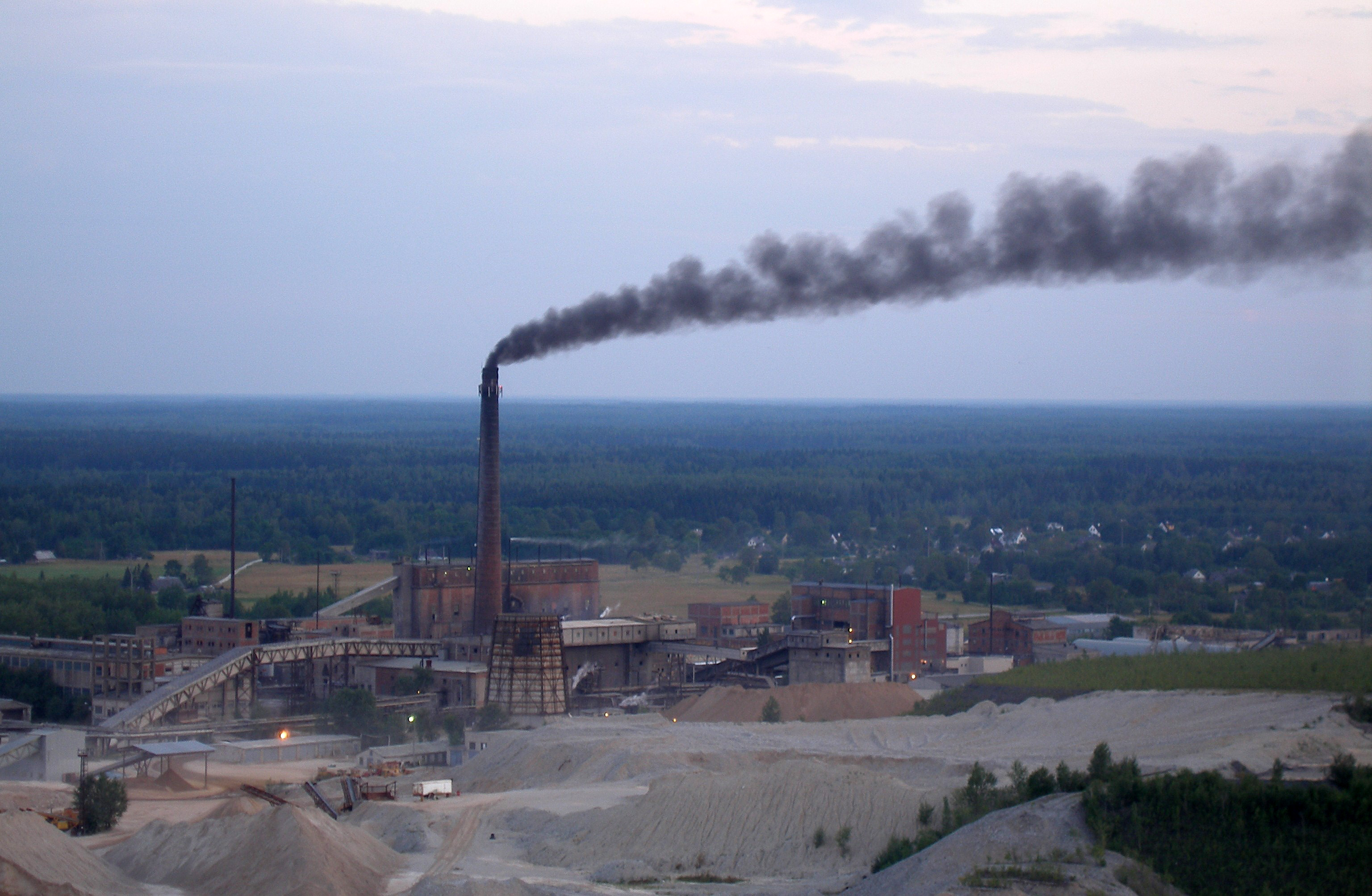
The environmental impact of the oil shale industry includes the consideration of issues such as land use, waste management, water and air pollution caused by the extraction and processing of oil shale. Surface mining of oil shale deposits causes the usual environmental impacts of open-pit mining. In addition, the combustion and thermal processing generate waste material, which must be disposed of, and harmful atmospheric emissions, including carbon dioxide, a major greenhouse gas. Experimental in-situ conversion processes and carbon capture and storage technologies may reduce some of these concerns in future, but may raise others, such as the pollution of groundwater.
Petroleum
Main article: Environmental impact of petroleum
The environmental impact of petroleum is often negative because it is toxic to almost all forms of life. Petroleum, a common word for oil or natural gas, is closely linked to virtually all aspects of present society, especially for transportation and heating for both homes and for commercial activities.
Reservoirs
Main article: Environmental impact of reservoirs

The environmental impact of reservoirs is coming under ever increasing scrutiny as the world demand for water and energy increases and the number and size of reservoirs increases.
Dams and the reservoirs can be used to supply drinking water, generate hydroelectric power, increasing the water supply for irrigation, provide recreational opportunities and flood control. However, adverse environmental and sociological impacts have also been identified during and after many reservoir constructions. Although the impact varies greatly between different dams and reservoirs, common criticisms include preventing sea-run fish from reaching their historical mating grounds, less access to water downstream, and a smaller catch for fishing communities in the area. Advances in technology have provided solutions to many negative impacts of dams but these advances are often not viewed as worth investing in if not required by law or under the threat of fines. Whether reservoir projects are ultimately beneficial or detrimental—to both the environment and surrounding human populations— has been debated since the 1960s and probably long before that. In 1960 the construction of Llyn Celyn and the flooding of Capel Celyn provoked political uproar which continues to this day. More recently, the construction of Three Gorges Dam and other similar projects throughout Asia, Africa and Latin America have generated considerable environmental and political debate.
Wind power
Manufacturing

Cleaning agents
Main article: Environmental impact of cleaning agents
The environmental impact of cleaning agents is diverse. In recent years, measures have been taken to reduce these effects.
Nanotechnology
Main article: Environmental impact of nanotechnology
Nanotechnology's environmental impact can be split into two aspects: the potential for nanotechnological innovations to help improve the environment, and the possibly novel type of pollution that nanotechnological materials might cause if released into the environment. As nanotechnology is an emerging field, there is great debate regarding to what extent industrial and commercial use of nanomaterials will affect organisms and ecosystems.
Paint
Main article: Environmental impact of paint
The environmental impact of paint is diverse. Traditional painting materials and processes can have harmful effects on the environment, including those from the use of lead and other additives. Measures can be taken to reduce environmental impact, including accurately estimating paint quantities so that wastage is minimized, use of paints, coatings, painting accessories and techniques that are environmentally preferred. The United States Environmental Protection Agency guidelines and Green Star ratings are some of the standards that can be applied.
Paper
Plastics

Some scientists suggest that by 2050 there could be more plastic than fish in the oceans. A December 2020 study published in Nature found that human-made materials, or anthropogenic mass, exceeds all living biomass on Earth, with plastic alone outweighing the mass of all terrestrial and marine animals combined.
Pesticides
Main article: Environmental impact of pesticides
The environmental impact of pesticides is often greater than what is intended by those who use them. Over 98% of sprayed insecticides and 95% of herbicides reach a destination other than their target species, including nontarget species, air, water, bottom sediments, and food. Pesticide contaminates land and water when it escapes from production sites and storage tanks, when it runs off from fields, when it is discarded, when it is sprayed aerially, and when it is sprayed into water to kill algae.
The amount of pesticide that migrates from the intended application area is influenced by the particular chemical's properties: its propensity for binding to soil, its vapor pressure, its water solubility, and its resistance to being broken down over time. Factors in the soil, such as its texture, its ability to retain water, and the amount of organic matter contained in it, also affect the amount of pesticide that will leave the area. Some pesticides contribute to global warming and the depletion of the ozone layer.
Pharmaceuticals and personal care
Transport
Main article: Environmental impact of transport
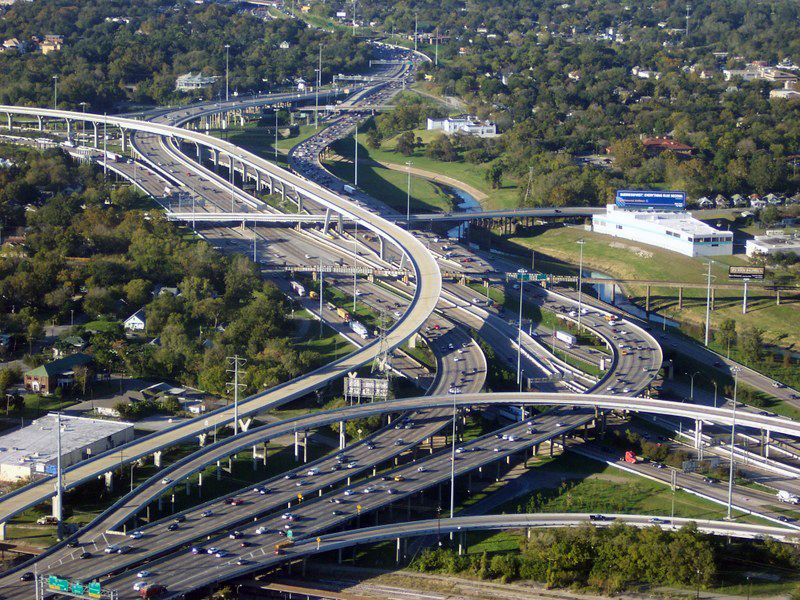
The environmental impact of transport is significant because it is a major user of energy, and burns most of the world's petroleum. This creates air pollution, including nitrous oxides and particulates, and is a significant contributor to global warming through emission of carbon dioxide, for which transport is the fastest-growing emission sector. By subsector, road transport is the largest contributor to global warming.
Environmental regulations in developed countries have reduced the individual vehicles emission; however, this has been offset by an increase in the number of vehicles, and more use of each vehicle. Some pathways to reduce the carbon emissions of road vehicles considerably have been studied. Energy use and emissions vary largely between modes, causing environmentalists to call for a transition from air and road to rail and human-powered transport, and increase transport electrification and energy efficiency.
Other environmental impacts of transport systems include traffic congestion and automobile-oriented urban sprawl, which can consume natural habitat and agricultural lands. By reducing transportation emissions globally, it is predicted that there will be significant positive effects on Earth's air quality, acid rain, smog and climate change.
The health impact of transport emissions is also of concern. A recent survey of the studies on the effect of traffic emissions on pregnancy outcomes has linked exposure to emissions to adverse effects on gestational duration and possibly also intrauterine growth.
Aviation
Main article: Environmental impact of aviation
The environmental impact of aviation occurs because aircraft engines emit noise, particulates, and gases which contribute to climate change and global dimming. Despite emission reductions from aircraft engines and more fuel-efficient and less polluting turbofan and turboprop engines, the rapid growth of air travel in recent years contributes to an increase in total pollution attributable to aviation. In the EU, greenhouse gas emissions from aviation increased by 87% between 1990 and 2006. Among other factors leading to this phenomenon are the increasing number of hypermobile travellers and social factors that are making air travel commonplace, such as frequent flyer programs.
There is an ongoing debate about possible taxation of air travel and the inclusion of aviation in an emissions trading scheme, with a view to ensuring that the total external costs of aviation are taken into account.
Roads
Main article: Environmental impact of roads
The environmental impact of roads includes the local effects of highways (public roads) such as on noise pollution, light pollution, water pollution, habitat destruction/disturbance and local air quality; and the wider effects including climate change from vehicle emissions. The design, construction and management of roads, parking and other related facilities as well as the design and regulation of vehicles can change the impacts to varying degrees.
Shipping
Main article: Environmental impact of shipping
The environmental impact of shipping includes greenhouse gas emissions and oil pollution. In 2007, carbon dioxide emissions from shipping were estimated at 4 to 5% of the global total, and estimated by the International Maritime Organization (IMO) to rise by up to 72% by 2020 if no action is taken. There is also a potential for introducing invasive species into new areas through shipping, usually by attaching themselves to the ship's hull.
The First Intersessional Meeting of the IMO Working Group on Greenhouse Gas Emissions from Ships took place in Oslo, Norway on 23–27 June 2008. It was tasked with developing the technical basis for the reduction mechanisms that may form part of a future IMO regime to control greenhouse gas emissions from international shipping, and a draft of the actual reduction mechanisms themselves, for further consideration by IMO's Marine Environment Protection Committee (MEPC).
Military

General military spending and military activities have marked environmental effects. The United States military is considered one of the worst polluters in the world, responsible for over 39,000 sites contaminated with hazardous materials. Several studies have also found a strong positive correlation between higher military spending and higher carbon emissions where increased military spending has a larger effect on increasing carbon emissions in the Global North than in the Global South. Military activities also affect land use and are extremely resource-intensive.
The military does not solely have negative effects on the environment. There are several examples of militaries aiding in land management, conservation, and greening of an area. Additionally, certain military technologies have proven extremely helpful for conservationists and environmental scientists.
As well as the cost to human life and society, there is a significant environmental impact of war. Scorched earth methods during, or after war have been in use for much of recorded history but with modern technology war can cause a far greater devastation on the environment. Unexploded ordnance can render land unusable for further use or make access across it dangerous or fatal.
Nuclear weapons
Light pollution

Main article: Ecological light pollution
Artificial light at night is one of the most obvious physical changes that humans have made to the biosphere, and is the easiest form of pollution to observe from space. The main environmental impacts of artificial light are due to light's use as an information source (rather than an energy source). The hunting efficiency of visual predators generally increases under artificial light, changing predator prey interactions. Artificial light also affects dispersal, orientation, migration, and hormone levels, resulting in disrupted circadian rhythms.
Fast fashion
Main article: Environmental impact of fashion
Fast fashion has become one of the most successful industries in many capitalist societies with the increase in globalisation. Fast fashion is the cheap mass production of clothing, which is then sold on at very low prices to consumers. Today, the industry is worth £2 trillion.
Environmental impacts
In terms of carbon dioxide emissions, the fast fashion industry contributes between 4–5 billion tonnes per year, equating to 8–10% of total global emissions. Carbon dioxide is a greenhouse gas, meaning it causes heat to get trapped in the atmosphere, rather than being released into space, raising the Earth's temperature – known as global warming.
Alongside greenhouse gas emissions the industry is also responsible for almost 35% of microplastic pollution in the oceans. Scientists have estimated that there are approximately 12–125 trillion tonnes of microplastic particles in the Earth's oceans. These particles are ingested by marine organisms, including fish later eaten by humans. The study states that many of the fibres found are likely to have come from clothing and other textiles, either from washing, or degradation.
Textile waste is a huge issue for the environment, with around 2.1 billion tonnes of unsold or faulty clothing being disposed per year. Much of this is taken to landfill, but the majority of materials used to make clothes are not biodegradable, resulting in them breaking down and contaminating soil and water.
Fashion, much like most other industries such as agriculture, requires a large volume of water for production. The rate and quantity at which clothing is produced in fast fashion means the industry uses 79 trillion litres of water every year. Water consumption has proven to be very detrimental to the environment and its ecosystems, leading to water depletion and water scarcity. Not only do these affect marine organisms, but also human's food sources, such as crops. The industry is culpable for roughly one-fifth of all industrial water pollution.
Society and culture
Warnings by the scientific community
There are many publications from the scientific community to warn everyone about growing threats to sustainability, in particular threats to "environmental sustainability". The World Scientists' Warning to Humanity in 1992 begins with: "Human beings and the natural world are on a collision course". About 1,700 of the world's leading scientists, including most Nobel Prize laureates in the sciences, signed this warning letter. The letter mentions severe damage to the atmosphere, oceans, ecosystems, soil productivity, and more. It said that if humanity wants to prevent the damage, steps need to be taken: better use of resources, abandonment of fossil fuels, stabilization of human population, elimination of poverty and more. More warning letters were signed in 2017 and 2019 by thousands of scientists from over 150 countries which called again to reduce overconsumption (including eating less meat), reducing fossil fuels use and other resources and so forth. Environmental storytelling may also constitute part of the environmental movement. Creative environmental vision can help eschew moral preaching in favor of self-reflection through ecological contradictions. Rather than pushing readers toward guilt or fear, this type of communication invite self-recognition and emotional engagement, which can be more effective in shifting environmental attitudes.
References
Bibliography
References
- (2017). "Climate Science Special Report – Fourth National Climate Assessment (NCA4)". U.S. Global Change Research Program.
- {{harvp. Sahney. Benton. Ferry. 2010; {{harvp. Hawksworth. Bull. 2008; {{harvp. Steffen. Sanderson. Tyson. Jäger. Matson. Moore III. Oldfield. Richardson. Schellnhuber. 2006 {{harvp. Chapin. Matson. Vitousek. 2011
- Stockton, Nick. (22 April 2015). "The Biggest Threat to the Earth? We Have Too Many Kids". [[Wired.com]].
- (5 November 2019). "World Scientists' Warning of a Climate Emergency". [[BioScience]].
- (13 April 2016). "Consensus on consensus: a synthesis of consensus estimates on human-caused global warming". [[Environmental Research Letters]].
- (2023). "Quantifying the human cost of global warming". [[Nature Sustainability]].
- (30 August 2016). "Increased Ocean Acidity". [[United States Environmental Protection Agency]].
- Weston, Phoebe. (March 26, 2025). "Biodiversity loss in all species and every ecosystem linked to humans – report". [[The Guardian]].
- Leakey, Richard and Roger Lewin, 1996, ''The Sixth Extinction : Patterns of Life and the Future of Humankind'', Anchor, {{ISBN. 0-385-46809-1
- (2015). "Accelerated modern human–induced species losses: Entering the sixth mass extinction". [[Science Advances]].
- (30 May 2014). "The biodiversity of species and their rates of extinction, distribution, and protection". Science.
- (November 2022). "Scientists' warning on population". Science of the Total Environment.
- (11 July 2017). "The best way to reduce your carbon footprint is one the government isn't telling you about". Science.
- (15 April 2020). "Do parents counter-balance the carbon emissions of their children?". [[PLOS One]].
- Harvey, David. (2005). "A Brief History of Neoliberalism". [[Oxford University Press]].
- (2020). "Ecological economics for humanity's plague phase". [[Ecological Economics (journal).
- (2021). "Neoliberalism and the Environment: Are We Aware of Appropriate Action to Save the Planet and Do We Think We Are Doing Enough?". [[Earth (journal).
- (November 2022). "Reducing Human Numbers and the Size of our Economies is Necessary to Avoid a Mass Extinction and Share Earth Justly with Other Species". Philosophia.
- Badri, Adarsh. (2024-03-04). "Feeling for the Anthropocene: affective relations and ecological activism in the global South". International Affairs.
- (14 September 2017). "New Climate Risk Classification Created to Account for Potential "Existential" Threats".
- Torres, Phil. (11 April 2016). "Biodiversity loss: An existential risk comparable to climate change". [[Taylor & Francis]].
- link. (22 September 2020 in Encyclopedia of Environmental Science, D. E. Alexander and R. W. Fairbridge (eds.), Kluwer Academic Publishers, Dordrecht, The Netherlands, {{ISBN). 0412740508.
- Crutzen, Paul and [[Eugene F. Stoermer]]. "The 'Anthropocene'" in International Geosphere-Biosphere Programme Newsletter. 41 (May 2000): 17–18
- Scott, Michon. (2014). "Glossary". [[NASA Earth Observatory]].
- (2020). "Extraordinary human energy consumption and resultant geological impacts beginning around 1950 CE initiated the proposed Anthropocene Epoch". [[Communications Earth & Environment]].
- Trenberth, Kevin E.. (2 October 2018). "Climate change caused by human activities is happening and it already has major consequences". Journal of Energy & Natural Resources Law.
- (2025). "Past Earth Overshoot Days". Earth Overshoot Day.
- "Graphic: The relentless rise of carbon dioxide". Climate Change: Vital Signs of the Planet.
- "Open Data Platform".
- Diamond, Jared. (2 January 2008). "What's Your Consumption Factor?". [[The New York Times]].
- Carrington, Damian. (21 May 2018). "Humans just 0.01% of all life but have destroyed 83% of wild mammals – study". [[The Guardian]].
- Borenstein, Seth. (21 May 2018). "Humans account for little next to plants, worms, bugs". [[AP News]].
- (21 May 2018). "Plants outweigh all other life on Earth". [[Science (journal).
- Best, Steven. (2014). "The Politics of Total Liberation: Revolution for the 21st Century". [[Palgrave Macmillan]].
- (2013-05-09). "World Population Growth". Our World in Data.
- "Graphic: The relentless rise of carbon dioxide". Climate Change: Vital Signs of the Planet.
- (August 2022). "Overpopulation is a major cause of biodiversity loss and smaller human populations are necessary to preserve what is left". [[Biological Conservation (journal).
- Stokstad, Erik. (5 May 2019). "Landmark analysis documents the alarming global decline of nature". [[American Association for the Advancement of Science.
- Weston, Phoebe. (13 January 2021). "Top scientists warn of 'ghastly future of mass extinction' and climate disruption". [[The Guardian]].
- (2021). "Underestimating the Challenges of Avoiding a Ghastly Future". [[Frontiers in Conservation Science]].
- Linkola, Pentti. (2011). "Can Life Prevail?". Arktos Media.
- (2012). "Life on the Brink: Environmentalists Confront Overpopulation". [[University of Georgia Press]].
- (September 18, 2014). "World population stabilization unlikely this century". AAAS.
- (2021). "Response: Commentary: Underestimating the Challenges of Avoiding a Ghastly Future". [[Frontiers in Conservation Science]].
- Dasgupta, Partha. (2021). "The Economics of Biodiversity: The Dasgupta Review Headline Messages". [[UK Government]].
- Carrington, Damian. (February 2, 2021). "Economics of biodiversity review: what are the recommendations?". [[The Guardian]].
- Piper, Kelsey. (2019-08-20). "We've worried about overpopulation for centuries. And we've always been wrong".
- Welle, Deutsche. (31 August 2020). "What fewer people on the planet would mean for the environment". [[Deutsche Welle]].
- Pearce, Fred. (8 March 2010). "The overpopulation myth".
- (2022). "Circling the drain: the extinction crisis and the future of humanity". [[Philosophical Transactions of the Royal Society B]].
- (December 2002). "Evaluation of the environmental impact of agriculture at the farm level: a comparison and analysis of 12 indicator-based methods". [[Agriculture, Ecosystems and Environment]].
- Borenstein, Seth. (6 May 2019). "UN report: Humans accelerating extinction of other species".
- (2003). "Rapid worldwide depletion of predatory fish communities". [[Nature (journal).
- "The World Counts".
- (3 November 2006). "Impacts of Biodiversity Loss on Ocean Ecosystem Services". [[Science (journal).
- Eilperin, Juliet. (2 November 2009). "Seafood Population Depleted by 2048, Study Finds". [[The Washington Post]].
- (2018). "Document card {{!}} FAO {{!}} Food and Agriculture Organization of the United Nations". Food and Agriculture Organization of the United Nations.
- (10 July 2018). "State of World Fisheries and Aquaculture 2018".
- Einhorn, Catrin. (27 January 2021). "Shark Populations Are Crashing, With a 'Very Small Window' to Avert Disaster". [[The New York Times]].
- (28 January 2021). "Half a century of global decline in oceanic sharks and rays". [[Nature (journal).
- "Management of Irrigation-Induced Salt-Affected Soils".
- van Hoorn, J. W. and J.G. van Alphen. 2006. Salinity control. In: H.P. Ritzema (ed.), Drainage Principles and Applications. Publication 16, International Institute for Land Reclamation and Improvement (ILRI), Wageningen, The Netherlands. pp. 533–600.
- ''Effectiveness and Social/Environmental Impacts of Irrigation Projects: a Review''. In: Annual Report 1988, International Institute for Land Reclamation and Improvement (ILRI), Wageningen, The Netherlands, pp. 18–34. Download from [http://www.waterlog.info/annrep.htm] {{Webarchive. link. (7 November 2009, under nr. 6, or directly [http://www.waterlog.info/pdf/irreff.pdf as PDF])
- Thakkar, Himanshu. (8 November 1999). "''Assessment of Irrigation in India''".
- Pearce, R.. (2006). "When the rivers run dry: Water – the defining crisis of the twenty-first century". [[Beacon Press]].
- "UNESCO raises global alarm on the rapid degradation of soils". United Nations.
- "Sustainable Development Goal (SDG) Indicator 15.3.1". United Nations.
- Lal, R. and B. A. Stewart. 1990... Soil degradation. Springer-Verlag, New York.
- (1999). "Soil Degradation: A Threat to Developing-Country Food Security by 2020?".
- (1990). "World map of the status of human-induced soil degradation. An explanatory note. GLASOD, Global Assessment of Soil Degradation. International Soil Reference and Information Centre, Wageningen".
- Eswaran, H., R. Lal and P. F. Reich. 2001. Land degradation: an overview. In. Bridges, E.M. et al. (eds.) Responses to Land Degradation. Proc. 2nd. Int. Conf. Land Degradation and Desertification, Khon Kaen, Thailand. Oxford Press, New Delhi, India.
- "FAOSTAT".
- (2007). "Soil erosion and agricultural sustainability". [[Proceedings of the National Academy of Sciences]].
- NRCS. 2013. Summary report 2010 national resources inventory. United States Natural Resources Conservation Service. 163 pp.
- (1995). "Rural Land Degradation in Australia". [[Oxford University Press]] Australia.
- (2001). "Land degradation: an overview". Oxford Press.
- Sample, Ian. (31 August 2007). "Global food crisis looms as climate change and population growth strip fertile land". [[The Guardian]].
- Damian Carrington, [https://www.theguardian.com/environment/2018/may/31/avoiding-meat-and-dairy-is-single-biggest-way-to-reduce-your-impact-on-earth "Avoiding meat and dairy is 'single biggest way' to reduce your impact on Earth "] {{Webarchive. link. (6 March 2020 , [[The Guardian]], 31 May 2018 (page visited on 19 August 2018).)
- (21 May 2018). "The biomass distribution on Earth". Our World in Data (OWID).
- Steinfeld, H. et al. 2006. Livestock's Long Shadow: Environmental Issues and Options. Livestock, Environment and Development, FAO, Rome. 391 pp.
- Intergovernmental Panel on Climate Change. (2013). [http://www.ipcc.ch/report/ar5/wg1/ ''Climate change 2013, The physical science basis''] {{Webarchive. link. (24 May 2019 . Fifth Assessment Report.)
- (2011). "Global atmospheric methane: budget, changes and dangers". Philosophical Transactions of the Royal Society A: Mathematical, Physical and Engineering Sciences.
- (2004). "Mitigation strategies to reduce enteric methane emissions from dairy cows: Update review". Can. J. Anim. Sci..
- Martin, C.. (2010). "Methane mitigation in ruminants: from microbe to the farm scale". [[Animal (journal).
- (2010). "Options for the abatement of methane and nitrous oxide from ruminant production: A review". Livestock Science.
- (2003). "Nitrous oxide emission from Australian agricultural lands and mitigation options: a review". [[Australian Journal of Soil Research]].
- (2005). "Nitrous oxide emissions from New Zealand agriculture – key sources and mitigation strategies". Nutrient Cycling in Agroecosystems.
- Mekonnen, M. M. and Hoekstra, A. Y. (2010). ''The green, blue and grey water footprint of farm animals and animal products''. Vol. 2: appendices. Value of Water Research Report Series No. 48. UNESCO-IHE Institute for Water Education.
- US EPA. 2000. Profile of the agricultural livestock production industry. U.S. Environmental Protection Agency. Office of Compliance. EPA/310-R-00-002. 156 pp.
- US EPA, OECA. (19 March 2015). "Agriculture".
- (2011). "The environmental impact of beef production in the United States: 1977 compared with 2007". J. Anim. Sci..
- "Red meat and poultry production". [[US Department of Agriculture]].
- Launchbaugh, K. (ed.) 2006. Targeted Grazing: a natural approach to vegetation management and landscape enhancement. American Sheep Industry. 199 pp.
- (1982). "Manipulation of Grazing to Improve or Maintain Wildlife Habitat". [[Wildlife Society Bulletin]].
- (1995). "Rangeland soil carbon and nitrogen responses to grazing". Journal of Soil and Water Conservation.
- (2010). "Surface soil changes during twelve years of pasture management in the southern Piedmont USA". Soil Sci. Soc. Am. J..
- Hance, Jeremy. (20 October 2015). "How humans are driving the sixth mass extinction". [[The Guardian]].
- Morell, Virginia. (11 August 2015). "Meat-eaters may speed worldwide species extinction, study warns". [[Science (magazine).
- (2015). "Biodiversity conservation: The key is reducing meat consumption". [[Science of the Total Environment]].
- Devlin, Hannah. (19 July 2018). "Rising global meat consumption 'will devastate environment'". [[The Guardian]].
- Watts, Jonathan. (6 May 2019). "Human society under urgent threat from loss of Earth's natural life". [[The Guardian]].
- McGrath, Matt. (6 May 2019). "Nature crisis: Humans 'threaten 1m species with extinction'". [[BBC]].
- Bland, Alastair. (1 August 2012). "Is the Livestock Industry Destroying the Planet?".
- Rosner, Hillary. (December 2018). "Palm oil is unavoidable. Can it be sustainable?".
- "Palm Oil".
- Meijaard, Erik. (7 December 2020). "The environmental impacts of palm oil in context". [[Nature Plants]].
- (2014). "Palms of controversies: Oil palm and development challenges". [[CIFOR]].
- [[Roundtable on Sustainable Palm Oil. "About".
- (1997). "Meanings of environmental terms". [[Journal of Environmental Quality]].
- Chertow, M.R.. (2001). "The IPAT equation and its variants". [[Journal of Industrial Ecology]].
- (2011). "Techno-Fix: Why Technology Won't Save Us Or the Environment". New Society Publishers.
- Carrington, Damian. (15 April 2021). "Just 3% of world's ecosystems remain intact, study suggests". [[The Guardian]].
- (2021). "Where Might We Find Ecologically Intact Communities?". [[Frontiers in Forests and Global Change]].
- (31 March 2021). "Global forest loss increases in 2020". World Resources Institute.
- (2004). "Global Change and the Climate System / A Planet Under Pressure". International Geosphere-Biosphere Programme (IGBP).
- (4 February 2021). "Deforestation and Forest Loss / Humanity destroyed one third of the world's forests by expanding agricultural land". Our World in Data (OWID).
- Fleischer, Evan. (2 November 2019). "Report: Just 23% of Earth's wilderness remains".
- (February 2016). "Habitat fragmentation and biodiversity conservation: key findings and future challenges". Landscape Ecology.
- Datta, S. (2018). ''The Effects of Habitat Destruction of the Environment''. Retrieved from https://sciencing.com/effects-habitat-destruction-environment-8403681.html
- (10 May 2011). "Anthropocene: Have humans created a new geological age?". [[BBC News]].
- May, R.M.. (1988). "How many species are there on earth?". Science.
- (August 2022). "Overpopulation is a major cause of biodiversity loss and smaller human populations are necessary to preserve what is left". [[Biological Conservation (journal).
- (21 April 2017). "The interaction of human population, food production, and biodiversity protection". [[Science (journal).
- (2020). "Scientists' warning on affluence". [[Nature Communications]].
- (30 May 2014). "The biodiversity of species and their rates of extinction, distribution, and protection". Science.
- (2023). "Mutilation of the tree of life via mass extinction of animal genera". [[Proceedings of the National Academy of Sciences of the United States of America]].
- (13 November 2017). "World Scientists' Warning to Humanity: A Second Notice". [[BioScience]].
- (2022). "The Sixth Mass Extinction: fact, fiction or speculation?". [[Biological Reviews]].
- Sankaran, Vishwam. (January 17, 2022). "Study confirms sixth mass extinction is currently underway, caused by humans". [[The Independent]].
- (1 June 2020). "Vertebrates on the brink as indicators of biological annihilation and the sixth mass extinction". [[PNAS]].
- Vidal, John. (March 15, 2019). "The Rapid Decline Of The Natural World Is A Crisis Even Bigger Than Climate Change". [[The Huffington Post]].
- (13 October 2022). "Living Planet Index, World". Our World in Data.
- (17 October 2022). "6 charts that show the state of biodiversity and nature loss – and how we can go 'nature positive'". World Economic Forum.
- (13 October 2022). "How does the Living Planet Index vary by region?". Our World in Data.
- Greenfield, Patrick. (9 September 2020). "Humans exploiting and destroying nature on unprecedented scale – report". [[The Guardian]].
- (9 September 2020). "Natural world being destroyed at rate 'never seen before', WWF warns as report reveals catastrophic decline of global wildlife". [[The Independent]].
- Ceballos, G.; Ehrlich, A. H.; Ehrlich, P. R. (2015). ''The Annihilation of Nature: Human Extinction of Birds and Mammals''. Baltimore, Maryland: Johns Hopkins University Press. pp. 135 {{ISBN. 1421417189 – via Open Edition.
- Plumer, Brad. (6 May 2019). "Humans Are Speeding Extinction and Altering the Natural World at an 'Unprecedented' Pace". [[The New York Times]].
- Staff. (6 May 2019). "Media Release: Nature's Dangerous Decline 'Unprecedented'; Species Extinction Rates 'Accelerating'". [[Intergovernmental Science-Policy Platform on Biodiversity and Ecosystem Services]].
- (20 April 2015). "Decreasing biodiversity affects productivity of remaining plants". Science Direct.
- (5 June 2019). "'Plant blindness' is obscuring the extinction crisis for non-animal species".
- (25 July 2014). "Defaunation in the Anthropocene". Science.
- Simberloff, Daniel. (10 October 2013). "Invasive Species". [[Oxford University Press]].
- (9 July 2019). "Cats kill more than 1.5 billion native animals per year".
- "Feral Cats".
- (25 September 2020). "Animals and Rabies {{!}} Rabies {{!}} CDC".
- Janos, Adam. (20 February 2020). "How Burmese Pythons Took Over the Florida Everglades".
- "How have invasive pythons impacted Florida ecosystems?".
- "Wild boar hybrids are raising hell on the Canadian prairies". The Economist.
- "The Causes of Climate Change". [[NASA]].
- "Climate Science Special Report / Fourth National Climate Assessment (NCA4), Volume I". U.S. Global Change Research Program.
- IPCC. (2019). "IPCC Special Report on the Ocean and Cryosphere in a Changing Climate". [[IPCC]].
- (September 2023). "Extreme Weather and Climate Change". National Aeronautics and Space Administration.
- (2016). "The Study of Earth as an Integrated System". [[NASA]].
- (18 November 2024). "Mapped: How climate change affects extreme weather around the world". Climate Central.
- (28 February 2019). "Acid Rain, explained".
- Jones N., (2016). ''How Growing Sea Plants Can Help Slow Ocean Acidification.'' Retrieved from https://e360.yale.edu/features/kelp_seagrass_slow_ocean_acidification_netarts
- [[John T. Houghton]], Y. Ding, D. J. Griggs, M. Noguer, P. J. van der Linden, X. Dai, K. Maskell, and C. A. Johnson. 2001. ''IPCC Climate Change 2001: The Scientific Basis. Contribution of Working Group I in the Third Assessment Report of Intergovernmental Panel on Climate Change''. Cambridge University Press
- Schlesinger, W. H. 1997. ''Biogeochemistry : An analysis of global change'', San Diego, CA.
- (2003). "The Nitrogen Cascade". [[BioScience]].
- (1993). "Distribution and decline of endangered herbaceous heathland species in relation to the chemical composition of the soil". [[Plant and Soil]].
- Commoner, B. (1971). The closing cycle – Nature, man, and technology, [[Alfred A. Knopf]].
- Faber, M., Niemes, N. and Stephan, G. (2012). ''Entropy, environment, and resources'', Springer Verlag, Berlin, Germany, {{ISBN. 3642970494.
- Kümmel, R.. (1989). "Energy as a factor of production and entropy as a pollution indicator in macroeconomic modeling". [[Ecological Economics]].
- Ruth, M.. (1993). "Integrating economics, ecology, and thermodynamics". [[Kluwer Academic Publishers]].
- (2011). "Technofix: Why Technology Won't Save Us or the Environment". New Society Publishers.
- [http://ngm.nationalgeographic.com/2009/01/gold/larmer-text/6 Logging of forests and debris dumping] {{Webarchive. link. (1 July 2017 . Ngm.nationalgeographic.com (17 October 2002). Retrieved on 11 May 2012.)
- Chibuike, G. U., & Obiora, S. C. (2014). Heavy metal polluted soils: effect on plants and bioremediation methods. ''Applied and environmental soil science'', ''2014''.
- [http://ngm.nationalgeographic.com/2009/01/gold/larmer-text/12 Poisoning by mines] {{Webarchive. link. (26 July 2017 . Ngm.nationalgeographic.com (17 October 2002). Retrieved on 11 May 2012.)
- Jiwan, S., & Ajah, K. S. (2011). Effects of heavy metals on soil, plants, human health and aquatic life. ''International Journal of Research in Chemistry and Environment'', ''1''(2), 15–21.
- Kay, J. (2002). [https://web.archive.org/web/20060106201301/http://www.nesh.ca/jameskay/www.fes.uwaterloo.ca/u/jjkay/pubs/IE/ie.pdf "On Complexity Theory, Exergy and Industrial Ecology: Some Implications for Construction Ecology"], pp. 72–107 in: Kibert C., Sendzimir J., Guy, B. (eds.) ''Construction Ecology: Nature as the Basis for Green Buildings,'' London: Spon Press, {{ISBN. 0203166140.
- (2003). "The Quest for Sustainability: Challenges for Process Systems Engineering". AIChE Journal.
- USDA-USDoE. (1998). ''Life cycle inventory of biodiesel and petroleum diesel in an urban bus''. NREL/SR-580-24089 UC Category 1503.
- (2009). "Life-cycle assessment of energy use and greenhouse gas emissions of soybean-derived biodiesel and renewable fuels". Environ. Sci. Technol..
- (2010). "High quality biodiesel and its diesel engine application: a review". [[Renewable and Sustainable Energy Reviews]].
- "coal power: air pollution".
- Fitzpatrick, Luke. (March 15, 2018). "Surface Coal Mining and Human Health: Evidence from West Virginia". Southern Economic Journal.
- Munawer, Muhammad. (2018). "Human health and environmental impacts of coal combustion and post-combustion wastes". Journal of Sustainable Mining.
- Moeller, Richard. (March 13, 2011). "I understand that, among mining's other problems, like providing climate-warming coal and endangering miners' lives, it is also a serious water polluter. Can you enlighten?". EarthTalk: Questions and Answers About Our Environment. A Weekly Column.
- Chabukdhara, Mayuri. (25 May 2016). "Coal mining in northeast India: an overview of environmental issues and treatment approaches". International Journal of Coal Science & Technology.
- Smith, G.. (2012). "Nuclear roulette: The truth about the most dangerous energy source on earth". Chelsea Green Publishing.
- Bartis, Jim. (26 October 2006). "Unconventional Liquid Fuels Overview". Association for the Study of Peak Oil and Gas.
- Sutter, John D.. (12 December 2016). "How to stop the sixth mass extinction". [[CNN]].
- Laville, Sandra. (9 December 2020). "Human-made materials now outweigh Earth's entire biomass – study". [[The Guardian]].
- (2020). "Global human-made mass exceeds all living biomass". [[Nature (journal).
- Miller GT (2004), ''Sustaining the Earth'', 6th edition. Thompson Learning, Inc. Pacific Grove, California. Chapter 9, pp. 211–216, {{ISBN. 0534400876.
- [https://web.archive.org/web/20010221212214/http://www.bpsp-neca.brim.ac.cn/books/actpln_uzbek/part1-3.html Part 1. Conditions and provisions for developing a national strategy for biodiversity conservation]. Biodiversity Conservation National Strategy and Action Plan of Republic of Uzbekistan. Prepared by the National Biodiversity Strategy Project Steering Committee with the Financial Assistance of The [[Global Environmental Facility]] (GEF) and Technical Assistance of [[United Nations Development Programme]] (UNDP, 1998). Retrieved on 17 September 2007.
- Kellogg RL, Nehring R, Grube A, Goss DW, and Plotkin S (February 2000), [https://web.archive.org/web/20020618151910/http://www.nrcs.usda.gov/technical/land/pubs/eip_pap.html Environmental indicators of pesticide leaching and runoff from farm fields]. United States Department of Agriculture Natural Resources Conservation Service. Retrieved on 3 October 2007.
- Reynolds, JD (1997), [http://www.law.fsu.edu/journals/landuse/Vol131/REYN.HTMl International pesticide trade: Is there any hope for the effective regulation of controlled substances?] {{Webarchive. link. (27 May 2012 ''Florida State University Journal of Land Use & Environmental Law'', Volume 131. Retrieved on 16 October 2007.)
- Worldwatch Institute. (16 January 2008). "Analysis: Nano Hypocrisy?".
- (2008). "Climate forcing from the transport sectors". [[Proceedings of the National Academy of Sciences]].
- [http://www.claverton-energy.com/carbon-pathways-analysis-informing-development-of-a-carbon-reduction-strategy-for-the-transport-sector.html Carbon Pathways Analysis – Informing Development of a Carbon Reduction Strategy for the Transport Sector. Claverton Group] {{Webarchive. link. (18 March 2021 . Claverton-energy.com (17 February 2009). Retrieved on 11 May 2012.)
- Environment Canada. "Transportation".
- Pereira, G.. (2010). "Residential exposure to traffic emissions and adverse pregnancy outcomes". S.A.P.I.EN.S.
- International Civil Aviation Organization, Air Transport Bureau (ATB). "Aircraft Engine Emissions".
- "What is the impact of flying?".
- (August 2002). "Contrails reduce daily temperature range". Nature.
- (20 December 2006). "Climate change: Commission proposes bringing air transport into EU Emissions Trading Scheme". EU press release.
- Gössling S, Ceron JP, Dubois G, Hall CM, Gössling S, Upham P, Earthscan L (2009). [http://www.gci.org.uk/Documents/Aviation-and-Climate-Change_.pdf "Hypermobile travellers"] {{Webarchive. link. (15 November 2020 , pp. 131–151 (Chapter 6) in: ''Climate Change and Aviation: Issues, Challenges and Solutions'', London, {{ISBN). 1844076202.
- [https://web.archive.org/web/20060215004933/http://www.defra.gov.uk/environment/climatechange/trading/eu/pdf/including-aviation-icf.pdf Including Aviation into the EU ETS: Impact on EU allowance prices]. ICF Consulting for DEFRA, February 2006.
- Vidal, John (3 March 2007) [https://www.theguardian.com/environment/2007/mar/03/travelsenvironmentalimpact.transportintheuk CO2 output from shipping twice as much as airlines] {{Webarchive. link. (25 January 2021 . The Guardian. Retrieved on 11 May 2012.)
- link. (7 July 2009 . Imo.org. Retrieved on 11 May 2012.)
- [http://sdg.iisd.org/news/imo-advances-measures-to-reduce-emissions-from-international-shipping/=1 SustainableShipping: (S) News – IMO targets greenhouse gas emissions (17 Jun 2008) – The forum dedicated to marine transportation and the environment]
- (1 May 2016). "The temporal stability and developmental differences in the environmental impacts of militarism: the treadmill of destruction and consumption-based carbon emissions". Sustainability Science.
- (17 July 2014). "The US Department of Defense Is One of the World's Biggest Polluters".
- (11 August 2017). "The Treadmill of Destruction in Comparative Perspective: A Panel Study of Military Spending and Carbon Emissions, 1960–2014". Journal of World-Systems Research.
- "The Military's Impact on the environment".
- "The Military-Environmental Complex".
- "The potential of the military in environmental protection: India".
- (2015). "The effects of modern war and military activities on biodiversity and the environment". Environmental Reviews.
- see Gledistch, Nils (1997). Conflict and the Environment. Kluwer Academic Publishers.
- (23 December 2014). "High-Resolution Imagery of Earth at Night: New Sources, Opportunities and Challenges". Remote Sensing.
- (December 2010). "Light pollution as a biodiversity threat". [[Trends in Ecology & Evolution]].
- Thomas, Dana. (2019). "Fashionopolis: The Price of Fast Fashion and the Future of Clothes". [[Head of Zeus]].
- Russon, Mary-Ann. (14 February 2020). "Global fashion industry facing a 'nightmare'". [[BBC News]].
- (15 April 2020). "The environmental price of fast fashion". Nature Reviews Earth & Environment.
- Nunez, Christina. (22 January 2019). "What is global warming, explained".
- Carrington, Damian. (22 May 2020). "Microplastic pollution in oceans vastly underestimated – study". [[The Guardian]].
- (October 2020). "Are we underestimating microplastic abundance in the marine environment? A comparison of microplastic capture with nets of different mesh-size". Environmental Pollution.
- (1 July 2011). "Environmental Impacts of Water Use in Global Crop Production: Hotspots and Trade-Offs with Land Use". Environmental Science & Technology.
- Regan, Helen. (28 September 2020). "Asian rivers are turning black. And our colorful closets are to blame". [[CNN]].
- "World Scientist's Warning to Humanity".
- (December 2017). "World Scientists' Warning to Humanity: A Second Notice". [[BioScience]].
- (2025). "Flying Beyond Didacticism: The Creative Environmental Vision of 'Wild Wise Weird'". Young Voices of Science.
This article was imported from Wikipedia and is available under the Creative Commons Attribution-ShareAlike 4.0 License. Content has been adapted to SurfDoc format. Original contributors can be found on the article history page.
Ask Mako anything about Human impact on the environment — get instant answers, deeper analysis, and related topics.
Research with MakoFree with your Surf account
Create a free account to save articles, ask Mako questions, and organize your research.
Sign up freeThis content may have been generated or modified by AI. CloudSurf Software LLC is not responsible for the accuracy, completeness, or reliability of AI-generated content. Always verify important information from primary sources.
Report