From Surf Wiki (app.surf) — the open knowledge base
HP Labs
Research division of HP Inc.

Research division of HP Inc.
| Field | Value |
|---|---|
| name | HP Laboratories |
| image | HP logo 2012.svg |
| image_size | 120px |
| type | Research organization |
| headquarters | Palo Alto, California |
| formation | 1966 |
| parent_organization | HP Inc. |
the lab run by HP Inc. and formerly run by Hewlett-Packard
HP Labs is the exploratory and advanced research group for HP Inc. HP Labs' headquarters is in Palo Alto, California and the group has research and development facilities in Bristol, UK. The development of programmable desktop calculators, inkjet printing, and 3D graphics are credited to HP Labs researchers.
HP Labs was established on March 3, 1966, by Hewlett-Packard founders Bill Hewlett and David Packard, seeking to create an organization not bound by day-to-day business concerns.{{cite web |access-date = 2022-05-31 |archive-date = 2021-06-26 |archive-url = https://web.archive.org/web/20210626121118/https://www.hpl.hp.com/news/2006/jan-mar/40anniversary.html |url-status = dead
The labs have downsized dramatically; in August 2007, HP executives drastically diminished the number of projects, down from 150 to 30. As of 2018, HP Labs has just over 200 researchers, compared to earlier staffing levels of 500 researchers.
With Hewlett Packard Enterprise being spun off from Hewlett-Packard on November 1, 2015, and the remaining company being renamed to HP Inc., the research lab also spun off Hewlett Packard Labs to Hewlett Packard Enterprise and HP Labs was kept for HP Inc.
History
As the Semiconductor Lab's first manager, Mohamed Atalla launched a material science investigation program that provided a base technology for gallium arsenide, gallium arsenide phosphide and indium arsenide devices. These devices became the core technology used by HP's Microwave Division to develop sweepers and network analyzers that pushed 2040 GHz frequency, giving HP more than 90% of the military communications market by the 1970s.
HP Labs was involved in HP's research and development (R&D) on practical light-emitting diodes (LEDs) between 1966 and 1969. The first practical LED displays were built at Atalla's Semiconductor Lab. HP introduced the first commercial LED display in 1968. In February 1969, they introduced the HP Model 5082-7000 Numeric Indicator. It was the first intelligent LED display, and was a revolution in digital display technology, replacing the Nixie tube and becoming the basis for later LED displays.
In 1977, HP Labs fabricated prototypes of the DMOS (double-diffused MOSFET), a type of power MOSFET. They demonstrated that it was superior to the VMOS (V-groove MOSFET) with its lower on-resistance and higher breakdown voltage. The DMOS became the most common power transistor used in power electronics.
During the early 90s, HP Labs invented the concept of an Explicitly parallel instruction computing (EPIC) instruction set, which led to the Intel Itanium architecture. Towards the end of the 90s, HP Labs worked on a precursor to web services, known as e-Speak.
In 1999, HP Labs and UCLA built the world's first molecular logic gate for eventual application in chemically assembled nano-computers.
During the 2000s, HP Labs in Bristol created Jena, a semantic web framework.
Research areas
Today, HP Labs specializes in products and solutions related to laptops and tablets, desktop computers, printers, ink and toner cartridges, display accessories and business solutions.
3D printing
HP Labs has made a substantial investment in the development of HP MultiJet Fusion technology. Previously, MetalJet technology was jointly developed between the 3D Print business and HP Labs, allowing for advanced metals to be incorporated in 3D printing.
Microfluidics
The lab invents microfluidic and imaging technologies for markets beyond office and home print, such as flexible packaging, life sciences, and sensing. The lab has also worked to develop a new method for isolating rare cancer cells.
Security
Security research began at the Bristol lab in the 1990s, leading to the co-founding of the TCPA alliance, later known as the Trusted Computing Group. In 2001, a Trusted Linux OS offering was created amongst many years of trusted computing development. Various research projects led to product features such as Virus Throttle, HP SureStart, Printer Runtime Intrusion Detection, HP Connection Inspector and HP SureAdmin. HP led the EU-funded open trusted computing (OpenTC) project, bringing trusted computing to the open source software community at various venues such as CCC.
Industrial Digital Printing Press – HP Indigo
HP Labs developed a breakthrough in the charging system of HP Indigo liquid electrophotography (LEP) printing presses by replacing the three double scorotron units used in second-generation models, such as the HP Indigo 5500, with a single charge roller unit. This innovation enabled the launch of the third-generation HP Indigo 6000 and 7000 presses in 2008, resulting in a 76% increase in productivity due to a higher marking engine speed.
Directors
The following have served as Director of HP Labs since its foundation in 1966.{{cite web
- Barney Oliver (1966–81)
- John Doyle (1981–84)
- Joel Birnbaum (1984–86 and 1991–99)
- Don Hammond (1986–87)
- Frank Carrubba (1987–91)
- Ed Karrer (1999)
- Dick Lampman (1999–2007)
- Prith Banerjee (2007–2012)
- Chandrakant Patel (interim; April 7, 2012 – Nov 2012)
- Martin Fink (2012–2016)
- Shane Wall (2016–2021)
- Tolga Kurtoglu (2021–2022)
Lab locations
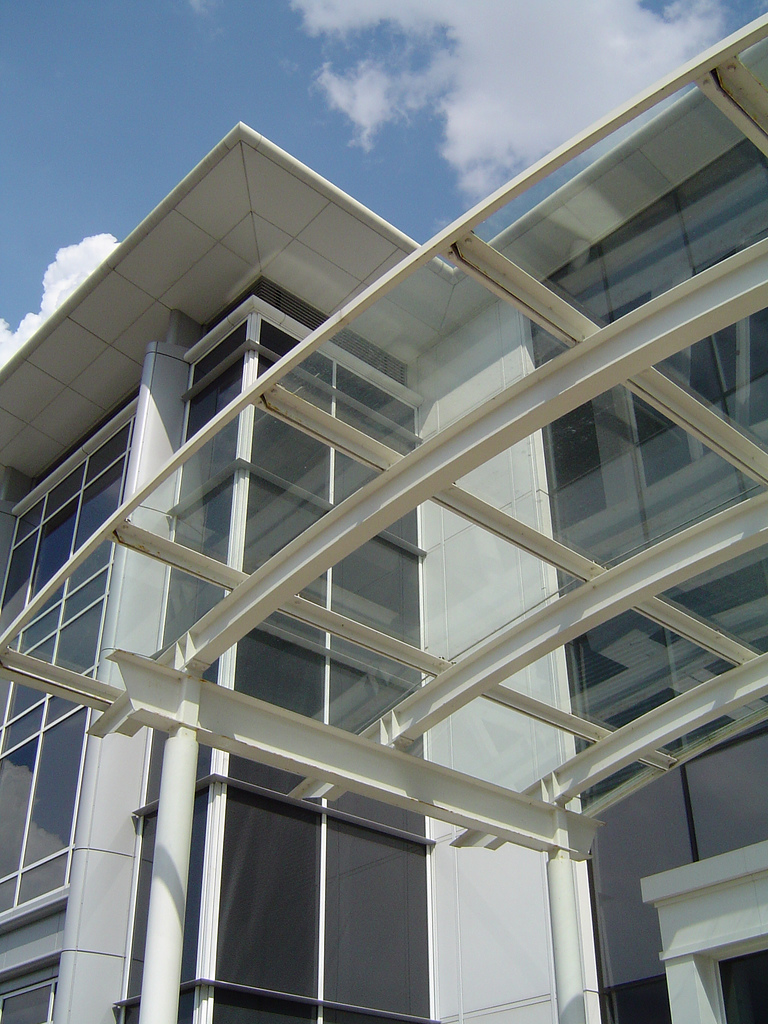
HP Labs has laboratories in two major sites:
- Palo Alto, California, United States (founded in 1966)
- Bristol, England, UK (founded in 1983)
Former sites:
- Haifa, Israel (founded in 1984)
- St Petersburg, Russia (founded in 2007)
- Beijing, China (founded in 2005)
- Fusionopolis, Singapore (founded in 2010)
- Cambridge, Massachusetts, United States (also known as CRL, a former DEC research lab)
- Bangalore, India (founded in 2002)
- Princeton, New Jersey, United States
- Tokyo, Japan (founded in 1990)
Notable people
Some of the former employees of HP's Research Labs include:
- Alan Kay: best known for his pioneering work on object-oriented programming and windowing graphical user interface (GUI) design
- Mohamed M. Atalla: best known for the MOSFET transistor and the world's first hardware security module (HSM) business, Atalla.
- Colin Needham: the founder of IMDb.
- R. Stanley Williams: best known for his re-discovery of the memristor
- Norman Jouppi: one of the computer architects at the MIPS Stanford University Project (under John L. Hennessy)
- Jim Gettys: one of the original developers of the X Window System
- Joel S. Birnbaum: known for his contributions to computer architectures, including RISC and EPIC architecture
- Prith Banerjee: a CTO at a number of companies.
- Kay-Yut Chen: an expert in behavioral economics.
- Bernard M. Oliver: inventor of Pulse-code modulation (PCM)
- Mark S. Miller: inventor of the E programming language.
- Alexander Stepanov: primary designer and implementer of the C++ Standard Template Library.
- James B. Saxe: known for automated theorem proving and other computer science topics.
- Kimberly Keeton: best known for advancing database and storage technology.
- Josh Fisher: best known for his work on VLIW architectures, compiling, and instruction-level parallelism.
- Marc Stiegler: who investigated planetary scale computing.
- Bernardo Huberman: known for his research in the economics and ecology of computation.
- Abraham Lempel: inventor of several data compression algorithms, including LZ77 and LZ78 and Lempel–Ziv–Markov chain algorithm.
- Phillip Kuekes: inventor of the crossbar latch in semiconductor manufacturing.
- Dave Cliff: Professor in the Department of Computer Science, University of Bristol, researcher and inventor.
- Steve Simske: known for advances in printing and forensics.
References
References
- "Hewlett-Packard Splits Again: But What About the Labs?".
- (18 March 2008). "HP Indigo 7000 Innovation".
- "HP Labs Indigo Innovation PDF".
- (2009). "High-Performance Charging Unit for Liquid Electrophotographic Presses". Journal of Imaging Science.
- "Print4Fab 2018 Abstract Book".
- (19 October 2022). "HP Labs Developed a New Rewritable Printing Technology Set to Impact Multiple Industries".
- (17 April 2017). "HP Iontouch on SlashGear".
- "HP develops IonTouch rewritable system for plastic cards".
- (13 March 2018). "HP video 1".
- (24 March 2017). "HP video 2".
- (4 May 2017). "HP video 3".
- (24 March 2017). "HP video 4".
- (2012). "Effects of Paper on LEP Digital Print Deinking with Alkaline and Neutral Chemistries". Journal of Imaging Science.
- "HP Life Science Dispensing".
- (2025). "Evaluating inkjet dispenser/Liquid vortex capture-mass spectrometry for single-cell metabolomics in Hep G2 steatosis caused by tamoxifen". Analytical and Bioanalytical Chemistry.
- (2020). "A Generalizable Single-Chip Calibration Method for Highly Quantitative SERS via Inkjet Dispense". Analytical Chemistry.
- (2022). "2022 IEEE 5th International Conference on Multimedia Information Processing and Retrieval (MIPR)".
- (2010). "Gold Nanofingers for Molecule Trapping and Detection". J. Am. Chem. Soc..
- (2012). "Fabrication of Deterministic Nanostructure Assemblies with Sub-nanometer Spacing Using a Nanoimprinting Transfer Technique". Nano Letters.
- "Hewlett Packard Labs". [[Hewlett Packard Enterprise]].
- (2009). "The HP Phenomenon: Innovation and Business Transformation". [[Stanford University Press]].
- (February 1969). "Solid-State Displays". [[Hewlett-Packard Journal]].
- (2003). "Advances in Solid State Physics". [[Springer Science & Business Media]].
- "Hewlett-Packard 5082-7000".
- (1 September 2005). "Advances in Discrete Semiconductors March On". [[Informa]].
- Sliwa, Carol. (2002-12-02). "From e-Speak to Web services".
- Karp, Alan. (2004). "Lessons from E-speak". Worlds 04.
- "UCLA Chemists, Hewlett-Packard Labs Colleagues Report Significant Advances Toward Chemical Computers".
- "Behind HP's new Metal Jet 3D Print technology lies a powerful collaborative research effort".
- (19 June 2023). "HP's novel coating that could enable the free sintering of BJT and MIM parts".
- ""Secure" Versions of Unix".
- (11 February 2005). "HPs Virus Throttle Aims to Halt Worms Spread".
- (18 September 2013). "Self-healing BIOS security from HP".
- Bristol), Dirk Kuhlmann (European HP Laboratories. (2019-02-17). "OpenTC: An Open Approach to Trusted Virtualization".
- (2008-03-18). "HP Indigo 7000 Innovation".
- (2009-01-01). "High-Performance Charging Unit for Liquid Electrophotographic Presses". NIP & Digital Fabrication Conference.
- "About HP Labs". HP.
- "HP Opens China Research Lab".
This article was imported from Wikipedia and is available under the Creative Commons Attribution-ShareAlike 4.0 License. Content has been adapted to SurfDoc format. Original contributors can be found on the article history page.
Ask Mako anything about HP Labs — get instant answers, deeper analysis, and related topics.
Research with MakoFree with your Surf account
Create a free account to save articles, ask Mako questions, and organize your research.
Sign up freeThis content may have been generated or modified by AI. CloudSurf Software LLC is not responsible for the accuracy, completeness, or reliability of AI-generated content. Always verify important information from primary sources.
Report