From Surf Wiki (app.surf) — the open knowledge base
House of Wittelsbach
German royal family of Bavaria
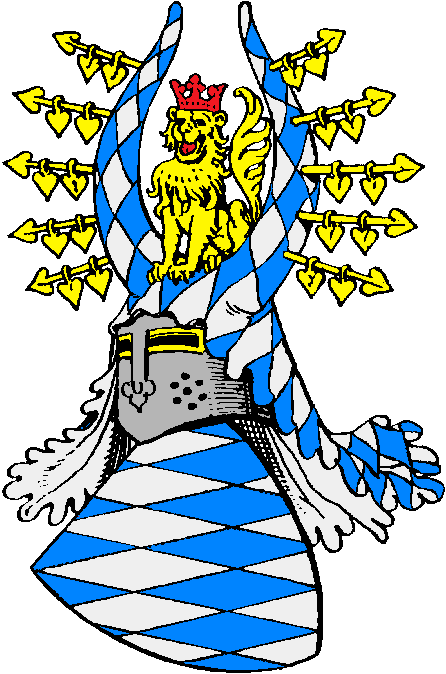
German royal family of Bavaria
| Field | Value | |
|---|---|---|
| surname | House of Wittelsbach | |
| coat of arms | Armoiries Bavière.svg | |
| country | Bavaria, Cologne, Germany, Greece, Hungary, Kalmar Union, Sweden, Palatinate, Lusatia | |
| parent house | Luitpoldings(?) | |
| titles | ||
| founder | Otto I | |
| final ruler | Ludwig III | |
| current head | Franz, Duke of Bavaria | |
| founding year | 11th century | |
| deposition | 13 November 1918 | |
| cadet branches | {{ubl | Bavaria branch: (extinct) |
:Bavaria-Landshut :Bavaria-Straubing :Bavaria-Ingolstadt :Bavaria-Munich Palatinate branch: (extant) :Palatinate-Simmern :Palatinate-Sulzbach :Palatinate-Neumarkt :Palatinate-Zweibrücken :Palatinate-Birkenfeld Counts of Dachau and Dukes of Merania (extinct)}} Counts Palatine of Bavaria and Counts of Wittelsbach (extinct) Löwenstein: (morganatic, extant) :Löwenstein-Scharffeneck :Löwenstein-Wertheim-Rosenberg :Löwenstein-Wertheim-Freudenberg}}
.png)
The House of Wittelsbach () is a former Bavarian dynasty, with branches that have ruled over territories including the Electorate of Bavaria, the Electoral Palatinate, the Electorate of Cologne, Holland, Zeeland, Sweden (with Swedish-ruled Finland), Denmark, Norway, Hungary, Bohemia, and Greece. Their ancestral lands of Bavaria and the Palatinate were prince-electorates, and the family had three of its members elected emperors and kings of the Holy Roman Empire. They ruled over the Kingdom of Bavaria which was created in 1805 and continued to exist until 1918.
The House of Windsor, the reigning royal house of the British monarchy, are descendants of Sophia of Hanover (1630–1714), a Wittelsbach Princess of the Palatinate by birth and Electress of Hanover by marriage, who had inherited the succession rights of the House of Stuart and passed them on to the House of Hanover.
History
When Otto I, Count of Scheyern (himself of uncertain origins) died in 1072, his third son Otto II, Count of Scheyern acquired Wittelsbach Castle (near Aichach). The Counts of Scheyern left Scheyern Castle (constructed around 940) in 1119 for Wittelsbach Castle and the former was given to monks to establish Scheyern Abbey. The origins of the Counts of Scheyern are unclear. Some speculative theories link them to Margrave Henry of Schweinfurt and his father Berthold, whose background is also disputed. Some speculate that the Schweinfurters may be descendants of the Luitpolding dynasty, the Bavarian dukes of the 10th century.
The Wittelsbach Conrad of Scheyern-Dachau, a great-grandson of Otto I, Count of Scheyern, became Duke of Merania in 1153 and was succeeded by his son Conrad II. It was the first duchy held by the Wittelsbach family (until 1180/82).
Otto I's eldest son Eckhard I, Count of Scheyern was father of the count palatine of Bavaria, Otto IV (died 1156), who was the first Count of Wittelsbach and whose son Otto was invested with the Duchy of Bavaria in 1180 after the fall of Henry the Lion and hence the first Bavarian ruler from the House of Wittelsbach. Duke Otto's son Louis I, Duke of Bavaria acquired the Electorate of the Palatinate in 1214.
Throughout history, members of the royal house have reigned as Dukes of Merania (1153–1180/82); Dukes, Electors, and Kings of Bavaria (1180–1918); Counts Palatine of the Rhine (1214–1803 and 1816–1918); Margraves of Brandenburg (1323–1373); Counts of Holland, Hainaut, and Zeeland (1345–1433); Elector-Archbishops of Cologne (1583–1761); Dukes of Jülich and Berg (1614–1794/1806); Kings of Sweden (1441–1448 and 1654–1720); and Dukes of Bremen-Verden (1654–1719).
The family also provided two Holy Roman Emperors (1328–1347/1742–1745), one King of the Romans (1400–1410), two Anti-Kings of Bohemia (1619–20/1742–43), one King of Hungary (1305–1308), one King of Denmark and Norway (1440–1448), and one King of Greece (1832–1862).
Bavaria and Palatinate within the Holy Roman Empire
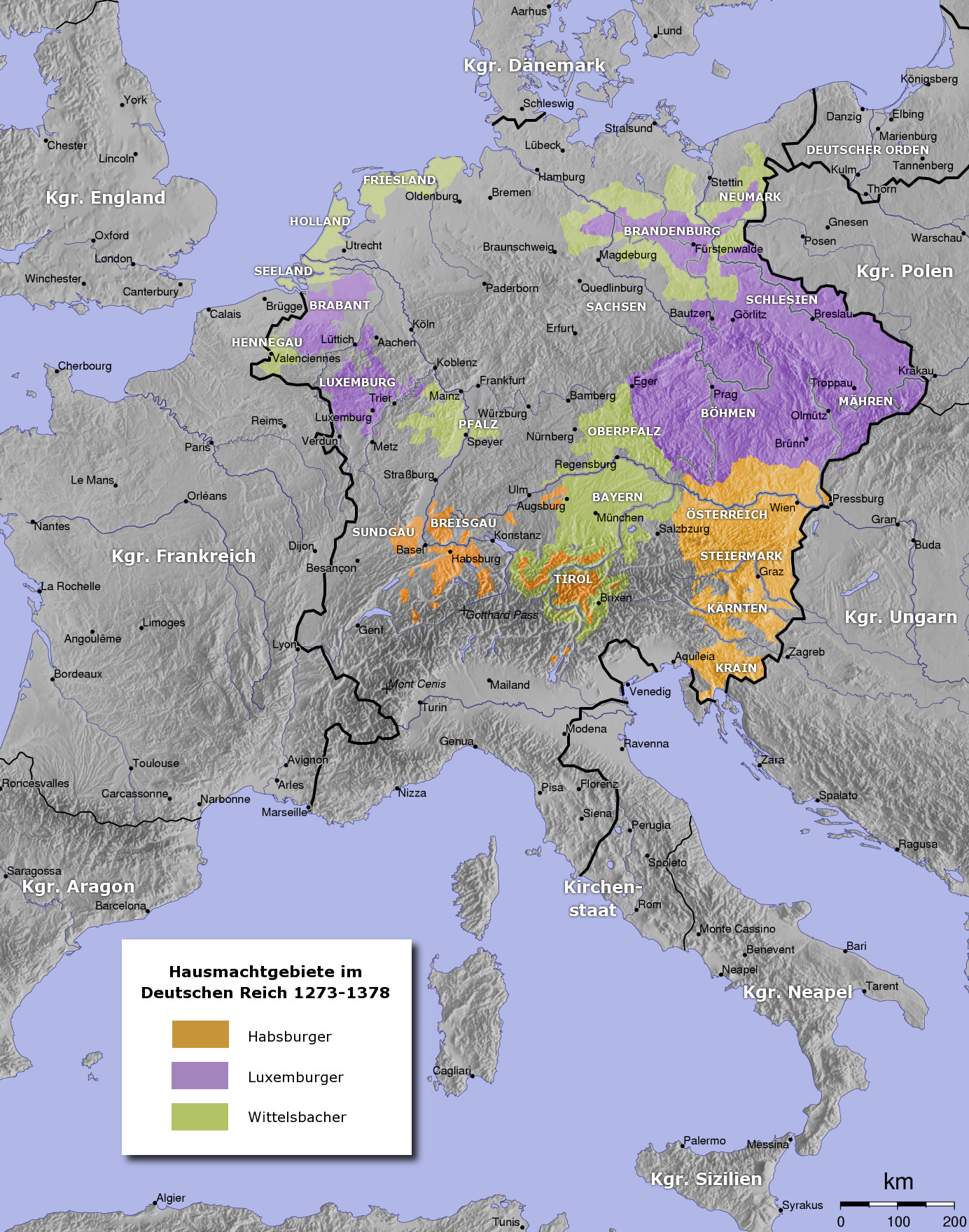
The Wittelsbach dynasty ruled the German territories of Bavaria from 1180 to 1918 and the Electorate of the Palatinate from 1214 until 1805. In both countries they had succeeded rulers from the House of Welf. The Duchy of Bavaria was elevated to the Electorate of Bavaria in 1623, and in 1806, Napoleon elevated it to the Kingdom of Bavaria. In 1815, the majority of the Palatinate was annexed by the Grand Duchy of Baden, with the remainder becoming the Circle of the Rhine.
On Duke Otto II's death in 1253, his sons divided the Wittelsbach possessions between them: Henry became Duke of Lower Bavaria, and Louis II Duke of Upper Bavaria and Count Palatine of the Rhine. When Henry's branch died out in 1340 the Emperor Louis IV, a son of Duke Louis II, reunited the duchy.
The family provided two Holy Roman Emperors: Louis IV (1314–1347) and Charles VII (1742–1745), both members of the Bavarian branch of the family, and one German King with Rupert of Germany (1400–1410), a member of the Palatinate branch.
The House of Wittelsbach split into these two branches in 1329: Under the Treaty of Pavia, Emperor Louis IV granted the Palatinate including the Bavarian Upper Palatinate to his brother Duke Rudolf's descendants, Rudolf II, Rupert I and Rupert II. Rudolf I in this way became the ancestor of the older (Palatinate) line of the Wittelsbach dynasty, which returned to power also in Bavaria in 1777 after the extinction of the younger (Bavarian) line, the descendants of Louis IV.
Through the efforts of Louis IV, the Wittelsbachs controlled the Duchy of Bavaria, the Electorate of the Palatine, the County of Tyrol, the Margraviate of Brandenburg, the County of Holland, County of Zeeland and the County of Hainault. This gave them a chance to dominate the Empire as the previous imperial houses of Hohenstaufen, Salians, Ottonians and Carolingians had. However, in the next generation they were outmaneuvered in Imperial politics by the Habsburgs and the most importantly by the Luxemburgs who both held compact and large possessions in the Duchy of Austria for the former and the Kingdom of Bohemia for the latter that allowed them to expand eastward.
Bavarian branch
The Bavarian branch kept the Duchy of Bavaria until its extinction in 1777.

The Wittelsbach Emperor Louis IV acquired Brandenburg (1323), Tyrol (1342), Holland, Zeeland and Hainaut (1345) for his House but he had also released the Upper Palatinate for the Palatinate branch of the Wittelsbach in 1329. His six sons succeeded him as Duke of Bavaria and Count of Holland and Hainaut in 1347. The Wittelsbachs lost the Tyrol with the death of Duke Meinhard and the following Peace of Schärding – the Tyrol was finally renounced to the Habsburgs in 1369. In 1373 Otto, the last Wittelsbach regent of Brandenburg, released the country to the House of Luxembourg. On Duke Albert's death in 1404, he was succeeded in the Netherlands by his eldest son, William. A younger son, John III, became Prince-Bishop of Liège. However, on William's death in 1417, a war of succession broke out between John and William's daughter Jacqueline of Hainaut. This last episode of the Hook and Cod wars finally left the counties in Burgundian hands in 1433. Emperor Louis IV had reunited Bavaria in 1340 but from 1349 onwards Bavaria was split among the descendants of Louis IV, who created the branches Bavaria-Landshut, Bavaria-Straubing, Bavaria-Ingolstadt and Bavaria-Munich. With the Landshut War of Succession Bavaria was reunited in 1505 against the claim of the Palatinate branch under the Bavarian branch Bavaria-Munich.
From 1549 to 1567 the Wittelsbach owned the County of Kladsko in Bohemia.
Strictly Catholic by upbringing, the Bavarian dukes became leaders of the German Counter-Reformation. From 1583 to 1761, the Bavarian branch of the dynasty provided the Prince-electors and Archbishops of Cologne and many other bishops of the Holy Roman Empire, namely Liège (1581–1763). Wittelsbach princes served at times as Bishops of Regensburg, Freising, Münster, Hildesheim, Paderborn and Osnabrück, and as Grand Master of the Teutonic Order.
In 1623 under Maximilian I the Bavarian dukes were invested with the electoral dignity and the duchy became the Electorate of Bavaria. His grandson Maximilian II Emanuel, Elector of Bavaria served also as Governor of the Habsburg Netherlands (1692–1706) and as Duke of Luxembourg (1712–1714). His son Emperor Charles VII also claimed the throne of Bohemia (1741–1743). With the death of Charles' son Maximilian III Joseph, Elector of Bavaria the Bavarian branch died out in 1777.
Palatinate branch
-DE.svg)
The Palatinate branch kept the Palatinate until 1918, having succeeded also to Bavaria in 1777. With the Golden Bull of 1356 the Counts Palatine were invested with the electoral dignity, and their county became the Electorate of the Palatinate. Princes of the Palatinate branch served as bishops of the Empire and also as Archbishop-Electors of Mainz and Archbishop-Electors of Trier.
After the death of the Wittelsbach king Rupert of Germany in 1410 the Palatinate lands began to split under numerous branches of the family such as Neumarkt, Simmern, Zweibrücken, Birkenfeld, Neuburg, and Sulzbach. When the senior branch of the Palatinate branch died out in 1559, the electorate passed to Frederick III of Simmern, a staunch Calvinist, and the Palatinate became one of the major centers of Calvinism in Europe, supporting Calvinist rebellions in both the Netherlands and France.
The Neuburg cadet branch of the Palatinate branch also held the Duchy of Jülich and Berg from 1614 onwards: when the last duke of Jülich-Cleves-Berg died without direct heirs in 1609, the War of the Jülich succession broke out, ended by the 1614 Treaty of Xanten, which divided the separate duchies between Palatinate-Neuburg and the Margraviate of Brandenburg. Jülich and Berg fell to the Wittelsbach Count Palatine Wolfgang William of Neuburg.
In 1619, the Protestant Frederick V, Elector Palatine became King of Bohemia but was defeated by the Catholic Maximilian I, Elector of Bavaria, a member of the Bavarian branch. As a result, the Upper Palatinate had to be ceded to the Bavarian branch in 1623, along with the Imperial office of Arch-Steward. When the Thirty Years' War concluded with the Treaty of Münster (also called the Peace of Westphalia) in 1648, a new additional electorate was created for the Count Palatine of the Rhine, along with the new office of Imperial Arch-Treasurer. During their exile Frederick's sons, especially Prince Rupert of the Rhine, gained fame in England.

The house of Palatinate of Zweibrücken-Kleeburg as heir to the Swedish throne ruled simultaneously the Duchy of Bremen-Verden (1654–1719).
In 1685, the Simmern line died out, and the Catholic Philip William, Count Palatine of Neuburg inherited the Palatinate (and also Duke of Jülich and Berg). During the reign of Johann Wilhelm (1690–1716) the electoral residence moved to Düsseldorf in Berg. His brother and successor Charles III Philip moved the Palatinate's capital back to Heidelberg in 1718 and then to Mannheim in 1720. To strengthen the union of all lines of the Wittelsbach dynasty Charles Philip organized a wedding on 17 January 1742 when his granddaughters were married to Charles Theodore of Palatinate-Sulzbach and the Bavarian prince Clement. In the imperial election a few days later Charles III Philip voted for his Bavarian cousin Prince-Elector Charles Albert. After extinction of the Neuburg branch in 1742, the Palatinate was inherited by Duke Charles Theodore of the branch Palatinate-Sulzbach.
After the extinction of the Bavarian branch in 1777, a succession dispute and the brief War of the Bavarian Succession, the Palatinate-Sulzbach branch under Elector Charles Theodore succeeded also in Bavaria.
With the death of Charles Theodore in 1799 all Wittelsbach land in Bavaria and the Palatinate was reunited under Maximilian IV Joseph, a member of the Palatinate-Zweibrücken-Birkenfeld branch. At the time there were two surviving branches of the Wittelsbach family: Palatinate-Zweibrücken-Birkenfeld (headed by Maximilian Joseph) and Palatinate-Birkenfeld-Gelnhausen (headed by Count Palatine William). Maximilian Joseph inherited Charles Thedore's title of Elector of Bavaria, while William was compensated with the title of Duke in Bavaria. The form "Duke in Bavaria" was selected because in 1506 primogeniture had been established in the House of Wittelsbach resulting in there being only one reigning Duke of Bavaria at any given time. Maximillian Joseph assumed the title of king as Maximilian I Joseph on 1 January 1806. The new king still served as a Prince-elector until the Kingdom of Bavaria left the Holy Roman Empire (1 August 1806).
Kingdom of Bavaria, 1806–1918
The Bavarian Army was involved in the Austrian defeat at Hohenlinden, and General Jean Victor Marie Moreau once more occupied Munich. By the Treaty of Lunéville (9 February 1801), Bavaria lost the Palatinate and the duchies of Zweibrücken and Jülich. In view of the scarcely disguised ambitions and intrigues of the Austrian court, prime minister Montgelas now believed that the interests of Bavaria lay in a frank alliance with the French Republic; he succeeded in overcoming the reluctance of Maximilian Joseph; and, on 24 August, a separate treaty of peace and alliance with France was signed at Paris, which allied Bavaria with France.
The 1805 Peace of Pressburg (now Bratislava) between Emperor Napoleon of France and Francis II, Holy Roman Emperor, as a consequence of the French victory over the Russians and Austrians at the Battle of Austerlitz (2 December), allowed Maximilian to raise Bavaria to the status of a kingdom. Accordingly, Maximilian proclaimed himself king on 1 January 1806. The King still served as an elector until Bavaria seceded from the Holy Roman Empire on 1 August 1806, joining the Confederation of the Rhine. The Duchy of Berg was ceded to Napoleon only in 1806.

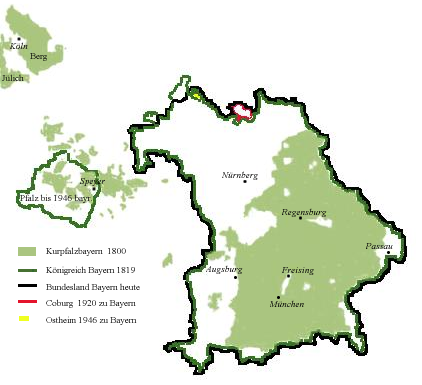
The Congress of Vienna 1814−15 led to the establishment of significant territorial gains for the Kingdom of Bavaria. Although the Duchy of Berg remained lost, almost all of Franconia, previously ruled by a number of Prince-bishops, as well as parts of Swabia, which had belonged to various mediatised secular and ecclesiastic princes, came under Bavarian rule. In both areas a number of formerly free imperial cities were also integrated into the kingdom. The previously heavily fragmented Palatinate territory was rounded off and partially moved. Smaller, mostly ecclesiastical territories on the southern border with Austria were also added. In this way, the border of Bavaria, which largely still exists today, was redefined and the state grew by more than a third in size.
Under Maximilian's descendants, Bavaria became the third most powerful German state, behind only Prussia and Austria. When the German Empire was formed in 1871, Bavaria became the new empire's second most powerful state after Prussia. The Wittelsbachs reigned as kings of Bavaria until the German Revolution of 1918–1919. On 12 November 1918 Ludwig III issued the Anif declaration (German: Anifer Erklärung) at Anif Palace in Austria, Germany: Bavaria: Heads of State: 1806–1918 archontology.org, accessed: 14 June 2008 in which he released his soldiers and officials from their oath of loyalty to him and ended the 738-year rule of the House of Wittelsbach in Bavaria. The republican movement thereupon declared a republic.
Activities during the Nazi regime, 1933–1945
Before and during the Second World War, the Wittelsbachs were anti-Nazi. Crown Prince Rupert had earned Hitler's eternal enmity by opposing the Beer Hall Putsch in 1923. In 1933, shortly after Hitler's rise to power, he protested against the appointment of governors at the head of the federal states and thus the de facto abolition of German federalism. In 1938, he emigrated to Italy and, after the German Army occupied Italy in September 1943, went into hiding in Florence.
His son, Albrecht, Duke of Bavaria, initially left Germany for Hungary with his family, but was eventually arrested by the Gestapo in October 1944, after Germany had occupied Hungary in March. With his wife, four children and three half-sisters, he was sent to a series of Nazi concentration camps, including Oranienburg, Flossenbürg and Dachau. Badly hit by hunger and disease, the family barely survived. At the end of April 1945, they were liberated by the United States Third Army.
Current position of the head of the house
Albrecht's eldest son, Franz von Bayern (Francis of Bavaria) is the current head of the house.
In the course of the division of state and house assets after the end of the kingdom, the Wittelsbach Compensation Fund (Wittelsbacher Ausgleichsfonds) was established through a compromise in 1923 and the Wittelsbach State Foundation for Art and Science was established by the former Crown Prince Rupprecht of Bavaria. The Wittelsbach State Foundation received the Wittelsbach family's art treasures acquired before 1804 and has since been the owner, although not the manager, of a large part of the holdings of the ancient and classical art museums in Munich, while more recent art collections came into the possession of the compensation fund, into which most of the possessions from the former Wittelsbach House Property Fund were transferred in 1923, including art treasures and collections (in particular the art collection of King Ludwig I, today mostly in the museums Alte Pinakothek and Neue Pinakothek and in the Glyptothek in Munich), the Secret House Archives (today a department of the Bavarian State Archives) and the former royal castles of Berg, Hohenschwangau (including the Museum of the Bavarian Kings), Berchtesgaden and Grünau hunting lodge.
The respective head of the House of Wittelsbach appoints a board of up to 8 directors of the foundation Wittelsbach Compensation Fund. He also appoints one of the 3 board members of the Wittelsbach State Foundation for Art and Science, while the other two are a representative of the Bavarian Ministry of Culture and a museum specialist appointed by the latter. There are around 13,500 cultural items belonging to the Wittelsbach State Foundation while another 43,000 are owned by the Wittelsbach Compensation Fund, mainly shown in museums and collections such as the Pinakotheken.
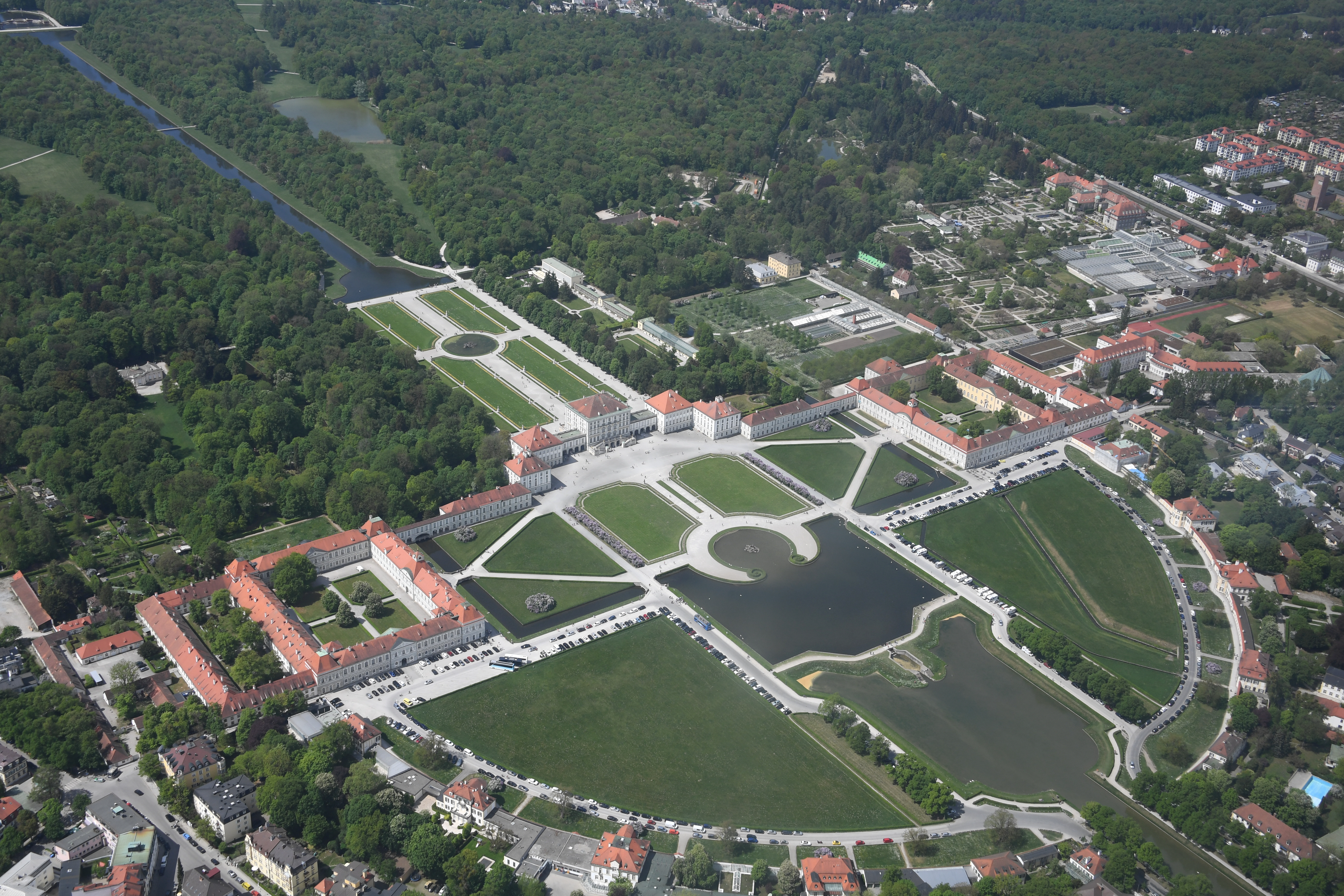
The former Bavarian Royal Family receives around 14 million Euros in payments annually from the proceeds of the Wittelsbach Compensation Fund which also owns agricultural and forestry lands, while its main source of income is urban real estate in Munich. The respective head of the family decides on their distribution and use. He has the right to live in the castles mentioned. While Albrecht lived in Berg Palace from 1949 until the end of his life in 1996, his son and successor Franz primarily uses the side wing of the Nymphenburg Palace that is available to him. The administration of the House of Wittelsbach is also based there.
The private assets of the House of Wittelsbach include the castles of Tegernsee Abbey, Wildenwart (near Frasdorf), Leutstetten (near Starnberg) and Kaltenberg as well as agricultural lands and forestry with an area of 12,500 hectares, real estate and industrial shares. These include two breweries that only became significant after the Second World War: the Ducal Bavarian Brewery of Tegernsee and the König Ludwig Schlossbrauerei. Since 2011, the Nymphenburg Porcelain Manufactory is also owned by a member of the family.
The head of the house is also Grand Master of the Wittelsbach House Orders, the Royal Order of Saint George for the Defense of the Immaculate Conception, the Order of Saint Hubert and the Order of Theresa.
Duke Franz maintained the tradition founded by his father of holding a large annual reception with a sit-down dinner at Nymphenburg Palace. Around 1,500 mostly changing guests from state politics, municipalities, churches and sciences, art and medicine as well as friends and relatives are invited. He also invites smaller groups of changing guests to Berchtesgaden Castle to discuss specific topics that are important to him. His 80th birthday party, in 2013, was held at the Schleissheim Palace near Munich. The party was attended by 2,500 guests including the then-incumbent Minister-President of Bavaria, Horst Seehofer.
In addition to numerous honorary positions in Bavaria, including many cultural and scientific institutions, Franz was also a member of the European Foundation for the Imperial Cathedral of Speyer in the State of Rhineland-Palatinate for many years, a position that his younger brother Duke Max Emanuel in Bavaria, has since taken over, through which the House of Wittelsbach still maintains a connection to one of its former main territories, the Electoral Palatinate. Max Emanuel is considered the next in line of succession to the headship of the former ruling dynasty, followed by his and Franz's first cousin Luitpold.
Reign outside the Holy Roman Empire
With Duke Otto III of Lower Bavaria, who was a maternal grandson of Béla IV of Hungary and was elected anti-king of Hungary and Croatia as Bela V (1305–1308) the Wittelsbach dynasty came to power outside the Holy Roman Empire for the first time. Otto had abdicated the Hungarian throne by 1308.
Palatinate branch
United Kingdom
The Bill of Rights 1689 and the Act of Settlement 1701 excluded non-Protestants from inheriting the throne of Great Britain, making Sophia of Hanover, a born princess of the House of Palatinate-Simmern, the heir presumptive upon Anne's death. Sophia died two months before Anne, however, and Sophia's eldest son George I of Great Britain succeeded the throne in 1714. In this way, the House of Hanover inherited the British crown. It remained on the throne until the death of Queen Victoria in 1901.
The line of Jacobite succession, which recognises the right for a Catholic monarch from the House of Stuart, acknowledges Franz, Hereditary Prince of Bavaria to be the rightful heir as "Francis II". However, no individual since Henry Benedict Stuart has publicly taken up the claim.
Kingdom of Sweden
Christopher III of the House of Palatinate-Neumarkt was king of Denmark, Sweden, and Norway in 1440/1442–1448, but left no descendants.
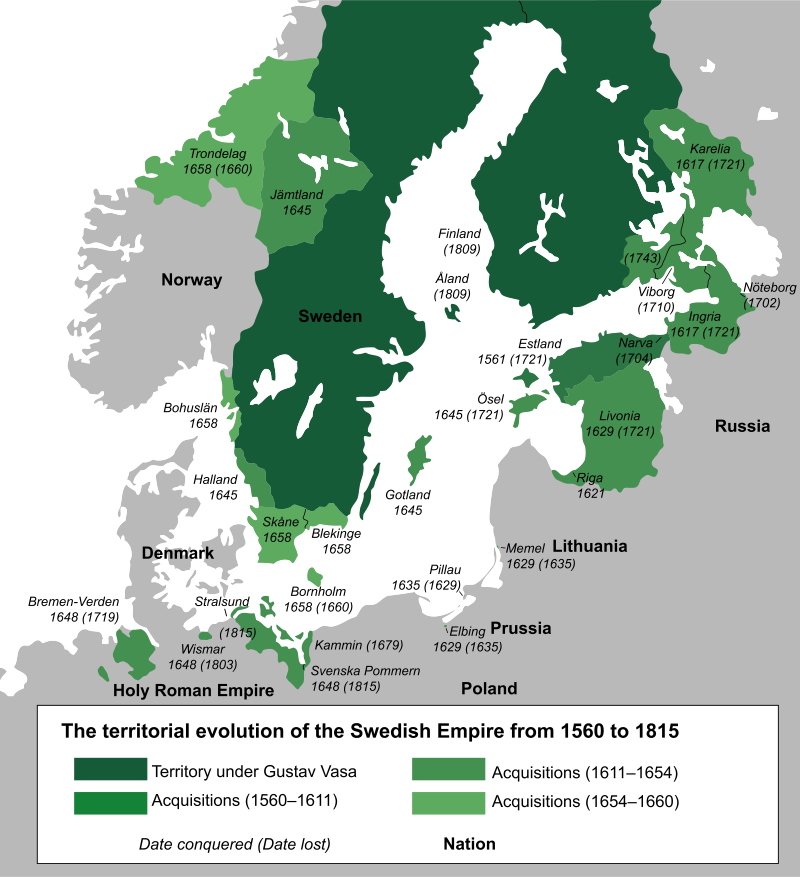
With the House of Palatinate-Zweibrücken the Wittelsbachs succeeded to the monarchy of Sweden again 1654–1720 when Queen Christina of Sweden abdicated her throne on 5 June 1654 in favour of her first cousin Charles X Gustav. Under him, Charles XI, Charles XII, Sweden reached its greatest power (see Swedish Empire). Charles XII was succeeded by his sister Ulrika Eleonora.
Sweden reached its largest territorial extent under the rule of Charles X Gustav after the Treaty of Roskilde in 1658. Charles Gustav's son Charles XI rebuilt the economy and refitted the army. His legacy to his son Charles XII was one of the finest arsenals in the world, a large standing army, and a large fleet. Charles XII was a skilled military leader and tactician. However, although he was also skilled as a politician, he was reluctant in making peace. While Sweden achieved several large scale military successes early on, and won the most battles, the Great Northern War eventually ended in Sweden's defeat and the end of the Swedish Empire. Charles was succeeded to the Swedish throne by his sister, Ulrika Eleonora. Her abdication in favour of her husband Frederick I in 1720 marked the end of Wittelsbach rule in Sweden.
Kingdom of Greece

Prince Otto of Bavaria was chosen by the London Conference of 1832 to be king of newly independent Greece. This was confirmed by the Treaty of Constantinople, whereby Greece became a new independent kingdom under the protection of the Great Powers (the United Kingdom, France and the Russian Empire).
Throughout his reign, Otto faced political challenges concerning Greece's financial weakness and the role of the government in the affairs of the Church. The politics of Greece of this era was based on affiliations with the three Great Powers, and Otto's ability to maintain the support of the powers was key to his remaining in power. To remain strong, Otto had to play the interests of each of the Great Powers’ Greek adherents against the others, while not aggravating the Great Powers. Otto's standing amongst Greeks suffered when Greece was blockaded by the British Royal Navy in 1850 and 1853 to stop Greece from attacking the Ottoman Empire during the Crimean War. As a result, there was an assassination attempt on his wife Queen Amalia in 1861. In 1862, Otto was deposed while in the countryside, and in 1863, the Greek National Assembly elected George I of the House of Glücksburg, aged only 17, King of the Hellenes, marking the end of Wittelsbach rule in Greece.
Hellenic Parliament from high above.jpg|The Old Royal Palace in Athens, built for King Otto I by Friedrich von Gärtner, 1841 Propylaeen Muenchen-1.jpg|Propylaea in Munich, monument for the secundogeniture of the Wittelsbach in Greece
Bavarian branch
Joseph Ferdinand, a son of Maximilian II Emanuel, was the favored choice of England and the Netherlands to succeed as the ruler of Spain, and Charles II of Spain chose him as his heir. Due to the unexpected death of Joseph Ferdinand in 1699 the Wittelsbachs did not come to power in Spain, leaving the Spanish Succession uncertain again.
Rulers
House of Wittelsbach
| Ruler | Born | Reign | Ruling part | Consort | Death | Notes |
|---|---|---|---|---|---|---|
| Otto I | c.1020 | |||||
| (Possible) son of Heinrich I, Count of Pegnitz | c.1050 – December 1072 | County of Scheyern | ? of Reichersbeuern | |||
| Haziga of Diessen | ||||||
| 1057 | ||||||
| (four children in total) | December 1072 | |||||
| aged 51–52 | ||||||
| Eckhard | 1044 | |||||
| First son of Otto I | December 1072 – May 1091 | County of Scheyern | Richardis of Carniola-Orlamünde | |||
| three children | May 1091 | |||||
| aged 46–47 | ||||||
| c.1045 | ||||||
| Second son of Otto I | December 1072 – 2 March 1104 | Unmarried | 2 March 1104 | |||
| Scheyern | ||||||
| aged | ||||||
| Otto II | c.1060 | |||||
| Third son of Otto I | December 1072 – 31 October 1120 | Richardis of Carniola-Orlamünde | ||||
| four children | 31 October 1120 | |||||
| aged 59–60 | ||||||
| c.1060 | ||||||
| Fourth son of Otto I | December 1072 – March 1123 | County of Dachau | ||||
| 1204 | ||||||
| one child | March 1123 | |||||
| aged 62–63 | ||||||
| Otto III | c.1090? | |||||
| Son of Otto II and Richardis of Carniola-Orlamünde | 31 October 1120 – December 1130 | County of Scheyern | Unmarried | December 1130 | ||
| aged 39–40? | ||||||
| c.1090 | ||||||
| First son of and | March 1123 – November 1130 | County of Dachau | Willibirg of Carniola-Orlamünde | |||
| two children | November 1130 | |||||
| aged 39–40 | ||||||
| c.1090 | ||||||
| Second son of and | March 1123 – April 1124 | Unmarried | April 1124 | |||
| Oberschleißheim | ||||||
| aged 33–34 | ||||||
| Otto I | c.1090 | |||||
| Third son of and | March 1123 – November 1130 | County of Valley | ||||
| five children | November 1130 | |||||
| aged 39–40 | ||||||
| Conrad II | c.1110 | |||||
| First son of and Willibirg of Carniola-Orlamünde | November 1130 – 18 February 1159 | County of Dachau | ||||
| (with the Duchy of Merania since 1152) | Adelaide of Limburg | |||||
| Udehild of Falkenstein | ||||||
| two children in total | 18 February 1159 | |||||
| aged 48–49? | ||||||
| c.1110 | ||||||
| Second son of and Willibirg of Carniola-Orlamünde | November 1130 – 1172 | County of Dachau | Unmarried | November 1185 | ||
| aged 74–75? | ||||||
| c.1110 | ||||||
| Son of Otto I and | November 1130 – 28 April 1162 | County of Valley | Agnes of Greifenstein | |||
| five children | 1175 | |||||
| Valley | ||||||
| aged 39–40 | ||||||
| Otto IV | [[File:Otto IV. von Scheyern-1.png | 100px]] | 1083 | |||
| Son of Eckhard and Richardis of Carniola-Orlamünde | December 1130 – 4 August 1156 | County of Scheyern | Heilika of Lengenfeld | |||
| 13 July 1116 | ||||||
| nine children | 4 August 1156 | |||||
| Wittelsbach Castle | ||||||
| aged 72–73 | ||||||
| Otto V & III the Redhead | [[File:Otton I Wittelsbach.jpg | 100px]] | 1117 | |||
| Kelheim | ||||||
| First son of Otto IV and Heilika of Lengenfeld | 4 August 1156 – 16 September 1180 | County of Scheyern | Agnes of Loon | |||
| 1169 | ||||||
| eleven children | 11 July 1183 | |||||
| Pfullendorf | ||||||
| aged 65–66 | ||||||
| 16 September 1180 – 11 July 1183 | Duchy of Bavaria | |||||
| Otto II | c.1140 | |||||
| First son of and Agnes of Greifenstein | 28 April 1162 – 29 October 1172 | County of Valley | Unmarried | November 1130 | ||
| aged 39–40 | ||||||
| c.1140 | ||||||
| Second son of and Agnes of Greifenstein | 28 April 1162 – 1196 | Matilda of Ortenburg | ||||
| three children | 1196 | |||||
| aged 65–66 | ||||||
| Conrad III | c.1130 | |||||
| Son of Conrad II | 1172 – 8 October 1182 | County of Dachau | ||||
| (with the Duchy of Merania since 1159) | Willibirg of Carniola-Orlamünde | |||||
| two children | 8 October 1182 | |||||
| aged 51–52 | ||||||
| Dachau annexed to the Duchy of Bavaria | ||||||
| c.1120 | ||||||
| Second son of Otto IV and Heilika of Lengenfeld | 16 September 1180 – 18 August 1189 | County of Scheyern | Benedicta of Donauwörth | |||
| 1204 | ||||||
| one child | 18 August 1189 | |||||
| aged 68–69 | ||||||
| Regency of Agnes of Loon, and Conrad of Wittelsbach, Archbishop of Mainz (1183-1189) | Obtained (through marriage) the Palatinate of the Rhine in 1214. He was assassinated in 1231. | |||||
| Louis I the Kelheimer | [[File:Julius Zimmermann - Ludwig I. der Kehlheimer (geb. 1174, reg. 1183-1231), Herzog von Bayern und Pfalzgraf bei Rhein - 4543 - Bavarian State Painting Collections.jpg | 100px]] | 23 December 1173 | |||
| Kelheim | ||||||
| Son of Otto V & III and Agnes of Loon | 11 July 1183 – 15 September 1231 | Duchy of Bavaria | Ludmilla of Bohemia | |||
| 1204 | ||||||
| one child | 15 September 1231 | |||||
| Kelheim | ||||||
| aged 57 | ||||||
| Otto VII | [[File:Ermordung Philipps von Schwaben.jpg | 100px]] | c.1160 | |||
| Son of and Benedicta of Donauwörth | 18 August 1189 – 7 March 1209 | County of Scheyern | Unmarried | 7 March 1209 | ||
| Bad Abbach | ||||||
| aged 48–49 | ||||||
| Scheyern annexed to the County of Ortenburg, and then joined the Duchy of Bavaria | ||||||
| Otto III | c.1190 | |||||
| Son of and Matilda of Ortenburg | 1196 – 1268 | County of Valley | ||||
| five children | 1268 | |||||
| aged c.77-78? | ||||||
| Valley annexed to the Duchy of Bavaria | ||||||
| Otto IV the Illustrious | [[File:Otto II Wittelsbach.jpg | 100px]] | 7 April 1206 | |||
| Kelheim | ||||||
| Son of Louis I and Ludmilla of Bohemia | 15 September 1231 – 29 November 1253 | Duchy of Bavaria | Agnes of the Palatinate | |||
| 1222 | ||||||
| Worms | ||||||
| eleven children | 29 November 1253 | |||||
| Landshut | ||||||
| aged 47 | ||||||
| Louis II the Strict | [[File:Fürstenfeldbruck-Klosterkirche 8.jpg | 100px]] | 13 April 1229 | |||
| Heidelberg | ||||||
| First son of Otto IV and Agnes of the Palatinate | 29 November 1253 – 2 February 1294 | Duchy of Upper Bavaria and County Palatine of the Rhine | Maria of Brabant | |||
| 2 August 1254 | ||||||
| no children | ||||||
| Anna of Głogów | ||||||
| 1260 | ||||||
| two children | ||||||
| Matilda of Austria | ||||||
| 24 October 1273 | ||||||
| four children | 2 February 1294 | |||||
| Heidelberg | ||||||
| aged 64 | ||||||
| Henry XIII | [[File:Heinrich XIII. (Bayern).png | 100px]] | 19 November 1235 | |||
| Landshut | ||||||
| Second son of Otto IV and Agnes of the Palatinate | 29 November 1253 – 3 February 1290 | Duchy of Lower Bavaria | Elizabeth of Hungary | |||
| 1250 | ||||||
| ten children | 3 February 1290 | |||||
| Burghausen | ||||||
| aged 54 | ||||||
| Otto V | [[File:Ota3 Thurocsi.jpg | 100px]] | 11 February 1261 | |||
| Burghausen | ||||||
| First son of Henry XIII and Elizabeth of Hungary | 3 February 1290 – 9 November 1312 | Duchy of Lower Bavaria | ||||
| January 1279 | ||||||
| two children | ||||||
| Agnes of Głogów | ||||||
| 18 May 1309 | ||||||
| two children | 9 November 1312 | |||||
| Landshut | ||||||
| aged 51 | ||||||
| Louis III | 9 February 1269 | |||||
| Landshut | ||||||
| Second son of Henry XIII and Elizabeth of Hungary | 3 February 1290 – 13 May 1296 | Isabella of Lorraine | ||||
| 1287 | ||||||
| no children | 13 May 1296 | |||||
| Landshut | ||||||
| aged 27 | ||||||
| Stephen I | 14 March 1271 | |||||
| Landshut | ||||||
| Third son of Henry XIII and Elizabeth of Hungary | 3 February 1290 – 10 December 1310 | |||||
| 1299 | ||||||
| eight children | 10 December 1310 | |||||
| Landshut | ||||||
| aged 27 | ||||||
| During a later division of territory among Louis II's heirs in 1294, the elder branch of the Wittelsbachs came into possession of both the Rhenish Palatinate and the territories in Bavaria north of the Danube river (the Nordgau) centred around the town of Amberg. As this region was politically connected to the Rhenish Palatinate, the name Upper Palatinate (Oberpfalz) became common from the early 16th century, to contrast with the Lower Palatinate along the Rhine. | ||||||
| Regency of Matilda of Austria (1294-1296) | Sons of Louis II, ruled jointly. In 1317 Rudolph abdicated of his rights to his brother, who in 1328 was elected Holy Roman Emperor. Louis had already been elected King of Germany in 1314. After occupying also the Palatinate, preventing the ascension of Rudolph's son Adolph, he eventually ceded his rights in Palatinate to Adolph's yoounger brothers in the Treaty of Pavia (1329). After John I the Child's death in 1340, Louis IV unified the Bavarian duchy. | |||||
| Rudolph I the Stammerer | [[File:Ausschnitt Codex Balduini Trevi.jpg | 100px]] | 4 October 1274 | |||
| Basel | ||||||
| First son of Louis II and Matilda of Austria | 2 February 1294 – 1317 | Duchy of Upper Bavaria | ||||
| (1294-1340) and County Palatine of the Rhine | ||||||
| (1294-1329) | Matilda of Nassau | |||||
| 1 September 1294 | ||||||
| Nuremberg | ||||||
| six children | 12 August 1319 | |||||
| Kingdom of England (?) | ||||||
| aged 44 | ||||||
| Louis IV the Bavarian | [[File:Ludwig der Bayer.jpg | 100px]] | 5 April 1282 | |||
| Munich | ||||||
| Second son of Louis II and Matilda of Austria | 2 February 1294 – 20 December 1340 | Beatrice of Świdnica-Jawor | ||||
| 14 October 1308 | ||||||
| six children | ||||||
| Margaret II, Countess of Holland-Hainaut | ||||||
| 26 February 1324 | ||||||
| Cologne | ||||||
| ten children | 11 October 1347 | |||||
| Puch, near Fürstenfeldbruck | ||||||
| aged 65 | ||||||
| 20 December 1340 – 11 October 1347 | Duchy of Bavaria | |||||
| Regency of Louis IV, Duke of Upper Bavaria (1312-1319) | Children of Stephen I and Otto V, ruled jointly. | |||||
| Henry XIV the Elder | 29 September 1305 | |||||
| First son of Stephen I and | 9 November 1312 – 1 September 1339 | Duchy of Lower Bavaria | Margaret of Bohemia | |||
| 12 August 1328 | ||||||
| Straubing | ||||||
| two children | 1 September 1339 | |||||
| Landshut | ||||||
| aged 33 | ||||||
| Otto VI | 3 January 1307 | |||||
| Second son of Stephen I and | 9 November 1312 – 14 December 1334 | Richardis of Jülich | ||||
| 1330 | ||||||
| one child | 14 December 1334 | |||||
| Munich | ||||||
| aged 27 | ||||||
| Henry XV of Natternberg | 28 August 1312 | |||||
| First son of Otto V and Agnes of Głogów | 9 November 1312 – 18 June 1333 | |||||
| between 1326 and 1328 | ||||||
| no children | 18 June 1333 | |||||
| aged 20 | ||||||
| Regency of Louis IV, Duke of Bavaria (1339-1340) | Left no male heirs, which allowed his cousin (and brother-in-law) Louis to reunite the Bavarian lands. | |||||
| John I the Child | 29 November 1329 | |||||
| Son of Henry XIV and Margaret of Bohemia | 1 September 1339 – 20 December 1340 | Duchy of Lower Bavaria | Anna of Upper Bavaria | |||
| 18 April 1339 | ||||||
| Munich | ||||||
| no children | 20 December 1340 | |||||
| Landshut | ||||||
| aged 11 | ||||||
| In 1327, Louis IV, Duke of Bavaria occupied Palatinate, but wasn't recognized as Count Palatine, as he was defending the position of his younger nephews against the claimancy of his older nephew, Adolf, Count Palatine of the Rhine. Ten years later gave it to his nephews, sons of Rudolph. With the Treaty of Pavia in 1329, as Emperor, Louis made formal his donation, pushing back the claimant Count Adolf. | ||||||
| Rudolph II the Blind | [[File:Rudolf II. von der Pfalz.jpg | 100px]] | 8 August 1306 | |||
| Wolfratshausen | ||||||
| Second son of Rudolph I and Matilda of Nassau | 1329 – 4 October 1353 | County Palatine of the Rhine | ||||
| 1328 | ||||||
| one child | ||||||
| Margaret of Sicily | ||||||
| 1348 | ||||||
| no children | 4 October 1353 | |||||
| Neustadt an der Weinstraße | ||||||
| aged 47 | ||||||
| Louis V the Brandenburger | [[File:LudwigI Wittelsbach Siegesallee.JPG | 100px]] | May 1315 | |||
| First son of Louis IV and Beatrice of Świdnica-Jawor | 11 October 1347 – 18 September 1361 | Duchy of Upper Bavaria | ||||
| (in all Bavaria until 1349; with the Margraviate of Brandenburg since 1323 and until 1351) | Margaret of Denmark | |||||
| 1324 | ||||||
| no children | ||||||
| Margaret, Countess of Tyrol | ||||||
| 10 February 1342 | ||||||
| Meran | ||||||
| four children | 18 September 1361 | |||||
| Zorneding | ||||||
| aged 46 | ||||||
| Louis VI the Roman | [[File:Ludwigvi.jpg | 100px]] | 7 May 1328 | |||
| Rome | ||||||
| First son of Louis IV and Margaret II, Countess of Holland-Hainaut | 11 October 1347 – | Duchy of Upper Bavaria | ||||
| (in all Bavaria until 1349) | Cunigunde of Poland | |||||
| before 1349 | ||||||
| no children | ||||||
| Ingeborg of Mecklenburg-Schwerin | ||||||
| 1360 | ||||||
| no children | 17 May 1365 | |||||
| Berlin | ||||||
| aged 37 | ||||||
| – 17 May 1365 | Margraviate of Brandenburg | |||||
| (until 1356) | ||||||
| Electorate of Brandenburg | ||||||
| (from 1356) | ||||||
| Otto VII the Lazy | [[File:OttoV Faule Siegesallee.JPG | 100px]] | 1346 | |||
| Fourth son of Louis IV and Margaret II, Countess of Holland-Hainaut | 11 October 1347 – | Duchy of Upper Bavaria | ||||
| (in all Bavaria until 1349) | Catherine of Bohemia | |||||
| 19 March 1366 | ||||||
| no children | 15 November 1379 | |||||
| aged 32–33 | ||||||
| – | Margraviate of Brandenburg | |||||
| (until 1356) | ||||||
| Electorate of Brandenburg | ||||||
| (from 1356) | ||||||
| – 15 November 1379 | Duchy of Landshut | |||||
| (in co-rulership with his brother 1373-75, with his nephews 1375-79) | ||||||
| Stephen II the Representative | [[File:Julius Zimmermann - Stephan II. mit der Hafte (geb. 1313, regierte 1347-1375), Herzog von Bayern - 4544 - Bavarian State Painting Collections.jpg | 100px]] | 1319 | |||
| Second son of Louis IV and Beatrice of Świdnica-Jawor | 11 October 1347 – 13 May 1375 | Duchy of Landshut | ||||
| (in all Bavaria until 1349; in Lower Bavaria until 1353) | Elisabeth of Sicily | |||||
| 27 June 1328 | ||||||
| four children | ||||||
| 14 February 1359 | ||||||
| three children | 13 May 1375 | |||||
| Landshut or Munich | ||||||
| aged 55–56 | ||||||
| William I the Mad | [[File:Guillaume III de Hainaut.png | 100px]] | 12 May 1330 | |||
| Frankfurt am Main | ||||||
| Second son of Louis IV and Margaret II, Countess of Holland-Hainaut | 11 October 1347 – 15 April 1389 | Duchy of Straubing | ||||
| (in all Bavaria until 1349; in Lower Bavaria until 1353; with the maternal Counties of Holland, Zeeland and Hainaut since 1356) | Matilda of England | |||||
| 1352 | ||||||
| London | ||||||
| no children | 15 April 1389 | |||||
| Le Quesnoy | ||||||
| aged 58 | ||||||
| Albert I | [[File:Albert de Bavière.png | 100px]] | 25 July 1336 | |||
| Munich | ||||||
| Third son of Louis IV and Margaret II, Countess of Holland-Hainaut | 11 October 1347 – 13 December 1404 | Margaret of Brzeg | ||||
| after 19 July 1353 | ||||||
| Passau | ||||||
| seven children | ||||||
| Margaret of Clèves | ||||||
| 1394 | ||||||
| Heusden | ||||||
| no children | 13 December 1404 | |||||
| The Hague | ||||||
| aged 68 | ||||||
| Albert II | [[File:Straubing-Karmelitenkirche-Grabmal-Albrecht-II-Detail.JPG | 100px]] | 1368 | |||
| Second son of Albert I and Margaret of Brzeg | 15 April 1389 – 21 January 1397 | Unmarried | 21 January 1397 | |||
| Kelheim | ||||||
| aged 28–29 | ||||||
| Electorate of Brandenburg lost to the House of Hohenzollern | ||||||
| The Golden Bull of 1356 confirmed the right to participate in the election of a Holy Roman Emperor to the Count Palatine, title that evolved to Elector Palatine. | ||||||
| Robert I the Red | [[File:Ruprecht I., 1910.jpg | 100px]] | 9 June 1309 | |||
| Wolfratshausen | ||||||
| Third son of Rudolph I and Matilda of Nassau | 4 October 1353 – 16 February 1390 | County Palatine of the Rhine | ||||
| (until 1356) | ||||||
| Electorate of the Palatinate | ||||||
| (from 1356) | ||||||
| 1350 or 1358 | ||||||
| no children | ||||||
| Beatrix of Berg | ||||||
| 1385 | ||||||
| no children | 16 Febrruarry 1390 | |||||
| Neustadt an der Weinstraße | ||||||
| aged 47 | ||||||
| Meinhard | [[File:Meinhard III. von Tirol.jpg | 100px]] | 9 February 1344 | |||
| Landshut | ||||||
| Son of Louis V and Margaret, Countess of Tyrol | 18 September 1361 – 13 January 1363 | Duchy of Upper Bavaria | Margaret of Austria | |||
| 4 September 1359 | ||||||
| Passau | ||||||
| no children | 13 January 1363 | |||||
| Tirol Castle | ||||||
| aged 18 | ||||||
| Divided between Bavaria-Landshut and Bavaria-Straubing | ||||||
| Stephen III the Magnificent | [[File:Zimmermann - Stephen III of Bavaria.jpg | 100px]] | 1337 | |||
| First son of Stephen II and Elisabeth of Sicily | 13 May 1375 – 26 September 1413 | Duchy of Ingolstadt | ||||
| (in Landshut until 1392) | Taddea Visconti | |||||
| 13 October 1364 | ||||||
| two children | ||||||
| Myntha Elisabeth of Cleves | ||||||
| 16 January 1401 | ||||||
| Cologne | ||||||
| no children | 26 September 1413 | |||||
| Niederschönenfeld | ||||||
| aged 75–76 | ||||||
| Frederick the Wise | [[File:König Friedrich Rathaus München.jpg | 100px]] | 1339 | |||
| Second son of Stephen II and Elisabeth of Sicily | 13 May 1375 – 4 December 1393 | Duchy of Landshut | ||||
| 1360 | ||||||
| one child | ||||||
| Maddalena Visconti | ||||||
| 2 September 1381 | ||||||
| five children | 4 December 1393 | |||||
| České Budějovice | ||||||
| aged 53–54 | ||||||
| John II | [[File:Herzog Johann II. Rathaus München.jpg | 100px]] | 1341 | |||
| Third son of Stephen II and Elisabeth of Sicily | 13 May 1375 – 1 July 1397 | Duchy of Munich | ||||
| (in Landshut until 1392) | Catherine of Gorizia | |||||
| 1372 | ||||||
| three children | 1 July 1397 | |||||
| aged 55–56 | ||||||
| Robert II the Hard | [[File:Ruprecht und Gattin 2.jpg | 100px]] | 12 May 1325 | |||
| Amberg | ||||||
| Son of Adolph of the Rhine and Irmengard of Oettingen | 16 January 1390 – 6 January 1398 | Electorate of the Palatinate | Beatrice of Sicily | |||
| 1345 | ||||||
| seven children | 6 January 1398 | |||||
| Amberg | ||||||
| aged 72 | ||||||
| Regencies of Maddalena Visconti and Stephen III, Duke of Bavaria (1393-1401), John II, Duke of Bavaria (1393-97), Ernest, Duke of Bavaria and William III, Duke of Bavaria (1397-1401) | Annexed Ingolstadt in 1445. | |||||
| Henry XVI the Rich | [[File:Henry XVI of Bavaria.jpg | 100px]] | 1386 | |||
| Burghausen | ||||||
| Son of Frederick and Maddalena Visconti | 4 December 1393 – 30 July 1450 | Duchy of Landshut | ||||
| 25 November 1412 | ||||||
| Landshut | ||||||
| six children | 30 July 1450 | |||||
| Landshut | ||||||
| aged 75–76 | ||||||
| Ernest | [[File:Jaumann Ernst Rat.jpg | 100px]] | 1373 | |||
| Munich | ||||||
| First son of John II and Catherine of Gorizia | 1 July 1397 – 2 July 1438 | Duchy of Munich | Elisabetta Visconti | |||
| 26 January 1395 | ||||||
| Pfaffenhofen an der Ilm | ||||||
| four children | 2 July 1438 | |||||
| Munich | ||||||
| aged 64–65 | ||||||
| William III | [[File:Jaumann Albrecht Wilhelm.jpg | 100px]] | 1375 | |||
| Munich | ||||||
| Second son of John II and Catherine of Gorizia | 1 July 1397 – 12 September 1435 | Margaret of Cleves | ||||
| 1433 | ||||||
| two children | 12 September 1435 | |||||
| Munich | ||||||
| aged 59–60 | ||||||
| Robert III the Righteous | [[File:Rooms-koning Ruprecht.jpg | 100px]] | 5 May 1352 | |||
| Amberg | ||||||
| Son of Robert II and Beatrice of Sicily | 6 January 1398 – 18 May 1410 | Electorate of the Palatinate | Elisabeth of Nuremberg | |||
| 27 June 1374 | ||||||
| Amberg | ||||||
| seven children | 18 May 1410 | |||||
| Oppenheim | ||||||
| aged 58 | ||||||
| William II of Oostervant | [[File:Willem van Beijeren, XXVII grave van Hollandt & Zeelandt, heeft geregeert 13 jaeren, Objectnr PV PV20626.27.jpg | 100px]] | 5 April 1365 | |||
| The Hague | ||||||
| First son of Albert I and Margaret of Brzeg | 13 December 1404 – 31 May 1417 | Duchy of Straubing | ||||
| (with the Counties of Holland, Zeeland and Hainaut) | Margaret of Burgundy | |||||
| 12 April 1385 | ||||||
| Cambrai | ||||||
| one child | 31 May 1417 | |||||
| Bouchain | ||||||
| aged 52 | ||||||
| Louis III the Bearded | [[File:Ludwig III. (Pfalz).jpg | 100px]] | 23 January 1378 | |||
| First son of Robert III and Elisabeth of Nuremberg | 18 May 1410 – 30 December 1436 | Electorate of the Palatinate | Blanche of England | |||
| 6 July 1402 | ||||||
| Cologne | ||||||
| no children | ||||||
| Matilda of Savoy | ||||||
| 30 November 1417 | ||||||
| five children | 30 December 1436 | |||||
| Heidelberg | ||||||
| aged 58 | ||||||
| John I | [[File:Johann von Pfalz-Neumarkt.jpg | 100px]] | 1383 | |||
| Neunburg vorm Wald | ||||||
| Second son of Robert III and Elisabeth of Nuremberg | 18 May 1410 – 14 March 1443 | County of Neumarkt | Catherine of Pomerania-Stolp | |||
| 15 August 1407 | ||||||
| Ribe | ||||||
| seven children | 14 March 1443 | |||||
| Kastl | ||||||
| aged 60 | ||||||
| Stephen I | [[File:Stefan von Pfalz-Simmern-Zweibrücken.jpg | 100px]] | 23 June 1385 | |||
| Third son of Robert III and Elisabeth of Nuremberg | 18 May 1410 – 14 February 1459 | County of Simmern | Anna of Veldenz | |||
| 10 June 1410 | ||||||
| Heidelberg | ||||||
| eight children | 14 February 1459 | |||||
| Simmern | ||||||
| aged 73 | ||||||
| Otto I | [[File:Pfalzgraf Otto I Mosbach a.jpg | 100px]] | 24 August 1390 | |||
| Mosbach | ||||||
| Fourth son of Robert III and Elisabeth of Nuremberg | 18 May 1410 – 5 July 1461 | County of Mosbach | ||||
| January 1430 | ||||||
| Burghausen | ||||||
| eight children | 5 July 1461 | |||||
| Reichenbach | ||||||
| aged 70 | ||||||
| Louis VII the Bearded | [[File:Ludbar.jpg | 100px]] | 1368 | |||
| Son of Stephen III and Taddea Visconti | 26 September 1413 – 1443 | Duchy of Ingolstadt | Anne de Bourbon-La Marche | |||
| 1 October 1402 | ||||||
| two children | ||||||
| Catherine of Alençon | ||||||
| 1413 | ||||||
| two children | 1 May 1447 | |||||
| aged 78–79 | ||||||
| John III the Pitiless | [[File:Jan van Beijeren, grave van Hollandt & Zeelandt, heeft geregeert 6 jaeren, Objectnr PV PV20626.28.jpg | 100px]] | 1374 | |||
| Le Quesnoy | ||||||
| Third son of Albert I and Margaret of Brzeg | 31 May 1417 – 6 January 1425 | Duchy of Straubing | Elizabeth I, Duchess of Luxembourg | |||
| 11418 | ||||||
| no children | 6 January 1425 | |||||
| The Hague | ||||||
| aged 50/51 | ||||||
| Jacqueline | [[File:Jacoba van Beieren door Hollandse school ca 1600.jpg | 100px]] | 15 July 1401 | |||
| Le Quesnoy | ||||||
| Daughter of William II and Margaret of Burgundy | 31 May 1417 – 12 April 1433 | Counties of Holland, Zeeland and Hainaut | John, Dauphin of France | |||
| 6 August 1415 | ||||||
| The Hague | ||||||
| no children | ||||||
| John IV, Duke of Brabant | ||||||
| 10 March 1418 | ||||||
| The Hague | ||||||
| (annulled 1422) | ||||||
| no children | ||||||
| Humphrey, Duke of Gloucester | ||||||
| February/March 1423 | ||||||
| Hadleigh, Essex | ||||||
| (in secret; annulled 1428) | ||||||
| no children | ||||||
| Frank van Borssele | ||||||
| 1434 | ||||||
| no children | 8 October 1436 | |||||
| Voorhout | ||||||
| aged 35 | ||||||
| Straubing definitively annexed by the remaining Bavarian duchies; the counties were annexed to the Duchy of Burgundy | ||||||
| Regency of Otto I, Count Palatine of Mosbach (1436–1442) | ||||||
| Louis IV the Meek | [[File:Ludwig IV. Hans Wertinger.jpg | 100px]] | 1 January 1424 | |||
| Heidelberg | ||||||
| First son of Louis III and Matilda of Savoy | 30 December 1436 – 13 August 1449 | Electorate of the Palatinate | Margaret of Savoy | |||
| 18 October 1445 | ||||||
| Heidelberg | ||||||
| one child | 13 August 1449 | |||||
| Worms | ||||||
| aged 25 | ||||||
| Albert III the Pious | [[File:Albrecht III von Bayern lehnt Königskrone ab.jpg | 100px]] | 27 March 1401 | |||
| Wolfratshausen | ||||||
| Son of Ernest and Elisabetta Visconti | 2 July 1438 – 29 February 1460 | Duchy of Munich | Agnes Bernauer | |||
| c. 1432? | ||||||
| (morganatic) | ||||||
| no children | ||||||
| Anna of Brunswick-Grubenhagen | ||||||
| 22 January 1437 | ||||||
| Munich | ||||||
| ten children | 29 February 1460 | |||||
| Munich | ||||||
| aged 58 | ||||||
| Louis VIII the Hunchback | 1 September 1403 | |||||
| Paris | ||||||
| Son of Louis VII and Anne de Bourbon-La Marche | 1443 – 7 April 1445 | Duchy of Ingolstadt | Unmarried | 7 April 1445 | ||
| Ingolstadt | ||||||
| aged 41 | ||||||
| Ingolstadt annexed by Landshut | ||||||
| Christopher I | [[File:Kristoffer, 1418-48, av Bayern konung av Danmark Norge och Sverige - Nationalmuseum - 15050.tif | 100px]] | 26 February 1416 | |||
| Neumarkt in der Oberpfalz | ||||||
| Son of John I and Catherine of Pomerania-Stolp | 14 March 1443 – 6 January 1448 | County of Neumarkt | Dorothea of Brandenburg | |||
| 12 September 1445 | ||||||
| Copenhagen | ||||||
| no children | 5/6 January 1448 | |||||
| Helsingborg | ||||||
| aged 31 | ||||||
| Neumarkt definitely annexed to Mosbach | ||||||
| Frederick I the Victorious | [[File:Friedrich der Siegreiche von Albrecht Altdorfer.jpg | 100px]] | 1 August 1425 | |||
| Heidelberg | ||||||
| Second son of Louis III and Matilda of Savoy | 13 August 1449 – 12 December 1476 | Electorate of the Palatinate | Clara Tott | |||
| 1471/2 | ||||||
| (morganatic) | ||||||
| two children | 12 December 1476 | |||||
| Heidelberg | ||||||
| aged 51 | ||||||
| Louis IX the Rich | [[File:Ludwig der Reiche.jpg | 100px]] | 23 February 1417 | |||
| Burghausen | ||||||
| Son of Henry XVI and | 30 July 1450 – 18 January 1479 | Duchy of Landshut | Amalia of Saxony | |||
| 21 March 1452 | ||||||
| Landshut | ||||||
| four children | 18 January 1479 | |||||
| Landshut | ||||||
| aged 61 | ||||||
| Frederick I the Pious | 19 November 1417 | |||||
| First son of Stephen and Anna of Veldenz | 14 February 1459 – 29 November 1480 | County of Simmern | Margaret of Guelders | |||
| 6 August 1454 | ||||||
| Lobith | ||||||
| ten children | 29 November 1480 | |||||
| Simmern | ||||||
| aged 61 | ||||||
| Louis I the Black | [[File:Herzog Ludwig I. der Schwarze von Zweibrücken und Veldenz (1423 – 1489).jpg | 100px]] | 1424 | |||
| Second son of Stephen and Anna of Veldenz | 14 February 1459 – 19 July 1489 | County of Zweibrücken | Johanna de Croÿ | |||
| 20 March 1454 | ||||||
| Luxembourg | ||||||
| twelve children | 19 July 1489 | |||||
| Simmern | ||||||
| aged 64–65 | ||||||
| John IV | 4 October 1437 | |||||
| Munich | ||||||
| First son of Albert III and Anna of Brunswick-Grubenhagen | 29 February 1460 – 18 November 1463 | Duchy of Munich | Unmarried | 18 November 1463 | ||
| aged 26 | ||||||
| Sigismund | [[File:Jan Polack - Sigismund von Bayern.jpg | 100px]] | 26 July 1439 | |||
| Munich | ||||||
| Second son of Albert III and Anna of Brunswick-Grubenhagen | 29 February 1460 – 1 February 1501 | Duchy of Munich | ||||
| (at Dachau) | 1 February 1501 | |||||
| Blutenburg Castle | ||||||
| aged 61 | ||||||
| Albert IV the Wise | [[File:Albert IV, Duke of Bavaria, portrait by Barthel Beham.jpg | 100px]] | 15 December 1447 | |||
| Munich | ||||||
| Third son of Albert III and Anna of Brunswick-Grubenhagen | 29 February 1460 – 1 December 1503 | Duchy of Munich | Kunigunde of Austria | |||
| 3 January 1487 | ||||||
| Munich | ||||||
| seven children | 18 March 1508 | |||||
| Munich | ||||||
| aged 60 | ||||||
| 1 December 1503 – 18 March 1508 | Duchy of Bavaria | |||||
| Dachau reunited with Munich | ||||||
| Otto II the Mathematician | [[File:Zeichnung - Otto II - Pfalzgraf Pfalz-Mosbach.jpg | 100px]] | 26 June 1435 | |||
| Mosbach | ||||||
| Son of Otto I and | 5 July 1461 – 4 October 1490 | County of Mosbach | Unmarried | 8 April 1499 | ||
| Neumarkt in der Oberpfalz | ||||||
| aged 63 | ||||||
| Mosbach definitely annexed to the Electorate of the Palatinate | ||||||
| Philip the Upright | [[File:Pfalzgraf Philipp I (1448-1508) as donor, from St. Cacilien in Neckarsteinach, Middle Rhine - Pfalz, 1483 AD, stained and painted glass - Hessisches Landesmuseum Darmstadt - Darmstadt, Germany - DSC00614.jpg | 100px]] | 14 July 1448 | |||
| Heidelberg | ||||||
| Son of Louis IV and Margaret of Savoy | 12 December 1476 – 28 February 1508 | Electorate of the Palatinate | Margaret of Bavaria | |||
| 1474 | ||||||
| Amberg | ||||||
| fourteen children | 28 February 1508 | |||||
| Germersheim | ||||||
| aged 59 | ||||||
| George the Rich | [[File:Herzog Georgs des Reichen von Paul Gertner.jpg | 100px]] | 15 August 1455 | |||
| Burghausen | ||||||
| Son of Louis IX and Amalia of Saxony | 18 January 1479 – 1 December 1503 | Duchy of Landshut | Hedwig of Poland | |||
| 14 November 1475 | ||||||
| Landshut | ||||||
| five children | 1 December 1503 | |||||
| Ingolstadt | ||||||
| aged 48 | ||||||
| John I | [[File:Fragment of an altarpiece, thought to depict Johan I, count palatine of Simmern.jpg | 100px]] | 15 May 1459 | |||
| Son of Frederick I and Margaret of Guelders | 29 November 1480 – 27 January 1509 | County of Simmern | ||||
| 29 September 1481 | ||||||
| three children | 27 January 1509 | |||||
| aged 49 | ||||||
| Kaspar | 11 July 1459 | |||||
| First son of Louis I and Johanna de Croÿ | 19 July 1489 – 1490 | County of Zweibrücken | Amalie of Brandenburg | |||
| 19 April 1478 | ||||||
| Zweibrücken | ||||||
| no children | 1527 | |||||
| Veldenz Castle | ||||||
| aged 67–68 | ||||||
| Alexander the Lame | 26 November 1462 | |||||
| Second son of Louis I and Johanna de Croÿ | 19 July 1489 – 21 October 1514 | |||||
| 1499 | ||||||
| Zweibrücken | ||||||
| six children | 21 October 1514 | |||||
| Zweibrücken | ||||||
| aged 51 | ||||||
| Elisabeth | 1478 | |||||
| Burghausen | ||||||
| Daughter of George and Hedwig of Poland | 1 December 1503 – 15 September 1504 | Duchy of Landshut | Robert of the Palatinate | |||
| 10 February 1499 | ||||||
| three children | 15 September 1504 | |||||
| Landshut | ||||||
| aged 25–26 | ||||||
| Landshut (with exceptions) was annexed to Munich | ||||||
| Louis V the Pacific | [[File:Ludwig V. Pfalz.jpg | 100px]] | 2 July 1478 | |||
| Heidelberg | ||||||
| First son of Philip and Margaret of Bavaria | 28 February 1508 – 16 March 1544 | Electorate of the Palatinate | Sibylle of Bavaria | |||
| 23 February 1511 | ||||||
| Heidelberg | ||||||
| no children | 16 March 1544 | |||||
| Heidelberg | ||||||
| aged 65 | ||||||
| Wolfgang the Elder | [[File:Pfalzgraf Wolfgang (1494-1558).jpg | 100px]] | 31 October 1494 | |||
| Heidelberg | ||||||
| Third son of Philip and Margaret of Bavaria | 28 February 1508 – 2 April 1558 | Electorate of the Palatinate | ||||
| (at Neumarkt) | Unmarried | 2 April 1558 | ||||
| Neumarkt in der Oberpfalz | ||||||
| aged 63 | ||||||
| William IV the Steadfast | [[File:Hans Wertinger - Herzog Wilhelm IV. von Bayern Rückseite, Wappen Bayern-Baden und Devise - 17 - Bavarian State Painting Collections.jpg | 100px]] | 13 November 1493 | |||
| Munich | ||||||
| First son of Albert IV and Kunigunde of Austria | 18 March 1508 – 7 March 1550 | Duchy of Bavaria | Jakobaea of Baden | |||
| 5 October 1522 | ||||||
| Munich | ||||||
| four children | 7 March 1550 | |||||
| Munich | ||||||
| aged 56 | ||||||
| Louis X | [[File:Ludwig X. von Bayern.jpg | 100px]] | 18 September 1495 | |||
| Grünwald | ||||||
| Second son of Albert IV and Kunigunde of Austria | 17 February 1514 – 22 April 1545 | Duchy of Bavaria | ||||
| (in Landshut and Straubing) | Unmarried | 22 April 1545 | ||||
| Landshut | ||||||
| aged 49 | ||||||
| John II | [[File:JohannIISimmern.jpg | 100px]] | 21 March 1492 | |||
| Simmern | ||||||
| Son of John I and | 27 January 1509 – 18 May 1557 | County of Simmern | Beatrix of Baden | |||
| 22 May 1508 | ||||||
| twelve children | 18 May 1557 | |||||
| Simmern | ||||||
| aged 65 | ||||||
| Louis II the Younger | [[File:Ludwig II., Pfalzgraf von Zweibrücken (1502-1532).jpg | 100px]] | 14 September 1502 | |||
| Zweibrücken | ||||||
| First son of Alexander and | 21 October 1514 – 3 December 1532 | County of Zweibrücken | Elisabeth of Hesse | |||
| 10 September 1525 | ||||||
| Kassel | ||||||
| two children | 3 December 1532 | |||||
| Zweibrücken | ||||||
| aged 30 | ||||||
| Robert | [[File:Rupprecht von Pfalz-Veldenz.jpg | 100px]] | 1506 | |||
| Zweibrücken | ||||||
| Second son of Alexander and | 3 December 1532 – 28 July 1544 | County of Veldenz | ||||
| 23 June 1537 | ||||||
| three children | 28 July 1544 | |||||
| Gräfenstein Castle | ||||||
| aged 37–38 | ||||||
| Regency of Robert, Count Palatine of Veldenz (1532–1543) | ||||||
| Wolfgang | [[File:Wolfgang von Zweibrücken-Neuburg.jpg | 100px]] | 26 September 1526 | |||
| Zweibrücken | ||||||
| Son of Louis II and Elisabeth of Hesse | 3 December 1532 – 11 June 1569 | County of Zweibrücken | Anna of Hesse | |||
| 24 February 1544 | ||||||
| thirteen children | 11 June 1569 | |||||
| Nexon | ||||||
| aged 42 | ||||||
| Frederick II the Wise | [[File:Hans Besser 006.jpg | 100px]] | 9 December 1482 | |||
| Neustadt an der Weinstraße | ||||||
| Second son of Philip and Margaret of Bavaria | 16 March 1544 – 26 December 1556 | Electorate of the Palatinate | Dorothea of Denmark | |||
| 18 May 1535 | ||||||
| Heidelberg | ||||||
| no children | 26 December 1556 | |||||
| Alzey | ||||||
| aged 73 | ||||||
| Regencies of (1544–1546) and Wolfgang, Count Palatine of Zweibrücken (1544–1560) | ||||||
| George John I the Astute | [[File:Georg Johann von Pfalz-Veldenz.jpg | 100px]] | 11 April 1543 | |||
| Son of Robert and | 28 July 1544 – 18 April 1592 | County of Veldenz | Anna of Sweden | |||
| 20 December 1562 | ||||||
| eleven children | 18 April 1592 | |||||
| Lützelstein | ||||||
| aged 49 | ||||||
| Albert V the Magnanimous | [[File:Albrecht V Bayern Jugendbild.jpg | 100px | Albert V]] | 29 February 1528 | ||
| Munich | ||||||
| Son of William IV and Jakobaea of Baden | 7 March 1550 – 24 October 1579 | Duchy of Bavaria | Anna of Austria | |||
| 4 July 1546 | ||||||
| Regensburg | ||||||
| seven children | 24 October 1579 | |||||
| Munich | ||||||
| aged 51 | ||||||
| Regencies of Philip, Elector Palatine (1504–1508) and Frederick II, Elector Palatine (1508–1516) | Paternal grandsons of Philip, Elector Palatine, and maternal grandsons of George, Duke of Landshut. In the aftermath of the War of the Succession of Landshut, a part of Landshut who didn't join Bavaria formed the County of Neuburg. In 1556, Otto Henry, count of Neuburg, inherited the Electoral title, and abdicated the county. Neuburg fell then to the County of Zweibrücken. Also, Otto Henry's death marked the end of the main line of Electors: the Simmern line ascended to the Electoral position. | |||||
| Otto Henry the Magnanimous | [[File:Georg Pencz 001.jpg | 100px]] | 10 April 1502 | |||
| Amberg | ||||||
| First son of Robert of the Palatinate and Elisabeth | 15 September 1504 – 26 December 1556 | Duchy of Landshut | ||||
| (in Neuburg) | ||||||
| Repurposed as: | ||||||
| County of Neuburg | Susanna of Bavaria | |||||
| 16 October 1529 | ||||||
| Neuburg an der Donau | ||||||
| no children | 12 February 1559 | |||||
| Heidelberg | ||||||
| aged 56 | ||||||
| 26 December 1556 – 12 February 1559 | Electorate of the Palatinate | |||||
| Philip the Warlike | [[File:Count Palatine Philip the Warlike, by Hans Baldung.jpg | 100px]] | 12 November 1503 | |||
| Heidelberg | ||||||
| Second son of Robert of the Palatinate and Elisabeth | 15 September 1504 – 1541 | Duchy of Landshut | ||||
| (in Neuburg) | ||||||
| Repurposed as: | ||||||
| County of Neuburg | Unmarried | 4 July 1548 | ||||
| Heidelberg | ||||||
| aged 44 | ||||||
| Neuburg briefly annexed to Zweibrücken (1559-1569) | ||||||
| Frederick III the Pious | [[File:Friedrich der Fromme.jpg | 100px]] | 14 February 1515 | |||
| Simmern | ||||||
| First son of John II and Beatrix of Baden | 18 May 1557 – 12 February 1559 | County of Simmern | Marie of Brandenburg-Kulmbach | |||
| 21 October 1537 | ||||||
| Kreuznach | ||||||
| eleven children | ||||||
| Amalia of Neuenahr | ||||||
| 25 April 1569 | ||||||
| Heidelberg | ||||||
| no children | 26 October 1576 | |||||
| Heidelberg | ||||||
| aged 61 | ||||||
| 12 February 1559 – 26 October 1576 | Electorate of the Palatinate | |||||
| (Simmern line) | ||||||
| George | 20 February 1518 | |||||
| Second son of John II and Beatrix of Baden | 12 February 1559 – 17 May 1569 | County of Simmern | Elisabeth of Hesse | |||
| 9 January 1541 | ||||||
| one child | 17 May 1569 | |||||
| Simmern | ||||||
| aged 51 | ||||||
| Richard | [[File:Richard of Pfalz-Simmern by the Brunswick-Lüneburg Court Miniaturist.jpg | 100px]] | 25 July 1521 | |||
| Simmern | ||||||
| Third son of John II and Beatrix of Baden | 17 May 1569 – 13 January 1598 | County of Simmern | Julianna of Wied | |||
| 30 January 1569 | ||||||
| four children | ||||||
| 26 March 1578 | ||||||
| no children | ||||||
| 14 December 1589 | ||||||
| no children | 13 January 1598 | |||||
| Ravengiersburg | ||||||
| aged 76 | ||||||
| Simmern briefly annexed to the Electoral Palatinate (1598–1610) | ||||||
| Regency of Anna of Hesse, William IV, Landgrave of Hesse-Kassel and Louis VI, Elector Palatine (1569–1574) | Children of Wolfgang, divided their inheritance: | |||||
| Philip Louis | [[File:Philip Ludwig von Pfalz-Neuburg.JPG | 100px]] | 2 October 1547 | |||
| Zweibrücken | ||||||
| First son of Wolfgang and Anna of Hesse | 11 June 1569 – 22 August 1614 | County of Neuburg | Anna of Cleves | |||
| 27 September 1574 | ||||||
| Neuburg an der Donau | ||||||
| eight children | 22 August 1614 | |||||
| Neuburg an der Donau | ||||||
| aged 66 | ||||||
| John I the Lame | [[File:Julius Zimmermann - Johann I. (geb. 1550, reg. 1569-1604), Pfalzgraf bei Rhein, Herzog von Zweibrücken - 4489 - Bavarian State Painting Collections.jpg | 100px]] | 8 May 1550 | |||
| Meisenheim | ||||||
| Second son of Wolfgang and Anna of Hesse | 11 June 1569 – 12 August 1604 | County of Zweibrücken | Magdalene of Jülich-Cleves-Berg | |||
| 1579 | ||||||
| Bad Bergzabern | ||||||
| nine children | 12 August 1604 | |||||
| Germersheim | ||||||
| aged 54 | ||||||
| Frederick | [[File:Friedrich von Pfalz-Vohenstrauß-Parkstein.jpg | 100px]] | 11 April 1557 | |||
| Meisenheim | ||||||
| Third son of Wolfgang and Anna of Hesse | 11 June 1569 – 17 December 1597 | County of Zweibrücken | ||||
| (at Vohenstrauss and Parkstein) | Katharina Sophie of Legnica | |||||
| 26 February 1587 | ||||||
| three children | 17 December 1597 | |||||
| Vohenstrauß | ||||||
| aged 40 | ||||||
| Charles I | [[File:Carolvs Pfalzgraff bei Rhein.jpeg | 100px]] | 4 September 1560 | |||
| Neuburg an der Donau | ||||||
| Fourth son of Wolfgang and Anna of Hesse | 11 June 1569 – 16 December 1600 | County of Birkenfeld | Dorothea of Brunswick-Lüneburg | |||
| 23 November 1590 | ||||||
| four children | 16 December 1600 | |||||
| Birkenfeld | ||||||
| aged 40 | ||||||
| Otto Henry | [[File:Otto Heinrich von Pfalz-Sulzbach (1556-1604, reg. 1582-1604).jpg | 100px]] | 22 July 1567 | |||
| Amberg | ||||||
| Fifth son of Wolfgang and Anna of Hesse | 11 June 1569 – 29 August 1604 | County of Sulzbach | ||||
| 25 November 1582 | ||||||
| thirteen children | 29 August 1604 | |||||
| Sulzbach | ||||||
| aged 48 | ||||||
| Vohenstrauss-Parkstein and Sulzbach annexed to Neuburg | ||||||
| Louis VI the Careless | [[File:Kurfuerst Ludwig VI. Pfalz.jpg | 100px]] | 4 July 1539 | |||
| Simmern | ||||||
| First son of Frederick III and Marie of Brandenburg-Kulmbach | 26 October 1576 – 22 October 1583 | Electorate of the Palatinate | ||||
| (Simmern line) | Elisabeth of Hesse | |||||
| 8 July 1560 | ||||||
| Marburg | ||||||
| twelve children | ||||||
| Anne of Ostfriesland | ||||||
| 12 July 1583 | ||||||
| Heidelberg | ||||||
| no children | 22 October 1583 | |||||
| Heidelberg | ||||||
| aged 44 | ||||||
| John Casimir | [[File:Johann Casimir (Pfalz).jpg | 100px]] | 7 March 1543 | |||
| Simmern | ||||||
| Second son of Frederick III and Marie of Brandenburg-Kulmbach | 26 October 1576 – 16 January 1592 | County of Simmern | ||||
| (at Lautern) | Elisabeth of Saxony | |||||
| 4 June 1570 | ||||||
| Heidelberg | ||||||
| no children | 16 January 1592 | |||||
| Heidelberg | ||||||
| aged 48 | ||||||
| Lautern reabsorbed in the Electorate | ||||||
| William V the Pious | [[File:William V, Duke of Bavaria.jpg | 100px | William V]] | 29 September 1548 | ||
| Landshut | ||||||
| Son of Albert V and Anna of Austria | 24 October 1579 – 15 October 1597 | Duchy of Bavaria | Renata of Lorraine | |||
| 22 February 1568 | ||||||
| Munich | ||||||
| ten children | 7 February 1626 | |||||
| Schleissheim Palace | ||||||
| aged 77 | ||||||
| Regency of John Casimir, Count of Lautern (1583–1592) | With his advisor Christian of Anhalt, he founded the Evangelical Union of Protestant states in 1608. | |||||
| Frederick IV the Righteous | [[File:Arolsen Klebeband 01 095 3.jpg | 100px]] | 5 March 1574 | |||
| Amberg | ||||||
| Son of Louis VI and Elisabeth of Hesse | 22 October 1583 – 19 September 1610 | Electorate of the Palatinate | ||||
| (Simmern line) | Louise Juliana of Orange-Nassau | |||||
| 23 June 1593 | ||||||
| Dillenburg | ||||||
| eight children | 19 September 1610 | |||||
| Heidelberg | ||||||
| aged 36 | ||||||
| Regency of Anna of Sweden (1592–1598) | Children of George John I, ruled jointly. In 1598 divided the land: George Gustavus kept Veldenz; John Augustus received Lützelstein; and Louis Philip and George John received jointly received Gutenberg. In 1601 George John ruled alone Gutenberg. In 1611, after the death of John Augustus with no descendants, Lützelstein was annexed to Guttenberg. In 1654, after the death of George John without descendants, Guttenberg reverted to Veldenz, united under Leopold Louis, George Gustavus' son. | |||||
| George Gustavus | [[File:Georg Gustav von Pfalz-Veldenz.jpg | 100px]] | 6 February 1564 | |||
| First son of George John I and Anna of Sweden | 18 April 1592 – 3 June 1634 | County of Veldenz | ||||
| 30 October 1586 | ||||||
| Stuttgart | ||||||
| no children | ||||||
| Zweibrücken | ||||||
| 17 May 1601 | ||||||
| eleven children | 3 June 1634 | |||||
| Lützelstein | ||||||
| aged 70 | ||||||
| John Augustus | [[File:Johann August zu Veldenz-Lützelstein.jpg | 100px]] | 26 November 1575 | |||
| Lemberg Castle | ||||||
| Second son of George John I and Anna of Sweden | 18 April 1592 – 18 September 1611 | County of Veldenz | ||||
| (at Lützelstein) | ||||||
| 1599 | ||||||
| no children | 18 September 1611 | |||||
| Lemberg Castle | ||||||
| aged 35 | ||||||
| Louis Philip | [[File:Ludwig Philipp von Pfalz-Veldenz.jpg | 100px]] | 24 November 1577 | |||
| Third son of George John I and Anna of Sweden | 18 April 1592 – 24 October 1601 | County of Veldenz | ||||
| (at Gutenberg) | Unmarried | 24 October 1601 | ||||
| Heidelberg | ||||||
| aged 23 | ||||||
| George John II | 24 June 1586 | |||||
| Lützelstein | ||||||
| Fourth son of George John I and Anna of Sweden | 18 April 1592 – 29 September 1654 | |||||
| 20 December 1562 | ||||||
| eleven children | 29 September 1654 | |||||
| aged 68 | ||||||
| Maximilian I the Great | [[File:Joachim von Sandrart - Maximilian I, Elector of Bavaria.jpg | 100px | Maximilian I]] | 17 April 1573 | ||
| Munich | ||||||
| First son of William V and Renata of Lorraine | 15 October 1597 – 27 September 1651 | Duchy of Bavaria | ||||
| (until 1623) | ||||||
| Electorate of Bavaria | ||||||
| (from 1623) | Elisabeth of Lorraine | |||||
| 9 February 1595 | ||||||
| Nancy | ||||||
| no children | ||||||
| Maria Anna of Austria | ||||||
| 15 July 1635 | ||||||
| Vienna | ||||||
| two children | 27 September 1651 | |||||
| Ingolstadt | ||||||
| aged 78 | ||||||
| Albert VI | [[File:Münchner Hofmaler - Bildnis des Herzogs Albrecht VI. von Bayern, der "Leuchtenberger" (1584-1666) - 12283 - Bavarian State Painting Collections.jpg | 100px | Albert VI]] | 26 February 1584 | ||
| Munich | ||||||
| Second son of William V and Renata of Lorraine | 1 November 1646 - 1650 | Duchy of Leuchtenberg | ||||
| 8 December 1650 | ||||||
| five children | 5 July 1666 | |||||
| Munich | ||||||
| aged 82 | ||||||
| 1650 - 5 July 1666 | ||||||
| Haag reverted to Bavaria | ||||||
| Regency of Philip Louis, Count Palatine of Neuburg (1600–1612) and John I, Count Palatine of Zweibrücken (1600–1604) | Children of Charles I, divided their inheritance | |||||
| George William | [[File:Georg-wilhelm.png | 100px]] | 6 August 1591 | |||
| Ansbach | ||||||
| First son of Charles I and Dorothea of Brunswick-Lüneburg | 16 December 1600 – 25 December 1669 | County of Birkenfeld | ||||
| 30 November 1616 | ||||||
| six children | ||||||
| 30 November 1641 | ||||||
| no children | ||||||
| 8 March 1649 | ||||||
| no children | 25 December 1669 | |||||
| Birkenfeld | ||||||
| aged 78 | ||||||
| Christian I | [[File:Christian I. von Pfalz-Birkenfeld-Bischweiler.jpeg | 100px]] | 3 November 1598 | |||
| Birkenfeld | ||||||
| Second son of Charles I and Dorothea of Brunswick-Lüneburg | 16 December 1600 – 6 September 1654 | County of Birkenfeld | ||||
| (at Bischweiler) | Magdalene Catherine of Palatinate-Zweibrücken | |||||
| 14 November 1630 | ||||||
| nine children | ||||||
| Maria Joanna of Helfenstein-Wiesensteig | ||||||
| 28 October 1648 | ||||||
| one child | 6 September 1654 | |||||
| Neuenstein | ||||||
| aged 55 | ||||||
| John II the Younger | [[File:Johann II von Pfalz-Zweibruecken.jpg | 100px]] | 26 March 1584 | |||
| Bad Bergzabern | ||||||
| First son of John I and Magdalene of Jülich-Cleves-Berg | 12 August 1604 – 9 August 1635 | County of Zweibrücken | Catherine de Rohan | |||
| 26 August 1604 | ||||||
| one child | ||||||
| Louise Juliana of the Palatinate | ||||||
| 13 May 1612 | ||||||
| seven children | 9 August 1635 | |||||
| Metz | ||||||
| aged 51 | ||||||
| Frederick Casimir | 10 June 1585 | |||||
| Zweibrücken | ||||||
| Second son of John I and Magdalene of Jülich-Cleves-Berg | 12 August 1604 – 30 September 1645 | County of Zweibrücken | ||||
| at Landsberg) | Emilia Antwerpiana of Orange-Nassau | |||||
| 4 July 1616 | ||||||
| three children | 30 September 1645 | |||||
| Montfort-en-Auxois | ||||||
| aged 60 | ||||||
| John Casimir | [[File:Johan Kasimir, 1589-1652, Count Palatine of Zweibrücken (David Beck) - Nationalmuseum - 15921.jpg | 100px]] | 20 April 1589 | |||
| Zweibrücken | ||||||
| Third son of John I and Magdalene of Jülich-Cleves-Berg | 12 August 1604 – 18 June 1652 | County of Kleeburg | Catherine of Sweden | |||
| 11 June 1615 | ||||||
| Stockholm | ||||||
| eight children | 18 June 1652 | |||||
| Stegeborg Castle | ||||||
| aged 63 | ||||||
| Frederick V the Winter King | [[File:Friedrich V. von der Pfalz bis.jpg | 100px]] | 26 August 1596 | |||
| First son of Frederick IV and Louise Juliana of Orange-Nassau | 19 September 1610 – 23 February 1623 | Electorate of the Palatinate | ||||
| (Simmern line) | Elizabeth of Great Britain | |||||
| 14 February 1613 | ||||||
| London | ||||||
| thirteen children | 29 November 1632 | |||||
| Mainz | ||||||
| aged 36 | ||||||
| Louis Philip | [[File:Ludwig Philipp von Pfalz-Simmern.jpg | 100px]] | 23 November 1602 | |||
| Heidelberg | ||||||
| Second son of Frederick IV and Louise Juliana of Orange-Nassau | 19 September 1610 – 6 January 1655 | County of Simmern | Maria Eleonora of Brandenburg | |||
| 4 December 1631 | ||||||
| seven children | 6 January 1655 | |||||
| Krosno Odrzańskie | ||||||
| aged 52 | ||||||
| Frederick V's territories and his position as elector were transferred to the Duke of Bavaria, Maximilian I, of a distantly related branch of the House of Wittelsbach. Although technically Elector Palatine, he was known as the Elector of Bavaria. From 1648 he ruled in Bavaria and the Upper Palatinate alone, but retained all his electoral dignities and the seniority of the Palatinate Electorate. | ||||||
| Electoral Palatinate briefly annexed to the Electorate of Bavaria (1623–1648) | ||||||
| Wolfgang William | [[File:Wolfgang Wilhelm.jpg | 100px]] | 4 November 1578 | |||
| Neuburg an der Donau | ||||||
| First son of Philip Louis and | Anna of Cleves | 22 August 1614 – 14 September 1653 | County of Neuburg | Magdalene of Bavaria | ||
| 11 November 1613 | ||||||
| Munich | ||||||
| one child | ||||||
| 11 November 1631 | ||||||
| Blieskastel | ||||||
| two children | ||||||
| 3 June 1651 | ||||||
| no children | 14 September 1653 | |||||
| Düsseldorf | ||||||
| aged 74 | ||||||
| Augustus | [[File:August, Pfalzgraf von Sulzbach.jpg | 100px]] | 2 October 1582 | |||
| Neuburg an der Donau | ||||||
| Second son of Philip Louis and | Anna of Cleves | 22 August 1614 – 14 August 1632 | County of Sulzbach | |||
| 17 July 1620 | ||||||
| seven children | 14 August 1632 | |||||
| Bad Windsheim | ||||||
| aged 49 | ||||||
| John Frederick | [[File:Johann Friedrich von Pfalz-Hilpoltstein.jpg | 100px]] | 23 August 1587 | |||
| Neuburg an der Donau | ||||||
| Third son of Philip Louis and | Anna of Cleves | 22 August 1614 – 19 October 1644 | County of Sulzbach | |||
| (at Hilpoltstein) | ||||||
| 7/17 November 1624 | ||||||
| eight children | 19 October 1644 | |||||
| Hilpoltstein | ||||||
| aged 57 | ||||||
| Regency of John Frederick, Count Palatine of Sulzbach-Hilpoltstein (1632–1636) | Reunited Sulzbach after John Frederick's death in 1644. | |||||
| Christian Augustus | [[File:ChristianAugustPfalzSulz.jpg | 100px]] | 26 July 1622 | |||
| Sulzbach | ||||||
| Son of Augustus and | 14 August 1632 – 23 July 1708 | County of Sulzbach | ||||
| 27 March 1649 | ||||||
| five children | 23 July 1708 | |||||
| Sulzbach | ||||||
| aged 85 | ||||||
| Regency of George John II, Count Palatine of Lützelstein-Guttenberg (1634–1639) | Reunited Palatinate-Veldenz in 1654. However, left no surviving male descendants. Veldenz went to the Electorate. | |||||
| Leopold Louis | [[File:LeopoldLudwigPfalzVeld.jpg | 100px]] | 1 February 1625 | |||
| Lauterecken | ||||||
| Son of George Gustavus and | 3 June 1634 – 29 September 1694 | County of Veldenz | Agatha Christine of Hanau-Lichtenberg | |||
| 4 July 1648 | ||||||
| Bischweiler | ||||||
| twelve children | 29 September 1694 | |||||
| Strasbourg | ||||||
| aged 69 | ||||||
| Veldenz definitely annexed to the Electoral Palatinate | ||||||
| Frederick | 5 April 1619 | |||||
| Son of John II and Catherine de Rohan | 9 August 1635 – 9 July 1661 | County of Zweibrücken | ||||
| 6 April 1640 | ||||||
| ten children | 9 July 1661 | |||||
| Charles I Louis | [[File:Anthony van Dyck - Portrait of Prince Charles Louis, Elector Palatine - WGA07386.jpg | 100px]] | 22 December 1617 | |||
| Heidelberg | ||||||
| Son of Frederick V and Elizabeth of Great Britain | 24 October 1648 – 28 August 1680 | Electorate of the Palatinate | ||||
| (Simmern line, restored) | Charlotte of Hesse-Kassel | |||||
| 22 February 1650 | ||||||
| Kassel | ||||||
| (unilateral divorce in 1658) | ||||||
| three children | ||||||
| Marie Luise von Degenfeld | ||||||
| 6 January 1658 | ||||||
| Schwetzingen | ||||||
| (morganatic and bigamous) | ||||||
| thirteen children | ||||||
| Elisabeth Hollander von Bernau | ||||||
| 11 December 1679 | ||||||
| Vohenstrauß | ||||||
| (morganatic) | ||||||
| one child | 28 August 1680 | |||||
| near Edingen-Neckarhausen | ||||||
| aged 62 | ||||||
| Regency of Albert VI, Duke of Bavaria (1651-1654) | In 1650, Maximilian Philip, second son of Maximilian, received the Duchy of Leuchtenberg, from which his uncle Albert VI had abdicated. His childless death led to the union of the Bavarian Leuchtenberg lands and the Electorate. | |||||
| Ferdinand Maria | [[File:Ferdinand Maria of Bavaria.jpg | 100px | Ferdinand Maria]] | 31 October 1636 | ||
| Schleissheim Palace | ||||||
| First son of Maximilian I and Maria Anna of Austria | 27 September 1651 – 26 May 1679 | Electorate of Bavaria | Henriette Adelaide of Savoy | |||
| 8 December 1650 | ||||||
| eight children | 26 May 1679 | |||||
| Schleissheim Palace | ||||||
| aged 42 | ||||||
| Maximilian Philip Hieronymus | [[File:Maximilian Philipp Hieronymus von Bayern-Leuchtenberg.jpg | 100px | Maximilian Philip]] | 30 September 1638 | ||
| Munich | ||||||
| Second son of Maximilian I and Maria Anna of Austria | 1650 - 20 March 1705 | Duchy of Leuchtenberg | Mauricienne Fébronie de La Tour d'Auvergne | |||
| (1652-1706) | ||||||
| 1668 | ||||||
| Château-Thierry | ||||||
| no children | 20 March 1705 | |||||
| Türkheim | ||||||
| aged 66 | ||||||
| Leuchtenberg re-merged in the Electorate of Bavaria | ||||||
| Charles Gustavus | [[File:King Charles X Gustavus (Sébastien Bourdon) - Nationalmuseum - 19702.tif | 100px]] | 8 November 1622 | |||
| Nyköping Castle | ||||||
| First son of John Casimir and Catherine of Sweden | 18 June 1652 – 6 June 1654 | County of Kleeburg | Hedwig Eleonora of Holstein-Gottorp | |||
| 24 October 1654 | ||||||
| Stockholm | ||||||
| one child | 13 February 1660 | |||||
| Gothenburg | ||||||
| aged 37 | ||||||
| Adolph John I | [[File:Adolf Johan d.ä., 1629-1689 (David Klöcker Ehrenstrahl) - Nationalmuseum - 39785.jpg | 100px]] | 21 October 1629 | |||
| Stegeborg Castle | ||||||
| Second son of John Casimir and Catherine of Sweden | 6 June 1654 – 24 October 1689 | County of Kleeburg | Elsa Beata Brahe | |||
| 19 June 1649 | ||||||
| Stockholm | ||||||
| one child | ||||||
| Elsa Elisabeth Brahe | ||||||
| 1661 | ||||||
| Stockholm | ||||||
| nine children | 24 October 1689 | |||||
| Stegeborg Castle | ||||||
| aged 60 | ||||||
| Louis Henry | 11 October 1640 | |||||
| Sedan | ||||||
| Son of Louis Philip and Maria Eleonora of Brandenburg | 6 January 1655 – 3 January 1674 | County of Simmern | Maria of Orange-Nassau | |||
| 23 September 1666 | ||||||
| Kleve | ||||||
| no children | 3 January 1674 | |||||
| Bad Kreuznach | ||||||
| aged 33 | ||||||
| Simmern definitely annexed to the Electoral Palatinate | ||||||
| 23 April 1621 | ||||||
| Heidelberg | ||||||
| Daughter of John II and Catherine de Rohan | 9 July 1661 – 25 March 1672 | County of Zweibrücken | Frederick Louis | |||
| 14 November 1645 | ||||||
| Düsseldorf | ||||||
| thirteen children | 25 March 1672 | |||||
| Meisenheim | ||||||
| aged 51 | ||||||
| Frederick Louis | [[File:Fredrik Ludvig, 1619-1681, pfalzgreve av Landsberg och Zweibrücken - Nationalmuseum - 15766.tif | 100px]] | 27 October 1619 | |||
| Heidelberg | ||||||
| Son of Frederick Casimir, Count of Landsberg and Emilia Antwerpiana of Orange-Nassau | 9 July 1661 – 11 April 1681 | County of Zweibrücken | ||||
| (in Landsberg 1645-1661) | ||||||
| 14 November 1645 | ||||||
| Düsseldorf | ||||||
| thirteen children | ||||||
| Anna Marie Elisabeth Hepp | ||||||
| 21 August 1672 | ||||||
| (morganatic) | ||||||
| five children | 11 April 1681 | |||||
| Landsberg Castle | ||||||
| aged 61 | ||||||
| Charles Otto | 5 September 1625 | |||||
| Birkenfeld | ||||||
| Son of George William and | 25 December 1669 – 30 March 1671 | County of Birkenfeld | ||||
| 26 September 1658 | ||||||
| three children | 30 March 1671 | |||||
| Birkenfeld | ||||||
| aged 45 | ||||||
| Christian II | [[File:Christian II. (Pfalz-Zweibrücken-Birkenfeld).jpeg | 100px]] | 22 June 1637 | |||
| Bischweiler | ||||||
| First son of Christian I and Magdalene Catherine of Palatinate-Zweibrücken | 30 March 1671 – 26 April 1717 | County of Birkenfeld | ||||
| (in Bischweiler 1654-1671) | Catherine Agatha of Rappoltstein | |||||
| 5 September 1667 | ||||||
| seven children | 26 April 1717 | |||||
| Birkenfeld | ||||||
| aged 79 | ||||||
| John Charles | [[File:Johan Karl, 1638-1704, pfalzgreve av Birkenfeld (Abraham Wuchters) - Nationalmuseum - 15758.tif | 100px]] | 17 October 1638 | |||
| Bischweiler | ||||||
| Second son of Christian I and Magdalene Catherine of Palatinate-Zweibrücken | 6 September 1654 – 21 February 1704 | County of Gelnhausen | ||||
| 1685 | ||||||
| Weikersheim | ||||||
| one child | ||||||
| Esther Maria von Witzleben | ||||||
| 28 July 1696 | ||||||
| five children | 21 February 1704 | |||||
| Gelnhausen | ||||||
| aged 65 | ||||||
| Bischweiler reannexed to Birkenfeld, though ruled by Bischweiler line | ||||||
| Regency of Maximilian Philipp Hieronymus, Duke of Leuchtenberg (1679-1680) | Took part in the War of the Spanish Succession on the side of France, against Leopold I, Holy Roman Emperor. He was accordingly forced to flee Bavaria following the Battle of Blenheim and deprived of his Electorate on 29 April 1706. He regained his Electorate in 1714 by the Peace of Baden and ruled until 1726. | |||||
| Maximilian II Emanuel | [[File:Elector Maximilian II Emanuel in armour.png | 128x128px | Maximilian II Emanuel]] | 11 July 1662 | ||
| Munich | ||||||
| Son of Ferdinand Maria and Henriette Adelaide of Savoy | 26 May 1679 – 26 February 1726 | Electorate of Bavaria | Maria Antonia of Austria | |||
| 15 July 1685 | ||||||
| Vienna | ||||||
| three children | ||||||
| Theresa Kunegunda Sobieska | ||||||
| 15 August 1694 | ||||||
| Warsaw | ||||||
| (by proxy) | ||||||
| ten children | 26 February 1726 | |||||
| Munich | ||||||
| aged 63 | ||||||
| Charles II | [[File:Charles II, Elector Palatine 01.jpg | 100px]] | 10 April 1651 | |||
| Heidelberg | ||||||
| Son of Charles I Louis and Charlotte of Hesse-Kassel | 28 August 1680 – 26 May 1685 | Electorate of the Palatinate | ||||
| (Simmern line) | Wilhelmine Ernestine of Denmark | |||||
| 20 September 1671 | ||||||
| Heidelberg | ||||||
| no children | 26 May 1685 | |||||
| Heidelberg | ||||||
| aged 34 | ||||||
| Charles I | [[File:Charles XI of Sweden (1691).jpg | 100px]] | 24 November 1655 | |||
| Tre Kronor | ||||||
| Son of Charles Gustavus, Count of Kleeburg and Hedwig Eleonora of Holstein-Gottorp | 11 April 1681 – 5 April 1697 | County of Zweibrücken | Ulrika Eleonora of Denmark | |||
| 6 May 1680 | ||||||
| Skottorp | ||||||
| seven children | 5 April 1697 | |||||
| Tre Kronor | ||||||
| aged 41 | ||||||
| Philip William | [[File:Anonym Herzog Philipp Wilhelm.jpg | 100px]] | 24 November 1615 | |||
| Giessen | ||||||
| Son of Wolfgang William and Magdalene of Bavaria | 1653 – 26 May 1685 | County of Neuburg | Anna Catherine of Poland | |||
| 8 June 1642 | ||||||
| Warsaw | ||||||
| no children | ||||||
| Elisabeth Amalie of Hesse-Darmstadt | ||||||
| 3 September 1653 | ||||||
| Bad Schwalbach | ||||||
| seventeen children | 2 September 1690 | |||||
| Vienna | ||||||
| aged 74 | ||||||
| 26 May 1685 – 2 September 1690 | Electorate of the Palatinate | |||||
| (Neuburg line) | ||||||
| Adolph John II | 21 August 1666 | |||||
| Bergzabern | ||||||
| First son of Adolph John I and Elsa Elisabeth Brahe | 24 October 1689 – 27 April 1701 | County of Kleeburg | Unmarried | 27 April 1701 | ||
| Laiuse Castle | ||||||
| aged 34 | ||||||
| John William | [[File:Jan Frans van Douven 003.jpg | 100px]] | 19 April 1658 | |||
| Düsseldorf | ||||||
| First son of Philip William and Elisabeth Amalie of Hesse-Darmstadt | 2 September 1690 – 8 June 1716 | Electorate of the Palatinate | ||||
| (Neuburg line) | Maria Anna Josepha of Austria | |||||
| 25 October 1678 | ||||||
| Wiener Neustadt | ||||||
| two children | ||||||
| Anna Maria Luisa de' Medici | ||||||
| 6 May 1691 | ||||||
| Innsbruck | ||||||
| no children | 8 June 1716 | |||||
| Düsseldorf | ||||||
| aged 58 | ||||||
| Regency of Hedwig Eleonora of Holstein-Gottorp (1697) | Also King of Sweden, as Charles XII. After his death with no descendants, Zweibrücken was inherited by Kleeburg line. | |||||
| Charles II | [[File:Karl (Charles) XII of Sweden.png | 100px]] | 17 June 1682 | |||
| Tre Kronor | ||||||
| Son of Charles I and Ulrika Eleonora of Denmark | 5 April 1697 – 30 November 1718 | County of Zweibrücken | Unmarried | 30 November 1718 | ||
| Halden | ||||||
| aged 36 | ||||||
| Gustavus | [[File:Henri Millot - Gustav Samuel Leopold von Pfalz-Zweibrücken - Schloss Bad Homburg.jpg | 100px]] | 12 April 1670 | |||
| Stegeborg Castle | ||||||
| Second son of Adolph John I and Elsa Elisabeth Brahe | 27 April 1701 – 30 November 1718 | County of Kleeburg | ||||
| 10 July 1707 | ||||||
| no children | ||||||
| Louise Dorothea von Hoffmann | ||||||
| 13 May 1723 | ||||||
| (morganatic) | ||||||
| no children | 17 September 1731 | |||||
| Zweibrücken | ||||||
| aged 61 | ||||||
| 30 November 1718 – 17 September 1731 | County of Zweibrücken | |||||
| Palatinate-Kleeburg was definitely reannexed to Palatinate-Zweibrücken | ||||||
| Regency of John William, Elector Palatine (1704–1711) | Left no male descendants. He was succeeded by his brother John. | |||||
| Frederick Bernard | [[File:Conrad Mannlich - Friedrich Bernhard von Pfalz-Zweibrücken - Schloss Arolsen.jpg | 100px]] | 28 May 1697 | |||
| Gelnhausen | ||||||
| First son of John Charles and Esther Maria von Witzleben | 21 February 1704 – 5 August 1739 | County of Gelnhausen | ||||
| 30 May 1737 | ||||||
| Arolsen | ||||||
| two children | 5 August 1739 | |||||
| Gelnhausen | ||||||
| aged 42 | ||||||
| Theodore Eustace | [[File:Theodor, Pfalzgraf von Sulzbach Hz von Bayern.jpg | 100px]] | 14 February 1659 | |||
| Sulzbach | ||||||
| Son of Christian Augustus and | 23 July 1708 – 11 July 1732 | County of Sulzbach | Maria Eleonore of Hesse-Rotenburg | |||
| 6 June 1692 | ||||||
| Lobositz | ||||||
| nine children | 11 July 1732 | |||||
| Dinkelsbühl | ||||||
| aged 73 | ||||||
| Charles Philip | [[File:Karl Philipp, Kurfürst (1716-1742).jpg | 100px]] | 4 November 1661 | |||
| Neuburg an der Donau | ||||||
| Second son of Philip William and Elisabeth Amalie of Hesse-Darmstadt | 8 June 1716 – 31 December 1742 | Electorate of the Palatinate | ||||
| (Neuburg line) | Ludwika Karolina Radziwiłł | |||||
| 10 August 1688 | ||||||
| Berlin | ||||||
| four children | ||||||
| Teresa Lubomirska | ||||||
| 15 December 1701 | ||||||
| Kraków | ||||||
| two children | ||||||
| Violante Theresia of Thurn and Taxis | ||||||
| 1728 | ||||||
| (morganatic) | ||||||
| no children | 31 December 1742 | |||||
| Mannheim | ||||||
| aged | ||||||
| Christian III | [[File:Christian III de Deux-Ponts-Birkenfeld--Joseph Matter-f4232641.jpg | 100px]] | 7 November 1674 | |||
| Strasbourg | ||||||
| Son of Christian II and Catherine Agatha of Rappoltstein | 26 April 1717 – 17 September 1731 | County of Birkenfeld | Caroline of Nassau-Saarbrücken | |||
| 21 September 1719 | ||||||
| Lorentzen | ||||||
| four children | 3 February 1735 | |||||
| Zweibrücken | ||||||
| aged 60 | ||||||
| 17 September 1731 – 3 February 1735 | County of Zweibrücken | |||||
| Birkenfeld reannexed to Zweibrücken | ||||||
| Charles Albert | [[File:George Desmarées 002.jpg | 100px | Charles Albert]] | 6 August 1697 | ||
| Brussels | ||||||
| Son of Maximilian II Emanuel and Maria Antonia of Austria | 26 February 1726 – 20 January 1745 | Electorate of Bavaria | Maria Amalia of Austria | |||
| 5 October 1722 | ||||||
| Vienna | ||||||
| seven children | 20 January 1745 | |||||
| Munich | ||||||
| aged 47 | ||||||
| John Christian | [[File:John Christian of Sulzbach, misidentified with Christian III of Zweibrücken-Birkenfeld.jpg | 100px]] | 23 January 1700 | |||
| Sulzbach | ||||||
| Son of Theodore Eustace and Maria Eleonore of Hesse-Rotenburg | 11 July 1732 – 20 July 1733 | County of Sulzbach | Maria Henriette de La Tour d'Auvergne | |||
| 15 February 1722 | ||||||
| two children | ||||||
| Eleonore of Hesse-Rotenburg | ||||||
| 21 January 1731 | ||||||
| Mannheim | ||||||
| no children | 20 July 1733 | |||||
| Sulzbach | ||||||
| aged 33 | ||||||
| Regency of Caroline of Nassau-Saarbrücken (1735–1740) | His children from his morganatic marriage were barred from succession. He was succeeded by his nephew. | |||||
| Christian IV | [[File:Christian IV of Palatinate-Zweibrücken.jpg | 100px]] | 6 September 1722 | |||
| Bischweiler | ||||||
| Son of Christian III and Caroline of Nassau-Saarbrücken | 3 February 1735 – 5 November 1775 | County of Zweibrücken | Maria Johanna Camasse | |||
| 1751 | ||||||
| (morganatic) | ||||||
| six children | 5 November 1775 | |||||
| Herschweiler-Pettersheim | ||||||
| aged 53 | ||||||
| John | [[File:Johann, Count Palatine of Birkenfeld-Gelnhausen.png | 100px]] | 24 May 1698 | |||
| Gelnhausen | ||||||
| Second son of John Charles and Esther Maria von Witzleben | 5 August 1739 – 10 February 1780 | County of Gelnhausen | ||||
| 1743 | ||||||
| Dhaun | ||||||
| eight children | 10 February 1780 | |||||
| Mannheim | ||||||
| aged 81 | ||||||
| Maximilian III Joseph the Beloved | [[File:Maximilian III Joseph of Bavaria by Georges Desmarées 2.jpg | 100px | Maximillian III]] | 28 March 1727 | ||
| Munich | ||||||
| Son of Charles Albert and Maria Amalia of Austria | 20 January 1745 – 30 December 1777 | Electorate of Bavaria | Maria Anna Sophia of Saxony | |||
| 9 July 1747 | ||||||
| no children | 30 December 1777 | |||||
| Munich | ||||||
| aged 50 | ||||||
| Elisabeth Augusta | [[File:Elisabeth Auguste von Felix Anton Besold 1748.jpg | 100px]] | 17 January 1721 | |||
| Mannheim | ||||||
| Daughter of Joseph Charles of the Palatinate-Sulzbach and Elisabeth Augusta Sophia of the Palatinate-Neuburg | 31 December 1742 – 17 August 1794 | Electorate of the Palatinate | ||||
| (maternal Neuburg line, suo jure heiress) | Charles Theodore | |||||
| 17 January 1742 | ||||||
| Mannheim | ||||||
| one child | 17 August 1794 | |||||
| Weinheim | ||||||
| aged 73 | ||||||
| Regency of Charles Philip, Elector Palatine (1733–1738) | ||||||
| Charles Theodore | [[File:Workshop of Batoni - Charles Theodore, Elector of Bavaria.png | 100px]] | 11 December 1724 | |||
| Drogenbos | ||||||
| Son of John Christian and Maria Henriette de La Tour d'Auvergne | 20 July 1733 – 31 December 1742 | County of Sulzbach | Elisabeth Augusta | |||
| 17 January 1742 | ||||||
| Mannheim | ||||||
| one child | ||||||
| Maria Leopoldine of Austria-Este | ||||||
| 15 February 1795 | ||||||
| Innsbruck | ||||||
| no children | 16 February 1799 | |||||
| Munich | ||||||
| aged 74 | ||||||
| 31 December 1742 – 16 February 1799 | Electorate of the Palatinate | |||||
| (Sulzbach line, with the Electorate of Bavaria since 1777) | ||||||
| Charles August | [[File:Charlesaugustzweibruecken.jpg | 100px]] | 29 October 1746 | |||
| Düsseldorf | ||||||
| First son of Frederick Michael of the Palatinate-Zweibrücken and Maria Franziska of the Palatinate-Sulzbach | 5 November 1775 – 1 April 1795 | County of Zweibrücken | Maria Amalia of Saxony | |||
| 12 February 1774 | ||||||
| Dresden | ||||||
| no children | 1 April 1795 | |||||
| Mannheim | ||||||
| aged 48 | ||||||
| 13/18 September 1745 | ||||||
| Gelnhausen | ||||||
| First son of John and | 10 February 1780 – 31 March 1789 | County of Gelnhausen | Unmarried | 31 March 1789 | ||
| Mannheim | ||||||
| aged 43 | ||||||
| William | [[File:Herzog Wilhelm in Bayern.jpg | 100px]] | 10 November 1752 | |||
| Gelnhausen | ||||||
| Second son of John and | 31 March 1789 – 16 February 1799 | County of Gelnhausen | Maria Anna of Zweibrücken-Birkenfeld | |||
| 30 January 1780 | ||||||
| Mannheim | ||||||
| three children | 8 January 1837 | |||||
| Bamberg | ||||||
| aged 84 | ||||||
| Gelnhausen definitely annexed to the Electorate of Bavaria | ||||||
| Maximilian IV & I Joseph | [[File:King Max I Joseph in Coronation Robe.jpg | 100px]] | 27 May 1756 | |||
| Schwetzingen | ||||||
| Second son of Frederick Michael of the Palatinate-Zweibrücken and Maria Franziska of the Palatinate-Sulzbach | 1 April 1795 – 16 February 1799 | County of Zweibrücken | Augusta Wilhelmine of Hesse-Darmstadt | |||
| 30 September 1785 | ||||||
| Darmstadt | ||||||
| five children | ||||||
| Caroline of Baden | ||||||
| 9 March 1797 | ||||||
| Karlsruhe | ||||||
| eight children | 13 October 1825 | |||||
| Munich | ||||||
| aged 69 | ||||||
| 16 February 1799 – 1 January 1806 | ||||||
| 1 January 1806 –13 October 1825 | Electorate of Bavaria | |||||
| (until 1806; with the Palatinate in personal union until 27 April 1803) | ||||||
| Kingdom of Bavaria | ||||||
| (from 1806) | ||||||
| In 1799, Palatinate-Zweibrücken was definitely annexed to the Electorate of Bavaria | ||||||
| In 1803, the Electoral Palatinate was definitely annexed to the Electorate of Bavaria | ||||||
| Ludwig I | [[File:Ludwig I of Bavaria.jpg | 100px]] | 25 August 1786 | |||
| Strasbourg | ||||||
| Son of Maximilian IV & I Joseph and Augusta Wilhelmine of Hesse-Darmstadt | 13 October 1825 – 20 March 1848 | Kingdom of Bavaria | Therese of Saxe-Hildburghausen | |||
| 12 October 1810 | ||||||
| Munich | ||||||
| nine children | 29 February 1868 | |||||
| Nice | ||||||
| aged 81 | ||||||
| Maximilian II | [[File:Maximilian II of Bavaria.jpg | 100px]] | 28 November 1811 | |||
| Munich | ||||||
| Son of Ludwig I and Therese of Saxe-Hildburghausen | 20 March 1848 – 10 March 1864 | Kingdom of Bavaria | Marie of Prussia | |||
| 12 October 1842 | ||||||
| Munich | ||||||
| two children | 10 March 1864 | |||||
| Munich | ||||||
| aged 52 | ||||||
| Ludwig II | [[File:De 20 jarige Ludwig II in kroningsmantel door Ferdinand von Piloty 1865.jpg | 100px]] | 25 August 1845 | |||
| Munich | ||||||
| First son of Maximilian II and Marie of Prussia | 10 March 1864 – 13 June 1886 | Kingdom of Bavaria | Unmarried | 13 June 1886 | ||
| Lake Starnberg | ||||||
| aged 40 | ||||||
| *Regency of Prince Luitpold of Bavaria (1886-1912) | ||||||
| Regency of Prince Ludwig of Bavaria (1912-1913)* | From a mathematical, calendrical point of view, his marked the longest "reign" amongst the Kings of Bavaria. However, Otto was mentally ill since teenhood and throughout all of his later life, hence the royal functions had to be carried out by prince regents. | |||||
| Otto | [[File:OttoIBeieren.jpg | 100px]] | 27 April 1848 | |||
| Munich | ||||||
| Second son of Maximilian II and Marie of Prussia | 13 June 1886 – 15 November 1913 | Kingdom of Bavaria | Unmarried | 15 November 1913 | ||
| Munich | ||||||
| aged 68 | ||||||
| Ludwig III | [[File:Louis III en costume de sacre.jpg | 100px]] | 7 January 1845 | |||
| Munich | ||||||
| Son of Prince Luitpold of Bavaria and Auguste Ferdinande of Austria | 5 November 1913 – 13 November 1918 | Kingdom of Bavaria | Maria Theresa of Austria-Este | |||
| 20 February 1868 | ||||||
| Vienna | ||||||
| thirteen children | 13 November 1918 | |||||
| Sárvár | ||||||
| aged 76 |
Major members of the family
File:Ludwig der Bayer.jpg|Louis IV, Holy Roman Emperor (1314–1347) File:Isabeau de Baviere (detail).jpg|Isabeau of Bavaria, Queen of France (1370–1435) File:Kurfürst Friedrich V. von der Pfalz als König von Böhmen.jpg|Frederick V, Elector Palatine, King of Bohemia (1596–1632) File:Joseph Vivien 001.jpg|Maximilian II Emanuel, Elector of Bavaria (1662–1726) File:Karl XII i Ystad 1715, målning av Johan Heinrich Wedekindt från 1719.jpg|Charles XII, King of Sweden (1682–1718) File:Charles VII, Holy Roman Emperor.PNG|Charles VII, Holy Roman Emperor (1742–1745) File:King Otto of Greece.jpg|Otto, King of Greece (1815–1867) File:De 20 jarige Ludwig II in kroningsmantel door Ferdinand von Piloty 1865.jpg|Ludwig II, King of Bavaria (1845–1886)
Patrilineal descent

Duke Franz's patriline is the line from which he is descended father to son. Patrilineal descent is the principle behind membership in royal houses, as it can be traced back through the generations.
- Heinrich I, Count of Pegnitz, 1000–1043
- Otto I, Count of Scheyern, 1020–1072
- Eckhard I, Count of Scheyern, 1044-1088
- Otto IV, Count of Wittelsbach, 1083–1156
- Otto I, Duke of Bavaria, 1117–1183
- Louis I, Duke of Bavaria, 1173–1231
- Otto II Wittelsbach, Duke of Bavaria, 1206–1253
- Louis II, Duke of Bavaria, 1229–1294
- Rudolf I, Duke of Bavaria, 1274–1319
- Adolf, Count Palatine of the Rhine, 1300–1327
- Rupert II, Elector Palatine, 1325–1398
- Rupert of Germany, 1352–1410
- Stephen, Count Palatine of Simmern-Zweibrücken, 1385–1459
- Louis I, Count Palatine of Zweibrücken, 1424–1489
- Alexander, Count Palatine of Zweibrücken, 1462–1514
- Louis II, Count Palatine of Zweibrücken, 1502–1532
- Wolfgang, Count Palatine of Zweibrücken, 1526–1569
- Charles I, Count Palatine of Zweibrücken-Birkenfeld, 1560–1600
- Christian I, Count Palatine of Birkenfeld-Bischweiler, 1598–1654
- Christian II, Count Palatine of Zweibrücken, 1637–1717
- Christian III, Count Palatine of Zweibrücken, 1674–1735
- Count Palatine Frederick Michael of Zweibrücken, 1724–1767
- Maximilian I Joseph of Bavaria, 1756–1825
- Ludwig I of Bavaria, 1786–1868
- Luitpold, Prince Regent of Bavaria, 1821–1912
- Ludwig III of Bavaria, 1845–1921
- Rupprecht, Crown Prince of Bavaria, 1869–1955
- Albrecht, Duke of Bavaria, 1905–1996
- Franz, Duke of Bavaria, b. 1933
Bavarian branch
- Louis V, Margrave of Brandenburg, Duke of Bavaria and Count of Tyrol (1323–1361)
- Albert I, Duke of Bavaria, Count of Holland and Hainaut (1347–1404)
- Isabeau de Bavière (1371–1435), queen-consort of France
- Ernest, Duke of Bavaria (1397–1438) duke of Bavaria-Munich
- Albert III, Duke of Bavaria (1438–1460) duke of Bavaria-Munich
- Jacqueline, Countess of Hainaut and Holland (1417–1432)
- Albert IV, Duke of Bavaria (1465–1508)
- William IV, Duke of Bavaria (1508–1550), co-regent Louis X from 1516 to 1545
- Louis X, Duke of Bavaria (1516–1545)
- Albert V, Duke of Bavaria (1550–1579)
- Maximilian I, Elector of Bavaria (1597–1651)
- Maria Anna, Dauphine of France (1660–1690)
- Maximilian II Emanuel, Elector of Bavaria (1662–1726)
- Duchess Violante Beatrice of Bavaria (1673–1731), Hereditary Princess of Tuscany and Governess of Siena,
- Clemens August of Bavaria (1700–1761)
- Maria Antonia of Bavaria (1724–1780)
Palatinate branch
- Frederick I, Elector Palatine (1451–1476)
- Frederick III, Elector Palatine (1559–1576)
- Frederick V, Elector Palatine (1610–1623), King of Bohemia (the "Winter King")
- Charles I Louis, Elector Palatine (1648–1680)
- Prince Rupert of the Rhine (1619–1682)
- Sophia of the Palatine (1630–1714), daughter of Frederick V, Heiress to the British throne, mother of King George I of Great Britain
- Elizabeth Charlotte, Princess Palatine (1652–1722)
- Johann Wilhelm, Elector Palatine (1690–1718), his wife Anna Maria Luisa de' Medici being the last scion of the House of Medici
- King Ludwig I of Bavaria (1825–1848)
- Princess Sophie of Bavaria (1805–1872), Archduchess of Austria
- Elisabeth in Bavaria (1837–1898) ("Sisi"), Empress of Austria
- Ludwig II of Bavaria (1864–1886)
- Marie Sophie (1841–1925), last queen of the Kingdom of the Two Sicilies
- Elisabeth of Bavaria (1876–1965), queen-consort of Albert I of Belgium
- Sophie, Hereditary Princess of Liechtenstein, b. 1967
Scandinavian kings
- Christopher of Denmark, Norway and Sweden, reigned 1440–1448
[[Monarchy of Sweden|Royal House of Sweden]]
- Charles X Gustav of Sweden, reigned 1654–1660
- Charles XI of Sweden, reigned 1660–1697
- Charles XII of Sweden, reigned 1697–1718
- Ulrika Eleonora of Sweden, reigned 1718–1720
Family tree
Antecedents of the Wittelsbachs and Early Dukes of Bavaria
Founder of the Luitpoldings Margrave of Carinthia and Upper Pannonia, Count in the Nordgau ?-907}}
Duke of Bavaria r. 907–937 ?-937}}
Margrave of the Nordgau r. 994-1017 c.970–1017 or, Count Berthold of Schweinfurt ?-980| Margrave of Ostmark r. 976-994 c. 940 – 994}}
Count of Pegnitz c. 1008 – c. 1043
House of Babenberg(de) Margraves & Dukes of Austria to 1246|boxstyle_CoA=border-width:0px}}
Count of Scheyern Vogt of Freising c.1020–1072}}
Count of Scheyern c. 1044–1091| Count of Scheyern Vogt of Freising and Weihenstephan ?-1120| Count of Scheyern d.abt. 1102| Count of Scheyern in Dachau d. c. 1123}}
Count of Scheyern **Count of , 1116 Count Palatine of Bavaria r. 1120-1156 c. 1083–1156 (also Ulrich) Count of Scheyern and Vogt of Freising † 1130 1116, Vogt von Ebersberg † after 1135 d.1130 d.1183 Count of Scheyern-Dachau † 1130 Count of Scheyern-Dachau † 1124 Count of Scheyern in Dachau-Valley † 1130}}
****|boxstyle_Sch=border-width:0px}}
**Count Palatine of Bavaria, ** r. 1156-1180 Duke of Bavaria r. 1180-1183 1117–1183)|boxstyle_A01=border-width:2px; border-color:#1E90FF Archbishop of Mainz , r. 1161–1165, 1183−1200 c.1120/1125–1200 Count Palatine of Bavaria d.1189| Duke of Merania r.1152–1159 d.1159 Count of Scheyern in Dachau-Valley † 1175}}
Duke of Bavaria r. 1183-1231 1173 -1231|boxstyle_A01=border-width:2px; border-color:#1E90FF Count Palatine of Bavaria,r.1189-1209 bef. 1180–1209 killed Philip of Swabia Duke of Merania r.1159-–1182 d.1182 Count of Scheyern in Dachau-Valley † 1166 Count of Scheyern in Dachau-Valley † 1200}}
****|boxstyle_Arm=border-width:0px Count of Scheyern in Dachau-Valley † 1268}}
Duke of Bavaria r. 1231-1253 (1206-1253) m.Agnes of the Palatinate, grdd of Duke Henry the Lion and Conrad of Hohenstaufen by which the Wittelsbach inherited the Palatinate|boxstyle_A01=border-width:2px; border-color:#1E90FF}}
Duke of Bavaria & Count Palatine of the Rhine r. 1253-1294 (1229–1294)|boxstyle_A01=border-width:2px; border-color:#1E90FF Duke of (Lower) Bavaria r. 1255-1290 (1235–1290) m. Elizabeth d. Béla IV of Hungary
Elector Palatine (1274–1319)|boxstyle_RUD=border-width:2px;border-color:#F00; Holy Roman Emperor,1314 Duke of Upper Bavaria, 1294 (1282–1347)|boxstyle_LOU=border-width:2px; border-color:#1E90FF Duke of (Lower) Bavaria r. 1290–1312 King of Hungary r.1305–1307 (1261–1312) Duke of (Lower) Bavaria r. 1290–1296 (1269–1296) Duke of (Lower) Bavaria r. 1290–1310 (1271–1310)}}
****|boxstyle_COA =border-width:0px Duke of (Lower) Bavaria r. 1312-1333 (1312–1333) Duke of (Lower) Bavaria r. 1310–1339 (1305–1339) Duke of (Lower) Bavaria r. 1310–1334 (1307–1334)}}
Duke of (Lower) Bavaria r. 1339–1340 (1329–1340) lower Bavaria passed to Emperor Louis IV}}
The Palatinate/Elder Branch
Elector Palatine (1274–1319)|boxstyle_RUD=border-width:2px;border-color:#F00; Holy Roman Emperor,1314 Duke of Upper Bavaria, 1294 (1282–1347) Elector Palatine (1306–1353)|boxstyle_RUD =border-width:2px;border-color:#F00; Elector Palatine, 1353-1356 (1309– 1390)|boxstyle_RUP=border-width:2px;border-color:#F00; King of Germany](rupert-king-of-the-romans) (1352–1410) m. Elisabeth of Nuremberg|boxstyle_Rup=border-width:2px;border-color:#F00; (1377–1401) Elector Palatine](louis-iii-elector-palatine) (1378–1436)|boxstyle_ Lud=border-width:2px;border-color:#F00; Count Palatine of Neumarkt](john-count-palatine-of-neumarkt) (1383–1443) m. Catherine of Pomerania Count Palatine of Simmern-Zweibrucken](stephen-count-palatine-of-simmern-zweibrucken) (1385–1459) m. Anna of Veldenz|Ott=Otto Count Palatine of Mosbach (1390–1461) }} the Hunsrücker](frederick-i-count-palatine-of-simmern) Count Palatine of Simmern (1417–1480) Elector Palatine (1424–1449)|boxstyle_ Pfa=border-width:2px;border-color:#F00; Elector Palatine (1425–1476)|boxstyle_FRE=border-width:2px;border-color:#F00; Elector and Archbishop of Cologne (1427 –1480) King of Sweden, Denmark and Norway](christopher-iii-of-denmark) (1416–1448)|boxstyle_Chr=border-color:#06F; the Black](louis-i-count-palatine-of-zweibrucken) (1424–1489) m. Johanna de Cröy (1421–1485) Archbishop of Magdeburg](john-of-palatinate-simmern-archbishop-of-magdeburg) (1429–1475) Elector Palatine (1448–1508)|boxstyle_PHI=border-width:2px;border-color:#F00; (1459–1509)|Kas=Kaspar Count Palatine of Zweibrücken (1458–1527)|Ale=Alexander the Lame (1462–1514) m. Margaret of Hohenlohe-Neuenstein Elector Palatine (1478–1544) Lutheran, 1530s|boxstyle_LOU=border-width:2px;border-color:#F00; Elector Palatine (1482–1556) Lutheran, 1540s|boxstyle_FRED=border-width:2px;border-color:#F00; Bishop of Freising (1481–1504) the Younger](louis-ii-count-palatine-of-zweibrucken) (1502–1532) m. Elisabeth of Hesse Count Palatine of Veldenz](rupert-count-palatine-of-veldenz) (1506–1544) Elector Palatine (1502–1559) Lutheran, 1540s|boxstyle_OH=border-width:2px;border-color:#F00; (1503–1548) the Pious Count Palatine of Simmern Elector Palatine,1559 (1515–1576) made the Palatine Calvinist|boxstyle_FRED=border-width:2px;border-color:#F00; Count Palatine of Zweibrücken](wolfgang-count-palatine-of-zweibrucken) (1526–1569) n. Anna of Hesse (1539–1583) Lutheran|boxstyle_LUD=border-width:2px;border-color:#F00; Count Palatine of Lautern (1543– 1592) Calvinist general Count Palatine of Neuburg](philipp-ludwig-count-palatine-of-neuburg) (1547–1614) Lutheran m.Anna of Jülich-Cleves-Berg the Lame](john-i-count-palatine-of-zweibrucken) (1550–1604) m. Magdalene of Jülich-Cleves-Berg Count Palatine of Sulzbach](otto-henry-count-palatine-of-sulzbach) (1556–1604) Count Palatine of Zweibrücken-Vohenstrauss-Parkstein](frederick-count-palatine-of-zweibrucken-vohenstrauss-parkstein) (1557–1597) Count Palatine of Zweibrücken-Birkenfeld](charles-i-count-palatine-of-zweibrucken-birkenfeld) (1560–1600)}} (1574 –1610) Calvinist|boxstyle_FRED=border-width:2px;border-color:#F00; (1578–1653) Duke of Jülich & Berg, 1614 Lutheran to 1613, Catholic (1582–1632) Catholic the Younger](john-ii-count-palatine-of-zweibrucken) Count Palatine of Zweibrucken (1584–1635) Count Palatine of Zweibrücken-Landsberg](frederick-casimir-count-palatine-of-zweibrucken-landsberg) (1585–1645) Count Palatine of Kleeburg](john-casimir-count-palatine-of-kleeburg) (1589–1652) m. Catherine of Sweden (1591–1669) (1598–1654) (1596–1632), King of Bohemia,1619-1620 Calvinist|boxstyle_FRED=border-width:2px;border-color:#F00; (1596–1662) (1615–1690) C. Pal. of Neuburg: , D. Julich & Berg: , Elector Palatine: Catholic|boxstyle_PW=border-width:2px;border-color:#F00; (1622–1708) Catholic Count Palatine of Zweibrucken](frederick-count-palatine-of-zweibrucken) & Duke of Zweibrucken** (1616–1661) Count Palatine of Zweibrücken](frederick-louis-count-palatine-of-zweibrucken) (1619–1681) King of Sweden](charles-x-gustav-of-sweden) (1622–1660) m. Hedwig Eleonora of Holstein-Gottorp|boxstyle_Cas=border-color:#06F; Count Palatine of Kleeburg](adolph-john-i-count-palatine-of-kleeburg) (1629–1689) (1625–1671) (1637–1717) (1638–1704) (1617–1680)
Calvinist|boxstyle_CAR=border-width:2px;border-color:#F00; (1619-1682) English General and Admiral Lord High Admiral of England Duke of Cumberland (1630–1714) Her son became King George I of Great Britain in 1714. Count Palatine of Zweibrucken](frederick-louis-count-palatine-of-zweibrucken)& Duke of Zweibrucken** (1619–1681) King of Sweden](charles-xi-of-sweden) (1655–1697) m. Ulrika Eleonora of Denmark|boxstyle_ Cas=border-color:#06F; Duke of Zweibrucken, 1718** (1658–1716) Catholic|boxstyle_JW=border-width:2px;border-color:#F00; (1661–1742) Catholic|boxstyle_CP=border-width:2px;border-color:#F00; (1659–1732) D. of Zweibrucken (1674–1735) (1697–1739) (1698–1780) (1651–1685)
Calvinist|boxstyle_CAR=border-width:2px;border-color:#F00; King of Sweden](charles-xii-of-sweden) (1682–1718)|Ado=Ulrika Eleonora Queen of Sweden (1688–1741) m. Frederick I of Sweden|boxstyle_ Cas=border-color:#06F; House of Hanover Kings of Great Britain|boxstyle_HAN=border-width:0px (1700–1733) D. Zweibrücken (1722–1775) D. Zweibrücken Imp. Field Marshal (1724–1767) (1724–1799) Elector Palatine Palatine Electorate merged with Bavarian Elector of Bavaria Catholic|boxstyle_TBD3=border-width:2px;border-color:#F00; (1746–1795) D. Zweibrücken, 1795 El. Palatine, 1799-1806 El. Bavaria, 1799-1806 King of Bavaria, 1806 (1756-1825)|boxstyle_MAX=border-width:2px;border-color:#F00; Duke in Bavaria (1752–1837) Kings of Bavaria|boxstyle_MAX=border-width:0px Dukes in Bavaria|boxstyle_WLM=border-width:0px
The Bavarian/Younger Branch
The colours denote the Dukes, Counts and Electors over the following regions of Bavaria and under the following circumstances:
Elector Palatine (1274–1319)|boxstyle_RUD=border-width:2px;border-color:#F00;
Holy Roman Emperor,1314 Duke of Upper Bavaria, 1294 (1282–1347)|boxstyle_LOU=border-width:4px; border-color:#1E90FF; background-color: #FFD700
Margrave of Brandenburg
Duke of (Upper) Bavaria
(1319–1375)|boxstyle_A01=border-width:4px; border-style:double;border-color:#1E90FF
Duke of Bavaria-Landshut Duke of (Upper)Bavaria
(1319–1375)|boxstyle_A02 =border-width:4px;border-style:double;border-color:#1E90FF
**Duke of (Upper) Bavaria
El. Margrave of Brandenburg
raised to El. 1356** (1328–1365)|boxstyle_A03 =border-width:2px; border-color:#000000
Duke of (Lower) Bavaria Duke of Bavaria(-Straubing)
Count of Holland, Zealand, and Hainaut ** (1330–1389)|boxstyle_A04=border-width:2px; border-color:#FFD700
Duke of (Lower) Bavaria Duke of Bavaria(-Straubing)
Count of Holland, Zealand, and Hainaut ** (1336–1404)|boxstyle_A05 =border-width:2px; border-color:#FFD700
Duke of (Upper) Bavaria
El. Margrave of Brandenburg
raised to El. 1356, dep. 1373 by Emp. Charles IV for his son Wenceslaus** (1340–1379)|boxstyle_A06 =border-width:2px; border-color:#000000
Count of Tyrol Duke of (Upper)Bavaria
(1344–1363)|boxstyle_A01=border-width:2px; border-style:double;border-color:#1E90FF
Duke of Bavaria-Ingolstadt
(1337–1413)**|boxstyle_A02 =border-width:2px; border-style:ridge;border-color:#1E90FF
Duke of Bavaria-Landshut
(1339–1393)**|boxstyle_A03 =border-width:2px; border-style:dotted;border-color:#1E90FF
Duke of Bavaria-Munich
(1341–1397)**|boxstyle_A04 =border-width:2px; border-style:dashed;border-color:#1E90FF
Duke of Bavaria(-Straubing)
Count of Holland, Zealand, and Hainaut
(1365–1417)**|boxstyle_A05 =border-width:2px; border-color:#FFD700
Duke of Bavaria(-Straubing), admin for Will. II
(1368–1397)**
Prince Bp. of Liege, resigned
Count of Holland, Zealand, de facto
Duke of Bavaria(-Straubing) Duke of Luxembourg w/ wife Eliz.of Gorlitz (1374–1425)**|boxstyle_A07=border-width:2px;border-style:dashed;border-color:#FFD700
Duke of Bavaria-Ingolstadt
(1368–1447)**|boxstyle_A02 =border-width:2px; border-style:ridge;border-color:#1E90FF
Duke of Bavaria-Landshut
Ingolstadt (merged), (1386–1450)**|boxstyle_A03 =border-width:2px; border-style:dotted;border-color:#1E90FF
Duke of Bavaria-Munich
absorbed Straubing, 1429 (1373–1438)**|boxstyle_A04 =border-width:2px; border-style:dashed;border-color:#1E90FF
co-Duke of Bavaria-Munich
(1375–1435)**|boxstyle_A05 =border-width:2px; border-style:dashed;border-color:#1E90FF
Count of Holland, Zealand, and Hainaut Holl & Zea. , , Hain (1401–1436)**|boxstyle_A06=border-width:2px; border-color:#FFD700
Duke of Bavaria-Ingolstadt
(1403–1445)**|boxstyle_A01 =border-width:2px; border-style:ridge;border-color:#1E90FF
Duke of Bavaria-Landshut & Ingolstadt
(1417–1479)**|boxstyle_A02 =border-width:2px; border-style:dotted;border-color:#1E90FF
Duke of Bavaria-Munich & Straubing
(1401–1460)**|boxstyle_A03 =border-width:2px; border-style:dashed;border-color:#1E90FF
Duke of Bavaria-Munich & Straubing
(1437–1463 of plague)**|boxstyle_A02 =border-width:2px; border-style:dashed;border-color:#1E90FF
co-Duke of Bavaria-Munich & Straubing
Duke of Bavaria-Munich-Dachau, (1439–1501)**|boxstyle_A03 =border-width:2px; border-style:inset;border-color:#1E90FF
Duke of Bavaria-Munich & Straubing , Landshut, , & Ingolstadt (1447–1508) Male-Primogeniture est. 1506**|boxstyle_A04 =border-width:2px; border-style:dashed;border-color:#1E90FF
(1449–1493, Rhodes)**
(1451–1514), a canon in Passau, Augsburg and Köln**
Duke of Bavaria-Munich & Straubing, & Ingolstadt
(1493 –1550)**|boxstyle_A01=border-width:4px; border-color:#1E90FF
Duke of Bavaria-Landshut
(1495–1545)**|boxstyle_A02 =border-width:2px; border-style:dotted;border-color:#1E90FF
Administrator of Diocese of Passau, Administrator of Diocese of Salzburg, (1500–1560)
Duke of Bavaria
(1528–1579)** |boxstyle_A01=border-width:4px; border-color:#1E90FF
Duke of Bavaria
(1548–1626)** |boxstyle_A01=border-width:4px; border-color:#1E90FF
Duke in Bavaria, general (1550–1608)**|boxstyle_A02 =border-color:#1E90FF; border-style:outset;border-width:2px
Duke in Bavaria
Elector and Abp. of Cologne, , & Pr. Bishop of Liege, (1581) & Hildesheim (1573), Freising,
(1554–1612)** |boxstyle_A03=border-width:2px;border-color:#C41E3A
Duke of Bavaria
Elector & Arch-Seneschal (repl. Palatine, conf. 1648)
Elector of Bavaria & Arch-Seneschal
(1573–1651)**|boxstyle_A01=border-width:4px;border-color:#F00;
Duke in Bavaria Bp. of Regensburg
Cardinal, 1596 (1576–1598)**|boxstyle_A02 =border-color:#1E90FF; border-style:outset;border-width:2px
Duke in Bavaria Elector and Abp. of Cologne & etc., (1577–1650)**|boxstyle_A03=border-width:2px;border-color:#C41E3A
{{Small|Duke in Bavaria Landgrave of Leuchtenberg to 1650, Reichsgraf of Haag in Oberbayern Regent of Bavaria, {{r.|1651 |1654}} (1584–1666)}}'''|boxstyle_A04 =border-color:#1E90FF; border-style:outset;border-width:2px
Elector and Duke of Bavaria
(1636–1679)**|boxstyle_A01=border-width:4px;border-color:#F00;
Duke in Bavaria Landgrave of Leuchtenberg Prince Administrator (Kuradministrator) of Bavaria
(1638–1705)**|boxstyle_A02 =border-color:#1E90FF; border-style:outset;border-width:2px
Duke in Bavaria Elector and Abp. of Cologne & etc., (1621- 1688)**|boxstyle_A03 =border-width:2px;border-color:#C41E3A
Duke in Bavaria Bishop of Freising and Regensburg, 1668 (1623–1685)**|boxstyle_A04 =border-color:#1E90FF; border-style:outset;border-width:2px
Elector and Duke of Bavaria
Governor of Spanish Netherlands
(1662–1726)**|boxstyle_A01=border-width:4px;border-color:#F00;
Duke in Bavaria Elector and Abp. of Cologne & etc., (1671- 1723)**|boxstyle_A02=border-width:2px;border-color:#C41E3A
eldest d. & only surviving child of Emp.Leopold I & Margaret Theresa of Spain. heir to the Spanish throne (1669–1692)**
Elector and Duke of Bavaria
King of Bohemia
Holy Roman Emperor
(1697–1745)**|boxstyle_A01=border-width:4px;border-color:#F00;background-color: #FFD700
Duke in Bavaria elected bishop of Paderborn and Münster (1698–1719)**|boxstyle_A02 =border-color:#1E90FF; border-style:outset;border-width:2px
Duke in Bavaria Imperial General (1699–1738)**|boxstyle_A03 =border-color:#1E90FF; border-style:outset;border-width:2px
Duke in Bavaria Elector and Abp. of Cologne & etc., (1700–1761)**|boxstyle_A04=border-width:2px;border-color:#C41E3A
Duke in Bavaria Prince-Bishop of Regensburg, Prince-Bishop of Freising, and the Prince-Bishop of Liège Cardinal (1703–1763)**|boxstyle_A05 =border-color:#1E90FF; border-style:outset;border-width:2px
Duke in Bavaria heir of Spain (1692–1699)**|boxstyle_A06 =border-color:#1E90FF;border-style:outset;border-width:2px
Elector and Duke of Bavaria
(1727–1777) by the Treaty of Pavia (1329), Bavaria was inherited by the elder branch of the Palatine**|boxstyle_A01=border-width:4px;border-color:#F00;
Duke in Bavaria Crown Prince of Bavaria (1722–1770)**|boxstyle_A02=border-color:#1E90FF; border-style:outset;border-width:2px;
The Royal House of the Kingdom of Bavaria
D. Zweibrücken, 1795 El. Palatine & Bavaria, 1799-1806 King of Bavaria, (1756-1825) of Baden](caroline-of-baden) 1776–1841 1765–1796 Duke in Bavaria (1752–1837) sister of King Max I of Bavaria
King of Bavaria (1786––1868 )** of Saxe- Hildburghausen](therese-of-saxe-hildburghausen) 1792–1854 Ludovika of Bavaria](elisabeth-ludovika-of-bavaria) 1801–1873 1795–1861 Fld Mar. & Insp. Gen. (1795–1875)** D. in Bavaria (1786-1837)** of Bavaria](princess-ludovika-of-bavaria) 1808–1892 | AMA=Amalia Augusta of Bavaria 1801–1877
King of Bavaria (1811––1864)** Prussia](marie-of-prussia) 1825–1889 King of Greece
(1815–1867)** Prinz Regent
(1821–1912)** Ferdinande of Austria](archduchess-auguste-ferdinande-of-austria) 1825–1864 P. of Bavaria (1828–1875)m. Inf. Amalia, s. K.-Cnsrt Francis of Spain** Duke in Bavaria (1808–1888)** Theodore of Bavaria](karl-theodor-duke-in-bavaria) 1839–1909
King of Bavaria "the Swan King" or "der Märchenkönig" (1845-1886)** King of Bavaria deposed (1848–1916)** Prince Regent, King of Bavaria abd. in pretence 1918–1921 (1845–1921)** Theresa of Austria-Este](maria-theresa-of-austria-este-1849-1919) 1849–1919 (1846–1930)** (1852–1907)** (1859–1949)m. Infanta María de la Paz of Spain** (1862–1933)** Duke in Bavaria (1831–1920)** Duke in Bavaria (1839–1909)** Duke in Bavaria (1849–1893)**
(1869–1955) in pretence 1921–1955** Gabrielle of Bavaria](duchess-marie-gabrielle-in-bavaria), d. Charles Theordore (1876–1912)** (1874–1927)** (1875–1957)** Priest, 1921, Mnsgr. (1880–1943)** (1883–1969)** (1884–1916),k. in action WWI** (1884–1958) m. Inf. Maria Teresa of Spain** (1886–1970)** (1902–1990)** (1884–1968)** (1876–1952)** (1879-1963)** (1890-1973)**
Hereditary Prince of Bavaria (1901–1914)** "Duke of Bavaria" 1905–1996 in pretence 1955–1996 Draskovich of Trakostjan](countess-maria-draskovich-of-trakostjan) 1904–1969 (1922–1958)** (1913–2008)** (1926–2011)** (1925–1997)**
"Duke of Bavaria" 1933– in pretence (1996–) Duke in Bavaria (1937-)** (1951-)** born Francis Joseph (1957–2022)** (1960-)** (1962-)**
Complete Genealogy of the Wittelsbach Dynasty
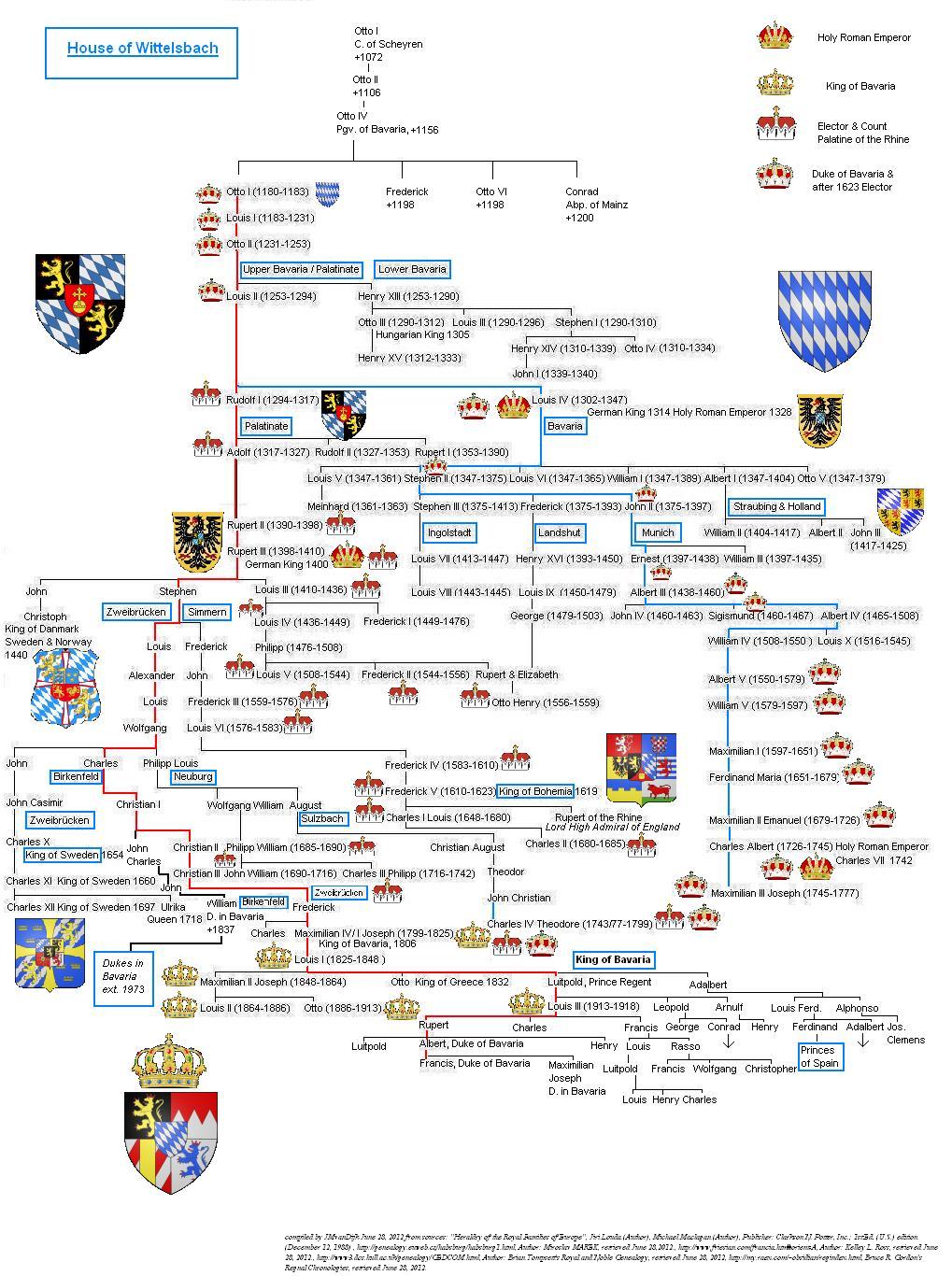
Living legitimate members of the House of Wittlesbach
Bold signifies heads of the house and numbers shown indicate the pretense to the kingship of Bavaria:
- [[Image:Simple gold crown.svg|15px]] Ludwig I of Bavaria (1786–1868)
- [[Image:Simple gold crown.svg|15px]] Maximilian II of Bavaria (1811–1864)
- [[Image:Simple gold crown.svg|15px]] Ludwig II of Bavaria (1845–1886)
- [[Image:Simple gold crown.svg|15px]] Otto of Bavaria (1848–1916)
- Princess Mathilde Caroline of Bavaria (1813–1863), married Louis III, Grand Duke of Hesse (1806-1877) without issue
- Prince Otto of Bavaria, later King of Greece, (1815–1867), married Princess Amalia of Oldenburg (1818–1875) without issue
- Princess Theodelinde of Bavaria (1816–1817)
- [[Image:Simple silver crown.svg|15px]] Luitpold, Prince Regent of Bavaria (1821–1912)
- [[Image:Simple gold crown.svg|15px]] Ludwig III of Bavaria 1845–1921
- [[Image:Simple silver crown.svg|15px]] Rupprecht, Crown Prince of Bavaria (1869–1955)
- Prince Luitpold of Bavaria (1901–1914)
- Princess Irmingard of Bavaria (1902–1903)
- [[Image:Simple silver crown.svg|15px]] Albrecht, Duke of Bavaria (1905–1996)
- Princess Marie Gabrielle of Bavaria (born 1931), married Georg, Prince of Waldburg zu Zeil und Trauchburg (1928–2015) and has issue
- Princess Marie Charlotte of Bavaria (1931–2018), married Paul, Prince of Quadt zu Wykradt und Isny (1930–2011) and issue
- [[Image:Simple silver crown.svg|15px]] Franz, Duke of Bavaria (born 1933), head of the House of Wittelsbach (1996–present)
- (1) Prince Max-Emanuel, Duke in Bavaria (born 1937)
- Princess Sophie of Bavaria (born 1967), married Alois, Hereditary Prince of Liechtenstein (born 1968) and has issue
- Princess Marie Caroline of Bavaria (born 1969), married Duke Philipp of Württemberg (born 1964) and has issue
- Princess Helene of Bavaria (born 1972)
- Princess Elisabeth of Bavaria (born 1973), married Daniel Terberger (born 1967) and has issue
- Princess Maria Anna of Bavaria (born 1975), married twice and has issue
- Prince Rudolf of Bavaria (1909–1912)
- Prince Heinrich of Bavaria (1922–1958), married Anne Marie de Lustrac (1927–1999) without issue
- Princess Irmingard of Bavaria (1923–2010), married Prince Ludwig of Bavaria (1913–2008), see issue below
- Princess Editha of Bavaria (1924–2013), married twice and has issue
- Princess Hilda of Bavaria (1926–2002), married Juan Bradstock Edgar Lockett de Loayza (1912–1987) and had issue
- Princess Gabriele of Bavaria (1927–2019), married Carl Emmanuel, 14th Duke of Croÿ (1914–2011) and had issue
- Princess Sophie of Bavaria (born 1935), married Jean, 12th Duke of Arenberg (1921–2011) and has issue
- Princess Adelgunde of Bavaria (1870–1958), married William, Prince of Hohenzollern (1864–1927) without issue
- Princess Maria Ludwiga Theresia of Bavaria (1872–1954), married Prince Ferdinand Pius, Duke of Castro (1869–1960) and had issue
- Prince Karl of Bavaria (1874–1927)
- Prince Franz of Bavaria (1875–1957)
- Prince Ludwig of Bavaria (1913-2008)
- (2) Prince Luitpold of Bavaria (born 1951)
- Princess Auguste of Bavaria (born 1979), married Hereditary Prince Ferdinand of Lippe-Weißenfeld (born 1976) and has issue
- Princess Alice of Bavaria (born 1981), married Prince Lukas of Auersperg (born 1981) and has issue
- (3) Prince Ludwig of Bavaria (born 1982)
- (4) Prince Rupprecht of Bavaria (born 2024)
- (5) Prince Heinrich of Bavaria (born 1986)
- (6) Prince Maximilian of Bavaria (born 2021)
- (7) Prince Luitpold of Bavaria (born 2023)
- (8) Prince Karl of Bavaria (born 10 March 1987)
- Princess Maria of Bavaria (1953-1953)
- Princess Philippa of Bavaria (1954–1953)
- (2) Prince Luitpold of Bavaria (born 1951)
- Princess Maria Elisabeth of Bavaria (1914–2011), married Prince Pedro Henrique of Orléans-Braganza (1909–1981) and had issue – including the current Head of the Imperial House of Brazil
- Princess Adelgunde of Bavaria (1917–2004), married Baron Zdenko von Hoenning-O'Caroll (1906–1996) and had issue
- Princess Eleonore of Bavaria (1918–2009), married Count Konstantin of Waldburg-Zeil (1909–1972) and had issue
- Princess Dorothea of Bavaria (1920–2015), married Archduke Gottfried of Austria (1902–1984) and had issue
- Prince Rasso of Bavaria (1926-2011)
- Princess Maria Theresa of Bavaria (born 1956), married Count Tamбs Kornis de Gцncz-Ruszka (born 1949) and has issue
- Prince Franz-Josef of Bavaria (1957–2022)
- Princess Elisabeth of Bavaria (born 1959), married Count Andreas von Kuefstein (born 1954) and has issue
- (9) Prince Wolfgang of Bavaria (born 1960)
- (10) Prince Tassilo of Bavaria (born 1992)
- (11) Prince Richard of Bavaria (born 1993)
- (12) Prince Philip of Bavaria (born 1996)
- Princess Flavia of Bavaria (born 2011)
- Princess Benedikta of Bavaria (born 1961), married Count Rudolf von Freyberg-Eisenberg (born 1958) and has issue
- (13) Prince Christoph of Bavaria (born 1962)
- (14) Prince Corbinian of Bavaria (born 1996)
- (15) Prince Stanislaus of Bavaria (born 1997)
- (16) Prince Marcello of Bavaria (born 1998)
- Princess Odilia of Bavaria (born 2002)
- Princess Gisela of Bavaria (born 1964), married Prince Alexander of Saxony (born 1954) and has issue
- Prince Ludwig of Bavaria (1913-2008)
- Princess Mathilde of Bavaria (1877–1906), married Prince Ludwig Gaston of Saxe-Coburg and Gotha (1870–1942) and had issue
- Prince Wolfgang of Bavaria (1879–1895)
- Princess Hildegard of Bavaria (1881–1948)
- Princess Notburga of Bavaria (1883-1883)
- Princess Wiltrud of Bavaria (1884–1975), married Wilhelm Karl, Duke of Urach (1864–1928) without issue
- Princess Helmtrud of Bavaria (1886–1977)
- Princess Dietlinde of Bavaria (1888–1889)
- Princess Gundelinde of Bavaria (1891–1983), married Count Johann Georg of Preysing-Lichtenegg-Moos (1887–1924) and had issue
- [[Image:Simple silver crown.svg|15px]] Rupprecht, Crown Prince of Bavaria (1869–1955)
- Prince Leopold of Bavaria (1846–1930)
- Princess Elisabeth Marie of Bavaria (1874–1957), married Count Otto of Seefried and Buttenheim (1870–1951) and had issue
- Princess Auguste of Bavaria (1875–1964), married Archduke Joseph August of Austria (1872–1962) and had issue
- Prince Georg of Bavaria (1880–1943), married Archduchess Isabella of Austria (1888–1973) without issue
- Prince Konrad of Bavaria (1883–1969)
- Princess Amalie Isabella of Bavaria (1921–1985), married Count Umberto Poletti Galimberti, Count di Assandri (1921–1995) and had issue
- Prince Eugen of Bavaria (1925–1997), married Countess Helene von Khevenhüller-Metsch (1921–2017) without issue
- Princess Therese of Bavaria (1850–1925)
- Prince Arnulf of Bavaria (1852–1907)
- Prince Heinrich of Bavaria (1884–1916)
- [[Image:Simple gold crown.svg|15px]] Ludwig III of Bavaria 1845–1921
- Princess Adelgunde of Bavaria (1823–1914), married Francis V, Duke of Modena (1819–1875) and had issue
- Princess Hildegard of Bavaria (1825–1864), married Archduke Albrecht, Duke of Teschen (1817–1895) and had issue
- Princess Alexandra of Bavaria (1826–1875)
- Prince Adalbert of Bavaria (1828–1875)
- Prince Ludwig Ferdinand of Bavaria (1859–1949)
- Prince Ferdinand of Bavaria (1884–1958), married twice and renounced his rights to the Bavarian throne in 1914
- Prince Adalbert of Bavaria (1886–1970)
- Prince Konstantin of Bavaria (1920–1969)
- (17) Prince Leopold of Bavaria (born 1943)
- (18) Prince Manuel of Bavaria (born 1972)
- (19) Prince Leopold of Bavaria (born 2007)
- Princess Alva of Bavaria (born 2010)
- (20) Prince Gabriel of Bavaria (born 2014)
- (21) Prince Joseph of Bavaria (born 2019)
- Princess Maria del Pilar of Bavaria (born 1978)
- Princess Maria Felipa of Bavaria (born 1981), married Christian Dienst (born 1978) and has issue
- (22) Prince Konstantin of Bavaria (born 1986)
- (23) Prince Alexis of Bavaria (born 2020)
- (24) Prince Nikolaus of Bavaria (born 2023)
- (18) Prince Manuel of Bavaria (born 1972)
- (25) Prince Adalbert of Bavaria (born 1944)
- Princess Bernadette of Bavaria (born 1986), married Carmelo Milici (born 1987) and has issue
- (26) Prince Hubertus of Bavaria (born 1989)
- Princess Ysabel of Bavaria (born 1954), married Count Alfred Hoyos (born 1951) and has issue
- (17) Prince Leopold of Bavaria (born 1943)
- Prince Alexander of Bavaria (1923–2001)
- Prince Konstantin of Bavaria (1920–1969)
- Prince Alfons of Bavaria (1862–1933)
- Prince Joseph Clemens of Bavaria (1902–1990)
- Princess Elisabeth of Bavaria (1913–2005), married twice and had issue
- Princess Isabella of Bavaria (1863–1924), married Prince Tommaso, Duke of Genoa (1854–1931) and had issue
- Princess Elvira of Bavaria (1868–1943), married Count Rudolf von Wrbna-Kaunitz-Rietberg-Questenberg und Freudenthal (1864–1927) and had issue
- Princess Clara of Bavaria (1874–1941)
- Prince Ludwig Ferdinand of Bavaria (1859–1949)
- [[Image:Simple gold crown.svg|15px]] Maximilian II of Bavaria (1811–1864)
Gallery of the Bavarian Kings
File:King Max I Joseph in Coronation Robe.jpg|Max I. Joseph (1806–1825) File:Ludwig I of Bavaria.jpg|Ludwig I. (1825–1848) File:MaximilianII.jpg|Maximilian II. (1848–1864) File:De 20 jarige Ludwig II in kroningsmantel door Ferdinand von Piloty 1865.jpg|Ludwig II. (1864–1886) File:Luitpold Bayern.jpg|Prinzregent Luitpold (1886–1912) File:Paul Beckert Ludwig III als Großmeister des St-Georg-Ordens.jpg|Ludwig III. (1913–1918)
Castles and palaces
Bavaria
Some of the most important Bavarian castles and palaces that were built by Wittelsbach rulers, or served as seats of ruling branch lines, are the following: File:München Alter Hof Burgstock.jpg|The Old Court in Munich File:Wening Residenz München.jpg|Munich Residenz by Michael Wening File:Exterior del Palacio de Nymphenburg, Múnich, Alemania59.JPG|Nymphenburg Palace in Munich File:Nuevo Palacio Schleissheim, Oberschleissheim, Alemania, 2013-08-31, DD 28.jpg|Schleissheim Palace in Munich File:Castillo Trausnitz, Landshut, Alemania, 2012-05-27, DD 20.JPG|Trausnitz Castle in Landshut File:Neues Schloss Ingolstadt Südwest.jpg|Ingolstadt Castle File:Schloss Straubing2.JPG|Straubing Castle File:P1010270 Burghausen.jpg|Burghausen Castle File:Hohenschwangau (9436083255).jpg|Hohenschwangau Castle File:Castelul Linderhof18.jpg|Linderhof Palace File:Schloss Herrenchiemsee Parkseite Westen.jpg|Herrenchiemsee Palace File:Neuschwanstein Castle.jpg|Neuschwanstein Castle
Palatinate branch
Some of the most important castles and palaces of the Palatinate Wittelsbach were: File:Heidelberger Schloss von Gerrit Berckheyde 1670.jpg|Heidelberg Castle 1670 File:Ehrenhof des Mannheimer Schlosses.JPG|Mannheim Palace File:Schwetzingen BW 2014-07-22 16-43-37.jpg|Schwetzingen Castle File:Schloss Neuburg.jpg|Neuburg Castle (Bavaria) File:Düsseldorf, handkolorierter Kupferstich nach L.Janscha, 1798.jpg|Düsseldorf Castle File:Schloss Benrath Jan2012.jpg|Benrath Mansion in Düsseldorf File:Bensberg Neues Schloss Denkmal 136 2011.jpg|Bensberg Castle File:Zweibrücken castle front April 2010 darker.jpg|Zweibrücken Castle File:Birkenfeld-merian.jpg|Birkenfeld Castle 1645 File:2010.08.22.123059 Burg Sulzbach-Rosenberg.jpg|Sulzbach Castle File:Residenz Neumarkt Oberpfalz 001.JPG|Neumarkt Castle File:Merian_Simmern.JPG|Simmern Castle 1648
Electorate of Cologne
From 1597 to 1794, Bonn was the capital of the Electorate of Cologne and residence of the Archbishops and Prince-electors of Cologne, most of them belonging to the Bavarian branch of the House of Wittelsbach (continuously from 1583 to 1761). File:Universität Bonn.jpg|Electoral Palace, Bonn File:Poppelsdorfer Schloss seen from the East.jpg|Poppelsdorf Palace, Bonn File:Schloss Augustusburg, Hof.JPG|Augustusburg Palace, Brühl
Coats of arms
A full armorial of the Wittelsbach family can be found on the French-language Wikipedia at Armorial of the House of Wittelsbach.
Origins
| [[File:DEU Neustadt an der Weinstrasse COA.svg | 150 px]] | |
|---|---|---|
| [[File:Arms of the Palatinate (Old).svg | 100px]] | Count Palatine of the Rhine from 1215. |
Grand Offices of the [[Electoral Prince|Prince Electors of the House of Wittelsbach]] (Erzämter)
Each of the prince electors carried one of the grand offices of the Empire. Each office was indicated by a heraldic mark; the ones that the House of Wittelsbach carried are shown below.
| Office and titles | Mark of office | Holder | Blazon (of mark of office) | Arch-Senechal (Arch-Steward) of the Empire | |||
|---|---|---|---|---|---|---|---|
| (Count Palatine of the Rhine from 1329 to 1623 and 1706 to 1714, | |||||||
| plus Dukes of Bavaria from 1623 to 1706 and after 1714) | Arch-treasurer of the Empire | ||||||
| (Count Palatine of the Rhine from 1652 to 1706 and from 1714 to 1777, | |||||||
| plus House of Hanover from 1710 to 1714 and after 1777) | |||||||
| [[Image:Armoiries archi-sénéchal du Saint-Empire.svg | 100px]] | ||||||
| [[File:HRE Arch-Steward Arms.svg | 100px]] | [[Image:COA family de Pfalz-Simmern.svg | 100px]] | De gueules à l'orbe d'or. | |||
| [[Image:COA_family_de_Kurpfalz.svg | 100px]] | ||||||
| [[Image:Armoiries archi-trésorier du Saint-Empire.svg | 100px]] | ||||||
| [[File:HRE Arch-Treasurer Arms.svg | 100px]] | [[Image:Armoiries électeur palatin 1648.svg | 100px]] | De gueules à la couronne de Charlemagne d'or. | |||
| [[Image:Royal Hanover Inescutcheon.svg | 100px]] |
Palatinate branch (senior line), issue of Rudolph I of the Palatinate and Bavaria
In the German fashion, all the sons were "Count Palatine of the Rhine" (). There was only one Elector Palatine of the Rhine (). Similarly, all the sons were Dukes of Bavaria (), until 1506. Then, Duke in Bavaria (German: Herzog in Bayern) was the title used by all members of the House of Wittelsbach with the exception of the Duke of Bavaria. This became a unique position given to the eldest descendant of the younger branch of the Wittelsbachs, who inherited the rule of the entire duchy of Bavaria. For example, so reads the full title of the late 16th century's Charles I, Count Palatine of Zweibrücken-Birkenfeld and patriarch of the House of Palatinate-Birkenfeld: "Count Palatine by Rhine, Duke in Bavaria, Count at Veldenz and Sponheim" (Pfalzgraf bei Rhein, Herzog in Bayern, Graf zu Veldenz und Sponheim).
| Figure | Name of armiger and blazon | |
|---|---|---|
| [[File:Arms of the Electoral Palatinate (Variant 1).svg | 100 px]] | |
| [[File:Arms of the Palatinate (Palatinate-Bavaria).svg | 100 px]] | Electoral Palatinate, County Palatine of the Rhine from 1215 to 1623. |
| [[File:Wappen des Herzogs in Bayern (Haus Wittelsbach).png | 200px]] | Electoral Palatinate, County Palatine of the Rhine from 1215 to 1623. |
| [[File:Arms of Rupert I of Germany.svg | 100 px]] | Rupert of Germany (1352 † 1410), king of the Romans from 1400 to 1410. |
| [[File:Royal Arms of Norway, Denmark & Sweden (1442-1448).svg | 100px]] | Christopher of Bavaria (1416 † 1448), king of Denmark, Norway and Sweden |
| [[File:Arms of the Palatinate (Palatinate-Bavaria)-Simmern.svg | 100 px]] | Stephen, Count Palatine of Simmern-Zweibrücken (1385 † 1459), Count Palatine of Simmern-Zweibrücken |
| [[File:Arms of Pfalz-Veldenz (Palatinate-Bavaria).svg | 100 px]] | Counts Palatine of Veldenz |
| [[File:Coat of Arms of Palatinate-Birkenfeld.svg | 100 px]] | Counts of Palatinate–Birkenfeld (1584–1717) |
| [[File:Armoiries Frédéric V de Wittelsbach, roi de Bohême.svg | 100 px]] | |
| [[File:Arms of Frederick V of the Palatinate as King of Bohemia.svg | 100px]] | Frederick V, Elector Palatine (1596 † 1632), elector palatine from 1610 to 1623 and king of Bohemia from 1619 to 1620. |
| [[File:Arms of the Electoral Palatinate (Variant 1).svg | 100 px]] | |
| [[File:Arms of the Electoral Palatinate (Variant 2).svg | 100px]] | Counts Palatine of the Rhine from 1648 to 1688. |
| [[File:Armoiries comtes palatins de Soulzbach.svg | 100 px]] | Counts palatine of Neuburg from 1574 to 1688. |
| Counts palatine of Sulzbach from 1688 to 1795. | ||
| [[File:Armoiries électeurs palatins de Neubourg.svg | 100 px]] | Electors palatine of Neuburg from 1688 to 1742. |
| [[File:Arms of Pfalz-Neuburg (1609-1685).svg | 100 px]] | Counts palatine of Zweibrücken from 1569 to 1675 Palatine Zweibrücken |
| [[File:Bayern-1777.png | 100px]] | Electorate of Bavaria under Charles Theodore, Elector of Bavaria, 1777–1799 |
| [[File:CoA Kurpfalz-Bayern 1799-1804.svg | 100px]] | Electorate of Bavaria under Maximilian I Joseph of Bavaria, 1799–1804 |
| [[File:Blason de Maximilien Joseph de Bavière de 1804 à 1806.svg | 100px]] | Electorate of Bavaria under Maximilian I Joseph of Bavaria, 1804–1806 |
| [[File:Armoiries Suède Palatinat1.svg | 100px]] | |
| [[File:Palatinate-Zweibrücken.png | 100px]] | Kings of Sweden from 1654 to 1720 (from the Counts Palatine of Zweibrücken-Kleeburg a sub-cadet branch of the Counts Palatine of Zweibrücken) |
| [[File:Armoiries comtes palatins de Birkenfeld.svg | 100 px]] | Counts palatine of Birkenfeld from 1569 to 1795. |
| [[File:Armoiries du royaume de Bavière (1809).svg | 100 px]] | King of Bavaria from 1809 to 1835. |
| [[File:Arms of the Kingdom of Bavaria 1835-1918.svg | 100 px]] | Kings of Bavaria from 1835 to 1918 (see Coat of arms of Bavaria). |
| [[File:Armoiries Othon de Wittelsbach, roi de Grèce.svg | 100 px]] | Otto de Wittelsbach (1815 † 1867), king of Greece. |
| [[File:Armoiries ducs en Bavière.svg | 100 px]] | Dukes in Bavaria after 1834. |
| [[File:Arms of Prince Ferdinand of Baviaria (1884-1958) as Spanish Infante.svg | 130 px]] | Prince Ferdinand of Bavaria (1884–1958), Infante of Spain |
| branch of "Wittelsbach-Bourbon» |
Bavarian branch (junior branch), issue of Louis of Bavaria, extinct by 1777
| Figure | Name of armiger and blazon | |
|---|---|---|
| [[File:Armoiries Bavière.svg | 100 px]] | Dukes of Bavaria from 1180 to 1623. |
| [[File:Arms of Louis IV, Holy Roman Emperor.svg | 100 px]] | Louis IV (1286 † 1347), king of the Romans in 1314, emperor of the Holy Roman Empire in 1328. |
| [[File:Armoiries Bavière-Brandebourg.svg | 100 px]] | Dukes of Bavaria and Electors of Brandenburg : Louis V († 1361), Louis VI († 1365) and Otto V († 1379). |
| [[File:Arms of the House of Bavaria-Holland.svg | 100px]] | Duke of Bavaria-Straubing, Counts of Hainaut and Holland from 1254 to 1433. |
| [[File:Arms of Charles VII Albert, Holy Roman Emperor.svg | 100 px]] | Electors of Bavaria from 1623 to 1777. |
| [[File:Arms of Charles VII Albert, Holy Roman Emperor-Or shield variant.svg | 100 px]] | |
| [[File:Coat of Arms of Charles VII Albert, Holy Roman Emperor-Or shield variant.svg | 100px]] | Charles VII (1697 † 1745), Holy Roman Emperor from 1742 to 1745. |
Notes
References
- Family tree of the Counts of Scheyern-Wittelsbach-Dachau-Valley, from a lecture by Prof. Schmid: Bayern im Spätmittelalter, winter 1996/97
- 239
- Otto I at genealogie-mittelalter
- Otto II at genealogie-mittelalter (give a different date of death)
- Otto III at genealogie-mittelalter
- Johannes Rietstap:
- Johannes Rietstap:
- Johannes Rietstap:
- Johannes Rietstap:
References
- (17 March 2016). "Succession". The Royal Family.
- (19 August 2019). "Dynastic Change: Legitimacy and Gender in Medieval and Early Modern Monarchy". Routledge.
- {{BBKL. r/rupprecht_m_l_f
- "house of Wittelsbach {{!}} Facts & History".
- Sun, Baltimore. (10 July 1996). "Duke Albrecht of Bavaria,91, who survived Nazi...".
- Franz von Bayern (with Marita Krauss): ''Zuschauer in der ersten Reihe: Erinnerungen'' (Front row audience: memories), publisher C. H. Beck, 2023, pp. 5–28
- [https://www.waf-bayern.de/ Website of Wittelsbacher Ausgleichsfonds] ''(Wittelsbach Compensation Fund)'', in German
- The board usually consists of the head of the House of Wittelsbach, the Bavarian Minister of Education, Sciences and Arts, and the General Director of the [[Bavarian State Painting Collections]].
- [[Tagesschau (German TV programme)]]: ''[https://www.tagesschau.de/inland/regional/bayern/br-die-wittelsbacher-und-ihre-heutige-rolle-ehrgeiz-fuer-bayern-100.html Die Wittelsbacher und ihre heutige Rolle: "Ehrgeiz für Bayern"]'' (The Wittelsbachers and their role today: “Ambition for Bavaria”)
- [https://www.waf-bayern.de/ Wittelsbach Compensation Fund], website (in German)
- [https://www.sueddeutsche.de/bayern/wittelsbacher-erben-der-bayerischen-koenige-kassieren-immer-noch-millionen-1.2852054 Heirs of the Bavarian kings still collect millions] (German article in [[Süddeutsche Zeitung]], 6 February 2016)
- Francis of Bavaria (with Marita Krauss): ''Zuschauer in der ersten Reihe: Erinnerungen'' (Front row audience: memories), 2023, p. 178−181
- (17 March 2016). "Succession". The Royal Family.
- "George I". BBC History.
- United with the [[Duchy of Merania]] in 1152-59 and 1172-82
- 1428 in the Duchy itself; 1433 in the [[Low Countries]] possessions which went to the [[Duchy of Burgundy]]
- Following the [[War of the Succession of Landshut]], the region around Neuburg didn't rejoin Bavaria, and formed an independent county.
- Between 1559 and 1592, the county of Lautern was created for John Casimir, brother of the Elector; however it merged again after John Casimir's death with no male descendants.
- Between 1569 and 1572, a county at Vohenstrauss and Parkstein was created for Frederick, son of Count Wolfgang of Zweibrucken; However, it was re-merged in Zweibrucken after Frederick's death with no descendants.
- Bischweiler splits off in 1615-71; this line eventually took over and supplanted Birkenfeld in 1671.
- Landsberg also split off in 1604-1661; this line eventually took over Zweibrücken in 1661.
- Duchy formed by [[Albert VI, Duke of Bavaria]], but in 1650 he exchanged this property with the County of Haag, which he held until his death. Leuchtenberg was inherited by a second son of [[Maximilian I, Elector of Bavaria]] and later merged in this Electorate.
- The county was inherited by the Swedish branch of the Kleeburg line in 1681; in 1718, Charles XII of Sweden lacked heirs, and appointed his cousin Gustav from Kleeburg; Kleeburg merged in Zweibrücken under Gustav's rule (1718-31). The same would happen in 1731 with the Birkenfeld line: this line supplanted the Kleeburg one, and also merged with Zweibrücken.
- Otto III as Duke of Bavaria, as there were already two previous rulers of this name in the Duchy.
- Pius Wittmann, ''Die Pfalzgrafen von Bayern'', Munich, Ackermann, 1877, p. 52.
- William III ascended first than William II, but was younger than him. The numbering applied reflects [[seniority]]
- Maximilian I as King of Bavaria.
- King, Greg. (1996). "The Mad King: The Life and Times of Ludwig II of Bavaria.". Carol Publishing.
- Duggan, Anne J., ed. Nobles and Nobility in Medieval Europe: Concepts, Origins, Transformations. Rochester, N.Y.: Boydell & Brewer, 2000.p.36.
- (2001). "Ottonian Germany: The Chronicon of Thietmar of Merseburg". Manchester University Press.
- Lingelbach 1913, p. 89.
- Detlev Schwennicke, ''[[Europäische Stammtafeln. Europäische Stammtafeln: Stammtafeln zur Geschichte der Europäischen Staaten]]'', Neue Folge, Band I (Marburg, Germany: Verlag von J. A. Stargardt, 1980), Tafeln 9, 23
- Detlev Schwennicke, ''Europäische Stammtafeln: Stammtafeln zur Geschichte der Europäischen Staaten'', Neue Folge, Band I (Marburg, Germany: Verlag von J. A. Stargardt, 1980), Tafel 23
- {{Blockquote. Louda & c make Otto II the father of Otto IV
- Wolfram Ziegler: ''König Konrad III. (1138–1152). Hof, Urkunden und Politik.'' Böhlau Wien, 2008, {{ISBN. 978-3-205-77647-5, S. 472.
- Rietstap, Johannes Baptist. (1861). "Armorial général, contenant la description des armoiries des familles nobles et patriciennes de l'Europe: précédé d'un dictionnaire des termes du blason". G.B. van Goor.
- Biebel, Christoph. (October 2010). "Das Wappen der Wittelsbacher".
- Biebel, Christoph. (October 2010). "Das Wappen der Wittelsbacher".
- {{Harvsp. Maclagan. Louda. 1999
- Rietstap, Johannes Baptist. (1861). "Armorial général, contenant la description des armoiries des familles nobles et patriciennes de l'Europe: précédé d'un dictionnaire des termes du blason". G.B. van Goor.
- [http://daten.digitale-sammlungen.de/bsb00016900/image_68 BSB-CGM-1952].
- Rietstap, Johannes Baptist. (1861). "Armorial général, contenant la description des armoiries des familles nobles et patriciennes de l'Europe: précédé d'un dictionnaire des termes du blason". G.B. van Goor.
- Rodewald, Heinrich. (1927). "Das Birkenfelder Schloß. Leben und Treiben an einer kleinen Fürstenresidenz 1584-1717". Erike.
- Par déduction. En 1648, le fils de Frédéric V recupère une partie des terres paternelles, le titre d'électeur, confisquées en 1623, et la charge d'archi-trésorier du Saint-Empire. Il paraît logique de penser qu'il ajoute l'écu de cette charge sur ses armes.
- "Haus der Bayerischen Geschichte".
- "Haus der Bayerischen Geschichte".
- "Digitale Bibliothek".
- "Haus der Bayerischen Geschichte".
This article was imported from Wikipedia and is available under the Creative Commons Attribution-ShareAlike 4.0 License. Content has been adapted to SurfDoc format. Original contributors can be found on the article history page.
Ask Mako anything about House of Wittelsbach — get instant answers, deeper analysis, and related topics.
Research with MakoFree with your Surf account
Create a free account to save articles, ask Mako questions, and organize your research.
Sign up freeThis content may have been generated or modified by AI. CloudSurf Software LLC is not responsible for the accuracy, completeness, or reliability of AI-generated content. Always verify important information from primary sources.
Report