From Surf Wiki (app.surf) — the open knowledge base
House of Lords Act 1999
UK law removing hereditary peerage from the House of Lords

UK law removing hereditary peerage from the House of Lords
| Field | Value | ||
|---|---|---|---|
| short_title | House of Lords Act 1999 | ||
| type | Act | ||
| parliament | Parliament of the United Kingdom | ||
| long_title | An Act to restrict membership of the House of Lords by virtue of a hereditary peerage; to make related provision about disqualifications for voting at elections to and for membership of the House of Commons and for related purposes. | ||
| year | 1999 | ||
| statute_book_chapter | 1999 c. 34{{cite web | ||
| url | http://www.opsi.gov.uk/acts/acts1999/ukpga_19990034_en_1 | ||
| archive-url | https://web.archive.org/web/20071030080047/http://www.opsi.gov.uk/acts/acts1999/ukpga_19990034_en_1 | ||
| url-status | dead | ||
| archive-date | 30 October 2007 | ||
| title | House of Lords Act 1999 (original text) | ||
| date | 11 November 1999 | ||
| access-date | 21 May 2008 | ||
| citation | 1999 c. 34 | ||
| introduced_commons | Margaret Beckett, Leader of the House of Commons{{cite web | ||
| url | https://publications.parliament.uk/pa/cm199899/cmhansrd/vo990119/debtext/90119-08.htm | ||
| title | Hansard, Vol 323 No 22 Col 714 | date=19 January 1999 | access-date=19 May 2008}} |
| introduced_lords | Baroness Jay of Paddington, Leader of the House of Lords | ||
| territorial_extent | England and Wales; Scotland; Northern Ireland | ||
| royal_assent | 11 November 1999{{cite web | ||
| url | https://publications.parliament.uk/pa/cm199899/cmhansrd/vo991111/debtext/91111-11.htm#91111-11_head0 | ||
| title | Hansard, Vol 337 No 149 Col 1306 | date=11 November 1999 | access-date=19 May 2008}} |
| commencement | 11 November 1999 | ||
| amends | |||
| status | Current | ||
| original_text | https://www.legislation.gov.uk/ukpga/1999/34/enacted | ||
| revised_text | https://www.legislation.gov.uk/ukpga/1999/34 |
|archive-url=https://web.archive.org/web/20071030080047/http://www.opsi.gov.uk/acts/acts1999/ukpga_19990034_en_1 |url-status=dead |archive-date=30 October 2007 |access-date=21 May 2008
The House of Lords Act 1999 (c. 34) is an act of the Parliament of the United Kingdom which reformed the House of Lords, one of the chambers of Parliament. The Act was given royal assent on 11 November 1999. For centuries, the House of Lords had included several hundred members who inherited their seats (hereditary peers); the Act removed such a right. However, as part of a compromise, the Act allowed ninety-two hereditary peers to remain in the House. Another ten were created life peers to enable them to remain in the House.
The Act decreased the membership of the House from 1,330 in October 1999 to 669 in March 2000. As another result of the Act, the majority of the Lords were thence life peers, whose numbers had been gradually increasing since the Life Peerages Act 1958. As of June 2023, there were members of the House of Lords, of whom were senior Church of England bishops, whose representation in the House is governed by the Lords Spiritual (Women) Act 2015.
Background
Prior to the 16th century, the Lords was the more powerful of the two houses of Parliament.{{cite web |archive-url=https://web.archive.org/web/20061016203459/http://www.parliament.uk/about/history/institution.cfm |url-status=dead |archive-date=16 October 2006 |archive-url=https://web.archive.org/web/20061016203459/http://www.parliament.uk/about/history/institution.cfm |url-status=dead |archive-date=16 October 2006 |archive-url=https://web.archive.org/web/20061016203459/http://www.parliament.uk/about/history/institution.cfm |url-status=dead |archive-date=16 October 2006
During the 20th century, Liberal and Labour governments proposed many bills that were opposed by the House of Lords, which had been dominated by Conservatives since the 1890s, leading to some delay and, where proposed before elections, their dropping from the legislative agenda. In the first year of the Blair government, the Lords passed back Government bills 38 times. The rejection considered the most contentious was that of the European Elections Bill, against which the Lords voted five times. Blair stated that the Conservatives were using the hereditary peers to "frustrate" and "overturn the will of the democratically elected House of Commons".{{cite web
On 24 November 1998, in opening the second session of Parliament, the Queen delivered her annual Speech from the Throne; the Speech was written for her by the government and outlines its legislative agenda for the forthcoming year. In it, she stated that her government would pursue a reform of the House of Lords. These remarks were followed by loud mumbles of "Hear! Hear!" from supportive Labour Members of Parliament, which led to similar utterances of "Shame! Shame!" from Conservative peers; such outbursts were unprecedented, for the Queen's Speech is usually heard by a silent Parliament.
Bill
.jpg)
The House of Lords Bill was expected to face a tough fight in the House of Lords. Several Lords threatened to disrupt the Government's other bills if they continued with the plan to abolish the hereditaries' right to sit in the House of Lords. Michael Onslow, 7th Earl of Onslow, for instance, said, "I'm happy to force a division on each and every clause of the Scotland Bill. Each division takes 20 minutes and there are more than 270 clauses."
Stuart Randall, Baron Randall of St Budeaux put forward the idea of phasing out the hereditary peers by disqualifying their heirs.
Margaret Jay, Baroness Jay of Paddington reminded the House that under the Salisbury Convention they could not block the bill.
In order to convince some peers to vote for reform, Tony Blair announced that he would compromise by allowing a number of hereditary peers to remain in the House of Lords on an interim basis. On 2 December 1998, the Conservative Leader of the Opposition, William Hague, rose in the House of Commons to attack Blair's plans. He suggested that Blair's changes indicated his lack of principles, claiming that Blair wanted to turn the House of Lords into a "House of Cronies". Hague further suggested that the Conservative Party would never agree to such constitutional reforms that were "based on no comprehensive plan or principle."{{cite web
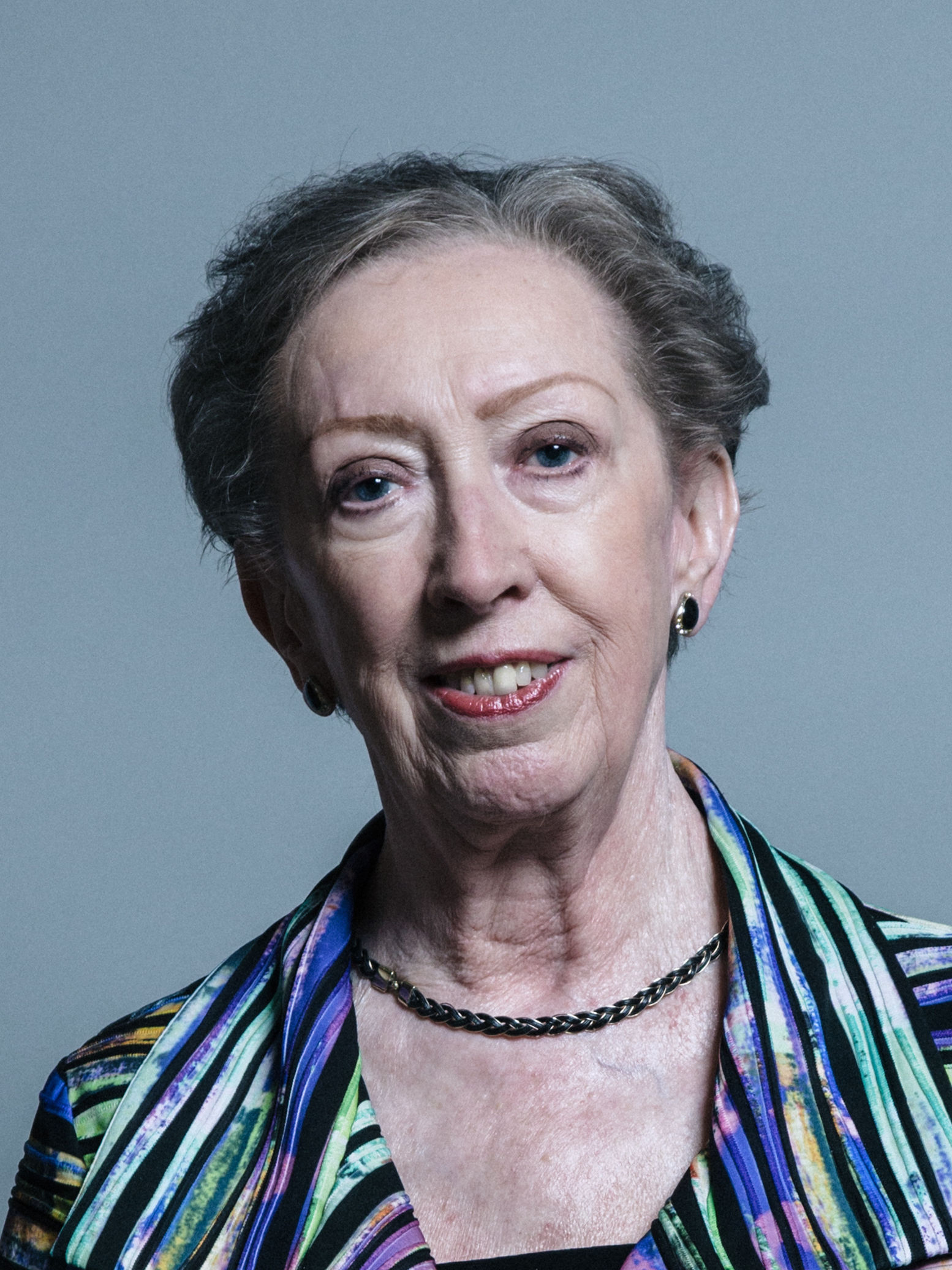
On 19 January 1999, the Leader of the House of Commons, Margaret Beckett, introduced the House of Lords Bill into the House of Commons. The House of Commons passed the bill by a vote of 340 to 132 on 16 March.{{cite web
Several controversies relating to the technicalities of the bill were brought up in the House of Lords. One issue regarded the language used in clauses 1 to 7, which was described by Patrick Mayhew, Lord Mayhew of Twysden as "uncertain in its effects and would leave the position of most hereditary Peers uncertain if the Bill was enacted."{{cite web
Under the Acts of Union 1707, Scottish Lords would be entitled to elect 16 Scottish representative peers to sit on their Lordships' behalf in the House of Lords. In 1963, the Peerage Act 1963 was passed, allowing all Scottish peers to sit in the House, not just 16 of them. It was felt that removing all Scottish representation would breach the Articles. The Government, however, responded that the Articles did envisage a change in the election of representative peers. It was argued that some portions of the Treaty were entrenched, while others were not. For instance, Scotland and England were united "forever," the Scottish Court of Session was to "remain in all time coming within Scotland as it is now constituted," and the establishment of the Church of Scotland was "effectually and unalterably secured." However, it was suggested, the election of Scottish representative peers was not entrenched, and therefore could be amended. Furthermore, the Government argued that Parliament was entirely sovereign and supreme, and could at its will change the Articles of Union. For example, the Treaty of Union joining Great Britain and Ireland required that the two nations be united "forever". Nonetheless, in 1922, by an act of Parliament, most of Ireland was made independent as the Irish Free State. Thus, even entrenched clauses were argued to be open to amendment by the authority of Parliament. The Committee agreed and reported to the House on 20 October 1999 that the Bill was indeed lawful in this regard.
After the Committee's first and second reports were considered, the Lords passed the bill 221 to 81 on 26 October 1999.{{cite web
Membership of the House of Lords
The House of Lords Act 1999 first provides that "No-one shall be a member of the House of Lords by virtue of a hereditary peerage." (The Act treats the Principality of Wales and the Earldom of Chester as hereditary peerages.) The Act then provides that 92 peers, including the Earl Marshal, the Lord Great Chamberlain and 90 other peers elected in accordance with the Standing Orders of the House, would be excepted from the exclusion of hereditary peers, and that after the first session of the next Parliament, whenever one of those seats fell vacant, the Lords would have to proceed to a by-election. The Act also provided that a hereditary peer would be entitled to vote in elections for, and sit in, the House of Commons, unless he or she was a member of the House of Lords. Previously, hereditary peers had been constitutionally disqualified from participating in elections to the House of Commons. The first hereditary peer to gain a seat in the Commons under this provision was John Sinclair, 3rd Viscount Thurso.{{cite web |archive-url=https://web.archive.org/web/20060111172543/http://www.libdems.org.uk/party/people/viscount-john-thurso.html |url-status=dead |archive-date=11 January 2006

The Act prevents even hereditary peers who are the first to hold their titles from sitting automatically in the House of Lords; however, the Government gave life peerages (the titles of which are indicated in parentheses) to all three living non-royal hereditary peers of first creation (Low, Erroll and Pakenham were the only living non-royal hereditary peers of first creation as of November 1999; see the lists of hereditary peerages) and also offered life peerages to the royal peers (of whom only the Earl of Snowdon accepted):
| Name | Hereditary peerage | Life peerage | Died/Left House |
|---|---|---|---|
| Toby Low | Baron Aldington | Baron Low | 2000 |
| Frederick Erroll | Baron Erroll of Hale | Baron Erroll of Kilmun | 2000 |
| Antony Armstrong-Jones | Earl of Snowdon | Baron Armstrong-Jones | 2016 |
| Francis Pakenham | Baron Pakenham | Baron Pakenham of Cowley | 2001 |
William Whitelaw, 1st Viscount Whitelaw, died on 1 July 1999; had he lived he would have been eligible as a former Leader of the House of Lords 1983–1988 and as a first holder of his hereditary peerage, also David Eccles, 1st Viscount Eccles, died 24 February 1999; had he also lived he would have been eligible as a first holder of his hereditary peerage.
Additionally, life peerages were created for all former living Leaders of the House of Lords who were hereditary peers (Quintin Hogg already held a life peerage since 1970):
| Name | Leader of the House | Hereditary peerage | Life peerage | Died/Left House | Ref | ||
|---|---|---|---|---|---|---|---|
| Quintin Hogg | 1960–1963 | Viscount Hailsham (disclaimed in 1963) | Baron Hailsham of St Marylebone (1970) | 2001 | |||
| Peter Carington | 1963–1964 | Baron Carrington | Baron Carington of Upton | 2018 | issue=55676 | date=23 November 1999 | page=12466}} |
| Francis Pakenham | 1964–1968 | Baron Pakenham | Baron Pakenham of Cowley | 2001 | |||
| George Jellicoe | 1970–1973 | Earl Jellicoe | Baron Jellicoe of Southampton | 2007 | |||
| David Hennessy | 1973–1974 | Baron Windlesham | Baron Hennessy | 2010 | |||
| Malcolm Shepherd | 1974–1976 | Baron Shepherd | Baron Shepherd of Spalding | 2001 | |||
| John Ganzoni | 1988–1990 | Baron Belstead | Baron Ganzoni | 2005 | |||
| Robert Gascoyne-Cecil | 1994–1997 | Viscount Cranborne | Baron Gascoyne-Cecil | 2017 |
The following hereditary peers who had been created life peers remained in the House after the Act was passed, they were:
| Name | Hereditary peerage | Life peerage | Died/Left House |
|---|---|---|---|
| Michael Berry | Viscount Camrose (disclaimed in 1995) | Baron Hartwell (1968) | 2000 |
| Robert Lindsay | Earl of Crawford and Balcarres | Baron Balniel (1975) | 2019 |
| George Younger | Viscount Younger of Leckie | Baron Younger of Prestwick (1992) | 2003 |
| James Douglas-Hamilton | Earl of Selkirk (disclaimed in 1994) | Baron Selkirk of Douglas (1997) | 2023 |
Life peerages were also offered to members of the royal family with new hereditary peerages, but were declined, as this would have meant they would continue to hold seats in the reformed House of Lords: Prince Philip, Duke of Edinburgh; Charles, Prince of Wales; Prince Andrew, Duke of York; and Prince Edward (who was created Earl of Wessex on his wedding day).
First election to the House of Lords
Main article: 1999 House of Lords elections
Before the granting of Royal Assent, the Lords had adopted a Standing Order making provision for the election of those hereditary peers who would remain members of the House under section 2 of the Act.{{cite web
- two peers by the Labour hereditary peers
- three peers by the Liberal Democrat hereditary peers
- 28 peers by the Crossbench hereditary peers
- 42 peers by the Conservative hereditary peers
- 15 peers, ready to serve as Deputy Speakers and in other offices, by the whole House of Lords
The elections for officers of the House were held on 27 and 28 October 1999, while those for peers elected by party were held on 3 and 4 November; the results were proclaimed to the House on 29 October and 5 November.{{cite web
Subsequent by-elections
Main article: By-elections to the House of Lords
Since November 2002, by-elections have been held to fill vacancies. Two by-elections were held in 2003, one in 2004, four in 2005, one in each of 2007, 2008 and 2009, two in 2010, four in 2011, two in 2013, four in 2014, six in 2015, two in 2016, two in 2017, three in 2018, two in 2019, five in 2021, six in 2022, and three in 2023. Voting is by preferential voting, with peers ranking the candidates in order of preference. As many or as few preferences as desired may be indicated. To win the election, a peer must receive at least one half of the available votes. If no candidate receives this number of first preference votes, the candidate with the fewest first preference votes is eliminated, with each of their votes being redistributed according to the second preference marked on the ballot (see instant-runoff voting). The process is continued until one candidate receives at least one half of the remaining votes.
Subsequent reform proposals
Labour proposals to remove remaining hereditary peers (until 2009)
The Labour Government expected eventually to present a bill for a second stage of House of Lords reform based on Lord Steel's earlier bills, which aimed to remove the remaining 92 hereditary peers;{{cite web
2012 coalition bill electing all Lords and halving their number
Main article: House of Lords Reform Bill 2012
The coalition government of David Cameron (Conservatives) and Nick Clegg (Liberal Democrats), inaugurated in 2010, had plans to reform the House of Lords by making it mostly elected and slashing its size. Deputy Prime Minister and Liberal Democrat leader Nick Clegg spearheaded the push to bring in the changes. In August 2012, the coalition's plans were dropped.
2014 and 2015 reform acts
The House of Lords Reform Act 2014 allowed peers to retire or resign, to be expelled for serious criminal offences, or to be removed for non-attendance during a whole session. The Act came out of a concern with the size of the chamber; a year later, in May 2015 membership stood at 787 with an additional 31 on a leave of absence. It was presented by Dan Byles and based on earlier bills which Lord Steel had attempted to pass through parliament. The House of Lords (Expulsion and Suspension) Act 2015 authorised the House of Lords to expel or suspend a member for serious misconduct; expelled members are permanently barred from returning to the House. Unlike the 2014 Act, members did not have to have been sentenced to at least a year's imprisonment in order to be expelled for misconduct. The Act was introduced by Baroness Hayman to address the "narrow" circumstances for expulsion set out in the 2014 Act.
2016 bill to phase out hereditary peers
An amendment to the 1999 Act was proposed by Labour peer Lord Grocott to abolish by-elections, but was filibustered in 2016 by Conservative hereditary peer Lord Trefgarne.
References
Notes
References
- "House of Lords – Annual Report and Accounts 1999–2000".
- "House of Lords – Annual Report and Accounts 1999–2000".
- Cracknell, Richard. (15 June 2000). "Lords Reform: The interim House – background statistics; Research Paper 00/61". House of Commons Library.
- "Lords membership".
- (25 January 2012). "What is the role of bishops in UK politics?". BBC News.
- (15 April 2005). "1997: Labour landslide ends Tory rule". [[British Broadcasting Corporation]].
- "The 1997 General Election". History Learning Site.
- (1983). "The New Hope for Britain; Labour Party Manifesto 1983". The Labour Party.
- (1992). "It's time to get Britain working again; Labour Party Manifesto 1992". The Labour Party.
- (27 March 2001). "Vote 2001: House of Lords reform". [[British Broadcasting Corporation]].
- (3 December 1998). "Euro bill forced through". [[British Broadcasting Corporation]].
- (1997). "New labour: because Britain deserves better; Labour Party Manifesto 1997". The Labour Party.
- (24 November 1998). "Queen's speech spells end for peers". [[British Broadcasting Corporation]].
- Sewell, Dennis. (16 October 1998). "Matrix of Power; Lords Reform". [[British Broadcasting Corporation]].
- (13 October 1998). "UK Politics | Labour peer attacks 'degrading' Lords reform". BBC News.
- (14 October 1998). "House of Lords Reform (Hansard, 14 October 1998)". [[Hansard.
- (2 December 1998). "'I require you to step down'". [[British Broadcasting Corporation]].
- (3 December 1998). "Hague leadership in crisis". [[British Broadcasting Corporation]].
- White, Michael. (12 May 1999). "Suspicious peers back reform". The Guardian.
- (20 October 1999). "Second Report from the Committee for Privileges; Statement of Issues agreed between the Lord Gray and Her Majesty's Government". [[The Stationery Office]].
- (20 October 1999). "Second Report from the Committee for Privileges; Extract of the Union with Scotland Act 1706 (Article XIX)". [[The Stationery Office]].
- (20 October 1999). "Second Report from the Committee for Privileges; Extract of the Union with Scotland Act 1706 (Article XXV s2)". [[The Stationery Office]].
- (20 October 1999). "Second Report from the Committee for Privileges; Case for Her Majesty's Government (point 68)". [[The Stationery Office]].
- (20 October 1999). "Second Report from the Committee for Privileges". [[The Stationery Office]].
- (18 October 1999). "First Report from the Committee for Privileges". [[The Stationery Office]].
- (26 October 1999). "Uk Politics One lord a-leaping". BBC News.
- (1958-08-01). "UK peerage creations: Peerages created since 1 August 1958 other than under the Life Peerages Act 1958".
- (1958-08-01). "UK peerage creations: Chronological list 1901–1950".
- (1958-08-01). "UK peerage creations: Chronological list 1951–1990".
- (2 November 1999). "Snowdon leads Lords converts". [[British Broadcasting Corporation]].
- {{London Gazette. (19 November 1999)
- {{London Gazette. (2 July 1970)
- {{London Gazette. (23 November 1999)
- {{London Gazette. (5 May 1992)
- He was summoned in the House of Lords as Baron Cecil, although he continued to be known by his courtesy style of Viscount Cranborne until 2003.
- Watt, Nicholas. (3 November 1999). "Dismay as Snowdon stays in Lords". [[Guardian Media Group]].
- "House of Lords Act: Hereditary Peers Elections".
- "Previous by-elections in the House of Lords".
- "By-elections in the House of Lords".
- "Hereditary peers' by-election: vacancy created by death of Lord Skelmersdale (Whole House electorate)". [[UK Parliament]].
- "Crossbench hereditary peers' by-election, July 2015: result". [[UK Parliament]].
- [https://www.theguardian.com/politics/2009/jan/27/house-of-lords-reform theguardian.com: "Labour's attempts to reform the House of Lords"], dated 27 January 2009
- "Constitutional Reform and Governance Bill".
- [https://www.bbc.com/news/uk-politics-18612233 bbc.com: "Q&A: House of Lords reform"], 6 August 2012
- The government wanted four-fifths of members of a reformed House of Lords to be elected. They would have served 15-year terms of office, after which they could not run for re-election. The number of peers was to be almost halved, from 826 to 450. The chamber would have kept the title of House of Lords, after names like Senate and Reformed House were rejected. Peers were each to represent a specific region of the United Kingdom, as constituted for the election of Members of the European Parliament. One-third of seats would have been filled by elections held every five years. Of the remaining 90 members, 12—rather than the current 26—would have been Church of England bishops. The remainder were to continue to be appointed, and all hereditary peers were to be removed. The government had scheduled passage of its bill for the spring of 2013, and the elections were to have taken place in 2015, but the effort stalled when in July 2012, 91 Conservatives in the Commons rebelled against the government in a vote on how to timetable the [[House of Lords Reform Bill]].[https://www.bbc.com/news/uk-politics-18782379 bbc.com: "Lords reform: How the Commons war will be fought"], 10 July 2012
- Ryan, Mark. "Bills of Steel: The House of Lords Reform Act 2014". [[Public Law (journal).
- Kelly, Richard. (1 July 2016). "House of Lords (Expulsion and Suspension) Act 2015 Briefing Paper".
- (9 December 2016). "Hereditary peers reform plan runs out of time". [[BBC]].
This article was imported from Wikipedia and is available under the Creative Commons Attribution-ShareAlike 4.0 License. Content has been adapted to SurfDoc format. Original contributors can be found on the article history page.
Ask Mako anything about House of Lords Act 1999 — get instant answers, deeper analysis, and related topics.
Research with MakoFree with your Surf account
Create a free account to save articles, ask Mako questions, and organize your research.
Sign up freeThis content may have been generated or modified by AI. CloudSurf Software LLC is not responsible for the accuracy, completeness, or reliability of AI-generated content. Always verify important information from primary sources.
Report