From Surf Wiki (app.surf) — the open knowledge base
Hood chair
Historic doorman's chair
Historic doorman's chair
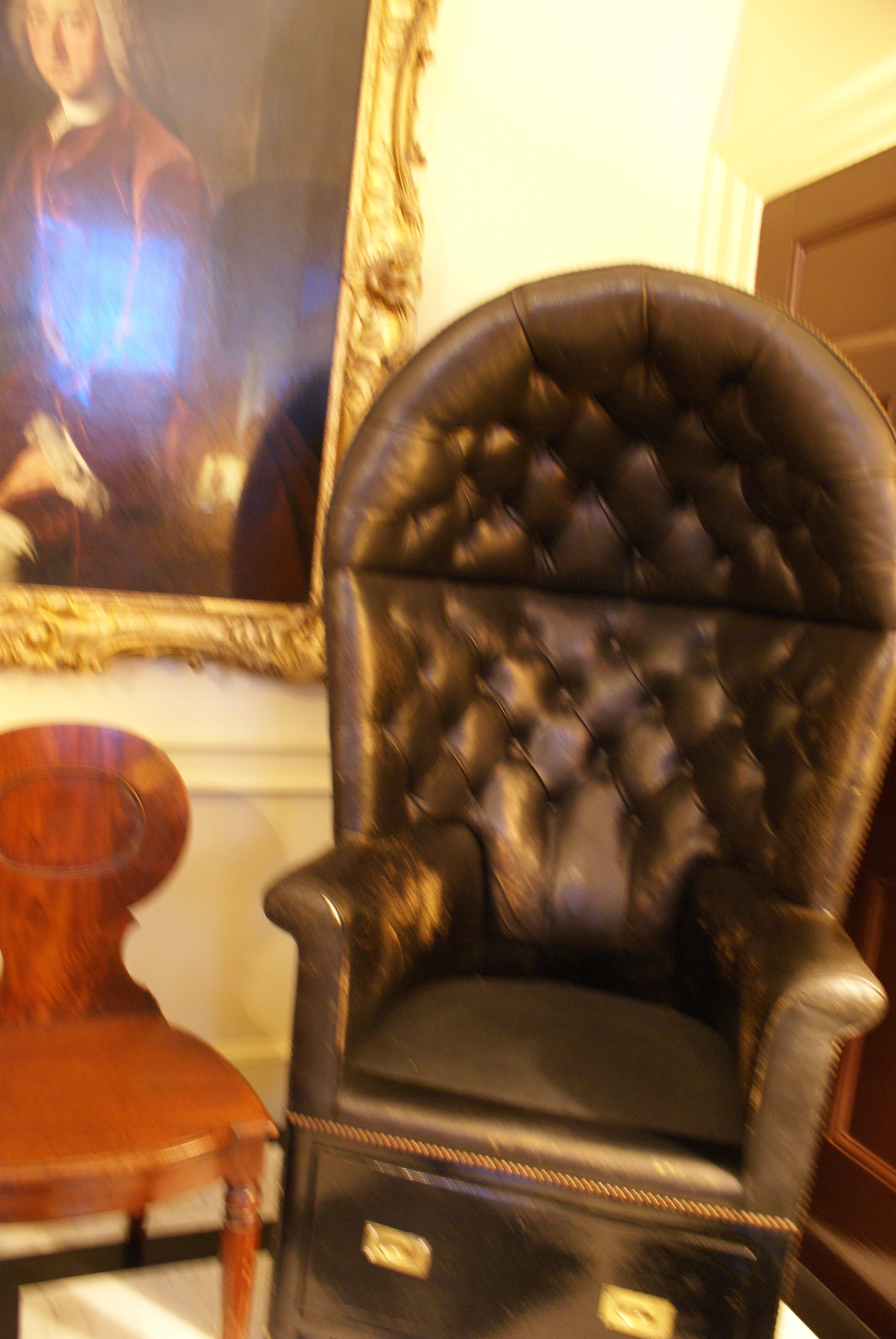
A hood chair or porter's chair was a type of chair used originally in medieval England and later France. Usually made of wood, but sometimes formed in a high-grade leather or red velvet, it was placed by the front door of an estate or home for use by a gatekeeper servant who was in charge of screening guests and visitors. This was necessary since the door knocker might not be heard throughout the house.
Since there were often cold breezes near a front door, the chair was designed to envelop and keep the servant relatively warm in his task of remaining at the door for long periods. It could be described as a hollowed-out egg shape, with a very high and enclosed back, standing on end, four legs, with handrests and usually with a notch for a lantern at the side, allowing the person to sink back into it out of the wind and await visitors' knocks. Notable current survivors exist at the London Branch of the Bank of England, Museum of Leathercraft, Abington, Northampton and at various antique auction houses in the UK and US.
References
References
- https://museumofleathercraft.org/ {{webarchive. link. (2014-01-01)
This article was imported from Wikipedia and is available under the Creative Commons Attribution-ShareAlike 4.0 License. Content has been adapted to SurfDoc format. Original contributors can be found on the article history page.
Ask Mako anything about Hood chair — get instant answers, deeper analysis, and related topics.
Research with MakoFree with your Surf account
Create a free account to save articles, ask Mako questions, and organize your research.
Sign up freeThis content may have been generated or modified by AI. CloudSurf Software LLC is not responsible for the accuracy, completeness, or reliability of AI-generated content. Always verify important information from primary sources.
Report