From Surf Wiki (app.surf) — the open knowledge base
Honshu
Largest island of Japan
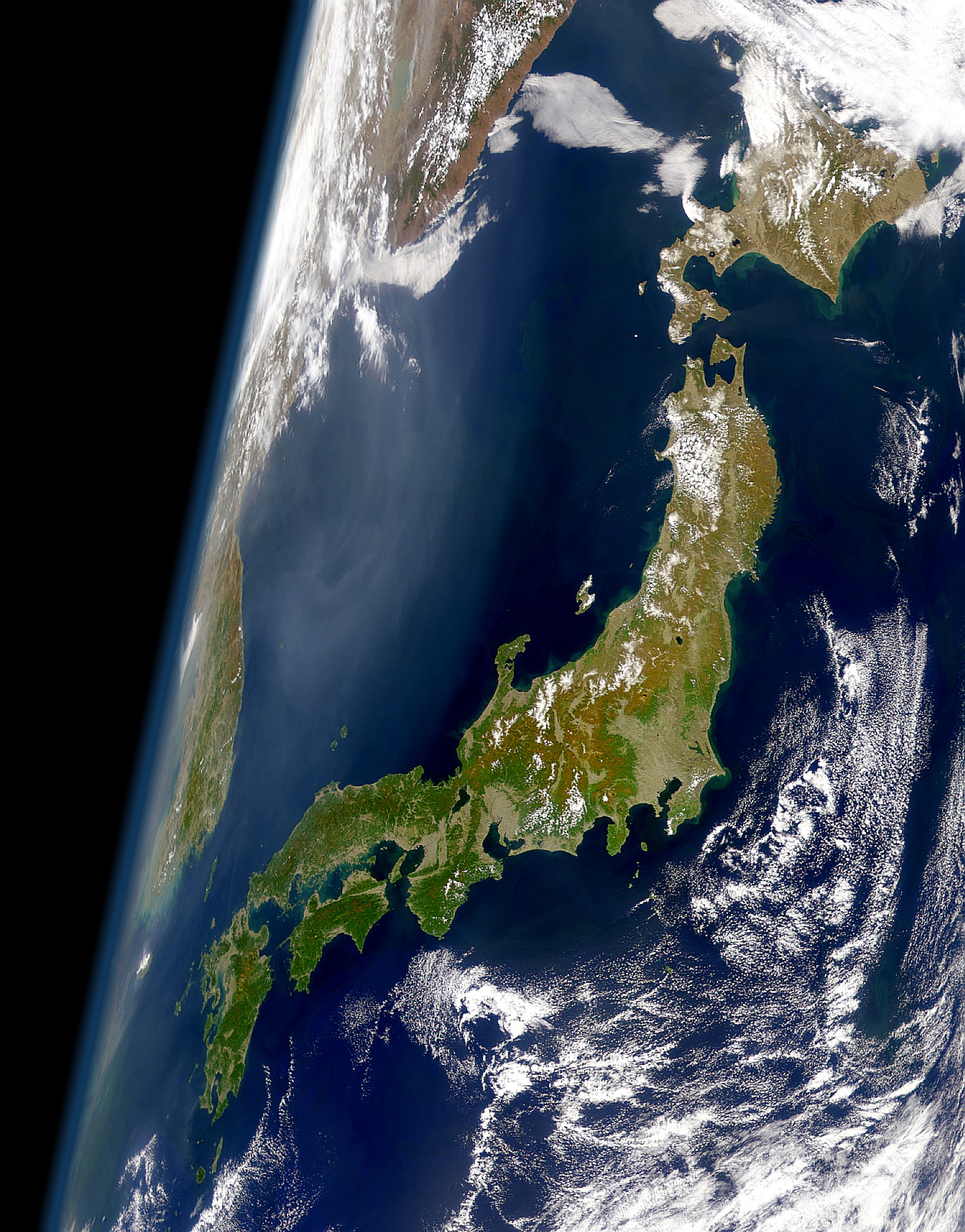
Largest island of Japan
| Field | Value |
|---|---|
| name | Honshu |
| native_name | 本州 |
| native_name_link | Japanese language |
| native_name_lang | ja |
| image | Satellite image of Honshu in May 2003.png |
| image_caption | A May 2003 satellite image of Honshu |
| image_map | Japan honshu map.svg |
| location | {{ubl |
| coordinates | |
| archipelago | Japanese archipelago |
| area_km2 | 227,960 |
| length_km | 1300 |
| width_min_km | 50 |
| width_max_km | 230 |
| coastline_km | 10084 |
| rank | 7th |
| highest_mount | Mount Fuji |
| elevation_m | 3776 |
| country | Japan |
| country_admin_divisions_title | Prefectures |
| country_admin_divisions | {{clist |
| title | List of prefectures |
| country_largest_city | Tokyo |
| country_largest_city_population | 14,043,239 |
| population | 104,000,000 |
| timezone1 | Japan Standard Time (UTC+9) |
| population_as_of | 2017 |
| density_km2 | 447 |
| ethnic_groups | Japanese |
| Sea of Japan (North and West) | Pacific Ocean (South and East) | Aichi | Akita | Aomori | Chiba | Fukui | Fukushima | Gifu | Gunma | Hiroshima | Hyōgo | Ibaraki | Ishikawa | Iwate | Kanagawa | Kyoto | Mie | Miyagi | Nagano | Nara | Niigata | Okayama | Osaka | Saitama | Shiga | Shimane | Shizuoka | Tochigi | Tokyo | Tottori | Toyama | Wakayama | Yamagata | Yamaguchi | Yamanashi
Honshu, historically known as Akitsushima, is the largest of Japan's four main islands. It lies between the Pacific Ocean (east) and the Sea of Japan (west). It is the seventh-largest island in the world, and the second-most populous after the Indonesian island of Java.
Honshu had a population of 104 million , constituting 81.3% of the entire population of Japan, and mostly concentrated in the coastal areas and plains. Approximately 30% of the total population resides in the Greater Tokyo Area on the Kantō Plain. As the historical center of Japanese cultural and political power, the island includes several past Japanese capitals, including Kyoto, Nara, and Kamakura. Much of the island's southern shore forms part of the Taiheiyō Belt, a megalopolis that spans several of the Japanese islands. Honshu also contains Japan's highest mountain, Mount Fuji, and its largest lake, Lake Biwa.
Most of Japan's industry is located in a belt running along Honshu's southern coast, from Tokyo to Nagoya, Kyoto, Osaka, Kobe, and Hiroshima. The island is linked to the other three major Japanese islands by a number of bridges and tunnels. The island primarily shares two climates, with Northern Honshu having four seasons with largely varying temperatures while the south experiences long, hot summers and cool to mild winters.
Etymology
The name of the island, Honshū, stems from Middle Chinese. It directly translates to "main province" or "home land" in English.
History
Early history
Humans first arrived in Honshu at least approximately 37,000 years ago. The first humans to arrive in Honshu were Stone Age hunter-gatherers from Northeast Asia, likely following the migration of ice age megafauna. Surviving artifacts from this period include finely crafted stone blades, similar to those found in Siberia. After the initial arrival of hunter-gatherers, the island saw the emergence of the Jōmon period (c. 14,000–300 BCE), one of the earliest known eras of prehistoric Japanese culture. The Jōmon people were known for their distinctive cord-marked pottery and dogū clay figurines, many of which have been excavated at archaeological sites across Honshu. These artifacts reflect a complex spiritual life and early forms of sedentary communities, particularly along the coasts and river valleys.
Meiji Restoration
The Meiji Restoration, in Japanese history, is the political revolution in 1868 that brought the final demise of the Tokugawa shogunate (which is a military government). It ended the Edo (Tokugawa) Period (1603–1867) and at least nominally returned control of the country to direct imperial rule under Mutsuhito (the Emperor Meiji). One of the main leaders of the restoration (who were mostly young samurai) was Chōshū in far western Honshu, which was one of the feudal areas, hostile to Tokugawa authority domains.
Geography
The island is roughly 1300 km long and ranges from 50 to wide, and its total area is 227,960 km². It is slightly larger than Britain. Its land area has been increasing with land reclamation and coastal uplift in the north due to plate tectonics with a convergent boundary. Honshu has 10084 km of coastline.
Mountainous and volcanic, Honshu experiences frequent earthquakes (such as the Great Kantō earthquake, which heavily damaged Tokyo in September 1923; and the earthquake of March 2011, which moved the northeastern part of the island by varying amounts of as much as 5.3 m while causing devastating tsunamis). The highest peak is the active volcano Mount Fuji at 3776 m, which makes Honshu the world's 7th highest island. There are many rivers, including the Shinano River, Japan's longest. The Japanese Alps span the width of Honshu, from the 'Sea of Japan' coast to the Pacific shore. Western Japan experiences a temperate climate with hot summers and cool to mild winters. In addition to the general climate patterns, central Honshu, particularly the regions surrounding the Japanese Alps, experiences heavy snowfall in winter. Areas such as Niigata, Toyama, and Nagano prefectures are renowned for their snow accumulation, making them popular destinations for skiing and winter sports. These regions are among the snowiest inhabited places in the world, due to the humid air masses from the Sea of Japan colliding with the mountainous terrain.
Population
Honshu has a total population of 104 million people, according to a 2017 estimate, 81.3% of the entire population of Japan. the capital of Japan and part of the Greater Tokyo Area, the most populous metropolitan area in the world.
Extreme points
Bridges and tunnels
Honshu is connected to the islands of Hokkaido, Kyushu and Shikoku by tunnels and bridges. Three bridge systems have been built across the islands of the Inland Sea between Honshu and Shikoku (Akashi Kaikyo Bridge and the Ōnaruto Bridge; Shin-Onomichi Bridge, Innoshima Bridge, Ikuchi Bridge, Tatara Bridge, Ōmishima Bridge, Hakata–Ōshima Bridge, and the Kurushima Kaikyō Bridge; Shimotsui-Seto Bridge, Hitsuishijima Bridge, Iwakurojima Bridge, Yoshima Bridge, Kita Bisan-Seto Bridge, and the Minami Bisan-Seto Bridge), the Seikan Tunnel connects Honshu with Hokkaido, and the Kanmonkyo Bridge and Kanmon Tunnel connect Honshu with Kyushu.
Flora and fauna
These are notable flora and fauna of Honshu.
:{| class="wikitable sortable"
| + Notable flora and fauna |
|---|
| ! Name !! Type |
| ! Notes |
| - |
| Japanese black bear |
| Fauna |
| A subspecies of the Asian black bear. It is typically herbivorous and lives in Honshu and Kyushu. |
| - |
| Japanese macaque |
| Fauna |
| (Macaca fuscata or snow monkey), is a terrestrial Old World monkey species that is native to Japan. |
| - |
| Japanese golden eagle |
| Fauna |
| (Aquila chrysaetos japonica), a subspecies of the golden eagle, inhabits Honshu and Hokkaido all year round. |
| - |
| Japanese wolf |
| Fauna |
| Aka Honshu Wolf is an extinct subspecies of the wolf. |
| - |
| Sika Deer |
| Fauna |
| Cervus nippon (Japanese deer), is overabundant in Honshu. |
| - |
| Japanese dwarf flying squirrel |
| Fauna |
| (Nihon momonga) is one of two species of Old World flying squirrels in the genus Pteromys. |
| - |
| Japanese raccoon dog |
| Fauna |
| (Nyctereutes viverrinus, also called tanuki), is a species of canid endemic to Japan. |
| - |
| Japanese giant salamander |
| Fauna |
| (Andrias japonicus) this fully aquatic salamander is endemic to Japan and called Ōsanshōuo (Giant Salamander) |
| - |
| Takydromus tachydromoides |
| Fauna |
| The Japanese grass lizard, is a wall lizard species of the genus Takydromus. |
| - |
| Japanese serow |
| Fauna |
| (kamoshika, lit. "coarse pelt deer"): (Capricornis crispus) is a Japanese goat-antelope found in dense woodland primarily in northern and central Honshu. |
| - |
| Japanese giant flying squirrel |
| Fauna |
| (musasabi, Petaurista leucogenys) is native to Japan where it inhabits sub-alpine forests and boreal evergreen forests on Honshu, Shikoku and Kyushu. |
| - |
| Japanese boar |
| Fauna |
| (Sus scrofa leucomystax, aka white-moustached pig, Nihon-inoshishi (ニホンイノシシ)), is a subspecies of wild boar native to all of Japan, save for Hokkaido and the Ryukyu Islands. |
| - |
| Japanese bush warbler |
| Fauna |
| (uguisu (鶯), is an Asian passerine bird more often heard than seen. It is a year-round resident of Japan (except Hokkaido where it is only in summer). |
| - |
| Sasakia charonda |
| Fauna |
| National butterfly of Japan (ō-murasaki, "great purple") |
| - |
| Copper pheasant |
| Fauna |
| (Syrmaticus soemmerringii) a large pheasant with a rich coppery chestnut plumage is endemic to Japan. |
| - |
| Green pheasant |
| Fauna |
| (Phasianus versicolor), aka Japanese green pheasant, is an omnivorous bird native to the Japanese archipelago, to which it is endemic. |
| - |
| Grey Heron |
| Fauna |
| (Ardea cinerea) Long legged wading bird. |
| - |
| Japanese scops owl |
| Fauna |
| (Otus semitorques) is a resident breeder in Japan and found in other countries in East Asia. |
| - |
| Doryrhamphus japonicus |
| Fauna |
| Doryrhamphus japonicus, or the Honshu pipefish, is a species of flagtail pipefish |
| - |
| Brahmaea japonica |
| Fauna |
| (Japanese owl moth) a species of moth of the Brahmaeidae family native to Japan. |
| - |
| Japanese spider crab |
| Fauna |
| (Macrocheira kaempferi) a marine crab with the largest leg-span of any arthropod. They live off the southern coasts of Honshū from Tokyo Bay to Kagoshima Prefecture. |
| - |
| Chum salmon |
| Fauna |
| (aka white salmon (白鮭 シロサケ) is native to middle and northern Honshu, Hokkaido and the North Pacific. |
| - |
| Silurus biwaensis |
| Fauna |
| The giant Lake Biwa catfish or Biwako-o'namazu, endemic to Lake Biwa. |
| - |
| Oncorhynchus kawamurae |
| Fauna |
| A species of landlocked Pacific trout in Japan. It is endemic to Lake Tazawa, Akita Prefecture, but was translocated to Lake Saiko. |
| - |
| Akita Inu |
| Fauna |
| (秋田犬, Akita-inu) is a historic dog breed of large size originating from the mountains in Akita Prefecture (northern Honshu). |
| - |
| Kai Ken |
| Fauna |
| The Kai Ken (甲斐犬) is a rare breed of dog native to Japan. It is originally from Kai Province in Yamanashi Prefecture. |
| - |
| Kishu |
| Fauna |
| Kishu Ken are a rare dog breed that was selectively bred for the hunting of wild boar and deer in the mountainous Mie prefecture and Wakayama prefecture. |
| - |
| Shiba Inu |
| Fauna |
| The Shiba Inu (柴犬), is an original and distinct spitz breed hunting dog, native to Japan. |
| - |
| Japanese rose |
| Flora |
| (Rosa rugosa), a species of rose native to eastern Asia and Japan. |
| - |
| Hydrangea hirta |
| Flora |
| A species of flowering plant in the family Hydrangeaceae that is native to East Asia and common in the Pacific side of Honshu. |
| - |
| Tsuga sieboldii |
| Flora |
| (Tsuga sieboldii or simply tsuga (栂)), is a conifer native to the Japanese islands of Honshū, Kyūshū, Shikoku and Yakushima. |
| } |
Geologic activity
Being on the Ring of Fire, the island of Honshu is seismically active, and is home to 40 active volcanoes.
In 2011, an earthquake of magnitude 9.0–9.1 occurred off the coast of Honshu, generating tsunami waves up to 40.5 meters (133 ft) high and killing 19,747. It was the most powerful earthquake ever recorded in Japan, and the fourth most powerful earthquake in the world since modern record-keeping began in 1900. The tsunami subsequently led to the meltdown of 3 nuclear reactors at the Fukushima Daiichi Nuclear Power Plant, leading to the Fukushima nuclear disaster.
Parks
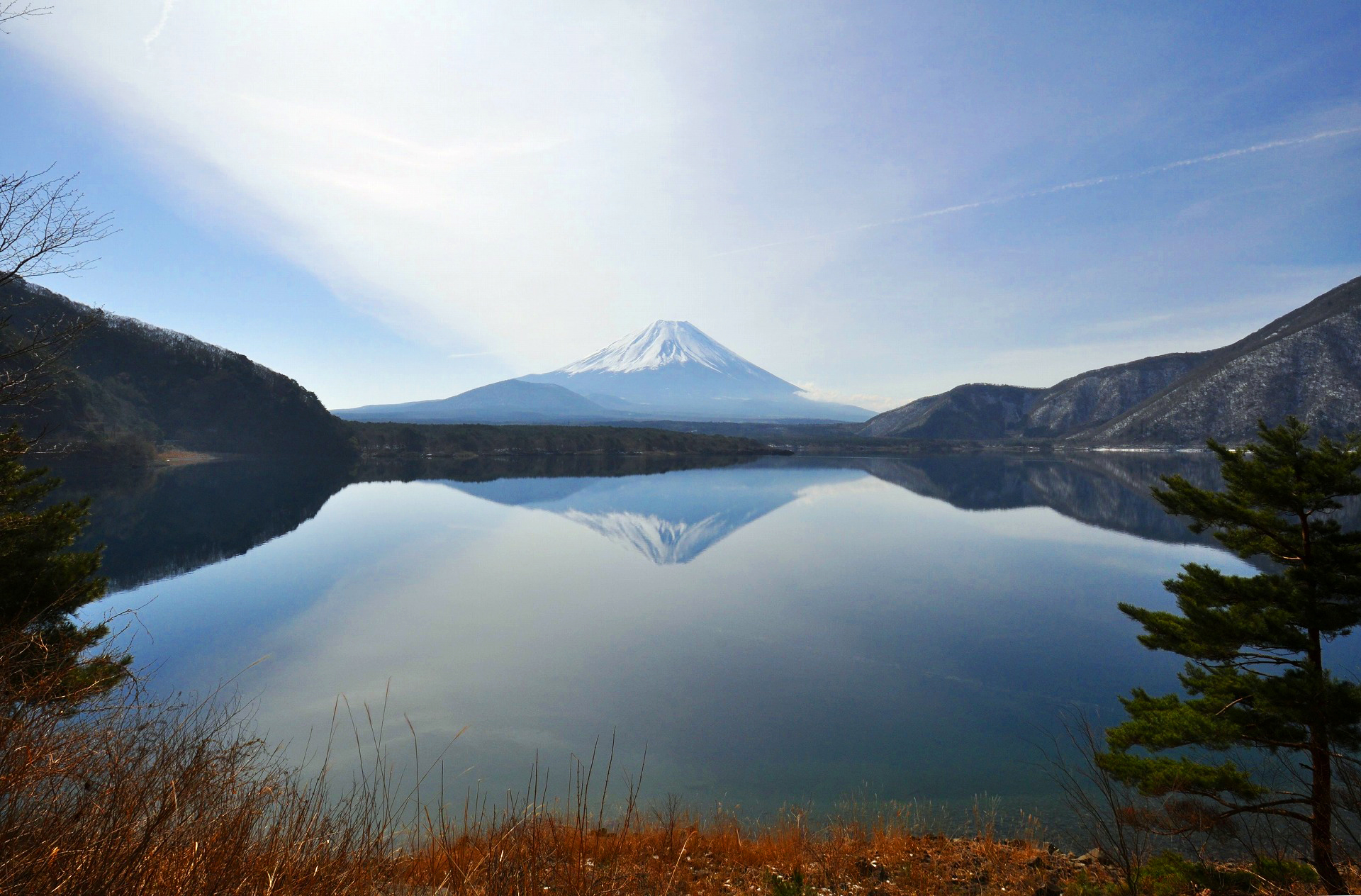
| Oze National Park | 尾瀬 |
|---|
| Region | List of Quasi-National Parks |
|---|---|
| Tōhoku | Shimokita Hantō, Tsugaru, Hayachine, Kurikoma, Minami Sanriku Kinkasan, Zaō, Oga, Chōkai |
| Kantō | Suigō-Tsukuba, Minami Bōsō, Meiji no Mori Takao, Tanzawa-Ōyama |
| Chūbu | Echigo Sanzan-Tadami, Myōgi-Arafune-Saku Kōgen, Sado-Yahiko-Yoneyama, Noto Hantō, Echizen-Kaga Kaigan, Yatsugatake-Chūshin Kōgen, Tenryū-Okumikawa, Chūō Alps, Ibi-Sekigahara-Yōrō, Hida-Kisogawa, Aichi Kōgen, Mikawa-wan |
| Kansai | Suzuka, Wakasa Wan, Tango-Amanohashidate-Ōeyama, Biwako, Murō-Akame-Aoyama, Kongō-Ikoma-Kisen, Yamato-Aogaki, Kōya-Ryūjin, Meiji no Mori Minō, Kyoto Tamba Kogen |
| Chūgoku | Hyōnosen-Ushiroyama-Nagisan, Hiba-Dōgo-Taishaku, Nishi-Chūgoku Sanchi, Kita-Nagato Kaigan, Akiyoshidai |
Economy
Honshu island generates around US$3.5 trillion or more than 80% of Japan's GDP.
Agriculture
Fruit, vegetables, grains, rice and cotton make up the main produce grown in Honshu. The Tōhoku region, spanning the north-eastern part of the island, is notable for its rice production, with 65% of cultivated land being rice paddy fields – almost a quarter of all paddy fields in Japan. Chiba Prefecture is famous for its peanuts, also being the largest producer in Japan. Rare species of the lichen genus Menegazzia are found only in Honshu.
Industry
Most of Japan's tea and silk is from Honshu. Japan's three largest industrial regions are all located on Honshu: the Keihin region, the Hanshin Industrial Region, and the Chūkyō Industrial Area.
Minerals and fuels
Honshu is home to a large portion of Japan's minimal mineral reserves, including small oil and coal deposits. Several coal deposits are located in the northern part of the island, concentrated in Fukushima Prefecture and Niigata Prefecture, though Honshu's coal production is negligible in comparison to Hokkaido and Kyushu. Most of Japan's oil reserves are also located in northern Honshu, along the west coast, spanning Niigata, Yamagata, and Akita Prefectures.
Most of Japan's copper, lead, zinc and chromite is located on Honshu, along with smaller, scattered deposits of gold, silver, arsenic, sulfur and pyrite.
Transportation
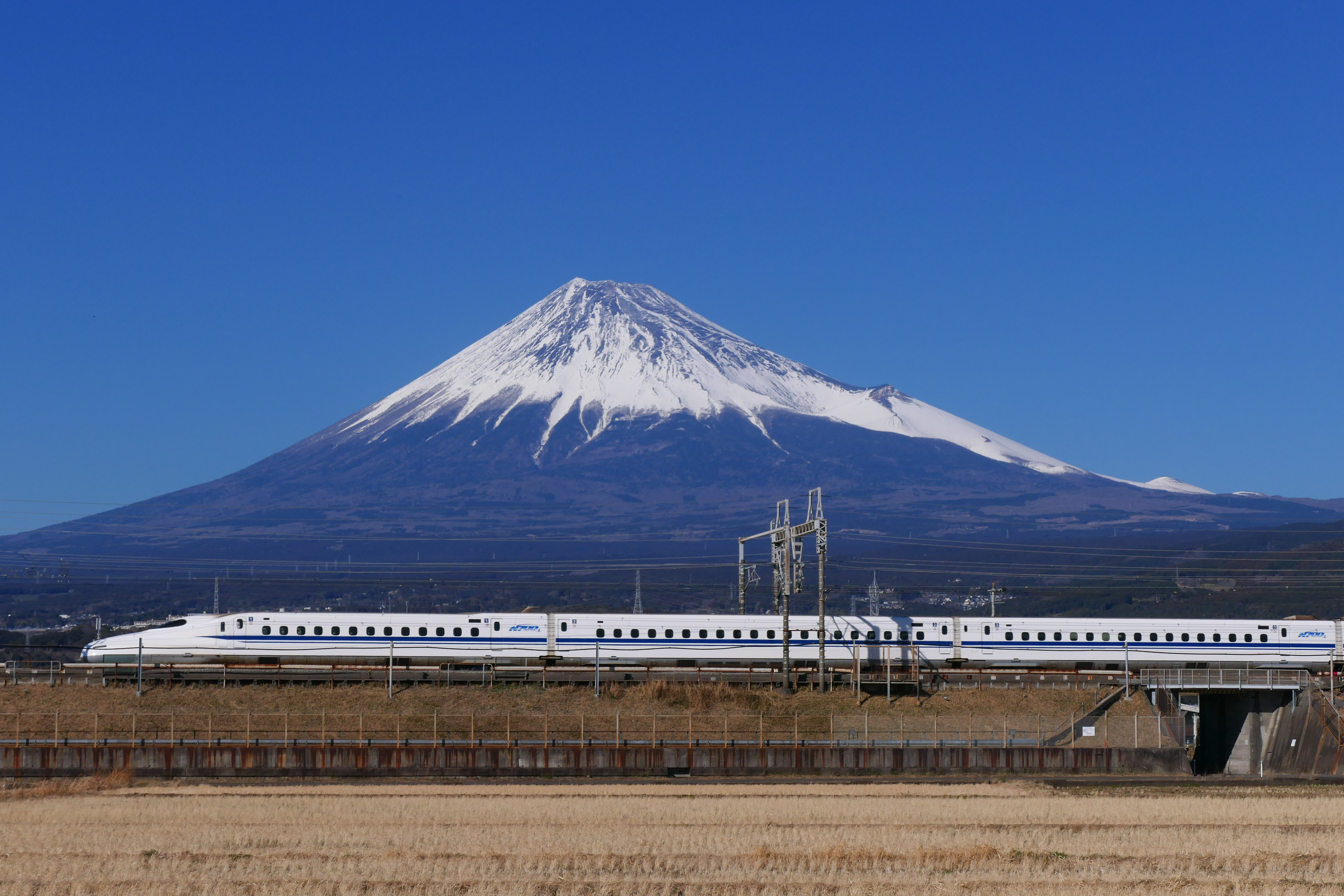
The Tokaido Shinkansen, opened in 1964 between Tokyo and Shin-Ōsaka, is Japan's first high-speed rail line. It is the world's oldest high-speed rail line and one of the most heavily used. The San'yō Shinkansen connects stations in the two largest cities in western Japan, Shin-Osaka in Osaka with Hakata Station in Fukuoka. Both the Tokaido Shinkansen and the Sanyo Shinkansen help form a continuous high-speed railway through the Taiheiyō Belt megalopolis.
The island is served by Japan's 4 major airports which are:
- Haneda Airport (serving Tokyo)
- Narita International Airport (serving Tokyo and Chiba Prefecture)
- Chubu Centrair International Airport (serving the Chūkyō region)
- Kansai International Airport (serving the Keihanshin region)
Administrative regions and prefectures
The island is divided into five nominal regions and contains 34 prefectures, including metropolitan Tokyo. Administratively, some smaller islands are included within these prefectures, notably including the Ogasawara Islands, Sado Island, Izu Ōshima, and Awaji Island.
The regions and their prefectures are:
- Tōhoku region consists of six prefectures.
- Akita
- Aomori
- Fukushima
- Iwate
- Miyagi
- Yamagata
- Kantō region consists of seven prefectures, including the capital of Japan which is the Tokyo Metropolis.
- Chiba
- Gunma
- Ibaraki
- Kanagawa
- Saitama
- Tochigi
- Tokyo
- Chūbu region consists of nine prefectures.
- Aichi
- Fukui
- Gifu
- Ishikawa
- Nagano
- Niigata
- Shizuoka
- Toyama
- Yamanashi
- Kansai region consists of seven prefectures.
- Hyōgo
- Kyoto
- Mie
- Nara
- Osaka
- Shiga
- Wakayama
- Chūgoku region consists of five prefectures.
- Hiroshima
- Okayama
- Shimane
- Tottori
- Yamaguchi
References
References
- (2013). "An Atlas of the World's Conifers: An Analysis of their Distribution, Biogeography, Diversity and Conservation Status". BRILL.
- "Tokyo Metropolis' Population overview – Reiwa 3 January 1". [[Tokyo Metropolitan Government]].
- "Maps ETC – Asia -> Japan". [[University of South Florida]].
- "Ōyamatotoyoakizushima". Kokugakuin University.
- "Akitsushima". Isahaya Shrine.
- (22 August 2015). "離島とは(島の基礎知識) (what is a remote island?)". [[Ministry of Land, Infrastructure, Transport and Tourism]].
- "Honshu".
- [http://www.soumu.go.jp/main_sosiki/jichi_gyousei/c-gyousei/daityo/index.html Japan Civil Registry Database 2013]
- See [http://www.stat.go.jp/english/data/kokusei/2000/final/hyodai.htm Japan Census of 2000]; the editors of [[List of islands by population]] appear to have used similar data from the relevant statistics bureaux and totalled up the various administrative districts that make up each island, and then done the same for less populous islands. An editor of this article has not repeated that work. Therefore, this plausible and eminently reasonable ranking is posted as unsourced [[Wikipedia:Common knowledge. common knowledge]].
- "Islands By Land Area". Islands.unep.ch.
- Boquet, Yves. (2017). "The Philippine Archipelago". Springer.
- (1992). "Japan: a country study". Federal Research Division, Library of Congress.
- "Honshu {{!}} Facts, History, & Points of Interest".
- ''[[Kodansha Encyclopedia of Japan]]''
- Köppen, Wladimir. (1884). "Die Wärmezonen der Erde, nach der Dauer der heissen, gemässigten und kalten Zeit und nach der Wirkung der Wärme auf die organische Welt betrachtet". Meteorologische Zeitschrift.
- Wilson, Scott. (2020-08-01). "Anglicized map shows what Japan's prefectures might be named if they were part of England".
- Walker, Robert. (2014-05-27). "Okinawa and the Ryukyu Islands: The First Comprehensive Guide to the Entire Ryukyu Island Chain". Tuttle Publishing.
- Hiragana Times. (2013-02-13). "[:en]Japanese Maps and the Meaning of Place-Names {{!}} Past Articles[:ja]日本の地図と地名の意味|過去記事 {{!}} Hiragana Times".
- "About Japan: A Teacher's Resource | Early Japan (50,000 BC – 710 AD) | Japan Society".
- (19 March 2011). "Map of Horizontal Land Movement caused by 2011/3/11 M9.0 earthquake". [[Geospatial Information Authority of Japan]].
- (14 March 2011). "Quake shifted Japan by over two meters". [[Deutsche Welle]].
- "Tokyo Population 2021 (Demographics, Maps, Graphs)".
- Japanese Wiki page [[:ja:北海道]]
- (14 March 2011). "New USGS number puts Japan quake at fourth largest". [[CBS News]].
- Branigan, Tania. (13 March 2011). "Tsunami, earthquake, nuclear crisis – now Japan faces power cuts". The Guardian.
- (11 March 2011). "Japan quake – seventh largest in recorded history".
- [http://stats.oecd.org/ Regions and Cities > Regional Statistics > Regional Economy > Gross Domestic Product, Large regions TL2], OECD.Stats. Accessed on 30 August 2022.
- "Regions of Japan".
- "Peanuts".
- (2004). "Revision of the lichen genus Menegazzia in Japan, including two new species". The Lichenologist.
- (2012). "Honshu".
- (1947). "Natural Resources of Japan". General Headquarters, Supreme Commander for the Allied Powers, Natural Resources Section.
- "Japan – Resources and power".
- "Catalogue of Geological Maps|Geological Survey of Japan/ AIST".
- (1947). "Natural Resources of Japan". General Headquarters, Supreme Commander for the Allied Powers, Natural Resources Section.
- (1947). "Natural Resources of Japan". General Headquarters, Supreme Commander for the Allied Powers, Natural Resources Section.
- (1947). "Natural Resources of Japan". General Headquarters, Supreme Commander for the Allied Powers, Natural Resources Section.
- (2020). "Shinkansen – Bullet Trains in Japan".
- Kasai, Yoshiyuki. (4 September 2010). "Bullet Train & Maglev System to Cross the Pacific".
- "Central Japan Railway Company".
This article was imported from Wikipedia and is available under the Creative Commons Attribution-ShareAlike 4.0 License. Content has been adapted to SurfDoc format. Original contributors can be found on the article history page.
Ask Mako anything about Honshu — get instant answers, deeper analysis, and related topics.
Research with MakoFree with your Surf account
Create a free account to save articles, ask Mako questions, and organize your research.
Sign up freeThis content may have been generated or modified by AI. CloudSurf Software LLC is not responsible for the accuracy, completeness, or reliability of AI-generated content. Always verify important information from primary sources.
Report